Posts: 45198 From: Houston, TX Registered: Nov 1999
posted 09-23-2009 03:32 PM
Boeing Company release
Boeing Submits Proposal for NASA Commercial Crew Transport System
The Boeing Company submitted a proposal to NASA on September 22 to accelerate the development of commercial human space transportation as defined by NASA in its Commercial Crew Development (CCDev) announcement. Boeing's submission, which draws on the company's experience with proven human-rated spacecraft, proposes development of technologies that will mature its Commercial Crew Transportation System concept.
NASA's CCDev initiative is intended to stimulate private-sector development of a commercially managed system that could be used to transport astronauts to and from the International Space Station, Bigelow Aerospace's Orbital Space Complex, and other potential destinations in low Earth orbit.
"Boeing's knowledge of the space station and our long history of supporting NASA with proven human-rated systems should allow us to work closely with NASA to develop a commercially viable, yet safe, crew transportation system," said Keith Reiley, Boeing program manager for the CCDev proposal. "Boeing has a lot to offer NASA in this new field of commercial crew transportation services. To show our commitment, we are willing to make a substantial investment in research and development."
Boeing has strong project management skills, commercial manufacturing experience using Lean management practices, one of the strongest supplier networks in the United States, and a team of talented engineers with practical human spaceflight experience. Most recently, Boeing has applied this experience on its Ares I and Constellation work in support of NASA's exploration mission. Boeing can apply these skills and capabilities to meeting specific milestones to show progress in developing a reliable and safe commercial crew transportation system.
Joining Boeing on the CCDev team will be Las Vegas-based Bigelow Aerospace, LLC. Bigelow Aerospace will provide additional investment, requirements for crew transportation to its Orbital Space Complex, and its expertise from testing and validating the technologies necessary to construct and deploy a full-scale, crewed, commercial orbital space complex.
To support the commercial space industry with space-platform and human-rated systems experience, Boeing also has joined three other teams competing for CCDev agreements. These teams are submitting their own separate proposals.
NASA has announced it will sign funded agreements with one or more teams in November, using funds from the American Recovery and Reinvestment Act of 2009. The value of the Space Act Agreements can vary, but NASA has said approximately $50 million is available to distribute and that the funded, fixed-price agreements will run through September 2010.
A unit of The Boeing Company, Boeing Integrated Defense Systems is one of the world's largest space and defense businesses specializing in innovative and capabilities-driven customer solutions, and the world's largest and most versatile manufacturer of military aircraft. Headquartered in St. Louis, Boeing Integrated Defense Systems is a $32 billion business with 70,000 employees worldwide.
Robert Pearlman Editor
Posts: 45198 From: Houston, TX Registered: Nov 1999
posted 02-02-2010 08:34 AM
Boeing Company release
NASA Selects Boeing for American Recovery and Reinvestment Act Award to Study Crew Capsule
The Boeing Company was selected by NASA on February 1 to develop critical technologies and capabilities for the space agency's Commercial Crew Development (CCDev) initiative, which offers an opportunity for the aerospace industry to develop concepts for future crewed space missions.
The funded Space Act Agreement for the CCDev project is valued at $18 million.
"We appreciate this opportunity to advance our crew system design," said Keith Reiley, Boeing CCDev program manager. "This agreement complements our internal efforts to accelerate development of system concepts and capabilities that will ultimately lead to a safe, reliable and cost-effective way to transport humans to low Earth orbit."
Boeing will research and further develop the system concepts and advance key technologies that are applicable to a capsule-based crew transport system. The company will develop the overall system definition, and also perform demonstration testing on life support, avionics, landing systems and other critical subsystems, primarily at sites in Texas, California and Nevada.
Boeing's crew module concept will be based on previous company efforts. It will be compatible with multiple launch vehicles and configurable to carry a mixture of crew and cargo on short-duration missions to and from the International Space Station, orbital habitats by Bigelow Aerospace and other future destinations in low Earth orbit. The size of the system is expected to be larger than the Apollo-era space capsule.
As part of the Boeing CCDev team, Las Vegas-based Bigelow Aerospace will provide requirements for crew transportation to support its planned Orbital Space Complex, as well as additional investment and expertise in testing and validating the technologies necessary to construct and deploy the complex.
"We're excited about this program and the Boeing partnership in general. Boeing brings with it unparalleled experience and expertise in human spaceflight systems, which will be combined with Bigelow Aerospace's entrepreneurial spirit and cost-conscious practices," said Robert T. Bigelow, president and founder of Bigelow Aerospace. "By combining these attributes, this partnership represents the best of both worlds."
NASA is using funds from the American Recovery and Reinvestment Act of 2009 to fund its Space Act Agreements. By maturing the design and development of commercial crew spaceflight concepts and associated enabling technologies and capabilities, the CCDev program allows companies to move toward full demonstration of commercial human spaceflight to low Earth orbit.
A unit of The Boeing Company, Boeing Defense, Space & Security is one of the world's largest defense, space and security businesses specializing in innovative and capabilities-driven customer solutions, and the world's largest and most versatile manufacturer of military aircraft. Headquartered in St. Louis, Boeing Defense, Space & Security is a $34 billion business with 68,000 employees worldwide.
Robert Pearlman Editor
Posts: 45198 From: Houston, TX Registered: Nov 1999
posted 06-16-2010 12:20 PM
Boeing's commercial manned spacecraft now has a name, according to a release from the Commercial Spaceflight Federation:
"We're extremely pleased to be part of the Boeing team constructing the CST-100 capsule under the auspices of NASA's own Commercial Crew Development program. Boeing's unparalleled heritage and experience, combined with Bigelow Aerospace's entrepreneurial spirit and desire to keep costs low, represents the best of both established and new space companies. The product of this relationship, the CST-100 capsule, will represent the safest, most reliable, and most cost-effective spacecraft ever to fly. Again, I don't understand the critics who say 'commercial' entities can't safely build a capsule. Why is it that Boeing, the company that constructed the ISS itself, can't safely build a capsule that would go to their own space station? These are the sorts of questions and issues that we will be posing in Washington as a member of the Commercial Spaceflight Federation."
Robert Pearlman Editor
Posts: 45198 From: Houston, TX Registered: Nov 1999
"It's a little smaller than Orion, but a little bigger than Apollo," Reiley said of the CST-100 spacecraft. "It carries seven, but it's fairly small -- it's not as large or as spacious as the Orion."
The capsule is being built for short missions to the space station, meaning it will not be designed to stay in space for long periods of time.
Credit: Boeing
Robert Pearlman Editor
Posts: 45198 From: Houston, TX Registered: Nov 1999
posted 07-19-2010 09:17 AM
Boeing release
Boeing CST-100 Spacecraft to Provide Commercial Crew Transportation Services
Boeing released artist's renderings of its Crew Space Transportation (CST)-100 spacecraft during a media briefing with Bigelow Aerospace today at the Farnborough Airshow.
Boeing is maturing the design of its CST-100 spacecraft under an $18 million Commercial Crew Development (CCDev) Space Act Agreement with NASA. The CST-100 can carry a crew of seven and is designed to support the International Space Station and the Bigelow Aerospace Orbital Space Complex.
The CST-100 will be bigger than Apollo but smaller than Orion, and be able to launch on a variety of different rockets, including Atlas, Delta and Falcon. It will use a simple systems architecture and existing, proven components. The "100" in CST-100 refers to the 100 kilometers from the ground to low Earth orbit.
KSCartist Member
Posts: 2944 From: Titusville, FL Registered: Feb 2005
The Boeing Co. plans to be ready to fly commercial space taxis from Cape Canaveral to the International Space Station by 2015 and soon will decide where the spacecraft will be manufactured and assembled, officials said Thursday.
Designed to launch on United Launch Alliance Atlas or Delta rockets, or perhaps even SpaceX Falcon 9s, the spacecraft also are destined to fly to a commercial space station being developed by Bigelow Aerospace in Nevada.
Four test flights -- including three from the Space Coast -- are targeted to launch in late 2013 and 2014.
Robert Pearlman Editor
Posts: 45198 From: Houston, TX Registered: Nov 1999
ILC Dover recently delivered six air-bag systems to Boeing, though a price was not disclosed. Boeing expects to begin test-landing its vehicle, using a crane, but no parachute, in coming weeks...
This most recent air-bag system for Boeing was originally designed for the Orion spacecraft, but the air bags were shed to save weight. Boeing hopes to use ILC's system essentially as landing gear for its 16,000 pound, funnel-shaped, Apollo-like capsule.
To soften the landing, one large air bag is stuffed inside another. The outside bag, which resembles a gigantic version of a car's air bag, includes a set of "blowout patches" that open up and allow air to escape, thereby cushioning the blow. Even under a parachute, the capsule could fall 35 feet per second.
As the top air bag flattens, the one inside serves as a buffer, keeping the capsule from running aground.
ILC's landing gear is also designed to keep the capsule from flipping over, and it should allow Boeing's product to escape space-to-Earth landings unscathed.
Robert Pearlman Editor
Posts: 45198 From: Houston, TX Registered: Nov 1999
posted 09-15-2010 09:58 AM
Boeing release
Boeing and Space Adventures to Offer Commercial Spaceflight Opportunities
The Boeing Company and Space Adventures, Ltd. have established a memorandum of agreement regarding the marketing of anticipated transportation services to destinations in low Earth orbit (LEO) on Boeing commercial crew spacecraft.
Under this agreement, Space Adventures will market passenger seats on commercial flights aboard the Boeing Crew Space Transportation-100 (CST-100) spacecraft to LEO. Potential customers for excess seating capacity include private individuals, companies, non-governmental organizations, and U.S. federal agencies other than NASA. Boeing plans to use the CST-100 to provide crew transportation to the International Space Station (ISS) and future commercial LEO platforms.
"By combining our talents, we can better offer safe, affordable transportation to commercial spaceflight customers," said Brewster Shaw, vice president and general manager of Boeing's Space Exploration division. "To date, all commercial flights for private spaceflight participants to the ISS have been contracted by Space Adventures. If NASA and the international partners continue to accommodate commercial spaceflight participants on ISS, this agreement will be in concert with the NASA administrator's stated intent to promote space commerce in low Earth orbit."
Boeing and Space Adventures have not yet set a price per seat for spaceflight participants, but will do so when full-scale development is under way. Boeing continues to advance its design for the CST-100 spacecraft under NASA's Commercial Crew Development Space Act Agreement. The spacecraft, which can carry seven people, will be able to fly on multiple launch vehicles and is expected to be operational by 2015.
"We are excited about the potential to offer flights on Boeing's spacecraft," said Eric Anderson, co-founder and chairman of Space Adventures. "With our customer experience and Boeing's heritage in human spaceflight, our goal is not only to benefit the individuals who fly to space, but also to help make the resources of space available to the commercial sector by bringing the value from space back to Earth."
Space Adventures has successfully contracted and flown seven spaceflight participants on eight missions to the International Space Station.
Space Adventures, headquartered in Vienna, Va., is the only company that provides orbital spaceflight opportunities to the world marketplace. The company offers a spectrum of programming that ranges from terrestrial weightless flights to orbital missions, flights to the edge of space, and a historic return to the Moon. Space Adventures' clients have spent over 2,000 hours in space, traveling over 35 million miles.
A unit of The Boeing Company, Boeing Defense, Space & Security is one of the world's largest defense, space and security businesses specializing in innovative and capabilities-driven customer solutions, and the world's largest and most versatile manufacturer of military aircraft. Headquartered in St. Louis, Boeing Defense, Space & Security is a $34 billion business with 68,000 employees worldwide.
Robert Pearlman Editor
Posts: 45198 From: Houston, TX Registered: Nov 1999
posted 12-13-2010 09:47 PM
Boeing Company release
Boeing Submits Proposal for 2nd Round of NASA Commercial Crew Development Program
Boeing today submitted its proposal for the second round of NASA's Commercial Crew Development (CCDev) program. Boeing plans to advance the design of its Crew Space Transportation (CST)-100 spacecraft and Commercial Crew Transportation System and continue to demonstrate key technologies.
"In the same way that Boeing helped launch commercial aviation more than 80 years ago, we are working to develop what could become a true commercial space transportation system: a commercial service to take people to the International Space Station and other Low Earth Orbit destinations," said Brewster Shaw, Boeing Space Exploration vice president and general manager. "We plan to further mature our design and continue the development process toward our first crewed flight in 2015."
Boeing is proposing an approach that will significantly mature the CST-100 design through demonstrations of critical subsystems. The CST-100 spacecraft is designed to support NASA's primary objective of affordable access to Low Earth Orbit. It will carry up to seven crew and passengers, is reusable up to 10 times, and is compatible with a variety of expendable launch vehicles. The spacecraft -- which is comprised of a Crew Module and a Service Module -- draws on Apollo-proven aerodynamic characteristics in a design that uses commercial, off-the-shelf, cost-effective technologies.
Boeing will build on its efforts performed under the first round of the CCDev program, which greatly reduced program risk. In October, Boeing completed a Systems Definition Review with NASA that defined the CST-100 spacecraft's system characteristics and configuration and established a baseline design. Other major accomplishments of the first round include:
Design, build and test of a pressurized structure of the crew module
Creation of a mock-up of the spacecraft to ensure the crew can enter and exit the vehicle safely, reach control switches and easily see through windows
Demonstration of manufacturability of the base heat shield structure and thermal protection system to protect the crew during re-entry into Earth's atmosphere
Development of an avionics systems integration facility to support rapid prototyping and full-scale development
Development of a rendezvous sensor and associated guidance and navigation software that allows the vehicle to autonomously approach and dock with the International Space Station and the planned Bigelow Orbital Space Complex
Demonstration of airbag land landing, water landing, post-water landing uprighting and life-support systems.
"We look forward to continuing our joint efforts with NASA to ensure CCDev's success," said Shaw. "Enabling commercial-crew access to Low Earth Orbit allows NASA to focus on deep space exploration and thereby ensure a continued leadership role for the U.S. in human spaceflight for generations to come."
Robert Pearlman Editor
Posts: 45198 From: Houston, TX Registered: Nov 1999
posted 04-18-2011 04:41 PM
Boeing Company release
Boeing selected for 2nd round of NASA commercial crew development
Boeing has been selected for the second round of NASA's Commercial Crew Development (CCDev) program. Under a $92.3 million CCDev-2 contract, the company will further mitigate program risk and mature the system design of its Crew Space Transportation (CST)-100 spacecraft.
"We are combining lessons learned and best practices from commercial airplanes, satellites and launch systems with those from human spaceflight programs such as the space shuttle and the International Space Station to design, deliver and fly the CST-100 in 2015," said John Elbon, vice president and program manager, Boeing Commercial Crew Programs.
The CST-100 spacecraft -- comprised of a crew module and a service module -- relies on proven materials and subsystem technologies that are safe and affordable. Boeing also plans to supply the CST-100 to Bigelow Aerospace for that company's space station. The CST-100 is designed to carry up to seven people, or a combination of people and cargo, and is compatible with a variety of expendable launch vehicles.
Under the initial CCDev Space Act Agreement of 2010, Boeing successfully completed several risk reduction demonstrations and a System Definition Review (SDR) in October, with only $18 million in government investment. The SDR defined the CST-100 spacecraft's system characteristics and configuration and established a baseline design. Among the many accomplishments Boeing achieved during this first phase of the CCDev program were the design, build and testing of a pressurized structure of the crew module and an avionics systems integration facility to support rapid prototyping and full-scale development.
"Boeing's CCDev performance to date is an example of how the company's innovative and experienced team is successfully partnering with NASA in a commercial environment," Elbon said.
NASA's new 14-month CCDev-2 Space Act Agreement builds on the work performed during the first round of CCDev and enables Boeing to further mature its system to a Preliminary Design Review, a critical step that ensures the system design meets all requirements. Boeing also will conduct key demonstrations and development tests. The company plans to gather performance data on the launch abort system and the service module fuel tank; evaluate vehicle ascent performance in wind tunnel testing; and build on earlier landing air bag and parachute demonstrations with more in-depth investigations.
Most of the work will be located at Boeing sites at Kennedy Space Center, Fla.; Houston; Huntington Beach, Calif.; and Huntsville, Ala. Key suppliers include Bigelow Aerospace, Pratt & Whitney Rocketdyne, Airborne Systems, ILC Dover, Spincraft, United Space Alliance and the ARES Corporation.
Boeing's Commercial Crew Transportation System includes the CST-100 spacecraft, launch services and ground systems -- all integrated to support a safe and reliable operations concept. Using expertise and resources from across the Boeing enterprise provides a complete end-to-end transportation service to support NASA crew transportation to and from the International Space Station.
A unit of The Boeing Company, Boeing Defense, Space & Security is one of the world's largest defense, space and security businesses specializing in innovative and capabilities-driven customer solutions, and the world's largest and most versatile manufacturer of military aircraft. Headquartered in St. Louis, Boeing Defense, Space & Security is a $32 billion business with 66,000 employees worldwide.
Robert Pearlman Editor
Posts: 45198 From: Houston, TX Registered: Nov 1999
posted 06-29-2011 03:59 PM
Boeing update (from NASA Return on Investment Report, Issue 1)
Boeing Completes Delta Systems Definition Review
The Boeing Company achieved a major milestone on May 19 by completing their delta Systems Definition Review (SDR) barely a month after CCDev 2 Space Act Agreements were executed.
Boeing engineers presented numerous updates and improvements to their CST-100 spacecraft design since the original SDR under CCDev 1 which occurred in October 2010. These updates included improved protection from orbital debris and changes to the crew module, which enables improved packaging and mounting of tanks and other equipment. Boeing also presented a comparison of their architecture with the latest drafts of NASA's requirements and standards for International Space Station (ISS) commercial crew transportation.
The review was preceded by several technical interchange meetings between Boeing engineers and NASA experts in key engineering and safety disciplines.
"We brought in outside experts who reviewed the vehicle design from an overall integrated system perspective to ensure that we are designing and building a safe and affordable system," said Keith Reiley, Deputy Program Manager of Commercial Crew Programs for Boeing.
Upcoming events for the Boeing CCDev 2 team are the Phase Zero Safety Review milestone in June, where Boeing will present a plan for identifying and mitigating potential hazards to safe spaceflight for the CST-100 system.
Boeing also plans to conduct a full-scale landing airbag drop demonstration later this summer.
Robert Pearlman Editor
Posts: 45198 From: Houston, TX Registered: Nov 1999
posted 08-04-2011 11:01 AM
Boeing release
Boeing Selects Atlas V Rocket for Initial Commercial Crew Launches
The Boeing Company today announced it has selected the United Launch Alliance (ULA) Atlas V rocket to launch the Boeing Crew Space Transportation (CST)-100 spacecraft from Florida's Space Coast.
"This selection marks a major step forward in Boeing's efforts to provide NASA with a proven launch capability as part of our complete commercial crew transportation service," said John Elbon, vice president and program manager of Commercial Crew Programs and the source selection official for Boeing.
If NASA selects Boeing for a development contract with sufficient funding, ULA will provide launch services for an autonomous orbital flight, a transonic autonomous abort test launch, and a crewed launch, all in 2015.
The addition of ULA to the Boeing team enables the start of detailed design work on an integrated system for launch and spacecraft operations. The team also will refine launch abort operations that will meet NASA's stringent human rating requirements to safely transport crew and cargo to the International Space Station. Boeing conducted a best-value competition among U.S. launch service providers prior to selecting the Atlas V.
"We are pleased Boeing selected the Atlas V rocket and believe it is the right vehicle to help usher in the new commercial era in human spaceflight," said George Sowers, ULA vice president of Business Development. "The Atlas V is a cost-effective, reliable vehicle and ULA stands ready to support Boeing's commercial human spaceflight program."
Boeing plans to begin wind tunnel testing of the Atlas V and the CST-100 this year and will use the results to complete a preliminary design review of the integrated system in 2012 under the second round of its Commercial Crew Development Space Act Agreement with NASA.
The Commercial Crew (CCDev) program consists of developing, manufacturing, testing and evaluating, and demonstrating the CST-100 spacecraft, launch vehicle and ground/mission operations — all part of Boeing's Commercial Crew Transportation System — for NASA's new Commercial Crew human spaceflight program that will provide access to the International Space Station.
The CST-100 is a reusable, capsule-shaped spacecraft that includes a crew module and a service module. It relies on proven, affordable materials and subsystem technologies that can transport up to seven people, or a combination of people and cargo.
Robert Pearlman Editor
Posts: 45198 From: Houston, TX Registered: Nov 1999
posted 08-04-2011 04:35 PM
United Launch Alliance release
United Launch Alliance Selected to Launch Boeing's CST-100 Spacecraft
United Launch Alliance (ULA) announced today that The Boeing Company has selected ULA's Atlas V rocket to launch its Crew Space Transportation (CST)-100 spacecraft.
"We are pleased Boeing selected the Atlas V rocket and believe it is the right vehicle to help usher in the new commercial era in human spaceflight," said George Sowers, ULA's vice president of business development. "The Atlas V is a cost-effective, reliable vehicle and ULA stands ready to support Boeing's commercial human spaceflight program."
Under the award, ULA will provide launch services from Space Launch Complex 41 at Cape Canaveral Air Force Station using the Atlas V 412 configuration with a single solid rocket booster with a dual engine upper-stage Centaur.
The Atlas V system provides the earliest initial launch capability for commercial crew capability development, with an un-crewed orbital test flight and a crewed flight test in 2015.
"From its roots as the launch vehicle for the manned Mercury program in the 1960's, each new generation of the Atlas system has demonstrated advancements in reliability and performance," said Sowers.
The Atlas vehicle is the proud inheritor of decades of improvements and has a record of 97 consecutive successes – best in the world. The Atlas V has launched 26 times with 100 percent success. In addition, the Atlas V has received NASA's highest and most rigorous Category 3 Certification, which allows the Atlas V family of launch vehicles to fly NASA's most complex and critical exploration missions.
ULA program management, engineering, test and mission support functions are headquartered in Denver, Colo. Manufacturing, assembly and integration operations are located at Decatur, Ala., Harlingen, Texas, and San Diego, Calif. Launch operations are located at Cape Canaveral AFS, Fla., and Vandenberg AFB, Calif.
Robert Pearlman Editor
Posts: 45198 From: Houston, TX Registered: Nov 1999
posted 10-17-2011 05:25 PM
Boeing Company release
Boeing space capsule begins wind-tunnel tests
Boeing is nearing completion of wind-tunnel testing for a new spacecraft to ferry people and cargo to the International Space Station.
Engineers have been testing the spacecraft, called the Crew Space Transportation (CST)-100, since Sept. 17 at NASA’s Ames Research Center in California. The test team is using a 12-inch-wide, 14-inch-long aluminum model that is about 1/14th the size of the operational space capsule that Boeing plans to build. Testing is scheduled to conclude by the end of October.
Using hundreds of pinhole-sized sensors, the wind-tunnel tests measure how air flows across the model. Boeing engineers plan to test the model in more than 20 different positions to mimic the different phases of an aborted landing.
“As engineers, we like data and numbers, and you can take all of this and make something meaningful out of it,” said Boeing engineer Dustin Choe. “We can reduce it down and provide a clearer picture of what we will experience in flight.”
The wind-tunnel tests help ensure the spacecraft is structurally sound and can be controlled safely. Engineers will tweak CST-100’s design based on the data collected.
The wind-tunnel activity is part of a series of planned tests for CST-100. Boeing and teammate Bigelow Aerospace recently dropped a mock capsule off a moving truck to test the external airbags the real spacecraft would deploy to cushion a landing on Earth.
CST-100 will transport up to seven people or a mix of people and cargo to low-Earth-orbit destinations, such as the International Space Station and Bigelow Aerospace’s planned space station.
Boeing is one of four companies competing under NASA’s Commercial Crew Development program to develop crew vehicles to restore the United States' capability to provide access to the International Space Station by 2016.
Robert Pearlman Editor
Posts: 45198 From: Houston, TX Registered: Nov 1999
posted 03-13-2012 02:23 PM
Boeing Company release
Boeing Completes Preliminary Design Review of Commercial Crew Space Transportation Vehicle
Boeing successfully completed a Preliminary Design Review (PDR) of the company's integrated Commercial Crew Space Transportation system, which includes the Crew Space Transportation (CST)-100 spacecraft, on March 12. The integrated system will provide the United States with the capability to transport people and cargo to the International Space Station (ISS), the Bigelow Space Complex and other destinations in low Earth orbit.
The system PDR, which included the CST-100 spacecraft, launch vehicle and ground system, evaluated technical adequacy, progress and risk resolution of the design and test approach.
"The progress made by the Commercial Crew team has been outstanding. It is clear that this team has the discipline and the right design, test and safety approaches and processes to ensure a safe, reliable and affordable transportation system by the middle of the decade," said John Mulholland, vice president and program manager, Boeing Commercial Programs.
"Boeing is leveraging not only the enduring spaceflight capabilities resulting from our 50-year heritage supporting human spaceflight, but also our contemporary expertise and experience, to achieve milestones toward the future of human spaceflight such as this PDR," Mulholland added.
The PDR included representatives from Boeing, NASA, the Federal Aviation Administration and independent consultants. They examined all milestones accomplished in the development of the integrated system design since the Delta System Definition review that was conducted in May 2011, under NASA's Commercial Crew Development Space Act Agreement.
Boeing has scheduled additional tests to be performed in 2012, including a launch abort engine hot fire test series, which was successfully completed on March 9, parachute drop tests in April, a landing air bag test series in May, a forward heat shield jettison test in June, and an attitude control engine hot fire test in June, to gather additional data on key functional elements of the spacecraft design.
The Boeing Commercial Crew program includes the design, manufacture, test and evaluation, and demonstration of the CST-100 spacecraft, launch vehicle and mission operations -- all part of Boeing's Commercial Crew Transportation System -- for NASA's Commercial Crew Development program. This system will provide crewed flights to the ISS and also support Bigelow Aerospace's orbital space complex. The program is based on Boeing's experience and innovation of over 50 years of human spaceflight and nearly 100 years of commercial aviation.
The CST-100 is a reusable capsule-shaped spacecraft based on proven materials and subsystem technologies that can transport up to seven people, or a combination of people and cargo. Boeing has designed the spacecraft to be compatible with a variety of expendable rockets. The company has selected the United Launch Alliance's Atlas V launch vehicle for initial CST-100 test flights in 2015.
Robert Pearlman Editor
Posts: 45198 From: Houston, TX Registered: Nov 1999
posted 04-04-2012 10:45 AM
Boeing Company release
Boeing Successfully Completes Parachute Drop Test of Crew Space Transportation Spacecraft
Boeing successfully completed a parachute drop test of the company's Crew Space Transportation (CST)-100 spacecraft today [April 3] at the Delamar Dry Lake Bed near Alamo, Nev.
CST-100 is part of the Boeing Commercial Crew Transportation System, which will provide the United States with the capability to transport people and cargo to the International Space Station (ISS), the Bigelow Aerospace Complex and other destinations in low Earth orbit.
An Erickson Sky Crane helicopter lifted the CST-100 test article to about 11,000 feet and released it. Three main parachutes deployed to slow the capsule's descent before six airbags inflated, providing a smooth ground landing. The event was the first drop test of the fully combined vehicle landing system, including all elements.
"This successful test is a tremendous milestone that brings Boeing one step closer to completing development of a system that will provide safe, reliable and affordable crewed access to space," said John Mulholland, vice president and program manager, Boeing Commercial Programs.
Boeing is drawing on its significant knowledge, testing and experience gained from the Apollo missions as it develops and tests the CCTS. Leveraging re-entry and ocean landing data from the Apollo program, the rigorous CST-100 landing tests will reduce risk and validate the post re-entry landing and recovery capability of this system.
As part of the Boeing Commercial Crew team, Bigelow Aerospace played a key role by providing the capsule test article and associated electronics and supporting the test itself. Bigelow Aerospace is a Boeing customer, with plans to use the CCTS for transportation to and from Bigelow on-orbit platforms. Boeing and Bigelow Aerospace are partnering to advance the commercial space market by offering opportunities for integrated transportation and on-orbit platform capabilities and services to new customers.
The team is planning a second test later this month, following parachute inspection and re-packing. This second drop test will include a drogue parachute deployment sequence on top of the main parachute deployment, demonstrating the full, nominal parachute system performance.
Boeing has scheduled additional tests to be performed in 2012, including a landing air bag test series in May, a forward heat shield jettison test in June, and an orbital maneuvering/attitude control engine hot fire test in June — all to gather additional data on key functional elements of the spacecraft design.
The Boeing Commercial Crew program includes the design, manufacture, test and evaluation, and demonstration of the CST-100 spacecraft, launch vehicle and mission operations — all part of Boeing's Commercial Crew Transportation System — for NASA's Commercial Crew Development program.
The CST-100 is a reusable capsule-shaped spacecraft based on proven materials and subsystem technologies that can transport up to seven people, or a combination of people and cargo.
Boeing has designed the spacecraft to be compatible with a variety of expendable rockets. The company has selected United Launch Alliance's Atlas V launch vehicle for initial CST-100 test flights in 2015-16.
Robert Pearlman Editor
Posts: 45198 From: Houston, TX Registered: Nov 1999
posted 05-04-2012 07:31 AM
Boeing Company release
Boeing Completes Full Landing Test of Crew Space Transportation Spacecraft
2nd CST-100 drop test demonstrates parachute and air bag system performance
Boeing [NYSE: BA] successfully completed the second parachute drop test of the company's Crew Space Transportation (CST)-100 spacecraft on May 2 at the Delamar Dry Lake Bed near Alamo, Nev. The test demonstrated the performance of the entire landing system.
An Erickson Air Crane helicopter lifted the CST-100 test article to about 14,000 feet and initiated a drogue parachute deployment sequence that was followed by deployment of the main parachute. The capsule descended to a smooth ground landing, cushioned by six inflated air bags.
"This second parachute drop test validates Boeing's innovative system architecture and deployment plan," said John Mulholland, vice president and program manager, Boeing Commercial Programs. "Boeing's completion of this milestone reaffirms our commitment to provide safe, reliable and affordable crewed access to space."
Boeing performed this test with the support of its Commercial Crew team, including Bigelow Aerospace, which played a key role by providing the capsule test article and associated electronics as well as supporting the test itself. HDT Airborne Systems designed, fabricated and integrated the parachute system, which included the two drogue parachutes added to complete the landing system. ILC Dover designed and fabricated the landing air bag system.
The Boeing and Bigelow partnership consolidates the deep knowledge acquired from Boeing's long history and heritage in human spaceflight with expertise from one of the world's most important new space firms.
"We're thrilled to see the robust progress that is being made via the Commercial Crew program," said Robert T. Bigelow, company founder and president. "This successful test provides further proof that the commercial crew initiative represents the most expeditious, safe and affordable means of getting America flying in space again."
Bigelow also is a Boeing customer, with plans to use the CST-100 spacecraft for transporting people to and from the company's space complex.
Boeing has completed 40 CST-100 milestones to plan, including the Preliminary Design Review in February. The company is preparing for additional tests to be performed this year, including another landing air bag test series, a forward heat shield jettison test and an orbital maneuvering/attitude control engine hot fire test that will provide more data on significant elements of the spacecraft design.
The Boeing Commercial Crew program includes the design, manufacture, test and evaluation, and demonstration of the CST-100 spacecraft, launch vehicle and mission operations — all part of Boeing's work under NASA's Commercial Crew Development program and upcoming Commercial Crew Integrated Capability initiative.
The CST-100 is a reusable spacecraft that uses a demonstrated capsule architecture, as well as proven materials and subsystem technologies. The CST-100 can transport up to seven astronauts, or a combination of astronauts and cargo. Boeing has designed the spacecraft to be compatible with a variety of expendable rockets. The company has selected the United Launch Alliance Atlas V launch vehicle for initial CST-100 test flights in 2015-16.
Robert Pearlman Editor
Posts: 45198 From: Houston, TX Registered: Nov 1999
posted 08-03-2012 10:16 AM
Boeing Company release
Boeing to further develop commercial crew space transportation system under NASA CCiCap award
Commercial Crew Integrated Capability phase of human spaceflight development program to be completed in 21 months
Boeing [NYSE: BA] has received notification that NASA will invest $460 million for further development of the Boeing Commercial Crew Transportation System in the third round of the Commercial Crew Program: Commercial Crew Integrated Capability (CCiCap). Boeing will complete development milestones to further mature the integrated system — including the CST-100 spacecraft, launch services and ground systems — to prepare for certification and operations.
"This award will enable us to build on the successes achieved in our Commercial Crew Development (CCDev) and CCDev-2 work for effective development through Critical Design Review, as we progress toward human rating and certification," John Mulholland, vice president and program manager of Boeing Commercial Programs, said. "We look forward to providing a complete end-to-end transportation service to support NASA crew transportation to and from the International Space Station (ISS), and fostering a growing market for commercial transportation to other low Earth orbit destinations."
The CCiCap award addresses development milestones to be completed in a 21-month base period, with the potential for additional milestones in a subsequent options period. Under CCDev and CCDev-2, Boeing has successfully completed tests on engines, abort systems, propulsion, heat shield jettison, attitude control systems and landing to provide full data on functional elements of the spacecraft's design.
"Today's award demonstrates NASA's confidence in Boeing's approach to provide commercial crew transportation services for the ISS," said John Elbon, Boeing vice president and general manager of Space Exploration. "It is essential for the ISS and the nation that we have adequate funding to move at a rapid pace toward operations so the United States does not continue its dependence on a single system for human access to the ISS."
Boeing's safe, reliable Commercial Crew Transportation System draws on practices, expertise and resources from across the Boeing enterprise and five decades of experience in human spaceflight. It is supported by professional personnel and flight-demonstrated systems and technologies. Boeing is preparing for its initial test flight with a United Launch Alliance Atlas V launch vehicle as early as 2016.
Robert Pearlman Editor
Posts: 45198 From: Houston, TX Registered: Nov 1999
posted 04-05-2013 08:21 PM
NASA release
NASA Commercial Crew Partner Boeing Completes Launch Vehicle Adapter Review
The Boeing Company of Houston, a NASA Commercial Crew Program (CCP) partner, has successfully completed a preliminary design review (PDR) of the component that would connect the company's new crew capsule to its rocket.
The review is one of six performance milestones Boeing has completed for NASA's Commercial Crew Integrated Capability (CCiCap) initiative, which is intended to make available commercial human spaceflight services for government and commercial customers. The company is on track to complete all 19 of its milestones during CCiCap.
Boeing is one of three U.S. companies NASA is working with during CCiCap to set the stage for a crewed orbital demonstration mission around the middle of the decade. Future development and certification initiatives eventually will lead to the availability of human spaceflight services for NASA to send its astronauts to the International Space Station.
The component that was reviewed is called the Launch Vehicle Adapter. The critical structure is being designed by United Launch Alliance (ULA) to join Boeing's Crew Space Transportation-100 (CST-100) spacecraft to ULA's Atlas V rocket, just above the rocket's second stage.
"Solid systems engineering integration is critical to the design of a safe system," said Ed Mango, NASA's CCP manager. "Boeing and all of NASA's partner companies are working to build in proper systems integration into their designs. This review with Boeing and their partner ULA was a good review of the current state of these important design interfaces."
In recent weeks, teams from NASA, Boeing and ULA met at ULA's headquarters in Denver, Colo., to assess requirements and capabilities to safely launch people into low-Earth orbit from U.S. soil once again. The PDR was a culmination of early development and preliminary analysis to demonstrate the design is ready to proceed with detailed engineering.
"The PDR was an outstanding integrated effort by the Boeing, ULA and NASA teams," said John Mulholland, vice president and program manager of Boeing Commercial Programs. "The ULA design leverages the heritage hardware of the Atlas V to integrate with the CST-100, setting the baseline for us to proceed to wind tunnel testing and the Launch Segment-level PDR in June."
In addition to the Launch Vehicle Adapter PDR, Boeing recently completed two additional CCiCap milestones, including the Engineering Release (ER) 2.0 software release and the Landing and Recovery Ground Systems and Ground Communications design review.
The ER 2.0 software release was completed Jan. 25 in Boeing's Avionics and Software Integration Facility Lab in Houston. This test laid the foundation for the software structure to control and fly the spacecraft, as well as communicate with pilots and ground systems.
The landing and recovery ground systems and ground communications design review Jan. 16 to 18 in Titusville, Fla., established the baseline plan for equipment and infrastructure needed for CST-100 spacecraft ground communications and landing and recovery operations.
Robert Pearlman Editor
Posts: 45198 From: Houston, TX Registered: Nov 1999
posted 05-31-2013 04:27 PM
NASA release
NASA Commercial Crew Partner Boeing Completes New Spacecraft, Rocket Milestones
The Boeing Company of Houston, a NASA Commercial Crew Program (CCP) partner, recently performed wind tunnel testing of its CST-100 spacecraft and integrated launch vehicle, the United Launch Alliance (ULA) Atlas V rocket. The testing is part of NASA's Commercial Crew Integrated Capability (CCiCap) initiative, intended to make commercial human spaceflight services available for government and commercial customers.
Boeing and ULA also worked together to test a newly developed component of the Atlas V's Centaur upper stage. Boeing now has completed two of eight performance milestones under CCiCap and is on track to complete all 19 of its milestones around mid-2014.
"The Centaur has a long and storied past of launching the agency's most successful spacecraft to other worlds," said Ed Mango, NASA's CCP manager at the agency's Kennedy Space Center in Florida. "Because it has never been used for human spaceflight before, these tests are critical to ensuring a smooth and safe performance for the crew members who will be riding atop the human-rated Atlas V."
The wind tunnel tests, which began in March and wrapped up in May at NASA's Ames Research Center in Moffett Field, Calif., were the first interface tests of Boeing's spacecraft, launch vehicle adaptor and launch vehicle. A scale model of the integrated spacecraft and rocket was placed in Ames' 11-foot diameter transonic wind tunnel. The data gathered provides Boeing with critical information it needs to ensure its system is safe for launching crews to low-Earth orbit.
The Centaur liquid oxygen-feed duct line was tested in March in Murrieta, Calif., to characterize how liquid oxygen moves from the stage's oxygen tank to its two engines where the propellant will be mixed with liquid hydrogen to create thrust. The Centaur, which takes over after the Atlas V first stage runs low on propellants, will push the spacecraft to its intended orbit. The Centaur has an extensive and successful history of delivering spacecraft to their destinations, including carrying NASA's Curiosity science rover to Mars.
"The CST-100 and Atlas V, connected with the launch vehicle adaptor, performed exactly as expected and confirmed our expectations of how they will perform together in flight," said John Mulholland, Boeing vice president and program manager for Commercial Programs.
Robert Pearlman Editor
Posts: 45198 From: Houston, TX Registered: Nov 1999
Boeing has thrown open the hatch to its new commercial spacecraft, offering a first look inside the capsule it is building in a bid to fly NASA astronauts to the International Space Station.
At its Houston Product Support Center located near NASA Johnson Space Center, Boeing revealed its first full-scale model of the CST-100, a gumdrop-shaped spacecraft that can seat up to seven crew members.
On Monday (July 22), two NASA astronauts were strapped into the capsule mockup to undergo flight suit evaluations aimed at validating the CST-100's interior design.
Robert Pearlman Editor
Posts: 45198 From: Houston, TX Registered: Nov 1999
Two years after climbing out of the last ship to launch him into orbit, Chris Ferguson was back in a spacecraft on Monday (July 22).
Ferguson, who as commander of NASA's orbiter Atlantis landed the space shuttle program's final mission on July 21, 2011, is retired as an astronaut and is now working at Boeing. There, he is leading development of a commercial space capsule designed to pick up where the shuttle left off.
"Two years and one day... I will tell you, it has gone by so fast," Ferguson says. "But if you can't fly 'em, you might as well build 'em."
On Monday, Ferguson got his first chance to go inside a mockup of the spacecraft he and his team are building, dubbed the CST-100.
Robert Pearlman Editor
Posts: 45198 From: Houston, TX Registered: Nov 1999
posted 09-13-2013 02:00 PM
NASA release
NASA Partner Boeing Completes Mission Control Center Interface Test
For the first time, the Mission Control Center (MCC) at NASA's Johnson Space Center in Houston has tested communications with a commercial, crew-capable spacecraft, as The Boeing Company conducted an interface test between the MCC and software planned for the company's CST-100 spacecraft.
Boeing has partnered with NASA to develop a fully integrated crew transportation system, with its CST-100 spacecraft and United Launch Alliance Atlas V rocket, in partnership with NASA's Commercial Crew Program (CCP). New commercial spaceflight capabilities being developed by NASA partners through commercial crew initiatives could eventually provide services to transport astronauts to and from the International Space Station, launching from U.S. soil.
The August test verified that Boeing could send and receive data from its Avionics Software Integration Facility to the MCC. The company's software facility and CST-100 spacecraft simulator are serving as precursors to integrated flight operations training.
"Every day, our connection to the humans living and working in space comes through the historic and hallowed MCC in Houston," said Ed Mango, NASA's CCP manager. "As low-Earth orbit opens to a growing commercial space industry, the ability of new spacecraft to communicate with existing space infrastructure is critical."
Through a reimbursable Space Act Agreement with NASA's Mission Operations Directorate, which began during CCP's second phase of development, Boeing is collaborating with the agency on mission planning, training and flight operations for its CST-100.
"Our continued partnership with NASA Mission Operations Directorate brings valued experience to our Commercial Crew Program," said John Mulholland, vice president of Boeing Commercial Crew Programs. "This fully integrated team will ensure that we can safely and affordably conduct missions."
Additional interconnectivity assessments conducted by Boeing will include software avionics testing for the ascent phase of flight and demonstrations that will put a human at the controls of the spacecraft simulator. A pilot will run through the critical phases of flight, including rendezvous and docking by firing thrusters, navigating state changes and adjusting the spacecraft attitude.
Boeing is on track to meet all 20 of its Commercial Crew integrated Capabilities (CCiCap) milestones by summer 2014. All of NASA's industry partners, including Boeing, continue to meet their established milestones in developing commercial crew transportation capabilities.
Robert Pearlman Editor
Posts: 45198 From: Houston, TX Registered: Nov 1999
posted 09-20-2013 09:18 AM
NASA release
NASA Commercial Partner Boeing Tests CST-100 Spacecraft Thrusters
Boeing's CST-100 spacecraft is one step closer to liftoff after a gauntlet of test firings of its steering jets at White Sands Space Harbor in Las Cruces, N.M.
Boeing and Aerojet Rocketdyne recently completed the tests, which simulated the demanding environment of space. The tests assessed how the thrusters -- which fire with 1,500 pounds of force -- will speed up, slow down and move the spacecraft while carrying NASA astronauts in Earth’s orbit.
Boeing is developing a fully integrated crew transportation system, which includes the CST-100 spacecraft and the United Launch Alliance Atlas V rocket, in partnership with NASA's Commercial Crew Program (CCP). New commercial spaceflight capabilities being developed by NASA partners through commercial crew initiatives eventually could provide services to transport astronauts to and from the International Space Station, launching from American soil. Boeing is working on development milestones that are part of NASA's Commercial Crew Integrated Capability (CCiCap) initiative.
"Boeing and Aerojet Rocketdyne continue to show a path forward for NASA's low-Earth orbit crew transportation needs by implementing cutting-edge technologies and showcasing decades of human spaceflight experience," said Ed Mango, CCP manager.
The CST-100's orbital maneuvering and attitude control (OMAC) system has 24 thrusters, giving it the ability to perform critical maneuvers in space such as those required to refine the CST-100's orbit, as well as the braking maneuver near the end of a mission that slows the spacecraft down before re-entry. The OMAC thrusters will be jettisoned when the service module is released from the capsule just before re-entry. Positioned in four clusters of six on the service module of the spacecraft, the thrusters could steer the spacecraft in case an emergency calls for it to separate from its rocket during launch or ascent.
During the tests, the OMAC thrusters were fired in a vacuum chamber that simulated the space-like environment at an altitude of 100,000 feet. These evaluations put the thrusters through the burns and stresses they would encounter during a real flight. Engineers equipped the jets with a host of instruments to measure changes in the smallest components.
"The CST-100 OMAC thrusters are an example of leveraging proven flight hardware solutions to ensure mission supportability," said John Mulholland, Boeing vice president and manager for commercial programs. "We are very pleased with the data collected during this second series of tests and with our overall team performance as we continue to progress through CCiCap milestones on time and on budget."
Previous tests of the OMAC thrusters verified their durability in extreme heat, evaluated the opening and closing of their valves and confirmed continuous combustion and performance. Designers are using the results of these tests to validate or adjust their complex computer models that predict how a thruster and spacecraft will work during a mission.
"The OMAC engines met CCiCap test objectives," said Terry Lorier, Aerojet Rocketdyne's CST-100 Service Module Propulsion Program manager. "Aerojet Rocketdyne and Boeing are both pleased with the results and look forward to continuing our partnership."
With the completion of its ninth milestone, Boeing is on track to meet all 20 of its CCiCap milestones by summer 2014. All of NASA's industry partners, including Boeing, continue to meet their established milestones in developing commercial crew transportation capabilities.
Robert Pearlman Editor
Posts: 45198 From: Houston, TX Registered: Nov 1999
posted 02-27-2014 01:42 PM
NASA release
Last Shuttle Commander Virtually Flies Boeing CST-100 to Space Station
Chris Ferguson, Boeing's director of Crew and Mission Operations and commander of the final Space Shuttle flight, virtually returned to space recently in the Boeing [NYSE: BA] Crew Space Transportation (CST)-100 simulator to satisfy a NASA testing requirement for the spacecraft.
Ferguson performed manual piloting activities including on-orbit attitude and translation maneuvers, docking and backing away from a virtual International Space Station and a manual re-entry to Earth in the simulator.
Above: Chris Ferguson, Boeing's director of Crew and Mission Operations and commander of the final Space Shuttle flight, virtually returned to space recently in the Boeing Crew Space Transportation (CST)-100 simulator to satisfy a NASA testing requirement for the spacecraft. Pictured are Ferguson (center) and Boeing Commercial Crew Design Team lead Steve Everett. (Photo: NASA)
"It was great to be back in the pilot’s seat, even if I didn't leave the ground," Ferguson said. "It's important for the spacecraft to have manual controls because although it's designed to be largely autonomous, the pilot should always be able to back up that autonomy. Manual flight controls provide a sort of a belt-and-suspenders capability for piloting the spacecraft."
The testing for NASA officials satisfied a CST-100 development milestone known as "Pilot in the Loop." It is the final milestone before the spacecraft's critical design review.
Ferguson, a veteran of three shuttle missions and commander of STS-135, the final shuttle flight, has logged more than 40 days in space and 5,700 hours in high-performance aircraft. He now oversees the crew interface of the Boeing CST-100 spacecraft and plays a key role in development and testing of system concepts and technologies for the vehicle and integrated launch and ground systems.
"This was the one opportunity to really show off, from a user's perspective, just how real our vehicle is becoming," said Ferguson. "We demonstrated that the CST-100 is on track to return Americans to space in an American spacecraft."
The Boeing-developed simulator will be used for astronaut training as part of a full suite ot training devices for crew members and mission controllers.
Robert Pearlman Editor
Posts: 45198 From: Houston, TX Registered: Nov 1999
posted 05-20-2014 09:33 AM
Boeing release
Boeing and Samsung to Evaluate Mobile Technology for New Spacecraft
Boeing and Samsung will collaborate on ways to incorporate the latest mobile technology into Boeing's Crew Space Transportation (CST)-100 spacecraft.
Under an agreement announced today (May 20) at the 30th Space Symposium, Boeing and Samsung will start identifying how mobile technology can be used to improve CST-100 crew and mission operations. The initial results are expected to be outlined later this year.
"Just as they've done on Earth, mobile tools and devices will enhance the way we operate in space day-to-day, making mission operations more efficient," said Chris Ferguson, director of crew and mission system for the Boeing Commercial Crew Program.
"Like any other person doing his or her work, an astronaut values connectivity and the ability to share experiences," added Ferguson, who piloted the final space shuttle mission for NASA in 2011.
The Boeing CST-100 spacecraft was developed as part of NASA's Commercial Crew Program. The CST-100 will accommodate up to seven passengers or a mix of crew and cargo to low-Earth orbit destinations.
Featuring an innovative weld-less design and a pressurized vessel that can be reused up to 10 times, the CST-100 capsule features Boeing's LED "Sky Lighting."
Robert Pearlman Editor
Posts: 45198 From: Houston, TX Registered: Nov 1999
posted 07-08-2014 10:09 AM
United Launch Alliance (ULA) release
United Launch Alliance Successfully Completes Critical Design Review for Boeing Commercial Crew Accommodations at Launch Pad
United Launch Alliance (ULA) recently completed a Critical Design Review (CDR) of the launch site accommodations that will support commercial crew launches of Boeing's Crew Space Transportation (CST) -100 at Space Launch Complex 41 (SLC-41) in Florida.
The CDR, supported by Boeing, NASA, and the Air Force, approved the design for the Crew Access Tower, Crew Access Arm as well as the White Room that will allow the flight crews the ability to safely ingress and egress Boeing's CST-100 crew module for launch. In addition, the team reviewed the conceptual design of the emergency egress system which is similar in design to the space shuttle basket escape system.
"This was a critical milestone to ensure all elements are in place to begin the construction as early as this fall to support the Boeing team and crewed launches of CST-100 from SLC-41," said Ellen Plese, director, ULA Human Launch Services. "As ULA was creating the innovative new design elements for the pad, human safety factors were the primary consideration."
"We have made great strides with ULA in the development of the CST-100 emergency detection system, the launch vehicle adaptor and now the crew access tower," added John Mulholland, Boeing vice president of Commercial Programs and Commercial Crew Program manager. "Our focus is on human safety, and meeting these goals ahead of schedule puts us in a good position as we look forward to the next phase of the Commercial Crew Program."
Once the work begins at SLC-41, the construction of the new elements to support human spaceflight will take approximately 18 months and will not impact any scheduled launches at the pad.
"The beauty of the plan is the integrated fashion in which the construction will be handled," said Plese. "We will be constructing each segment of the new tower and access arm at an off-site location and performing assembly at the pad between launches. This allows ULA to continue its full manifest of launches from SLC-41 while preparing the pad for future commercial crew missions."
Robert Pearlman Editor
Posts: 45198 From: Houston, TX Registered: Nov 1999
posted 08-21-2014 12:01 PM
Boeing release
Boeing Commercial Crew Program Completes Critical Design and Safety Reviews
NASA approves final two milestones in Commercial Crew Integrated Capability Phase (CCiCap)
Boeing [NYSE: BA] recently completed the Phase Two Spacecraft Safety Review of its Crew Space Transportation (CST)-100 spacecraft and the Critical Design Review (CDR) of its integrated systems, meeting all of the company's Commercial Crew Integrated Capability (CCiCap) milestones on time and on budget.
The reviews were Boeing's final two milestones in the current phase of its partnership with NASA. Completed in July, the CDR milestone marks a significant step in reaching the ultimate design that will be used for the spacecraft, launch vehicle and related systems. Propulsion, software, avionics, landing, power and docking systems were among 44 individual CDRs conducted as part of the broader review.
"The challenge of a CDR is to ensure all the pieces and sub-systems are working together," said John Mulholland, Boeing Commercial Crew program manager. "Integration of these systems is key. Now we look forward to bringing the CST-100 to life."
The CST-100 is being developed as part of NASA's Commercial Crew Program, which aims to make crew transportation systems available for low-Earth orbit destinations such as the International Space Station by 2017. The capsule could accommodate up to seven crew members or a mix of crew and cargo and features a weld less structure, wireless internet and Boeing LED "Sky Lighting" technology.
The Phase Two Spacecraft Safety Review included an overall hazard analysis of the spacecraft, identifying life-threatening situations and ensuring that the current design mitigated any safety risks.
Robert Pearlman Editor
Posts: 45198 From: Houston, TX Registered: Nov 1999
posted 10-17-2014 03:09 PM
NASA release
Boeing Concludes Commercial Crew Space Act Agreement for CST-100/Atlas V
Boeing has successfully completed the final milestone of its Commercial Crew Integrated Capability (CCiCap) Space Act Agreement with NASA. The work and testing completed under the agreement resulted in significant maturation of Boeing's crew transportation system, including the CST-100 spacecraft and Atlas V rocket.
NASA in July approved the Critical Design Review Board milestone for Boeing's crew transportation system, confirming the detailed designs and plans for test and evaluation form a satisfactory basis to proceed with full-scale fabrication, assembly, integration and testing. It is the culmination of four years of development work by Boeing beginning when the company partnered with NASA during the first round of agreements to develop commercial crew transportation systems. To get to this point, extensive spacecraft subsystem, systems, and integrated vehicle design work has been performed, along with extensive component and wind tunnel testing.
Boeing is one of eight companies NASA partnered with during the last four years to develop a human-rated transportation system capable of flying people to low-Earth orbit and the International Space Station. NASA's unique approach encouraged companies to invest their own financial resources in the effort and open up a new industry of private space travel. Other current NASA partners Blue Origin, Sierra Nevada Corporation and SpaceX all are deep in development of their own commercial crew transportation systems under separate Space Act Agreements.
NASA's spaceflight specialists from a variety of technical expertise areas not only assisted the companies but also worked closely with them in judging progress and deciding whether milestones in the Space Act Agreements were met.
The partnership with Boeing began in 2010 when NASA selected the company as one of five awardees for the first phase of commercial crew development. NASA's second round of development awards in April 2011 also included Boeing and called for the CST-100 crew transportation system design to be advanced to the preliminary design review point.
The CCiCap initiative, the third phase of development, began in August 2012 when NASA announced an agreement with Boeing totaling $460 million to advance the design of the integrated transportation system. NASA added an optional milestone in 2013, bringing the total level of NASA investment in Boeing for CCiCap to $480 million.
Development work aligned with milestone goals of the initiative, and work took place at numerous locations across the country to take advantage of unique facilities.
Engineering teams tested and modified mission flight software, including launch, docking, on-orbit, and re-entry and landing maneuvers. Teams conducted mission simulations to advance communications and mission operations planning.
Models of the CST-100 and the Atlas V launch vehicle were tested in wind tunnels. Launch abort engines and thrusters the spacecraft will use for maneuvering in space were test-fired. Work was done to refine the spacecraft and service module designs and make modifications required for human rating the existing commercially available United Launch Alliance Atlas V rocket.
Ground systems design and operation included launch site modification plans for crews and pad workers. Landing and recovery details also were conceived, reviewed, tested and approved.
All this work ensured Boeing's crew transportation system matured to the verge of flight test article construction.
Robert Pearlman Editor
Posts: 45198 From: Houston, TX Registered: Nov 1999
posted 12-02-2014 12:14 AM
NASA release
Boeing Completes First Milestone for NASA's Commercial Crew Transportation Systems
NASA has approved the completion of Boeing's first milestone in the company's path toward launching crews to the International Space Station from the United States under a groundbreaking Commercial Crew Transportation Capability (CCtCap) contract.
The Certification Baseline Review is the first of many more milestones, including flight tests from Florida's Space Coast that will establish the basis for certifying Boeing's human space transportation system to carry NASA astronauts to the space station. The review established a baseline design of the Crew Space Transportation (CST)-100 spacecraft, United Launch Alliance Atlas V rocket, and associated ground and mission operations systems.
"The work done now is crucial to each of the future steps in the path to certification, including a flight test to the International Space Station," said Kathy Lueders, manager of NASA's Commercial Crew Program. "This first milestone establishes an expected operating rhythm for NASA and Boeing to meet our certification goal."
On Sept. 16, the agency unveiled its selection of Boeing and SpaceX to transport U.S. crews to and from the space station using their CST-100 and Crew Dragon spacecraft, respectively. These contracts will provide U.S. missions to the station, ending the nation's sole reliance on Russia and allowing the station's current crew of six to grow, enabling more research aboard the unique microgravity laboratory.
The CCtCap contracts are designed for the companies to complete NASA certification of their human space transportation systems, including a crewed flight test with at least one NASA astronaut aboard to verify the fully integrated rocket and spacecraft system can launch from the United States, maneuver in orbit, and dock to the space station, as well as validate all its systems perform as expected. Once the test program has been completed successfully and the systems achieve NASA certification, the contractors will conduct at least two, and as many as six, crewed missions to the space station. The spacecraft also will serve as a lifeboat for astronauts aboard the station.
During the review, Boeing provided NASA with a roadmap toward certification, including its baseline design, concept of operations and management and insight plans. The Boeing team also detailed how the CST-100 would connect with the station and how it plans to train NASA astronauts to fly the CST-100 in orbit.
"It's important for us to set a robust plan for achieving certification upfront," said Boeing Commercial Crew Program Manager John Mulholland. "It's crucial for us to achieve our 2017 goal, and the plan we've put in place will get us there."
By expanding the crew size and enabling private companies to handle launches to low-Earth orbit — a region NASA has been visiting since 1962 — the nation's space agency can focus on getting the most research and experience out of America's investment in the International Space Station. NASA also can expand its focus to develop the Space Launch System and Orion capsule for missions in the proving ground of deep space beyond the moon to advance the skills and techniques that will enable humans to explore Mars.
Robert Pearlman Editor
Posts: 45198 From: Houston, TX Registered: Nov 1999
posted 12-10-2014 11:15 AM
Boeing Company release
Boeing CST-100 Spacecraft Moves Another Step Closer to Flight
Program completes baseline and ground segment Critical Design Review
Boeing and NASA recently completed the Ground Segment Critical Design Review and set the baseline design for the company's Commercial Crew Transportation System, moving a step closer to the planned early 2017 voyage to the International Space Station.
Completion of the Certification Baseline Review allows construction on system hardware, including the spacecraft and United Launch Alliance (ULA) launch vehicle adaptor, to begin. It also keeps the effort on track for achieving human-rated certification of the vehicle and ULA Atlas V rocket.
"This is an important step towards achieving human-rated certification," said Boeing Commercial Crew Program Manager John Mulholland. "This review provided an in-depth assessment of our training, facilities, operations and our flight processes."
Setting the design was the first milestone under the $4.2 billion contract NASA awarded to Boeing in September.
The second milestone in the Commercial Crew Transportation Capability (CCtCap) phase of the Commercial Crew Program, the Ground System Critical Design Review, evaluates all the ground operations and systems, mission operation systems, facilities, training systems, including mock-ups and trainers, and the control center.
The Crew Space Transportation (CST)-100 spacecraft, being developed in partnership with NASA's Commercial Crew Program, will provide a U.S. system for taking astronauts and cargo to low-Earth orbit destinations, such as the space station. It will accommodate up to seven people, or a mix of crew and cargo, and features a weldless structure, wireless Internet, and Boeing LED "Sky Lighting" technology.
Robert Pearlman Editor
Posts: 45198 From: Houston, TX Registered: Nov 1999
posted 03-23-2015 10:16 AM
NASA release
Rockets for Commercial Crew Launches Begin to Come Together
The codes AV-073 and AV-080 may not mean much to many, but they mean a whole lot to former astronaut Chris Ferguson and the team of engineers and technicians who will assemble the first Atlas V rocket to launch a crew to the International Space Station. That test and a precursor flight without crew are part of the final development work Boeing is completing with NASA’s Commercial Crew Program to certify a new crew transportation system for low-Earth orbit.
On its factory floor in Decatur, Alabama, United Launch Alliance, or ULA, is beginning to fabricate parts for the two rockets that are to launch Boeing’s CST-100 spacecraft in 2017.
Above: Boeing's Chris Ferguson said the first two Atlas V's to launch the CST-100 will have a parking spot on United Launch Alliance's factory floor in Decatur soon. Credit: ULA
As Boeing's director of Crew and Mission Systems for the company's commercial crew division, Ferguson toured ULA’s assembly factory this week to watch the rockets begin to take shape. Ferguson's last spacecraft, NASA's space shuttle Atlantis, already was built and had achieved veteran spaceflight status years before "Fergie," as he is known, climbed into the commander's seat for the last of the shuttle missions in 2011. Beginning later this year, the CST-100 spacecraft that will launch atop the Atlases will be assembled at another place familiar to Ferguson, a former space shuttle hangar at NASA’s Kennedy Space Center.
"The last time we were at this stage of development for a human spacecraft was in the 1970s when we were building the shuttle," Ferguson said. "I have Apollo manuals on my desk -- not to copy designs but to understand how they did it and to validate the decisions we've made with regard to provisions for the crew, what kind of spacesuits they wear, what kind of seats they sit in, and why they sit that way. Engineers put an enormous amount of thought into many low-level designs decades ago, but now we're trying to recreate the “why” behind all that. It's a little intimidating, but it's fun. You learn why the space program took the shape it is today over five decades ago."
Just like airplanes, rockets have unique tail numbers, or codes, that distinguish them from one another. AV-073 is the 73rd Atlas V that will be built, and AV-080 is the 80th in the line of boosters. Both have another distinguishing characteristic from other Atlas V launch vehicles, as well – since no previous Atlas V has carried people into space, these will be the first to be certified to launch humans. Up until this point, the rockets have been used to lift more than 60 critical missions without people: satellites, robotic probes and even the Mars rovers.
"To have Chris come in and talk to the team really put a face to the program," said Fred Hernandez, production operations chief engineer for ULA. "We're so used to launching things, and so to get to see the people involved in the launching of humans means we're that much closer to our goal."
The factory is building pieces of the rocket unique to the CST-100/Atlas V stack that will be used in the testing regimen. The adapter connecting the top of the rocket’s upper stage to the spacecraft, for example, is a new piece that has been meticulously designed and must be built with equal care.
"There are a lot of different major structures for the flight test vehicles that are going through the factory now," Hernandez said.
Manufacturing also has begun for the fuel and oxygen tanks of the Centaur upper stage that will provide the final push to get the CST-100 and its crews into Earth obit.
"They begin constructing the rocket about 18 months in advance, so it's still a little early, but a lot of the parts that will go into our first vehicle are here," Ferguson said. "So component-level assembly's going on. We don't have a parking spot out here yet, but it comes very soon. And by the end of the year we will have an actual slot. It'll become very, very real when that happens."
NASA's Commercial Crew Program relied on years of human spaceflight experience to develop the requirements needed to ensure transportation systems are qualified to fly astronauts. Through a Commercial Crew Transportation Capability, or CCtCap, contract, NASA will work with Boeing to ensure its rocket, spacecraft and associated ground and mission systems are safe and reliable.
For starters, each Atlas V will carry an extensive suite of sensors and fly with a robust computer that together will be able to detect a problem in the booster as it launches and ascends into space. Although unlikely to occur, a problem severe enough to risk the mission would trigger an abort sequence for the rocket that would automatically eject the spacecraft and carry its astronaut crew back to Earth safely. Additionally, the boosters for the CST-100 flights will use a Centaur upper stage fitted with two RL10 engines, instead of the usual single engine, to provide added performance.
"We fortunately don't see a lot of surprises in manufacturing," Hernandez said. "The Atlas line builds 10 or 11 rockets a year, and that rhythm alone helps to minimize a lot of the issues that we could have."
AV-073 will be outfitted as though it is carrying a crew but will fly the CST-100 without astronauts in an orbital flight test, a significant step on Boeing’s path to certification.
AV-080 is the rocket that will carry the first people inside a CST-100 for a flight into space. Still a flight test, the objective is to launch the Atlas V from Space Launch Complex 41 at Cape Canaveral Air Force Station and place the CST-100 on a path to the station. Crew members will fly to the orbiting laboratory and stay there for a few days while the spacecraft’s systems are evaluated for their performance. The flight test crew would then use the vehicle to return home to the United States, completing the test.
Although still about two years away, the flight tests are close enough to prompt excitement and ramp up anticipation almost daily at the Atlas V assembly hall.
"We're obviously very proud of our success rate, and we're sort of taking the approach that we have a recipe for mission success, and we have to continue to execute on that," Hernandez said. "If we keep that focus, that will transition over into the crew vehicles as well."
Robert Pearlman Editor
Posts: 45198 From: Houston, TX Registered: Nov 1999
posted 04-27-2015 12:01 PM
Paragon Space Development Corporation release
Paragon Space Development Corporation Named Boeing Supplier for New American Crew Transportation System
Paragon was recently awarded a contract by The Boeing Company to provide services to support their Crew Space Transportation System (CCTS) and Crew Space Transportation (CST)-100 spacecraft. Specifically, Paragon will provide the CST-100 Humidity Control Subassembly (HCS) for cabin atmospheric humidity control.
"We are excited to see this commitment from NASA which will allow commercial companies like Boeing to take the lead on low-Earth orbit transportation," said Grant Anderson, Paragon President and CEO. "Private human space transportation services provide not only a reliable and safe vehicle but will reduce overall costs to all customers looking to travel into low-Earth orbit. The positive impact on small businesses like Paragon, as well as the opportunity for new markets, is also encouraging".
Paragon's HCS is based on patent-pending humidity control technology developed under a NASA Commercial Crew Development 1 (CCDev1) Space Act Agreement designed to stimulate the private sector in the development of safe, reliable and cost-effective space transportation. The humidity control system is one of seven systems that comprise Paragon's Commercial Crew Transport-Air Revitalization System (CCT-ARS) which was developed through the flight Preliminary Design Review (PDR) in 2010 for commercial crew transport applications. Paragon's resulting CST-100 HCS meets Boeing needs as a robust, simple and low mass humidity control solution for a variety of applications. Boeing's CST-100 is being developed as part of NASA's Commercial Crew Program, which aims to resume U.S.-based flights to space by 2017. The CST-100 will transport up to seven passengers or a mix of crew and cargo to the International Space Station (ISS) and other low-Earth orbit destinations.
Under the Commercial Crew Transportation (CCtCap) phase of the program, Boeing will build three CST-100s at the company's Commercial Crew and Cargo Processing Facility at Kennedy Space Center in Florida. The spacecraft will undergo a pad-abort test, an uncrewed flight test and the first crewed flight to the ISS in 2017.
Earlier this year, Boeing completed the first two milestones in the CCtCap phase, the Certification Baseline Review (CBR) and Ground System Critical Design Review (CDR). The completion of the Certification Baseline Review allows construction on system hardware, including the spacecraft and United Launch Alliance (ULA) launch vehicle adaptor, to begin. It also keeps the effort on track for achieving human-rated certification of the vehicle and ULA Atlas V rocket. The Ground System CDR evaluates all the ground operations and systems, mission operation systems, facilities, training systems, including mock-ups and trainers, and the control center.
Robert Pearlman Editor
Posts: 45198 From: Houston, TX Registered: Nov 1999
posted 05-27-2015 02:25 PM
Boeing release
Boeing Awarded First-Ever Commercial Human Spaceflight Mission
NASA authorizes post certification mission under Commercial Crew contract
NASA issued a task order as part of Boeing's $4.2 billion Commercial Crew Transportation Capability (CCtCap) contract recently to include the company's first-ever service flight to the International Space Station. The award marks the first time in human spaceflight history NASA has contracted with a commercial company for a human spaceflight mission.
"This occasion will go in the books of Boeing's nearly 100 years of aerospace and more than 50 years of space flight history," said John Elbon, vice president and general manager of Boeing's Space Exploration division. "We look forward to ushering in a new era in human space exploration."
Boeing was selected in September 2014 to build and fly the United States' next passenger spacecraft, the Crew Space Transportation (CST)-100. The Commercial Crew Transportation System (CCTS) is being developed in partnership with NASA's Commercial Crew Program which aims to resume U.S.-based flights to space by 2017.
As part of the tCap contract with NASA, Boeing is guaranteed at least two and potentially six service flights after completing human certification.
The company has successfully demonstrated to NASA that the Commercial Crew Transportation System has reached design maturity appropriate to proceed to assembly, integration and test activities.
"We're on track to fly in 2017, and this critical milestone moves us another step closer in fully maturing the CST-100 design," said John Mulholland, vice president of Commercial Programs. "Our integrated and measured approach to spacecraft design ensures quality performance, technical excellence and early risk mitigation."
The CST-100 can transport up to seven passengers or a mix of crew and cargo to low-Earth orbit destinations like the International Space Station (ISS) and the Bigelow planned station.
Robert Pearlman Editor
Posts: 45198 From: Houston, TX Registered: Nov 1999
posted 07-27-2015 04:13 PM
NASA release
Domes Arrive for CST-100 Test Article Assembly
The first two domes that will form the pressure shell of the Structural Test Article, or STA, for Boeing's CST-100 spacecraft have arrived at NASA's Kennedy Space Center.
The STA Crew Module will be assembled inside the former space shuttle hangar, known as Orbiter Processing Facility-3, so the company can validate the manufacturing and processing methods it plans to use for flight-ready CST-100 vehicles. While the STA will not fly with people aboard, it will be used to determine the effectiveness of the design and prove its escape system during a pad abort test. The ability to abort from an emergency and safely carry crew members out of harm's way is a critical element for NASA's next generation of crew spacecraft.
The main structure of the STA was friction-stir welded into a single upper and lower hull in mid-2015 and then machined to its final thickness. Throughout the next few months, it will be outfitted with critical components and systems required for testing. Once completed at Kennedy, the test article will be taken to Boeing's facility in Huntington Beach, California, for evaluations.
The "structural test" is one of many that will verify the capabilities and worthiness of the spacecraft, which is being designed to carry astronauts to the International Space Station in the near future for NASA's Commercial Crew Program.
Robert Pearlman Editor
Posts: 45198 From: Houston, TX Registered: Nov 1999
posted 12-18-2015 03:57 PM
Boeing release
Boeing Awarded Its Second Commercial Human Spaceflight Mission
For the second time in seven months, NASA awards a mission to Boeing to transport crew to the International Space Station.
NASA today awarded a mission to Boeing [NYSE: BA] to transport crew to the International Space Station (ISS) with flights beginning in 2017, marking the second time this year that Boeing has been awarded a crew rotation mission. In May, the agency awarded Boeing its first commercial human spaceflight mission.
Boeing will transport the crews using its CST-100 (Commercial Space Transportation-100) "Starliner" spacecraft.
The award is technically a task order to Boeing's $4.2 billion Commercial Crew Transportation Capability contract. Boeing could provide as few as two and as many as six missions to the space station after completing human rating certification.
"As our company begins its second century, our Starliner program continues Boeing's tradition of space industry innovation with commercial service to the space station," said John Mulholland, vice president and program manager, Boeing's commercial crew program. "We value NASA's confidence in the Starliner system to keep their crews safe."
Boeing met a series of development milestones in order to receive NASA's "Authority to Proceed." Several of these milestones were accomplished in 2015 including those demonstrating integrated design maturity, qualification test vehicle readiness and reviews demonstrating flight software and checkout and control systems maturity. Launch vehicle provider United Launch Alliance recently completed construction on the main column of the Starliner crew access tower at Space Launch Complex-41, the first crew tower to be built at Cape Canaveral, Fla., since the 1960s.
Robert Pearlman Editor
Posts: 45198 From: Houston, TX Registered: Nov 1999
posted 02-18-2016 07:23 AM
NASA Langley Research Center photo release
Boeing Tests Starliner Spacecraft
Engineers from NASA's Langley Research Center in Hampton, Virginia, and Boeing dropped a full-scale test article of the company's CST-100 Starliner into Langley's 20-foot-deep Hydro Impact Basin.
Although the spacecraft is designed to land on land, Boeing is testing the Starliner's systems in water to ensure astronaut safety in the unlikely event of an emergency during launch or ascent. Testing allows engineers to understand the performance of the spacecraft when it hits the water, how it will right itself and how to handle rescue and recovery operations.
The test is part of the qualification phase of testing and evaluation for the Starliner system to ensure it is ready to carry astronauts to and from the International Space Station.
Robert Pearlman Editor
Posts: 45198 From: Houston, TX Registered: Nov 1999
Boeing's plans to launch NASA astronauts to the space station took on a new shape this month, as a test vehicle for the company's commercial crew spacecraft came together in Florida.
On May 2, engineers and mechanics working in the same hangar where space shuttles were once maintained joined the upper and lower pressure domes for Boeing's CST-100 Starliner Structural Test Article (STA). The test spacecraft's two halves formed Boeing's first example of the capsule.
Robert Pearlman Editor
Posts: 45198 From: Houston, TX Registered: Nov 1999
posted 08-18-2016 12:55 PM
NASA release
Engine Test Shows Design Ready for New Era
A trio of NASA astronauts watched Friday as engineers and technicians from Aerojet Rocketdyne fired one of the RL10 engines that will help power the first crewed flight test of Boeing's CST-100 Starliner as it flies into orbit on a United Launch Alliance Atlas V rocket.
Steam billowed from the test stand in West Palm Beach, Florida, for about six minutes as the engine burned a combination of liquid hydrogen and liquid oxygen to produce some 22,300 pounds of thrust. Bolted into place inside a vacuum chamber, the engine was shut down and then re-ignited just as it will be when it is pushing a spacecraft into orbit.
"Today's test was just amazing and from what it looked like, it looked flawless," said astronaut Eric Boe, one of four NASA astronauts training to fly on the flight tests of the agency's Commercial Crew Program missions. "They'll pore through the data, but the cool part is that the next time that engine fires, it's going to put one of us in space and we're looking forward to it."
After verifying the test was good and the information complete, Aerojet Rocketdyne will ship the same engine tested Friday to ULA's Decatur, Alabama, plant where it will be bolted alongside an identical engine to the upper stage of an Atlas V booster for the crewed flight test. That stage, called Centaur, will take over once the first stage is spent and falls away during the climb into space. The Centaur will push the Starliner with astronauts inside to orbital velocity and put it on course to the International Space Station.
The engines for the first Starliner flight test – which will be flown without a crew aboard – have already been through acceptance testing including a similar engine firing and now are in different stages of processing at Aerojet Rocketdyne and ULA. Engines for future crew rotation missions to the station also are in various stages of production.
Above: NASA astronaut Eric Boe watches as Aerojet Rocketdyne test team engineers direct the test-firing of an RL10 engine at the company's facility in West Palm Beach, Florida. Credit: NASA/Dimitri Gerondidakis
Although RL10s have been in use for more than 50 years and propelled NASA probes to distant worlds including the New Horizons spacecraft that surveyed Pluto for the first time last year, the engines have not been used on flights carrying people.
"The last thing for RL10s to do is put people into space," said Matthew Bullivant, lead engineer for RL10 integration for Aerojet Rocketdyne.
RL10 engines also are slated for use on the Space Launch System rocket in development to lift astronauts to deep-space destinations aboard Orion spacecraft. A cluster of RL10s are to power the second stage of the Space Launch System booster during Exploration Mission 2 targeted to launch without a crew in 2018.
Above: NASA astronauts Barry "Butch" Wilmore, from left, Eric Boe and Suni Williams survey an RL10 engine as it stands in a vacuum chamber at Aerojet Rocketdyne's test stand in West Palm Beach, Florida. Credit: NASA/Dimitri Gerondidakis
"My first impression was that everything was by the book and the team showed great attention to detail, which is what you have to do in this business, otherwise bad things happen," said astronaut Barry "Butch" Wilmore. "Confidence comes in many ways, it's meeting the people, it's seeing the tests and there's a lot of trust in a lot of the things we do."
The test was a standard firing all engines go through before they are counted on to power a mission in flight. As the engine burned on the test stand, the teams watched from a control room a safe distance away, controlling the event remotely.
With four cameras transmitting from inside the vacuum chamber where the rocket fired, the astronauts and test crew watched icicles form on the rim of the rocket bell even as the fiery thrust burned less than an inch away. Frost even formed on the walls of the engine thanks to the super-cold hydrogen and oxygen propellants coursing through the engine's turbopumps and plumbing. Frost doesn't form on the engines in space since there is no moisture as there is in South Florida.
"You actually put it through more hoops than it probably will see in a launch, so you know that it will handle anything that happens on the way to space," Boe said.
The engine test was the latest in a string of accomplishments for partners of NASA's Commercial Crew Program. In Boeing's development with ULA of the Starliner and Atlas V for human-rated spaceflight to the International Space Station, Boeing has rebuilt a former space shuttle processing facility into a factory for Starliners while ULA has added a Crew Access Tower to Space Launch Complex 41 so astronauts can get access to the spacecraft as it stands atop an Atlas V pointed to the sky on launch day.
Above: NASA astronauts Eric Boe, from left, Barry "Butch" Wilmore and Suni Williams listen as United Launch Alliance engineer Tom Harper discusses aspects of an RL10 engine during a tour of Aerojet Rocketdyne's facility in West Palm Beach, Florida. Credit: NASA/Dimitri Gerondidakis
The engine firing capped a visit by the astronauts in which they saw the engine assembly work underway, toured company facilities and met the work force.
"When you go through the whole process, seeing the test and seeing the professionals out here building the engines, there was no doubt the test would be a success," said Suni Williams, who also is training for Commercial Crew Program flight tests.
Engineers detailed specific elements of engine construction and showed the complex machinery involved with the work.
"This is what makes America great, and that's why it's so good to get out here and see things like this," Boe said.
Robert Pearlman Editor
Posts: 45198 From: Houston, TX Registered: Nov 1999
posted 10-13-2016 08:12 AM
United Launch Alliance (ULA) release
United Launch Alliance and the Boeing Company Unveil the Atlas V Configuration for the CST-100 Starliner Crew Capsule
ULA's Atlas V will Provide Safe and Reliable Transportation for Starliner to the International Space Station
United Launch Alliance (ULA) and The Boeing Company today unveiled an updated aerodynamic configuration of the Atlas V that will launch Boeing's CST-100 Starliner capsule for NASA after encountering unique challenges with aerodynamic stability and loads.
This new configuration incorporates an aeroskirt aft of the spacecraft, extending the Starliner Service Module cylindrical surface to improve the aerodynamic characteristics of the integrated launch configuration and bring loads margins back to acceptable flight levels.
"Through incredible coordination and continued innovative thinking, the collective team of NASA, Boeing and United Launch Alliance completed three wind tunnel tests in six months to investigate the aerodynamic stability of various configurations and to anchor our analytical predictions. Based on that information, we updated the configuration for the Atlas V Starliner integrated vehicle stack," said Gary Wentz, ULA vice president of Human and Commercial Services. "This configuration is unique because it combines the Atlas V launch vehicle without a payload fairing with Boeing's Starliner capsule, resulting in different aerodynamic interactions."
The aeroskirt is a metallic orthogrid structure designed to be jettisoned for improved performance. In the unlikely event that an emergency occurs during boost phase of flight, the aeroskirt has venting provisions to control over-pressurization if the Starliner's abort engines are fired. Fabrication of the aeroskirt is scheduled to begin this month at ULA's factory in Decatur, Alabama, following completion of a Production Readiness Review.
"Our testing indicates the solution we chose will sufficiently smooth the air flow around the vehicle during ascent, ensuring crew safety and mission success," said John Mulholland, vice president and program manager of Boeing's Commercial Crew Program.
The ULA team completed the aeroskirt Preliminary Design Review earlier this month. The Atlas V with Starliner has a planned uncrewed flight test in 2018 with operational missions to follow.
"We look forward to our continued partnership with Boeing and NASA to ensure mission success and safety for American astronauts flying from U.S. soil on the Atlas V Starliner," said Wentz.






 posted 09-23-2009 03:32 PM


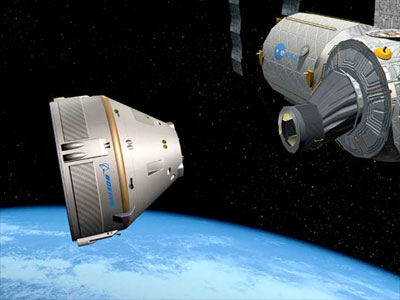
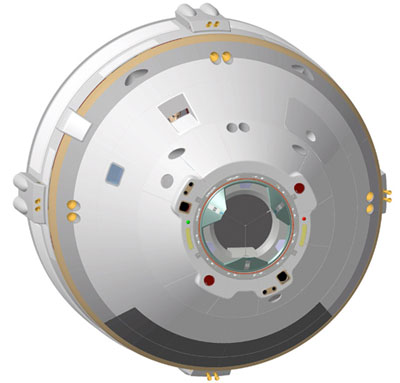
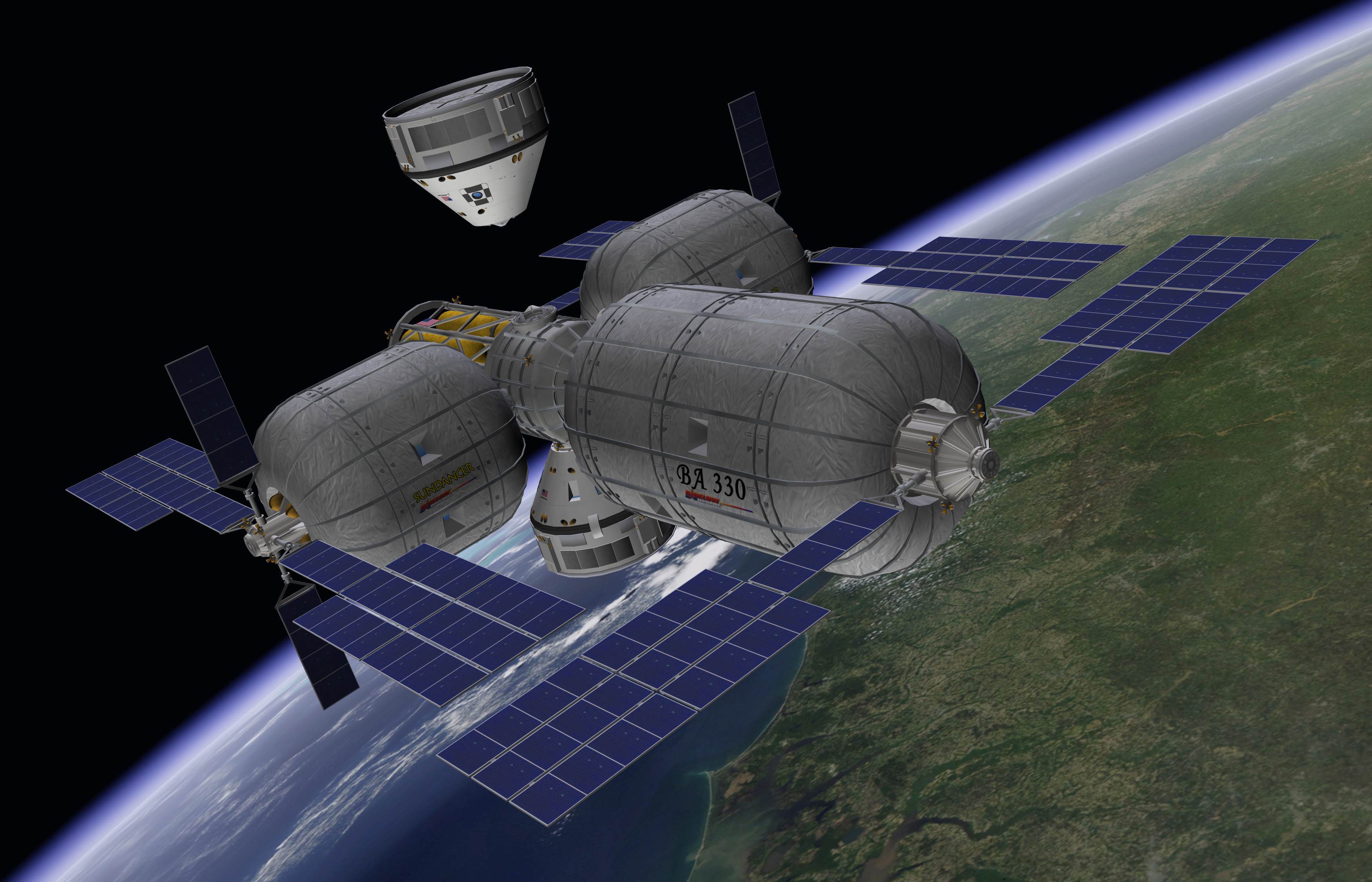
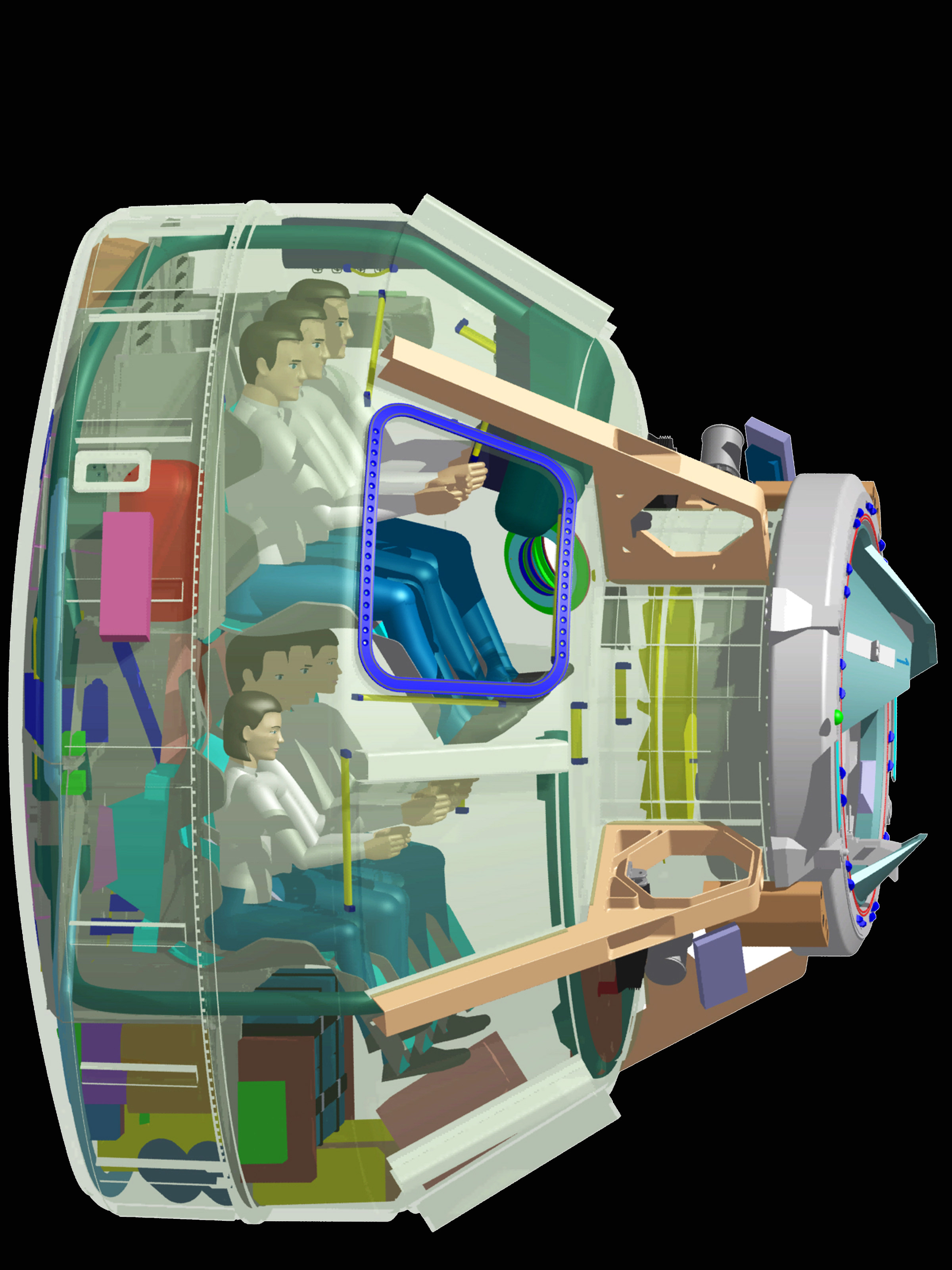
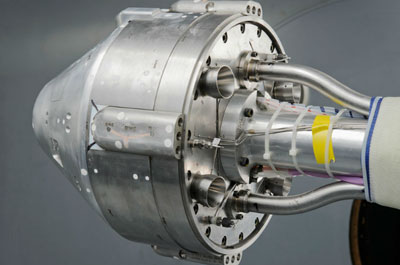
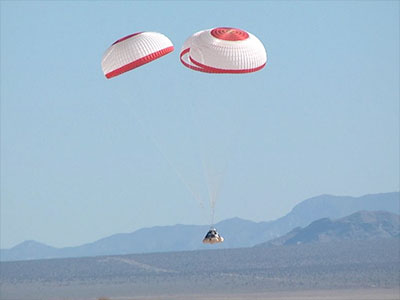
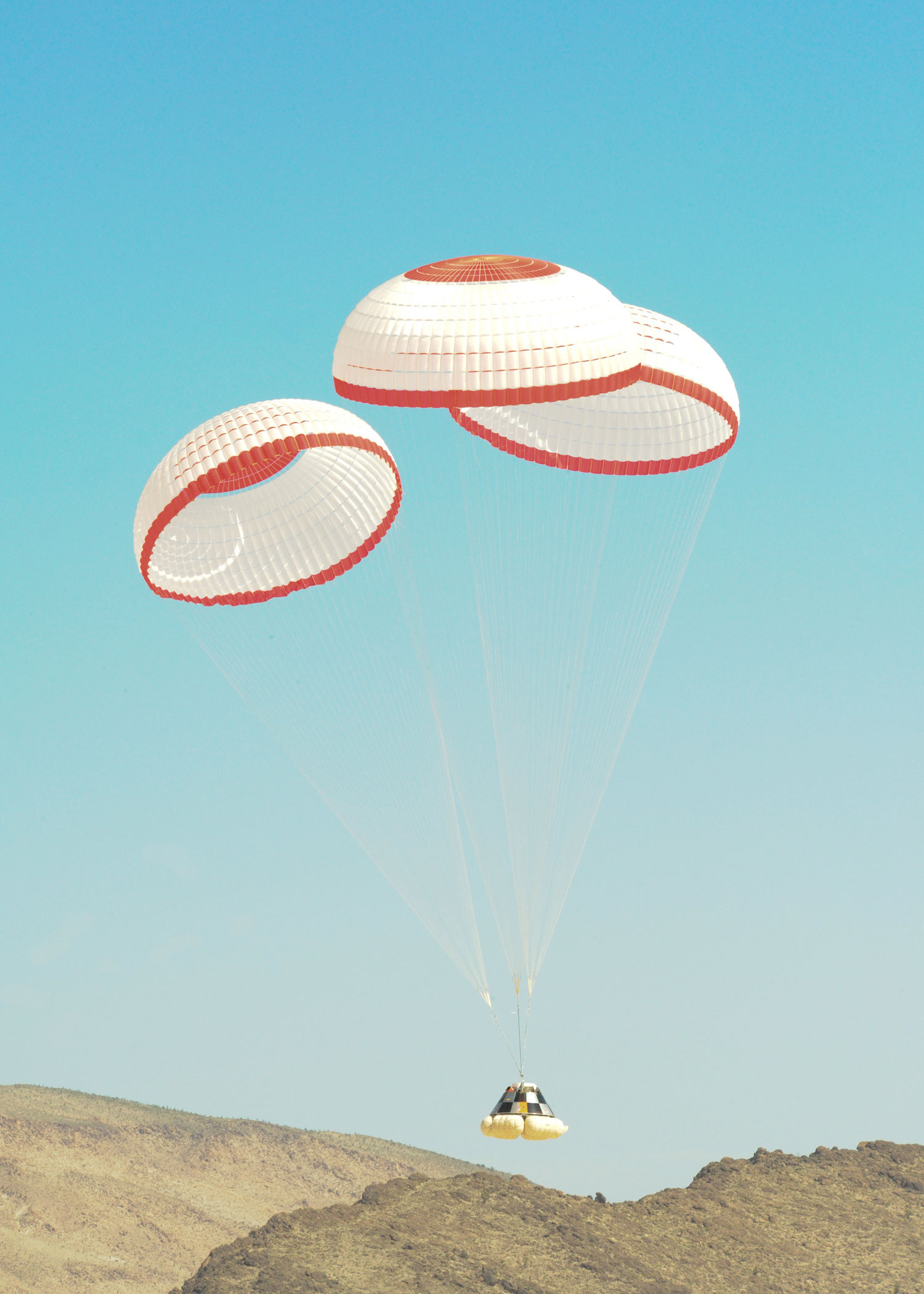
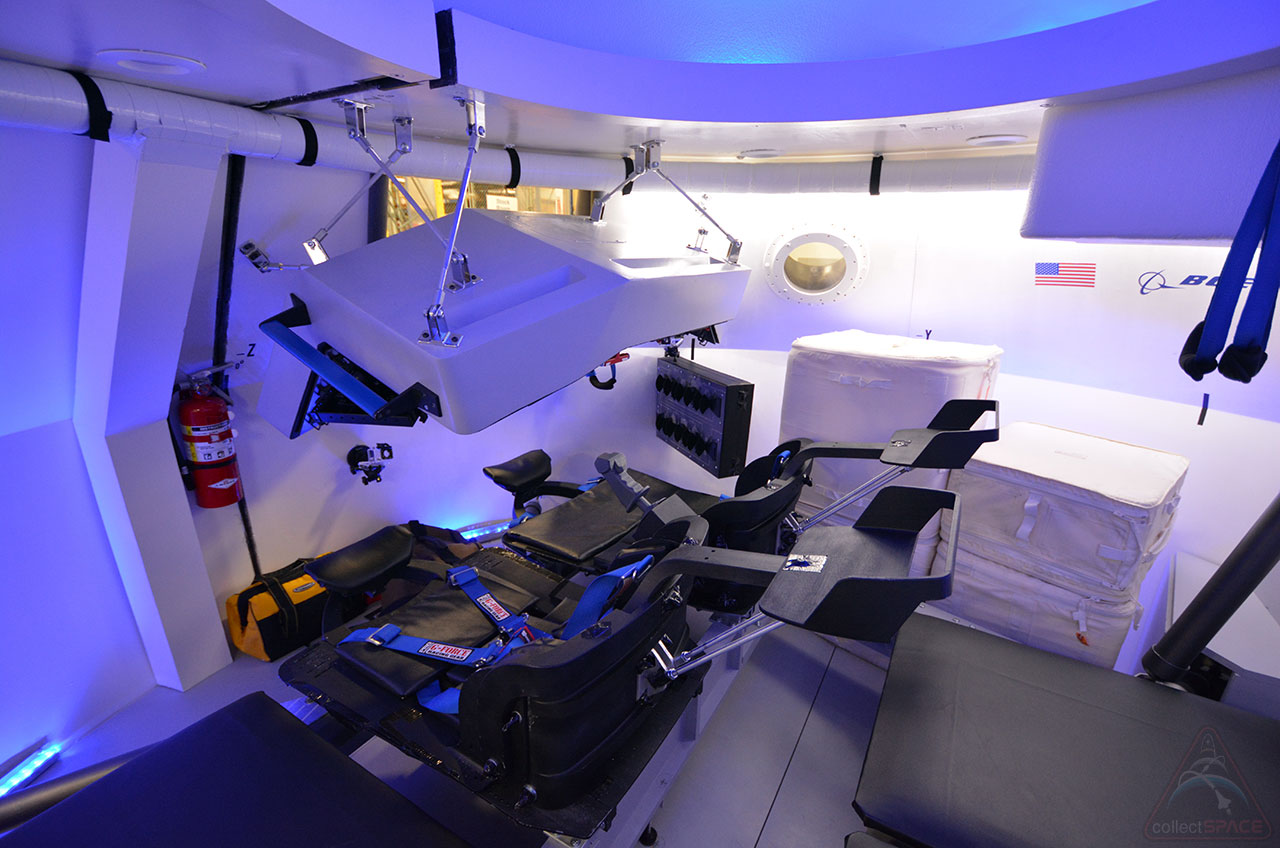
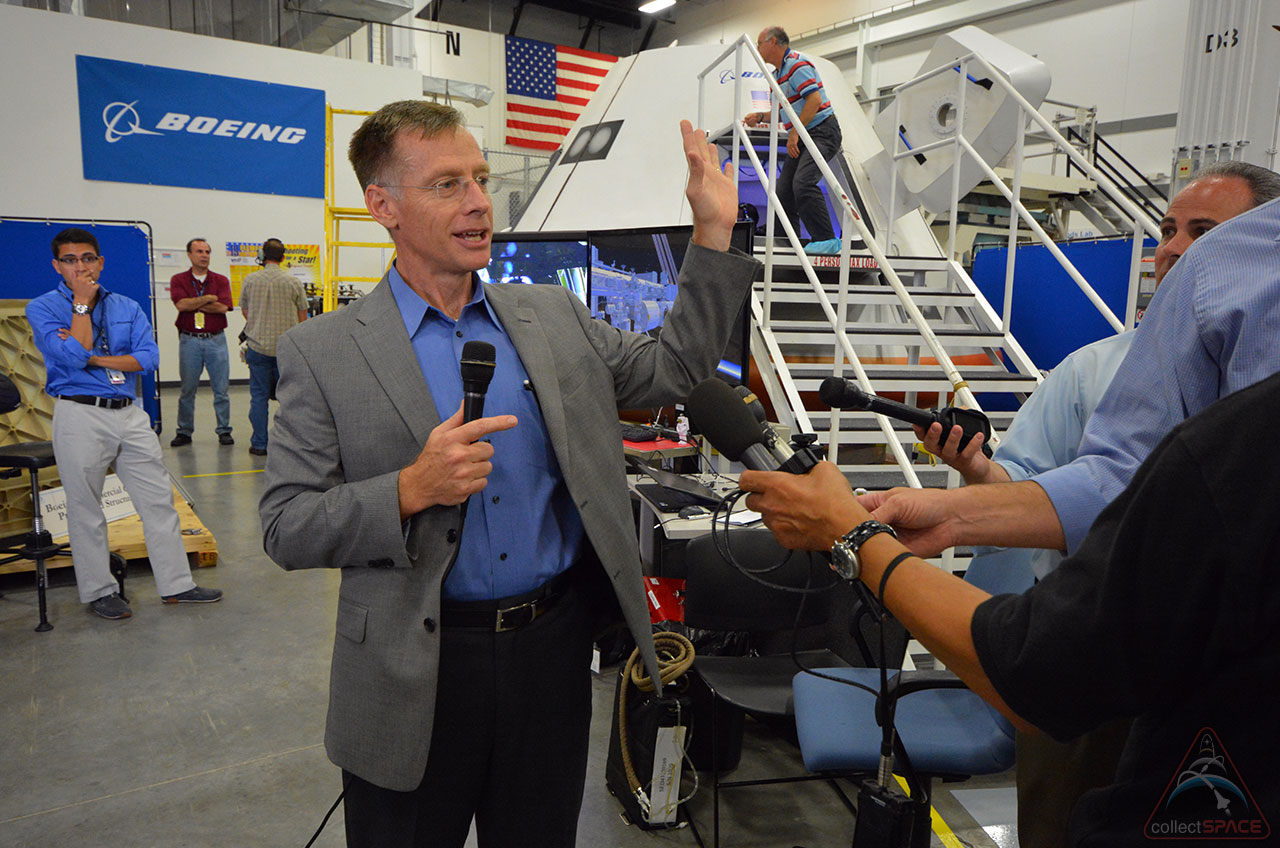
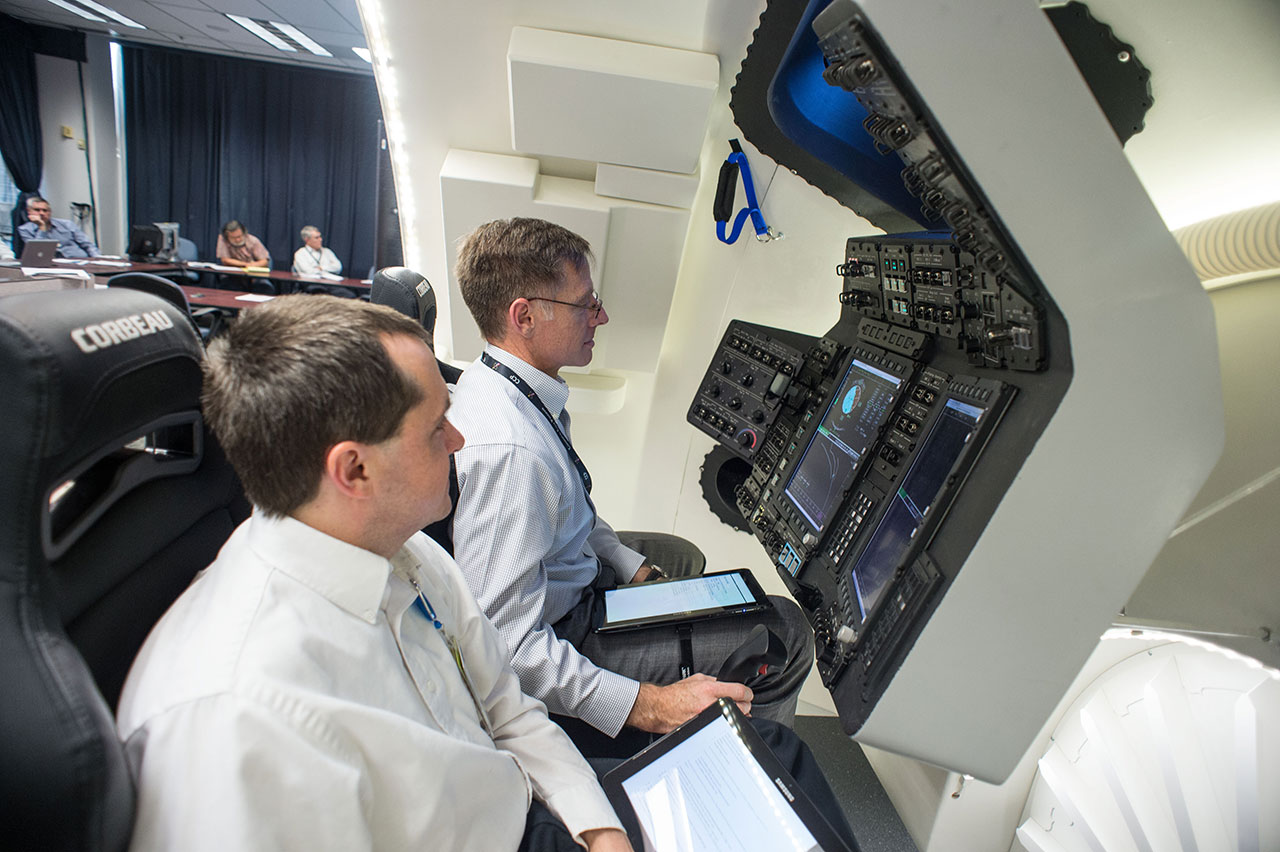
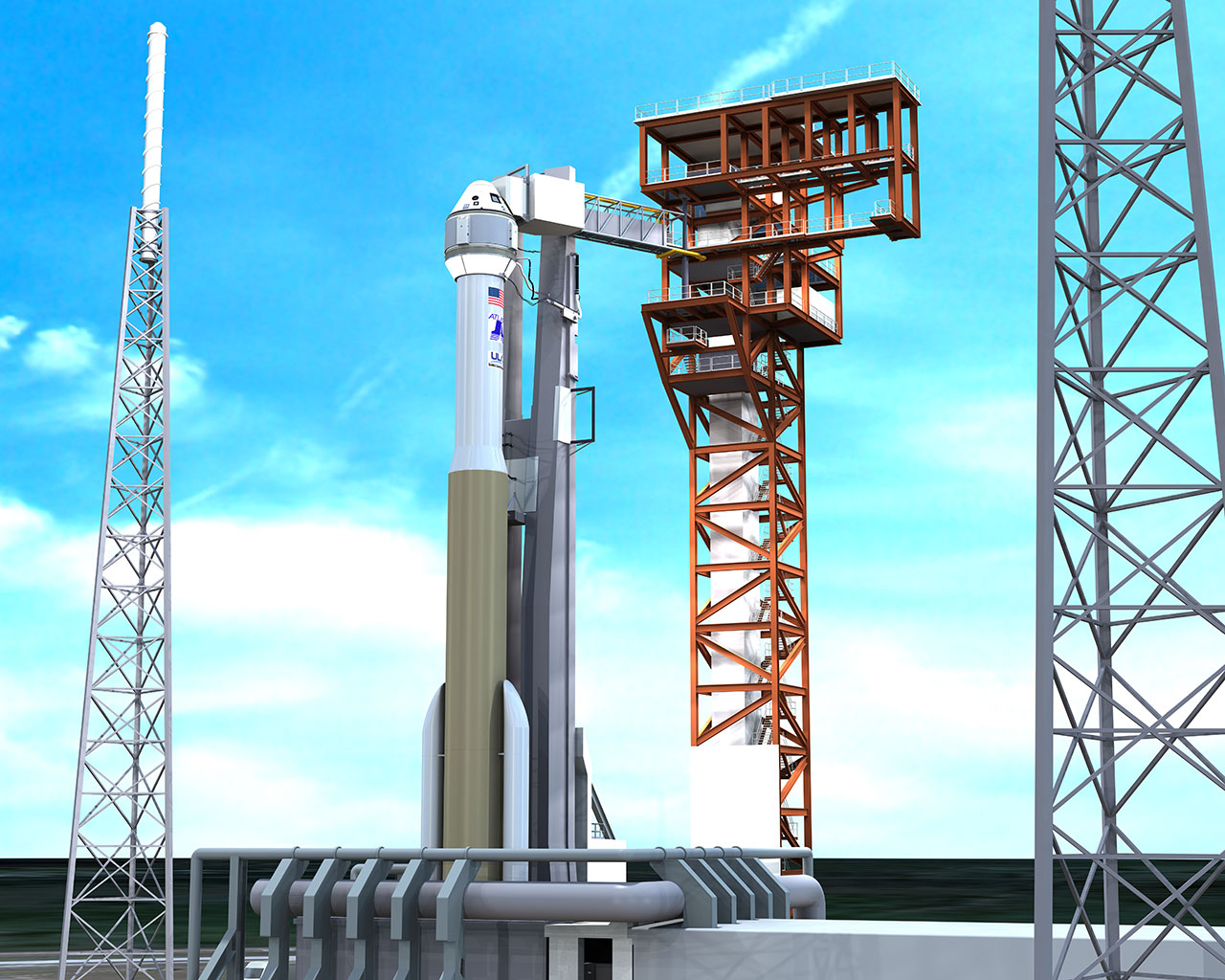
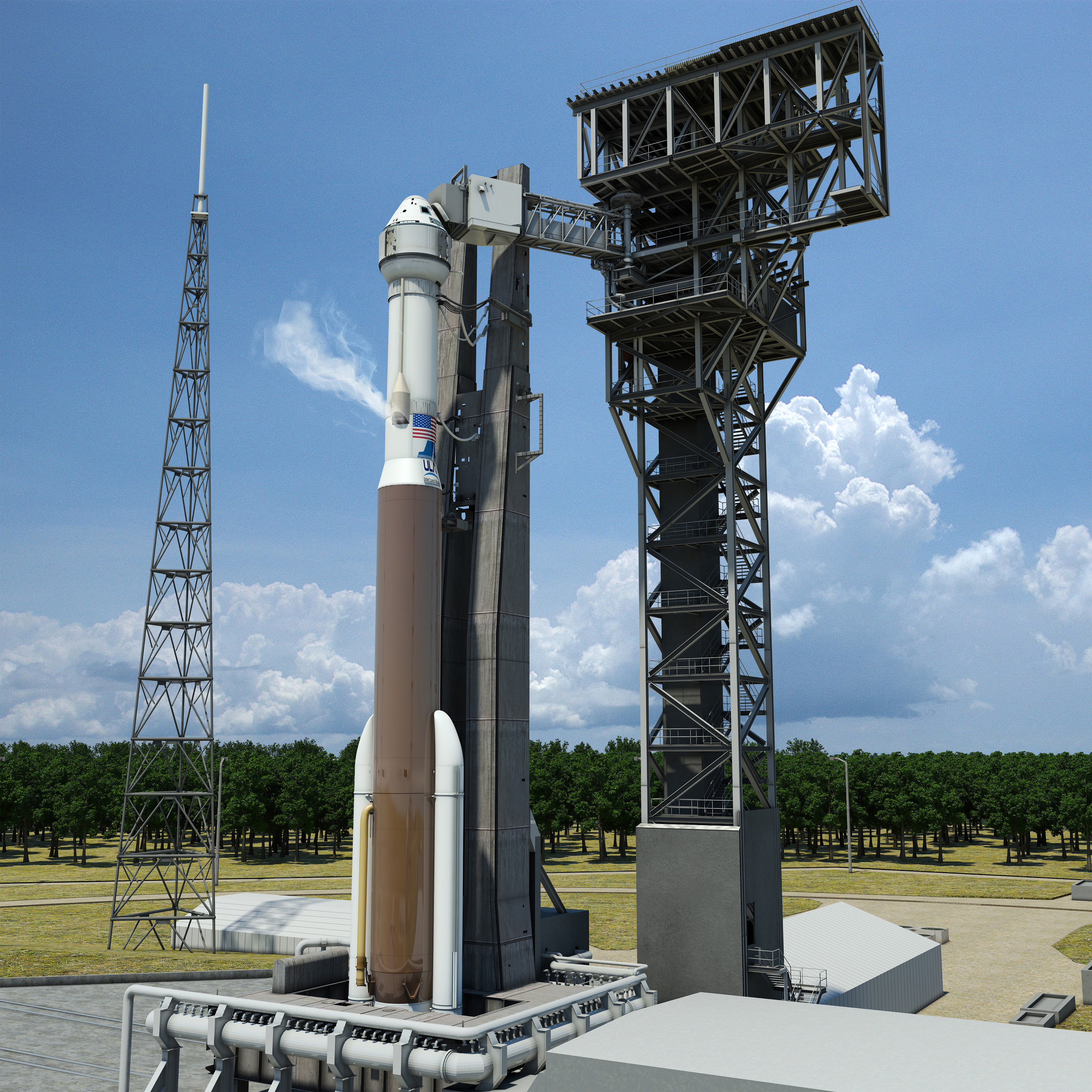

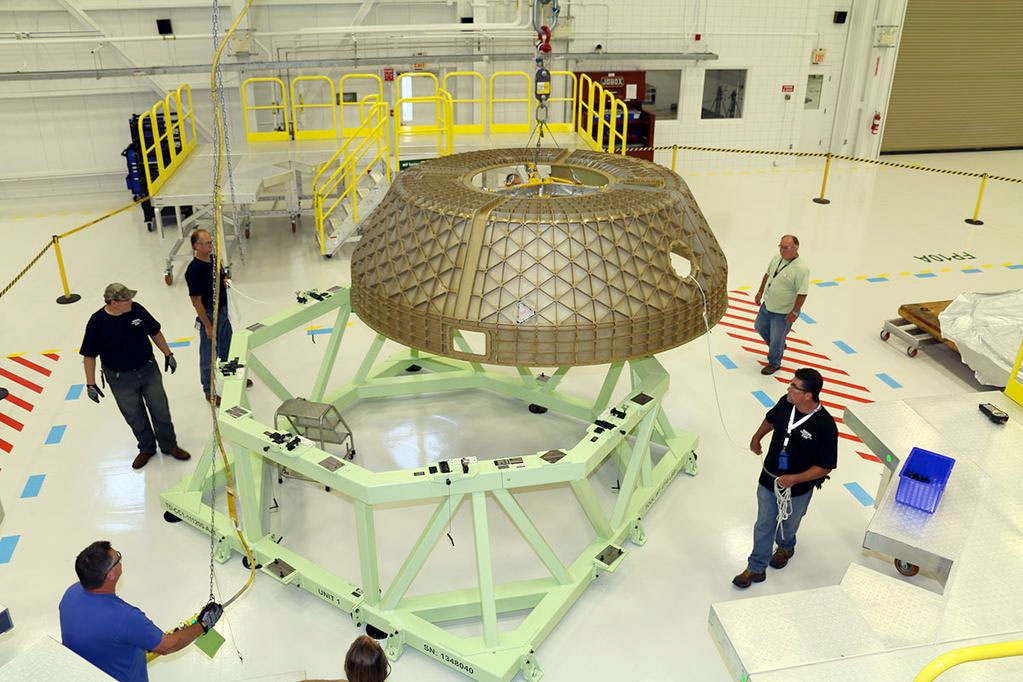
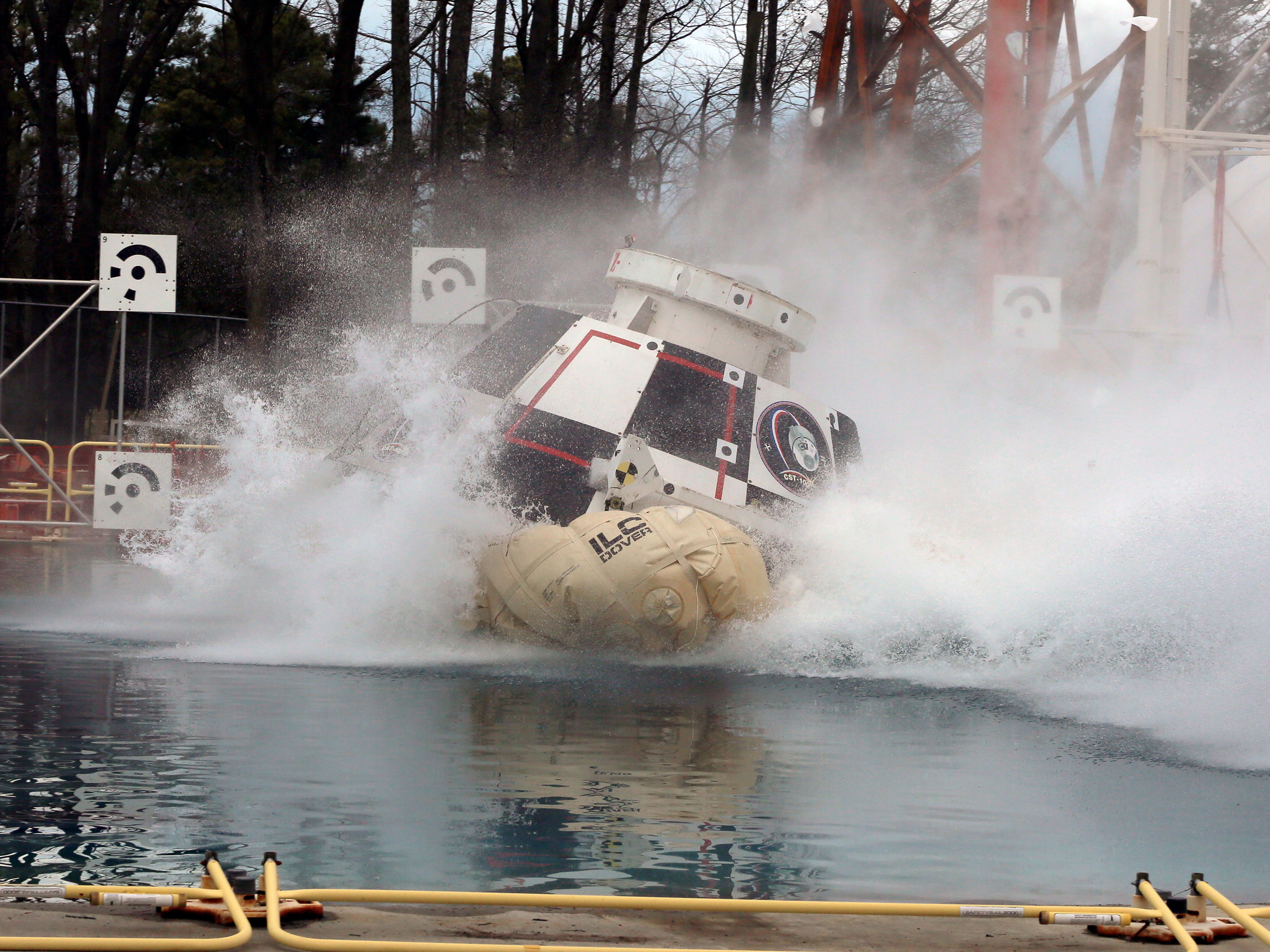
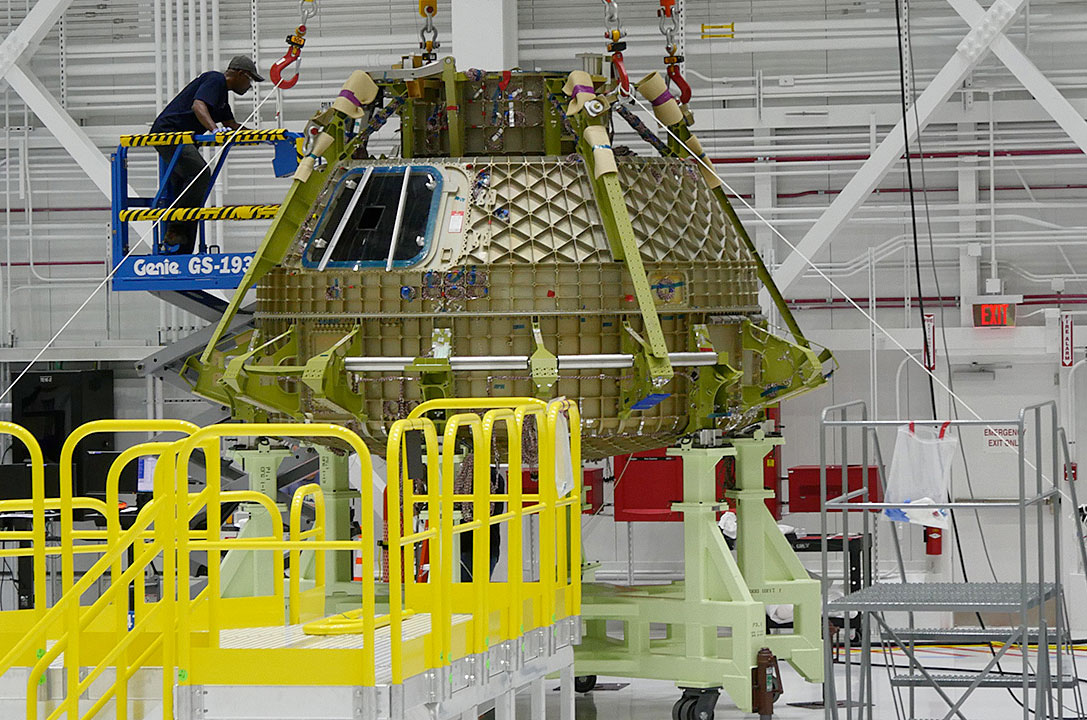
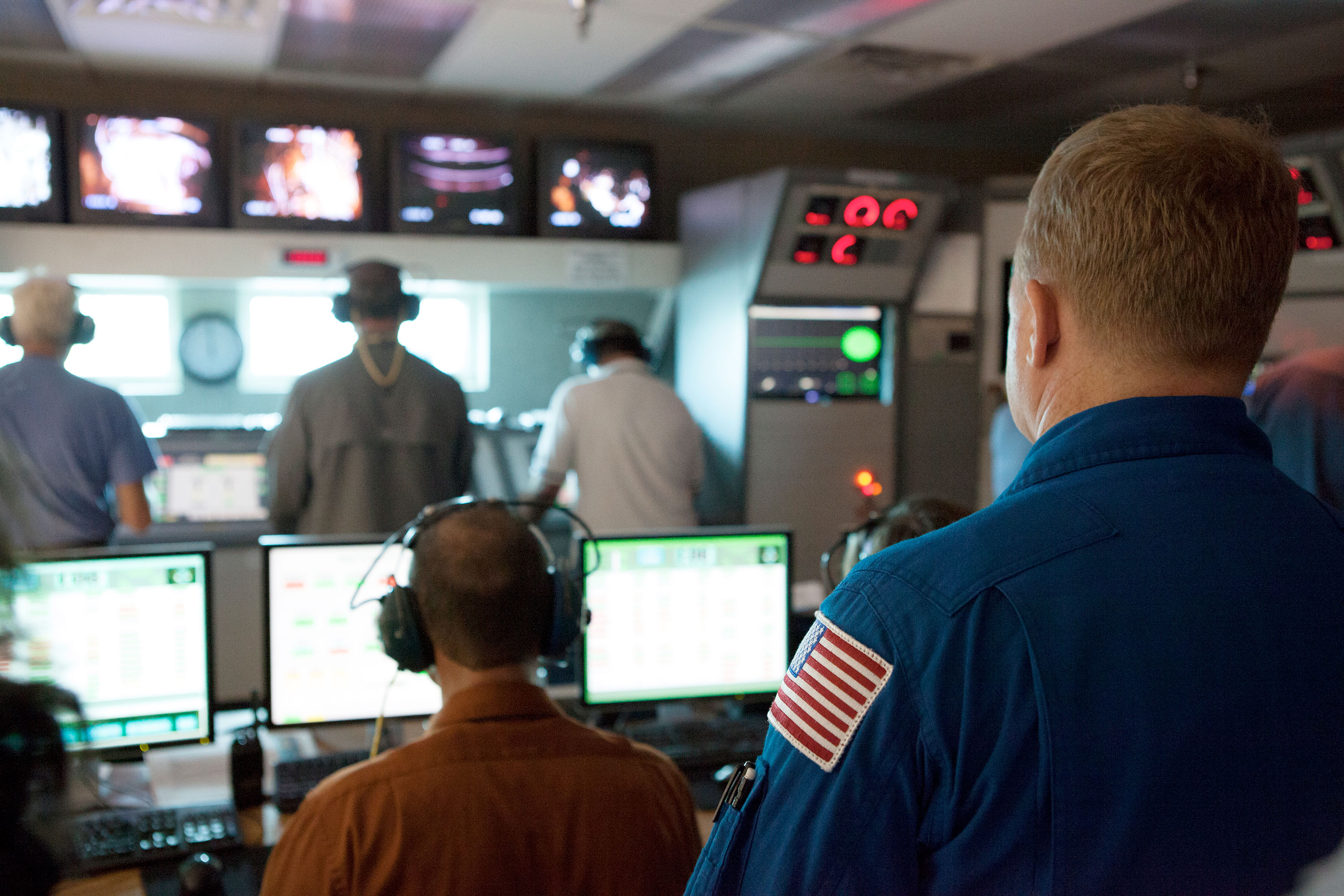
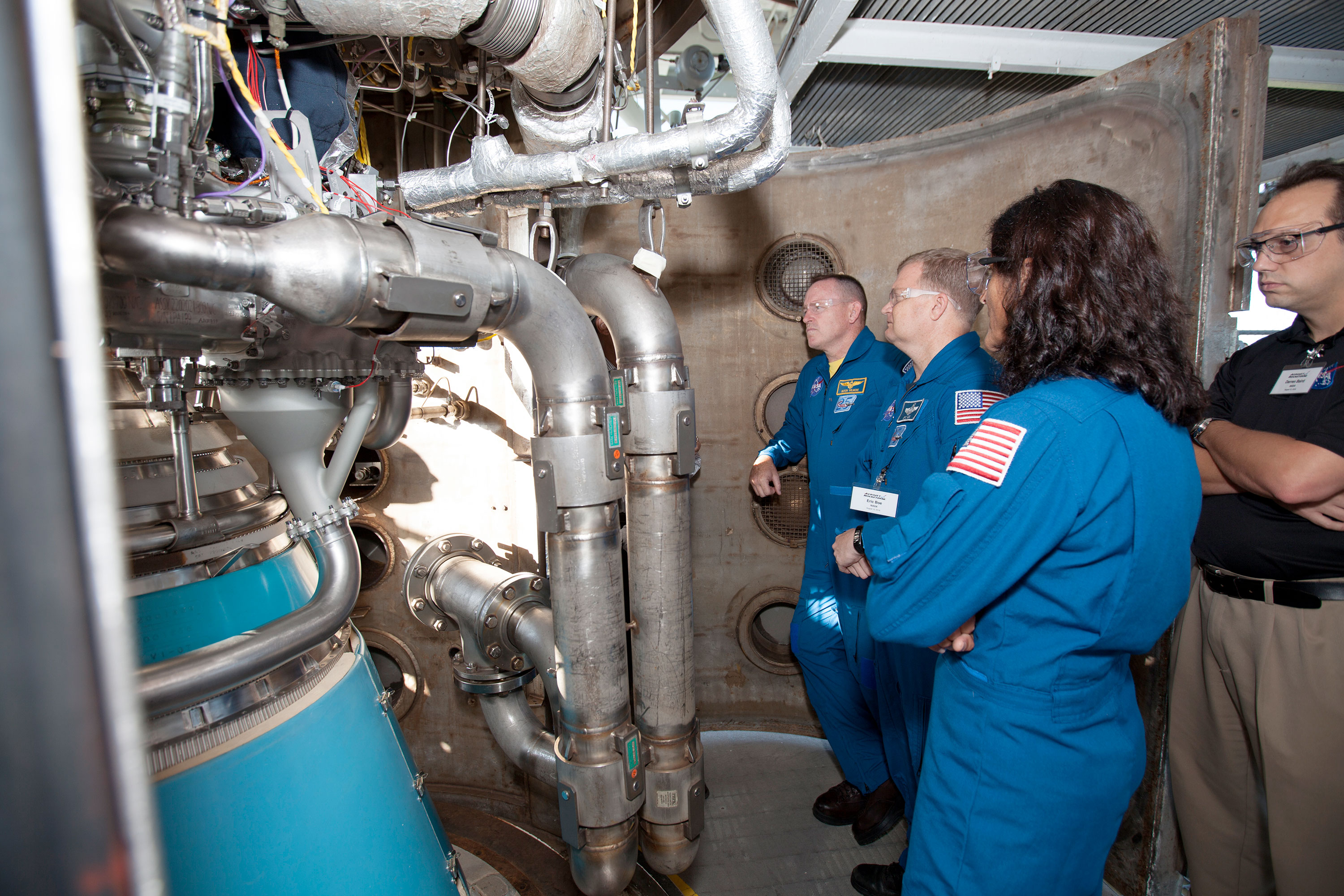
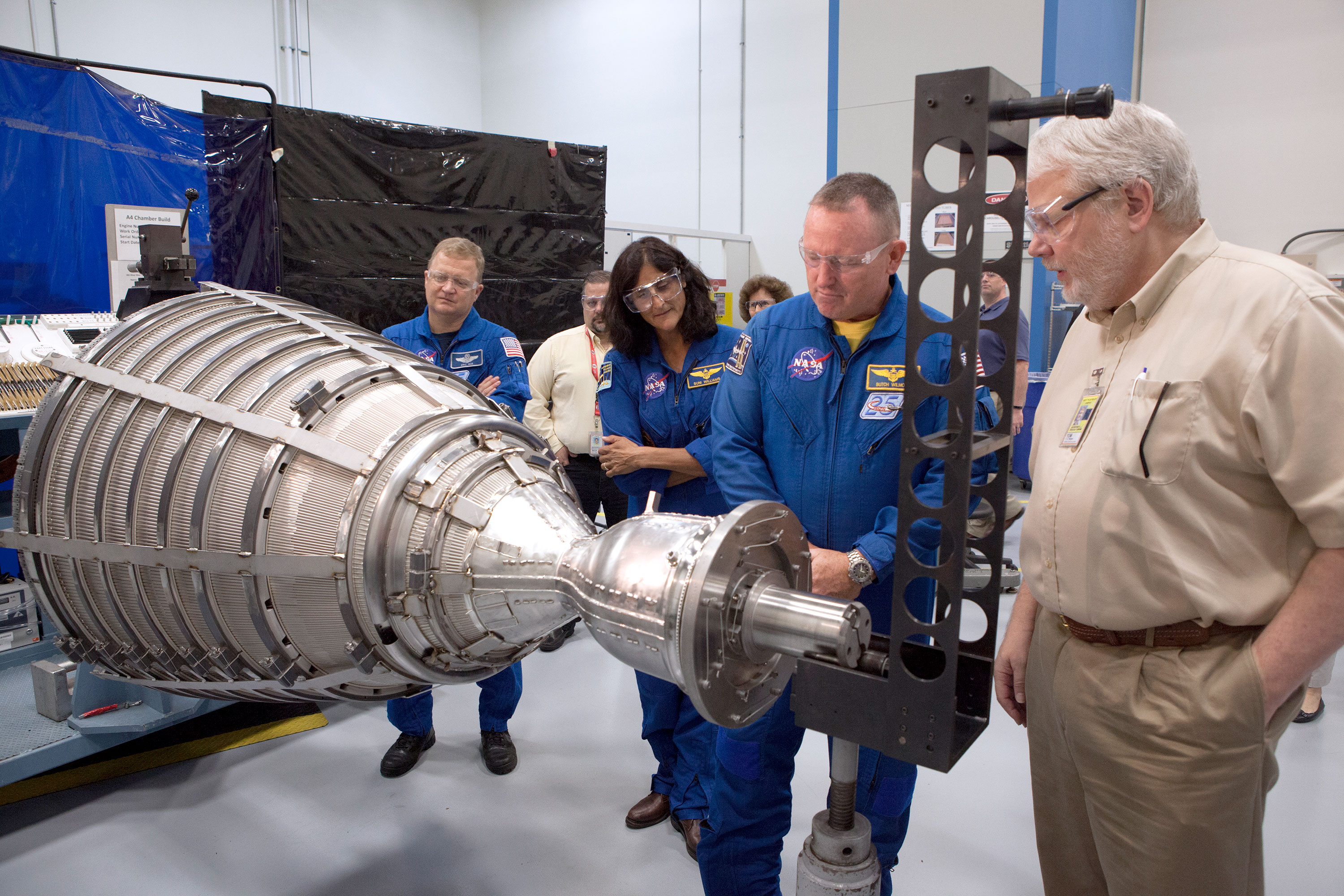
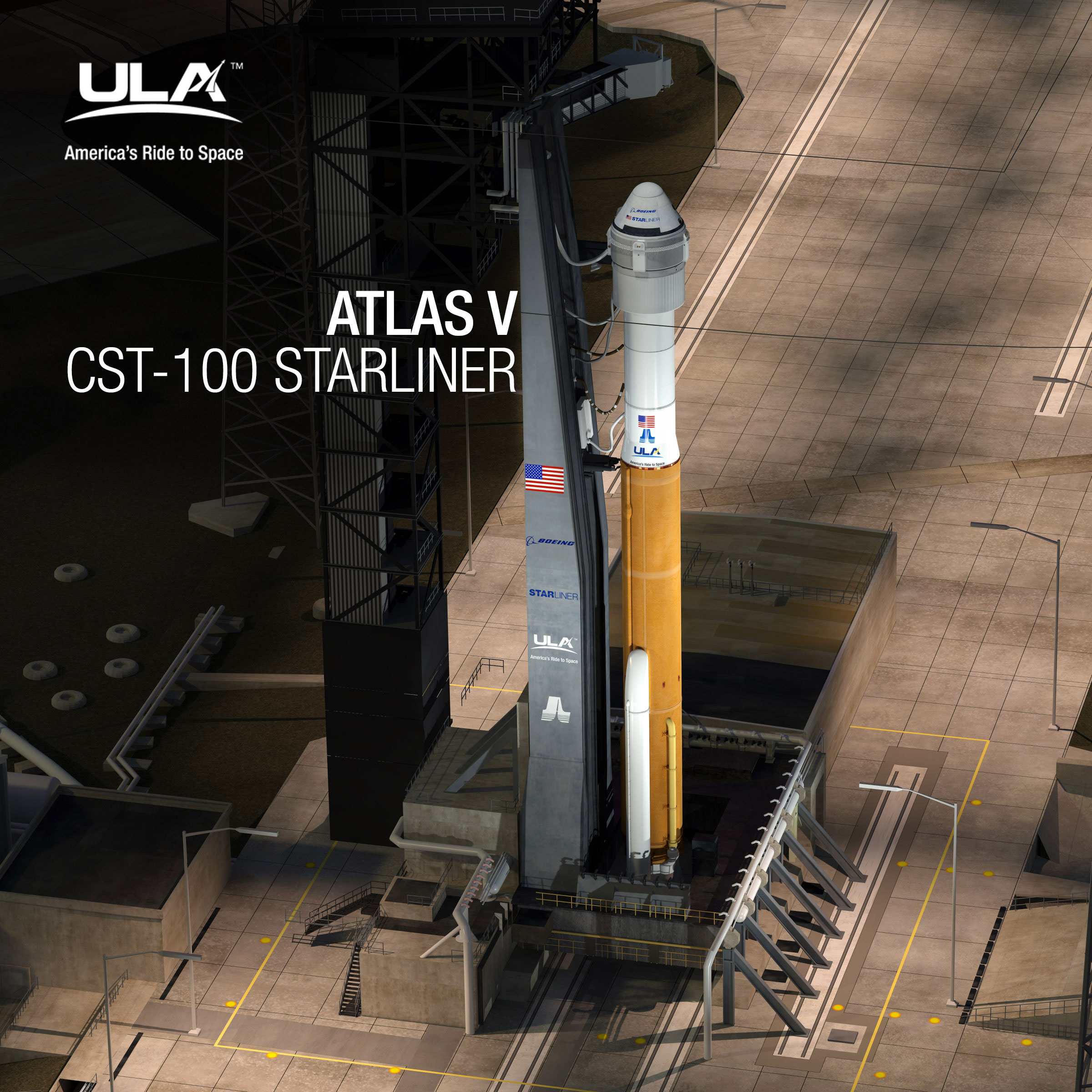

 advertisement