August 28, 2026 — The first astronauts to fly to the moon in more than 50 years have been awarded the Congressional Space Medal of Honor.
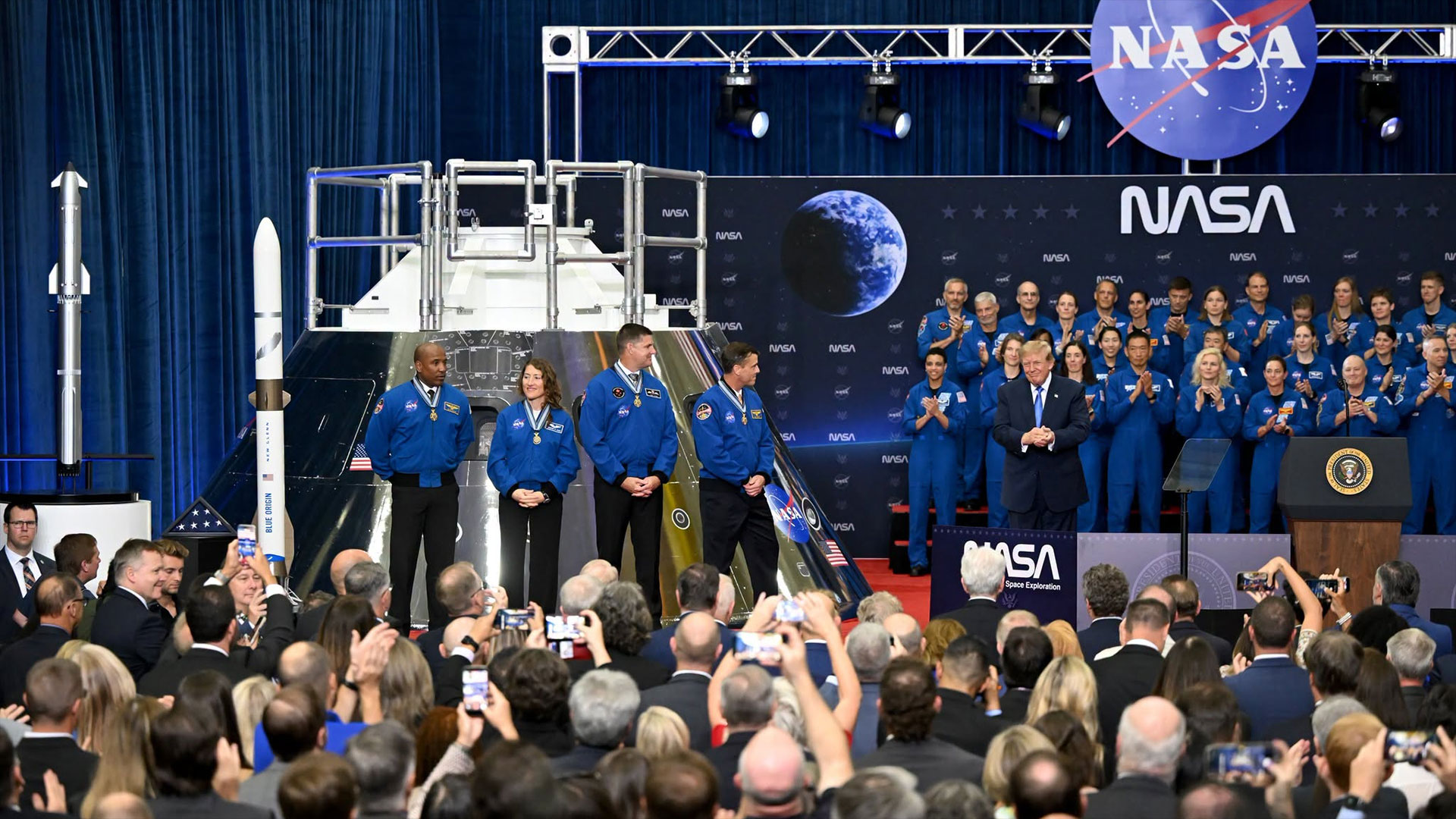
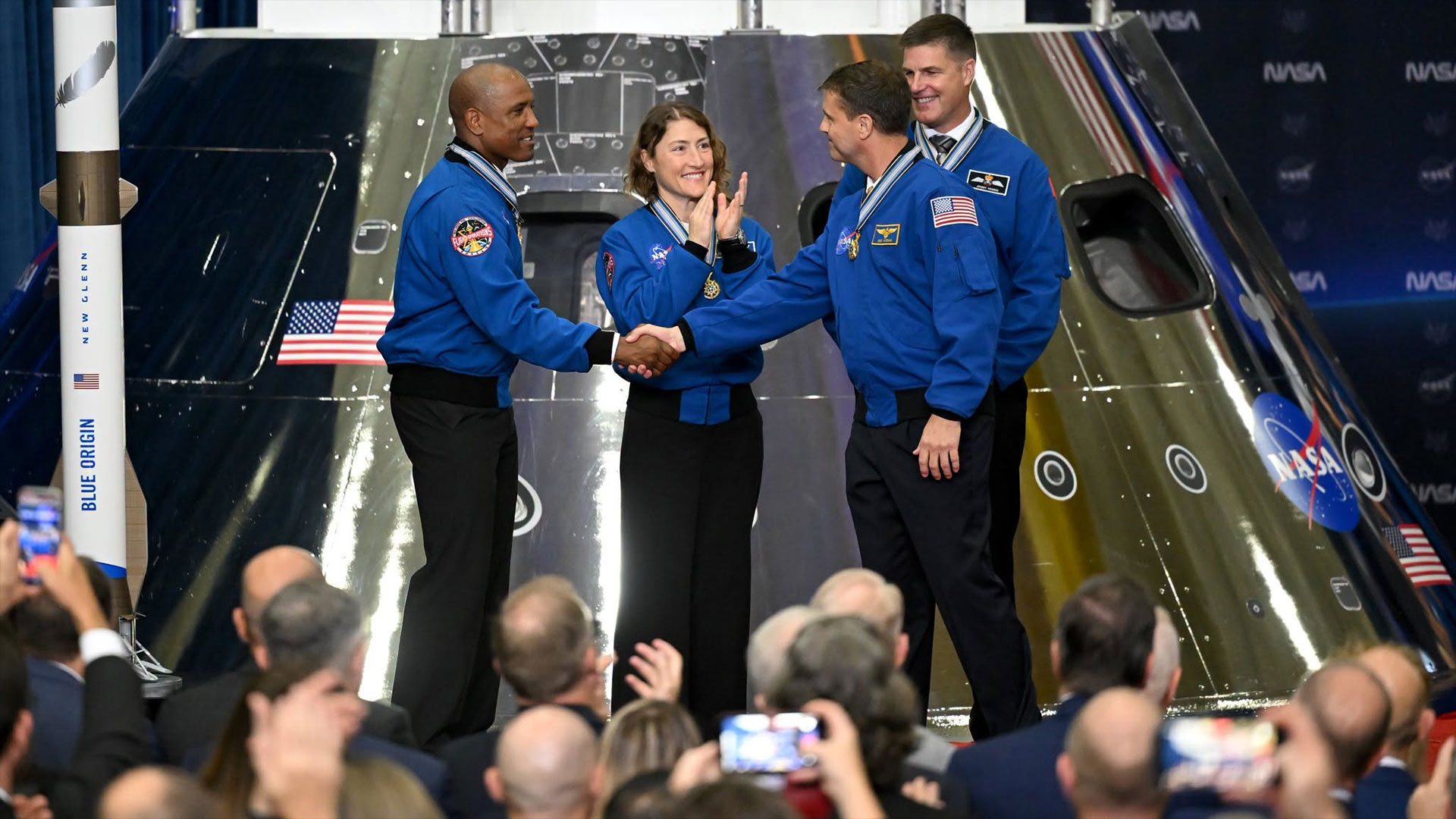
Artemis II commander Reid Wiseman, pilot Victor Glover and mission specialist Christina Koch, all of NASA, and Canadian Space Agency astronaut Jeremy Hansen were presented with the award by President Donald Trump and NASA Administrator Jared Isaacman at Johnson Space Center in Houston on Friday (Aug. 28). The Congressional Space Medal of Honor is the United States' highest distinction reserved for spaceflight veterans.
"Victor, Christina, Jeremy, what an honor to do this with you three," said Wiseman after accepting the medal. "Mr. President, it means a lot that you are here at the Johnson Space Center. It underscores the important work that is going on here at Mission Control in furthering human exploration, the home of our astronauts and the home of flight operations. Thank you for coming here today."
"We wear these four medals, and we are going to wear them with pride. But please know, it is not pride for ourselves that we feel, and I truly mean that. It is pride for the grit that our families had when we left this planet. It is pride for that team, this NASA team, that sent us on this mission, and it is pride for the international community that stood alongside us, got this vehicle ready, operated it and cheered us on," said Wiseman.
Despite its name, the Congressional Space Medal of Honor is awarded by the President in Congress's name only, based on recommendations by the NASA Administrator. Wiseman, Glover, Koch and Hansen are the 31st, 32nd, 33rd and 34th astronauts to be bestowed with the medal since it was first authorized by Congress in 1969.
'Exceptionally meritorious efforts'
The Congressional Space Medal of Honor is intended to recognize "any astronaut who in the performance of his or her duties has distinguished himself or herself by exceptionally meritorious efforts and contributions to the welfare of the nation and mankind." It was first given to six Mercury, Gemini and Apollo veterans in 1978.
The first honorees included Alan Shepard, the first American to fly into space; John Glenn, the first American to orbit Earth; Virgil "Gus" Grissom, commander of the ill-fated Apollo 1 crew; Frank Borman, commander on Apollo 8, the first mission to orbit the moon; Neil Armstrong, the first person to walk on the moon; and Charles "Pete" Conrad, commander of the first crew to live on Skylab, the first U.S. space station.
Other recipients were James Lovell, the commander of the ill-fated Apollo 13 mission; Thomas Stafford, the American commander of the joint Apollo-Soyuz Test Project; John Young and Robert Crippen, the crew of first space shuttle mission; Shannon Lucid, who set a record for the longest spaceflight by a woman aboard Russia's former space station Mir; William Shepherd, the first commander of the International Space Station; and the fallen Apollo 1, STS-51L (space shuttle Challenger) and STS-107 (Columbia) crew members, who died in 1967, 1986 and 2003, respectively.
The most recent awardees prior to the Artemis II crew, Doug Hurley and Bob Behnken, were honored in 2023 for being the first NASA astronauts to launch on a commercial spacecraft.
Farthest and firsts
The Artemis II astronauts were the first crew to fly to the moon since the Apollo 17 astronauts in December 1972.
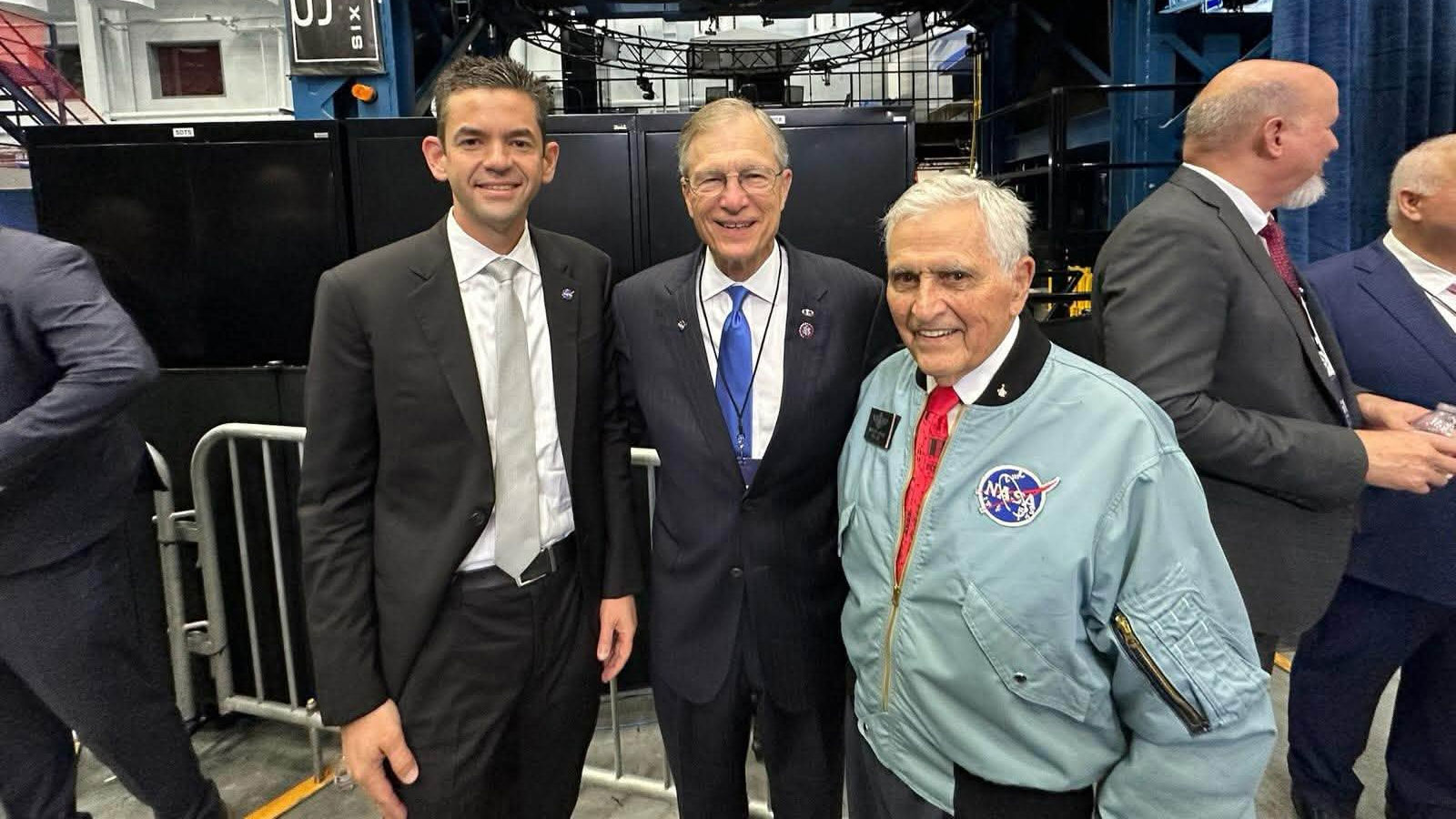
"The Artemis. II crew has just done an outstanding job of beginning the process that we went through almost 60 years ago now, in order to land on the moon," said Harrison Schmitt, who served as Apollo 17's lunar module pilot, said at Friday's ceremony. "Apollo 17 [was] the most productive lunar exploration mission that we have ever had, soon to be surpassed by Artemis."
Wiseman, Glover, Koch and Hansen were also honored for setting a new record for the farthest distance from Earth reached by humans. Glover and Koch were the first Black and first woman, respectively, to fly by the moon. Hansen was the first Canadian and first non-American to leave low Earth orbit.
"Today we're proudly awarding the Congressional Space Medal of Honor to the remarkable crew of Artemis II. Please join me in congratulating commander Reed Weissman, pilot Victor Glover, mission specialist Christina Koch and mission specialist Jeremy Hanson. Great people," said Trump. "I want to salute all of the engineers and scientists, launch and landing specialists and everyone at NASA who helped make this mission a great success."
The Artemis II astronauts have also been put forth to receive the Congressional Gold Medal, the highest civilian honor awarded in the United States alongside the Presidential Medal of Freedom. The Artemis II Congressional Gold Medal Act was introduced in late June and is awaiting a vote in both the U.S. Senate and U.S. House of Representatives. |
|
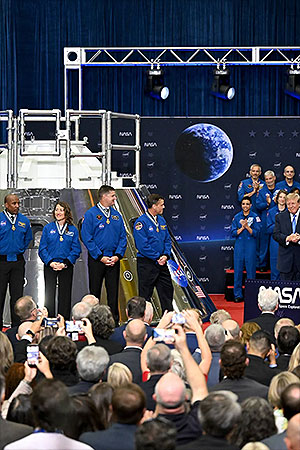
The Artemis II crew, from the left: Victor Glover, Christina Koch, Jeremy Hansen and Reid Wiseman seen after President Donald Trump bestowed them with the Congressional Space Medal of Honor at the Johnson Space Center on Aug. 28, 2026. (NASA)
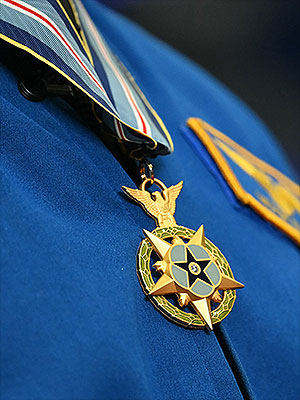
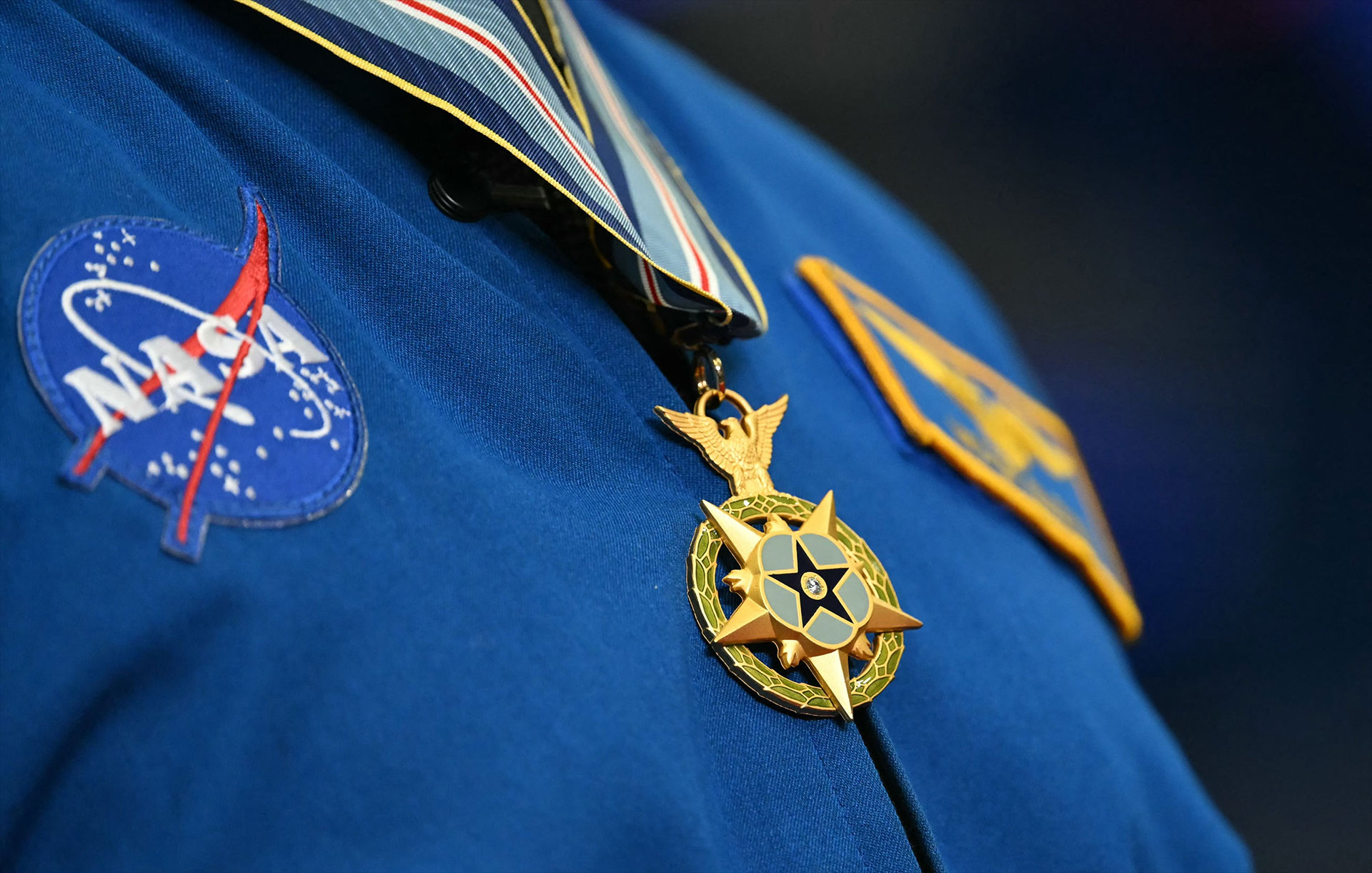
The Congressional Space Medal of Honor presented to Artemis II mission commander Reid Wiseman on Aug. 28, 2026. (AFP)
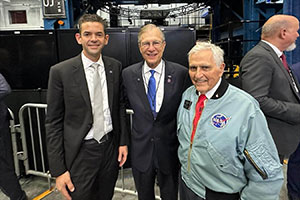
Apollo 17 astronaut Harrison Schmitt (at right) poses with NASA Administrator Jared Isaacman and Rep. Brian Babin (R-TX) at the Artemis II crew Congressional Space Medal of Honor ceremony at the Johnson Space Center on Aug. 28, 2026. (Rep. Brian Babin) |