Space Newsspace history and artifacts articlesMessagesspace history discussion forumsSightingsworldwide astronaut appearancesResourcesselected space history documents
advertisements
'Old neighborhood': Artemis II flies past Apollo 13 distance record
April 6, 2026
— NASA's Apollo and Artemis programs crossed historic paths on Monday (April 6), as the latter broke a record set by the earlier, and the legacy of earlier lived on with latter's promise for the future.
The first four astronauts to fly to the moon since the Apollo lunar missions ended, the Artemis II crew of Reid Wiseman, Victor Glover, Christina Koch of NASA and Jeremy Hansen with the Canadian Space Agency, flew past the farthest distance that humans have traveled beyond Earth — 248,655 miles (400,171 kilometers) — at 1:56 p.m. EDT (1756 GMT), or 4 days, 19 hours and 21 minutes into their flight.
The prior record holders, Jim Lovell, Fred Haise and Jack Swigert, reached the same "mile marker" on April 15, 1970, 3 days, 5 hours, and 8 minutes into their emergency return to Earth (by way of the moon) following a mid-flight explosion on board their Apollo 13 spacecraft.
Both missions followed free-return trajectories, such that their trips were shaped by the pull of gravity. Apollo 13 switched to that path because flight controllers were unsure about the integrity of the spacecraft's main engine. Artemis II planned for a free return from the start as it freed up propellant to perform tests of the Orion spacecraft "Integrity."
Unlike on Apollo 13, which reached the record distance and then began falling back to Earth, the Artemis II crew are continuing to travel deeper into space and are not expected to reach their maximum separation from Earth of 252,760 miles (406,778 km) until 7:05 p.m. EDT (2305 GMT) on Monday.
"From the cabin of Integrity here, as we surpass the furthest distance humans have ever traveled from planet Earth, we do so in honoring the extraordinary efforts and feats of our predecessors in human space exploration," said Hansen, speaking for the entire Artemis II crew. "We will continue our journey even further into space before Mother Earth succeeds in pulling us back to everything that we hold dear."
"But we most importantly choose this moment to challenge this generation and the next to make sure this record is not long lived," he said.
NASA's Artemis I Orion, which flew around the moon without astronauts in 2022, still holds the record for the farthest that any spacecraft designed for human travel has reached at 268,563 miles (432,210 km).
Lovell, who died in August 2025 at the age of 97, posthumously helped set the tone for the day's milestones through a message he recorded and Mission Control played back to wake the crew.
"Welcome to my old neighborhood," said Lovell as the recording began. "When Frank Borman and Bill Anders and I orbited the moon on Apollo 8, we got humanity's first up-close look at the moon and got a view of the home planet that inspired and united people around the world. I am proud to pass that torch on to you as you swing around the moon and lay the groundwork for missions to Mars for the benefit of all."
"It is historic day and I know how busy you will be, but do not forget to enjoy the view," Lovell said, concluding his message. "So, Reid, Victor, Christina and Jeremy, and all the great teams supporting you, good luck and godspeed from all of here on the good Earth."
Lovell was preceded in death by Borman (2023) and Anders (2024), as well as Swigert (1982), who flew on Apollo 13. Fred Haise is the only member of the Apollo 13 crew still alive today.
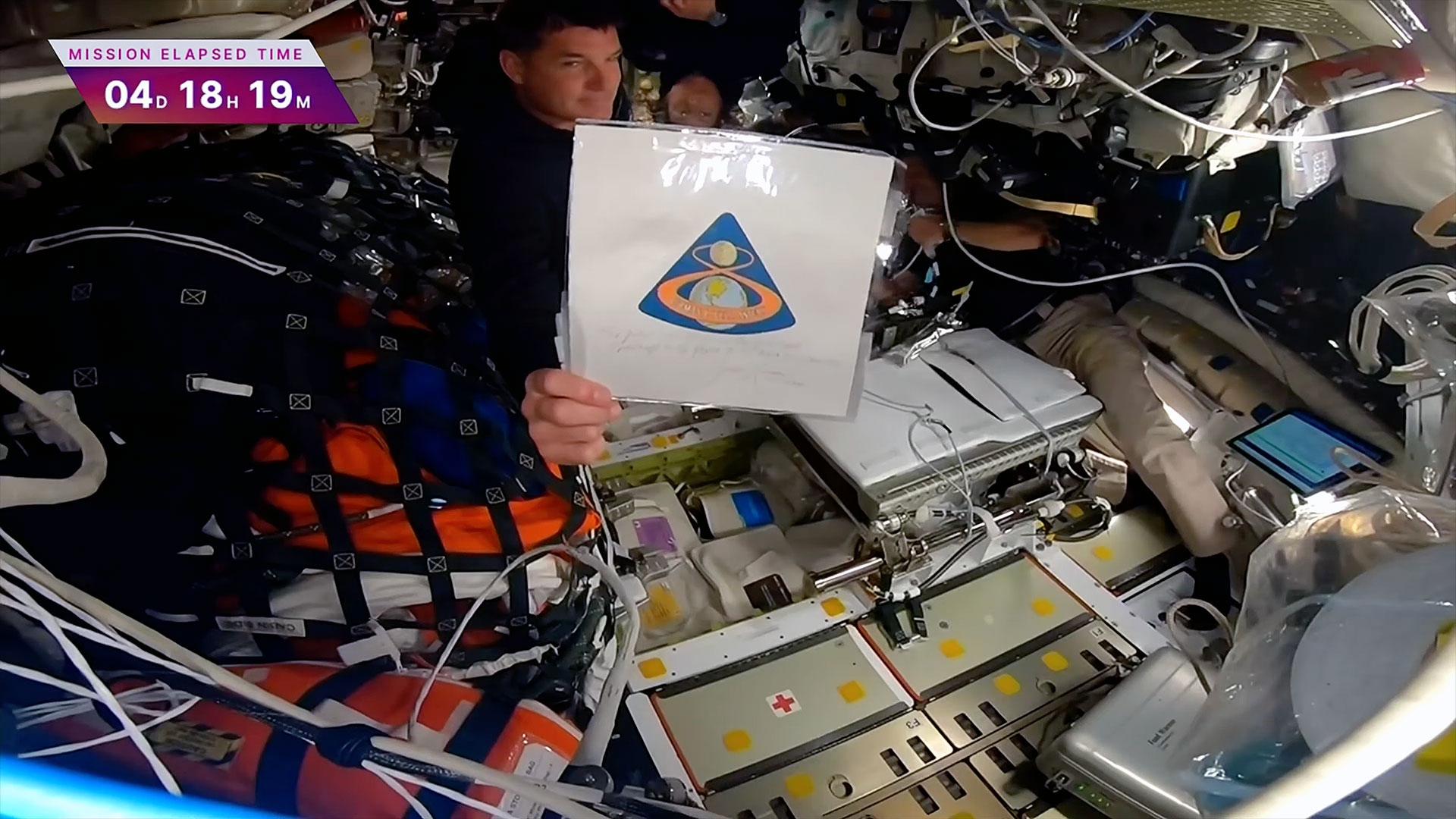
The Artemis II crew revealed that prior to their launch Lovell's family had given them an Apollo 8 patch that flew around the moon in 1968. The emblem was silkscreened onto Beta cloth, a fire-resistant glass-fiber fabric that was used to cover the Apollo astronauts' spacesuits.
"When this showed up from his family, we were completely honored," said Koch.
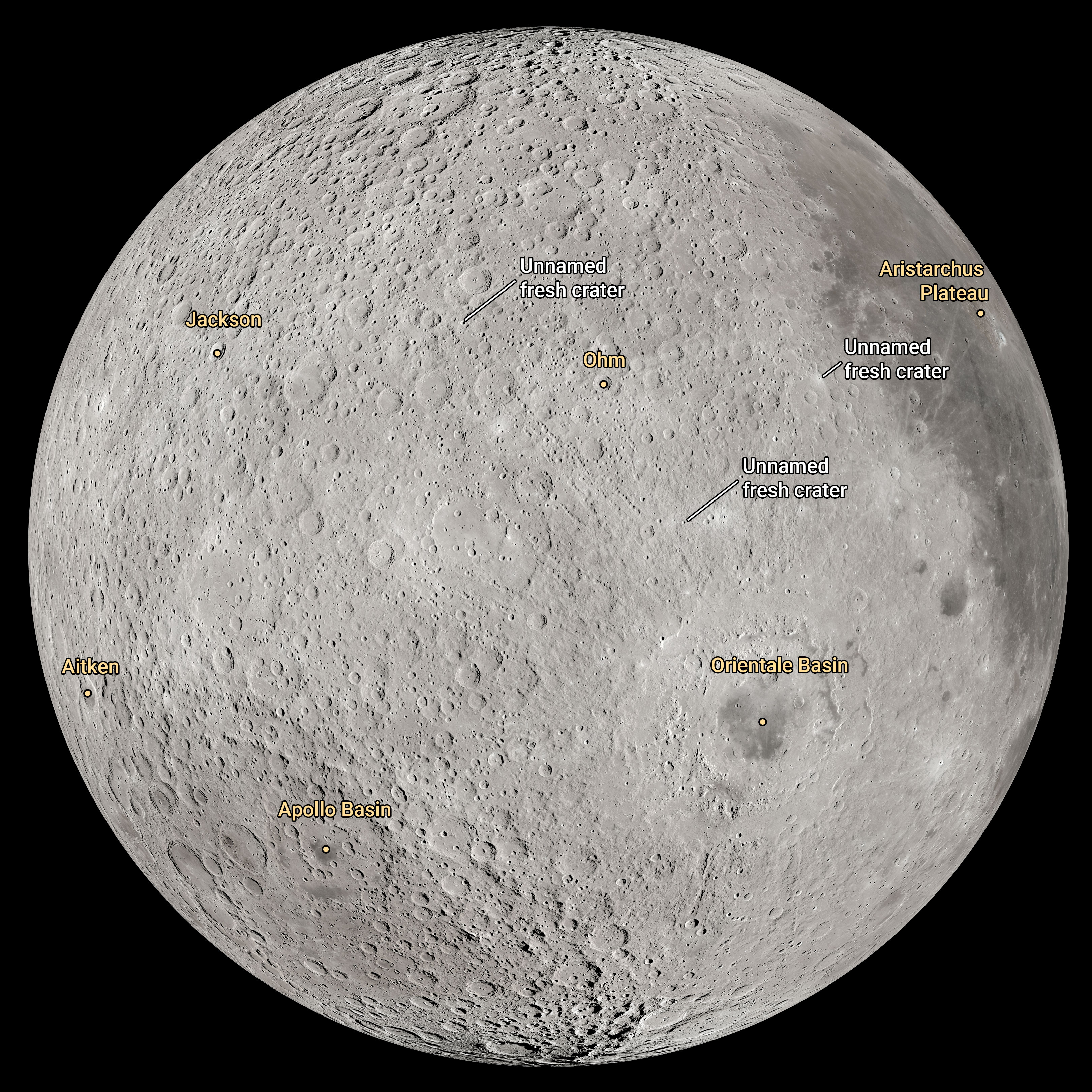
The Artemis II astronauts took the moment to also bestow some honors of their own, asking that two newly-formed, craters at the edge of the moon's near and far sides be named "Integrity" and "Carroll," the earlier after their spacecraft and the latter for Wiseman's lwife, who died of cancer in 2020.
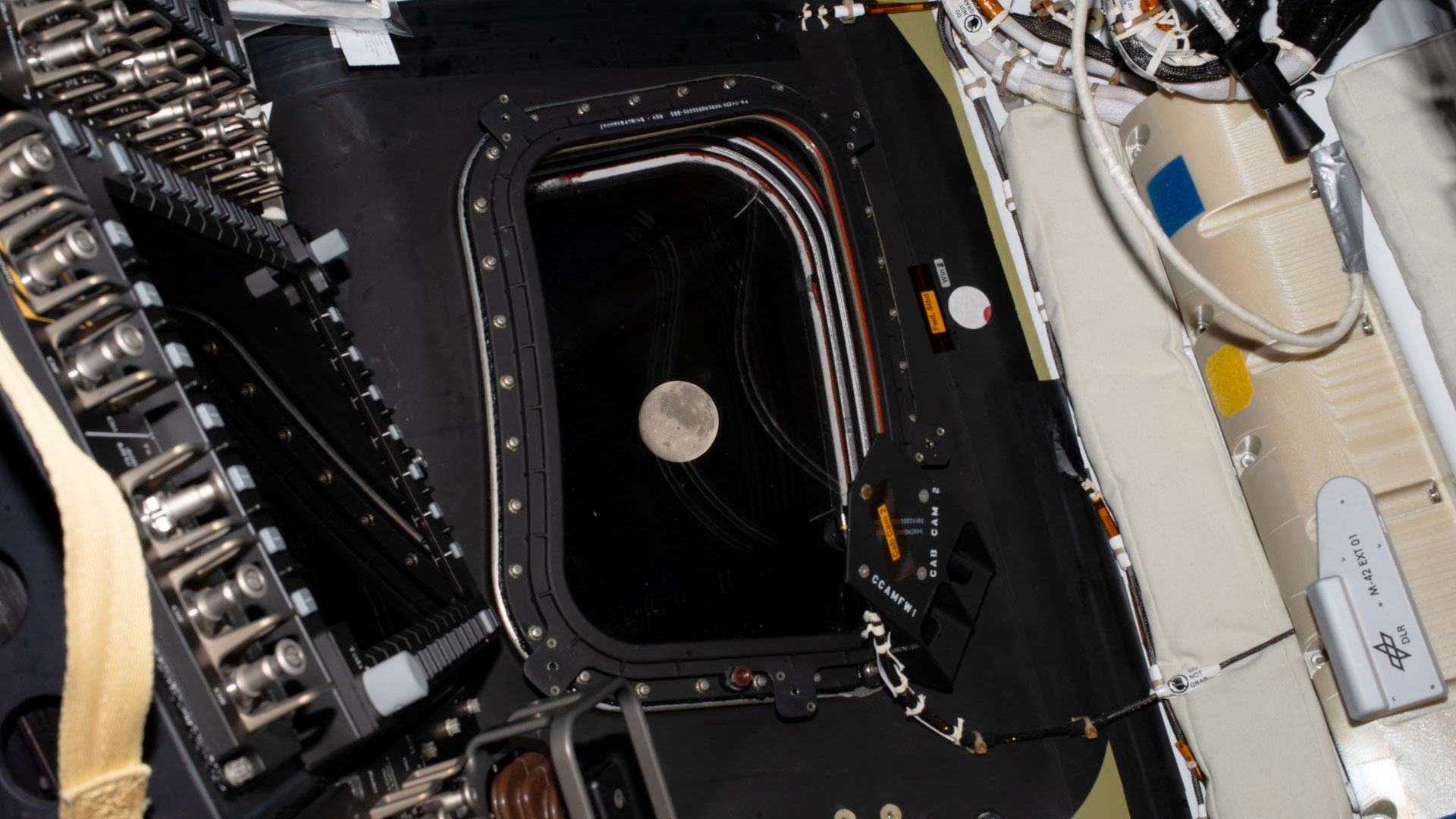
Before going to sleep on flight day 5, the Artemis II crew snapped this photo of the Moon, as it drew close in the window of their Orion spacecraft "Integrity," on April 6, 2026. (NASA)
Artemis II mission specialist Jeremy Hansen displays an Apollo 8 Beta cloth patch that has now twice flown the moon: once with the late Jim Lovell on Apollo 8 in 1968 and now on Integrity. (NASA)
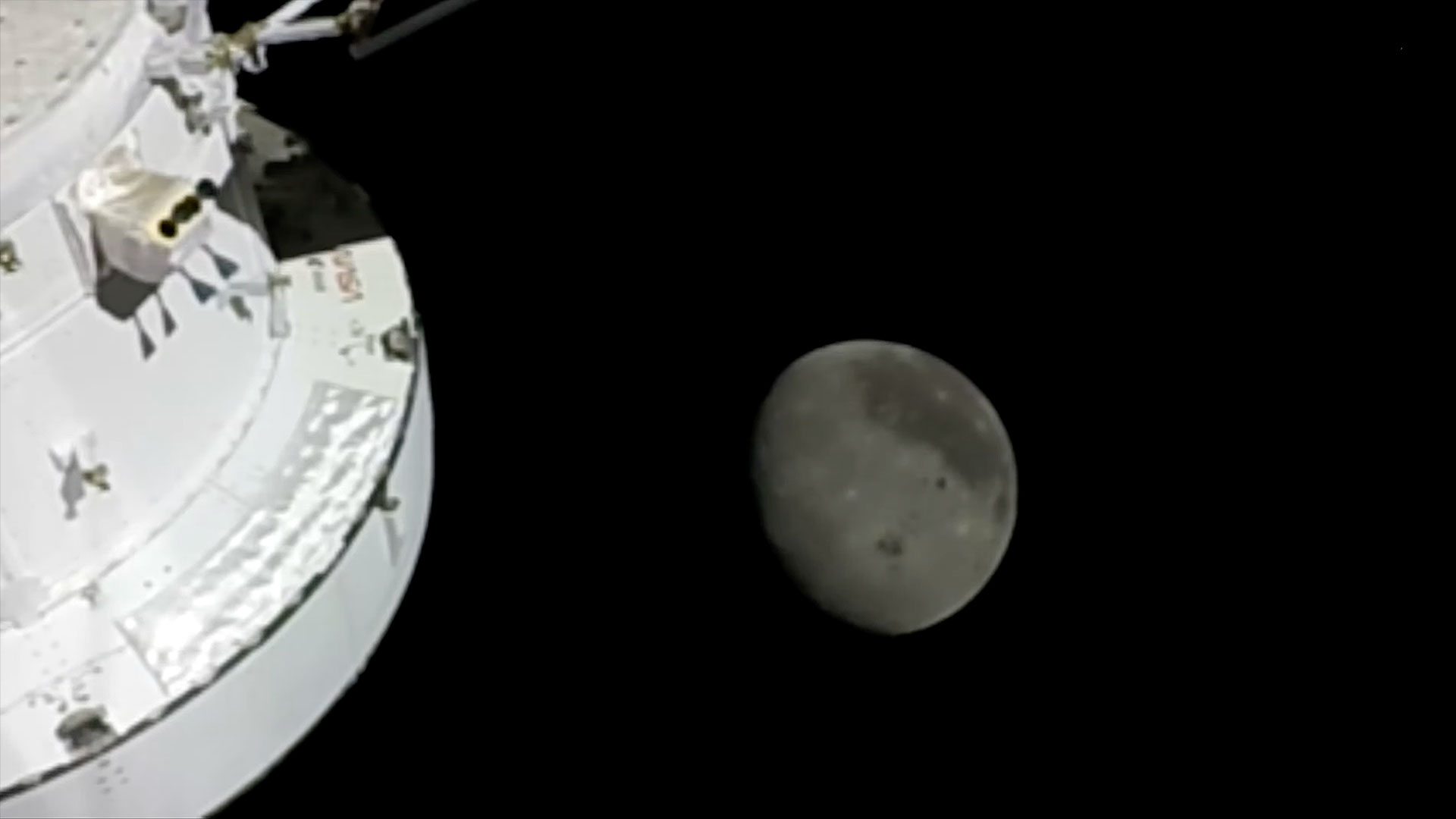
The Orion spacecraft "Integrity," with the Artemis II crew on board, continues to approach the Moon on April 6, 2026. In view are the Apollo 12 and Apollo 14 sites on the near side of the moon. (NASA)
The Artemis II crew described two small craters and suggested provisional names for them. Just northwest of Orientale basin, is a crater they would like to name Integrity after their spacecraft. Just northeast of that crater, the crew suggested a crater be designated Carroll in memory of Reid Weisman's wife. (NASA)