Space Newsspace history and artifacts articlesMessagesspace history discussion forumsSightingsworldwide astronaut appearancesResourcesselected space history documents
advertisements
Artemis II launches astronauts to moon for first time in over 50 years
Artemis II mission coverage presented with the support of
April 1, 2026
— Four astronauts have left Earth to fly by the moon for the first time in more than half a century.
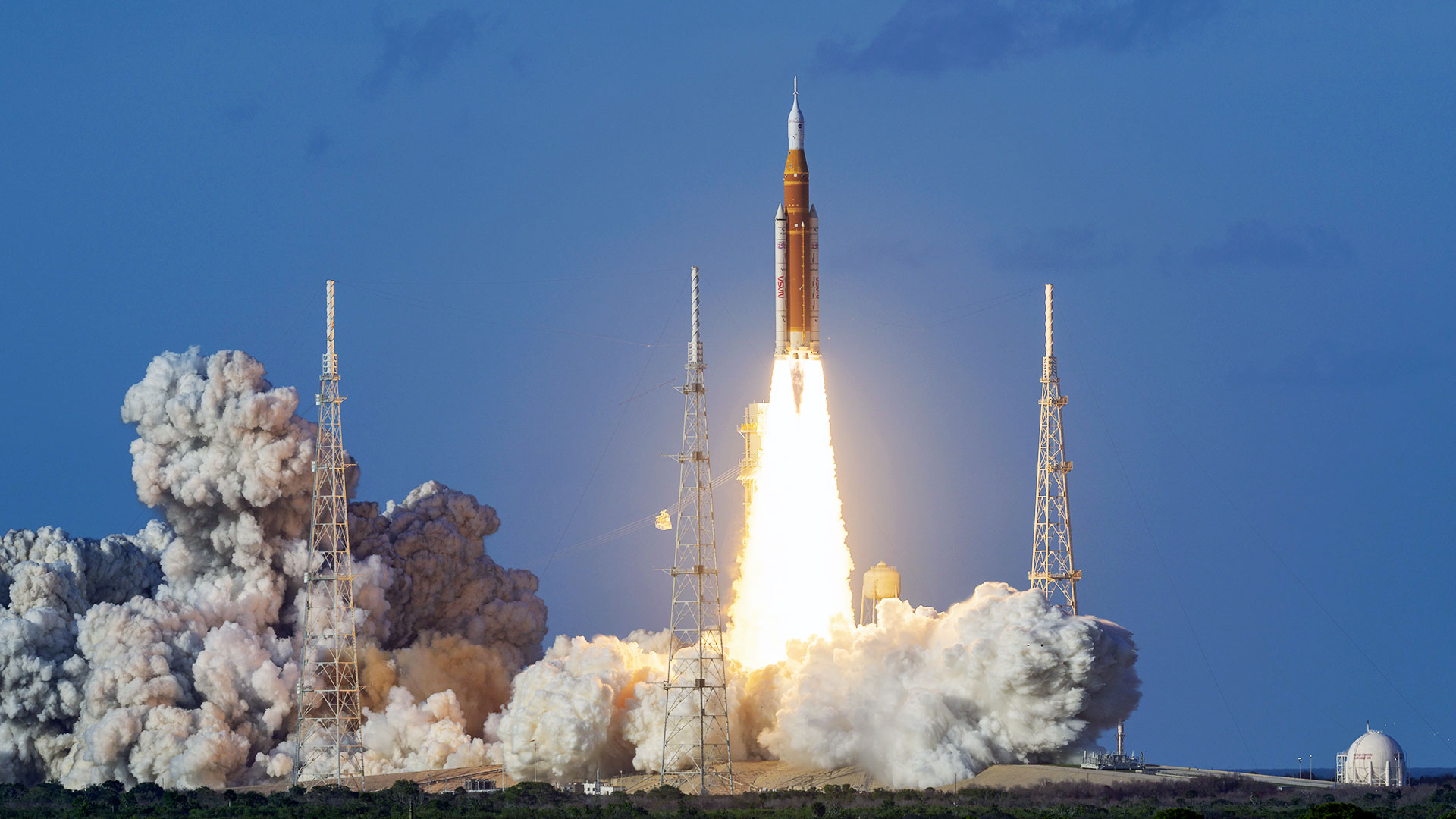
Making immediate history as the first crew to lift off atop NASA's Space Launch System (SLS) rocket, Reid Wiseman, Victor Glover, Christina Koch and Jeremy Hansen embarked on the 10-day Artemis II mission on Wednesday (April 1). The three Americans and one Canadian were strapped into "Integrity," their Orion spacecraft, when they launched at 6:35 p.m. EDT (2235 GMT) from Complex 39B at the Kennedy Space Center in Florida.
Climbing into the pre-sunset sky on a bright billowing plume, the scene evoked the long-past Apollo launches, yet the SLS resembles more closely the space shuttles that followed. Integrity's ride into Earth orbit included engines and side-mounted boosters being reused one last time from the former space transportation system.
Like the winged orbiters, the SLS jettisoned its spent solid rockets about two minutes into the flight. From there, it was the thrust from the four RS-25 engines that delivered the crew (and their zero-g indicator "Rise"), the Orion capsule, its European service module and the SLS upper stage, the ICPS (or Interim Cryogenic Propulsion System), into an initial highly-elliptical Earth orbit eight minutes and two seconds after they all left the ground.
Before heading off to the moon, the Artemis II crew will first test the maneuvers needed by the next astronauts to land on the lunar surface.
"We are essentially going to make sure that the vehicle flies the way that we think it does [and] that we designed it to do," said Glover, Artemis II pilot, during a pre-launch press conference.
Called the proximity operations demonstration, Glover and mission commander Wiseman will take turns manually controlling Integrity as they perform rendezvous and mock docking approaches with the ICPS. Future Artemis crews will need to carryout these maneuvers to link up with their human landing system (i.e. moon lander) in either Earth or lunar orbit.
"We also want to give qualitative and quantitative feedback to the ground team, letting them know what it feels like now that we can hear and feel the thrusters and to just understand the human experience," said Glover. "It's really a crew experience to fly the vehicle, but we want to give them feedback on [if] this flies like the simulator or [how it] is how it's very different from the simulator, so that we can verify and validate the models for training the later crews."
The prox ops demo is expected to begin about three and a half hours into the mission and take about an hour to complete. Integrity will then distance itself from the ICPS and for the remainder of the orbit, flight controllers on the ground will test and monitor Orion's life support, navigation and communication systems.
To see what they can see
The Artemis II crew will begin their 252,799 statute mile (406,840 km) journey out to and beyond the moon on the second day of the mission, about 25 hours and 37 minutes after their liftoff.
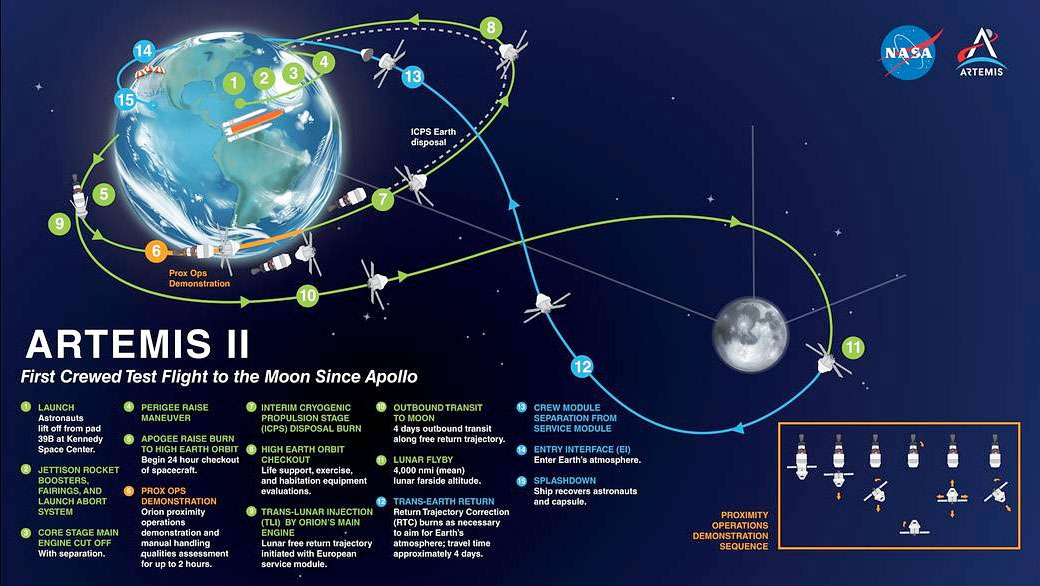
The European Service Module, provided by the European Space Agency (ESA), will use its shuttle-legacy engine to propel Integrity into a free-return trajectory. The burn will set Orion on an outbound trip of about four days and then around the far side of the moon. On flight day 5, the crew will enter the lunar sphere of influence, where the pull of the moon's gravity is stronger than the pull of Earth, shaping their figure eight path back home.
Three smaller outbound trajectory correction burns will ensure Orion stays on target during the outbound voyage, but no other major engine burns are needed through splashdown.
On the trip out and back, the astronauts will continue to evaluate Integrity's systems, including testing its radiation shelter, taking part in science experiments and making observations of the moon from a closer vantage point than human eyes have had in more than 50 years. At their closest approach, the moon will look about the size of a basketball held at arm's length.
"There's about 60 percent of the far side that has never been seen by human eyes because of the lighting conditions. Apollo always wanted that light on the front side of the moon for their landing and launch capabilities," said Wiseman. "When we see Orientale [crater], human eyes have never seen that. We've seen it in satellite photos, but humans have never ever seen that before."
Likewise, the Apollo astronauts reported that until you get closer to the moon, you can not really see the color in its regolith (top soil).
"The scientists are excited about getting these four sets of human eyes, the best cameras in the universe, close to the moon," said Glover. "To see things like the lunar regolith; we think of it as monochrome or black and white or gray and [yet] there is olivine, which is green, and pyroxene, which is gray or brown, so we get close to see some of those minerals in the regolith that add color."
The crew will also see an eclipse as the sun passes behind the moon. The chance phenomena will be an opportunity for the crew to look for the lofting of lunar dust as was observed by a couple of the Apollo astronauts, but not well documented or understood.
"This transport of lunar regolith around the moon is very interesting. Does it have to do with magnetic fields, or what is causing this? And so this [eclipse] provides an interesting opportunity to look at that and and also to look at the corona of the Sun in a different way," said Hansen, Artemis II mission specialist.
A mission of many firsts
The Artemis II mission will break the record for the farthest that humans have flown from Earth almost exactly 56 years after it was last set by the crew of Apollo 13 in April 1970. The four Artemis crewmates will travel 4,144 statute miles (6,669 km) deeper into space.
Before then, just by flying by, Glover, Koch and Hansen will each set firsts as the first person of color, woman and Canadian/non-American to launch to the moon, respectively.
They are also the first four-person crew to fly to the moon together; the first astronauts to have use of a toilet on the journey (the Apollo astronauts had to use collection bags); and will make the first long-distance call between two spacecraft when from out at the moon they speak with the Expedition 74 crew aboard the International Space Station.
"Although it is something to celebrate a bunch of firsts, that's definitely not necessarily telling the whole story, and it's also not about celebrating any one individual," said Koch, Artemis II mission specialist. "If there is something to celebrate. It's that we were are at a time when everyone who has a dream, gets to work equally hard to achieve that dream. And we're at a time where we recognize the importance of if we are not going for all, and by all, we aren't truly answering all of humanity's call to explore. That, to me, is what's worth celebrating."
NASA's Artemis II Space Launch System (SLS) rocket launches with the Orion spacecraft "Integrity" and astronauts Reid Wiseman, Victor Glover, Christina Koch and Jeremy Hansen on a 10-day mission to fly by the moon from Kennedy Space Center in Florida on Wednesday, April 1, 2026. (NASA/Bill Ingalls)
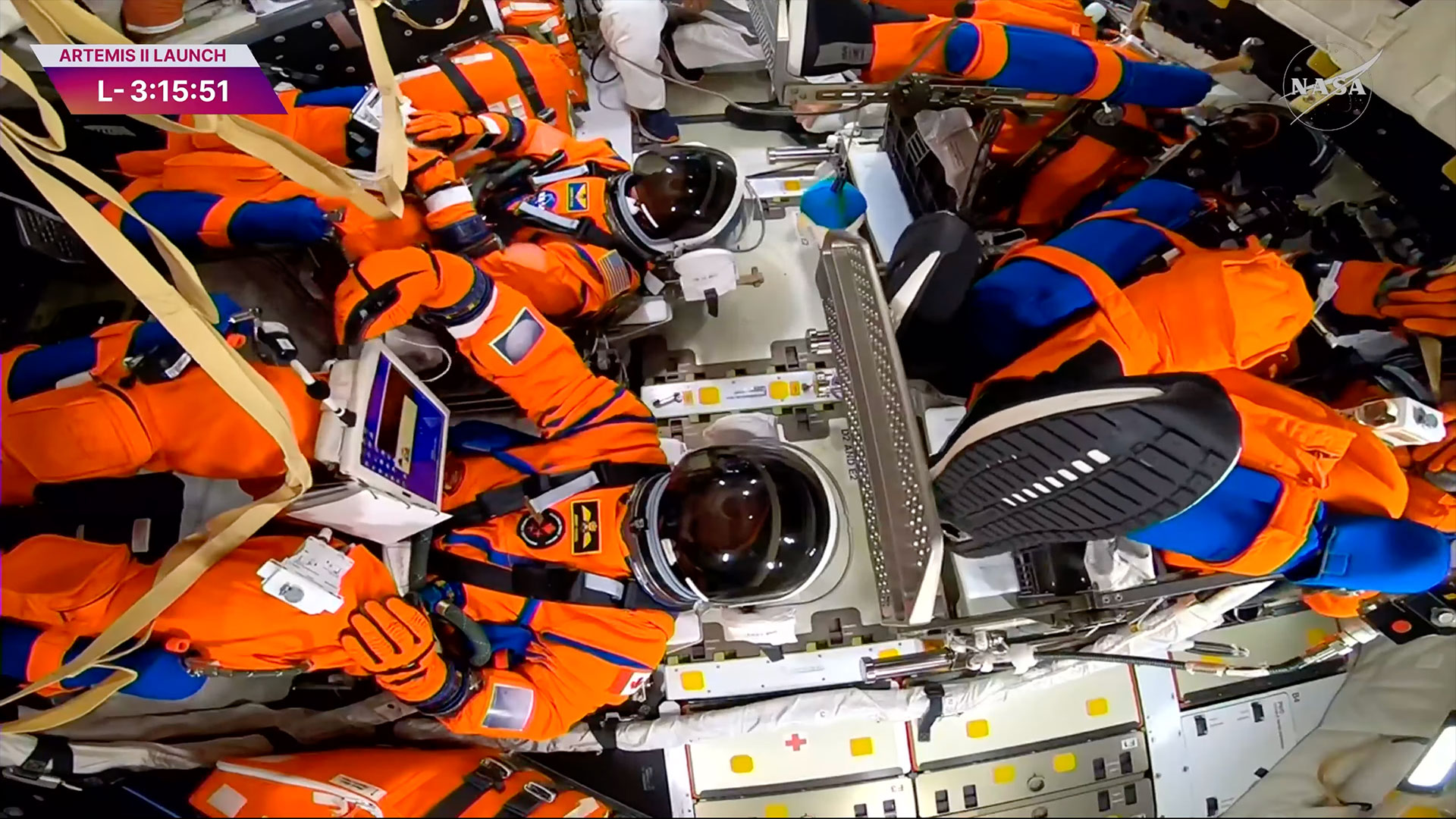
A view of the four Artemis II crew members in their seats on board the Orion spacecraft "Integrity" as seen prior to the launch. (NASA)
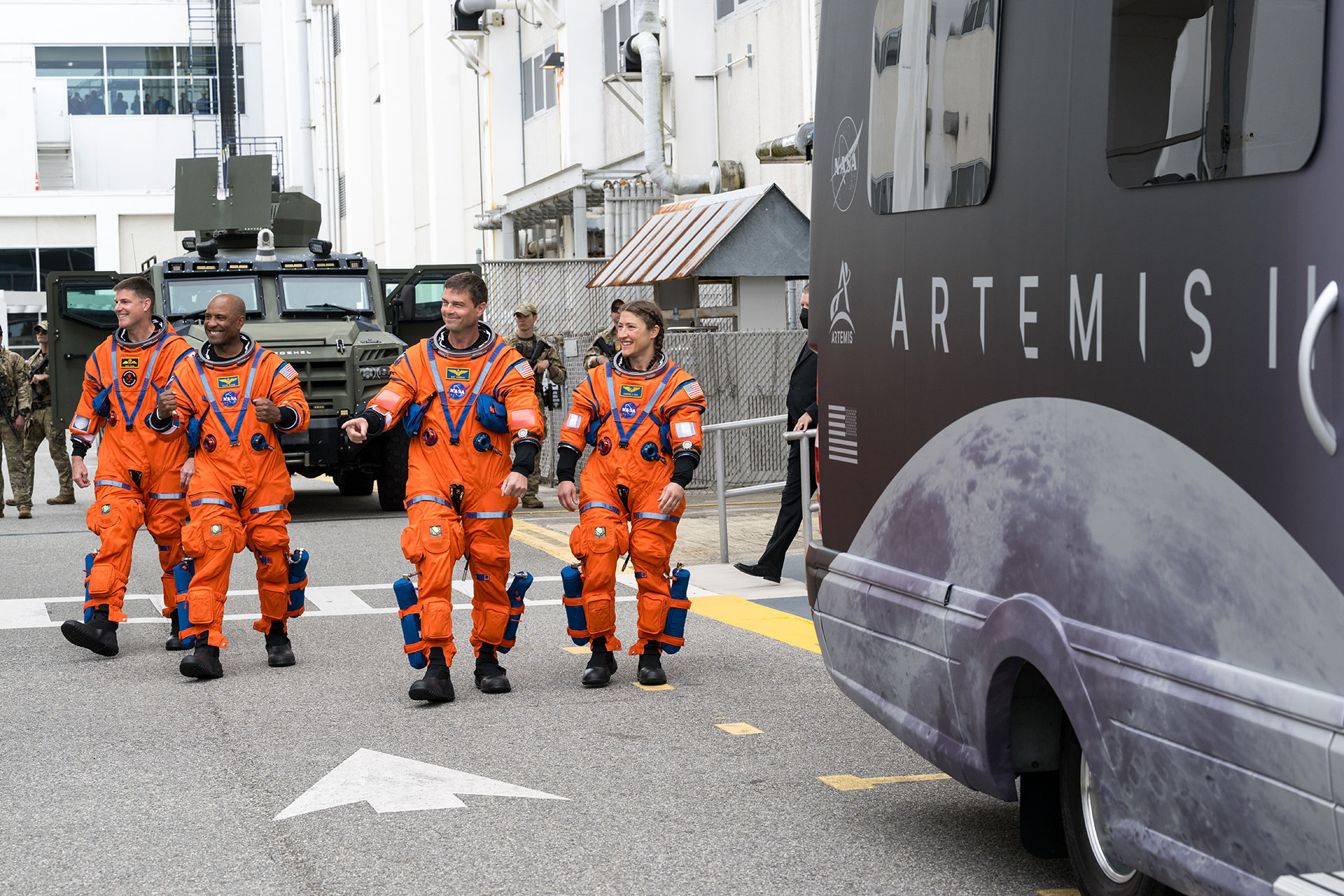
From left to right: Artemis II crew members Jeremy Hansen of the Canadian Space Agency and NASA astronauts Victor Gover, Reid Wiseman and Christina Koch board the Astrovan II for their ride to the launch pad on April 1, 2026. (NASA/Aubrey Gemignani)
NASA graphic showing the free-return trajectory that the Artemis II mission will follow to the moon and back over 10 days. (NASA)
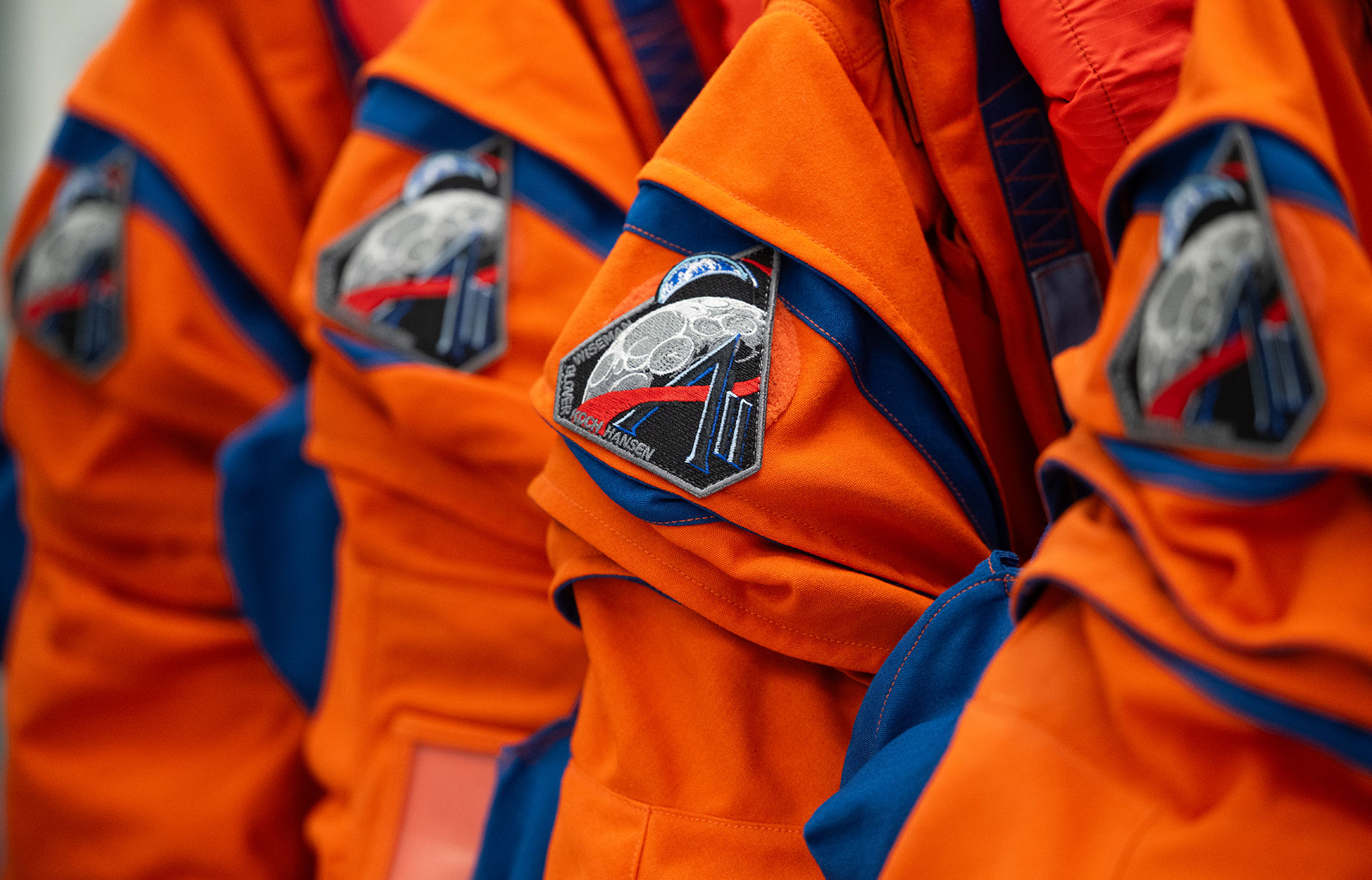
The Artemis II crew patch refers to the mission as "AII" as in "for all, by all," a theme adopted by the four astronauts. (NASA)
collectSPACE is grateful to Intuitive Machines for supporting our Artemis II mission coverage. Intuitive Machines successfully soft-landed its Nova-C class lunar lander on the moon, returning the United States to the lunar surface for the first time since 1972. In 2025, Intuitive Machines returned to the lunar south pole with a second lander. The company is focused on delivery services, data transmission services and infrastructure as a service.