Topic: [Discuss] NASA's Artemis II mission (Orion)
Robert Pearlman Editor
Posts: 57226 From: Houston, TX Registered: Nov 1999
posted 01-16-2026 11:00 AM
NASA video
NASA experts give updates on the Artemis II mission before rollout of the Moon rocket and spacecraft to the launch pad at Kennedy Space Center.
GACspaceguy Member
Posts: 3342 From: Guyton, GA Registered: Jan 2006
posted 01-16-2026 06:09 PM
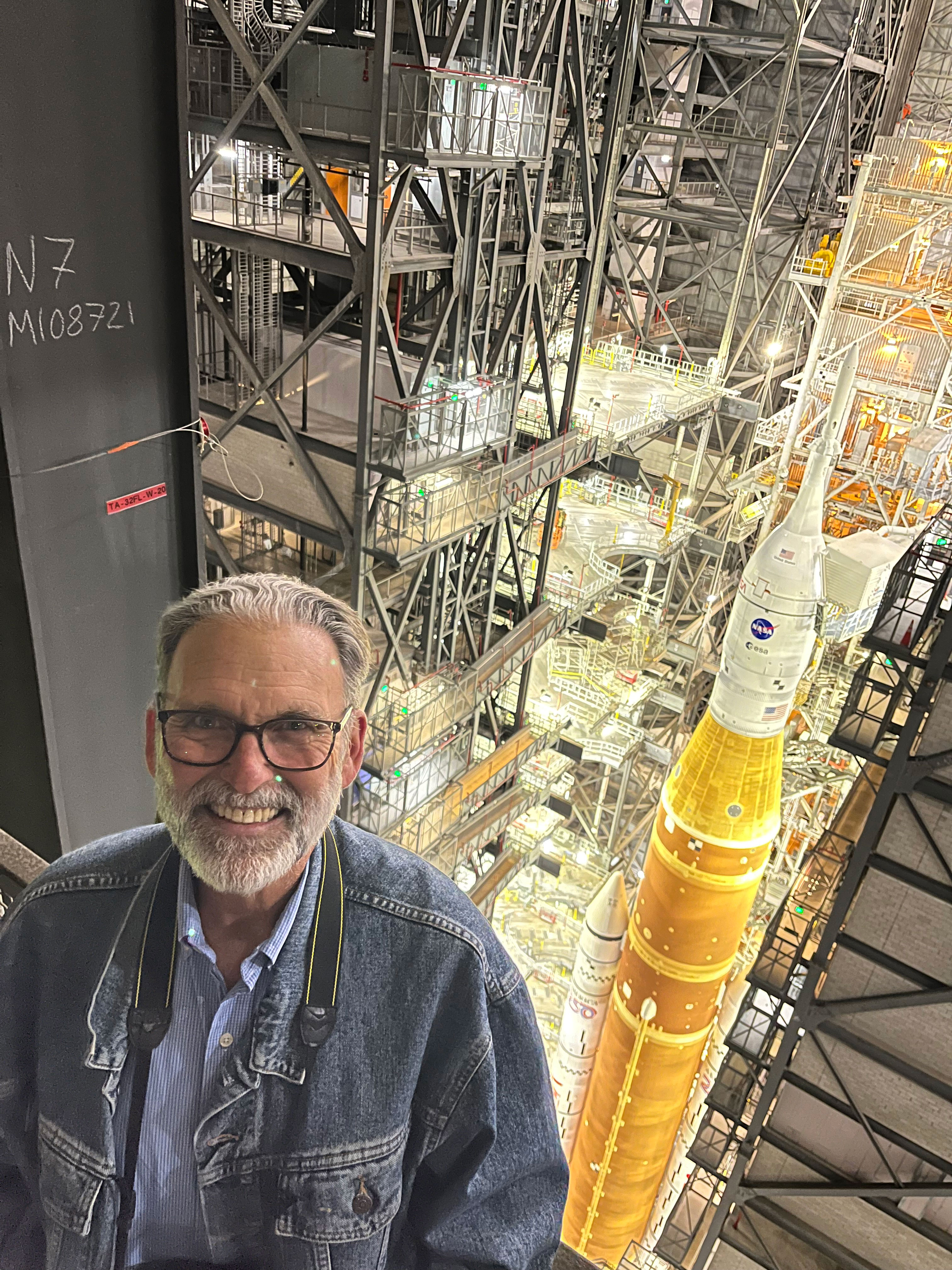
I am blessed with the opportunity to be inside the Vehicle Assembly Building 12 hours prior to first movement. This photo was taken from the 32nd floor level. It is absolutely stunning.
GACspaceguy Member
Posts: 3342 From: Guyton, GA Registered: Jan 2006
posted 01-17-2026 07:27 AM
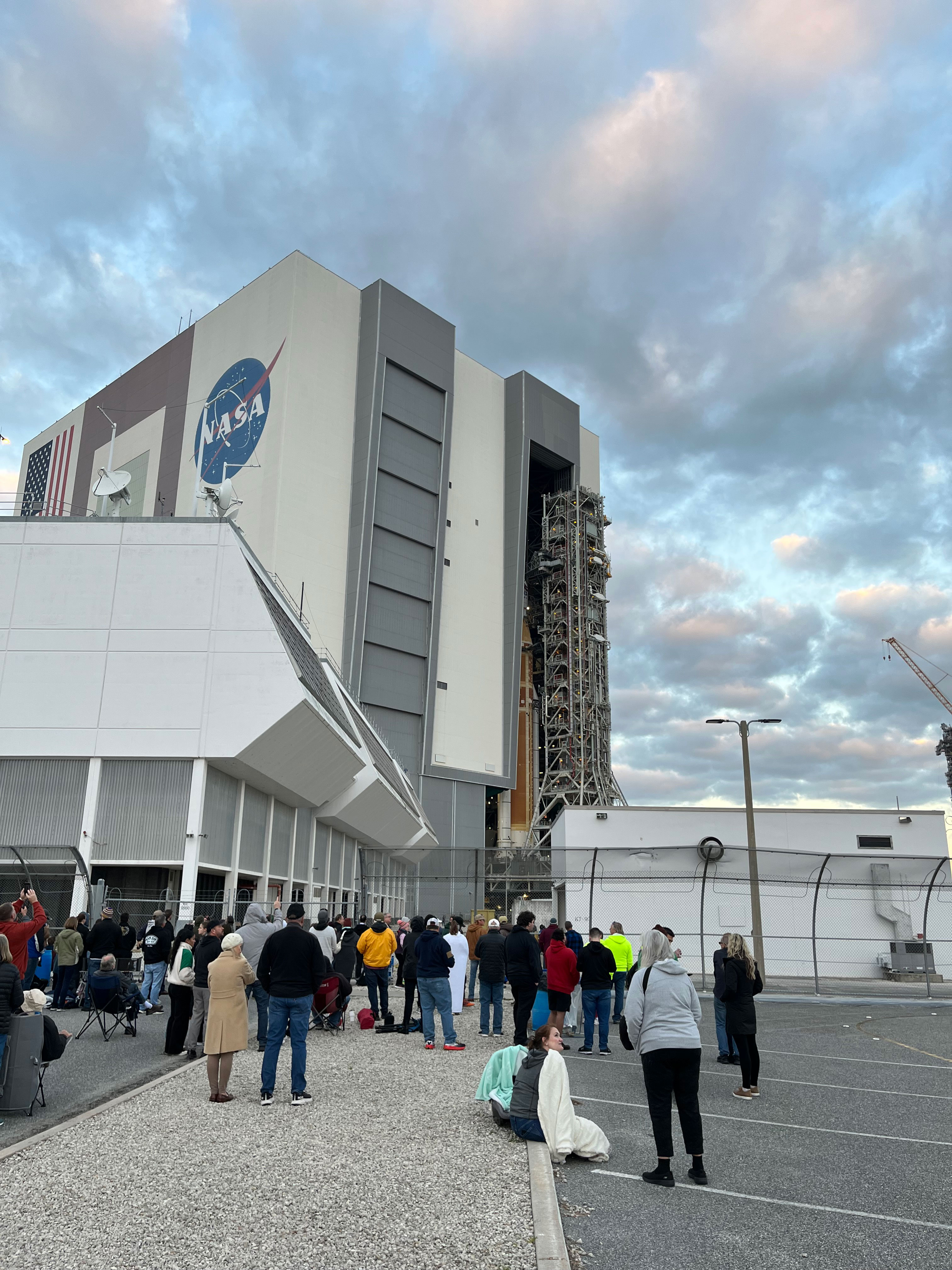
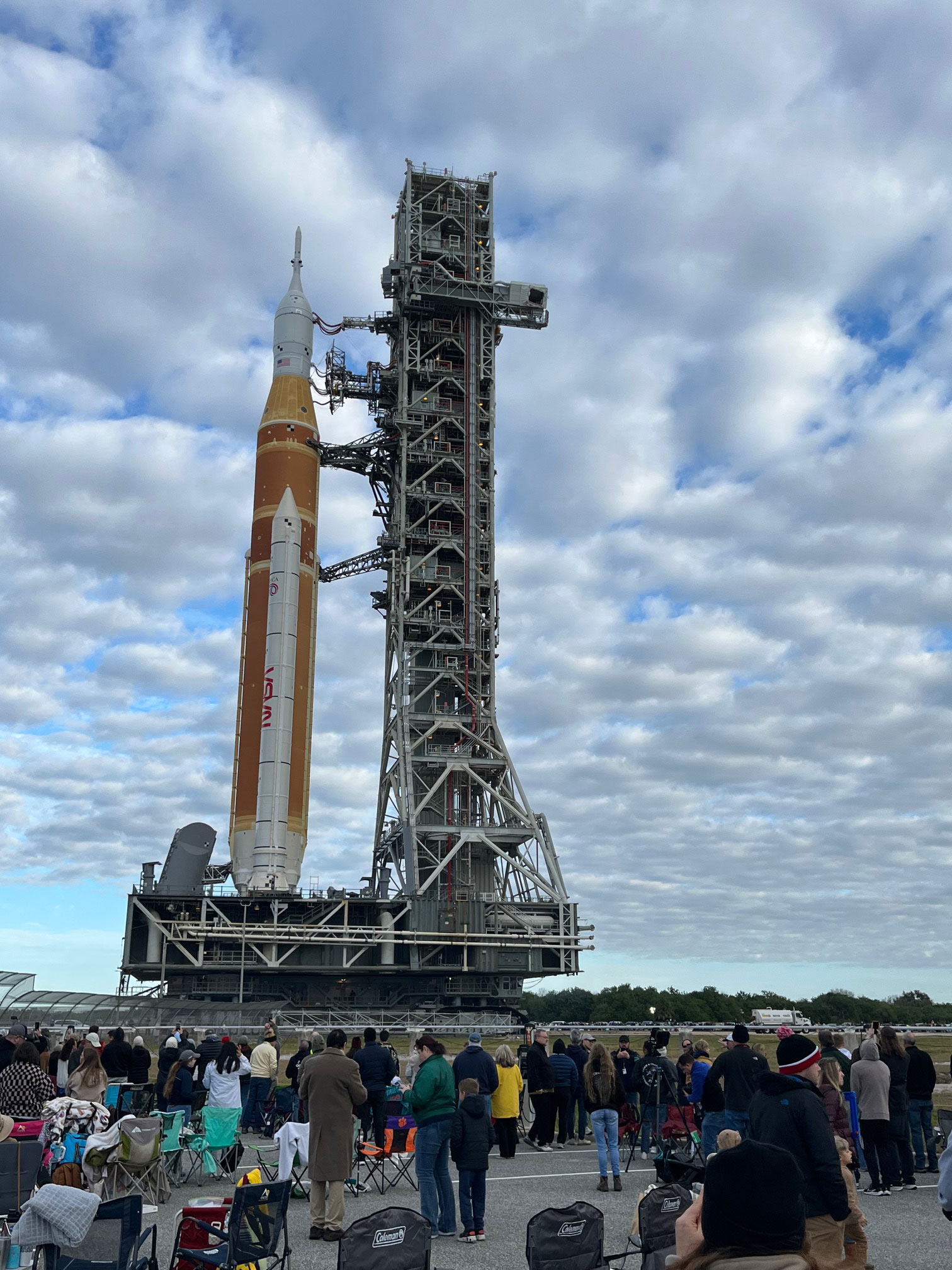
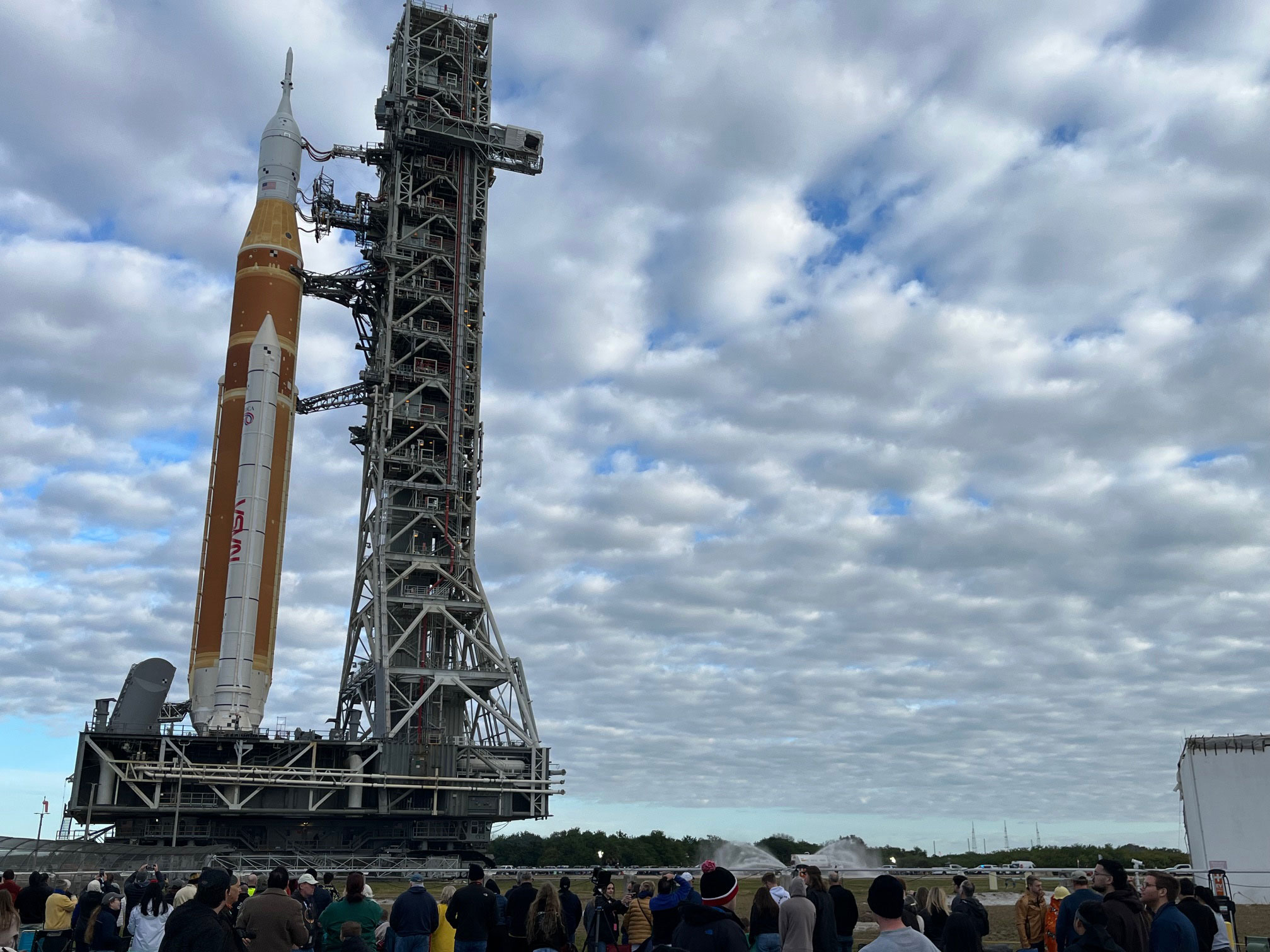
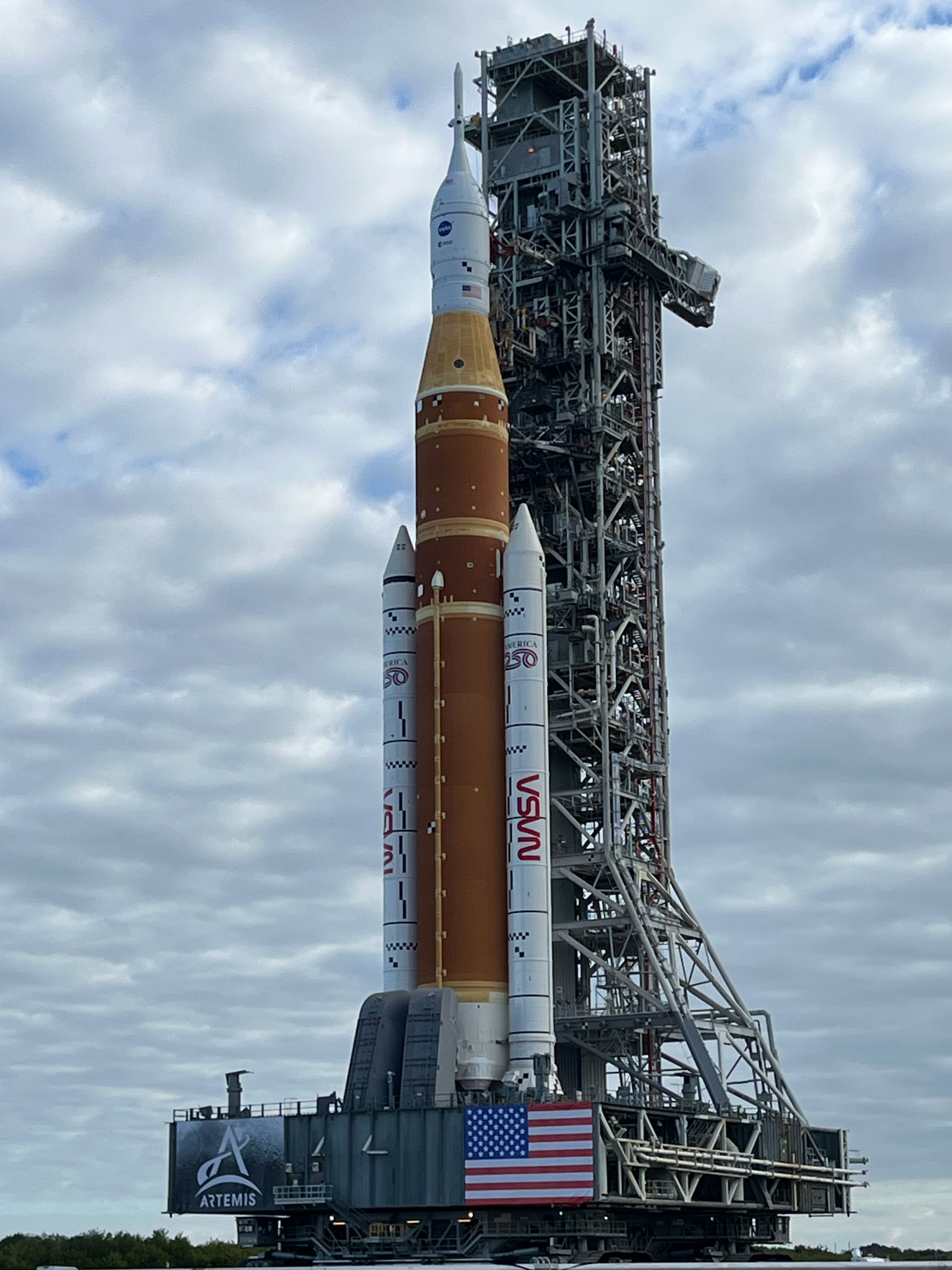
On the move...
Crew access arm rotating...
GACspaceguy Member
Posts: 3342 From: Guyton, GA Registered: Jan 2006
posted 01-17-2026 08:04 AM
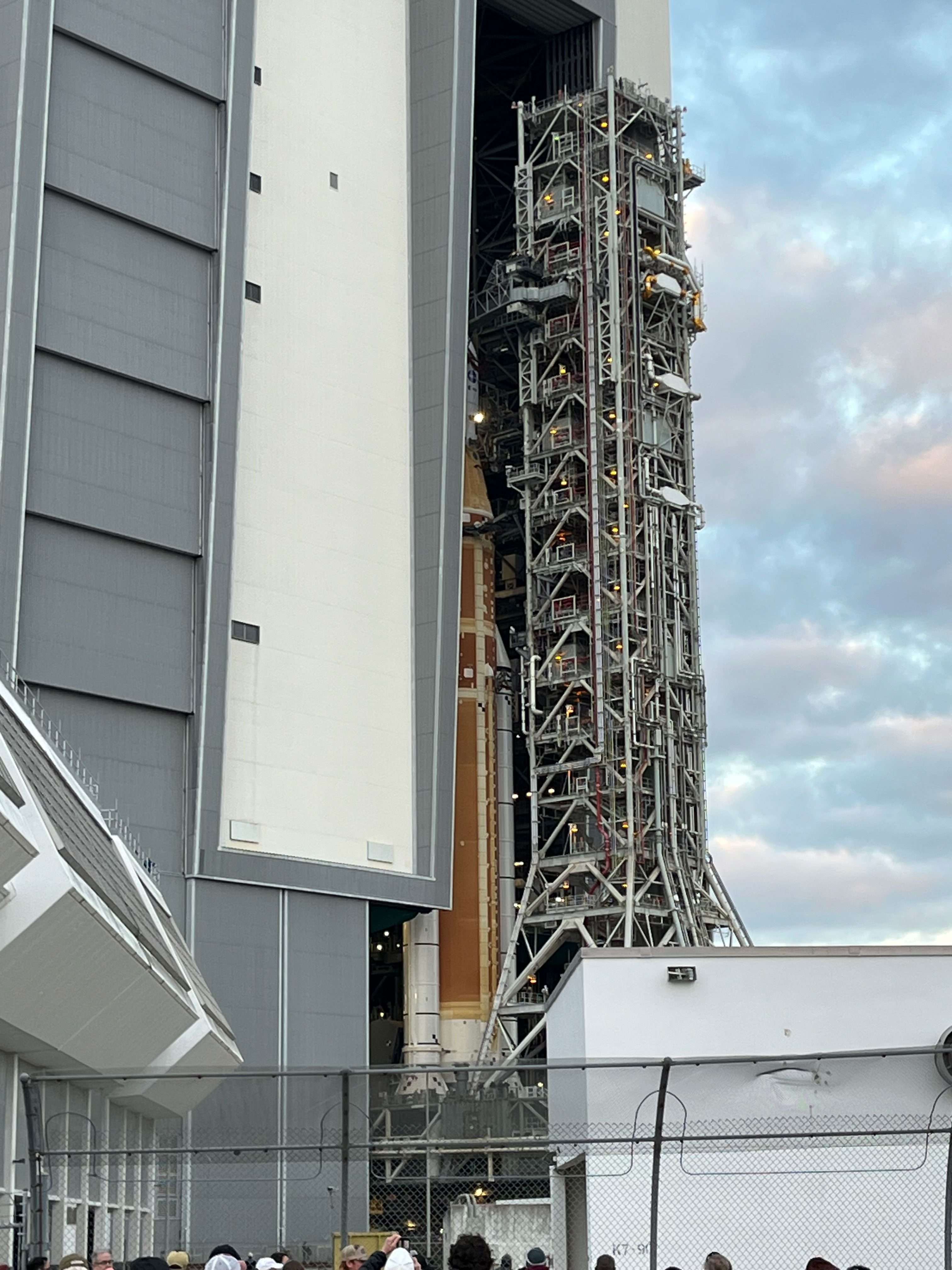
Making the first "turn..."
The water truck is upfront.
Good view...
Robert Pearlman Editor
Posts: 57226 From: Houston, TX Registered: Nov 1999
posted 01-17-2026 08:16 AM
NASA video
NASA Administrator Jared Isaacman and the crew of Artemis II (NASA astronauts Reid Wiseman, Victor Glover, and Christina Koch; Canadian Space Agency astronaut Jeremy Hansen) are at NASA’s Kennedy Space Center to answer questions from the media about the upcoming mission and preparations.
Blackarrow Member
Posts: 3994 From: Belfast, United Kingdom Registered: Feb 2002
posted 01-17-2026 10:27 AM
I am watching a live view of something no human eye has seen since I was a schoolboy (well, 17) in 1972. Let that sink in.
Admittedly it is a bit like watching an analogue clock: you have to go away and come back to see that there has been movement.
Axman Member
Posts: 971 From: Derbyshire UK Registered: Mar 2023
posted 01-17-2026 11:01 AM
Let's not get carried away here. This is an Apollo 8 mission, not an Apollo 11.
I sincerely hope it won't be an Apollo 13 or worse.
Robert Pearlman Editor
Posts: 57226 From: Houston, TX Registered: Nov 1999
posted 01-17-2026 12:22 PM
quote:Originally posted by Axman: This is an Apollo 8 mission, not an Apollo 11.
I am not quite sure what that means. Apollo 8 had a great impact on humanity.
Apollo 8 gave us the environmental movement, one of the most iconic images in history, the first first-hand views of the far side of the moon (as well as the same for the moon close up) and, as one person put it, "saved 1968."
Artemis II is going to be the first human flight to the moon to occur during the lifetimes of most of the people living on Earth today. It will be the first human mission to the moon to return 4K video and the first to unfold live on the internet. Its crew for the first time will represent more than just "whitey at the moon."
Time will tell what impact Artemis II has on the world but I don't think Geoffrey or others excited about it (myself included) are being carried away anymore than is appropriate given the circumstances.
Rick Mulheirn Member
Posts: 4702 From: England Registered: Feb 2001
posted 01-17-2026 12:35 PM
I must confess, I'm not close to the forthcoming Artemis II mission, though I'm excited none the less.
I was wondering, what plans are there, if any for high resolution photography of the lunar surface?
I'm always hoping for further evidence with which to shoot down the moon landing deniers.
Axman Member
Posts: 971 From: Derbyshire UK Registered: Mar 2023
posted 01-17-2026 12:38 PM
quote:Originally posted by Robert Pearlman: I am not quite sure what that means.
What I meant is quite straightforward. We are not returning to the moon with this mission. We won't be going back until 2028 at the earliest.
Six missions landed men on the moon back in the Apollo days (whether they were whitey or not makes little difference to me), this isn't surpassing that, nor even matching it.
As I said, it is similar to Apollo 8 (which was a truly historic mission).
You and Geoffrey can be as excited as you like, but historic it ain't.
Robert Pearlman Editor
Posts: 57226 From: Houston, TX Registered: Nov 1999
posted 01-17-2026 12:41 PM
For you, it may not be historic, but for others it will be (for reasons already cited, and more). For the sake of everyone's enjoyment, let's not try to rain on others' parades...
quote:Originally posted by Rick Mulheirn: ...what plans are there, if any for high resolution photography of the lunar surface?
The timing of the fly by is such that Artemis II will not be in line of sight of the Apollo landing sites. Even if they were, they would be at a farther distance than Lunar Reconnaissance Orbiter and other probes have orbited and returned imagery.
At their distance, about 4,000 to 6,000 miles above the lunar surface, the moon will appear to the crew to be about the size of a basketball held at arm's length.
The Artemis II crew will be observing the far side of the moon, taking photographs and filming the view in 4K (due to bandwidth requirements by other Orion systems, the 4K footage will not be seen until after the crew returns to Earth).
Headshot Member
Posts: 1505 From: Vancouver, WA, USA Registered: Feb 2012
posted 01-17-2026 01:13 PM
Too bad they did not put some sort of GoPro cams on the front, or back of the crawler, or even on the top of the launch tower.
Maybe next time.
Delta7 Member
Posts: 1815 From: Bluffton IN USA Registered: Oct 2007
posted 01-17-2026 01:33 PM
It's a test flight of the Orion spacecraft, and flying around the moon is part of that test. It isn't an exploration mission. What it does do is end the long drought in human deep space flight, laying the groundwork for return of humans to the moon and beyond. I find that very exciting. If you told me as a 12-year old watching the coverage of Apollo 17 that I would be 65 when the next crewed lunar mission would fly, I would have been crushed. I would gave predicted back then that we'd have colonies on the moon and Mars by 2026, and crewed flights to the outer planets similar to 2001: A Space Odyssey.
I'll take this with renewed excitement.
Ken Havekotte Member
Posts: 4091 From: Merritt Island, Florida, Brevard Registered: Mar 2001
posted 01-18-2026 06:55 AM
Great photos Fred and that's a nice personal shot of you inside the VAB looking down of the SLS vehicle in Bay 3. It was also a pleasure in seeing you on KSC grounds yesterday morning during rollout and I wish we had more time for an one-on-one visit during your short stay here. Next time for sure!
GACspaceguy Member
Posts: 3342 From: Guyton, GA Registered: Jan 2006
posted 01-18-2026 09:00 AM
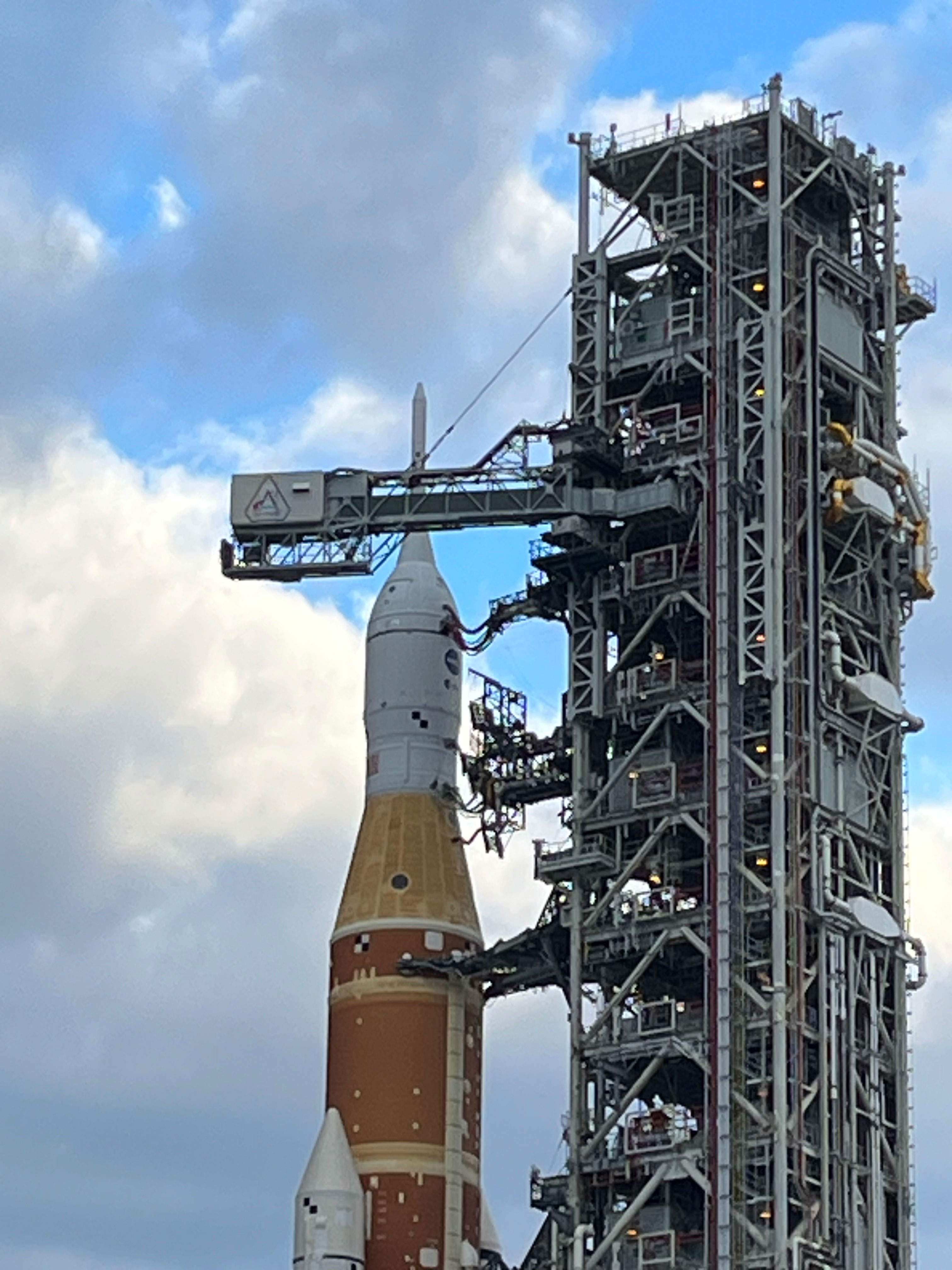
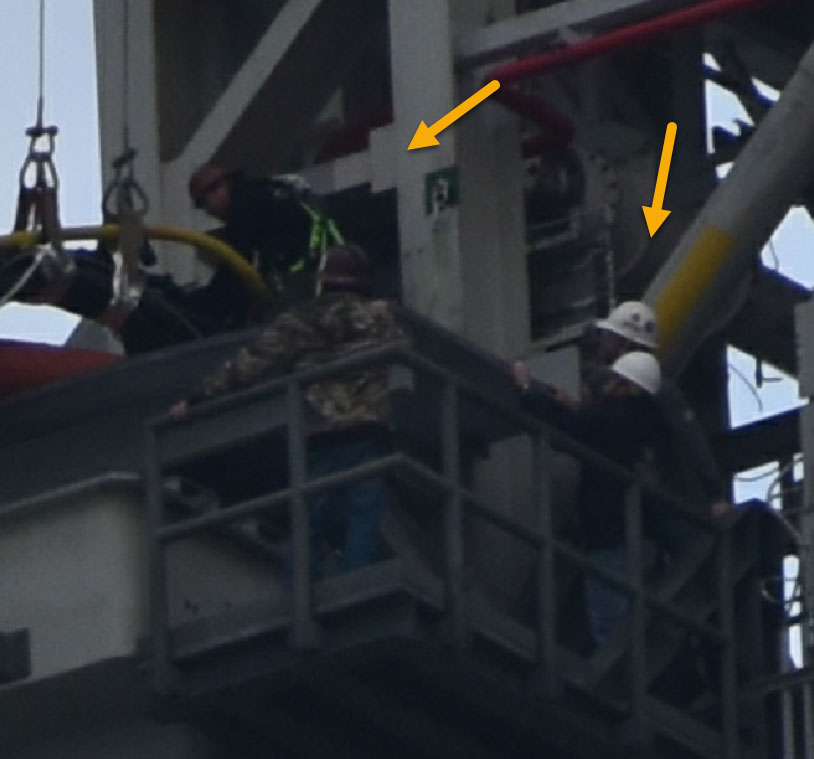
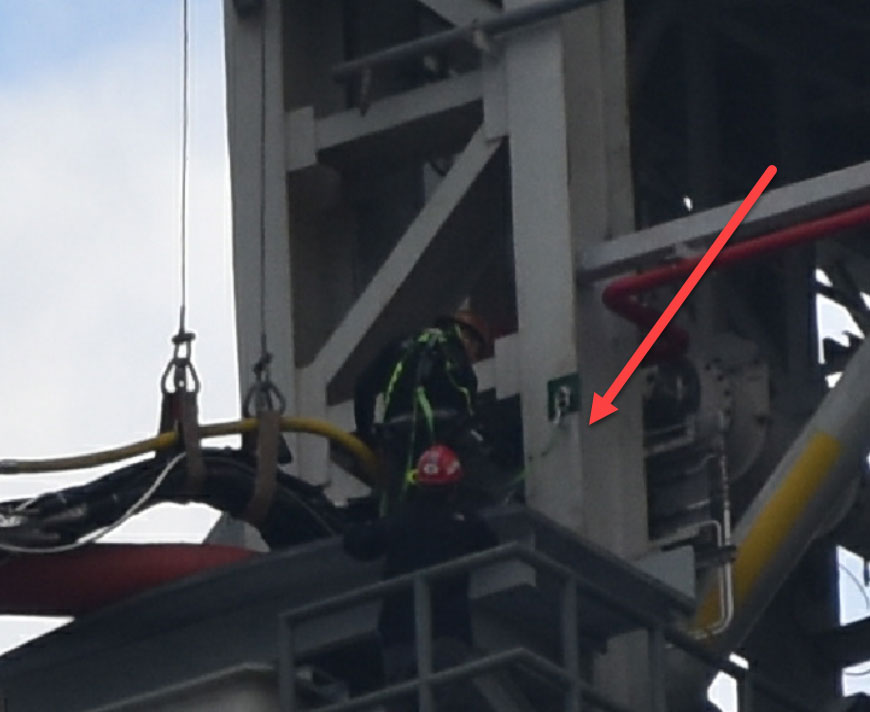
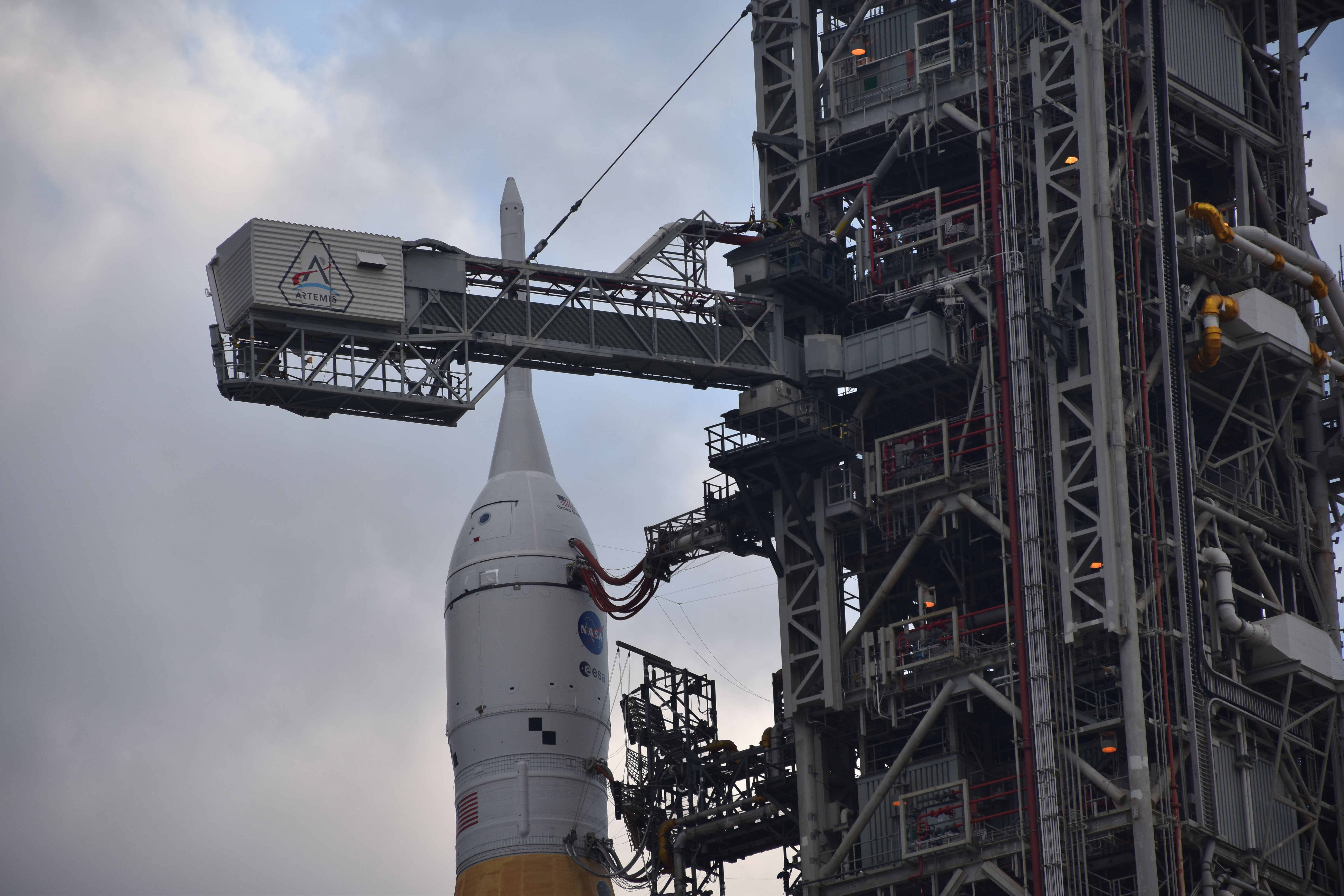
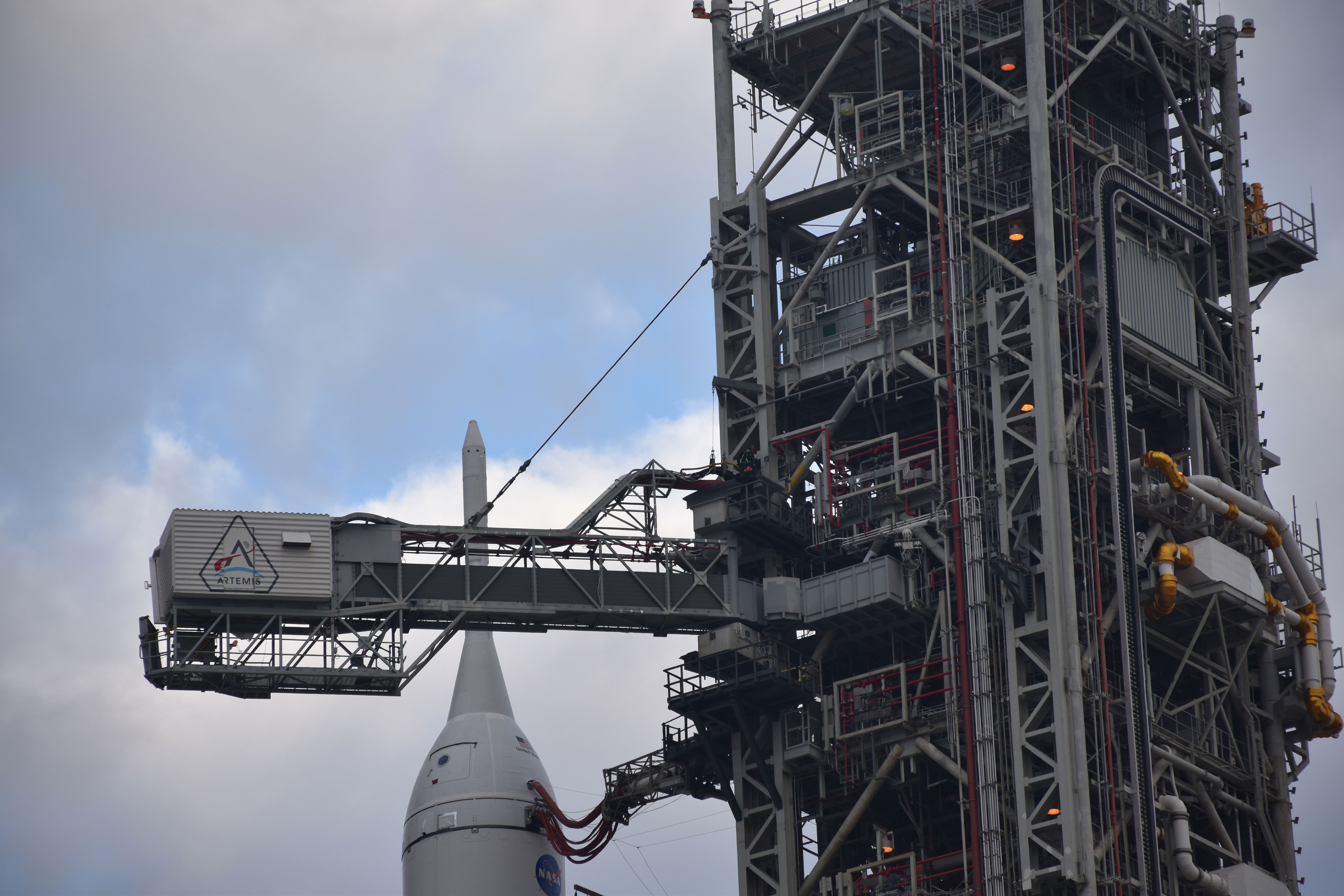
Yesterday, during the crew access swing arm retract operation, the arm stopped and went back towards the vehicle for a moment. I then saw folks on the tower at the "hinge" location doing some sort of work. The arm then retracted to the full retract position and the rollout resumed.
Below is a snagit from the original photos for reference.
GACspaceguy Member
Posts: 3342 From: Guyton, GA Registered: Jan 2006
posted 01-18-2026 10:32 AM
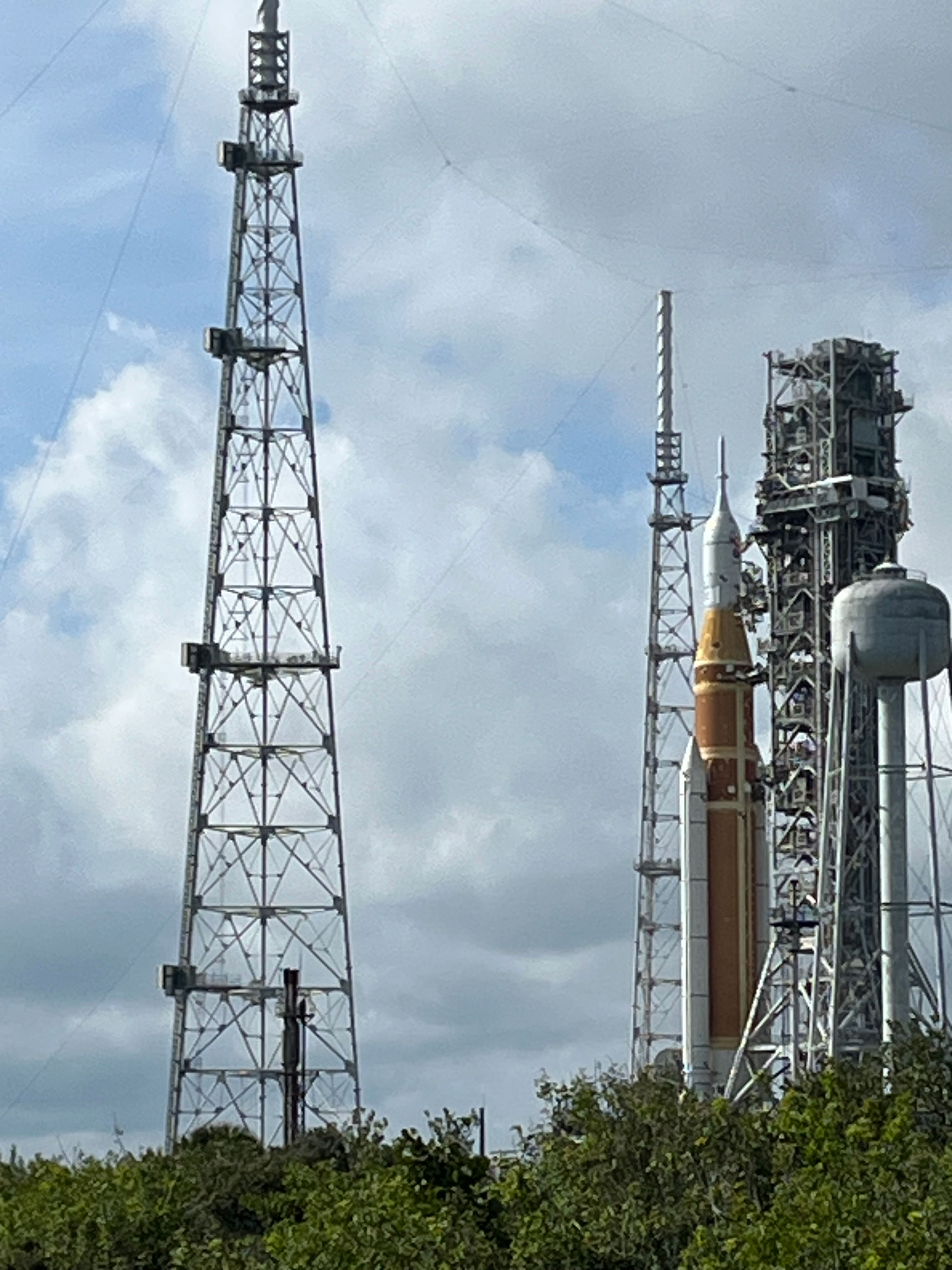
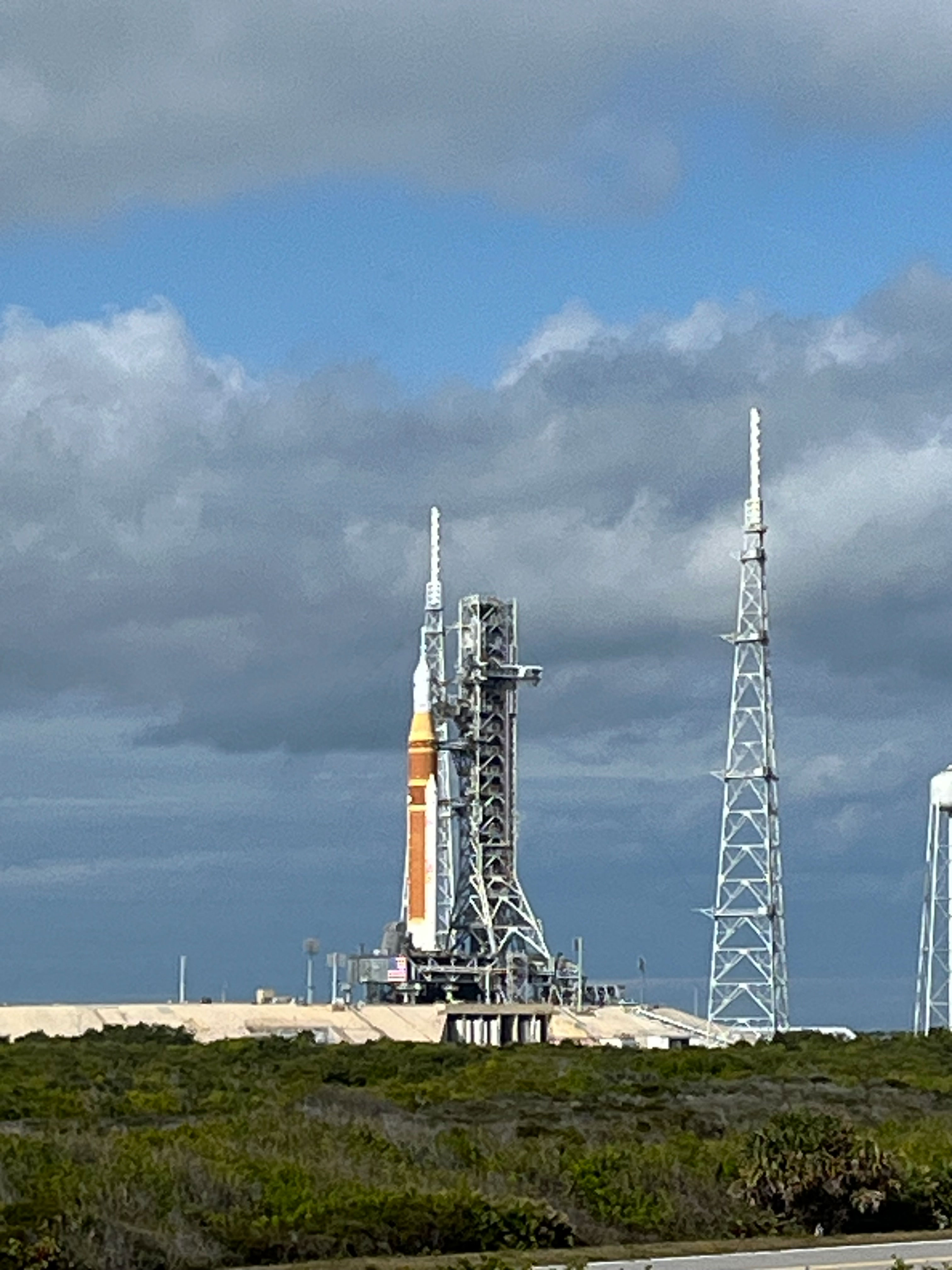
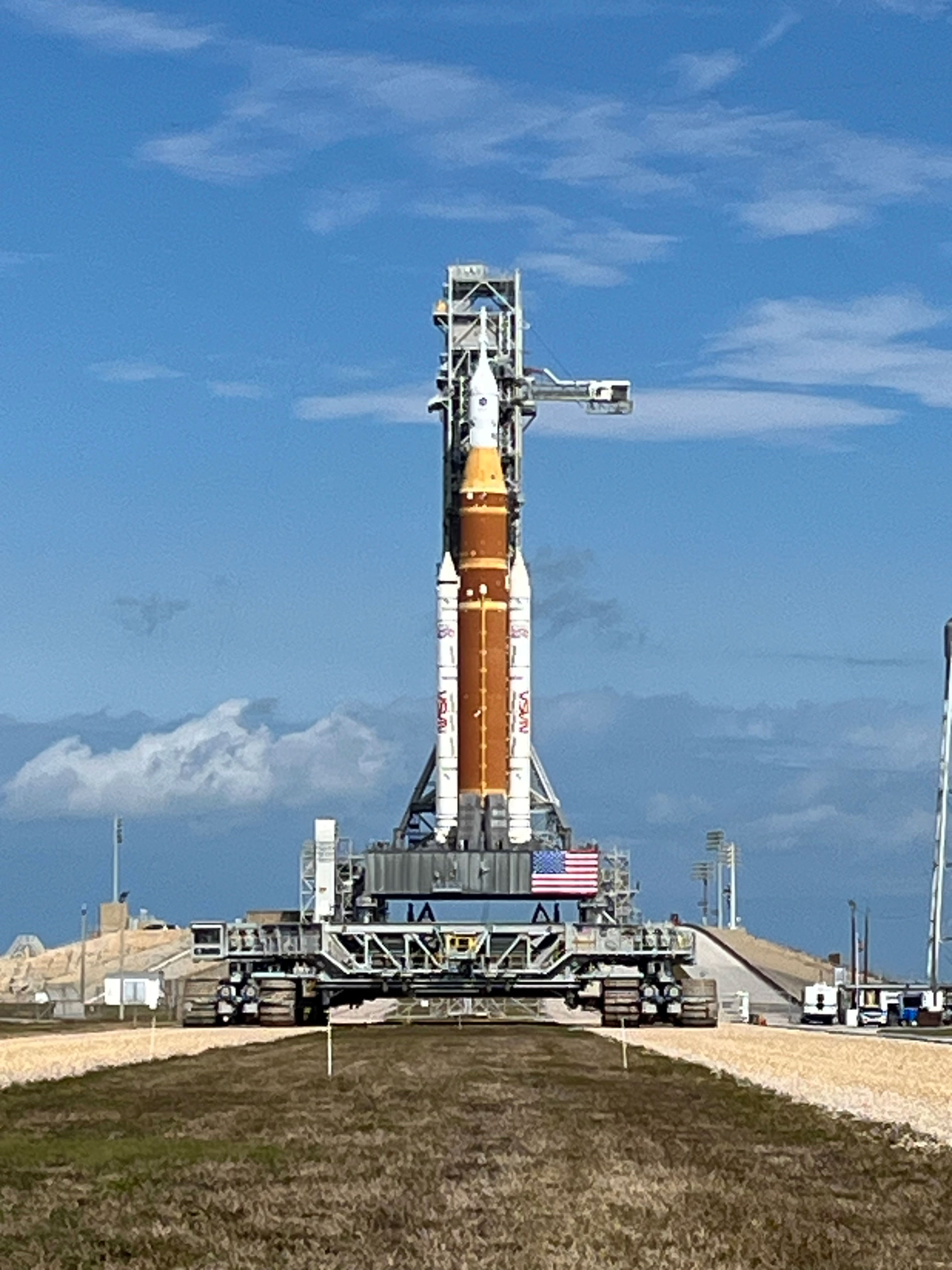
Had an opportunity to go to a various sites while the vehicle is on the pad.
The crawler has done its job. Time to rest.
Spaceflyer Member
Posts: 225 From: Nauheim, Germany Registered: Jan 2003
posted 01-18-2026 12:09 PM
My rollout video. Enjoy.
Robert Pearlman Editor
Posts: 57226 From: Houston, TX Registered: Nov 1999
posted 01-18-2026 06:55 PM
quote:Originally posted by GACspaceguy: The arm then retracted to the full retract position and the rollout resumed.
Apparently, a series of crew access arm swing tests have continued at the pad throughout today (Jan. 18). According to Spaceflight Now, as of 5 p.m. EDT (2200 UTC), "they've swung the arm towards Orion four times and away thrice."
Blackarrow Member
Posts: 3994 From: Belfast, United Kingdom Registered: Feb 2002
posted 01-19-2026 05:03 PM
Responding to early posts, no, this is not an "Apollo 11" type mission. It's not even an "Apollo 8" type mission. It's actually closer to the Apollo 13 flight profile (flown, rather than planned!) but NASA won't be saying that for obvious reasons. But it is a return to the vicinity of the Moon, and, if successful, will increase the list of human beings who have seen the far side of the Moon from 24 to 28. I think that's worth celebrating. Better late than never.
Robert Pearlman Editor
Posts: 57226 From: Houston, TX Registered: Nov 1999
posted 01-19-2026 05:18 PM
Artemis II can be likened to several different Apollo flights:
Artemis II is like Apollo 7 because it is a shakeout cruise for the command module's systems.
Artemis II is like Apollo 8 because it is the first time humans will see parts of the far side of the moon with their own eyes.
Artemis II is like Apollo 10 because it will fly from Pad 39B and then practice the maneuvers needed to land on the moon ahead of the next mission doing so.
Artemis II is like Apollo 13 because it will follow a free return trajectory around the moon and back.
At the same time, Artemis II is like none of these missions for numerous reasons.
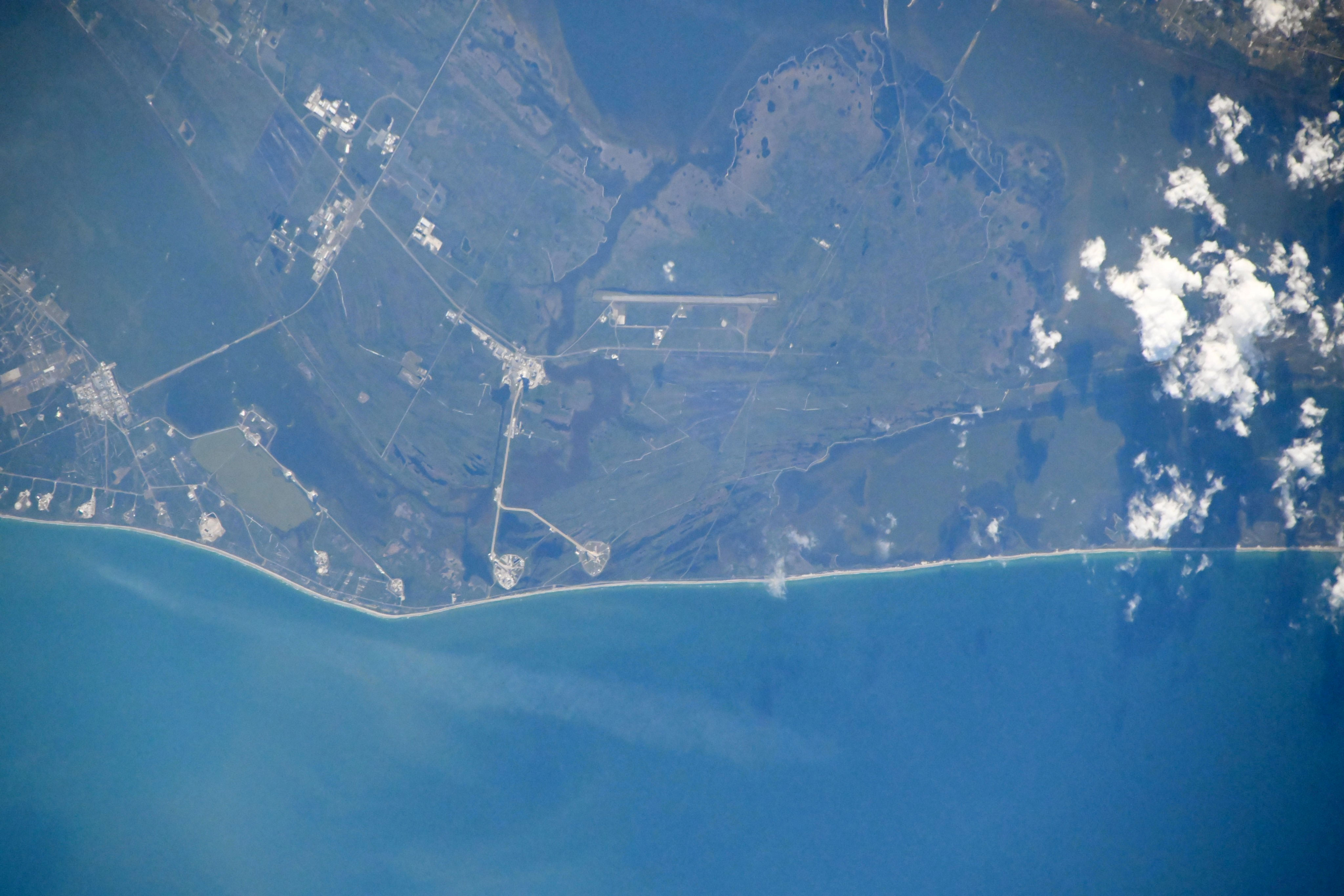
And now for something completely different, from Chris Williams aboard the International Space Station:
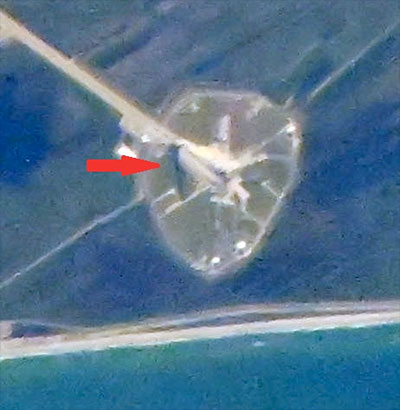
I took this photo of Kennedy Space Center this weekend. It is not my best photo (should have grabbed a different lens) but it is special – if you zoom in on the rightmost launch pad, you can see a shadow just to the left of the center of the pad.
That shadow is from the rocket (and launch tower) that will soon take four of my friends on a trip around the moon as part of the Artemis program! This weekend was the rollout of the rocket, and we passed over Florida just as it was arriving to the pad.
SpaceAholic Member
Posts: 5605 From: Sierra Vista, Arizona Registered: Nov 1999
posted 01-23-2026 12:25 PM
Some experts are urging NASA not to fly the Artemis II mission with humans on board due to their concerns about the Orion heat shield. But NASA remains confident it has a handle on the problem and the vehicle can bring the crew home safely.
"This is a deviant heat shield," said Dr. Danny Olivas, a former NASA astronaut who served on a space agency-appointed independent review team that investigated the incident. "There's no doubt about it: This is not the heat shield that NASA would want to give its astronauts."
Still, Olivas said he believes after spending years analyzing what went wrong with the heat shield, NASA "has its arms around the problem."
Robert Pearlman Editor
Posts: 57226 From: Houston, TX Registered: Nov 1999
...Olivas flew two Space Shuttle missions in 2007 and 2009 and has an advanced degree in materials science from Rice University. Before this week’s meeting, he had not gone public with his heat shield concerns. But he has been talking to me and another space reporter, Robert Pearlman, for about a month now. ...
After Thursday’s meeting, Olivas told me he had changed his mind, expressing appreciation and admiration for the in-depth engineering work done by the NASA team. He would now fly on Orion.
Headshot Member
Posts: 1505 From: Vancouver, WA, USA Registered: Feb 2012
posted 01-23-2026 01:36 PM
quote:Originally posted by Robert Pearlman: Artemis II can be likened to several different Apollo flights...
Artemis is also like the Apollo E mission (the original Apollo 9 with Borman, Collins, and Anders) that did not fly, in that it will conduct operations in a High Earth Orbit.
Robert Pearlman Editor
Posts: 57226 From: Houston, TX Registered: Nov 1999
posted 01-23-2026 04:06 PM
NASA release
NASA Selects Participants to Track Artemis II Mission
NASA has selected 34 global volunteers to track the Orion spacecraft during the crewed Artemis II mission's journey around the Moon.
The Artemis II test flight will launch NASA's Space Launch System (SLS) rocket, carrying the Orion spacecraft and a crew of four astronauts, on a mission into deep space. The agency's second mission in the Artemis campaign is a key step in NASA's path toward establishing a long-term presence at the Moon and confirming the systems needed to support future lunar surface exploration and paving the way for the first crewed mission to Mars.
While NASA's Near Space Network and Deep Space Network, coordinated by the agency's SCaN (Space Communication and Navigation) program, will provide primary communications and tracking services to support Orion's launch, journey around the Moon, and return to Earth, participants selected from a request for proposals published in August 2025, comprised of established commercial service providers, members of academia, and individual amateur radio enthusiasts will use their respective equipment to passively track radio waves transmitted by Orion during its approximately 10-day journey.
"The Artemis II tracking opportunity is a real step toward SCaN's commercial-first vision. By inviting external organizations to demonstrate their capabilities during a human spaceflight mission, we're strengthening the marketplace we'll rely on as we explore farther into the solar system," said Kevin Coggins, deputy associate administrator for SCaN at NASA Headquarters in Washington. "This isn't about tracking one mission, but about building a resilient, public-private ecosystem that will support the Golden Age of innovation and exploration."
These volunteers will submit their data to NASA for analysis, helping the agency better assess the broader aerospace community's tracking capabilities and identify ways to augment future Moon and Mars mission support. There are no funds exchanged as a part of this collaborative effort.
This initiative builds on a previous effort in which 10 volunteers successfully tracked the Orion spacecraft during Artemis I in 2022. That campaign produced valuable data and lessons learned, including implementation, formatting, and data quality variations for Consultative Committee for Space Data Systems, which develops communications and data standards for spaceflight. To address these findings, SCaN now requires that all tracking data submitted for Artemis II comply with its data system standards.
Compared to the previous opportunity, public interest in tracking the Artemis II mission has increased. About 47 ground assets spanning 14 different countries will be used for to track the spacecraft during its journey around the Moon.
Participants List:
Government:
Canadian Space Agency (CSA), Canada
The German Aerospace Center (DLR), Germany
Commercial:
Goonhilly Earth Station Ltd, United Kingdom
GovSmart, Charlottesville, Virginia
Integrasys + University of Seville, Spain
Intuitive Machines, Houston
Kongsberg Satellite Services, Norway
Raven Defense Corporation, Albuquerque, New Mexico
Reca Space Agency + University of Douala, Cameroon
Rincon Research Corporation & the University of Arizona, Tucson
Sky Perfect JSAT, Japan
Space Operations New Zealand Limited, New Zealand
Telespazio, Italy
ViaSat, Carlsbad, California
Von Storch Engineering, Netherlands
Individual:
Chris Swier, South Dakota
Dan Slater, California
Loretta A Smalls, California
Scott Tilley, Canada
Academia:
American University, Washington
Awara Space Center + Fukui University of Technology, Japan
Morehead State University, Morehead, Kentucky
Pisgah Astronomical Research Institute, Rosman, North Carolina
University of California Berkeley, Space Sciences Laboratory, California
University of New Brunswick, ECE, Canada
University of Pittsburgh, ECE, Pittsburgh
University of Zurich – Physics Department, Switzerland
Non-Profit & Amateur Radio Organizations:
AMSAT Argentina, Argentina
AMSAT Deutschland, Germany
Amateur Radio Exploration Ground Station Consortium, Springfield, Illinois
CAMRAS, Netherlands
Deep Space Exploration Society, Kiowa County, Colorado
Neu Golm Ground Station, Germany
Observation Radio Pleumur-bodou, France
Artemis II will fly around the Moon to test the systems which will carry astronauts to the lunar surface for economic benefits and scientific discovery in the Golden Age of exploration and innovation.
The networks supporting Artemis receive programmatic oversight from NASA's SCaN Program office. In addition to providing communications services to missions, SCaN develops the technologies and capabilities that will help propel NASA to the Moon, Mars, and beyond. The Deep Space Network is managed by NASA's Jet Propulsion Laboratory in Southern California, and the Near Space Network is managed by NASA's Goddard Space Flight Center in Greenbelt, Maryland.
Robert Pearlman Editor
Posts: 57226 From: Houston, TX Registered: Nov 1999
posted 01-27-2026 06:45 PM
From the Canadian Space Agency:
Today we celebrate Canadian Space Agency astronaut Jeremy Hansen's 50th birthday, and Canadians across the country are proud to stand behind him ahead of the launch of the historic Artemis II mission.
SpaceAngel Member
Posts: 626 From: Maryland Registered: May 2010
posted 01-30-2026 09:06 AM
The launch has now been slipped to no earlier than Feb. 8, due to cold weather conditions for the wet dress.
DeepSea Member
Posts: 86 From: Registered: Jun 2014
posted 01-30-2026 10:18 AM
quote:Originally posted by Axman: ...but historic it ain't.
Just my own opinion, Orion will obviously fly further than an Apollo CSM ever did, and carry one more person, but sure - it otherwise isn't anything new.
However, it's new to me, and millions like me. Unlike many of the members here, I was born after the end of Apollo*. I missed those glory days that the rest of you got to live through. I can't tell you how excited I am to see a crew leaving the Earth for the first time in my life, and I hope my gamble on a March or April launch pays off and I can see the crew fly in person.
*to me, a real spacecraft has wings!
Robert Pearlman Editor
Posts: 57226 From: Houston, TX Registered: Nov 1999
posted 01-31-2026 07:37 PM
The countdown is underway for the wet dress rehearsal.
A 24/7 live stream of the rocket at the pad continues online (below). NASA will provide a separate feed during tanking activities, as well as real-time blog post updates regarding the test during the fueling day.
SpaceAngel Member
Posts: 626 From: Maryland Registered: May 2010
posted 02-01-2026 05:25 AM
When is the crew expected to arrive at KSC for final launch preparation?
Ted Peterson Member
Posts: 28 From: Registered: Jun 2024
posted 02-01-2026 07:25 PM
quote:Originally posted by Axman: ...but historic it ain't.
I would grudgingly concede it certainly is an “historic” flight; technically accurate, though not for any reasons we should be particularly proud of. It’s been roughly 60 years. That’s what makes it historic.
perineau Member
Posts: 441 From: FRANCE Registered: Jul 2007
posted 02-02-2026 02:57 AM
Not to mention the fact that Christina Koch will become the first woman to fly to the moon.
Robert Pearlman Editor
Posts: 57226 From: Houston, TX Registered: Nov 1999
posted 02-02-2026 11:10 AM
quote:Originally posted by SpaceAngel: When is the crew expected to arrive...
If the wet dress rehearsal is successful, then the crew members are expected to fly their T-38s to Florida, arriving at about 3 p.m. on Feb. 3, per NASA.
Headshot Member
Posts: 1505 From: Vancouver, WA, USA Registered: Feb 2012
posted 02-02-2026 11:19 AM
I do not regard the Artemis II flight "historic" as it has been done before, and nearly a half-century ago at that. Even going back to Apollo, there were only two genuinely historic Apollo missions (out of ten): eight and eleven. The others just dotted the "i" or crossed the "t."
But that does not mean that Artemis II's flight is not interesting. It, hopefully, is a precursor to the immediate future of lunar exploration; a future far different than Apollo. Experience (and age) has taught me to not look for a "historic" label, just to enjoy following whichever Artemis missions fly, while I still can.
GACspaceguy Member
Posts: 3342 From: Guyton, GA Registered: Jan 2006
posted 02-02-2026 01:12 PM
It is the first flight of this vehicle with humans on board, which in of itself is historic.
I used this thread as a discussion point with a group of aerospace engineers. Surprisingly, I was the only one old enough to even be alive, let alone remember Apollo 8 as a current event.
One of the folks did a search finding that in order to be 10 years old or older at the time (and thus a good memory of major events) only about 11% of the population is still alive. Therefore, for most of the population this is amazing human event.
As a person who lived during Mercury, Gemini and Apollo I feel all the flights were historic.
Could you imagine if some group today launched a rigid airship of the Akron/Shenandoah class and flew it across the Atlantic? It would be an event of historic proportions.
Artemis II an historic event, at least for me and a group of engineers it is.
oly Member
Posts: 1580 From: Perth, Western Australia Registered: Apr 2015
posted 02-02-2026 05:44 PM
quote:Originally posted by Headshot: ...there were only two genuinely historic Apollo missions
Every Mercury, Gemini, and Apollo mission moved closer to the goal of landing man on the moon and returning them safely to the earth. Apollo 8 could be considered to just be a mission that flew further than Apollo 7, however, that overlooks the facts that Apollo 8 is considered to be a watershed moment in space exploration as the first crewed mission to leave Earth's orbit, reach the Moon, orbit it, and return safely. It also proved critical Apollo technologies, including the Saturn V rocket and navigation systems, and directly paved the way for the Apollo 11 lunar landing.
Apollo 9 was out of phase in the planned development flight schedule, but was the critical first crewed test of the complete Apollo spacecraft—Command/Service Module (CSM) and Lunar Module (LM) combined. It also validated the LM's capabilities, including docking, EVA, and life support systems, proving the hardware could safely attempt to land astronauts on the Moon.
Apollo 10 is considered to be the critical dress rehearsal for the first Moon landing. It successfully tested all components and procedures — including the Lunar Module's descent to 50000 feet from the lunar surface — without landing. It verified lunar navigation, docking, and tracking, enabling the Apollo 11 mission to safely attempt the landing.
Apollo 10 also encountered and helped map lunar gravitational mass concentrations (mascons). While the existence of these anomalies was discovered earlier in 1968 by analyzing tracking data from uncrewed Lunar Orbiter spacecraft, Apollo 10 was critical in understanding how they affected low-altitude, crewed missions.
Apollo 11 carried out the last 50000 feet of the lunar landing. Thireen additional minutes, "only" used three additional Apollo Guidance Computer (AGC) software programs (P63, P64, and P66) and proved that manual control could be used for lunar touchdown.
Once Apollo 11 successfully achieved the goal of landing man on the moon and returning safely to the earth, the focus of subsequent missions shifted to different objectives. Had Apollo 11 not landed or not returned, the plan was for Apollo 12 to make an attempt, etc.
Artemis II is historic, for reasons already known, including flying the first woman, the first "person of color", and the first Canadian to the moon, and will hopefully prove the new technologies, systems, and the first toilet flown to the moon. However, we still do not know how historically significant it will be until it returns the crew safely to Earth.
issman1 Member
Posts: 1247 From: UK Registered: Apr 2005
posted 02-03-2026 01:00 AM
You would think that after 3 years NASA might have fixed its still leaky system.
Robert Pearlman Editor
Posts: 57226 From: Houston, TX Registered: Nov 1999
posted 02-03-2026 04:50 AM
NASA is standing down the launch of Artemis II until the March window. From NASA Administrator Jared Isaacman:
With the conclusion of the wet dress rehearsal today, we are moving off the February launch window and targeting March for the earliest possible launch of Artemis II.
With more than three years between SLS launches, we fully anticipated encountering challenges. That is precisely why we conduct a wet dress rehearsal. These tests are designed to surface issues before flight and set up launch day with the highest probability of success.
During the test, teams worked through a liquid hydrogen leak at a core stage interface during tanking, which required pauses to warm hardware and adjust propellant flow. All core stage and interim cryogenic propulsion stage tanks were successfully filled, and teams conducted a terminal countdown to about T-5 minutes before the ground launch sequencer halted operations due to an increased leak rate. Additional factors included extended Orion closeout work, intermittent ground audio dropouts, and cold-weather impacts to some cameras, along with the successful demonstration of updated Orion closeout purge procedures to support safe crew operations.
As always, safety remains our top priority, for our astronauts, our workforce, our systems, and the public. As noted above, we will only launch when we believe we are as ready to undertake this historic mission.
This is just the beginning. It marks the start of an Artemis program that will evolve to support repeated and affordable missions to the Moon, in line with President Trump’s national space policy. Getting this mission right means returning to the Moon to stay and a future to Artemis 100 and beyond.
I want to thank the talented workforce at NASA, along with our industry and international partners, who are working tirelessly on this effort. The team will fully review the data, troubleshoot each issue encountered during WDR, make the necessary repairs, and return to testing. We expect to conduct an additional wet dress rehearsal and then target the March window.
We will continue to keep the public and the media informed as readiness progresses.
Axman Member
Posts: 971 From: Derbyshire UK Registered: Mar 2023
posted 02-03-2026 07:43 AM
I believe "historic" is being severely abused here.
Historic means something that will be remembered in history. That's in history - not in present day people's minds. Gagarin's flight is historic. Apollo 8 and Apollo 11 are historic.
Gemini 3, Gemini 12, Apollo 7 not so much. Does anybody (apart from space geeks) remember either Soyuz 28 or Soyuz 37?
Just having a random entry into a list of firsts does not make something historic. Who will give a monkey's handbag in 300 years time that the first person from Azerbaijan went into orbit around the moon over half a century after Mankind first landed there!
Within the field of space travel all those missions are certainly notable. Notable and historic are not the same.
Step back a bit and look at the historic Mongol Empire. Genghis Khan and Kubilai Khan are truly historic. Monkge Khan, Batu Khan, and Berke Khan are completely unknown to the vast majority of humanity. They are certainly historical. And to Mongol history buffs, are all notable... but they aren't historic.
Anticipation, Excitement, and firsts in a personal experience do not equate to historic.
[Edit - and to be clear, I am not trying to rain on anybody's parade. I have no intention in trying to offend. I'm merely stating my own personal opinion on a discussion thread.]
Robert Pearlman Editor
Posts: 57226 From: Houston, TX Registered: Nov 1999
posted 02-03-2026 09:18 AM
NASA video
Following the conclusion of the Artemis II wet dress rehearsal, tune in Tuesday (Feb. 3) at 1:00 p.m. EDT as agency leaders provide updates on the test and our Artemis II mission around the Moon.
Robert Pearlman Editor
Posts: 57226 From: Houston, TX Registered: Nov 1999
posted 02-03-2026 11:25 AM
The Artemis II crew's reaction to the slip to March:
Immense pride seeing the rocket reach 100% fuel load last night, especially knowing how challenging the scenario was for our launch team doing the dangerous and unforgiving work.
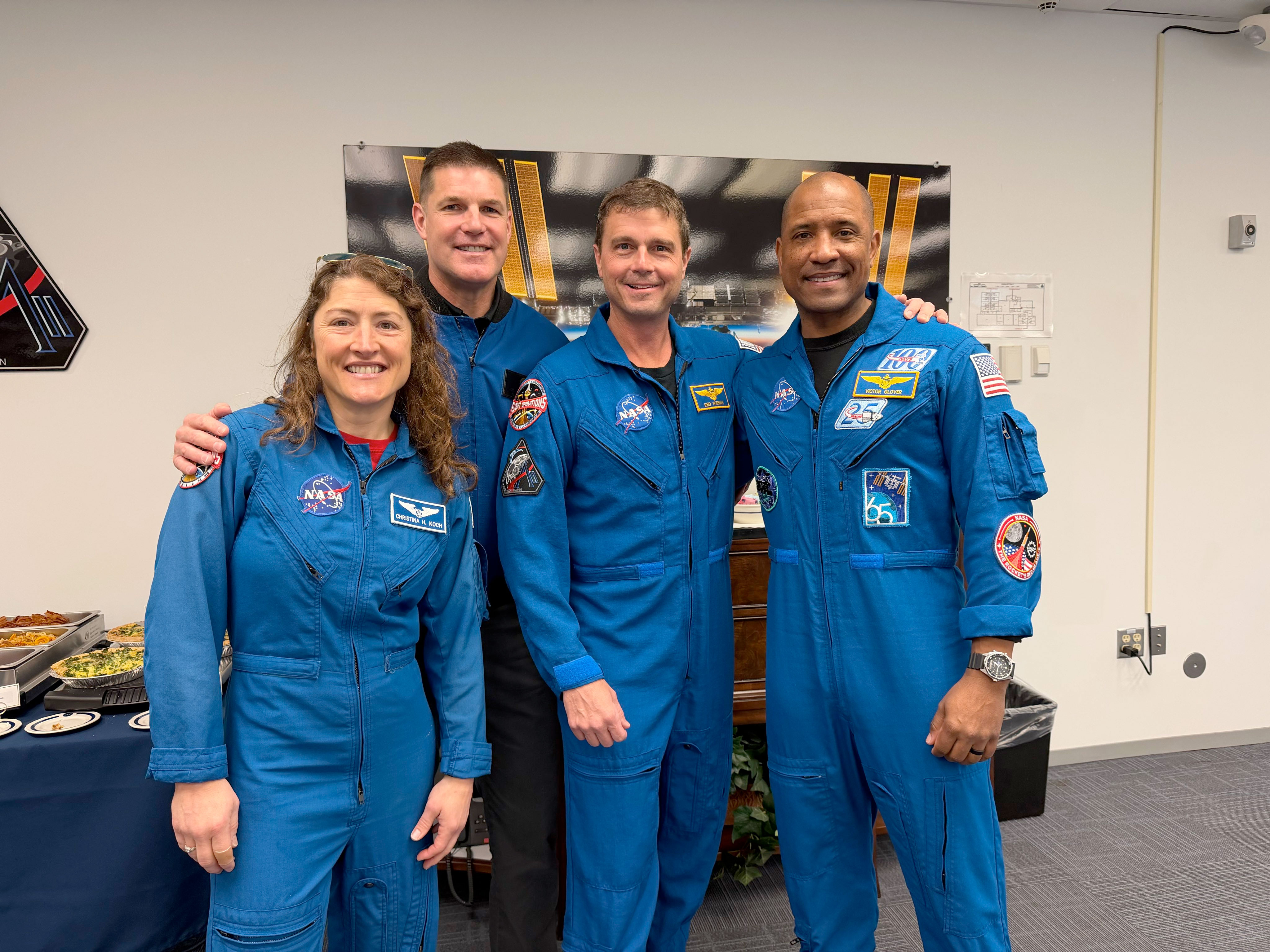
The crew just shared a peaceful breakfast with our families and we jump back into training tomorrow to start our preps for a March launch to the Moon.







 posted 01-16-2026 11:00 AM






 advertisement