Topic: [Discuss] NASA's Artemis II mission (Orion)
issman1 Member
Posts: 1247 From: UK Registered: Apr 2005
posted 04-10-2026 11:35 PM
Artemis II exceeded my expectations and hopefully the next mission does as well.
OV-105 Member
Posts: 956 From: Ridgecrest, CA Registered: Sep 2000
posted 04-10-2026 11:54 PM
Did anyone else think that one of the parachutes took a little longer to open up compared to the other two? I was having to watch on my phone.
GACspaceguy Member
Posts: 3342 From: Guyton, GA Registered: Jan 2006
posted 04-11-2026 04:55 AM
We thought it looked like that, it may not have caught as much air and thus needed some extra few seconds.
GACspaceguy Member
Posts: 3342 From: Guyton, GA Registered: Jan 2006
posted 04-11-2026 05:51 AM
During recovery it looked like they had to deploy the floatation collar out of the boat twice. It looked like the first time the uninflated collar was deployed but the team doing the deploy moved away from the Orion spacecraft. Did they use a backup or did we see that wrong?
SpaceAngel Member
Posts: 626 From: Maryland Registered: May 2010
posted 04-11-2026 06:36 AM
When will the four-person crew expected to return to JSC for their home coming event?
Robert Pearlman Editor
Posts: 57226 From: Houston, TX Registered: Nov 1999
posted 04-11-2026 07:34 AM
The crew was/is expected to arrive at Ellington between 7 a.m. and 7 p.m. CDT today. They will be greeted by NASA colleagues and their families. Their arrival is not open to the public, though a few members of the press will be there to share photos and videos.
quote:Originally posted by OV-105: ...one of the parachutes took a little longer to open up
Yes, but that is normal, according to NASA. The staggered main canopy deployment reduces extreme shock loads on the capsule and ensures stable deceleration.
quote:Originally posted by GACspaceguy: ...they had to deploy the floatation collar out of the boat twice.
The collar was deployed uninflated, attached to Orion, then inflated and then further secured to Orion, all to plan.
Robert Pearlman Editor
Posts: 57226 From: Houston, TX Registered: Nov 1999
posted 04-11-2026 09:38 AM
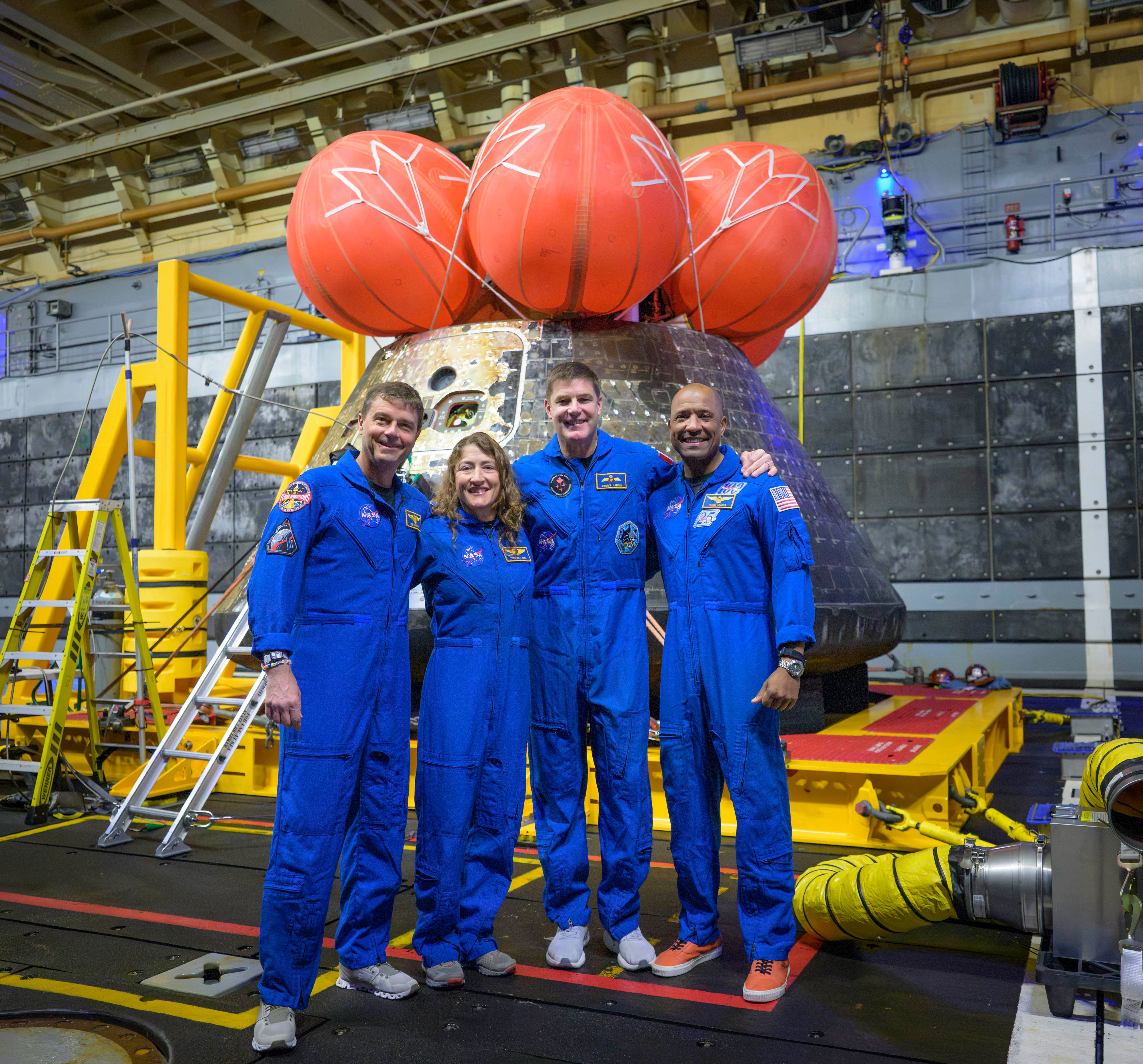
NASA photo (credit: Bill Ingalls)
NASA astronauts Reid Wiseman, commander; left, Christina Koch, mission specialist; CSA (Canadian Space Agency) astronaut Jeremy Hansen, mission specialist; and NASA astronaut Victor Glover, Artemis II pilot, right, pose for a group photo after viewing the Orion spacecraft in the well deck of USS John P. Murtha, Saturday, April 11, 2026, in the Pacific Ocean off the coast of California. The quartet splashed down Friday, April 10 at 5:07 p.m. PDT (8:07 p.m. EDT).
Robert Pearlman Editor
Posts: 57226 From: Houston, TX Registered: Nov 1999
posted 04-11-2026 03:21 PM
NASA video
After their historic journey around the Moon, the Artemis II astronauts are coming home. Watch as they arrive in Houston, Texas, home to NASA's Johnson Space Center.
Blackarrow Member
Posts: 3994 From: Belfast, United Kingdom Registered: Feb 2002
posted 04-11-2026 06:27 PM
Is there any official word on the maximum speed attained by Artemis II at or just after entry interface? My efforts to check this online produced contradictory AI results (not entirely surprising!).
On the NASA live-feed we saw a read-out of the spacecraft's speed during re-entry, but I have no faith in the figures I observed, which soared to over 25,600 mph before abruptly dropping to 14,000 mph. Has Apollo 10's record been broken?
Robert Pearlman Editor
Posts: 57226 From: Houston, TX Registered: Nov 1999
posted 04-11-2026 07:18 PM
I had the precise figure written down, but rounded it for the article to read "about 24,000 miles per hour." I was rounding up, so either way it was shy of the Apollo 10 record of 24,791 miles per hour.
Blackarrow Member
Posts: 3994 From: Belfast, United Kingdom Registered: Feb 2002
posted 04-11-2026 10:16 PM
Are you referring to a NASA announcement around entry interface when the capsule's speed was "34,800 feet per second?" That would be 23,727 mph, but I believe the maximum speed would be slightly later.
Robert Pearlman Editor
Posts: 57226 From: Houston, TX Registered: Nov 1999
posted 04-12-2026 12:26 AM
Public affairs officer Rob Navias asked FIDO for the projected maximum velocity and shared that figure during the descent. Later, FIDO confirmed that Integrity had followed its projected descent track with near perfect accuracy.
SpaceAngel Member
Posts: 626 From: Maryland Registered: May 2010
posted 04-12-2026 12:17 PM
How long it will take before "Integrity" is returned to KSC?
Robert Pearlman Editor
Posts: 57226 From: Houston, TX Registered: Nov 1999
posted 04-12-2026 01:22 PM
There were screen grabs being shared on social media showing a lighter area on Orion's heat shield post-reentry and, given its circular shape, some were suggesting that it was a hole. From NASA Administrator Jared Isaccman:
I am hesitant to get ahead of a proper data review, but I understand the space community's curiosity, especially when imagery can give the impression of a problem.
As you would expect, engineers were eager to inspect the heat shield, starting with diver imagery shortly after splashdown and continuing with the review aboard the ship. No unexpected conditions were observed. I suspect when the images are released, it will be pretty obvious the stark difference between Artemis I and Artemis II head shield performance.
As to the question specifically, the discoloration was not liberated material. The white color observed corresponds to the compression pad area and is consistent with the local geometry, AVCOAT byproducts, and transitional heating environments. We observed this behavior in arc jet testing and expected it in this compression pad area.
We will complete a full data review across all systems, including the thermal protection system, and make the results publicly available.
TLIGuy Member
Posts: 281 From: Virginia Registered: Jul 2013
posted 04-12-2026 06:40 PM
I know I'm not only one that enjoys looking for small details in NASA images.
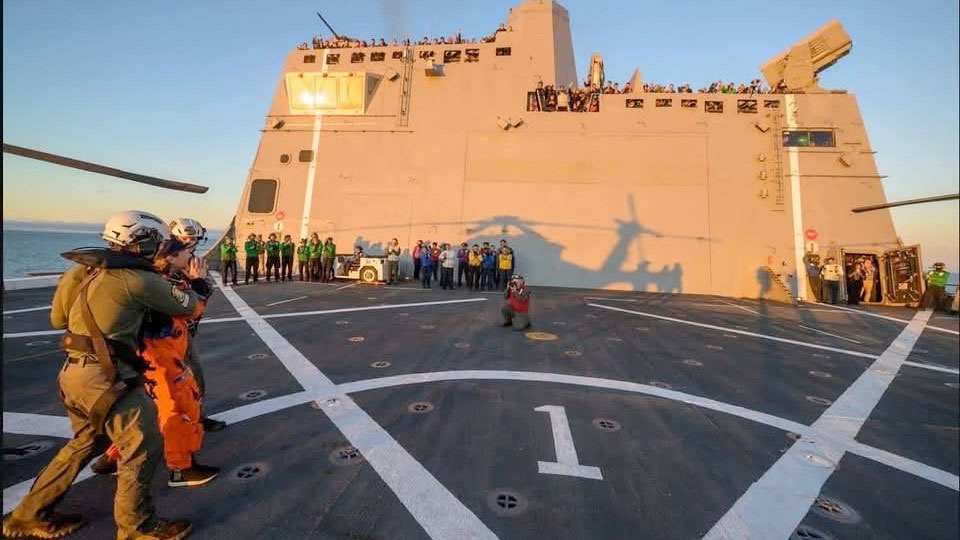
Am I the only one to see this little detail in the NASA photo taken onboard the USS John P. Murtha?
See it?
Top right window.
Well done sailors. BZ!!
Headshot Member
Posts: 1505 From: Vancouver, WA, USA Registered: Feb 2012
posted 04-12-2026 06:54 PM
Nice spotting of the other visitor from space.
Andy Anderson Member
Posts: 137 From: Perth, Australia Registered: Dec 2009
posted 04-13-2026 04:15 AM
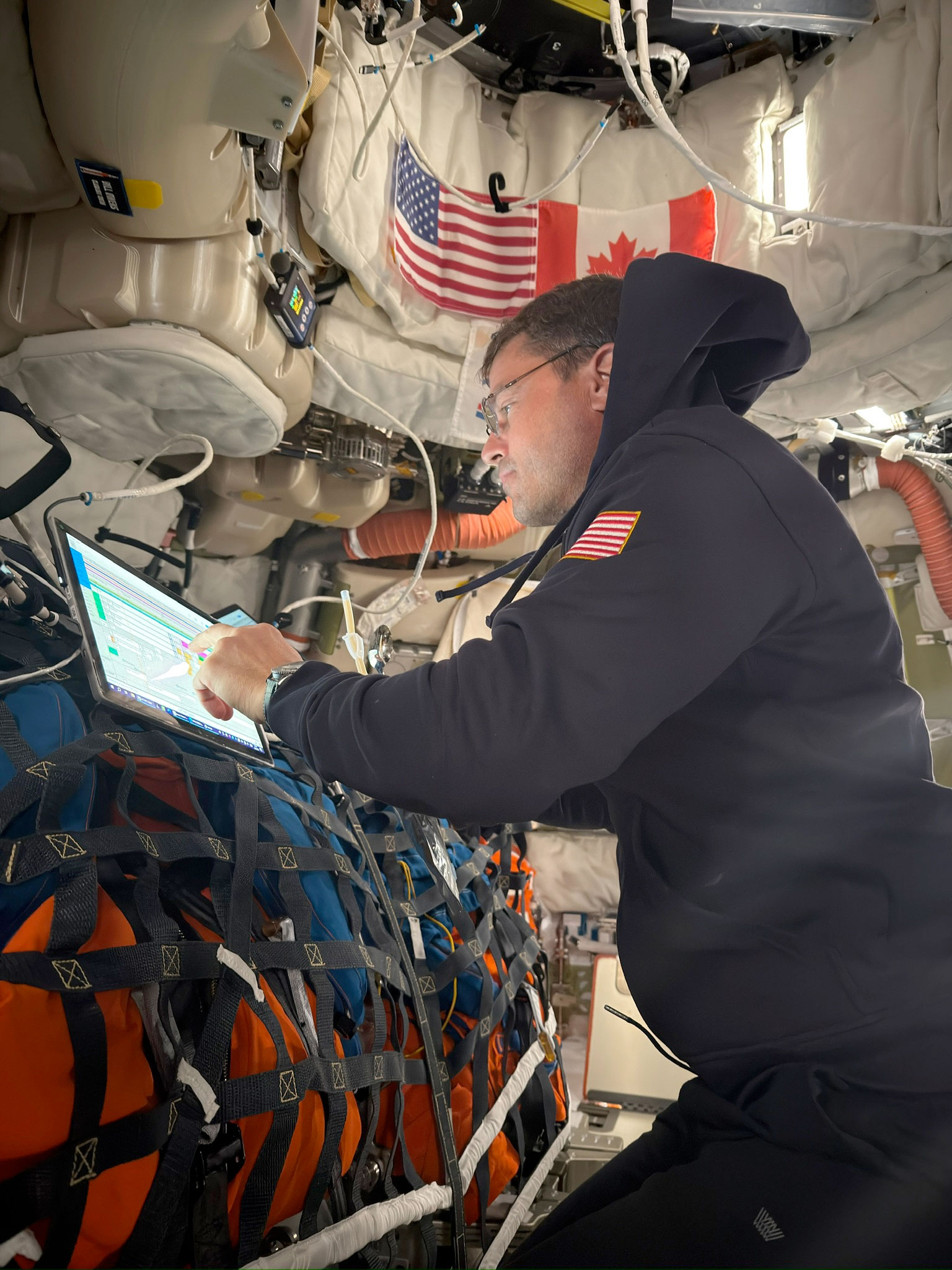
Excuse my ignorance, but what was or why were there items restrained by what looked like cargo nets in the Integrity cabin?
Robert Pearlman Editor
Posts: 57226 From: Houston, TX Registered: Nov 1999
posted 04-13-2026 07:10 AM
That was how the crew was able to stow their orange OCCS pressure suits and seats during the flight to open up the cabin more for access to the lockers (and toilet) beneath the seats and create a work and living area.
Dirk Member
Posts: 1063 From: Belgium Registered: Jul 2003
posted 04-13-2026 08:37 AM
Not sure if this has been posted, and I'm sure you all have seen this already, but it's pretty cool! Gene Cernan describes Artemis II...
Headshot Member
Posts: 1505 From: Vancouver, WA, USA Registered: Feb 2012
posted 04-13-2026 02:29 PM
Has Integrity been off-loaded from the USS John P. Murtha (LPD 26)?
Robert Pearlman Editor
Posts: 57226 From: Houston, TX Registered: Nov 1999
posted 04-13-2026 08:20 PM
The ship is back at port, but today was an opportunity for any active duty military to come aboard and see Orion still on the well deck.
Robert Pearlman Editor
Posts: 57226 From: Houston, TX Registered: Nov 1999
posted 04-15-2026 11:44 AM
Reid Wiseman has been named to the 2026 TIME100, the magazine's annual list of the 100 most influential people in the world.
Reid Wiseman led the first crewed mission to venture moonward in 54 years. The spacecraft commander headed a team of four on the Artemis II shakedown cruise of the new Orion spacecraft, flying a trajectory that took them to the moon and then 4,700 miles beyond the lunar far side — farther from Earth than any human beings have ever ventured...
Robert Pearlman Editor
Posts: 57226 From: Houston, TX Registered: Nov 1999
posted 04-16-2026 12:59 PM
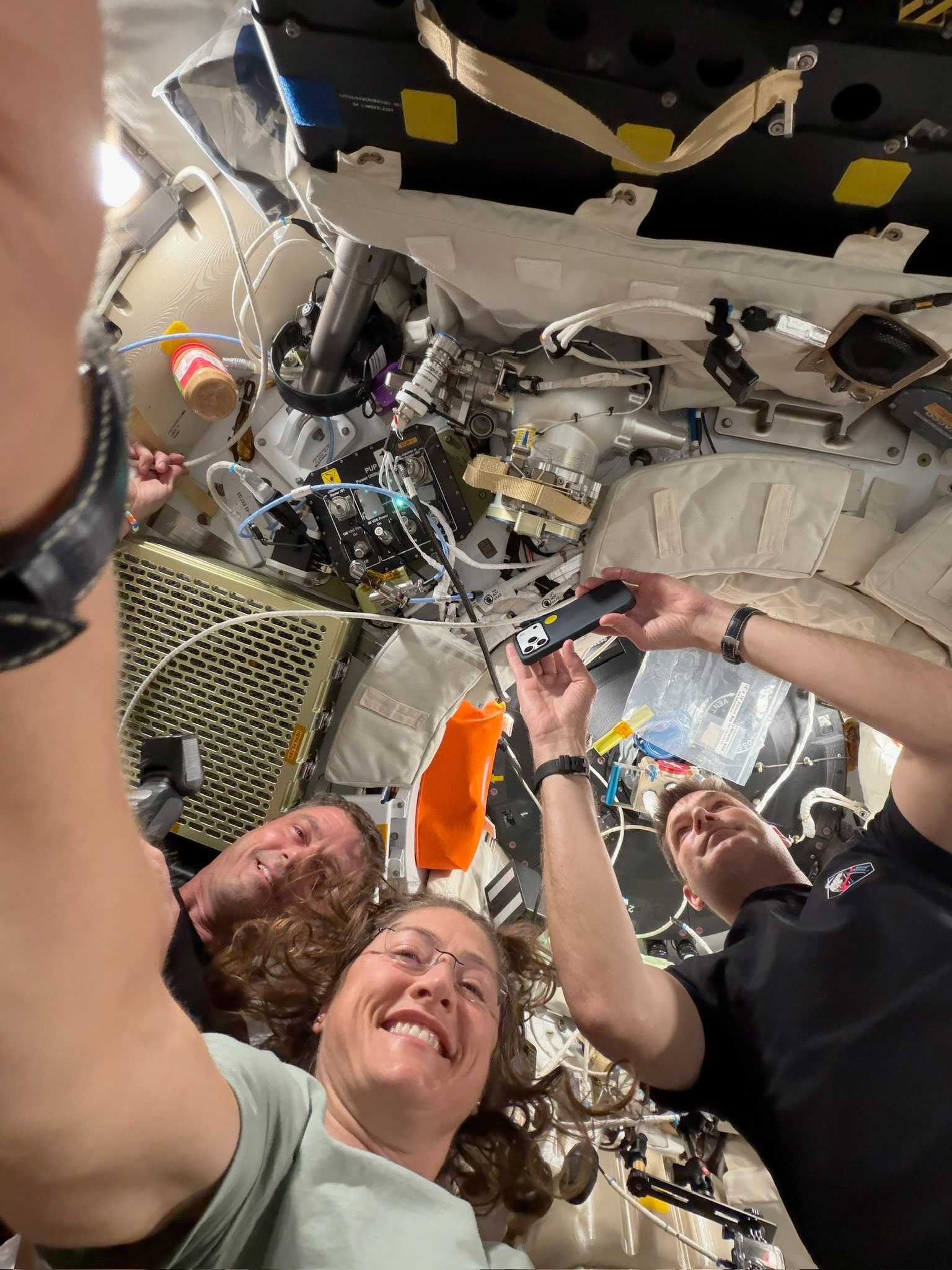
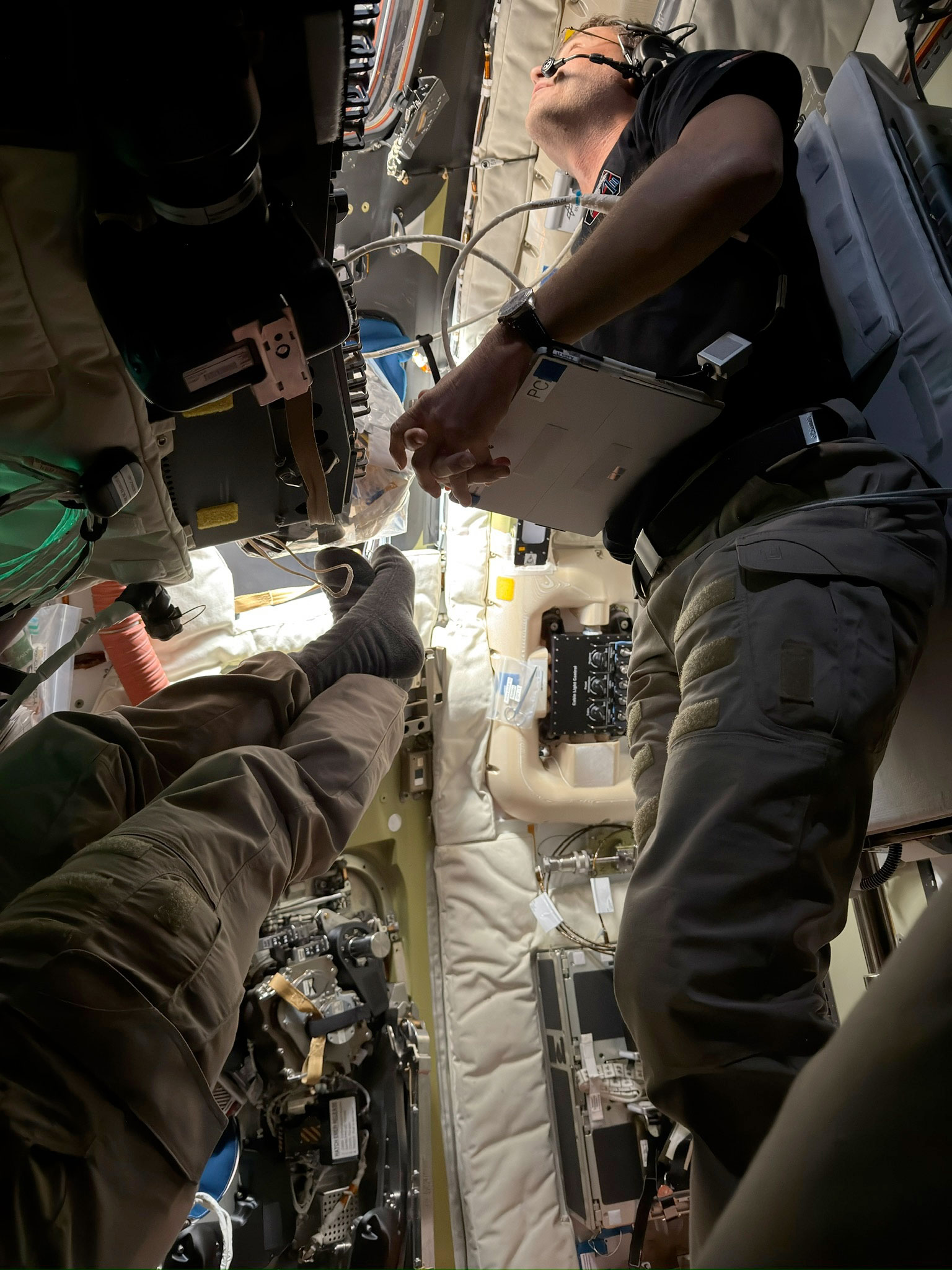
Some additional photos take aboard Orion:
Robert Pearlman Editor
Posts: 57226 From: Houston, TX Registered: Nov 1999
posted 04-16-2026 01:24 PM
NASA video
Live from NASA's Johnson Space Center in Houston, join the astronauts of Artemis II as they discuss their mission around the Moon.
Headshot Member
Posts: 1505 From: Vancouver, WA, USA Registered: Feb 2012
posted 04-16-2026 02:31 PM
Has NASA stated how many parachutes were recovered? Was the apex cover retrieved?
Robert Pearlman Editor
Posts: 57226 From: Houston, TX Registered: Nov 1999
posted 04-19-2026 08:41 AM
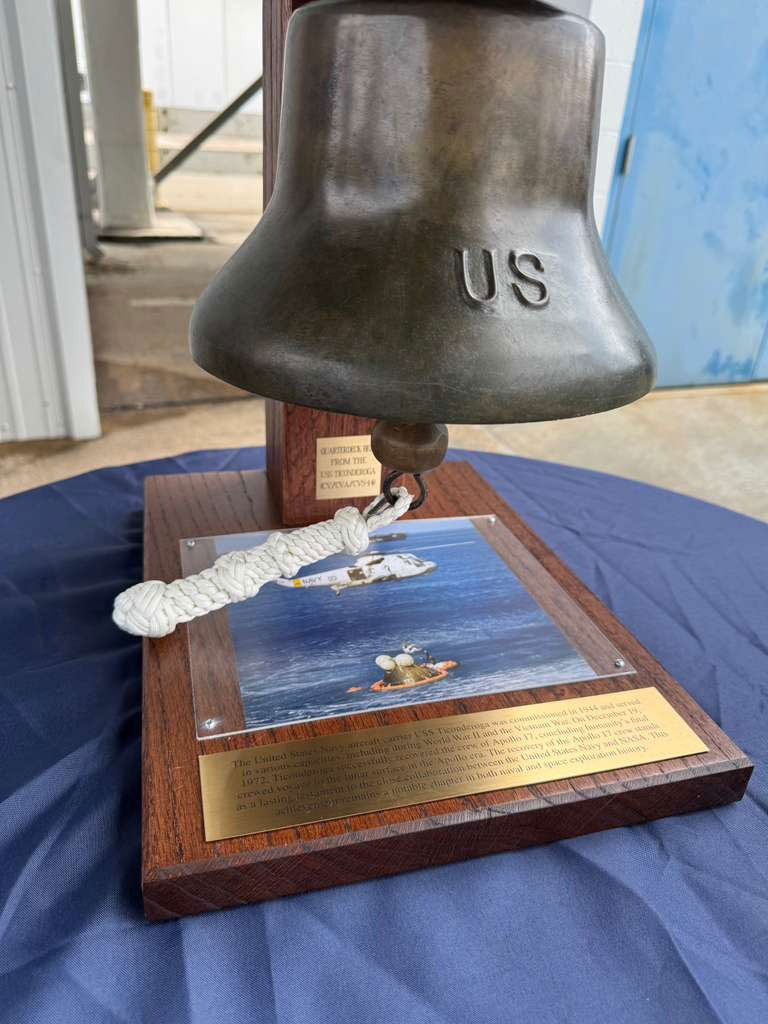
A nice touch shared by Rebecca Lawler, a member of the Platypi, NASA's 24th astronaut candidate class:
On loan from the U.S. Navy is the ship's bell from the quarterdeck of the USS Ticonderoga, which welcomed the Apollo 17 crew home after splashdown.
Members of our class (the platypi) were able to use it to announce the [Artemis II] crew's arrival. We rang the bell to welcome them stepping off the aircraft and onto the deck at Ellington Field.
Robert Pearlman Editor
Posts: 57226 From: Houston, TX Registered: Nov 1999
posted 04-19-2026 04:28 PM
quote:Originally posted by Headshot: Has Integrity been off-loaded...
Integrity is was taken off the ship on Friday (April 17) and the next day was lifted by crane into its crew module transportation fixture to be trucked to Florida.
Blackarrow Member
Posts: 3994 From: Belfast, United Kingdom Registered: Feb 2002
posted 04-20-2026 08:07 AM
On loan from the U.S. Navy is the ship's bell...
Wonderful!
Robert Pearlman Editor
Posts: 57226 From: Houston, TX Registered: Nov 1999
posted 04-21-2026 11:52 AM
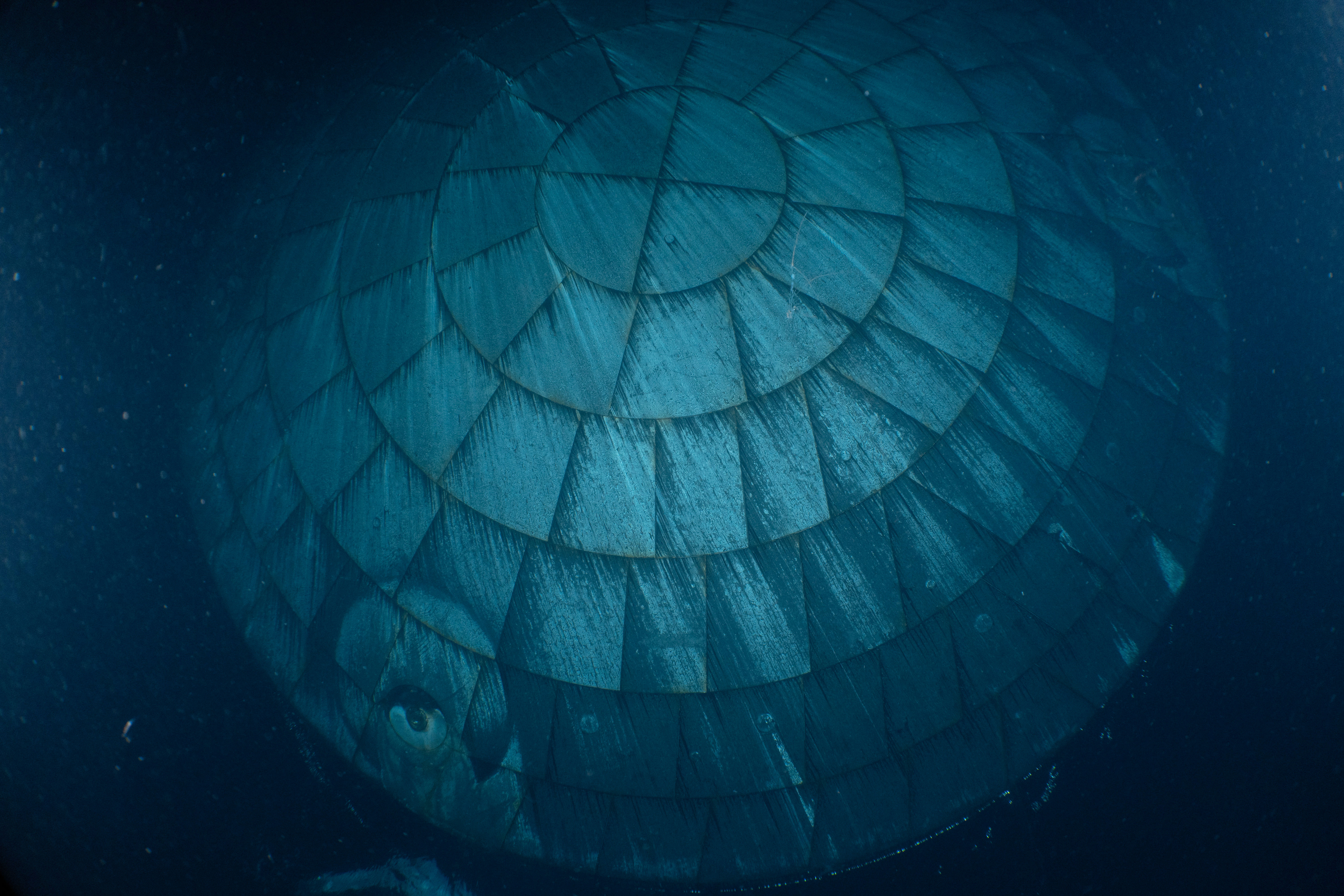
Soon after splashdown, Navy divers captured this underwater view of Integrity's heat shield:
Robert Pearlman Editor
Posts: 57226 From: Houston, TX Registered: Nov 1999
posted 04-22-2026 07:15 PM
U.S. Senate Committee on Commerce, Science and Transportation release
Cantwell, Cruz Introduce Resolution Honoring the Exceptional Success of the Artemis II Mission
Resolution honors the four astronauts who traveled farther from Earth than any human before, and the people and suppliers who made the mission's success possible
U.S. Senators Maria Cantwell (D-Wash.), Ranking Member of the Senate Committee on Commerce, Science and Transportation and Chairman Ted Cruz (R-Texas) today introduced a resolution to commemorate the hugely successful Artemis II mission that launched on April 1, 2026, and returned astronauts Reid Wiseman, Victor Glover, Christina Koch and Jeremy Hansen safely to Earth on April 10, 2026. The Artemis II mission took humans farther from Earth than ever before, when on April 6, 2026, the crew surpassed the record set by Apollo 13 for the farthest distance traveled by astronauts into deep space.
"Congratulations to NASA and the entire Artemis team on an extraordinary mission," said Sen. Cantwell. "The four astronauts who returned safely to Earth on April 10th paved the way not only for a return to the Moon, but for a sustained human presence there. When I spoke with the pilot of the Orion spacecraft, Victor Glover, during the mission, I was struck by his emphasis on the importance of human exploration itself — that there is something uniquely powerful about people going, seeing, learning, and representing all of us. With the support of 41 companies in Washington state, the Artemis II mission met its key objectives and was an absolute success. But beyond the mission's technical achievements, the astronauts also imparted a powerful message about unity and the importance of caring for our shared home planet."
"Artemis II reverberated around the world, sending a clear message: the United States will lead this new era of space exploration," said Sen. Cruz. "The crew and NASA's exceptional team, including those at Johnson Space Center, demonstrated the skill and determination needed to return to the Moon and prepare for future missions to Mars. I join all Americans in celebrating the work of these astronauts and our nation's historic achievement."
The resolution recognizes and commends the scientists, engineers, support personnel and the hundreds of suppliers that made the success of Artemis II possible and reaffirms the commitment of the United States to continue to lead the way in the space exploration and the science that makes such exploration possible. The success of the Artemis II mission paves the way for Artemis III, which will test our systems for returning humans to the lunar surface when it launches next year.
Sen. Cantwell has been a champion for our nation's space industry and its aerospace workforce. She spoke with the astronauts during their mission, and earlier this month, she visited several Washington companies that are supporting the Artemis II mission. In March, Sen. Cantwell led bipartisan, unanimous passage through the Commerce Committee of the NASA Authorization Act of 2026, which confirms support for the Artemis missions. As Chair of the Committee, Sen. Cantwell originally introduced the NASA Transition Authorization Act of 2024.
The full text of the resolution is below:
Commemorating April 6, 2026, as the day the Artemis II crew surpassed the record for the farthest distance traveled by astronauts into deep space and celebrating the success of the Artemis II mission.
Mr. Cruz (for himself and Ms. Cantwell) submitted the following resolution; which was referred to the Committee on __________
Whereas, on April 1, 2026, the Artemis II mission launched successfully aboard the Space Launch System rocket from the John F. Kennedy Space Center in Florida, marking a significant milestone in the efforts to return humans to the Moon and advance deep space exploration;
Whereas National Aeronautics and Space Administration astronauts Commander Reid Wiseman, Pilot Victor Glover, and Mission Specialist Christina Koch and Canadian Space Agency Mission Specialist Jeremy Hansen (referred to in this preamble as the "Artemis II crew") demonstrated exceptional skill, courage, and dedication in carrying out the historic Artemis II mission;
Whereas the Artemis II crew traveled aboard the Orion spacecraft named Integrity, which represents the enduring values of exploration, teamwork, and scientific discovery;
Whereas, on April 6, 2026, the Artemis II crew surpassed the record set by the Apollo 13 mission for the farthest distance traveled by astronauts from Earth, achieving a new milestone in human spaceflight;
Whereas Integrity eventually reached a maximum distance of 252,760 miles from Earth, surpassing the previous record of 248,655 miles set in 1970 and setting a new benchmark for crewed spaceflight;
Whereas the Artemis II mission represents a number of historic firsts in crewed space exploration, including the first woman, first African American, and first non-United States astronaut to travel beyond low Earth orbit;
Whereas the Artemis II mission was the first human journey to the vicinity of the Moon in more than 50 years;
Whereas this achievement reflects decades of sustained investment and leadership by the United States, in partnership with both the Canadian Space Agency and the European Space Agency, and the contributions of thousands of engineers, scientists, and skilled workers;
Whereas the Artemis effort is a partnership among government, industry, and international partners that involves more than 2,700 companies across the country whose collective expertise and coordination enabled successful execution of the Artemis II mission, demonstrating the strength of cooperative space exploration;
Whereas the Artemis II mission was managed from Mission Control and the Mission Evaluation Room at the Lyndon B. Johnson Space Center in Houston, Texas, where flight controllers, engineers, and support teams ensured the safety and success of the mission;
Whereas, on April 10, 2026, at 5:07 p.m. Pacific time, the Artemis II crew safely returned to Earth, splashing down in the Pacific Ocean off the coast of San Diego, California;
Whereas following splashdown, the United States Navy, with support from the United States Coast Guard, conducted recovery operations and successfully retrieved the Artemis II crew and spacecraft aboard the USS John P. Murtha (LPD–26);
Whereas the Artemis II mission showcased the economic and technological strength of the United States, which is supported by a highly skilled workforce and generates innovation across multiple sectors of the economy; and
Whereas the success of the Artemis II mission has inspired people around the world, rekindling a shared sense of wonder, possibility, and unity and reaffirming the commitment of the United States to peaceful exploration, scientific advancement, and international collaboration in space: Now, therefore, be it
Resolved, That the Senate—
commemorates April 6, 2026, as the day the Artemis II crew surpassed the record set by Apollo 13 for the farthest distance traveled by astronauts into deep space;
celebrates the successful completion of the Artemis II mission, including its launch, historic journey, and safe return to Earth;
honors the achievements and service of Reid Wiseman, Victor Glover, Christina Koch, and Jeremy Hansen;
celebrates technological and manufacturing excellence led by the United States as showcased by the successful Artemis II mission;
recognizes the critical contributions of the flight controllers, engineers, contractors, and support personnel, particularly those at the Lyndon B. Johnson Space Center, who ensured mission success;
commends the employees of the National Aeronautics and Space Administration, the Canadian Space Agency, and all industry and international partners whose efforts made the Artemis II mission possible; and
reaffirms the commitment of the United States to maintaining leadership in space exploration and advancing the peaceful use of space for the benefit of all humanity.
Robert Pearlman Editor
Posts: 57226 From: Houston, TX Registered: Nov 1999
posted 04-23-2026 12:05 PM
quote:Originally posted by Headshot: Has NASA stated how many parachutes were recovered? Was the apex cover retrieved?
According to NASA, none of the parachutes were retrieved. There was no mention of the apex cover.
Robert Pearlman Editor
Posts: 57226 From: Houston, TX Registered: Nov 1999
posted 04-29-2026 06:07 AM
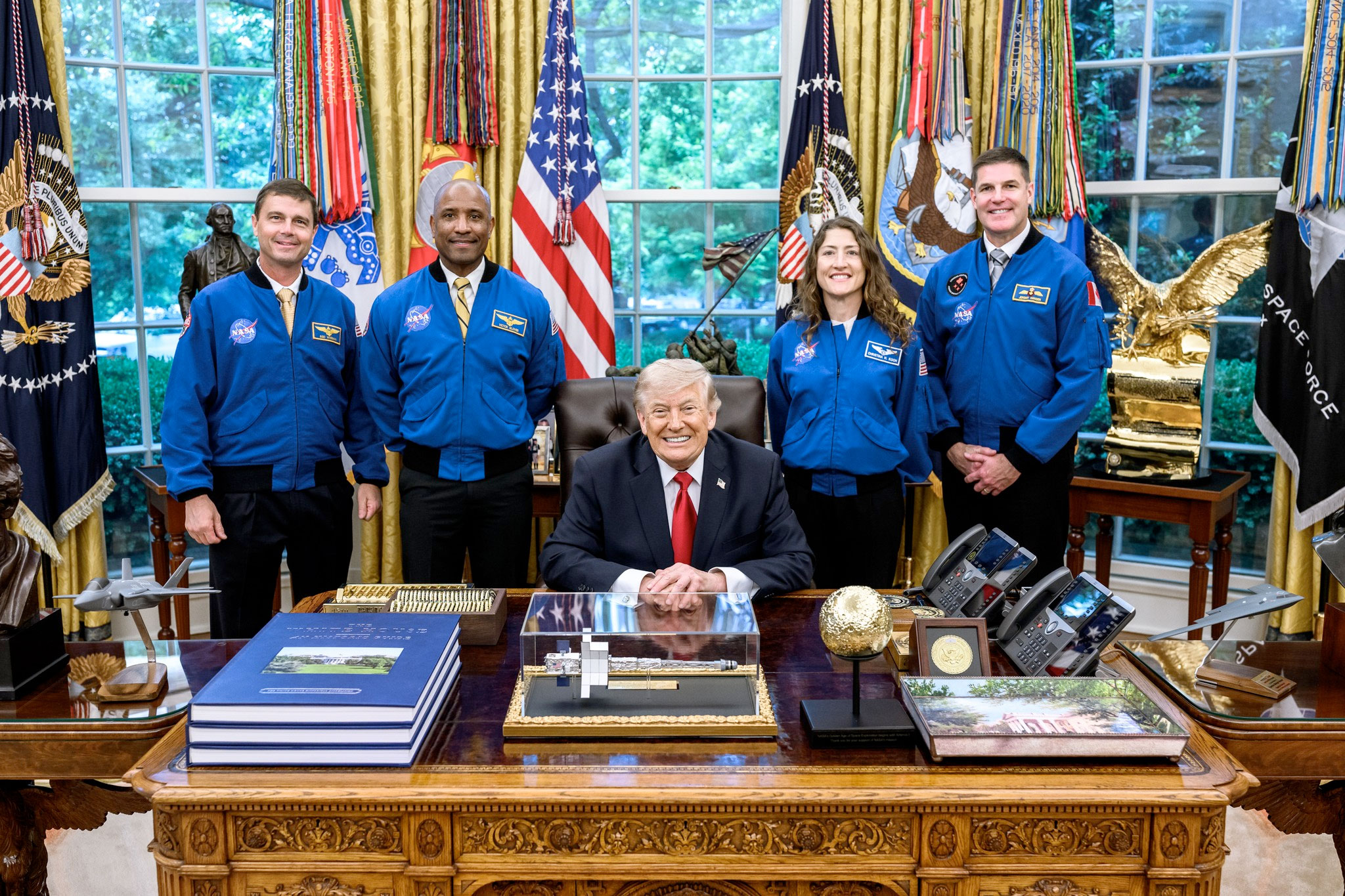
President Trump will host the crew in the Oval Office today (April 29) at 2 p.m. EDT (1800 GMT) to celebrate their achievements.
Robert Pearlman Editor
Posts: 57226 From: Houston, TX Registered: Nov 1999
posted 04-29-2026 09:03 PM
White House photos
Robert Pearlman Editor
Posts: 57226 From: Houston, TX Registered: Nov 1999
posted 04-30-2026 09:43 AM
The crew was Good Morning America today (April 30). At the conclusion, they were presented with personalized jars of Nutella, courtesy the brand:
The crew also appeared on the Today Show:
The astronauts were also on CNBC Squawk Box at the Nasdaq MarketSite and on Fox & Friends.
Robert Pearlman Editor
Posts: 57226 From: Houston, TX Registered: Nov 1999
posted 04-30-2026 11:36 PM
Reid, Victor (celebrating his 50th birthday), Christina and Jeremy on the Tonight Show with Jimmy Fallon:
Robert Pearlman Editor
Posts: 57226 From: Houston, TX Registered: Nov 1999
posted 05-01-2026 09:01 AM
CBS Mornings videos
Robert Pearlman Editor
Posts: 57226 From: Houston, TX Registered: Nov 1999
posted 05-04-2026 08:40 PM
Two Artemis II photography resources:
Artemis Timeline: Science communicator Hank Green gathered up all of the photography, video and audio released by PAO during the mission and organized by it the time it was created. You can access it all via the site.
Posts: 57226 From: Houston, TX Registered: Nov 1999
posted 05-06-2026 04:25 PM
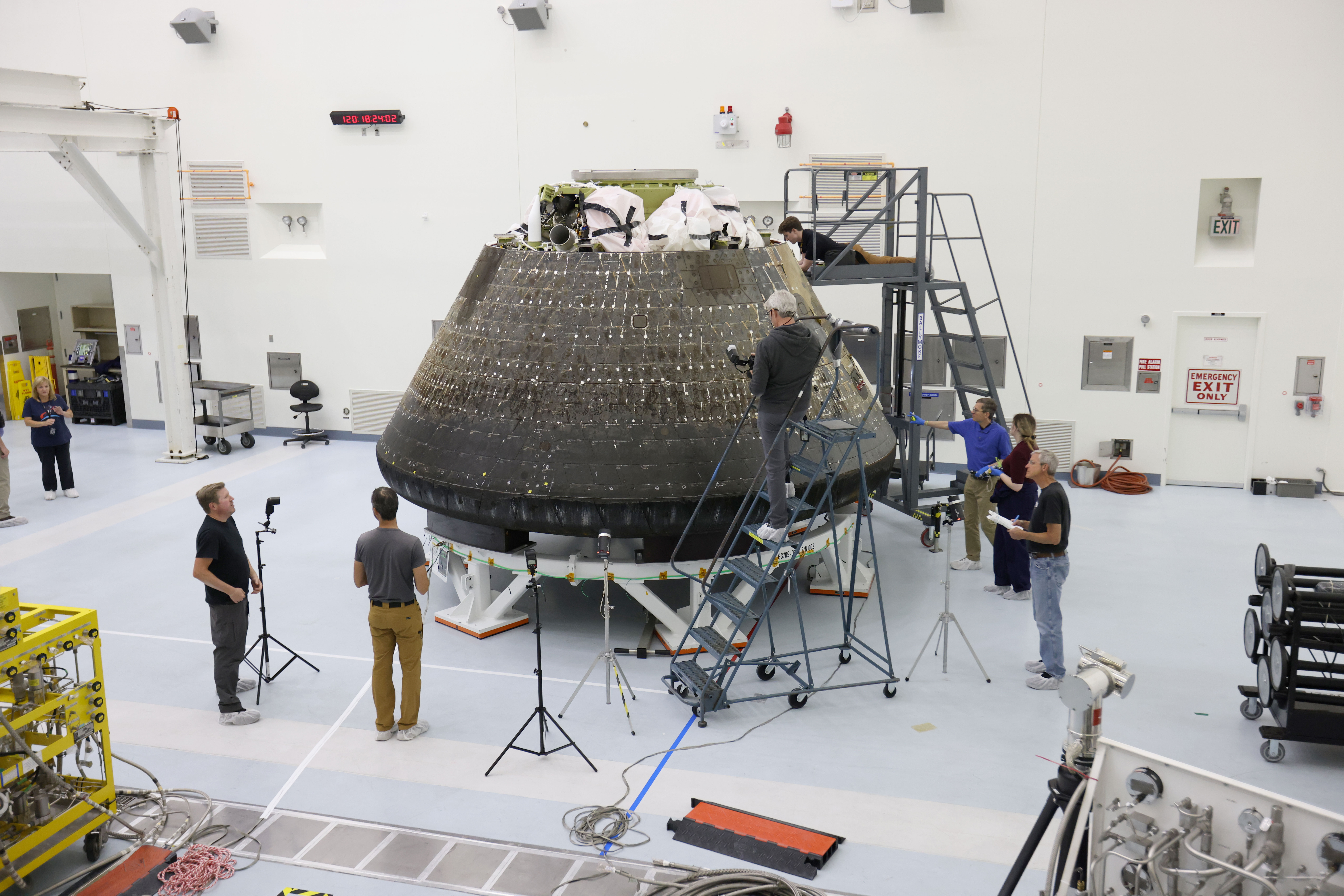
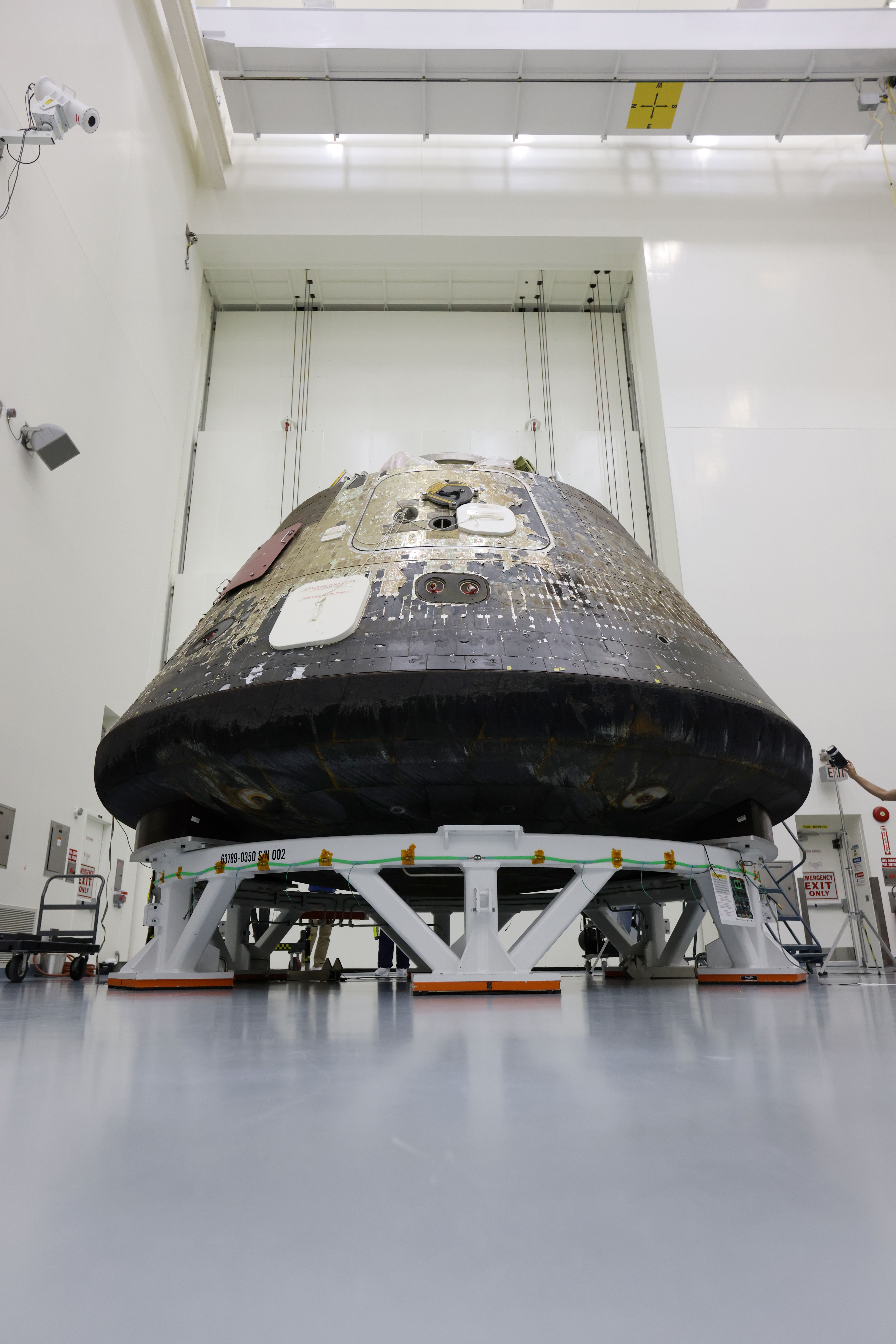
Integrity arrived back at the NASA's Kennedy Space Center Multi-Payload Processing Facility in Florida on Thursday (April 30), 2026, for de-servicing operations:
SpaceAngel Member
Posts: 626 From: Maryland Registered: May 2010
posted 05-07-2026 01:33 PM
I’m guessing that "Integrity" won't be reused again.
Robert Pearlman Editor
Posts: 57226 From: Houston, TX Registered: Nov 1999
posted 05-07-2026 02:15 PM
According to Lockheed Martin, the company is possibly looking at re-flying Integrity, but need to complete post-flight inspections and consult with NASA before making a decision.
If the pressure vessel does not get reused, its internal systems and hardware may be set aside for future reuse.







 posted 04-10-2026 11:35 PM








 advertisement