Posts: 50516 From: Houston, TX Registered: Nov 1999
posted 09-14-2011 09:02 AM
NASA release
Space Launch System (SLS) NASA Announces Design for New Deep Space Exploration System
NASA is ready to move forward with the development of the Space Launch System — an advanced heavy-lift launch vehicle that will provide an entirely new national capability for human exploration beyond Earth's orbit. The Space Launch System will give the nation a safe, affordable and sustainable means of reaching beyond our current limits and opening up new discoveries from the unique vantage point of space.
The Space Launch System, or SLS, will be designed to carry the Orion Multi-Purpose Crew Vehicle [MPCV], as well as important cargo, equipment and science experiments to Earth's orbit and destinations beyond. Additionally, the SLS will serve as a back up for commercial and international partner transportation services to the International Space Station.
"This launch system will create good-paying American jobs, ensure continued U.S. leadership in space, and inspire millions around the world," NASA Administrator Charles Bolden said. "President Obama challenged us to be bold and dream big, and that's exactly what we are doing at NASA. While I was proud to fly on the space shuttle, kids today can now dream of one day walking on Mars."
The SLS rocket will incorporate technological investments from the space shuttle program and the Constellation program in order to take advantage of proven hardware and cutting-edge tooling and manufacturing technology that will significantly reduce development and operations costs.
It will use a liquid hydrogen and liquid oxygen propulsion system, which will include the RS-25D/E from the space shuttle program for the core stage and the J-2X engine for the upper stage. SLS will also use solid rocket boosters for the initial development flights, while follow-on boosters will be competed based on performance requirements and affordability considerations.
The SLS will have an initial lift capacity of 70 metric tons (mT) and will be evolvable to 130 mT. The first developmental flight, or mission, is targeted for the end of 2017.
This specific architecture was selected, largely because it utilizes an evolvable development approach, which allows NASA to address high-cost development activities early on in the program and take advantage of higher buying power before inflation erodes the available funding of a fixed budget. This architecture also enables NASA to leverage existing capabilities and lower development costs by using liquid hydrogen and liquid oxygen for both the core and upper stages.
Additionally, this architecture provides a modular launch vehicle that can be configured for specific mission needs using a variation of common elements. NASA may not need to lift 130 mT for each mission and the flexibility of this modular architecture allows the agency to use different core stage, upper stage, and first-stage booster combinations to achieve the most efficient launch vehicle for the desired mission.
"NASA has been making steady progress toward realizing the president's goal of deep space exploration, while doing so in a more affordable way," NASA Deputy Administrator Lori Garver said. "We have been driving down the costs on the Space Launch System and Orion contracts by adopting new ways of doing business and project hundreds of millions of dollars of savings each year."
The Space Launch System will be NASA's first exploration-class vehicle since the Saturn V took American astronauts to the moon over 40 years ago. With its superior lift capability, the SLS will expand our reach in the solar system and allow us to explore cis-lunar space, near-Earth asteroids, Mars and its moons and beyond. We will learn more about how the solar system formed, where Earth' water and organics originated and how life might be sustained in places far from our Earth's atmosphere and expand the boundaries of human exploration. These discoveries will change the way we understand ourselves, our planet, and its place in the universe.
See here for discussion of NASA's heavy-lift launch vehicle development efforts.
Robert Pearlman Editor
Posts: 50516 From: Houston, TX Registered: Nov 1999
posted 09-16-2011 03:53 PM
Space Launch System (SLS)
SLS Initial Lift Capability
SLS Evolved Lift Capability
Weight:
5.5 million pounds
6.5 million pounds
Height:
320 feet
400 feet
Payload:
70 metric tons (154,000 lbs)
130 metric tons (286,000 lbs)
Thrust at liftoff:
8.4 million pounds (10 percent more than Saturn V)
9.2 million pounds (20 percent more than Saturn V)
See here for discussion of NASA's heavy-lift launch vehicle development efforts.
Robert Pearlman Editor
Posts: 50516 From: Houston, TX Registered: Nov 1999
posted 09-23-2011 02:36 PM
NASA release
NASA posts Space Launch System acquisition overview
NASA has released the acquisition overview for the Space Launch System (SLS). SLS is an entirely new advanced, heavy-lift launch vehicle that will take the agency's astronauts farther into space than ever before, create high-quality jobs here at home and provide the cornerstone for America's future human space exploration efforts.
This new heavy-lift rocket combined with the Orion crew capsule will provide an entirely new capability for human exploration beyond low Earth orbit and will back up commercial and international partner transportation services to the International Space Station. It will provide a fresh focus on new technologies and is key to implementing the plan laid out by President Obama and Congress in the bipartisan 2010 NASA Authorization Act, which the president signed last year.
The booster will be America's most powerful since the Saturn V rocket that carried Apollo astronauts to the moon and will launch humans to places no one has gone before. The rocket will give the nation a safe, affordable and sustainable means of reaching beyond our current range of space exploration. It will open new discoveries from unique vantage points and destinations far from Earth.
The SLS will carry the Orion Multi-Purpose Crew Vehicle and its astronaut crew, cargo, equipment and science experiments to an asteroid by the middle of the next decade and then to Mars.
The specific architecture was selected after analysis of the combination of technologies that would effectively meet the SLS capability requirements. The architecture also uses an evolvable development approach. This type of approach allows NASA to address high-cost development activities early on in the program while taking advantage of higher buying power before inflation erodes the available funding in a fixed budget.
Robert Pearlman Editor
Posts: 50516 From: Houston, TX Registered: Nov 1999
posted 03-14-2012 05:10 PM
NASA release
NASA Sub-Scale Solid-Rocket Motor Tests Material for Space Launch System
A sub-scale solid rocket motor designed to mimic NASA's Space Launch System, or SLS, booster design successfully was tested today by engineers at NASA's Marshall Space Flight Center in Huntsville, Ala. The 20-second firing tested new insulation materials on the 24-inch-diameter, 109-inch-long motor. The motor is a scaled down, low-cost replica of the solid rocket motors that will boost SLS off the launch pad.
Marshall is leading the design and development of the SLS on behalf of the agency. The new heavy-lift launch vehicle will expand human presence beyond low-Earth orbit and enable new missions of exploration across the solar system.
The test will help engineers develop and evaluate analytical models and skills to assess future full-scale SLS solid rocket motor tests. The next full-scale test, Qualification Motor-1 (QM-1), is targeted for spring 2013. Two five-segment solid rocket motors, the world's largest at 154-foot-long and 12-foot diameter, will be used in the first two 70-metric-ton capability flights of SLS.
Previous ground tests of the motors included carbon insulation to protect the rocket's nozzle from the harsh environment and 5000-degree temperatures to which it is exposed. QM-1 will include a new insulation material, provided by a new vendor, to line the motor's nozzle.
"Test firing small motors at Marshall provides a quick, affordable and effective way to evaluate the new nozzle liner's performance," said Scott Ringel, an engineer at Marshall and the design lead for this test. "We have sophisticated analytic and computer modeling tools that tell us whether the new nozzle insulation will perform well, but nothing gives us better confidence than a hot-fire test."
The test also includes several secondary objectives. The team introduced an intentional defect in the propellant with a tool designed to create a specific flaw size. By measuring the temperature inside the motor at the flaw location, the team hopes to gain a better understanding for the propellant's margin for error. Test data also will help the team better understand acoustics and vibrations resulting from the rocket motor's plume.
In addition, NASA's Engineering and Safety Center will use test data to measure a solid rocket motor's plume and how it reacts to certain materials.
Engineers from Marshall's Engineering Directorate designed the test motor with support from ATK Aerospace Systems of Huntsville, Ala. ATK of Brigham City, Utah, the prime contractor for the SLS booster, is responsible for designing and testing the SLS five-segment solid rocket motor.
Robert Pearlman Editor
Posts: 50516 From: Houston, TX Registered: Nov 1999
posted 04-03-2012 10:04 AM
NASA release
Space Launch System Program Completes Step One of Combined Milestone Reviews
America's next heavy-lift launch vehicle — the Space Launch System — is one step closer to its first launch in 2017, following the successful completion of the first phase of a combined set of milestone reviews.
The SLS Program has completed step one in a combined System Requirements Review and System Definition Review — both extensive NASA-led reviews that set requirements to further narrow the scope of the system design and evaluate the vehicle concept based on top-level program requirements. The reviews include setting launch vehicle requirements for crew safety and interfacing with the Orion Multi-Purpose Crew Vehicle to carry it to deep space as well as the ground operations and launch facilities at NASA's Kennedy Space Center in Cape Canaveral, Fla. Additionally, the reviews set cost and schedule requirements to provide on-time development.
"It's exciting to see how far this program has come in such a short time," said Todd May, SLS program manager at NASA's Marshall Space Flight Center in Huntsville, Ala. "Completion of this first step of reviews moves the nation's first deep space rocket from concept development to preliminary design."
The milestone reviews are two in a series of life-cycle reviews advancing the vehicle from concept design to flight readiness. Step one included a focused technical review of the program requirements with information on cost, schedule and risk. A standing review board comprised of technical experts from across the agency evaluated SLS program documents including vehicle requirements, specifications, plans, studies and reports. The board ensured specific criteria were met and confirmed that requirements are complete, validated and responsive to mission requirements.
The combination of the two reviews as well as safety and reliability analyses is a fundamentally different way of conducting program reviews. The SLS team is streamlining processes to provide a safe, affordable and sustainable rocket.
"This checkpoint gives us a mature understanding of the requirements, solidifies the vehicle concept design will meet all the requirements of the program and mission and signals that SLS is ready to begin engineering design activities," added May. "We're moving forward to deliver a new national capability to get America exploring space again."
Step two, which will begin in early summer, will include an integrated assessment of the technical and programmatic components fully evaluating cost, schedule and risk involved with the program.
Robert Pearlman Editor
Posts: 50516 From: Houston, TX Registered: Nov 1999
posted 04-03-2012 10:08 AM
Alliant Techsystems (ATK) release
NASA and ATK complete milestone in the development of the booster for the country's next deep space exploration system
NASA and ATK successfully completed the first test for NASA's Space Launch System (SLS) booster program March 28 at ATK's Promontory, Utah, test facility. This demonstration was a key avionics and controls test designated Flight Control Test 1 and included a fully integrated flight heritage thrust vector control (TVC) system with the new SLS booster avionics subsystem.
The avionics subsystem is responsible for booster ignition, nozzle steering and booster separation. This test will specifically focus on the avionics subsystem's ability to start-up, monitor, steer and shut down an SLS booster nozzle TVC system.
This test marks the first time a new avionics subsystem interfaced with and controlled a previously developed TVC system, performing an SLS launch simulation.
The avionics subsystem is responsible for commanding the vectoring of the booster's nozzles during flight. In addition to a new avionics subsystem, the test included new electronic ground support equipment which monitored and coordinated activities between the test facilities, avionics subsystem, and TVC system.
This test effort is one in a series of tests to reduce risk and validate the avionics subsystem design early in development life cycle.
"The test was a great milestone for ATK and NASA's SLS program," said Fred Brasfield, ATK's vice president, Next-Generation Booster. "The results not only validate the system, but also our streamlining efforts to produce a product that is robust, sustainable and affordable."
Affordability was designed in from the onset of developing a new avionics subsystem. From a common chassis design, to utilization of 14 common circuit cards, to standardization of cable designs, to single piece process flow — the company has incorporated lean manufacturing and continuous improvement principles in the avionics design.
"This successful test of the Flight Control System is a big step forward for NASA's Space Launch System, an advanced heavy-lift launch vehicle that will provide an entirely new national capability for human exploration beyond Earth's orbit," said Brasfield.
Two additional tests are planned for the avionics and controls system, culminating in supporting the first qualification test of the five segment motor which is currently scheduled for spring 2013.
ATK is an aerospace, defense, and commercial products company with operations in 22 states, Puerto Rico, and internationally.
Robert Pearlman Editor
Posts: 50516 From: Houston, TX Registered: Nov 1999
posted 06-21-2012 07:39 PM
NASA release
NASA Space Launch System core stage moves from concept to design
The nation's space exploration program is taking a critical step forward with a successful major technical review of the core stage of the Space Launch System (SLS), the rocket that will take astronauts farther into space than ever before.
The core stage is the heart of the heavy-lift launch vehicle. It will stand more than 200 feet (61 meters) tall with a diameter of 27.5 feet (8.4 meters).
Above: An expanded view of an artist rendering of the 70 metric ton configuration of NASA's Space Launch System.
NASA's Marshall Space Flight Center in Huntsville, Ala., hosted a comprehensive review. Engineers from NASA and The Boeing Co. of Huntsville presented a full set of system requirements, design concepts and production approaches to technical reviewers and the independent review board.
"This meeting validates our design requirements for the core stage of the nation's heavy-lift rocket and is the first major checkpoint for our team," said Tony Lavoie, manager of the SLS Stages Element at Marshall. "Getting to this point took a lot of hard work, and I'm proud of the collaboration between NASA and our partners at Boeing. Now that we have completed this review, we go from requirements to real blueprints. We are right on track to deliver the core stage for the SLS program."
The core stage will store liquid hydrogen and liquid oxygen to feed the rocket's four RS-25 engines, all of which will be former space shuttle main engines for the first few flights. The SLS Program has an inventory of 16 RS-25 flight engines that successfully operated for the life of the Space Shuttle Program. Like the space shuttle, SLS also will be powered initially by two solid rocket boosters on the sides of the launch vehicle.
The SLS will launch NASA's Orion spacecraft and other payloads, and provide an entirely new capability for human exploration beyond low Earth orbit. Designed to be safe, affordable and flexible for crew and cargo missions, the SLS will continue America's journey of discovery and exploration to destinations including nearby asteroids, Lagrange points, the moon and ultimately, Mars.
"This is a very exciting time for the country and NASA as important achievements are made on the most advanced hardware ever designed for human space flight," said William Gerstenmaier, associate administrator for the Human Exploration Operations Mission Directorate at NASA Headquarters in Washington. "The SLS will power a new generation of exploration missions beyond low Earth orbit and the moon, pushing the frontiers of discovery forward. The innovations being made now, and the hardware being delivered and tested, are all testaments to the ability of the U.S. aerospace workforce to make the dream of deeper solar system exploration by humans a reality in our lifetimes."
The first test flight of NASA's Space Launch System, which will feature a configuration for a 77-ton (70-metric-ton) lift capacity, is scheduled for 2017. As SLS evolves, a two-stage launch vehicle configuration will provide a lift capability of 143 tons (130 metric tons) to enable missions beyond low Earth orbit and support deep space exploration.
Boeing is the prime contractor for the SLS core stage, including its avionics. The core stage will be built at NASA's Michoud Assembly Facility in New Orleans using state-of-the-art manufacturing equipment. Marshall manages the SLS Program for the agency.
Across the SLS Program, swift progress is being made on several elements. The J-2X upper-stage rocket engine, developed by Pratt & Whitney Rocketdyne for the future two-stage SLS, is being tested at Stennis Space Center in Mississippi. The prime contractor for the five-segment solid rocket boosters, ATK of Brigham City, Utah, has begun processing its first SLS hardware components in preparation for an initial qualification test in 2013.
Robert Pearlman Editor
Posts: 50516 From: Houston, TX Registered: Nov 1999
posted 07-13-2012 03:04 PM
NASA release
NASA selects Space Launch System advanced booster proposals
NASA has chosen six proposals to improve the affordability, reliability and performance of an advanced booster for the Space Launch System. The awardees will develop engineering demonstrations and risk reduction concepts for SLS, a heavy-lift rocket that will provide an entirely new capability for human exploration beyond low Earth orbit.
"The initial SLS heavy-lift rocket begins with the proven hardware, technology and capabilities we have today and will evolve over time to a more capable launch vehicle through competitive opportunities," said William Gerstenmaier, associate administrator for the Human Exploration Operations Mission Directorate at NASA Headquarters in Washington. "While the SLS team is making swift progress on the initial configuration and building a solid baseline, we also are looking ahead to enhance and upgrade future configurations of the heavy lift vehicle. We want to build a system that will be upgradable and used for decades."
Designed to be flexible for launching spacecraft, including NASA's Orion multipurpose vehicle, for crew and cargo missions SLS will enable NASA to meet the president's goal of sending humans to an asteroid by 2025 and to Mars in the 2030s. The initial SLS configuration will use two five-segment solid rocket boosters similar to the solid rocket boosters that helped power the space shuttle to orbit. The evolved SLS vehicle will require an advanced booster with significant increase in thrust from any existing U.S. liquid or solid boosters.
Individual awards will vary with a total NASA investment of as much as $200 million.
Proposals selected for contract negotiations are:
"Subscale Composite Tank Set," Northrop Grumman Systems Corporation Aerospace Systems
"Full-Scale Combustion Stability Demonstration," Aerojet General Corp.
"F-1 Engine Risk Reduction Task," Dynetics Inc.
"Main Propulsion System Risk Reduction Task," Dynetics Inc.
"Structures Risk Reduction Task," Dynetics Inc.
"Integrated Booster Static Test," ATK Launch Systems Inc.
"We are building a new national capability to carry astronauts and science experiments beyond Earth orbit to new destinations in space," said Todd May, SLS program manager at NASA's Marshall Space Flight Center in Huntsville, Ala. "Our industry partners have presented a variety of options for reducing risk while increasing performance and affordability, and we're looking forward to seeing their innovative ideas come to life."
The proposal selections are the first step in the NASA Research Announcement procurement process. The second step, the formal contract award, will follow after further negotiations between NASA and selected organizations. All funded efforts will demonstrate and examine advanced booster concepts and hardware demonstrations during a 30-month period. This risk mitigation acquisition precedes the follow-on design, development, testing and evaluation competition for the SLS advanced booster currently planned for 2015.
All proposals will be valid for 12 months to allow for a later award should the opportunity become available, unless withdrawn by the offeror prior to award. Successful offerors to this NRA are not guaranteed an award for any future advanced booster acquisition.
The first test flight of NASA's Space Launch System, which will feature a configuration for a 77-ton (70-metric-ton) lift capacity, is scheduled for 2017. As SLS evolves, a two-stage launch vehicle configuration will provide a lift capability of 143 tons (130 metric tons).
Robert Pearlman Editor
Posts: 50516 From: Houston, TX Registered: Nov 1999
posted 07-25-2012 01:40 PM
NASA release
NASA's Space Launch System passes major agency review, moves to preliminary design
The rocket that will launch humans farther into space than ever before passed a major NASA review Wednesday. The Space Launch System (SLS) Program completed a combined System Requirements Review and System Definition Review, which set requirements of the overall launch vehicle system. SLS now moves ahead to its preliminary design phase.
The SLS will launch NASA's Orion spacecraft and other payloads, and provide an entirely new capability for human exploration beyond low Earth orbit.
These NASA reviews set technical, performance, cost and schedule requirements to provide on-time development of the heavy-lift rocket. As part of the process, an independent review board comprised of technical experts from across NASA evaluated SLS Program documents describing vehicle specifications, budget and schedule. The board confirmed SLS is ready to move from concept development to preliminary design.
"This new heavy-lift launch vehicle will make it possible for explorers to reach beyond our current limits, to nearby asteroids, Mars and its moons, and to destinations even farther across our solar system," said William Gerstenmaier, associate administrator for the Human Exploration and Operations Mission Directorate at NASA Headquarters in Washington. "The in-depth assessment confirmed the basic vehicle concepts of the SLS, allowing the team to move forward and start more detailed engineering design."
The reviews also confirmed the SLS system architecture and integration with the Orion spacecraft, managed by NASA's Johnson Space Center in Houston, and the Ground Systems Development and Operations Program, which manage the operations and launch facilities at NASA's Kennedy Space Center in Florida.
"This is a pivotal moment for this program and for NASA," said SLS Program Manager Todd May. "This has been a whirlwind experience from a design standpoint. Reaching this key development point in such a short period of time, while following the strict protocol and design standards set by NASA for human spaceflight is a testament to the team's commitment to delivering the nation's next heavy-lift launch vehicle."
SLS reached this major milestone less than 10 months after the program's inception. The combination of the two assessments represents a fundamentally different way of conducting NASA program reviews. The SLS team is streamlining processes to provide the nation with a safe, affordable and sustainable heavy-lift launch vehicle capability. The next major program milestone is the preliminary design review, targeted for late next year.
The first test flight of NASA's Space Launch System, which will feature a configuration for a 70-metric-ton (77-ton) lift capacity, is scheduled for 2017. As SLS evolves, a three-stage launch vehicle configuration will provide a lift capability of 130 metric tons (143 tons) to enable missions beyond low Earth orbit and support deep space exploration.
Robert Pearlman Editor
Posts: 50516 From: Houston, TX Registered: Nov 1999
posted 10-01-2012 03:58 PM
NASA release
NASA Awards Space Launch System Advanced Booster Contracts
NASA has awarded three contracts totaling $137.3 million to improve the affordability, reliability and performance of an advanced booster for the Space Launch System (SLS). The awardees will develop engineering demonstrations and risk reduction concepts for a future version of the SLS, a heavy-lift rocket that will provide an entirely new capability for human exploration beyond low Earth orbit.
The initial 77 ton (70 metric ton) SLS configuration will use two 5-segment solid rocket boosters similar to the boosters that helped power the space shuttle to orbit.
The evolved 143 ton (130 metric ton) SLS vehicle will require an advanced booster with more thrust than any existing U.S. liquid- or solid-fueled boosters. These new initiatives will demonstrate and examine advanced booster concepts and hardware demonstrations during a 30-month period.
The companies selected for SLS Advanced Booster contracts are:
ATK Launch Systems Inc. of Brigham City, Utah, which will demonstrate innovations for a solid-fueled booster. The contract addresses the key risks associated with low-cost solid propellant boosters, particularly in the areas of composite case design and development, propellant development and characterization, nozzle design and affordability enhancement, and avionics and controls development.
Dynetics Inc. of Huntsville, Ala., which will demonstrate the use of modern manufacturing techniques to produce and test several primary components of the F-1 rocket engine originally developed for the Apollo Program, including an integrated powerpack, the primary rotating machinery of the engine. Additionally, the contract will demonstrate innovative fabrication techniques for metallic cryogenic tanks.
Northrop Grumman Corporation Aerospace Systems of Redondo Beach, Calif., which will demonstrate innovative design and manufacturing techniques for composite propellant tanks with low fixed costs and affordable production rates. Independent time and motion studies will compare demonstration affordability data to SLS advanced booster development, production and operations.
Additional contracts may be awarded following successful negotiation of other proposals previously received for this NASA Research Announcement (NRA), subject to funding availability.
Designed to be flexible for launching payloads and spacecraft, including NASA's Orion spacecraft that will take humans beyond low Earth orbit, SLS will enable the agency to meet the Obama Administration's goal of sending humans to an asteroid by 2025 and to Mars in the 2030s.
The first flight test of NASA's SLS, an uncrewed mission to lunar orbit, which will feature a configuration for a 77-ton lift capacity, is scheduled for 2017. As SLS evolves, a two-stage launch vehicle configuration will provide a lift capability of 143 tons and include the improved, more powerful advanced booster.
These new contracts are funded under an NRA risk mitigation effort and acquisition. There will be a future competition for design, development, testing and evaluation for the SLS advanced booster. This future competition is planned for 2015 and will be acquired through a separate solicitation. The 2015 competition will not be limited to awardees announced in this NRA. Successful offerors to this NRA are not guaranteed an award for any future advanced booster acquisition.
As NASA endeavors to send humans to a range of new destinations, agency initiatives are helping develop a U.S. commercial space transportation industry with the goal of achieving safe, reliable and cost-effective transportation to and from the International Space Station and low Earth orbit. Ongoing advances made by NASA's commercial space partners are paving the way for regular contract flights of cargo to the space station and marking progress toward a launch of astronauts from U.S. soil in the next five years.
Robert Pearlman Editor
Posts: 50516 From: Houston, TX Registered: Nov 1999
posted 12-21-2012 03:15 PM
NASA release
NASA's Space Launch System Core Stage Passes Major Milestone, Ready to Start Construction
The team designing America's new flagship rocket has completed successfully a major technical review of the vehicle's core stage. NASA's Space Launch System (SLS) will take the agency's Orion spacecraft and other payloads beyond low-Earth orbit, providing a new capability for human exploration.
The core stage preliminary design review (PDR) was held Thursday at NASA's Marshall Space Flight Center in Huntsville, Ala., and included representatives from the agency and The Boeing Co. Boeing's Exploration Launch Systems in Huntsville is the prime contractor for the core stage and its avionics. Marshall manages the SLS Program.
Above: A machine operator stands on the first test panel for the Space Launch System's liquid hydrogen tank at AMRO Fabricating Corp. in South El Monte, Calif. (Photo: AMRO)
"Passing a preliminary design review within 12 months of bringing Boeing on contract shows we are on track toward meeting a 2017 launch date," said Tony Lavoie, manager of the SLS Stages Element at Marshall. "We can now allow those time-critical areas of design to move forward with initial fabrication and proceed toward the final design phase — culminating in a critical design review in 2014 — with confidence."
The first flight test of the SLS, which will feature a configuration for a 70-metric ton lift capacity and carry an uncrewed Orion spacecraft beyond the moon, is scheduled for 2017. As the SLS evolves, a two-stage launch vehicle using the core stage will provide a lift capability of 130-metric tons to enable missions beyond low-Earth orbit and to support deep space exploration.
The purpose of the PDR was to ensure the design met system requirements within acceptable risk and fell within schedule and budget constraints. An important part of the PDR was to prove the core stage could integrate safely with other elements of the rocket's main engines and solid rocket boosters, the crew capsule and the launch facilities at NASA's Kennedy Space Center in Florida. Core stage designers provided an in-depth assessment to a board of engineers comprised of propulsion and design experts from across the agency and the aerospace industry.
"Each individual element of this program has to be at the same level of maturity before we can move the program as a whole to the next step," SLS Program Manager Todd May said. "The core stage is the rocket's central propulsion element and will be an optimized blend of new and existing hardware design. We're building it with longer tanks, longer feed lines and advanced manufacturing processes. We are running ahead of schedule and will leverage that schedule margin to ensure a safe and affordable rocket for our first flight in 2017."
The core stage will be built at NASA's Michoud Assembly Facility in New Orleans using state-of-the-art manufacturing equipment. The plant continues modifying its facilities and ordering materials for construction of the rocket. Michoud has built components for NASA's spacecraft for decades, most recently, the space shuttle's external tanks.
Robert Pearlman Editor
Posts: 50516 From: Houston, TX Registered: Nov 1999
posted 02-14-2013 04:15 PM
NASA release
NASA awards final Space Launch System advanced booster contract
NASA has selected Aerojet of Sacramento, Calif., for a $23.3 million contract to develop engineering demonstrations and risk reduction concepts for future advanced boosters for the agency's Space Launch System (SLS).
Aerojet is one of four companies contracted under a NASA Research Announcement (NRA) to improve the affordability, reliability and performance of an advanced booster for a future version of the SLS heavy-lift rocket.
The SLS vehicle will take the agency's Orion spacecraft and other payloads farther than ever before. The initial 70-metric-ton (77-ton) configuration will use two five-segment solid rocket boosters similar to the boosters that helped power the space shuttle to orbit. An evolved 130-metric-ton (143-ton) rocket will require an advanced booster with more thrust than any existing U.S. liquid- or solid-fueled boosters.
Aerojet will work to reduce the risk and improve technical maturation of a liquid oxygen and kerosene oxidizer-rich staged-combustion engine. The company will fabricate a representative full-scale 550,000-pound thrust class main injector and thrust chamber, and prepare to conduct a number of tests measuring performance and demonstrating combustion stability.
In addition to Aerojet, three other companies are under contract to develop SLS advanced booster contracts including ATK Launch Systems Inc. of Brigham City, Utah; Dynetics Inc. of Huntsville, Ala.; and Northrop Grumman Corporation Aerospace Systems of Redondo Beach, Calif. These new initiatives will perform and examine advanced booster concepts and hardware demonstrations during an approximate 30-month period.
While commercial partners seek to fly astronauts and payloads to the International Space Station, NASA's SLS, with an uncrewed Orion spacecraft, will begin the first step towards deep space on a flight test in 2017.
Robert Pearlman Editor
Posts: 50516 From: Houston, TX Registered: Nov 1999
ATK Solid Rocket Boosters Complete Major Space Launch System Program Milestone
ATK has successfully completed its solid rocket booster Preliminary Design Review (PDR) with NASA for the new Space Launch System (SLS). The PDR milestone indicates the booster design is on track to support first flight of the SLS in 2017. The SLS vehicle will support NASA's human spaceflight exploration to all destinations beyond low-earth orbit.
"This is a tremendous milestone for ATK as we work toward building the boosters for our country's Space Launch System," said Charlie Precourt, vice president and general manager of ATK's Space Launch division. "NASA's SLS will enable human exploration for decades to come."
With the successful completion of PDR, the SLS booster design can now proceed with the associated activities required to advance the design toward Critical Design Review (CDR). Additionally, a ground static firing of qualification motor-1 is planned for later this year at ATK.
"The booster PDR was successful and speaks to the importance of a collaborative design process with our NASA customer" said Fred Brasfield, ATK vice president, Next-generation Booster.
The SLS booster PDR is a significant step toward providing the necessary technical and programmatic information needed for NASA to obtain approval to proceed with development of the Space Launch System--which will support a variety of missions of national and international importance.
Robert Pearlman Editor
Posts: 50516 From: Houston, TX Registered: Nov 1999
posted 07-30-2013 06:05 PM
NASA release
First Liquid Hydrogen Tank Barrel Segment for the SLS Core Stage Completed at Michoud
The first liquid hydrogen tank barrel segment for the core stage of NASA's new heavy-lift launch vehicle, the Space Launch System (SLS), recently was completed at the agency's Michoud Assembly Facility in New Orleans.
The segment is considered a "confidence" barrel segment because it validates the vertical weld center is working the way it should. The vertical weld center is a friction-stir-weld tool for wet and dry structures on the SLS core stage.
Friction stir welding uses frictional heating, combined with forging pressure, to produce high-strength bonds virtually free of defects. The welding process transforms metals from a solid state into a "plastic-like" state and uses a rotating pin tool to soften, stir and forge a bond between two metal plates to form a uniform welded joint -- a vital requirement of next-generation space hardware.
The vertical weld center, completed in June, is welding barrel panels together to produce whole barrels for the core stage's two pressurized tanks, the forward skirt and the aft engine section. The vertical weld center stands about three stories tall and weighs 150 tons.
The finished barrel segment stands at 22 feet tall, weighs 9,100 pounds and is made of Al 2219, an aerospace aluminum alloy. The segment will be used in structural tests to ensure the integrity of the piece. "This barrel section was welded as part of a plan to demostrate new weld tool manufacturing capabilities and will be used for futher production tool confidence welding activities," said Steve Holmes, manufacturing lead in the Stages Office at NASA's Marshall Space Flight Center in Huntsville, Ala. "The first fully welded barrel segments are extremely important to test tools and manufacturing processes prior to start of qualification hardware and first-flight articles."
Five similar barrels and two end domes will be constructed to make up the SLS core stage liquid hydrogen tank. The core stage will be more than 200 feet tall with a diameter of 27.6 feet, and it will store cryogenic liquid hydrogen and liquid oxygen that will feed the vehicle's RS-25 engines.
NASA and The Boeing Company engineers have been conducting friction-stir-welding tests at Michoud to ensure quality and safety of flight hardware. Boeing is the prime contractor for the SLS core stage, including its avionics. Marshall manages the SLS Program for the agency.
Robert Pearlman Editor
Posts: 50516 From: Houston, TX Registered: Nov 1999
posted 08-01-2013 03:50 PM
NASA release
NASA's Space Launch System Completes Preliminary Design Review
NASA has achieved a major milestone in its effort to build the nation's next heavy-lift launch vehicle by successfully completing the Space Launch System (SLS) preliminary design review.
Senior experts and engineers from across the agency concluded Wednesday the design, associated production and ground support plans for the SLS heavy-lift rocket are technically and programmatically capable of fulfilling the launch vehicle's mission objectives. NASA is developing the SLS and Orion spacecraft to provide an entirely new capability for human exploration beyond low-Earth orbit, with the flexibility to launch spacecraft for crew and cargo missions, including to an asteroid and Mars.
"The review had to be incredibly detailed, so our plans for vehicle integration, flight software, test, verification and operations will result in a safe, affordable and sustainable vehicle design," said Todd May, manager of the SLS Program at NASA's Marshall Space Flight Center in Huntsville, Ala.
This review concludes the initial design and technology development phase. The next milestone in the continuing verification process is Key Decision Point-C, in which NASA will grant the program authority to move from formulation to implementation.
"The agency not only reviews the program internally, but also seeks help from many external sources," said LeRoy Cain, head of the independent standing review board for SLS. "There are several external NASA stakeholders and organizations -- including Congress, the Office of Management and Budget, and the public -- who require a thorough, truly independent look at these programs as they transition through their lifecycle."
People from across the country, including experts on 11 different review teams, participated in the design review process, which included analysis of approximately 200 documents and 15 terabytes of data. NASA's industry partners -- The Boeing Company of Chicago, ATK of Brigham City, Utah, and Aerojet Rocketdyne of Sacramento, Calif. -- also contributed to this successful checkpoint, and will continue to work to meet all program milestones.
In July 2012, the SLS Program completed a combined system requirements review and system definition review, which set requirements of the overall launch vehicle system. That successful completion confirmed the SLS was ready to move from concept to design. All element-level preliminary design reviews for the SLS core stage, boosters, engines and spacecraft and payload integration have been completed successfully.
"In two short years from the first announcement of the Space Launch System, we are at a milestone that validates the detailed design and integration of the system," said Dan Dumbacher, deputy associate administrator for the Human Exploration and Operations Mission Directorate. "You can feel the momentum of the workforce as we produce test hardware today. We are creating a national capability, and we will get this country, and the world, exploring deep space."
The initial 70-metric-ton version of SLS will stand 321 feet tall, provide 8.4 million pounds of thrust at liftoff, and carry 154,000 pounds of payload. The rocket is scheduled for its first mission, Exploration Mission 1, in 2017 at which time it will launch an uncrewed Orion spacecraft. The mission's goal is to demonstrate the integrated system performance of the SLS rocket and spacecraft before a crewed flight in 2021.
The SLS will be modified from the 70-metric-ton version into the most powerful rocket ever built, a 130-metric-ton version, which will be capable of lifting 286,000 pounds. NASA plans to engage industry peers to further refine the 130-metric-ton design to support any destination, any payload and any mission to deep space.
Robert Pearlman Editor
Posts: 50516 From: Houston, TX Registered: Nov 1999
posted 08-01-2013 03:53 PM
NASA release
NASA's Space Launch System Program PDR: Answers to the Acronym
NASA's Space Launch System (SLS) Program recently completed its preliminary design review, commonly referred to as PDR. A quick inquiry of "What is PDR?" on a search engine pulls up everything from dent repairs to a physicians’ reference guide on prescription medications. So, what exactly is PDR when you're talking about building the world's most powerful rocket? And why is it important to the future of space missions? It's a lot more complex than its abbreviated moniker suggests.
The Design
Let's start at the beginning. To conduct a design review, there has to be a developing design. The 70 metric-ton SLS will stand 321 feet tall, provide 8.4 million pounds of thrust at liftoff, weigh 5.5 million pounds and carry 154,000 pounds of payload. That vehicle will set out on its first mission — Exploration Mission 1 — in 2017, launching an uncrewed Orion spacecraft to demonstrate the integrated system performance of the SLS rocket and spacecraft before a crewed flight.
The initial design will evolve into a 130 metric-ton (143 ton) configuration that will lift more than 286,000 pounds and provide 20 percent more thrust than the Saturn V, which launched American astronauts to the moon. Used primarily to launch heavy cargo, SLS will be the largest rocket ever built and will enable exploration missions beyond low-Earth orbit to many places in the solar system including Mars.
The 70 metric-ton SLS requires many critical parts to get it off the ground and safely into space, including solid rocket boosters, powerful engines, flight computers, avionics and the core stage. The core stage, towering more than 200 feet tall with a diameter of 27.6 feet, will carry cryogenic liquid hydrogen and liquid oxygen that will feed the vehicle’s RS-25 engines.
"For the SLS, we will use proven hardware designs and cutting-edge tooling and manufacturing technology that advanced during the space shuttle's evolution and from other exploration programs, which reduces manufacturing costs," said Garry Lyles, chief engineer for the SLS Program Office at NASA's Marshall Space Flight Center in Huntsville, Ala.
In July 2012, the SLS Program completed a combined system requirements review and system definition review, which set technical, performance, cost and schedule requirements for the overall launch vehicle system. That successful completion confirmed the SLS was ready to move to the preliminary design phase.
In that same month, the SLS Program achieved approval on Key Decision Point-B, which gave the thumbs up to move forward to PDR. That approval came less than a year after the official announcement of the SLS Program in September 2011. All element-level preliminary design reviews for the SLS core stage, boosters, engines and integrated spacecraft and payloads have been completed successfully.
"Milestone reviews, like PDR, are one of the most important and visible activities that the SLS Program will perform during the development phase," said Mike Ryschkewitsch, NASA's chief engineer. "Building a rocket is challenging. There are risks associated with human spaceflight. That's why we have reviews, like PDR — to mitigate those risks and improve the SLS design to make difficult missions possible. We want to expand human spaceflight and improve our lives on Earth through scientific research and exploration. We need a safe and sustainable vehicle to achieve those goals."
PDR demonstrates that the SLS preliminary design meets all the system requirements with acceptable risk and within cost and schedule constraints. It also proves that the SLS Program is ready to begin implementation.
At the review, which kicked off June 18-19, engineers and experts from across the agency discussed the design of SLS and any issues, or review item discrepancies (RID). A major review is not complete until all resulting RIDs and action items are closed out thoroughly and accurately. "There's a common misconception that RIDs are a bad thing, but really, they help make the design better," said Jim Turner, deputy manager of the Spacecraft and Vehicle Systems Department at Marshall. "PDR is the time to identify issues and ensure the design will successfully meet all mission requirements."
Thirty-one working days were dedicated to the review before the PDR board was held July 31. There, senior experts and engineers concluded that the design, associated production and ground support plans for SLS are technically and programmatically capable of fulfilling its mission objectives.
The Players
The saying "it takes a village to raise a child" — or in this case, a rocket — could definitely be applicable to the preparation for PDR. People from across the country including 11 independent review teams played a part in the preliminary design.
More than 200 documents, 15 terabytes of data and more than two days of presentations were delivered for PDR. Marshall's Engineering Directorate, provided the majority of those documents, which included drawings and data. "Our department, as well as many other engineering organizations across the Marshall Center and the agency, played an important role in PDR," said Helen McConnaughey, manager of the Spacecraft and Vehicle Systems Department. "This was an extensive, collaborative and thorough effort to understand, discuss and resolve any concerns associated with the preliminary design."
What's Next?
As a result of the PDR board, the findings will be presented by SLS Program management to Marshall’s Center Management Council. If the council concurs with the SLS Program's recommendation, the results then will be briefed to NASA's Human Exploration and Operations Mission Directorate. This will culminate in a final briefing, known as Key Decision Point-C, to the agency's administrator. That final briefing will grant the program approval to move forward from formulation to implementation.
"You can feel that we're going to go do this," said Dan Dumbacher, deputy associate administrator for NASA's Exploration and Operations Mission Directorate. "There is no doubt in my mind — assuming the budget will come like we need it to and within the plan that we have — we'll be flying SLS and Orion in 2017."
"We're going to get this country — and the world — exploring beyond low-Earth orbit very shortly," he added.
Robert Pearlman Editor
Posts: 50516 From: Houston, TX Registered: Nov 1999
posted 11-19-2013 01:03 PM
NASA release
NASA Tests Space Launch System Autopilot Technology on F/A-18 Jet
An F/A-18 research jet simulated various flight conditions that NASA's Space Launch System may experience as it makes its way from the launch pad to space, to evaluate the rocket's flight control system. The tests are helping engineers design a system that can autonomously adjust to unexpected conditions during flight.
NASA has completed the first tests with an F/A-18 research jet to evaluate the autonomous flight control system for the agency's Space Launch System (SLS) rocket.
The system, called the Adaptive Augmenting Controller, will allow SLS to respond to vehicle and environmental variations such as winds or vehicle flexibility after it blasts off the launch pad and heads toward space. This is the first time a flight control system for a NASA rocket is being designed to adjust autonomously to unexpected conditions during actual flight rather than pre-flight predictions. This ability to make real-time adjustments to the autopilot provides enhanced performance and increased safety for the crew.
The tests were flown Nov. 14-15 out of NASA's Dryden Flight Research Center at Edwards Air Force Base, Calif. During the flights, more than 40 tests were conducted using SLS-like trajectories. The system was evaluated in different scenarios for up to 70 seconds at a time to match the rocket's dynamics for the majority of its flight from liftoff to solid rocket booster separation.
"By flying a high-performance F/A-18 jet in a manner similar to our rocket, we're able to simulate SLS's flight conditions and improve our software," said Tannen VanZwieten, SLS flight controls working group lead. "The innovative system that we are testing at Dryden is advancing flight control technology by adding an adaptive element which is new for launch vehicles. We're using this technology to expand the capabilities of the SLS a bit more than what is possible with a traditional design."
During the flight, NASA simulated both normal and abnormal flight conditions, such as sloshing propellant, and identified key aircraft vibrational characteristics. The flight test data will be used to refine software for SLS and plans for future F/A-18 flights, which will run through the end of the year.
"This is an example of how advanced rocket technology can be checked out in flight without having to be launched into space," said John Carter, project manager for the flight tests at Dryden. "Doing this work on the F/A-18 test bed allows for low-cost, quick-schedule tests that can be repeated many times in order to gain confidence in the advanced controls technology, providing some unique testing advantages for this type of control system validation."
This flight control system will be ready for the first flight test of the SLS, scheduled for 2017. That flight will feature a 70-metric-ton (77-ton) lift capacity configuration and carry an uncrewed Orion spacecraft beyond low-Earth orbit to test the performance of the integrated system. As the SLS evolves, it will provide an unprecedented lift capability of 130-metric-tons (143 tons) to enable missions even farther into our solar system to places such as an asteroid and Mars.
Robert Pearlman Editor
Posts: 50516 From: Houston, TX Registered: Nov 1999
posted 01-10-2014 03:11 PM
NASA release
NASA Powers Up State-of-the-Art Space Launch System Software Avionics
The modern avionics system that will guide NASA's Space Launch System (SLS), the most powerful rocket ever built, has seen the light.
The flight software and avionics for SLS were integrated and powered for testing Thursday at NASA's Marshall Space Flight Center in Huntsville, Ala., as part of a milestone known as first light.
The milestone enables early integration and testing of avionics and software to help NASA perfect the system and ensure the units communicate together as designed. Avionics tell the rocket where it should fly and how it should pivot its engines to stay on course.
"We continue to make good progress developing SLS," said Dan Dumbacher, deputy associate administrator for exploration systems development at NASA Headquarters in Washington. "The avionics are like the central nervous system for the launch vehicle. They’re of critical importance and testing them early helps us build a more robust rocket."
The SLS avionics and the flight computer will be housed in the rocket's core stage. When completed, the core stage will be more than 200 feet tall and store cryogenic liquid hydrogen and liquid oxygen that will feed the rocket's RS-25 engines.
The first SLS flight test, targeted for 2017, will feature a configuration for a 70-metric-ton (77-ton) lift capacity and carry an uncrewed Orion spacecraft beyond low-Earth orbit to test the performance of the integrated system. As the SLS evolves, it will provide an unprecedented lift capability of 130 metric tons (143 tons) to enable missions even farther into our solar system to places such as to an asteroid and Mars.
The Boeing Company, prime contractor for the SLS core stage and its avionics, delivered the flight computers and supporting avionics hardware. NASA's Integrated Avionics Test Facilities team provided and installed the structure and simulation capability to model the environments the vehicle will experience during launch. With the avionics hardware units arranged in flight configuration on the structure and with the flight software, the facility will replicate what will actually fly the rocket.
Robert Pearlman Editor
Posts: 50516 From: Houston, TX Registered: Nov 1999
posted 07-02-2014 11:22 AM
Boeing release
NASA and Boeing Sign Space Launch System Contract
Agreement reached as core-stage critical design review closes
Boeing has finalized a contract with NASA to develop the core stage of the Space Launch System (SLS), the most powerful rocket ever built and destined to propel America's return to human exploration of deep space.
The $2.8 billion contract validates Boeing's earlier selection as the prime contractor on the SLS core stage, including the avionics, under an undefinitized contract authorization. In addition, Boeing has been tasked to study the SLS Exploration Upper Stage, which will further expand mission range and payload capabilities.
The agreement comes as NASA and the Boeing team complete the Critical Design Review (CDR) on the core stage — the last major review before full production begins.
"Our teams have dedicated themselves to ensuring that the SLS — the largest ever — will be built safely, affordably and on time," said Virginia Barnes, Boeing SLS vice president and program manager. "We are passionate about NASA's mission to explore deep space. It's a very personal mission, as well as a national mandate."
During the CDR, which began June 2, experts examined and confirmed the final design of the rocket's cryogenic stages that will hold liquefied hydrogen and oxygen. This milestone marks NASA's first CDR on a deep-space human exploration launch vehicle since 1961, when the Saturn V rocket underwent a similar design review as the United States sought to land an astronaut on the moon. Boeing participated in that CDR as well, as the three stages of the Saturn V were built by Boeing and its heritage companies Douglas Aircraft and North American Aviation.
Scheduled for its initial test flight in 2017, the SLS is designed to be flexible and evolvable to meet a variety of crew and cargo mission needs. The initial flight-test configuration will provide a 77-ton capacity, and the final evolved two-stage configuration will provide a lift capability of more than 143 tons.
Robert Pearlman Editor
Posts: 50516 From: Houston, TX Registered: Nov 1999
posted 08-27-2014 02:14 PM
NASA release
NASA Completes Key Review of World's Most Powerful Rocket in Support of Journey to Mars
NASA officials Wednesday announced they have completed a rigorous review of the Space Launch System (SLS) — the heavy-lift, exploration class rocket under development to take humans beyond Earth orbit and to Mars — and approved the program's progression from formulation to development, something no other exploration class vehicle has achieved since the agency built the space shuttle.
"We are on a journey of scientific and human exploration that leads to Mars," said NASA Administrator Charles Bolden. "And we're firmly committed to building the launch vehicle and other supporting systems that will take us on that journey."
Above: Artist concept of NASA's Space Launch System (SLS) 70-metric-ton configuration launching to space. (Credit: NASA/MSFC)
For its first flight test, SLS will be configured for a 70-metric-ton (77-ton) lift capacity and carry an uncrewed Orion spacecraft beyond low-Earth orbit. In its most powerful configuration, SLS will provide an unprecedented lift capability of 130 metric tons (143 tons), which will enable missions even farther into our solar system, including such destinations as an asteroid and Mars.
This decision comes after a thorough review known as Key Decision Point C (KDP-C), which provides a development cost baseline for the 70-metric ton version of the SLS of $7.021 billion from February 2014 through the first launch and a launch readiness schedule based on an initial SLS flight no later than November 2018.
Conservative cost and schedule commitments outlined in the KDP-C align the SLS program with program management best practices that account for potential technical risks and budgetary uncertainty beyond the program's control.
"Our nation is embarked on an ambitious space exploration program, and we owe it to the American taxpayers to get it right," said Associate Administrator Robert Lightfoot, who oversaw the review process. "After rigorous review, we're committing today to a funding level and readiness date that will keep us on track to sending humans to Mars in the 2030s — and we're going to stand behind that commitment."
"The Space Launch System Program has done exemplary work during the past three years to get us to this point," said William Gerstenmaier, associate administrator for the Human Explorations and Operations Mission Directorate at NASA Headquarters in Washington. "We will keep the teams working toward a more ambitious readiness date, but will be ready no later than November 2018."
The SLS, Orion, and Ground Systems Development and Operations programs each conduct a design review prior to each program's respective KDP-C, and each program will establish cost and schedule commitments that account for its individual technical requirements.
"We are keeping each part of the program — the rocket, ground systems, and Orion — moving at its best possible speed toward the first integrated test launch," said Bill Hill, director Exploration Systems Development at NASA. "We are on a solid path toward an integrated mission and making progress in all three programs every day."
"Engineers have made significant technical progress on the rocket and have produced hardware for all elements of the SLS program," said SLS program manager Todd May. "The team members deserve an enormous amount of credit for their dedication to building this national asset."
The program delivered in April the first piece of flight hardware for Orion's maiden flight, Exploration Flight Test-1 targeted for December. This stage adapter is of the same design that will be used on SLS's first flight, Exploration Mission-1.
Above: This artist concept shows NASA’s Space Launch System, or SLS, rolling to a launchpad at Kennedy Space Center at night. (Credit: NASA/MSFC)
Michoud Assembly Facility in New Orleans has all major tools installed and is producing hardware, including the first pieces of flight hardware for SLS. Sixteen RS-25 engines, enough for four flights, currently are in inventory at Stennis Space Center, in Bay St. Louis, Mississippi, where an engine is already installed and ready for testing this fall. NASA contractor ATK has conducted successful test firings of the five-segment solid rocket boosters and is preparing for the first qualification motor test.
SLS will be the world's most capable rocket. In addition to opening new frontiers for explorers traveling aboard the Orion capsule, the SLS may also offer benefits for science missions that require its use and can't be flown on commercial rockets.
The next phase of development for SLS is the Critical Design Review, a programmatic gate that reaffirms the agency's confidence in the program planning and technical risk posture.
Robert Pearlman Editor
Posts: 50516 From: Houston, TX Registered: Nov 1999
posted 09-12-2014 12:53 PM
NASA release
NASA Unveils World's Largest Spacecraft Welding Tool for Space Launch System
The largest spacecraft welding tool in the world, the Vertical Assembly Center officially is open for business at NASA's Michoud Assembly Facility in New Orleans. The 170-foot-tall, 78-foot-wide giant completes a world-class welding toolkit that will be used to build the core stage of America's next great rocket, the Space Launch System (SLS).
SLS will be the most powerful rocket ever built for deep space missions, including to an asteroid and eventually Mars. The core stage, towering more than 200 feet tall (61 meters) with a diameter of 27.6 feet (8.4 meters), will store cryogenic liquid hydrogen and liquid oxygen that will feed the rocket's four RS-25 engines.
Above: A 16mm fisheye lens was used to show a wide angle view of the Vertical Assembly Center at NASA’s Michoud Assembly Facility in New Orleans at a ribbon-cutting ceremony Sept 12. (NASA)
"This rocket is a game changer in terms of deep space exploration and will launch NASA astronauts to investigate asteroids and explore the surface of Mars while opening new possibilities for science missions, as well," said NASA Administrator Charles Bolden during a ribbon-cutting ceremony at Michoud Friday.
The Vertical Assembly Center is part of a family of state-of-the-art tools designed to weld the core stage of SLS. It will join domes, rings and barrels to complete the tanks or dry structure assemblies. It also will be used to perform evaluations on the completed welds. Boeing is the prime contractor for the SLS core stage, including avionics.
"The SLS Program continues to make significant progress," said Todd May, SLS program manager. "The core stage and boosters have both completed critical design review, and NASA recently approved the SLS Program's progression from formulation to development. This is a major milestone for the program and proof the first new design for SLS is mature enough for production."
Work is well underway on several additional welding tools. Engineers recently completed welding all the rings for the first flight of SLS using the Segmented Ring Tool. Ten barrels also have been welded for the SLS core stage using the Vertical Weld Center. The rings connect and provide stiffness between domes and barrels, which will make-up the five major core stage structures: the forward skirt, the liquid oxygen tank, the intertank, the liquid hydrogen tank and the engine section.
Robert Pearlman Editor
Posts: 50516 From: Houston, TX Registered: Nov 1999
posted 09-09-2015 04:01 PM
NASA release
Construction Begins on Test Version of Important Connection for SLS
Strong connection points between the stages of NASA's Space Launch System (SLS) -- the agency's advanced launch vehicle for exploration beyond Earth's orbit into deep space -- are essential to ensure that the rocket will withstand the loads it may experience during flight. The Launch Vehicle Stage Adapter, or LVSA, plays an important role in connecting two major sections of the rocket — the core stage and the upper stage.
The upper stage, known as the Interim Cryogenic Propulsion Stage, gives the Orion spacecraft the big, in-space push needed to fly beyond the moon before the spacecraft returns to Earth for the first flight test of SLS. The Orion spacecraft is connected to the upper stage with the Orion Stage Adapter.
Above: Marshall crew members prepare to install a LVSA structural test article panel onto the weld fixture. (NASA/MSFC/Emmett Given)
Welding of the major panels of a test version of the LVSA began in August at NASA's Marshall Space Flight Center in Huntsville, Alabama, where the agency manages the SLS program.
Marshall engineers, in close partnership with prime contractor Teledyne Brown Engineering of Huntsville, are applying friction-stir-welding capabilities and equipment. The friction-stir-welding process joins large pieces of the LVSA by stirring their edges together without completely melting the metal, resulting in a stronger weld than in standard welding practices. The Marshall weld team also developed an innovative modular tooling concept, which can make different size adapters using the same machinery – reducing costs and build time.
"We are starting to see the test version of the LVSA take shape," said Brent Gaddes, adapter manager for SLS. "This is a unique structure, which presents some challenges due to its large size and conical shape. However, we have a very capable team, both with Marshall and Teledyne Brown, and are building on our experience with the stage adapter that was used on Orion's first test flight in 2014."
Engineers have already completed structural test articles of the Orion stage adapter, core stage simulator and Orion spacecraft simulator. A test article for the interim cryogenic propulsion stage is currently in production at United Launch Alliance in Decatur, Alabama. When the test versions of all the parts are completed, engineers will stack them and move the 56-foot tall structure to a Marshall test stand for testing to verify the integrity of the hardware and ensure it can withstand the loads it may experience during flight.
The first flight test of the SLS will feature a Block I configuration for a 70-metric-ton (77-ton) lift capacity and carry an uncrewed Orion spacecraft beyond low-Earth orbit to test the performance of the integrated system. As the SLS evolves, it will provide an unprecedented lift capability of 130 metric tons (143 tons) to enable missions even farther into our solar system.
Robert Pearlman Editor
Posts: 50516 From: Houston, TX Registered: Nov 1999
The space agency has revealed a reworked color scheme for the Space Launch System heavy-lift booster, removing the paint from one major component, while adding "racing stripes" to another.
The new appearance was rolled out on Thursday (Oct. 22) with the announcement that a critical design review (CDR) had been completed. The review is a milestone toward the Space Launch System's (SLS) first test flight, targeted for 2018.
Robert Pearlman Editor
Posts: 50516 From: Houston, TX Registered: Nov 1999
posted 02-12-2016 10:24 AM
NASA release
The Making of a Mockup: Work Begins on NASA SLS Core Stage Pathfinder
Major work is beginning in three Alabama communities on a 213-foot, 230,000-pound simulation of the core stage of NASA's new rocket, the Space Launch System (SLS).
SLS will be the world's most powerful rocket for deep-space missions. The core stage, with flight hardware currently in production at NASA's Michoud Assembly Facility in New Orleans, will stand more than 200 feet tall and store cryogenic liquid hydrogen and liquid oxygen that will feed the vehicle's RS-25 engines.
The steel mockup, designed by engineers at NASA's Marshall Space Flight Center in Huntsville, Alabama, will demonstrate core stage operations and transportation, including routes for testing, assembly and launch. "This hardware is an excellent proving ground for the core stage — from manufacturing and assembly to the launch site," said Shane Carpenter, engineering lead on the core stage pathfinder project at Marshall. "We don't want the first time we transport the core stage to be with flight hardware. That's why having a pathfinder is critical to the program."
Radiance Technologies of Huntsville recently was selected by NASA to build, assemble and transport the pathfinder vehicle. The low-cost, core stage reproduction will be built at Dynetics' facility in Huntsville and G&G Steel in Russellville, Alabama. It will be a "shell" of the core stage, with no engines or avionics.
"We look forward to working with these companies on such an important project for SLS," said David Adcock, Stages pathfinder project lead at Marshall. "We want to ensure that the form and fit of the entire process for the core stage is successful, and any issues are addressed, before the flight hardware leaves Michoud. It helps reduce risk and keeps us on schedule."
After manufacturing, the high-precision pieces will be trucked to the G&G Steel plant in the small town of Cordova, Alabama, for final welding and assembly. The company stands close to the Black Warrior River, where the pathfinder will travel by barge to Michoud. Transport will be done by Barnhart Crane and Rigging of Huntsville.
The pathfinder is scheduled to be completed and delivered to NASA in early 2017.
Once the pathfinder is successfully delivered to Michoud, NASA will place it on the Pegasus barge to further validate all modifications made to the vessel for core stage transportation. Refurbishments have been made to the barge to accommodate the sheer size of the massive core stage include a new, 165-foot center section, which brings the total length of the barge from 260 feet to 310 feet — a little more than the length of a football field.
The mockup then will be shipped to NASA's Stennis Space Center near Bay St. Louis, Mississippi, and fit vertically in the B-2 test stand. The test stand is being completely refurbished for core stage testing in 2017. The pathfinder will travel again to NASA's Kennedy Space Center in Florida and placed vertically in the Vehicle Assembly Building, which also is undergoing major renovations for SLS. At both locations, the pathfinder will be used to ensure all modifications meet SLS core stage specifications.
The SLS Block I configuration will have a minimum 70-metric-ton (77-ton) lift capability and be powered by twin boosters and four RS-25 engines. The next planned upgrade of SLS, Block 1B, would use a more powerful exploration upper stage for more ambitious missions with a 105-metric-ton (115-ton) lift capacity. Block 2 will add a pair of advanced solid or liquid propellant boosters to provide a 130-metric-ton (143-ton) lift capacity. In each configuration, SLS will continue to use the same core stage and four RS-25 engines.
Robert Pearlman Editor
Posts: 50516 From: Houston, TX Registered: Nov 1999
posted 01-30-2017 08:05 AM
NASA release
Major Review Completed for NASA's New SLS Exploration Upper Stage
NASA has successfully completed the exploration upper stage (EUS) preliminary design review for the powerful Space Launch System rocket. The detailed assessment is a big step forward in being ready for more capable human and robotic missions to deep space, including the first crewed flight of SLS and NASA's Orion spacecraft in 2021.
"To send humans and even more cargo farther away from Earth than ever before, NASA decided to add a more powerful upper stage -- the upper part of the rocket that continues to operate after launch and ascent," said Kent Chojnacki, EUS team lead and preliminary design review manager.
"With the completion of this review, our teams will start developing components and materials for the EUS, and build up tooling," he added. "Full-scale manufacturing will begin after the critical design phase is completed." Critical design review is the next programmatic milestone that will provide a final look at the design and development of the EUS before beginning full-scale fabrication.
Starting with that first crewed mission, future configurations of SLS will include the larger exploration upper stage and use four RL10C-3 engines. The EUS will replace the interim cryogenic propulsion stage that will be used on the initial configuration of SLS for the first, uncrewed flight with Orion. The EUS will use an 8.4-meter diameter liquid hydrogen tank and a 5.5-meter diameter liquid oxygen tank. A new universal stage adapter will connect the EUS to the Orion spacecraft, and be capable of carrying large co-manifested payloads, such as a habitat.
The preliminary design review kicked off Nov. 30, 2016, with approximately 500 experts from across NASA and industry assessing more than 320 items on the EUS, including documents and data. This review had a new "techie" touch to it with the incorporation of virtual reality glasses, which gave teams enhanced visuals of how the EUS is put together and a broader perspective on the size of the hardware. The preliminary design review board was completed Jan. 19, with the board voting unanimously that the EUS is ready to move to the critical design phase.
"I couldn't be prouder of the SLS Stages team completing this review," said SLS Program Manager John Honeycutt. "We continue to make progress on hardware for SLS's first flight, while also working on the next-generation rocket that will take astronauts to deep-space destinations, like Mars."
The powerful stage will be built at NASA's Michoud Assembly Facility in New Orleans. Massive welding machines, like the Vertical Assembly Center, currently building the SLS core stage, also will help build the EUS liquid hydrogen tank. New tooling and assembly areas will be put in place to manufacture the liquid oxygen tank.
Once built, the EUS structural test article will undergo qualification testing at NASA's Marshall Space Flight Center in Huntsville, Alabama, to ensure the hardware can withstand the incredible stresses of launch. "Green run" testing on the first flight article will be done at NASA's Stennis Space Center near Bay St. Louis, Mississippi. For the test, the EUS and RL10 engines will fire up together for the first time before being sent to Kennedy Space Center in Florida for the 2021 launch.
Robert Pearlman Editor
Posts: 50516 From: Houston, TX Registered: Nov 1999
posted 09-06-2017 12:53 PM
Orbital ATK release
Orbital ATK Completes Qualification of Solid Rocket Booster Avionics for NASA's Space Launch System
Company's Five-Segment Boosters will Help Provide Initial Thrust for First Two Minutes of Flight for SLS
Full Booster Certification Set to Complete Later this Year
Orbital ATK, a global leader in aerospace and defense technologies, recently completed an important qualification test of the avionics system for the solid rocket boosters the company has developed and is now manufacturing for NASA's Space Launch System (SLS). Completion of this milestone is an important step toward preparing the SLS and Orion spacecraft for their first flight in 2019. Two Orbital ATK-developed five-segment rocket boosters will be used on each SLS launch to help provide initial thrust for the first two minutes of flight.
The avionics system is considered the "brains of the booster" as it starts booster ignition, communicates with the SLS launch vehicle computers during flight, and initiates booster separation upon completion of the first stage burn. The system is now qualified as meeting NASA's demanding human-rating requirements, which provide a level of redundancy to ensure a safe flight environment through various phases of lift-off, ascent and staging.
"Completion of booster avionics system qualification is a significant step forward in supporting overall vehicle qualification and launch of the first flight of SLS – Exploration Mission-1," said Jeff Foote, Vice President of NASA Programs for Orbital ATK's Propulsion Systems Division. "We are proud of this accomplishment and look forward to completing full certification of the booster later this year."
Qualification of the booster avionics system included a rigorous and comprehensive test series that thoroughly verified the fidelity of the system in a variety of expected and abnormal conditions. Key interactions confirmed during qualification testing included the ability to initiate booster ignition, control the booster during flight, and terminate flight.
Robert Pearlman Editor
Posts: 50516 From: Houston, TX Registered: Nov 1999
posted 10-21-2019 09:27 AM
NASA release
NASA Commits to Future Artemis Missions With More SLS Rocket Stages
NASA has taken the next steps toward building Space Launch System (SLS) rocket core stages to support as many as 10 Artemis missions, including the mission that will carry the first woman and next man to the Moon by 2024.
The agency intends to work with Boeing, the current lead contractor for the core stages of the rockets that will fly on the first two Artemis missions, for the production of SLS rockets through the next decade. The core stage is the center part of the rocket that contains the two giant liquid fuel tanks. Towering 212 feet with a diameter of 27.6 feet, it will store cryogenic liquid hydrogen and liquid oxygen and all the systems that will feed the stage's four RS-25 engines. It also houses the flight computers and much of the avionics needed to control the rocket's flight.
Above: NASA finished assembling the main structural components for the Space Launch System (SLS) rocket core stage on Sept. 19. Engineers at NASA's Michoud Assembly Facility in New Orleans fully integrated the last piece of the 212-foot-tall core stage by adding the engine section to the rest of the previously assembled structure. (NASA/Steven Seipel)
NASA has provided initial funding and authorization to Boeing to begin work toward the production of the third core stage and to order targeted long-lead materials and cost-efficient bulk purchases to support future builds of core stages. This action allows Boeing to manufacture the third core stage in time for the 2024 mission, Artemis III, while NASA and Boeing work on negotiations to finalize the details of the full contract within the next year. The full contract is expected to support up to 10 core stages and up to eight Exploration Upper Stages (EUS).
"It is urgent that we meet the President's goal to land astronauts on the Moon by 2024, and SLS is the only rocket that can help us meet that challenge," said NASA Administrator Jim Bridenstine. "These initial steps allow NASA to start building the core stage that will launch the next astronauts to set foot on the lunar surface and build the powerful exploration upper stage that will expand the possibilities for Artemis missions by sending hardware and cargo along with humans or even heavier cargo needed to explore the Moon or Mars."
Boeing's current contract includes the SLS core stages for the Artemis I and Artemis II missions and the first EUS, as well as structural test articles and the core stage pathfinder. The new contract is expected to realize substantial savings compared to the production costs of core stages built during the design, development, test and evaluation phase by applying lessons learned during first-time builds and gaining efficiencies through bulk purchases.
"NASA is committed to establishing a sustainable presence at the Moon, and this action enables NASA to continue Space Launch System core stage production in support of that effort to help bring back new knowledge and prepare for sending astronauts to Mars," said John Honeycutt, SLS Program Manager at Marshall. "SLS is the only rocket powerful enough to send Orion, astronauts and supplies to the Moon on a single mission, and no other rocket in production today can send as much cargo to deep space as the Space Launch System rocket.
For the first three Artemis missions, the SLS rocket uses an interim cryogenic propulsion stage to send the Orion spacecraft to the Moon. The SLS rocket is designed to meet a variety of mission needs by evolving to carry greater mass and volume with a more powerful EUS. The EUS is an important part of Artemis infrastructure needed to send astronauts and large cargo together, or larger cargo-only shipments, to the Moon, Mars and deep space. NASA aims to use the first EUS on the Artemis IV mission, and additional core stages and upper stages will support either crewed Artemis missions, science missions or cargo missions.
"The exploration upper stage will truly open up the universe by providing even more lift capability to deep space," said Julie Bassler, the SLS Stages manager at Marshall. "The exploration upper stage will provide the power to send more than 45 metric tons, or 99 thousand pounds, to lunar orbit."
Robert Pearlman Editor
Posts: 50516 From: Houston, TX Registered: Nov 1999
posted 06-29-2020 04:02 PM
NASA release
NASA Plans for More SLS Rocket Boosters to Launch Artemis Moon Missions
NASA has taken the next steps toward building Space Launch System (SLS) solid rocket boosters to support as many as six additional flights, for a total of up to nine Artemis missions. The agency is continuing to work with Northrop Grumman of Brigham City, Utah, the current lead contractor for the solid rocket boosters that will launch the first three Artemis missions, including the mission that will land the first woman and next man on the Moon in 2024.
Under this letter contract, with a potential value of $49.5 million, NASA will provide initial funding and authorization to Northrop Grumman to order long-lead items to support building the twin boosters for the next six SLS flights. Northrop Grumman will be able to make purchases as the details of the full contract are finalized within the next year. The full Boosters Production and Operations Contract is expected to support booster production and operations for SLS flights 4-9. The period of performance for the letter contract is 150 days; the definitized contract will extend through Dec. 31, 2030.
"This initial step ensures that NASA can build the boosters needed for future Space Launch System rockets that will be needed for the Artemis missions to explore the Moon," said John Honeycutt, SLS Program Manager at NASA's Marshall Space Flight Center in Huntsville, Alabama. "The letter contract allows us to buy long-lead materials in time for manufacturing boosters for the fourth flight."
The twin solid rocket boosters, which are mounted on the side of the SLS core stage, will produce more than 75% percent of the thrust for each SLS launch. The boosters were based on the design of the space shuttle solid rocket boosters but include a fifth segment to produce the extra power needed to send the larger SLS rocket to space.
"We're ready to process and stack the boosters for the Artemis I mission, and we are making great progress producing boosters for the Artemis II and III missions," said Bruce Tiller, manager of the SLS Boosters office at Marshall. "NASA is committed to establishing a sustainable presence at the Moon, and this action enables NASA to have boosters ready when needed for future missions."
Northrop Grumman has delivered the 10 solid rocket booster segments to NASA's Kennedy Space Center in Florida. There they will be stacked with other booster components outfitted at Kennedy and readied for launch. Casting is complete for the solid rocket motor segments for Artemis II and is underway for the Artemis III crew lunar landing mission.
Recently, NASA conducted SLS procurement activities to acquire additional RS-25 engines and core stages for future SLS flights. The Interim Cryogenic Propulsion Stage for the second Artemis mission, as well as the launch vehicle stage adapter and Orion stage adapter are in the initial phase of manufacturing in Alabama.






 posted 09-14-2011 09:02 AM


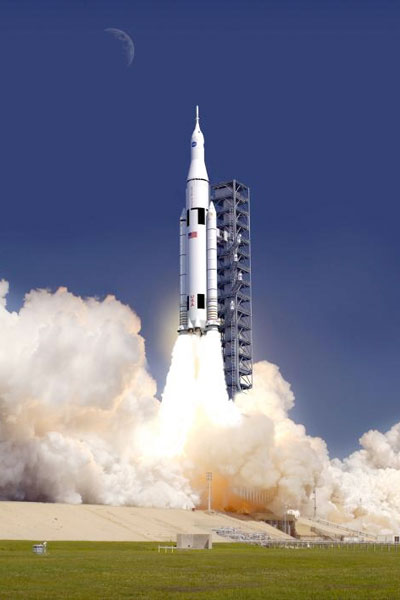
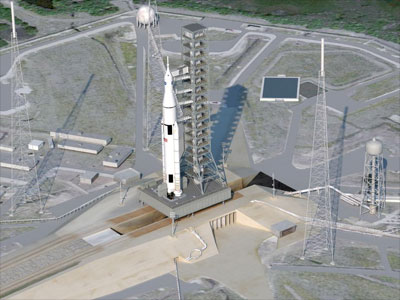
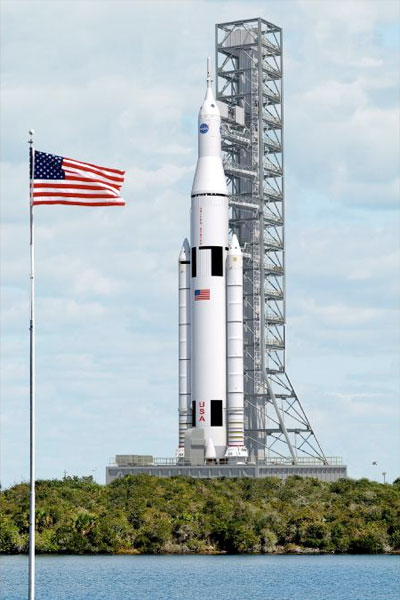
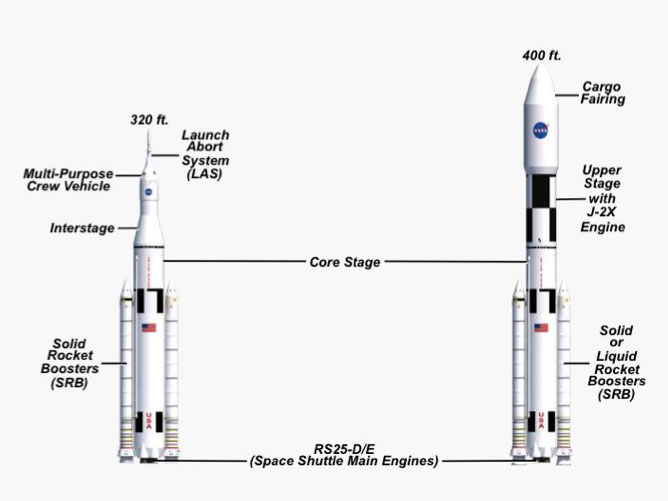
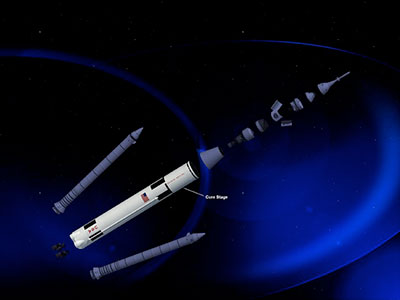
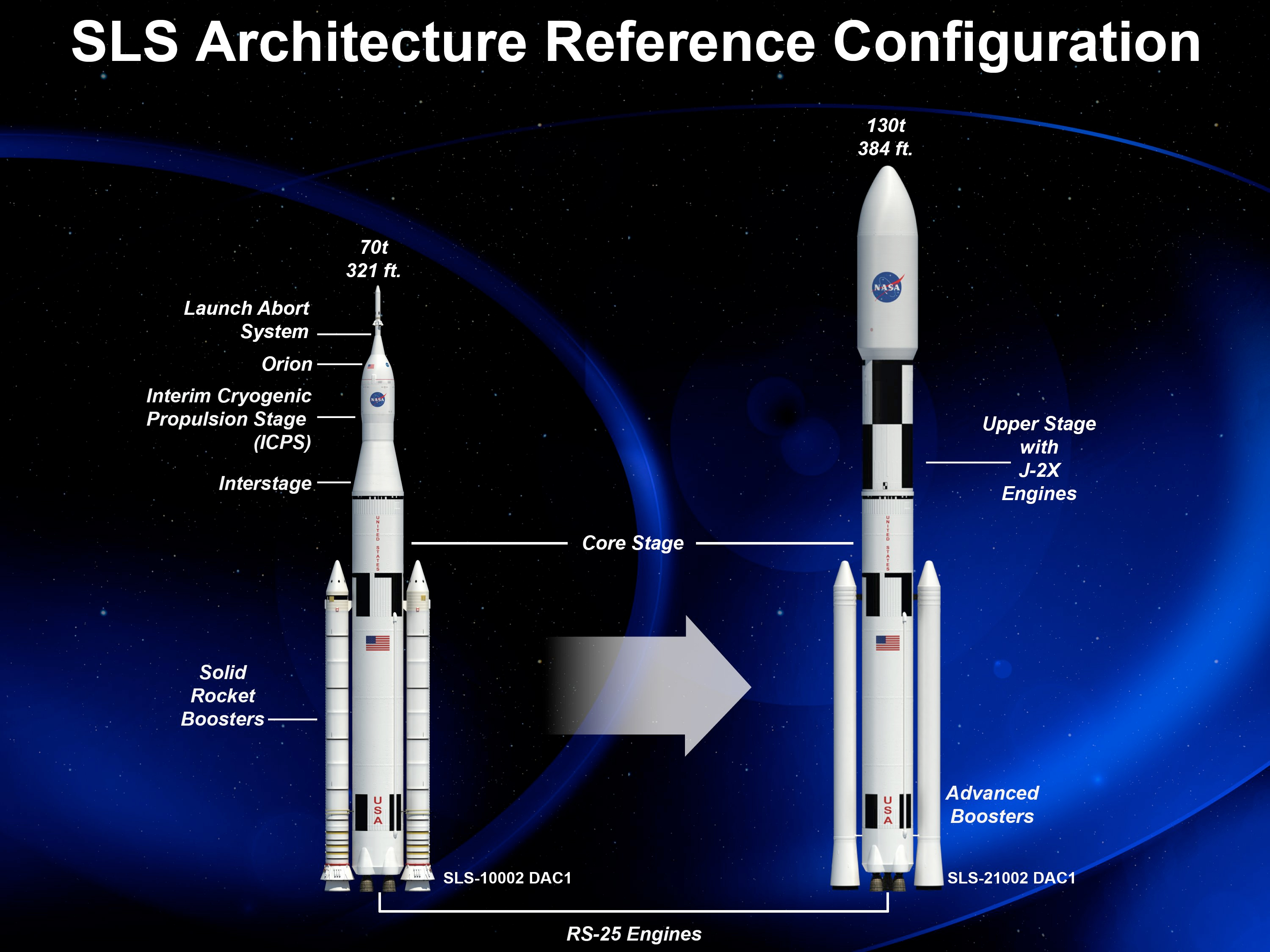
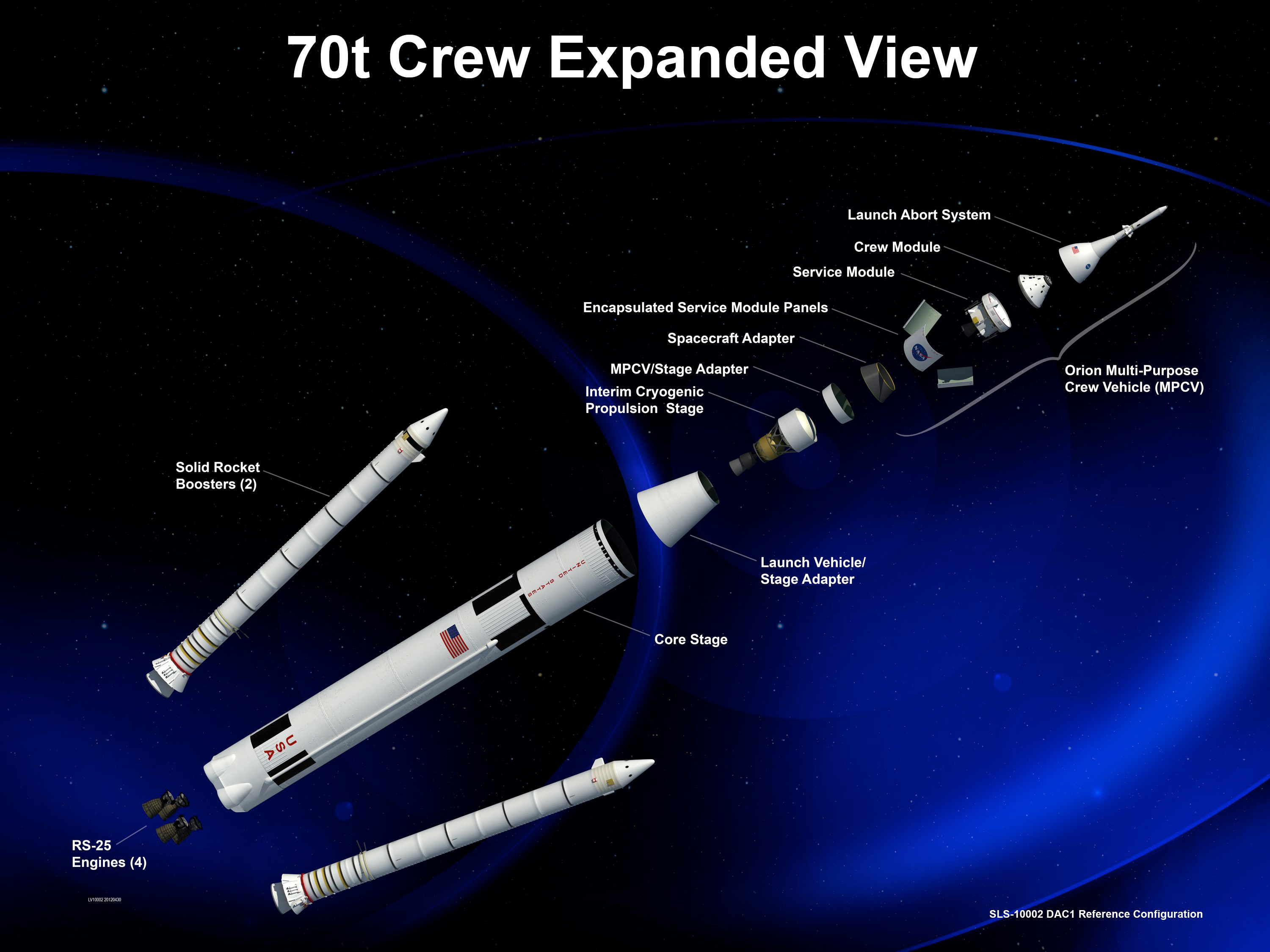
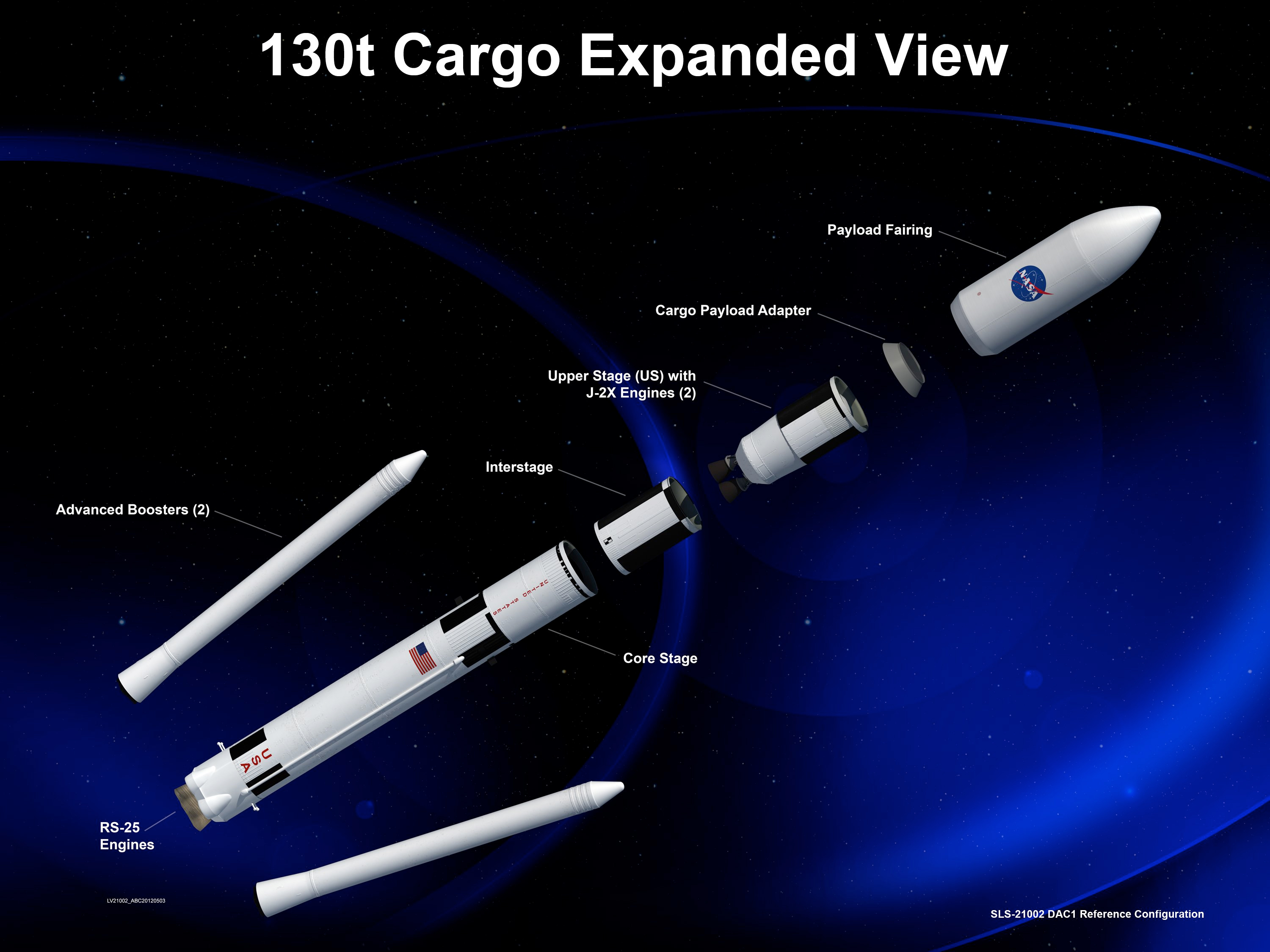
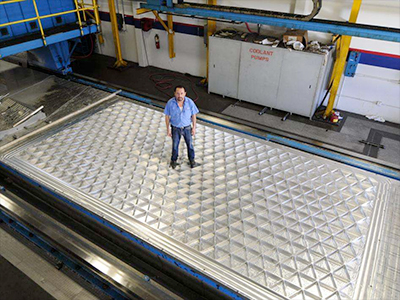
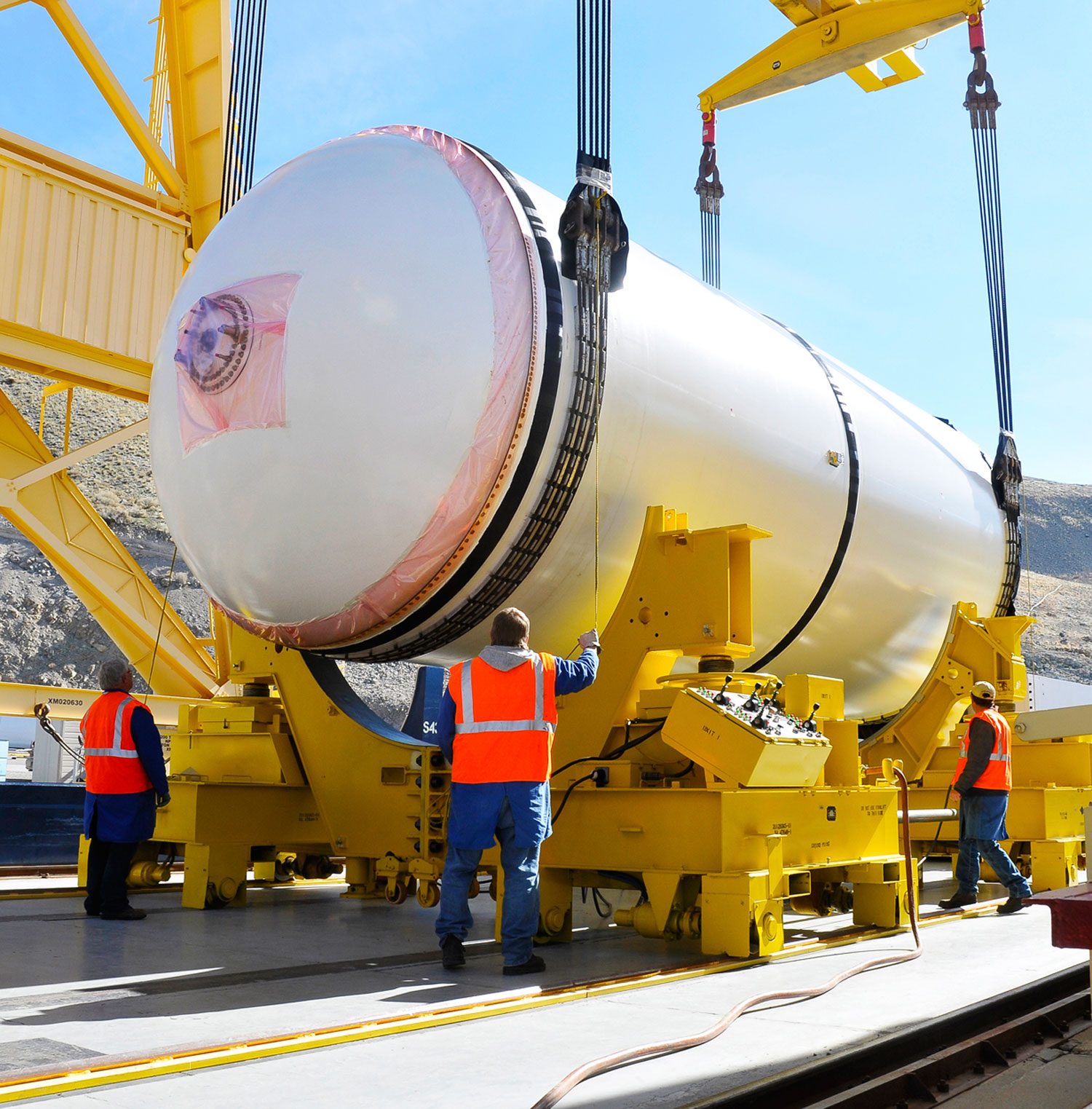
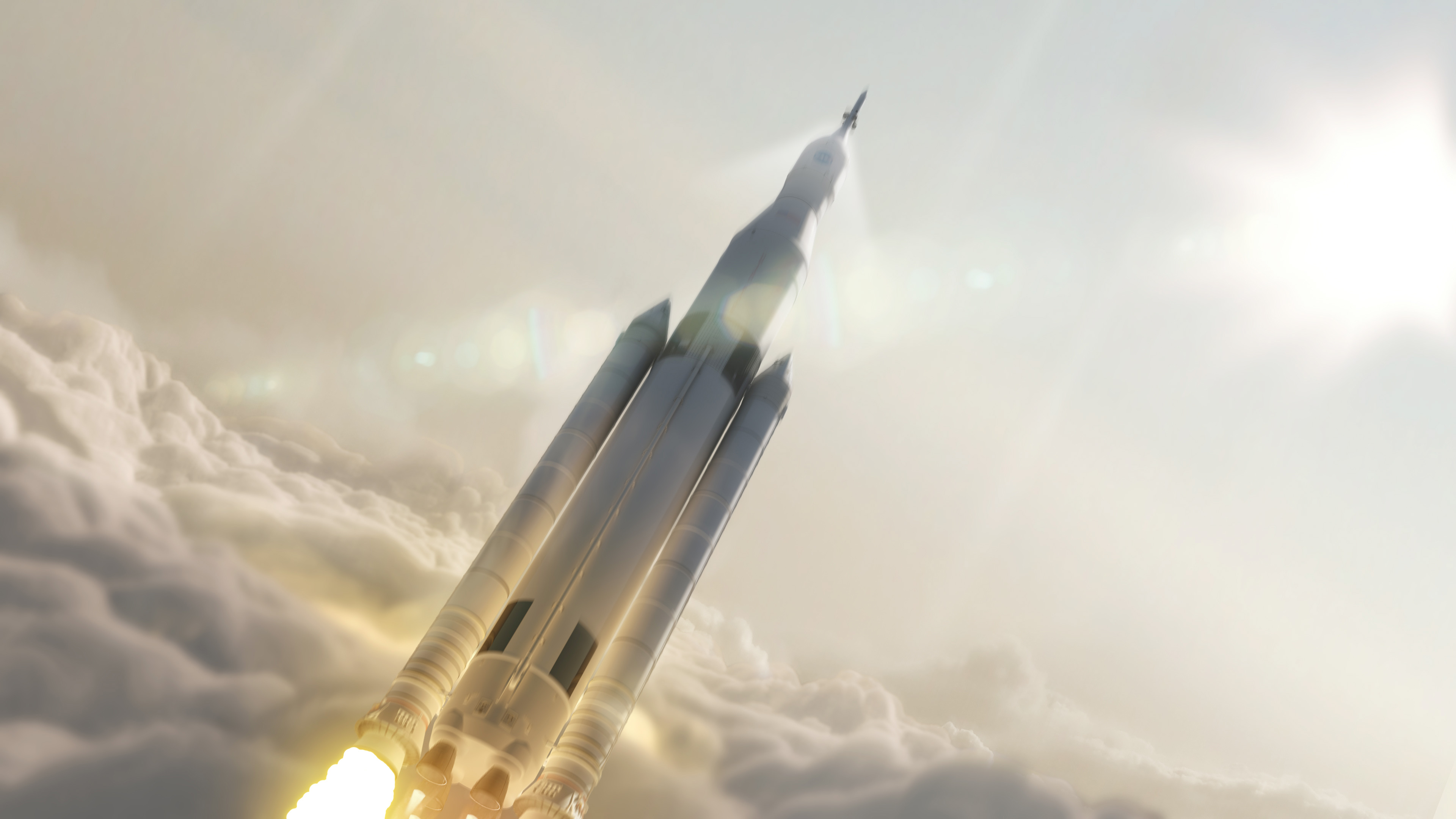

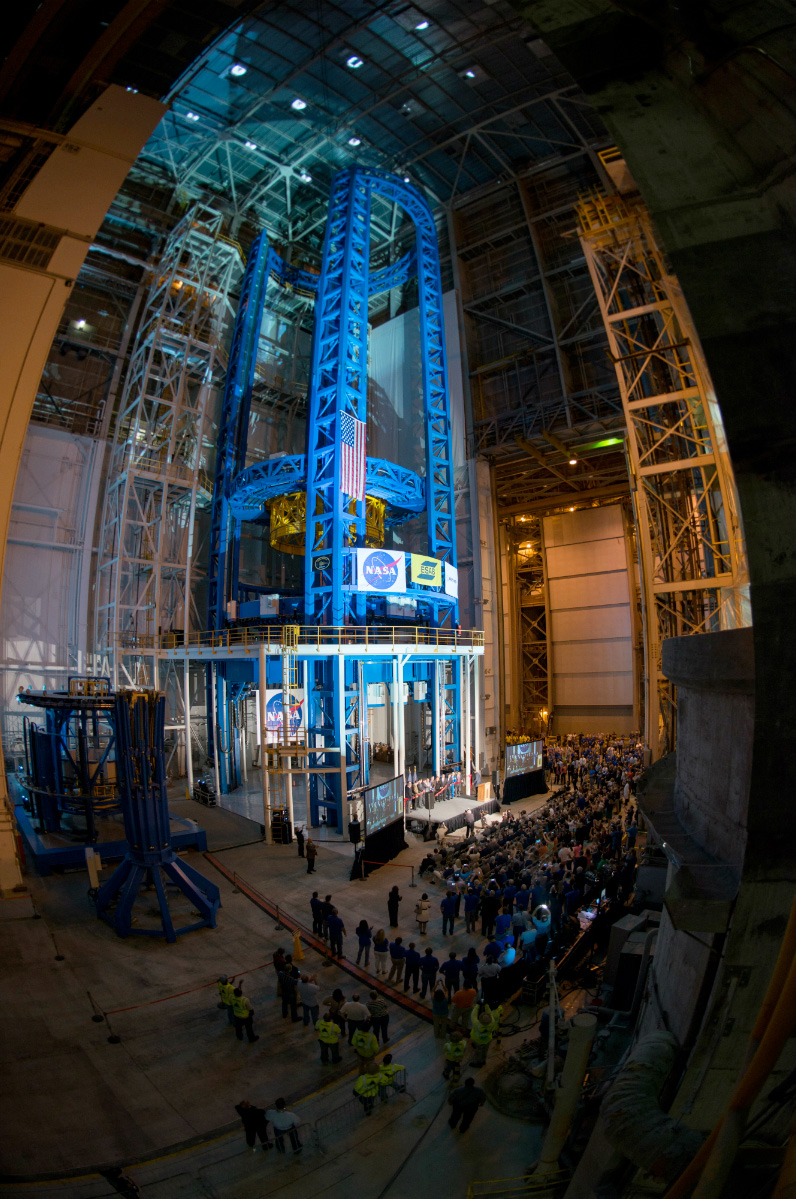
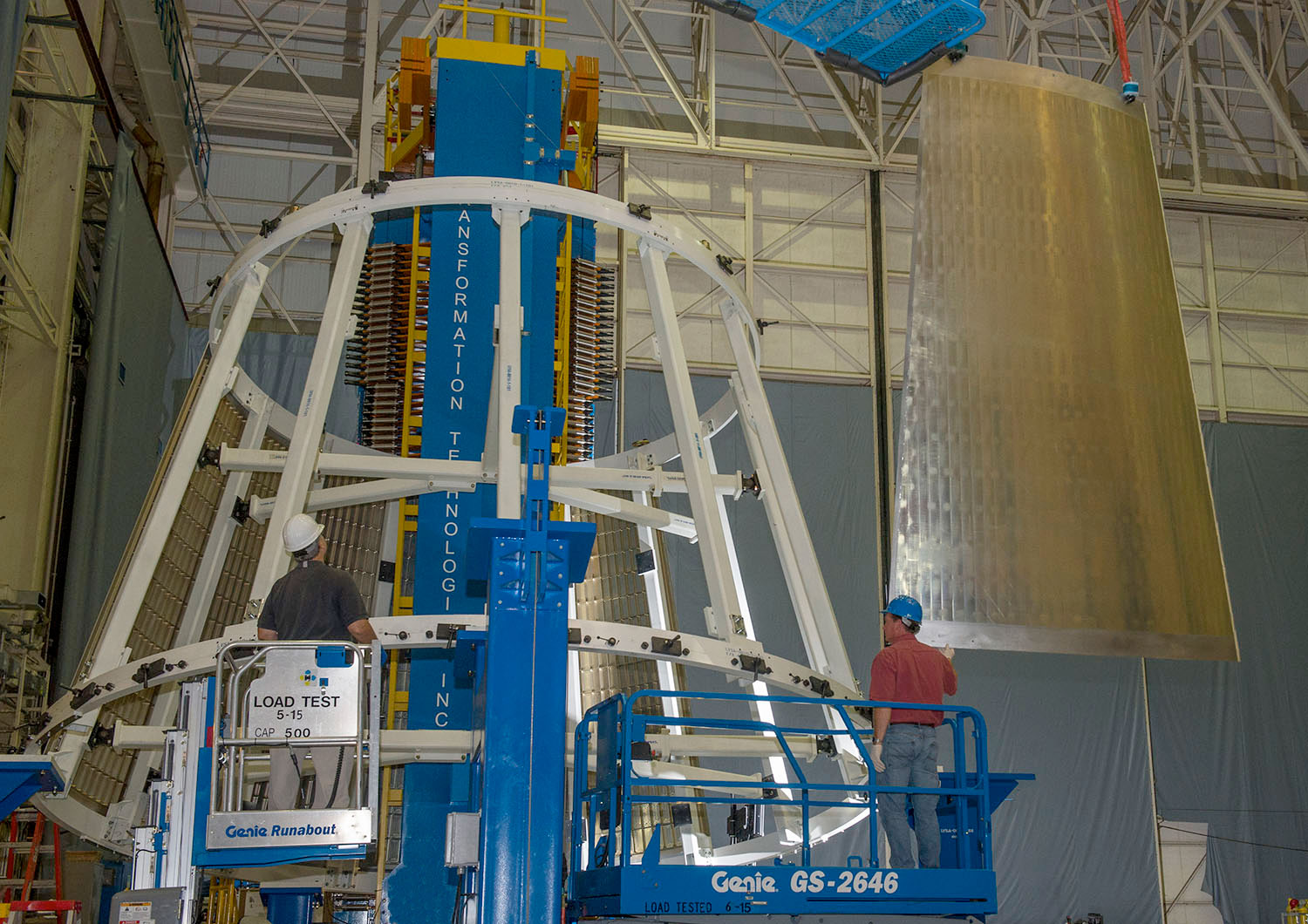
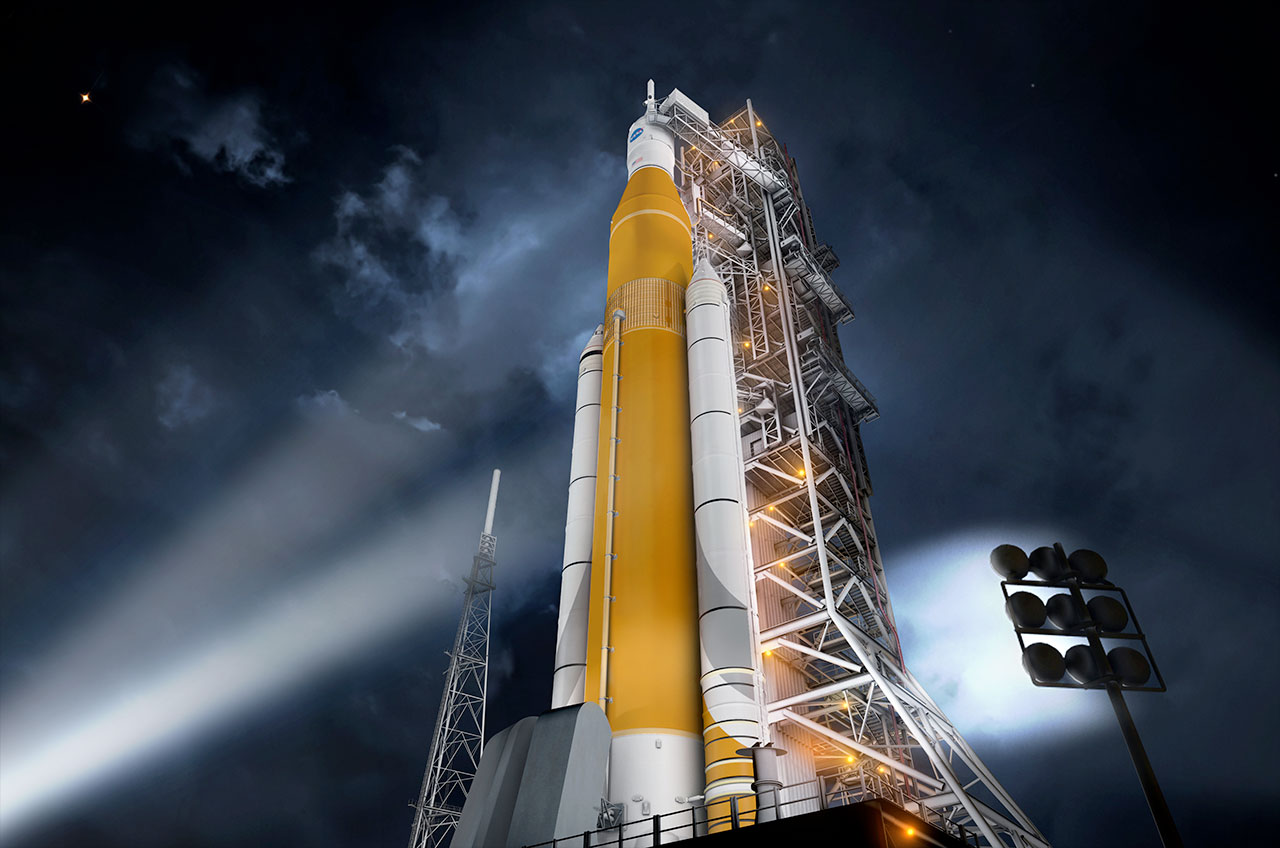
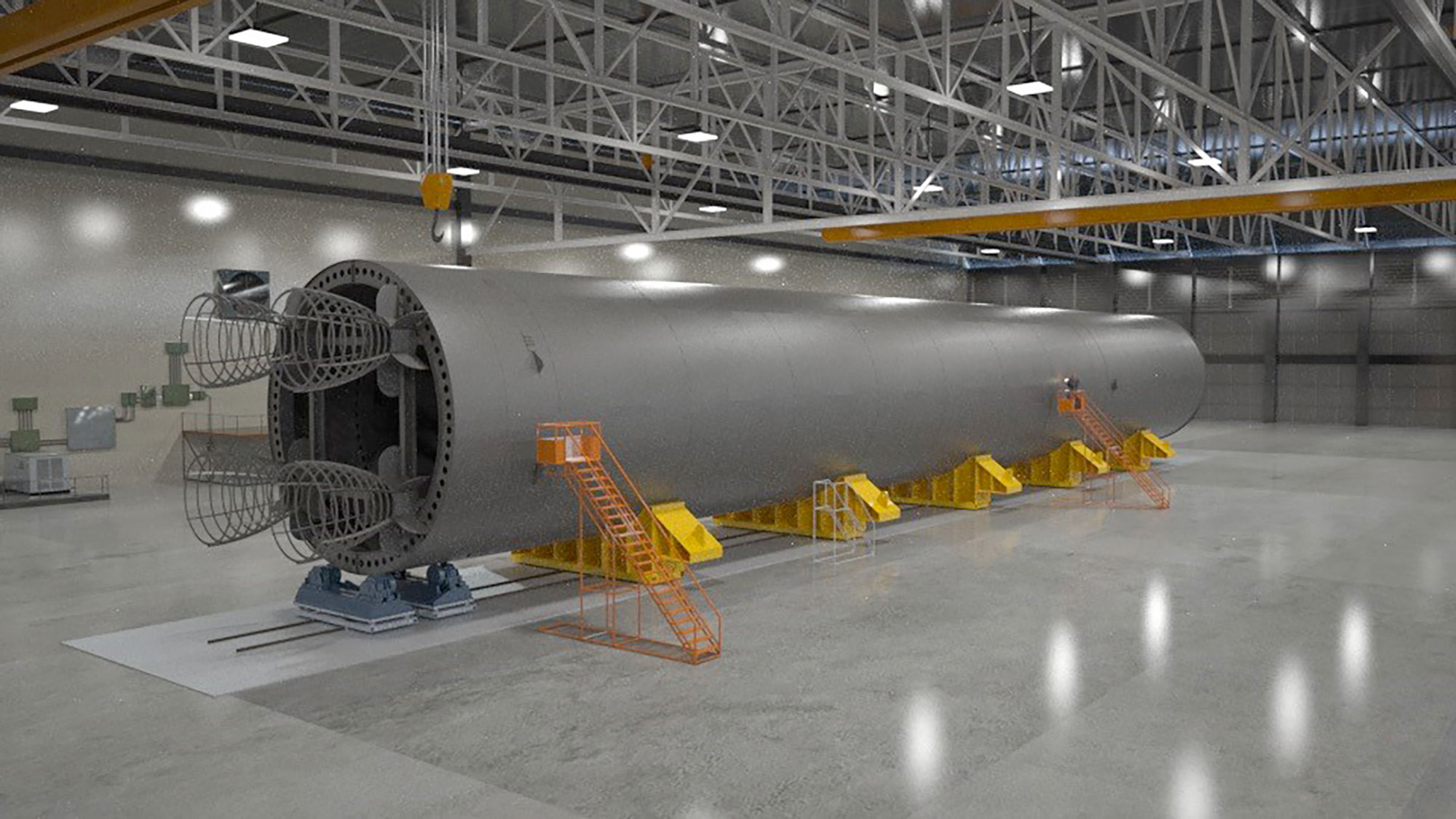


 advertisement