Posts: 42988 From: Houston, TX Registered: Nov 1999
posted 03-04-2009 11:44 PM
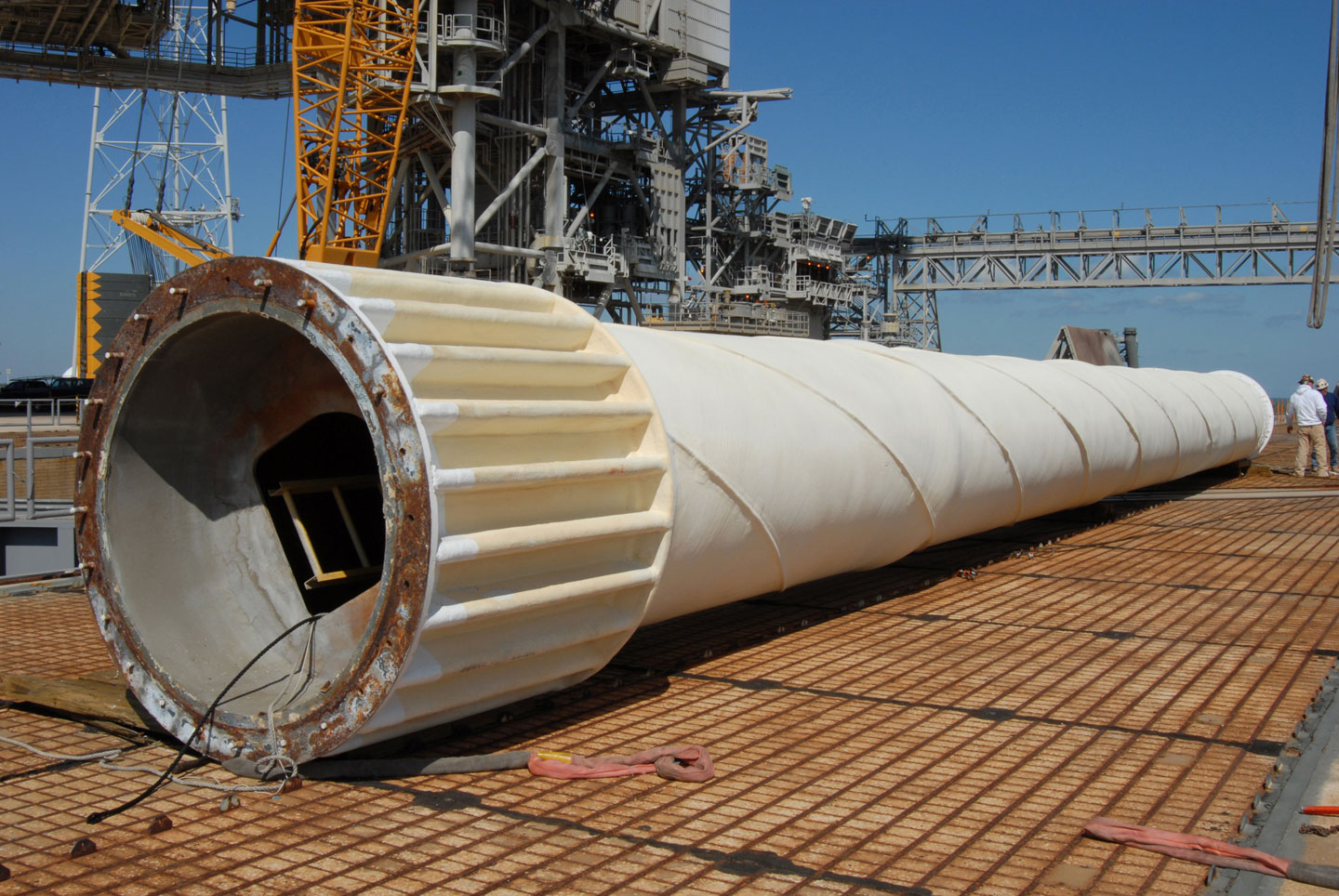
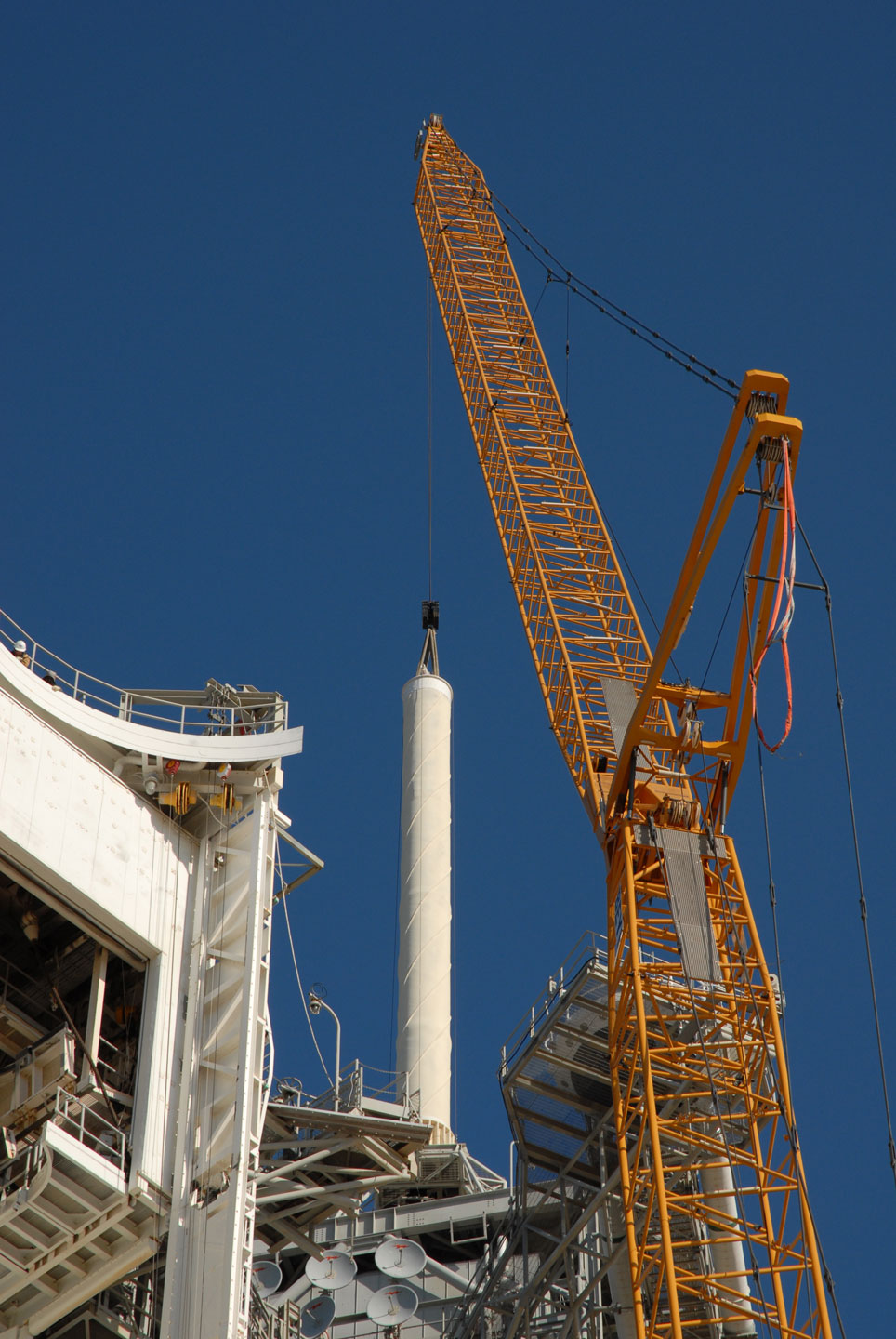
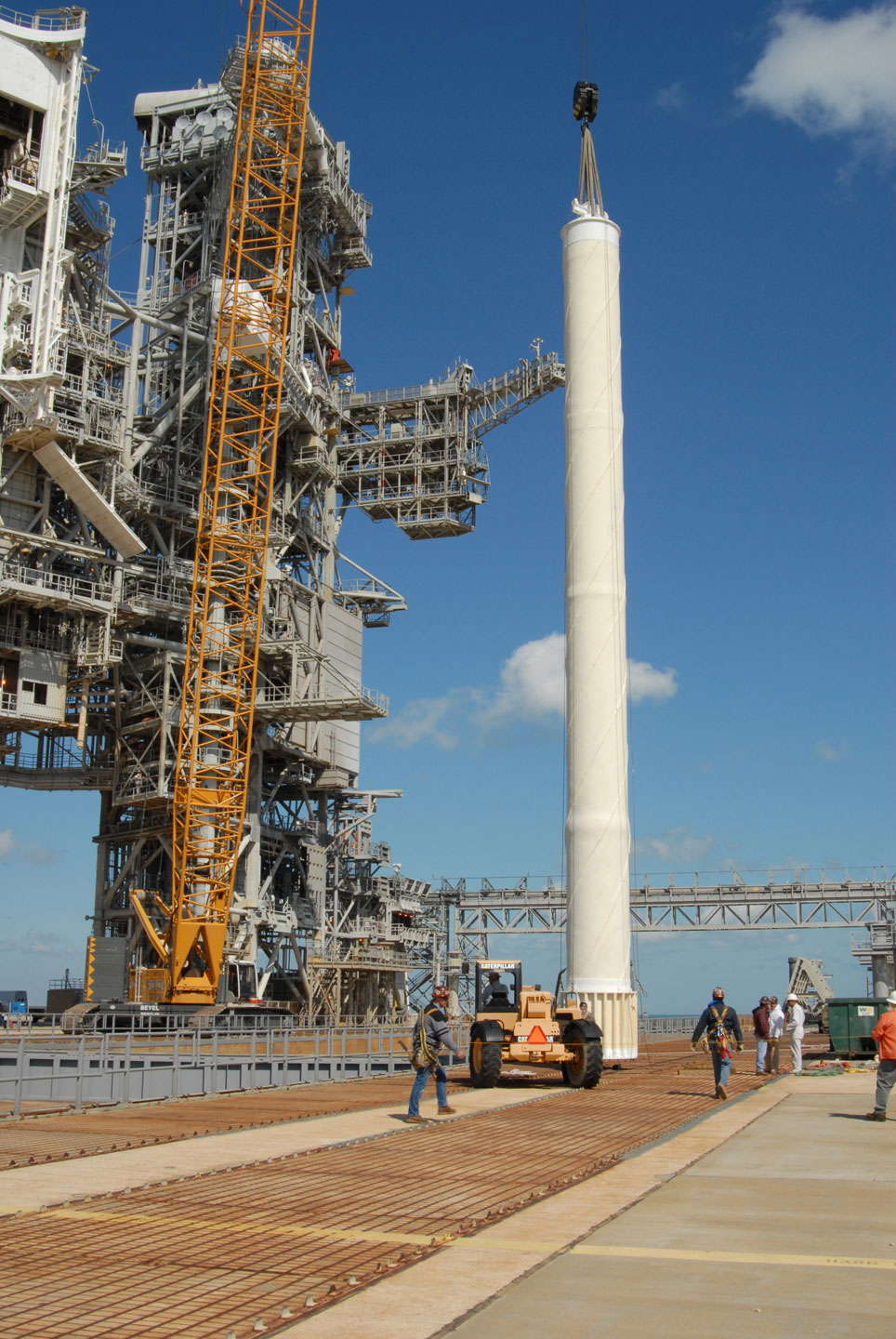
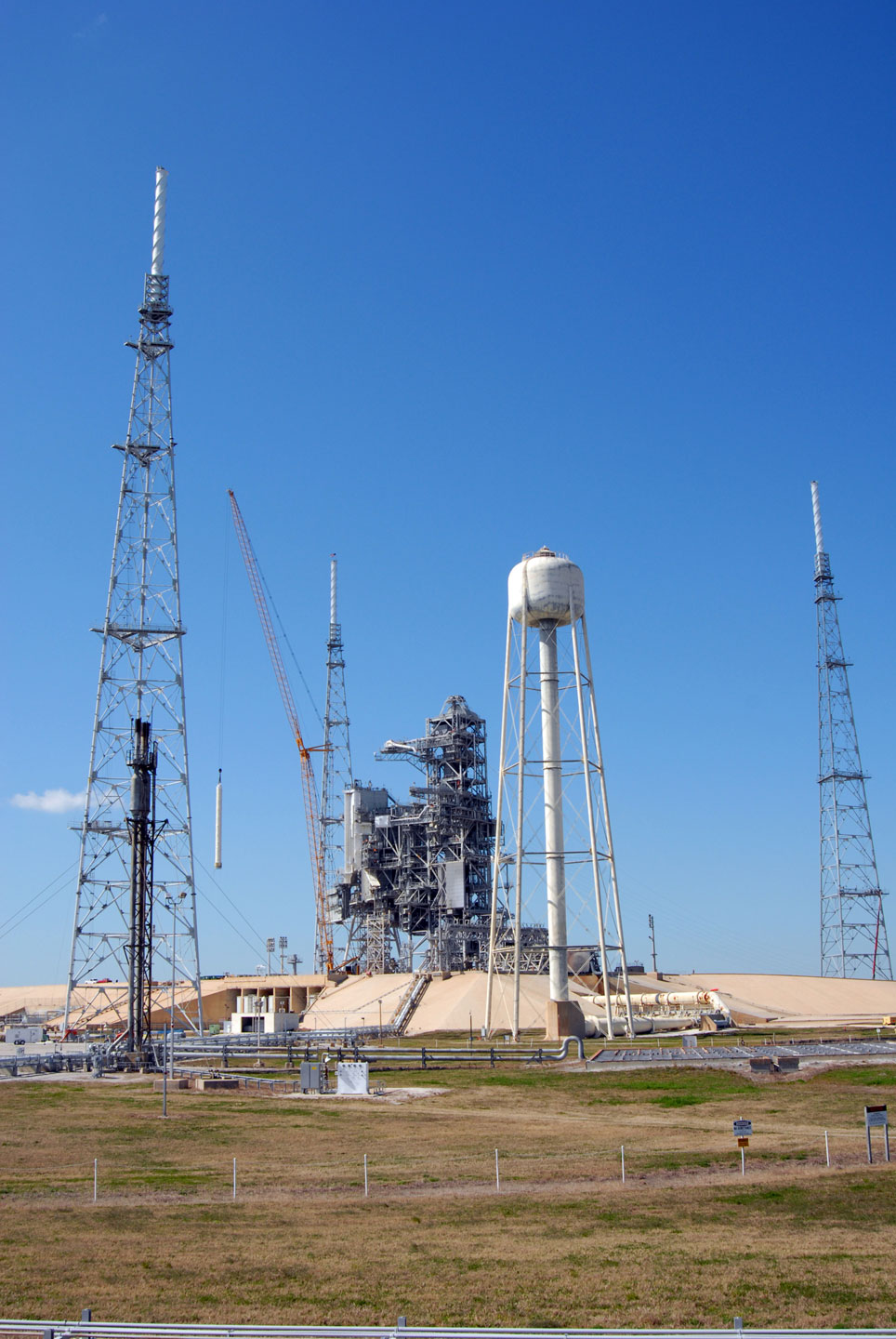
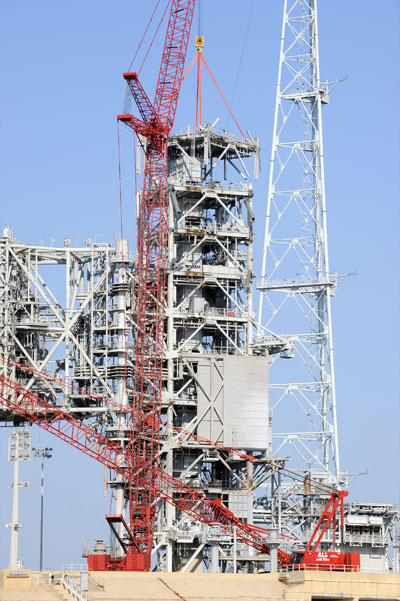
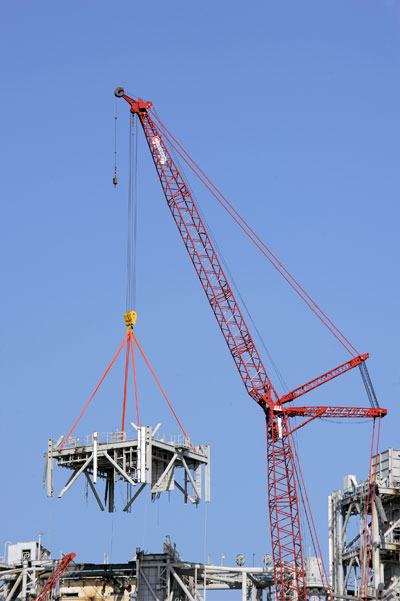
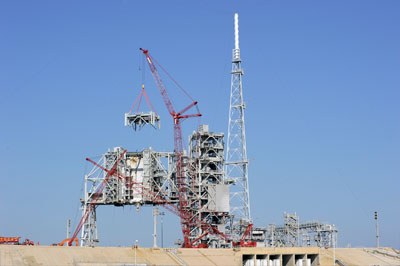
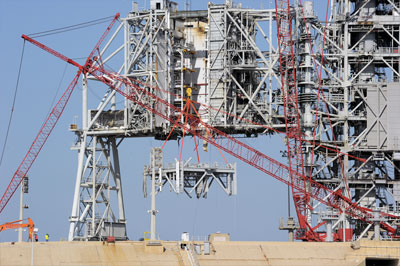
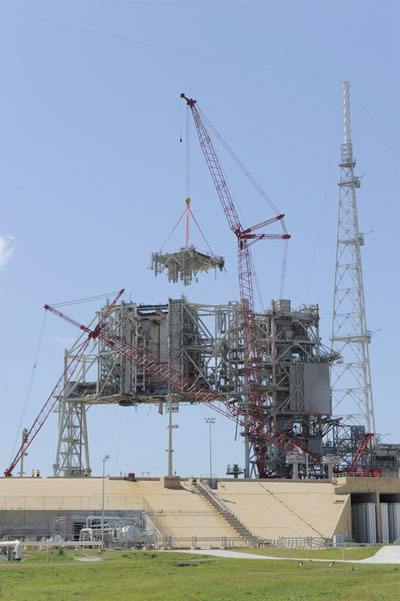
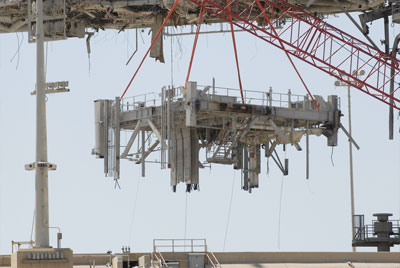
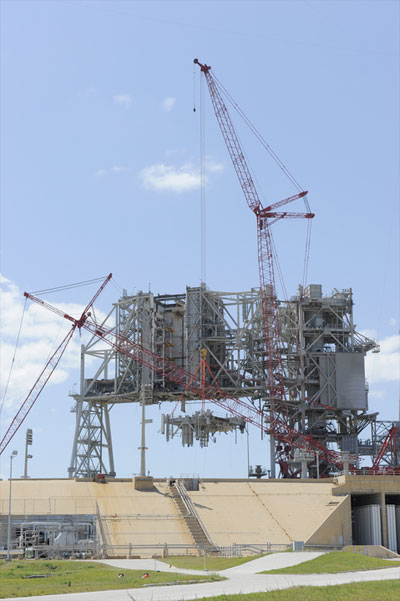
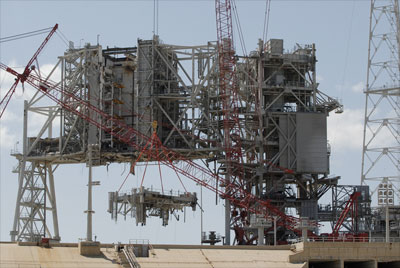
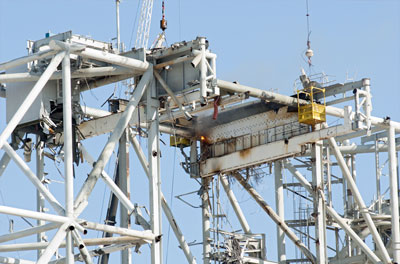
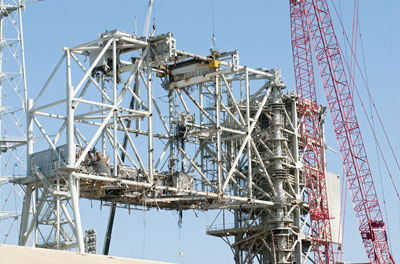
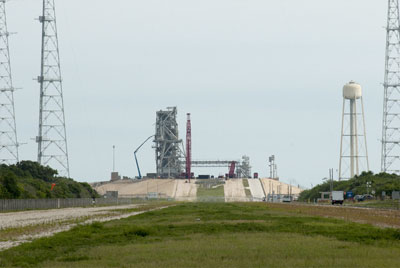
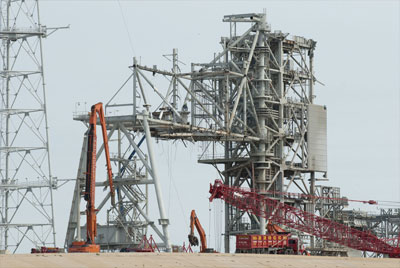
More than 30 years after being erected atop launch pad 39B at NASA's Kennedy Space Center in Florida, the lightning mast that protected 53 space shuttles while they were readied for launch was removed from its 267 foot perch on March 3.
The 80-foot, Mercury-Redstone-rocket-sized fiberglas lightning mast was no longer needed after the recent installation of three new lightning towers around the pad in support of NASA's future use of the pad.
The removal of the mast marks the first major step in the deconstruction of 39B's fixed service structure, which served the space shuttle but will not be needed by future launch vehicles.
According to NASA in response to an inquiry by collectSPACE, the fate of the mast has yet to be decided.
Robert Pearlman Editor
Posts: 42988 From: Houston, TX Registered: Nov 1999
posted 03-05-2009 08:48 AM
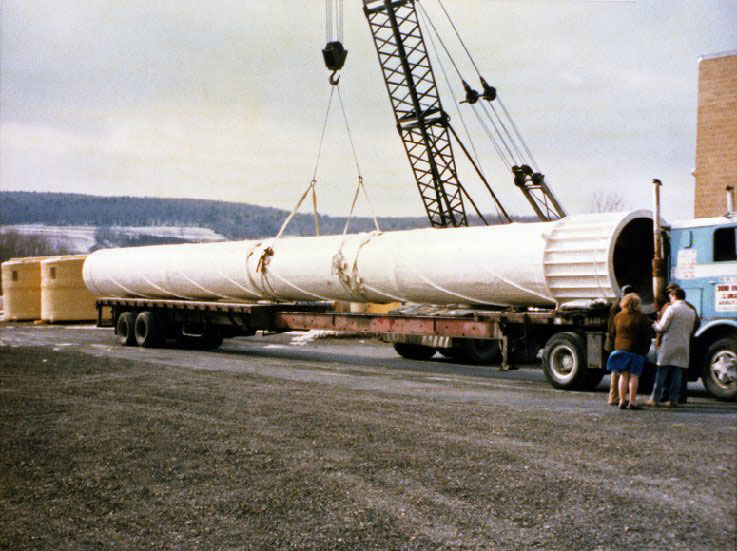
Courtesy J.L. Pickering/RetroSpaceImages.com, here is a photo of the lightning mast prior to its arrival at Pad 39B in the late 1970s.
Robert Pearlman Editor
Posts: 42988 From: Houston, TX Registered: Nov 1999
posted 03-05-2009 09:15 PM
Is the lightning mast that was added to the top of the launch umbilical tower for the Apollo-Soyuz Test Project the same mast that was later installed atop the fixed service structure at Pad 39B?
According to NASA SP-4209 The Partnership: A History of the Apollo-Soyuz Test Project, the mast used for ASTP was 25.6 meters (84 feet) tall.
According to NASA's website, Pad 39B's FSS was topped until recently by a mast 24.4 meters (80 feet) tall.
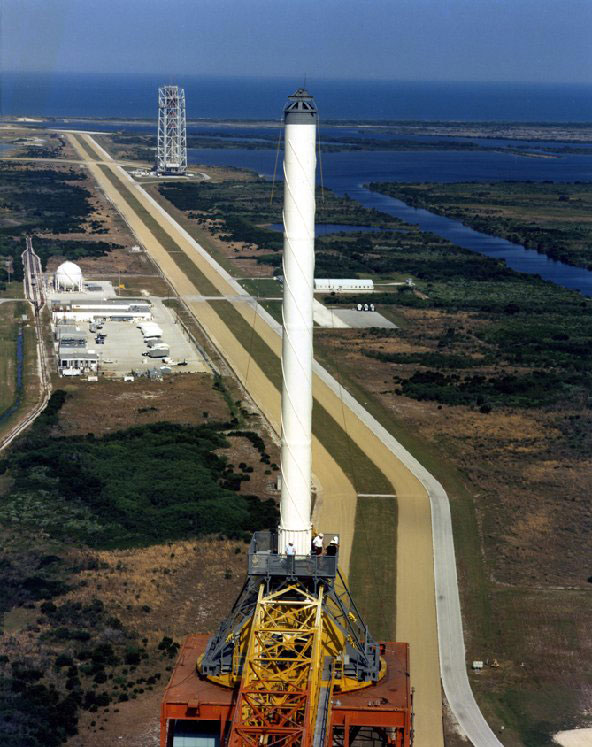
A photo (courtesy of RetroSpaceImages.com) of the mast, taken from the roof of the Vehicle Assembly Building during the ASTP rollout does show a different configuration at the top of the mast than the one shown in the photos of the recent removal.
Did a modification between the LUT and FSS use account for the 1.2 meter (4 foot) difference? Or were they different masts?
Robert Pearlman Editor
Posts: 42988 From: Houston, TX Registered: Nov 1999
posted 03-08-2009 12:14 PM
The lightning mast has reportedly been cut into three segments in preparation for its removal from the pad.
Robert Pearlman Editor
Posts: 42988 From: Houston, TX Registered: Nov 1999
posted 03-10-2009 09:54 AM
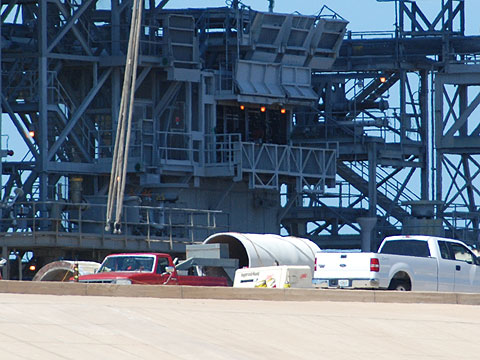
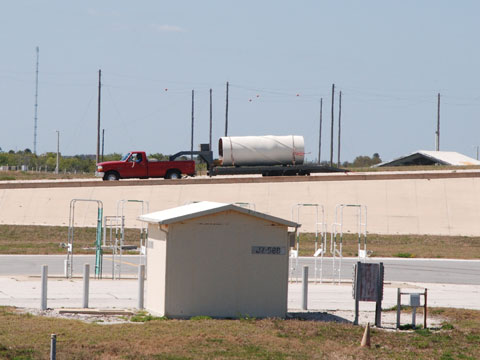
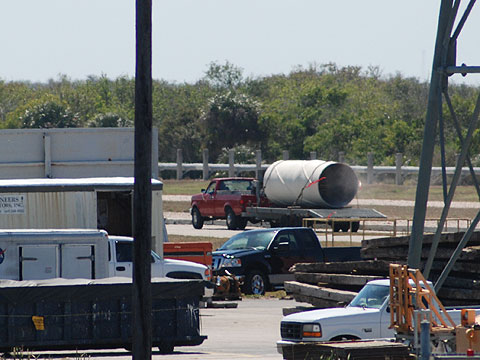
Yesterday, while at Pad 39B for a media briefing and tour, the three segments of the lightning mast was being removed by truck. NASA is disposing of the mast.
Robert Pearlman Editor
Posts: 42988 From: Houston, TX Registered: Nov 1999
posted 06-01-2009 10:24 PM
NASA release
NASA's Shuttle Program Hands Over Launch Pad to Constellation
The May 31, 2009 transfer of Launch Pad 39B at NASA's Kennedy Space Center in Florida from the Space Shuttle Program to the Constellation Program is the next step in preparing the first flight test of the agency's next-generation spacecraft and launch system. The Constellation Program is developing new spacecraft -- including the Ares I and Ares V launch vehicles, the Orion crew capsule, and the Altair lunar lander -- to carry humans to the International Space Station, the moon and beyond.
Since the late 1960s, pad B has been instrumental in human spaceflight programs, such as Apollo, Skylab and the space shuttle. The pad originally was built for the Saturn V rockets to launch the Apollo capsules to the moon. In July 1975, the pad was modified to support space shuttle operations. The first space shuttle to lift off from pad B was Challenger in January 1986.
The handover took place Sunday after space shuttle Endeavour was moved to Launch Pad 39A. The ground operations team will finish modifying pad B for the Ares I-X rocket launch. Modifications will include removing the orbiter access arm and a section of the gaseous oxygen vent arm and installing access platforms and a vehicle stabilization system.
Robert Pearlman Editor
Posts: 42988 From: Houston, TX Registered: Nov 1999
posted 06-05-2009 06:46 PM
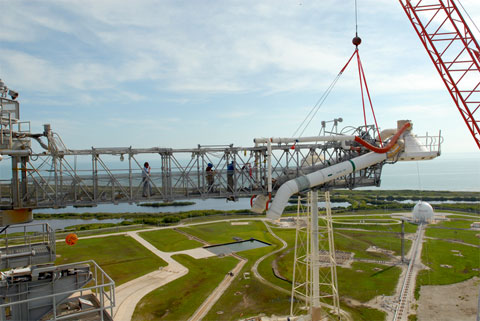
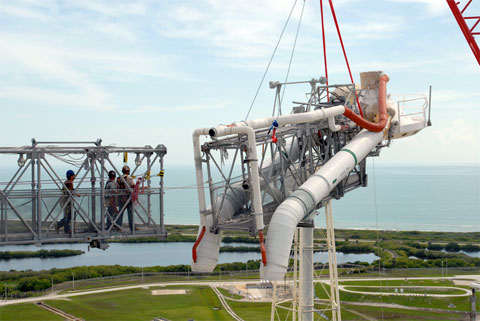
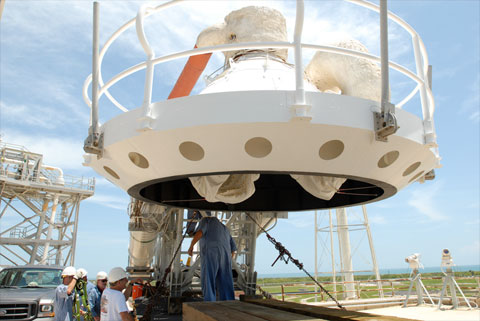
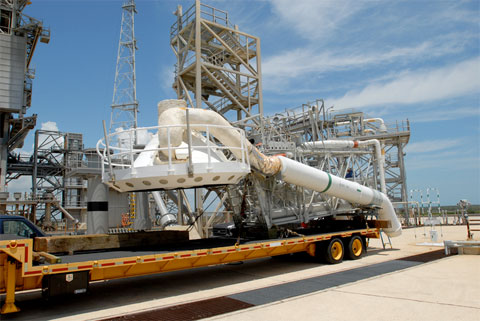
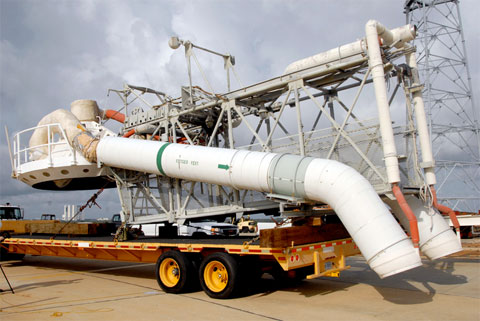
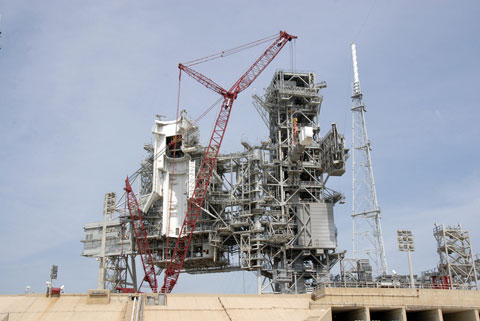
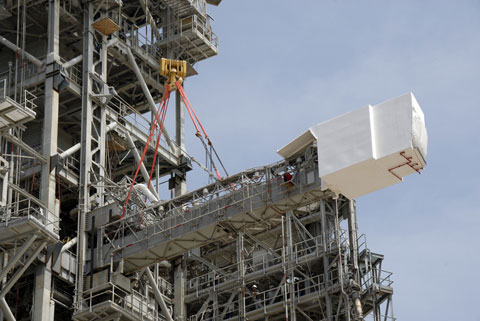
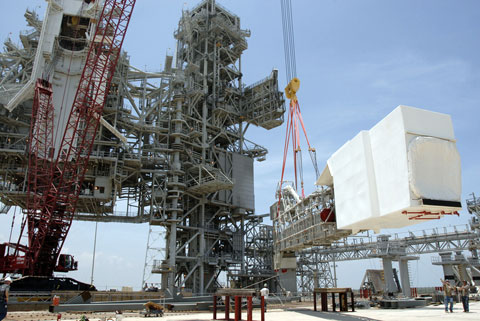
On June 3, the oxygen vent hood, called the "beanie cap," and gaseous oxygen vent arm was removed from Launch Pad 39B's fixed service structure and lowered the 227 feet to the ground.
The gaseous oxygen vent arm would swing into position over the space shuttle's external tank and then lower a hood, called the "beanie cap", over the top of the tank. Heated gaseous nitrogen flowed into the hood to warm the liquid oxygen vent system at the top of the external tank. This heating action would prevent vapors at the vent opening from condensing into ice that could dislodge and damage the orbiter during launch.
The vent system arm is 80 feet (24.4 meters) long, 5 feet (1.5 meters) wide, and 8 feet (2.4 meters) high. The vent hood is 13 feet (4 meters) in diameter. The arm attached to the fixed service structure between the 207-foot (63-meter) and 227-foot (69-meter) levels.
Photo credit: NASA/Jim Grossmann
Robert Pearlman Editor
Posts: 42988 From: Houston, TX Registered: Nov 1999
posted 06-05-2009 06:57 PM
Photo credit: NASA/Jack Pfaller
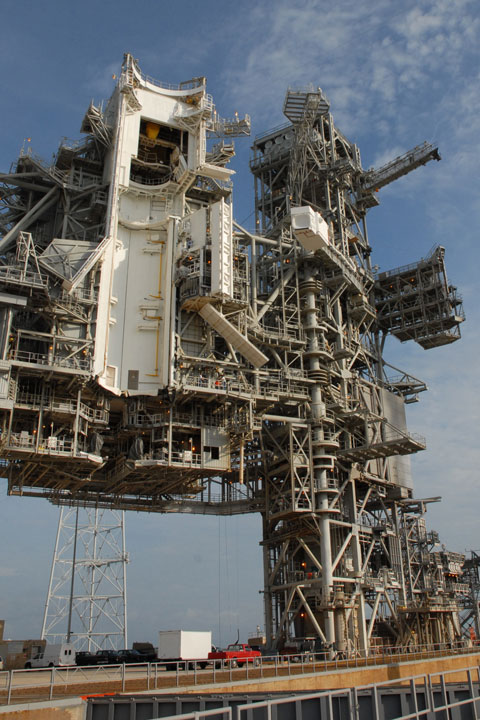
Pad 39B as it appeared on June 3, 2009.
Robert Pearlman Editor
Posts: 42988 From: Houston, TX Registered: Nov 1999
posted 06-22-2009 02:11 PM
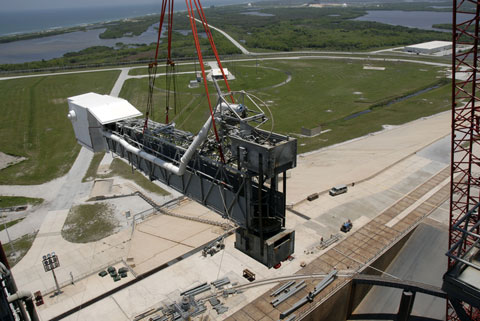
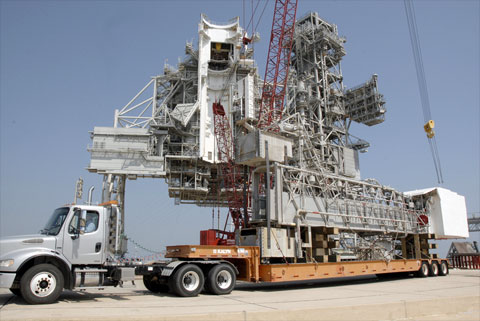
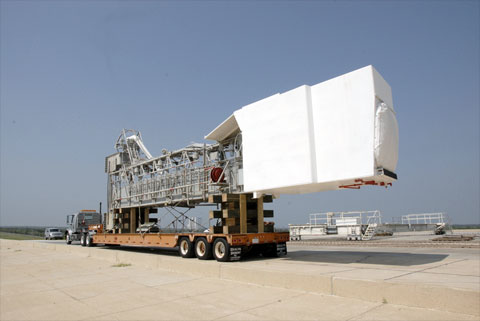
On June 20, the orbiter access arm and its "white room" was removed from Launch Pad 39B's fixed service structure and lowered the 147 feet to the ground.
The lowermost arm, located 147 feet above the pad surface, the orbiter access arm allowed personnel -- including 53 astronaut crews -- to enter the shuttle's crew cabin.
The outer end of the access arm features an environmental chamber or "white room" that mates with the orbiter and holds six people.
The arm remained in the extended position until seven minutes, 24 seconds before launch to serve as an emergency escape route for the flight crew. It is 65 feet long, 5 feet wide, and 8 feet high, and could be mechanically or manually repositioned in about 15 seconds in the event it was needed.
Photo credit: NASA/Kim Shiflett
Robert Pearlman Editor
Posts: 42988 From: Houston, TX Registered: Nov 1999
posted 06-22-2009 02:16 PM
Like the "beanie cap" the preceded its removal, the access arm will be moved for display at the Kennedy Space Center Visitor Complex.
Photo credit: NASA/Kim Shiflett
Robert Pearlman Editor
Posts: 42988 From: Houston, TX Registered: Nov 1999
posted 09-15-2010 06:28 PM
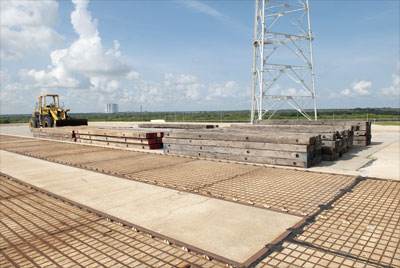
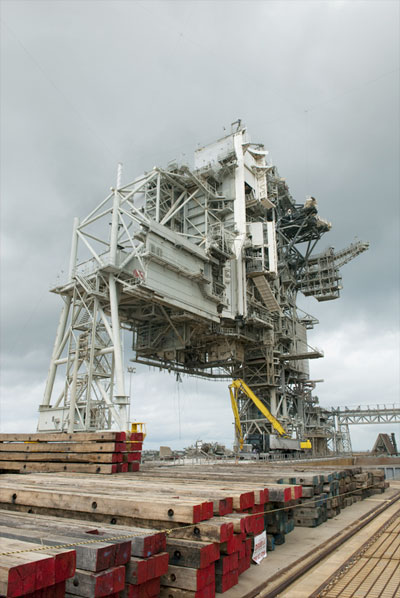
Construction crews have laid sand, reinforcing steel and large wooden mats under the rotating service structure (RSS) at Pad 39B to protect the structure's concrete from falling debris during deconstruction.
Photo credit: NASA/Jim Grossmann
Robert Pearlman Editor
Posts: 42988 From: Houston, TX Registered: Nov 1999
posted 09-30-2010 05:13 PM
Construction crews have begun dismantling Pad 39B's Rotating Service Structure.
The rotating service structure is 102 feet long, 50 feet wide, and 130 feet high. It is supported by a rotating bridge that pivots about a vertical axis on the west side of the pad's flame trench. The structure rotates through 120 degrees -- one third of a circle -- on a radius of 160 feet. Its hinged column rests on the pad surface and is braced against the fixed service structure.
The major feature of the rotating service structure is the Payload Changeout Room, an enclosed, environmentally controlled area that supports payload delivery and servicing at the pad and mates to the orbiter cargo bay for vertical payload installation.
Another feature of the rotating service structure is the orbiter midbody umbilical unit, which provides access and services to the midfuselage portion of the orbiter. The unit is 22 feet long, 13 feet wide, and 20 feet high. It extends from the rotating structure at levels ranging from 158 feet to 176 feet above the pad surface. The unit provides access to the midbody umbilical door.
Also found on the rotating service structure is the hypergolic umbilical system. Hypergolic fuel and oxidizer lines, as well as helium and nitrogen service lines, are carried from the fixed service structure to the space shuttle orbital maneuvering system pods via this umbilical system.
Photo credit: NASA/Jim Grossmann
Robert Pearlman Editor
Posts: 42988 From: Houston, TX Registered: Nov 1999
posted 09-30-2010 05:14 PM
Photo credit: NASA/Jim Grossmann
Robert Pearlman Editor
Posts: 42988 From: Houston, TX Registered: Nov 1999
posted 10-05-2010 04:28 PM
Progress photographs taken on October 4, 2010:
Photo credit: NASA/Jack Pfaller
Robert Pearlman Editor
Posts: 42988 From: Houston, TX Registered: Nov 1999
posted 10-12-2010 10:59 AM
Via a Kennedy Space Center employee, the level removed housed the ground support equipment (GSE) used to service the space shuttle orbital maneuvering system (OMS) pods.
Robert Pearlman Editor
Posts: 42988 From: Houston, TX Registered: Nov 1999
posted 10-26-2010 11:39 PM
Progress photographs taken on October 22, 2010:
Photo credit: NASA/Jack Pfaller
Robert Pearlman Editor
Posts: 42988 From: Houston, TX Registered: Nov 1999
posted 03-22-2011 08:12 AM
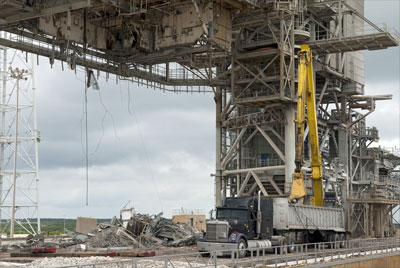
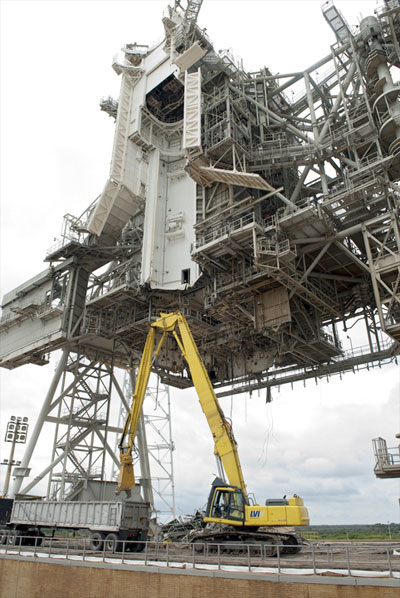
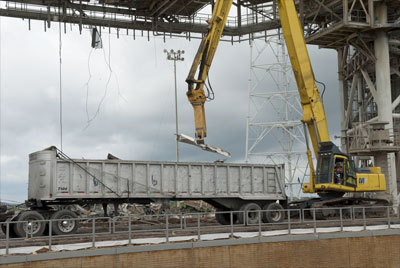
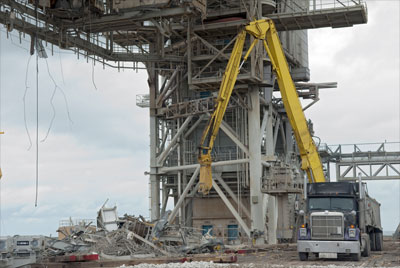
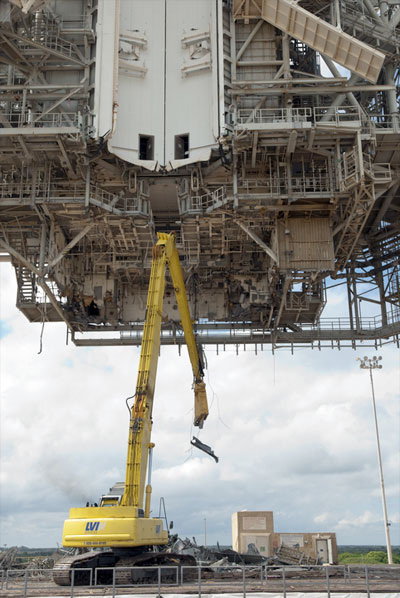
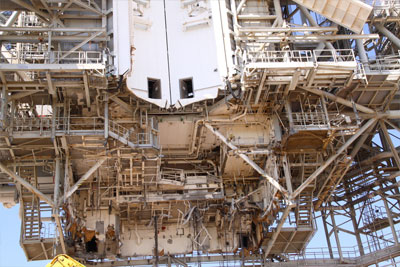
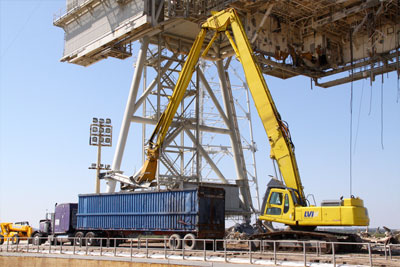
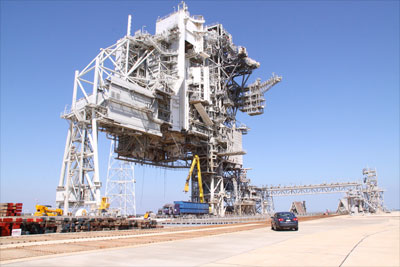
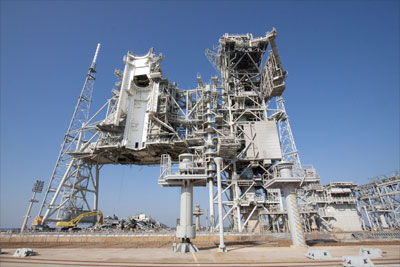
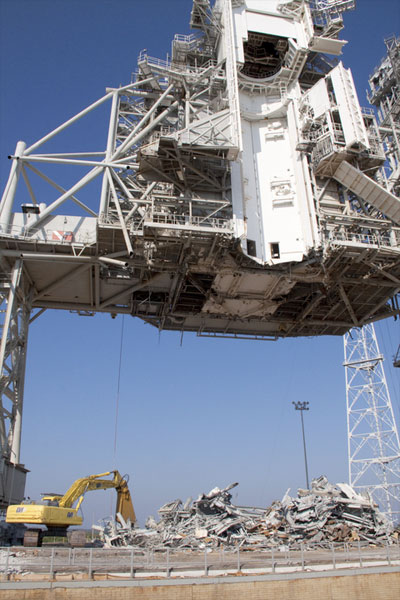
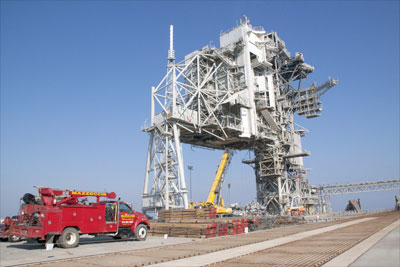
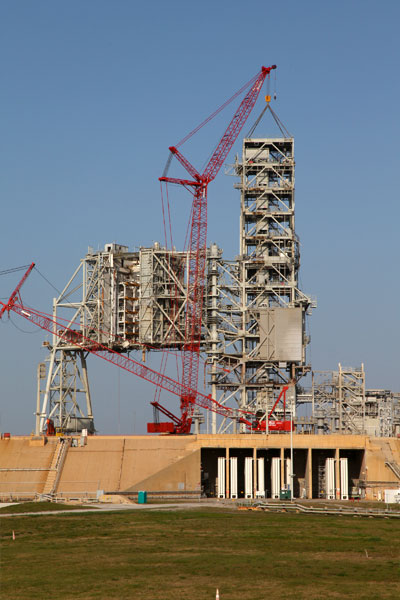
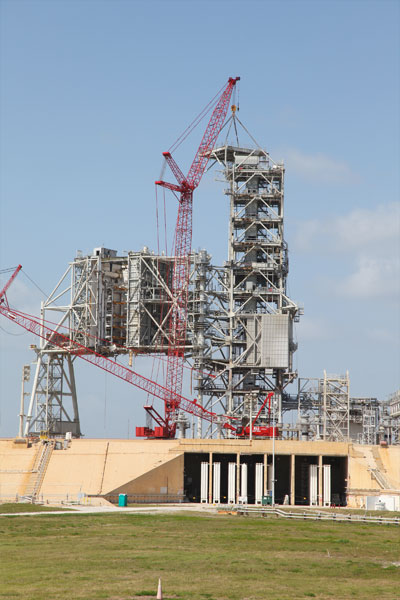
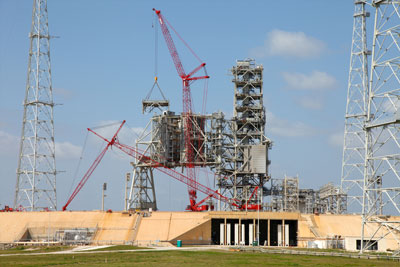
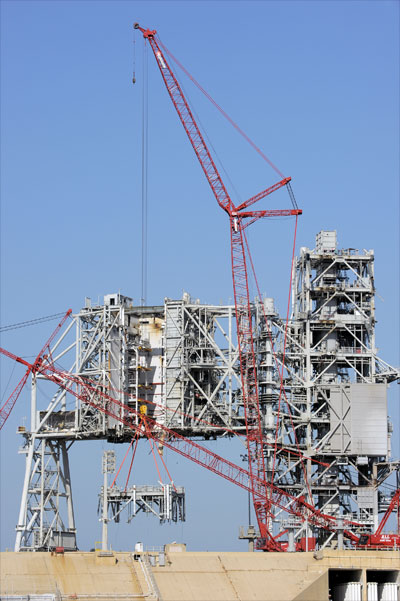
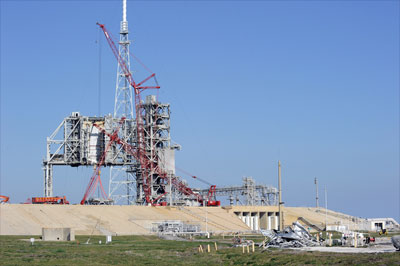
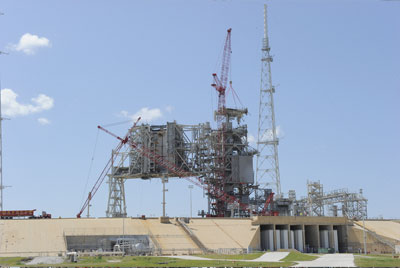
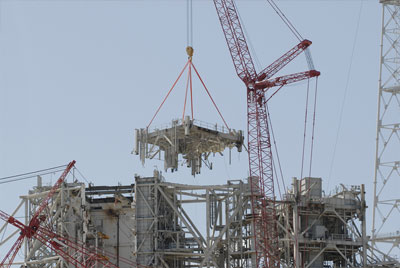
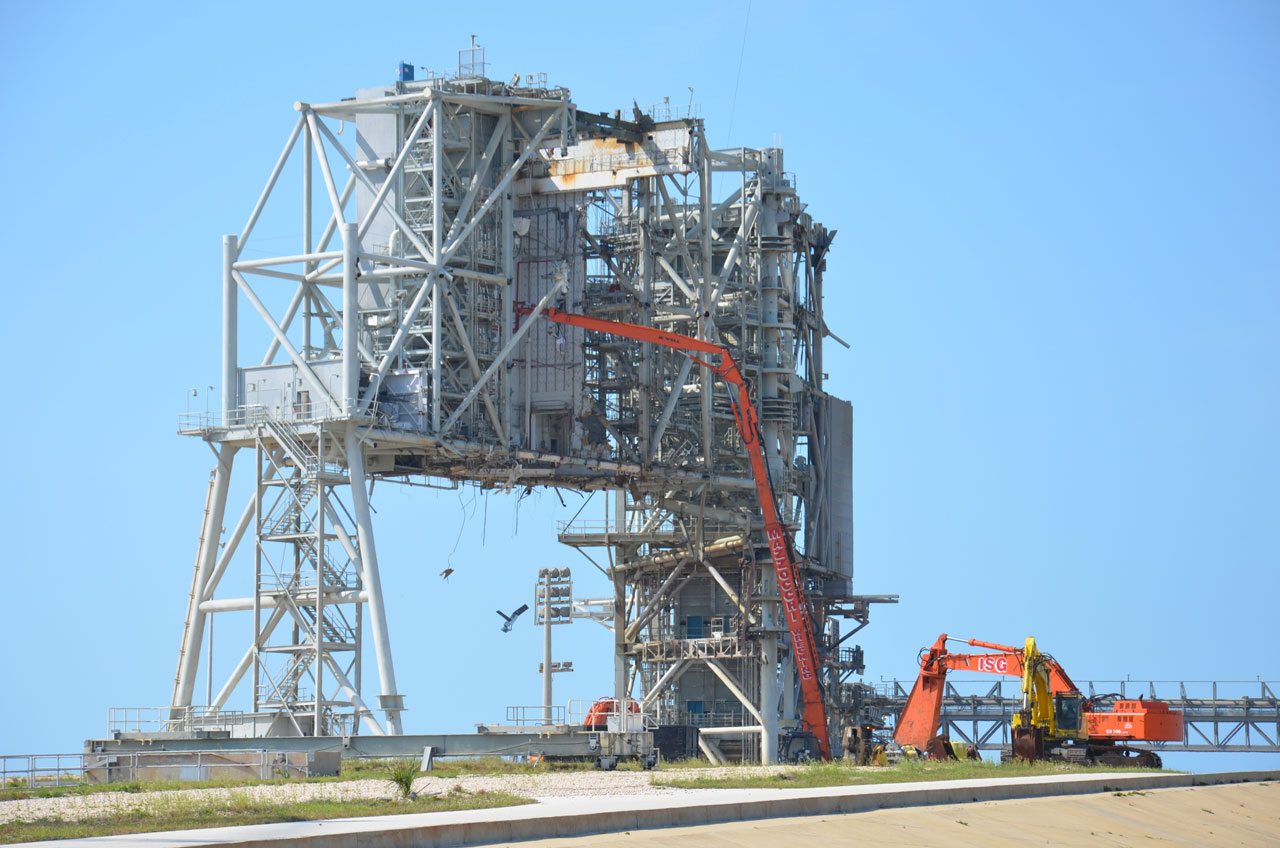
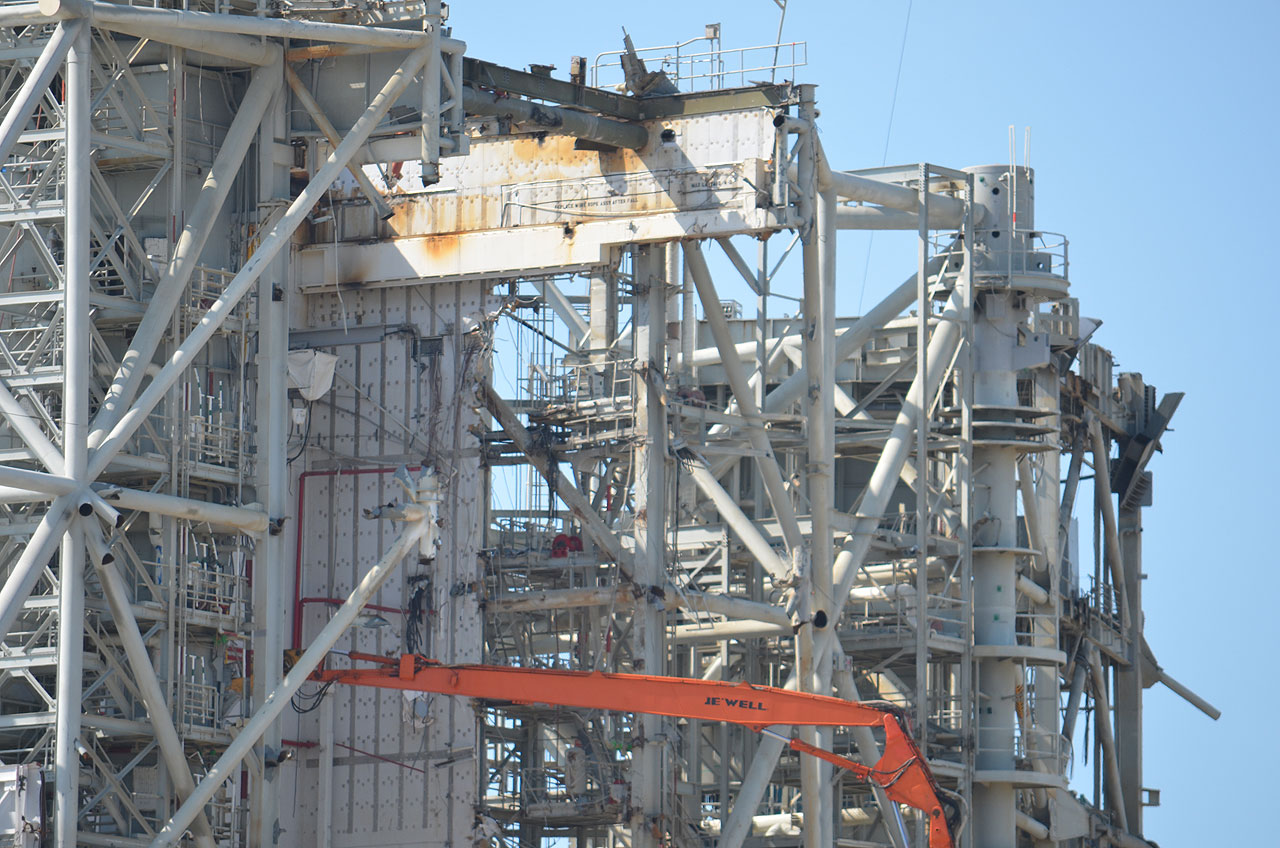
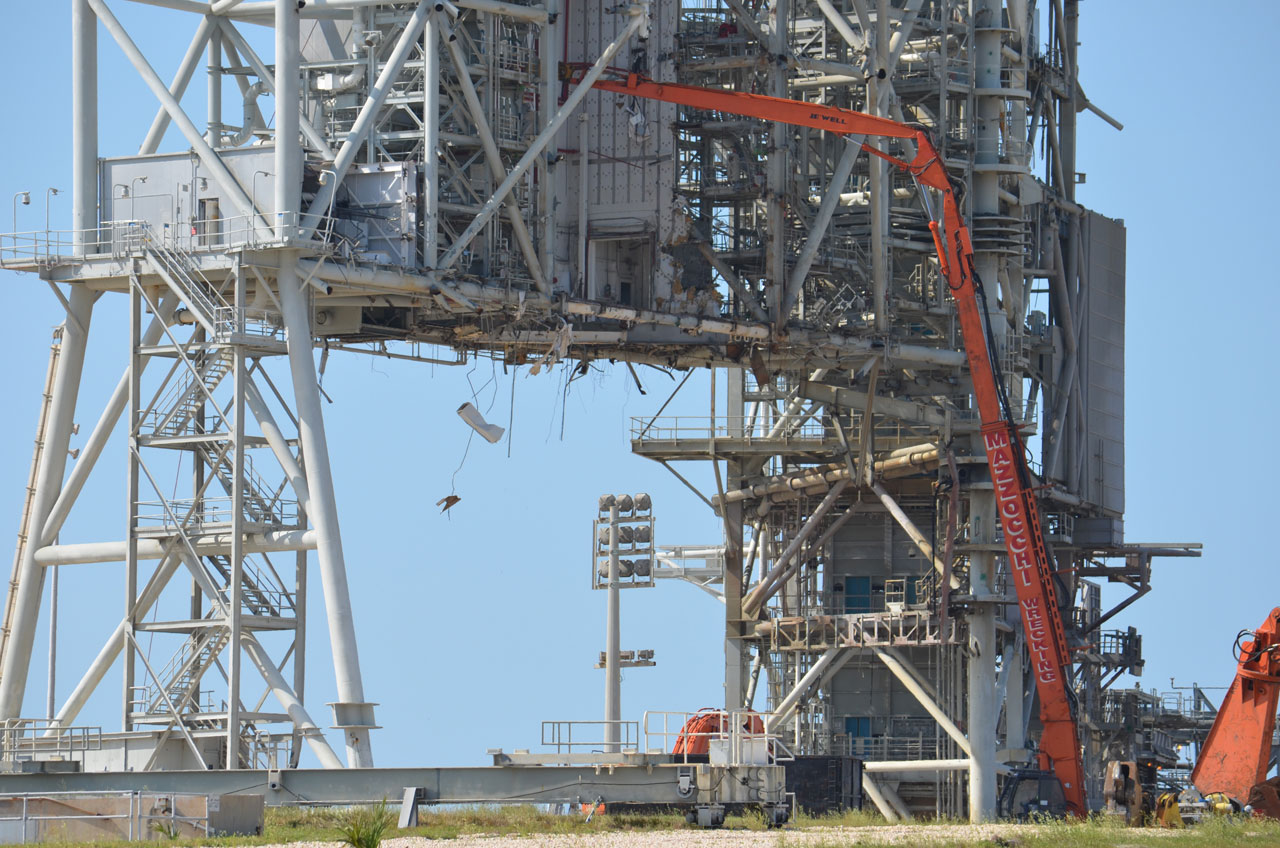
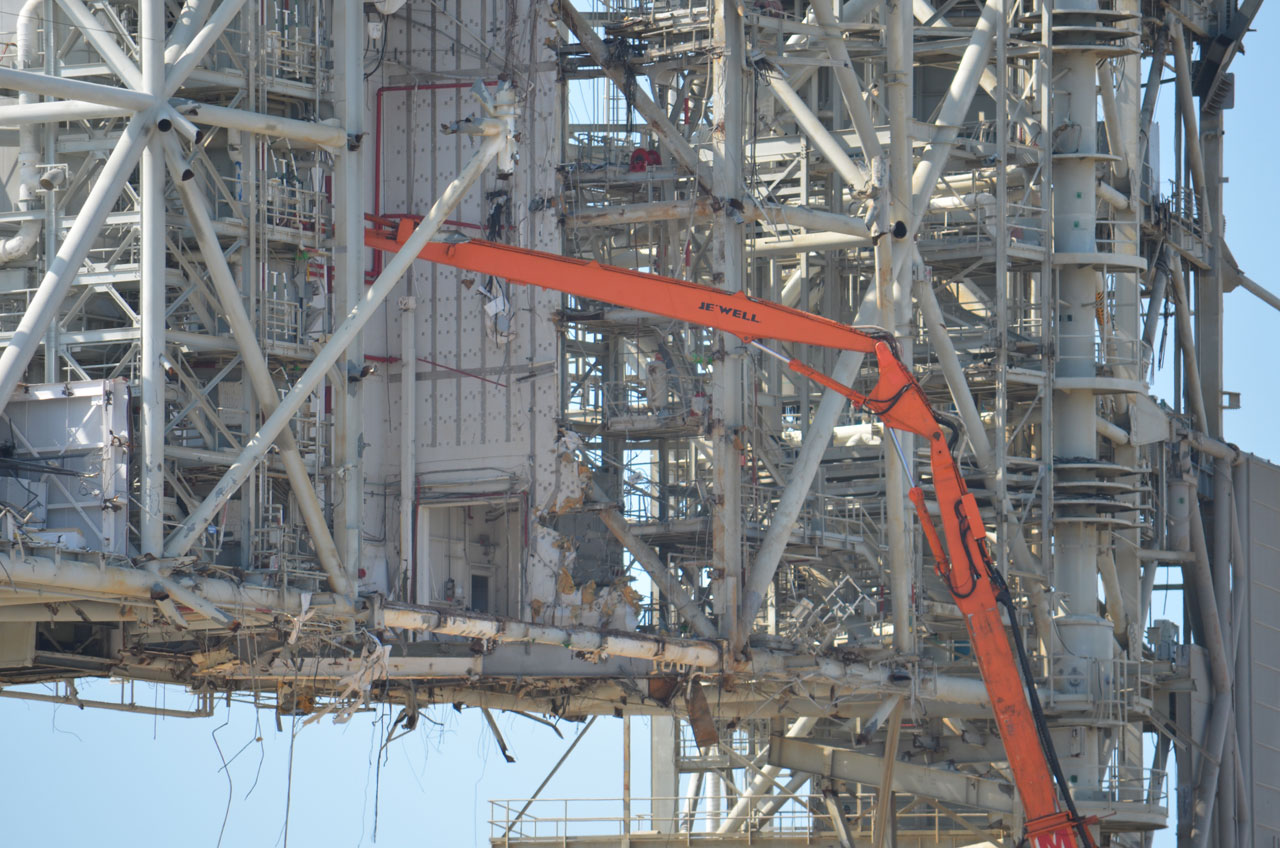
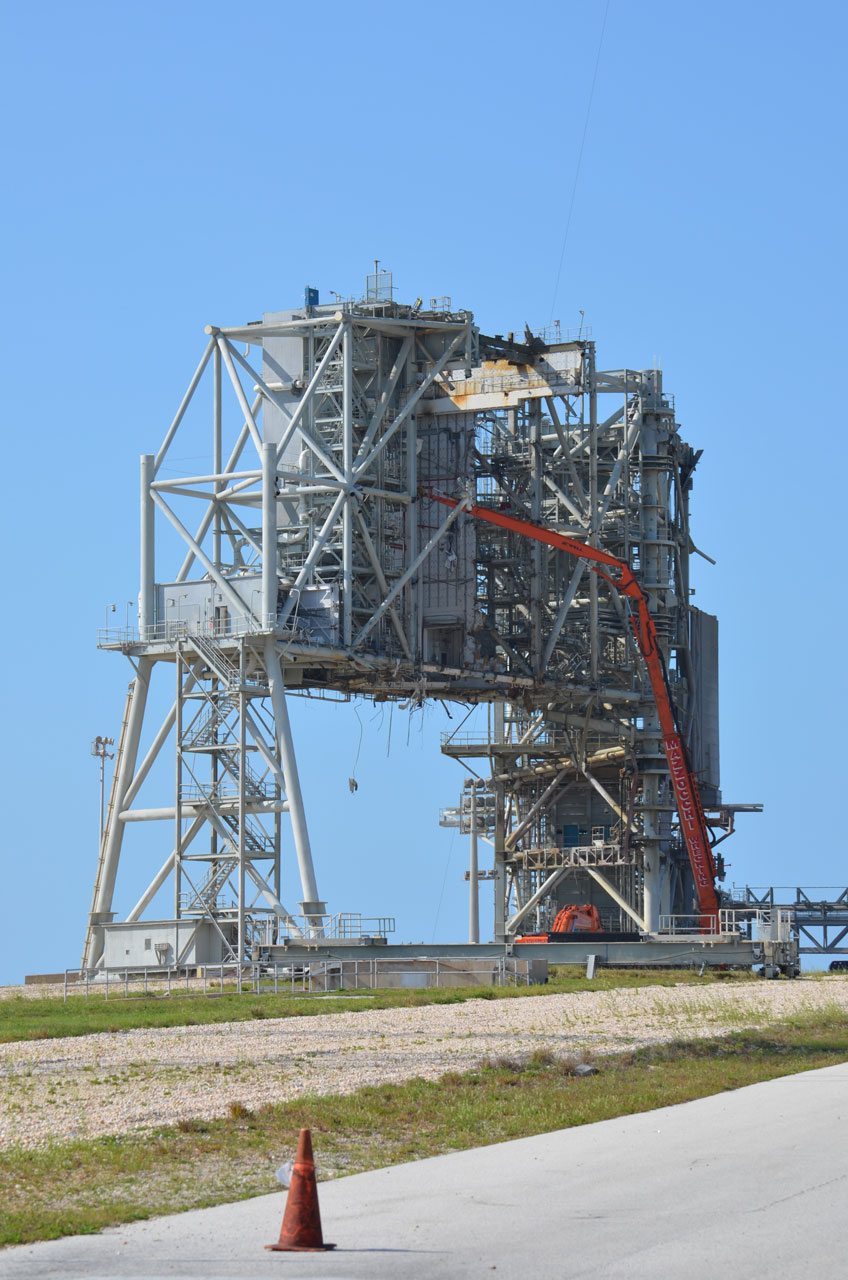
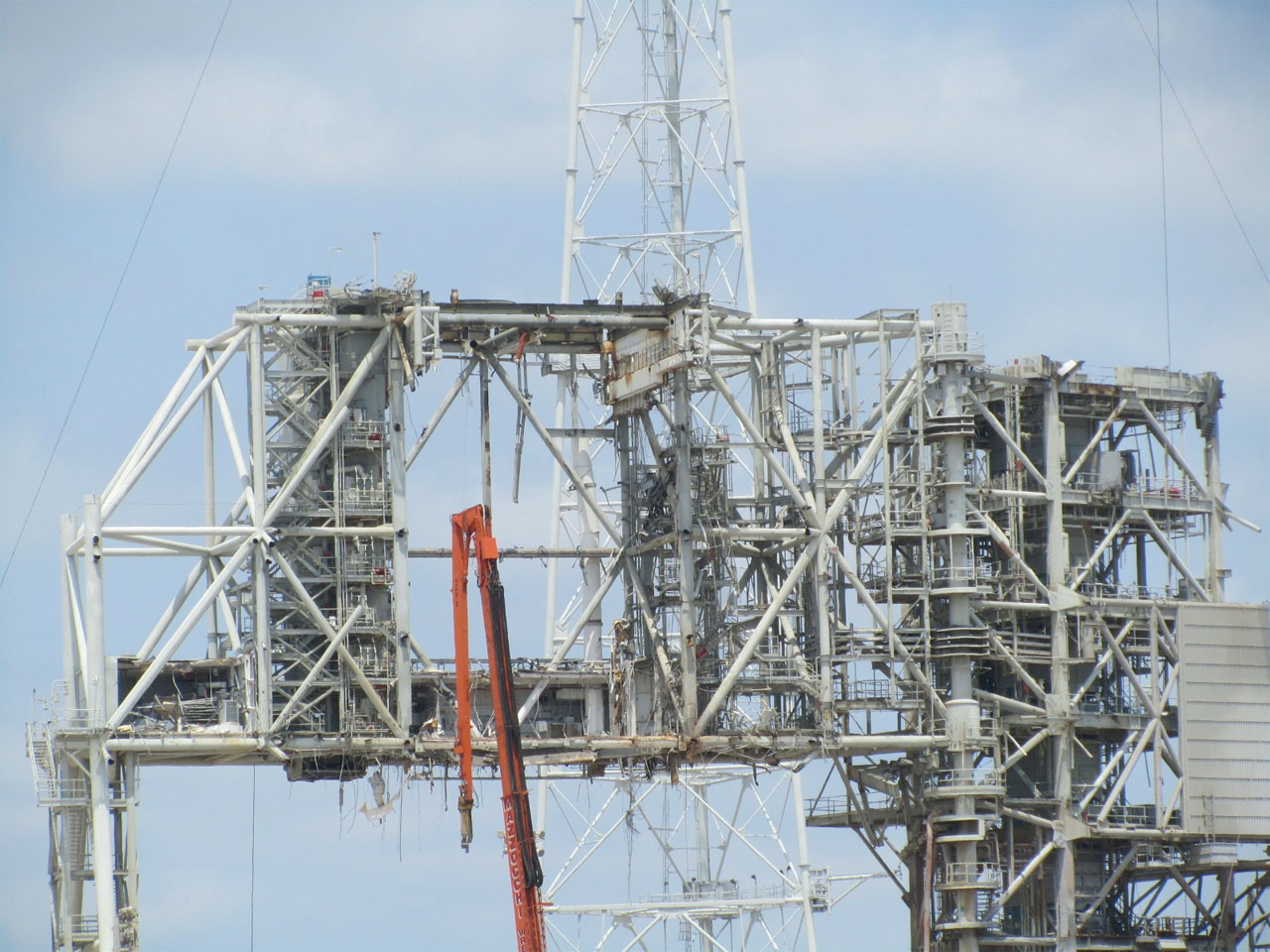
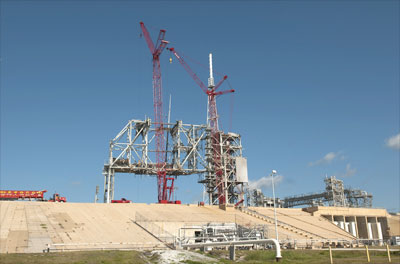
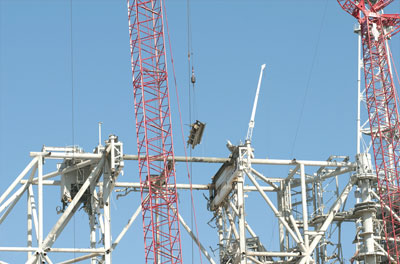
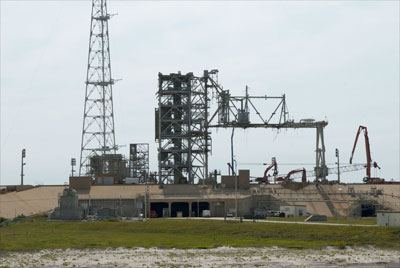
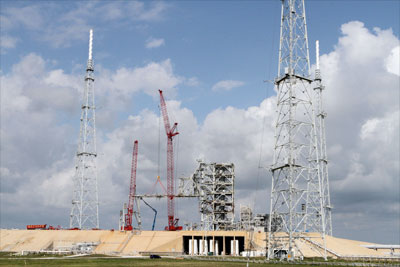
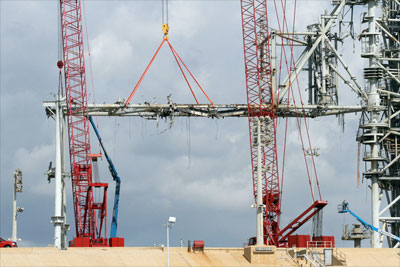
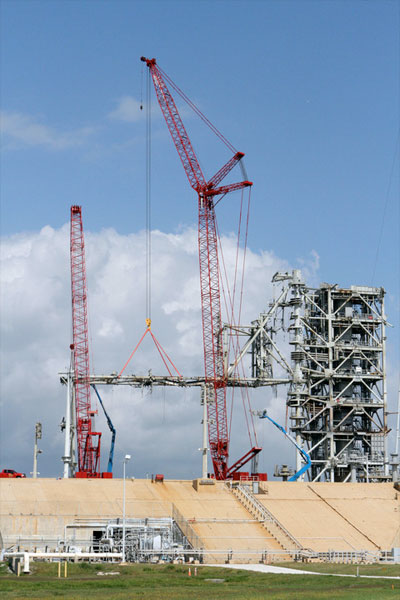
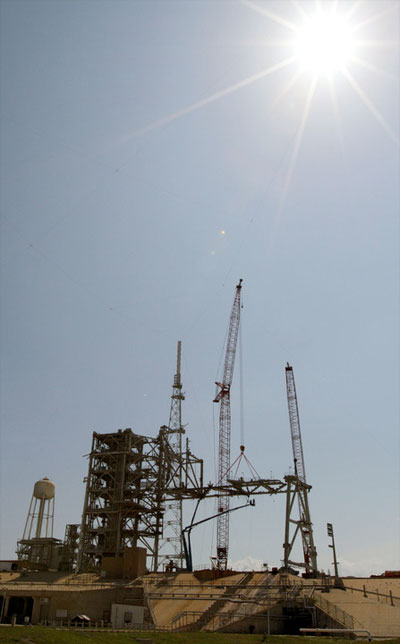
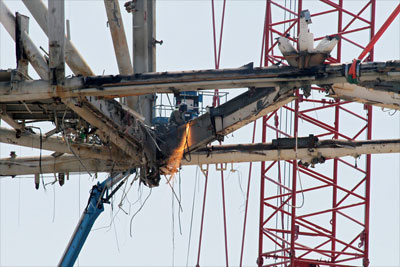
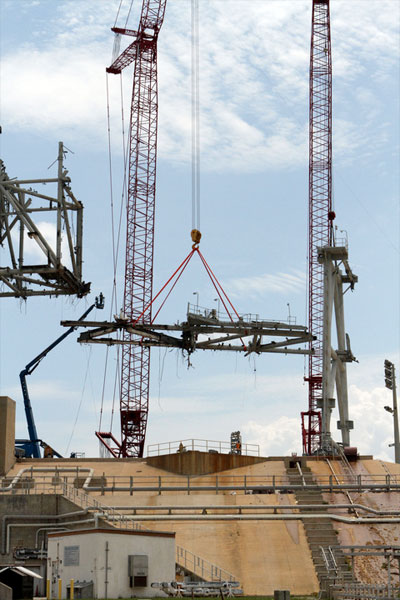
Construction crews began Monday (March 21) dismantling Pad 39B's Fixed Service Structure.
The fixed service structure (FSS) is the pad's most prominent feature, standing 347 feet from ground level to the tip of the [since removed] 80 foot lightning mast.
There are 12 floors on the FSS, positioned at 20-foot intervals. The first is located 27 feet above the pad surface.
A crane is being used to dismantle the FSS floor by floor beginning Monday with the 267-foot level. Work to remove the rotating service structure (RSS) also continues at the pad.
The FSS and RSS were designed to support the unique needs of the space shuttle. In 2009, the pad was no longer needed for the shuttle program, so NASA began restructuring it for future use.
Its new design will feature a "clean pad" for rockets to come with their own support structures, which NASA says will make it more versatile for a number of vehicles.
Photo credit: NASA/Frankie Martin
Robert Pearlman Editor
Posts: 42988 From: Houston, TX Registered: Nov 1999
posted 03-22-2011 08:13 AM
Photo credit: NASA/Frankie Martin
Robert Pearlman Editor
Posts: 42988 From: Houston, TX Registered: Nov 1999
posted 03-28-2011 12:12 PM
Progress photographs taken on March 25, 2011:
Photo credit: NASA/Kim Shiflett
Robert Pearlman Editor
Posts: 42988 From: Houston, TX Registered: Nov 1999
posted 03-28-2011 12:12 PM
Photo credit: NASA/Kim Shiflett
Robert Pearlman Editor
Posts: 42988 From: Houston, TX Registered: Nov 1999
posted 04-08-2011 08:54 AM
Progress photographs taken on April 6, 2011:
Photo credit: NASA/Kim Shiflett
Robert Pearlman Editor
Posts: 42988 From: Houston, TX Registered: Nov 1999
posted 04-08-2011 08:55 AM
Photo credit: NASA/Kim Shiflett
See here for discussion of these photos and the dismantling of Pad 39B.
Robert Pearlman Editor
Posts: 42988 From: Houston, TX Registered: Nov 1999
posted 05-03-2011 01:37 PM
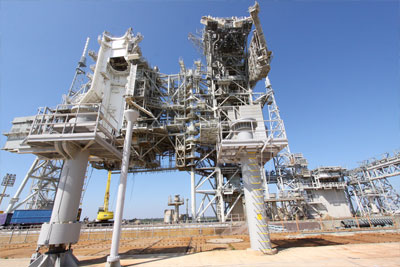
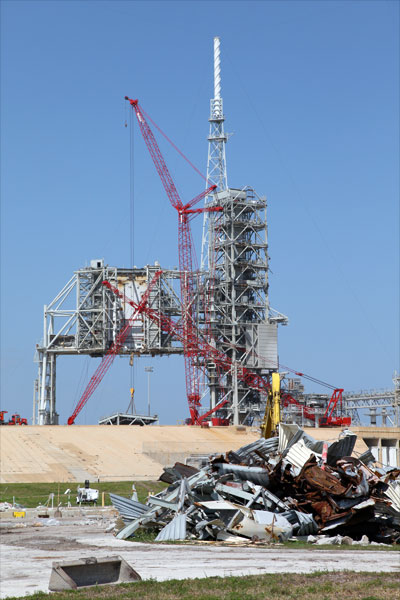
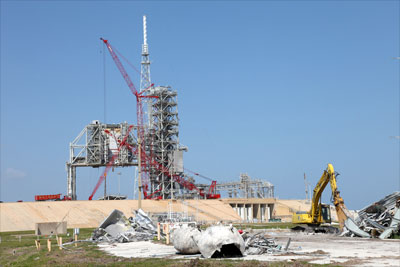
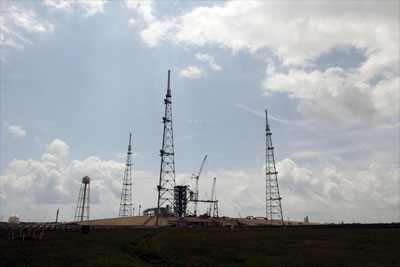
On April 27, NASA provided the media with a look at the progress dismantling 39B.
Photo credit: collectSPACE/Robert Pearlman
Robert Pearlman Editor
Posts: 42988 From: Houston, TX Registered: Nov 1999
posted 05-03-2011 01:43 PM
Progress photograph taken on May 3, 2011:
See here for discussion of these photos and the dismantling of Pad 39B.
Robert Pearlman Editor
Posts: 42988 From: Houston, TX Registered: Nov 1999
posted 05-13-2011 06:12 AM
The emergency egress system that was part of Pad 39B included seven baskets suspended from seven slidewires that extended from the pad to a landing zone 1,200 feet west of the pad. The system and the bunkers at the base are also being dismantled (the baskets were retained and are being provided to museums for display).
Photo credit: NASA/Jack Pfaller
See here for discussion of these photos and the dismantling of Pad 39B.
Robert Pearlman Editor
Posts: 42988 From: Houston, TX Registered: Nov 1999
posted 05-21-2011 03:51 PM
Progress photographs taken on May 18, 2011:
Photo credit: NASA/Jim Grossmann
See here for discussion of these photos and the dismantling of Pad 39B.
Robert Pearlman Editor
Posts: 42988 From: Houston, TX Registered: Nov 1999
posted 06-06-2011 06:00 PM
Progress photographs taken on June 6, 2011:
Photo credit: NASA/Jim Grossmann
Robert Pearlman Editor
Posts: 42988 From: Houston, TX Registered: Nov 1999
posted 06-06-2011 06:00 PM
Progress photographs taken on June 6, 2011:
Photo credit: NASA/Jim Grossmann
See here for discussion of these photos and the dismantling of Pad 39B.
Robert Pearlman Editor
Posts: 42988 From: Houston, TX Registered: Nov 1999
posted 06-14-2011 03:40 PM
Progress photographs taken on June 9, 2011:
Photo credit: NASA/Cory Huston
Robert Pearlman Editor
Posts: 42988 From: Houston, TX Registered: Nov 1999
posted 06-14-2011 03:40 PM
Progress photographs taken on June 9, 2011:
Photo credit: NASA/Cory Huston
See here for discussion of these photos and the dismantling of Pad 39B.
Robert Pearlman Editor
Posts: 42988 From: Houston, TX Registered: Nov 1999
posted 08-04-2011 09:56 PM
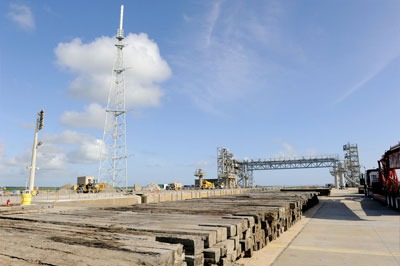
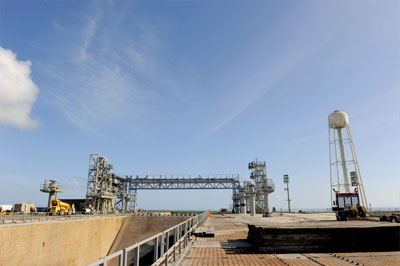
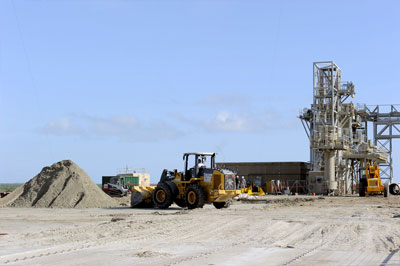
Progress photographs taken on August 3, 2011:
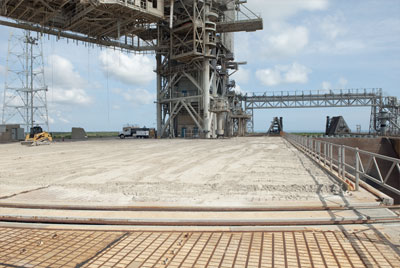
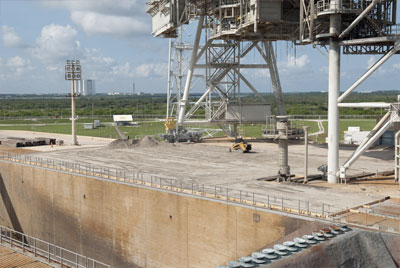
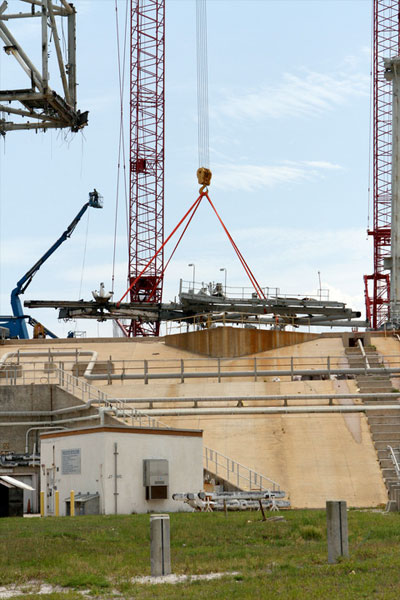
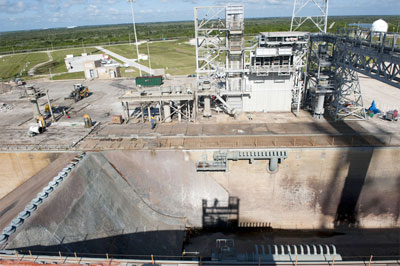
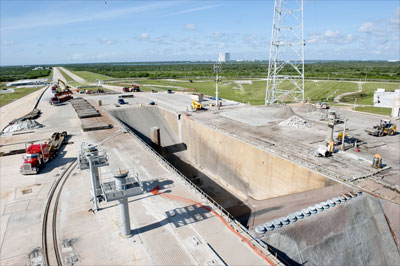
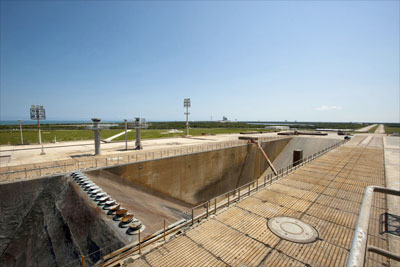
Cleanup of Pad 39B is in progress beside the pad's flame trench. The trench is 450 feet long, 58 feet wide and 42 feet deep with an inner inverted V-shaped steel flame deflector.
Sand, reinforcing steel and large wooden mats were placed over the pad's concrete surfaces during deconstruction to protect them from falling debris.
Photo credit: NASA/Kim Shiflett
Robert Pearlman Editor
Posts: 42988 From: Houston, TX Registered: Nov 1999
posted 08-04-2011 09:57 PM
Progress photographs taken on August 3, 2011:
Photo credit: NASA/Kim Shiflett
Robert Pearlman Editor
Posts: 42988 From: Houston, TX Registered: Nov 1999
posted 08-04-2011 09:58 PM
Progress photographs taken on August 3, 2011:
Photo credit: NASA/Kim Shiflett
Robert Pearlman Editor
Posts: 42988 From: Houston, TX Registered: Nov 1999
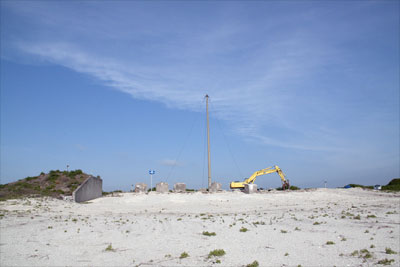
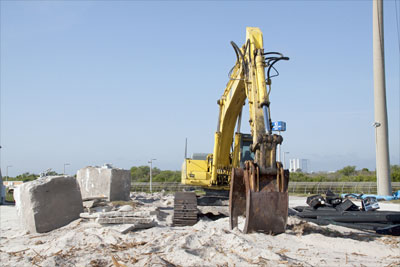
posted 09-16-2011 03:17 PM
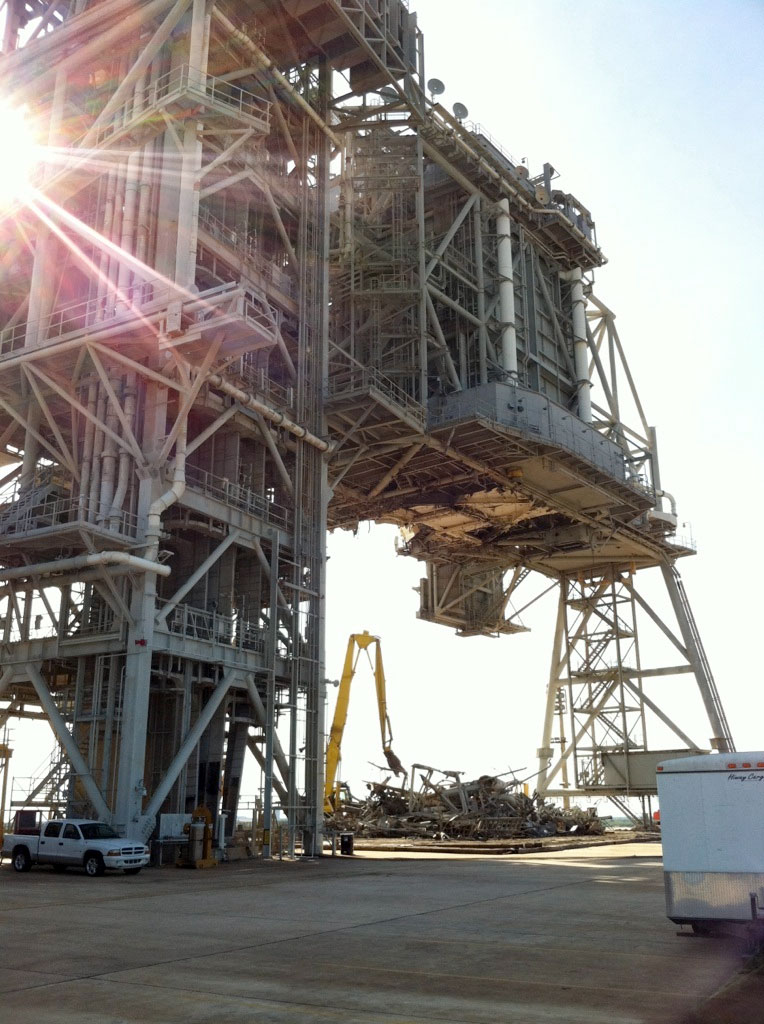
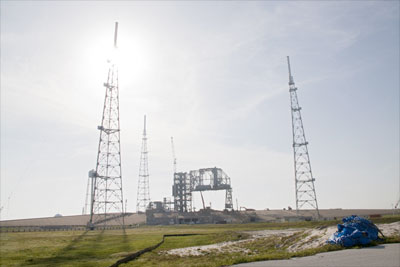
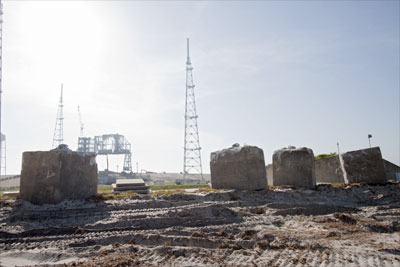
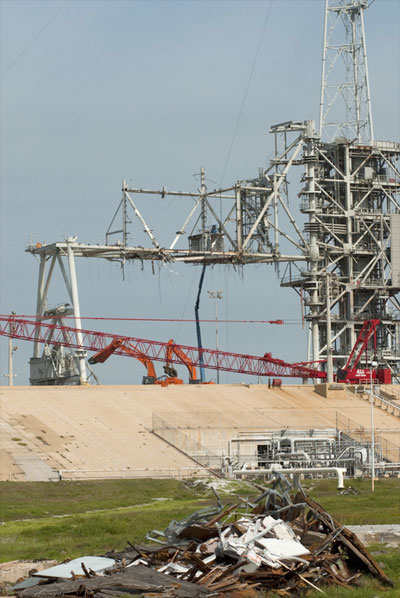
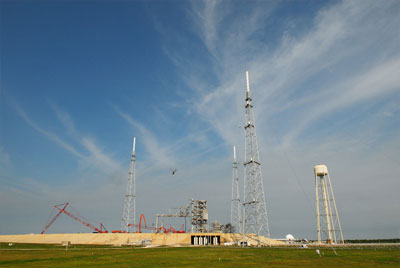
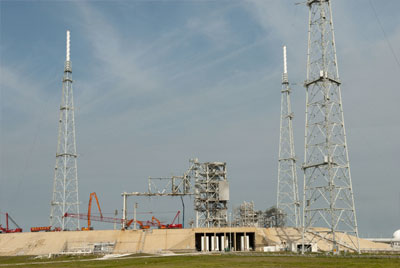
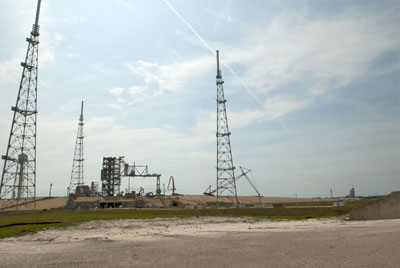
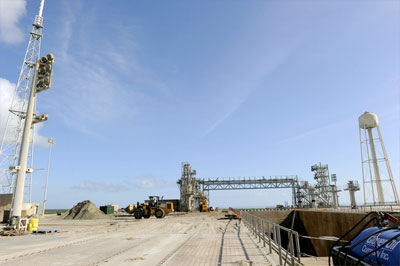
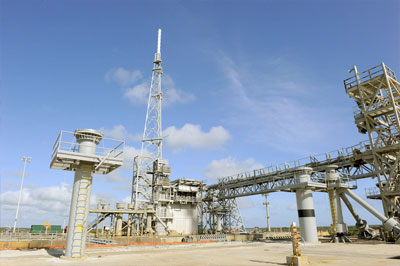
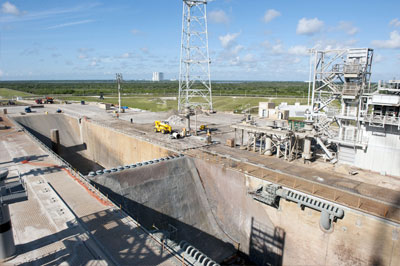
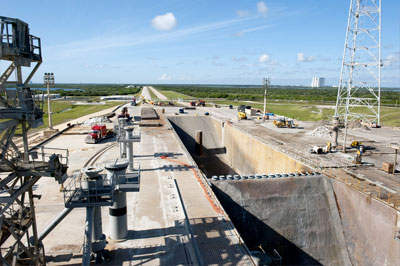
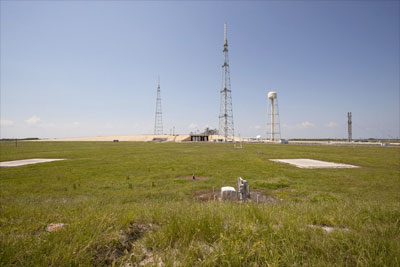
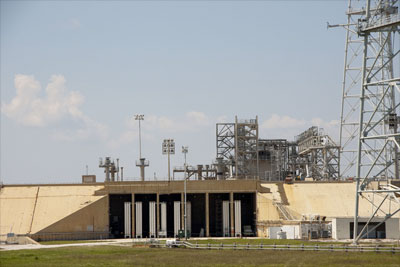
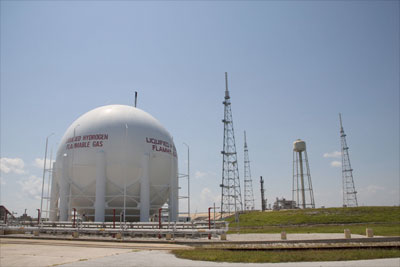
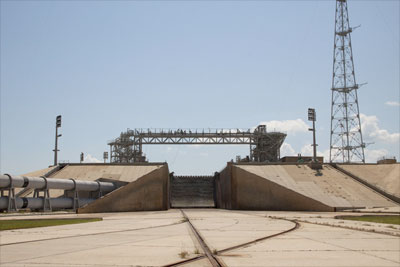
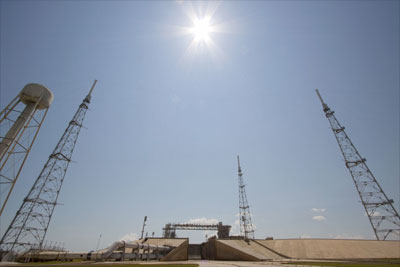
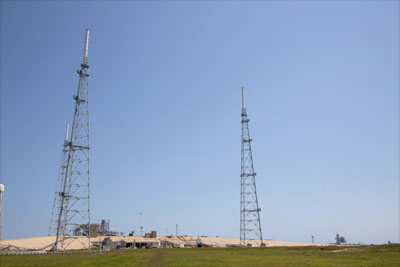
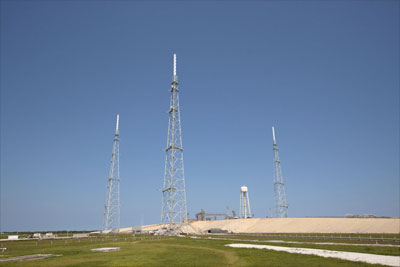
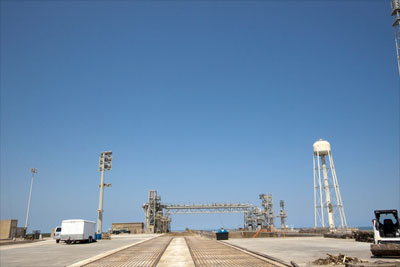
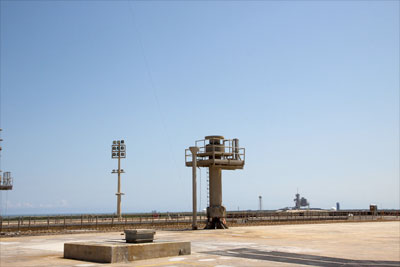
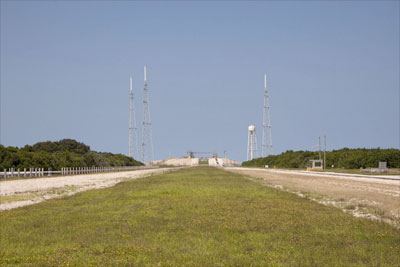
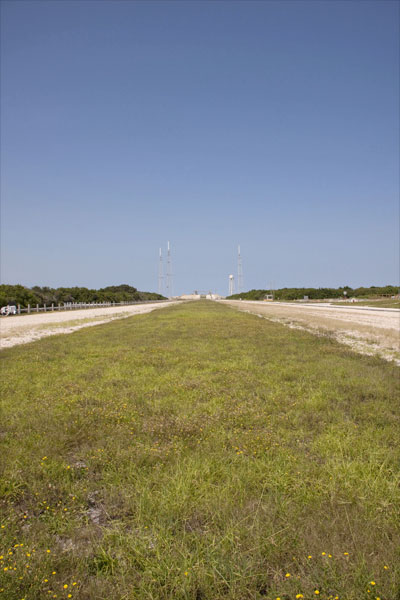
The deconstruction of Pad 39B at NASA's Kennedy Space Center in Florida was declared complete on Sept. 15, 2011:
Photo credit: NASA/Jim Grossmann
Robert Pearlman Editor
Posts: 42988 From: Houston, TX Registered: Nov 1999
posted 09-16-2011 03:17 PM
Photo credit: NASA/Jim Grossmann
Robert Pearlman Editor
Posts: 42988 From: Houston, TX Registered: Nov 1999
posted 09-16-2011 03:17 PM
Photo credit: NASA/Jim Grossmann
Robert Pearlman Editor
Posts: 42988 From: Houston, TX Registered: Nov 1999
The historic gantries that towered over Pad 39B at NASA's Kennedy Space Center, Fla. are no more. After more than two years of "deconstruction" work, demolition crews told NASA on Sept. 14 that the pad was clean of the structures that supported more than 50 space shuttle launches over two decades...
See here for discussion of the dismantling of Kennedy Space Center's Pad 39B.







 posted 03-04-2009 11:44 PM






 advertisement