advertisements
|

|
Voyager 1 at one light-day: Historian revisits Golden Record's details
November 18, 2026 — In the one light-day that humanity's most distant object has now traveled from Earth, there has been enough time for details about its creation — and what it left behind — to be all but forgotten and discovered again.
Voyager 1, which left Earth in 1977 on an initial mission to fly by Jupiter and Saturn (as well as the latter's moon Titan), crossed into interstellar space in 2012. Like its twin (Voyager 2), Voyager 1 carries a "commemorative phonograph record," in part as a nod to the 100th anniversary of the recording medium and as a message from humanity to whomever (or whatever) encounters the spacecraft on its journey through outer space.
About those forgotten bits, ask Glen Swanson. While researching the history of the Golden Record, he uncovered the discs' overlooked second set of operating directions and has located the duplicates that were made and distributed almost five decades ago.
"So much has been written about the contents of the record — the message in the bottle, so to speak — whereas I was more interested in the hardware, the bottle itself, because so very little is known about that," Swanson, former chief historian for NASA's Johnson Space Center in Houston and founding editor of "Quest: The History of Spaceflight Quarterly," said in an interview.
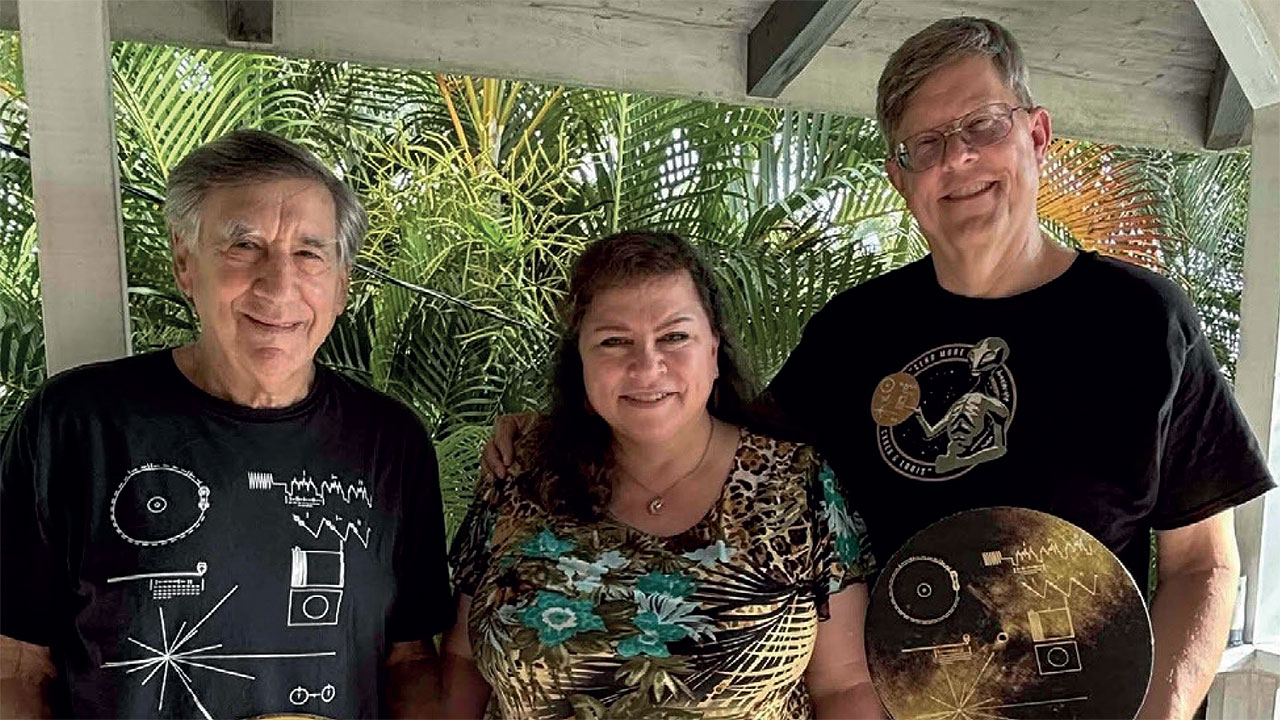
With the 50th anniversaries looming for the launches of both Voyager probes, Swanson, his wife, space anthropologist Deana Weibel and Jon Lomberg, the design director of the Golden Record, recently set about writing "Voyager's Golden Record: An Enduring Reflection" being released by the University of Chicago Press in August of next year.
"There isn't a whole lot of information, and some of the information is somewhat contradictory," said Swanson of the existing resources and publications. "So it is kind of refreshing to look back and see what exactly went on."
Meanwhile, the Voyagers continue to travel outwards, still communicating with Earth. On Wednesday (Nov. 18), Voyager 1 reached one light-day from Earth — the distance a particle of light travel in 24 hours — giving Swanson an occasion to share details from his and Jon Lomberg's pending book.
Under cover
At the immense scale of the universe, Voyager 2 is barely even a block from its home. Were an intelligent species to find it today — some 16 billion miles (25.9 billion kilometers) away from Earth — they might not need anything contained on the Golden Record to trace its origins back to our planet.
But that was never the intention of the Golden Record's designers, which created the archive to last and be relevant for a much more distant encounter.
"They are pretty confident that it's going to last a long, long, long time based on the data; the probabilities of the impacts from micrometeorites and things like that," Swanson said.
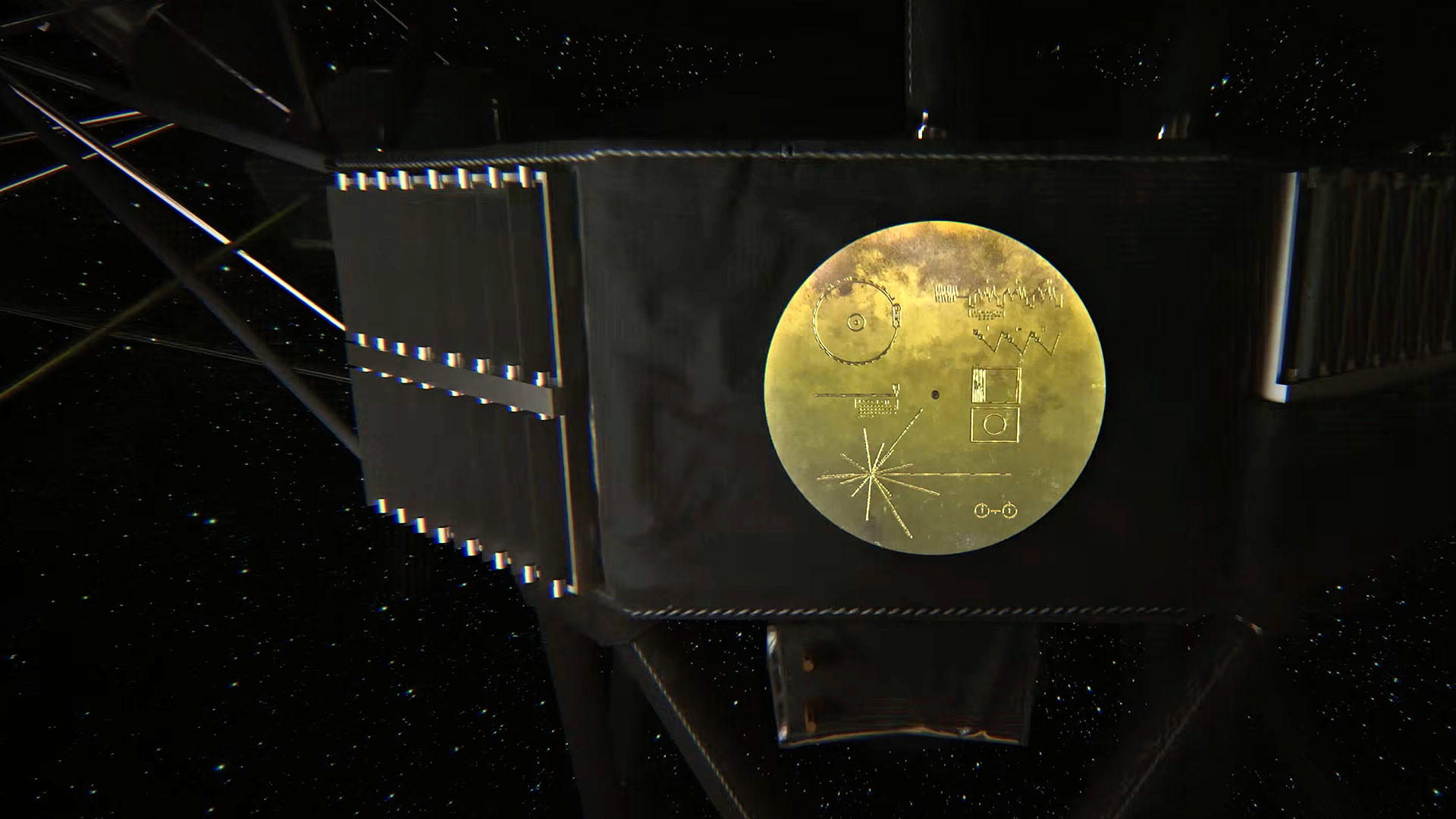
When most people think of the Golden Record, says Swanson, what often comes to mind is not the disc itself, but its protective cover. In addition to being inscribed with the now-iconic Pulsar map of the location of our Sun as earlier flown on the Pioneer 10 and 11 probes, hieroglyphs lay out how to play the record and access the data (e.g. photos) also contained on the disc.
The cover also shields the record from possible damage, but nothing protects the protector.
"The designers recognized that the outside of the cover was going to wear down. It just would," Swanson told collectSPACE. "Even small amounts of dust are eventually going to wear down the inscriptions to the point perhaps where they are not going to be readable."
It is a Catch-22: The instructions needed to be on the outside so whoever finds Voyager easily finds what to do. But if the hieroglyphs are damaged or are eroded away, the disc inside might forever go unplayed.
The solution may seem obvious, but it was unknown if the designers thought of it back then.
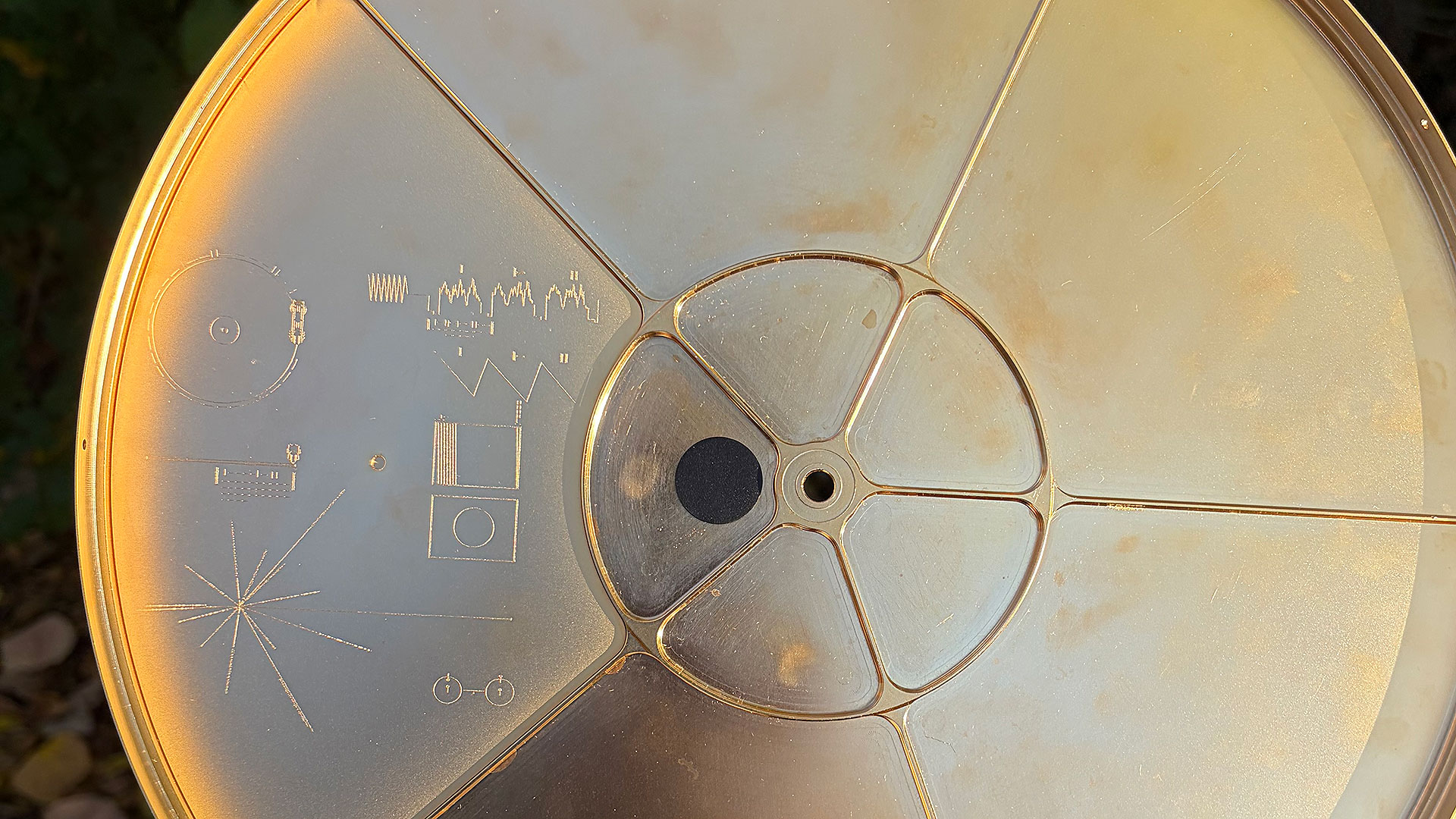
"It makes a whole lot of sense that they repeated the instructions on the inside of the cover because when someone or something finds Voyager, they might only be able to make out a little bit on the outside," said Swanson.
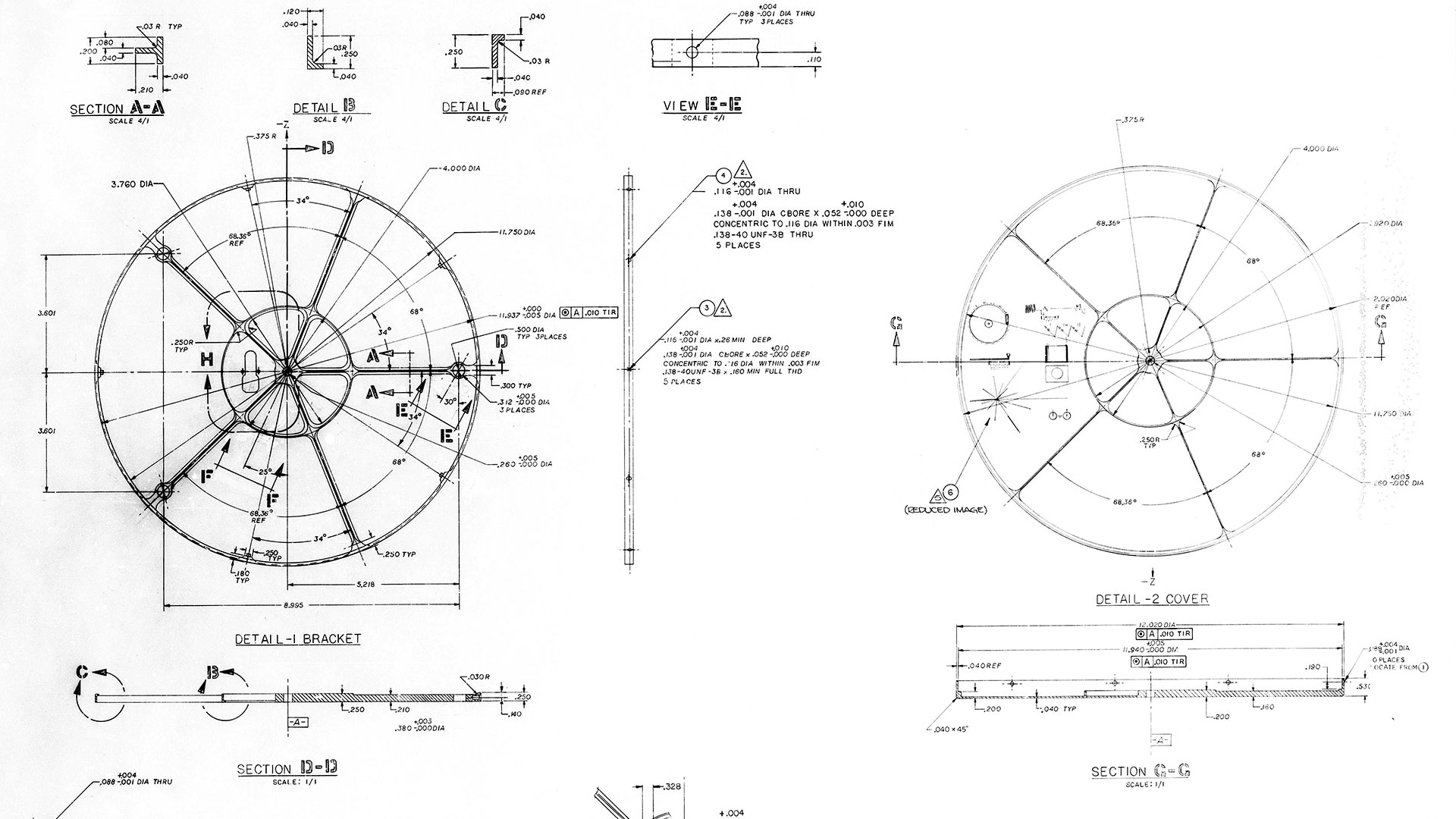
There were hints that this backup existed in photographs taken of the covers before the Voyager probes were launched, but they were either not clear enough or had other objects (e.g. a bag) in the way to make out what was there. It was not until Swanson was able to find and reference the original blueprints that he was able to confirm that the instructions were on the inside, too.
There is another reason why the record's designers may have felt they needed to repeat the instructions, according to Swanson.
"What's the best way to convey the importance of those instructions? You repeat them," he said. "You have them on the outside and you have them on the inside."
Limited edition
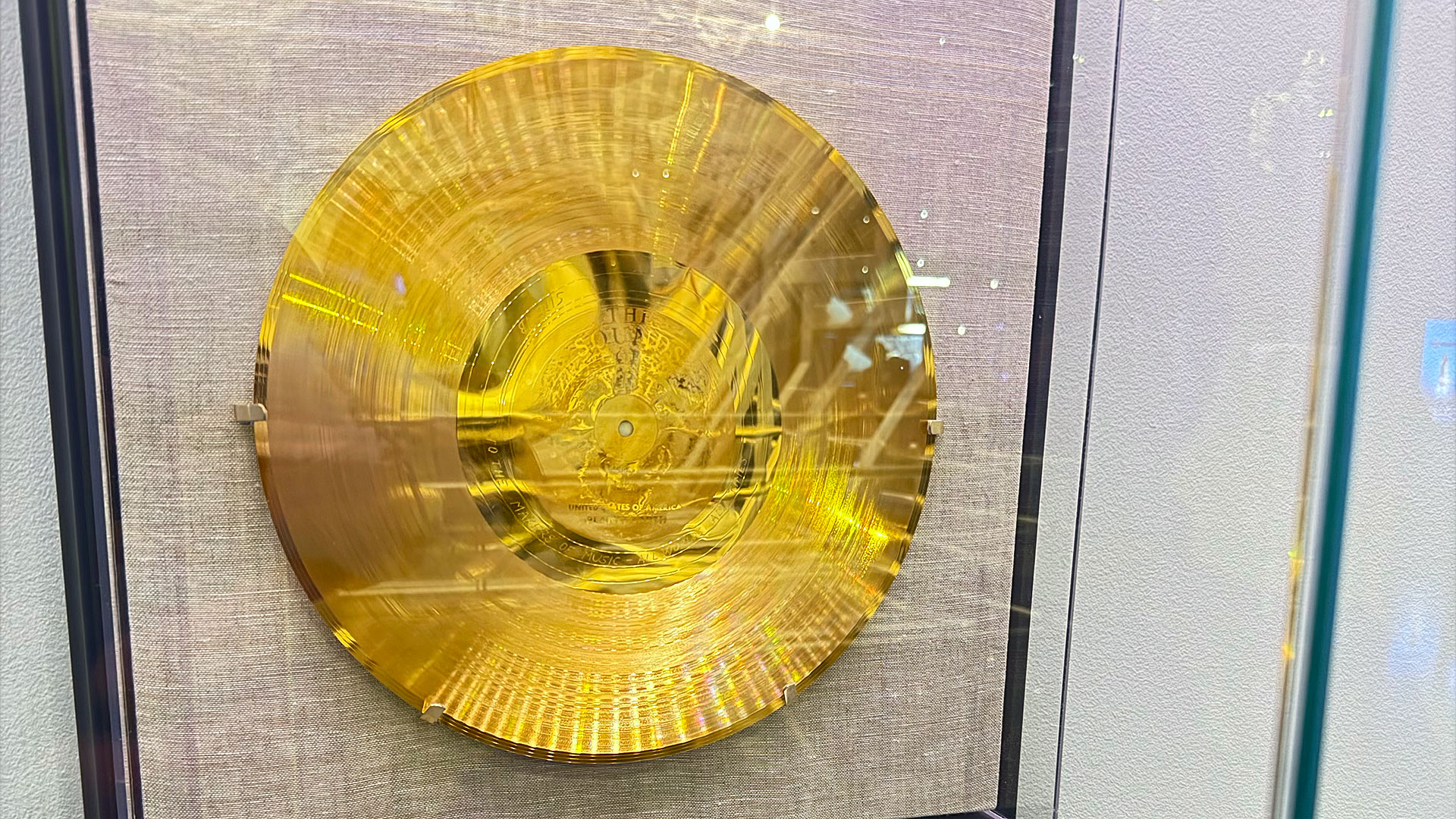
Initially, the Voyager Golden Record was a limited edition of just three — one to fly on each spacecraft and a flight backup.
"Later, meaning maybe a month or so after the launches, there's correspondence indicating that NASA said to go ahead and make 10 extras," said Swanson, noting that the count included the spare. "How they came up with that number, I am not 100% sure, other than maybe they were to make as many as they could based on the hardware and funding available."
Over the years, various reports have either lowered the total number to as few as 6 or raised it as high as 14, for reasons unexplained. What is for certain — as Swanson also verified — is that the Jet Propulsion Laboratory (JPL) in Pasadena, California, retained and displays the flight spare.
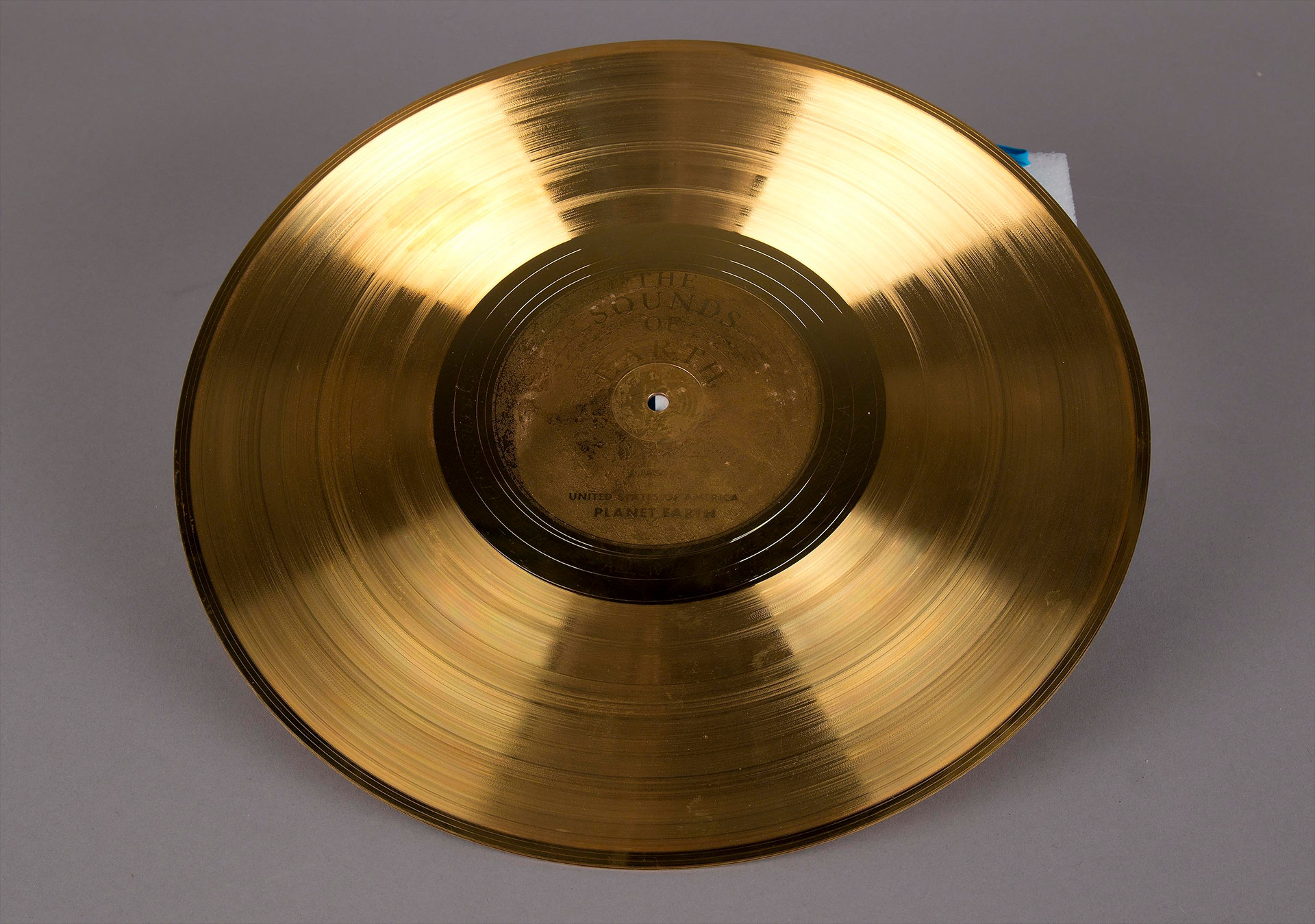
In the process of his research, Swanson was also able to verify original duplicates are held today at the United Nations in New York; U.S. Library of Congress, NASA Headquarters and Smithsonian National Air and Space Museum in Washington, D.C.; Johnson Space Center in Texas; Kennedy Space Center in Florida; Langley Research Center in Virginia; Glenn Research Center in Ohio; and Goddard Space Flight Center in Maryland.
"Interestingly enough, NASA Headquarters was not given one originally so how they obtained their copy is not certain," said Swanson. "It may be that President Carter turned his copy over to NASA HQ since records indicate that he had one. Archivists at the Carter Presidential Library and Museum confirmed that they never received a Golden Record so Carter most likely gave it back to NASA at some point."
In 2024, SpaceX founder Elon Musk replied to a social media post stating "I have one," offering no other details. It is believed he was speaking of a replica and not one of the NASA-produced duplicates.
Due to rights issues and the material challenges, there have been no complete versions offered for sale. The audio tracks have been collected on vinyl, CD and in playlists and even a CD-ROM was produced for the visuals. Full and smaller size replicas of the cover have also been made.
Swanson and Lomberg are working on a full-size replica of the copper record to be released in conjunction with their book. But even that, as now planned, will not be playable.
"I think humanity is delighted that there were 10 spares made because now we have those to study and look at, as the two that were flown are now well out of our reach," said Swanson. |
|
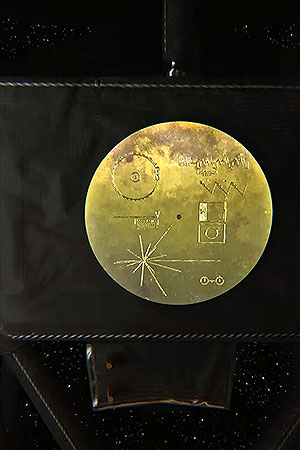
Rendering of the Voyager 1 spacecraft carrying the Golden Record, a message from humanity, now one light-day from Earth. (NASA)
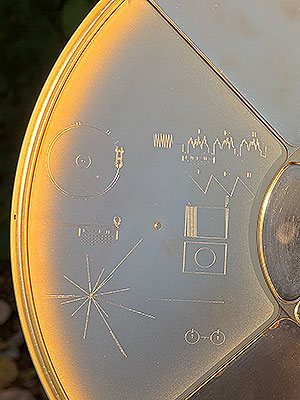
Historian Glen Swanson rediscovered that the designers of the Voyager Golden Record repeated the operating instructions on the inside of its protective cover. (Glen Swanson)
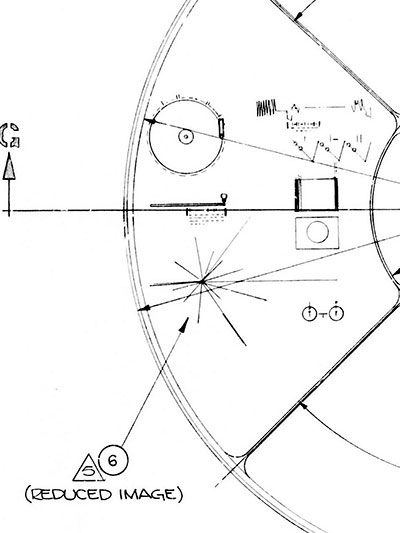
The schematics for the Voyager Golden Record's protective cover confirmed the "reduced size" instructions to be added to the interior side, just as Glen Swanson found. (Glen Swanson/NASA/JPL)
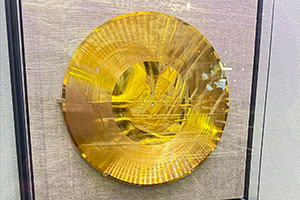
One of the 10 duplicate Voyager Golden Records that were made, this one was recently on display at the Kennedy Space Center in Florida, pulled out from the archives. (collectSPACE/Tim Gagnon)
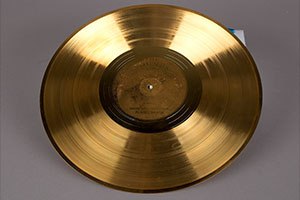
This duplicate of the Voyager Golden Record was transferred to the National Air and Space Museum in 1978. (Smithsonian) |
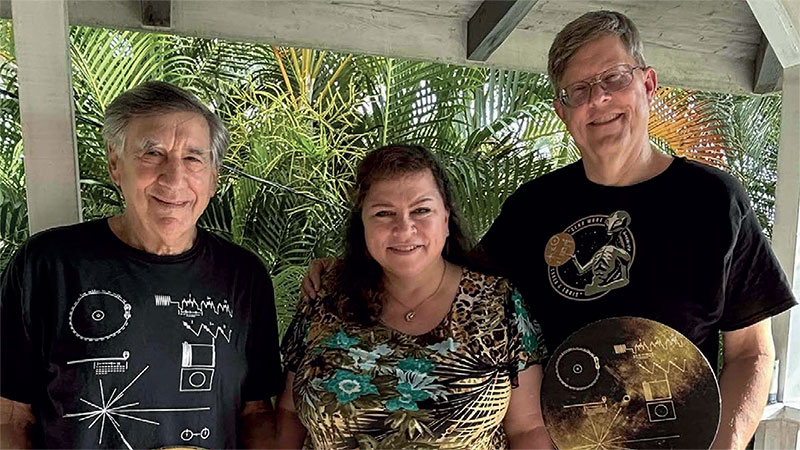
Historian Glen Swanson (at right) with his wife, anthropologist Deana Weibel (at center) and Jon Lomberg, space artist, science journalist and design director for the Voyager Gold Record. (Glen Swanson) |
|
When you purchase through links on our site, we may earn an affiliate commission. Here's how it works.

© collectSPACE. All rights reserved.
|
|
|
|