Space Newsspace history and artifacts articlesMessagesspace history discussion forumsSightingsworldwide astronaut appearancesResourcesselected space history documents
advertisements
NASA names Artemis III crew to test moon landers in Earth orbit
June 9, 2026
— NASA's first astronauts to fly to the moon in more than 50 years handed off the baton to the next four people to launch on an Orion spacecraft on Tuesday (June 9).
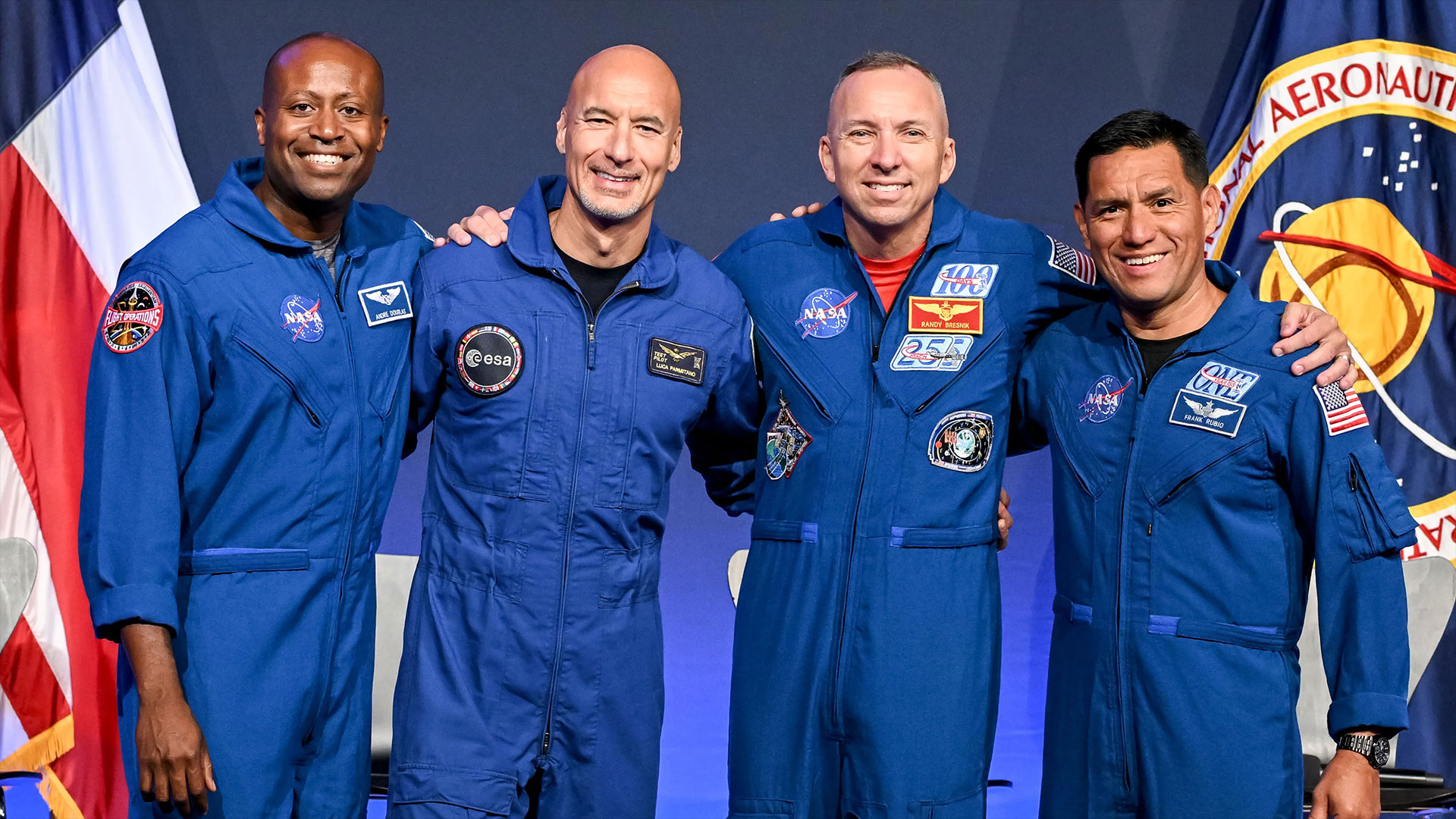
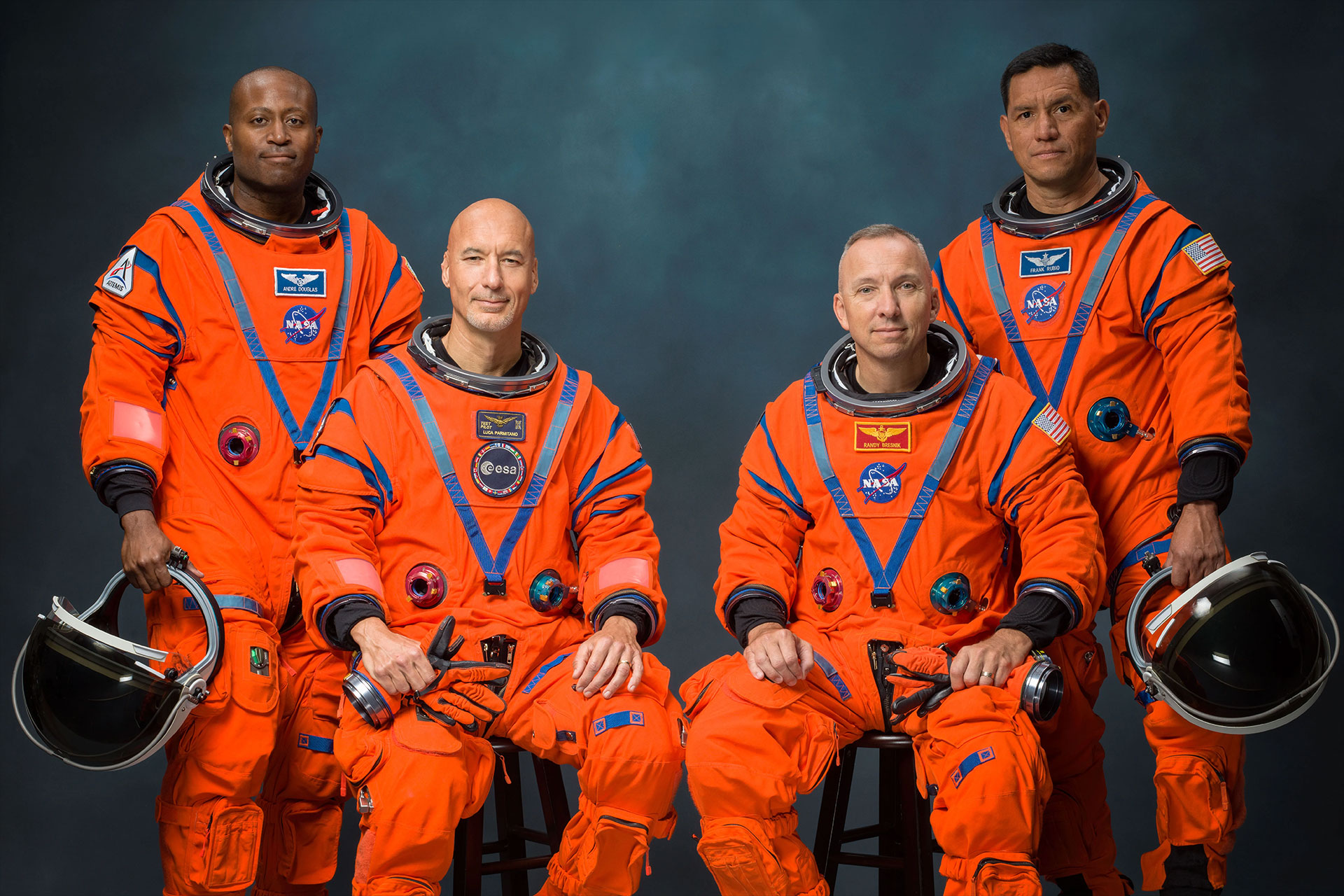
Artemis II crewmates Reid Wiseman, Victor Glover and Christina Koch, who with Canadian Space Agency astronaut Jeremy Hansen flew on a 10-day flyby of the moon, handed the symbolic metal bar to the newly-announced Artemis III crew: NASA astronaut and commander Randy Bresnik, Italian astronaut and pilot Luca Parmitano of the European Space Agency (ESA) and mission specialists Frank Rubio and Andre Douglas, both with NASA.
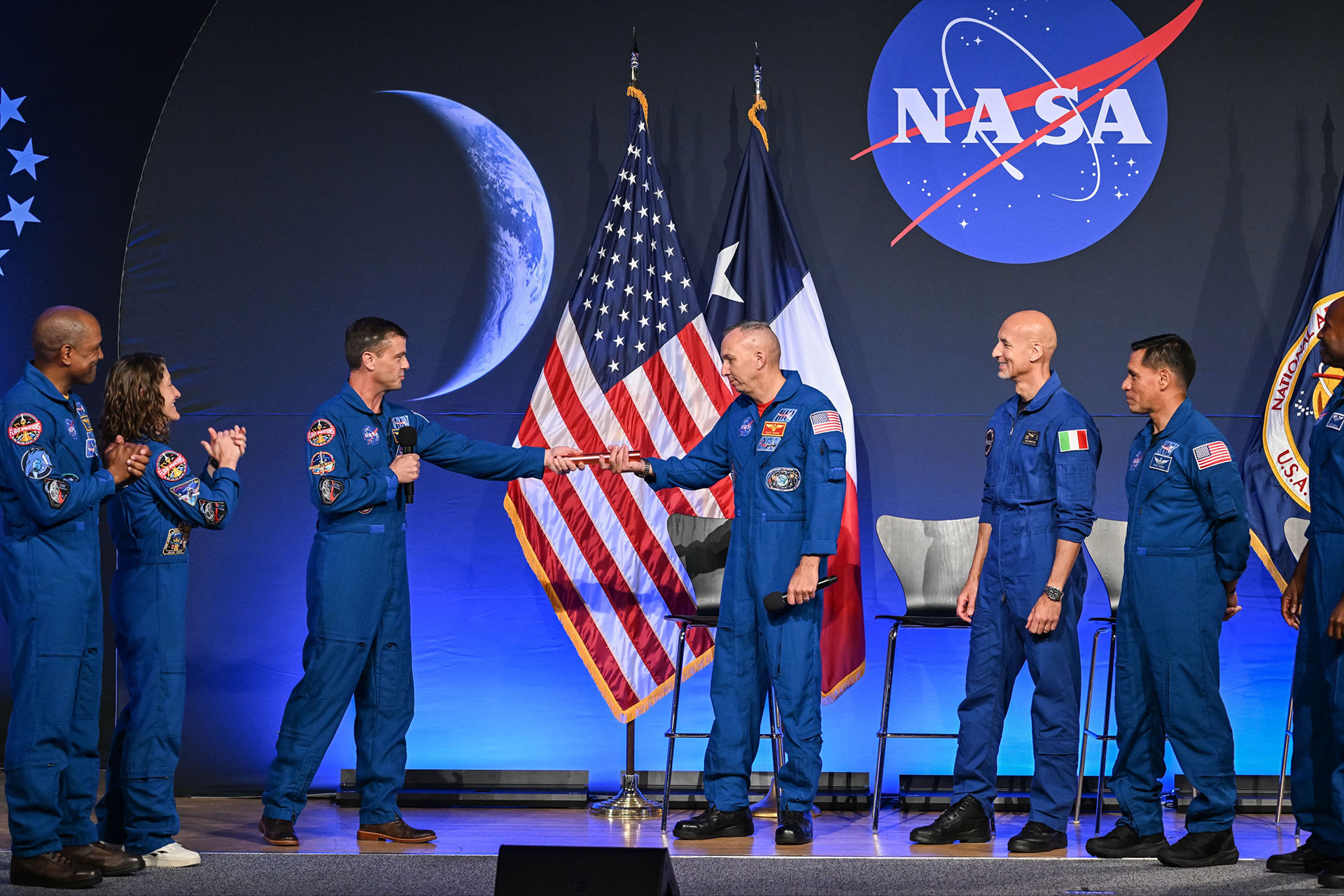
"You guys know, because you work in the [Astronaut] office, we've been carrying these batons around for way too long, and so with that, the Artemis II crew hands you the baton, you got the controls," said Wiseman, passing the copper tube to Bresnik on the stage at Johnson Space Center's Teague Auditorium in Houston.
"We are certainly humbled as a crew to be able to be your crew that executes this Artemis III mission in space, being that unifying link between the phenomenal Artemis II mission we just had two months ago and the Artemis IV mission that will follow ours, where we will again be the first to land humans on another celestial body, ... our neighbor in the sky at night, the moon," said Bresnik.
From 'Moon (lander) Joy' to 'Earth Joy'
"Artemis III will be an extraordinary demonstration of what is possible when the greatest aerospace companies across the United States, alongside our European partners, come together to showcase the technological might and ambition of the free world," said Jared Isaacman, NASA Administrator.
During the mission, which NASA is targeting to launch next year (2027), the agency's Space Launch System (SLS) rocket will fly for only the second time with a crewed Orion spacecraft, lifting off from the Kennedy Space Center in Florida into low Earth orbit. After checking out the Orion's systems, the Artemis III crew will demonstrate rendezvous and docking capabilities with test versions from one, or both, U.S. companies developing human landing systems.
"Artemis III is an incredibly exciting, complicated and highly coordinated multi-launch campaign. It's going to happen in a short period of time with three of the world's most powerful rockets," said Jeremy Parsons, NASA's Artemis program manager.
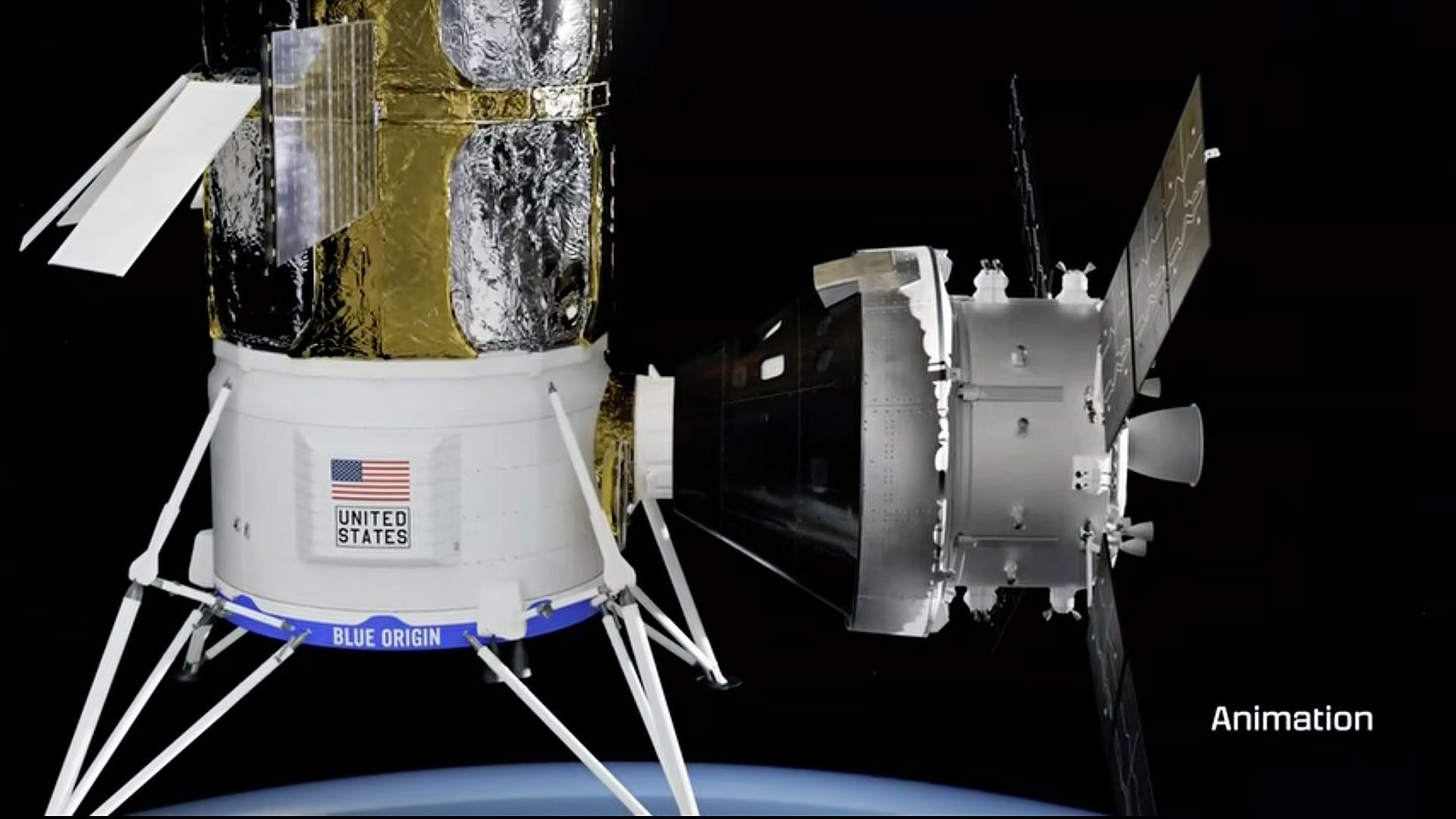
As currently planned, Blue Origin's Blue Moon lander will be deployed into low Earth orbit first, followed by the launch of Bresnik, Parmitano, Rubio and Douglas on the Orion-SLS stack. The two vehicles will rendezvous and spend about two days docked together, during which the crew will test "technology demonstrations" outside and inside the lander.
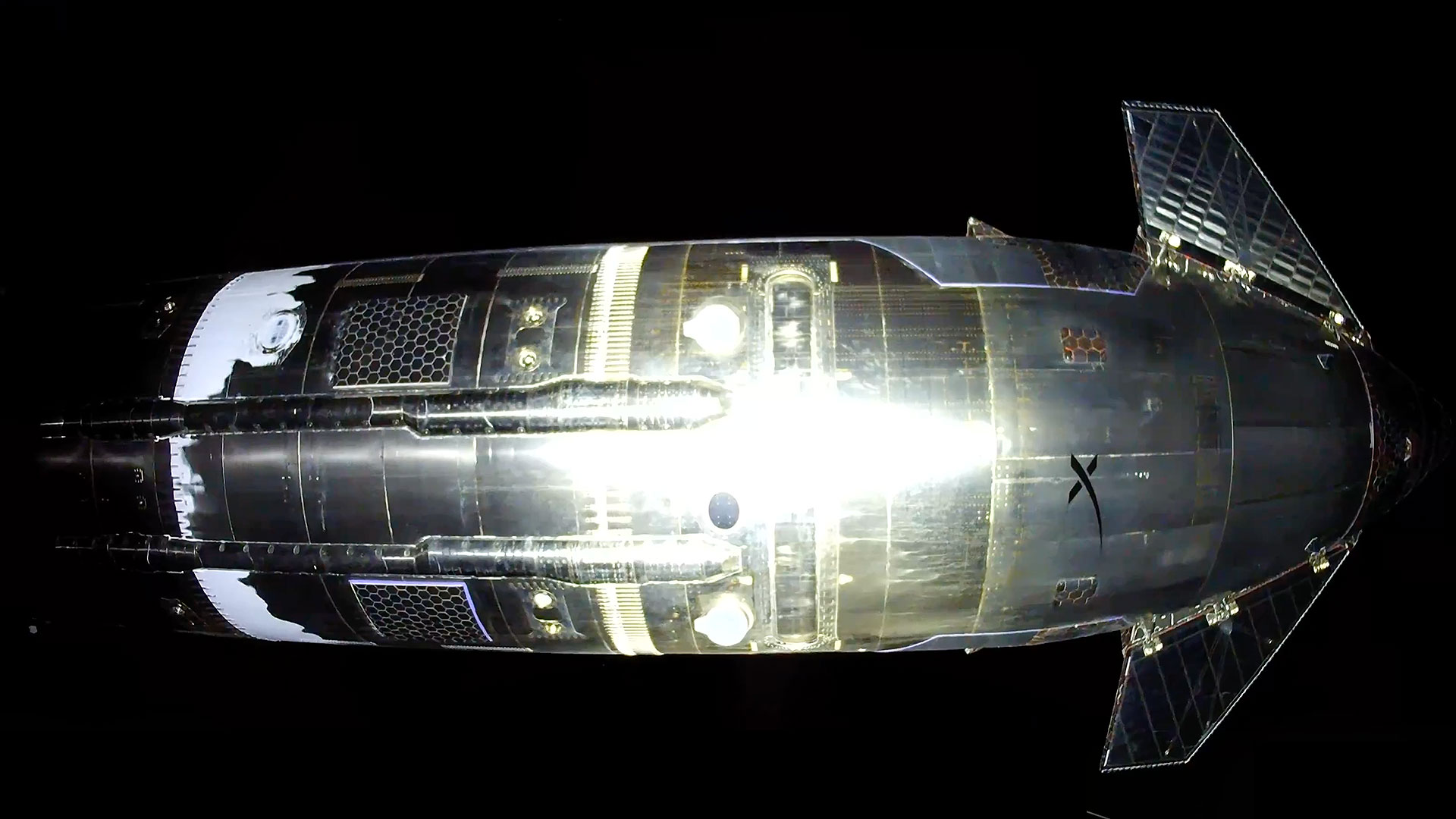
Orion will then undock, separate from Blue Moon and conduct its second rendezvous of the mission with SpaceX's lander test article. Orion will spend about a day docked to the Starship before separating and preparing to splash down in the Pacific Ocean, off the coast of California.
"In total, we expect the mission to last around two weeks," said Parsons.
Blue Origin and SpaceX representatives each said their company would be ready to support Artemis III. Blue Origin, the spaceflight firm founded by Amazon founder Jeff Bezos, is currently recovering from the loss of a New Glenn rocket, taking out part of its launch pad.
"We expect to complete the vehicle for Artemis III and be ready for launch in 2027," said John Couluris, senior vice president of lunar permanence. "Blue Origin is very motivated to be part of the journey of returning humans to the moon."
SpaceX, founded by Elon Musk, flew its twelfth test flight of its Starship launch vehicle in May, debuting a third version of the spacecraft, as well as improvements to its booster and launch pad. It has yet, though, put a Starship into orbit or demonstrated some of the technologies needed for a crewed, moon-bound lander.
"The V3 design of Starship is planned to be the vehicle for propellant transfer, our uncrewed missions to the moon and for the HLS [human landing system] crewed lunar landing," said Jessica Jensen, vice president for customer operations and integration at SpaceX. "We're also actively building our first flight fidelity Starship HLS cabin at Starbase, the primary structure is assembled and prepared to be outfitted with key functional systems like avionics, power, life support systems, and more to come in the next few months."
In addition to the moon lander demonstrations, the Artemis III crew will take advantage of their position in Earth orbit to conduct science similar to the type that has been and will be done at the moon.
"While Artemis II was all about "Moon Joy," Artemis III will be all about "Earth Joy." We will be studying the route from Earth, and our Artemis III crew will be our mission scientists," said Nicky Fox, NASA's associate administrator for science. "For this technical and complex mission, we will focus on how we can better work with the unique Orion capsule and test and establish the necessary groundwork prior to landing with Artemis IV."
Four for III
The Artemis III crew includes the first space shuttle-era astronaut to fly on Orion; the first ESA astronaut to join an Artemis crew; the current U.S. record holder for the most time in space on a single mission; and the U.S. backup crew member for the Artemis II mission. (NASA research pilot and astronaut Bob Hines serves a backup to the Artemis III crew members.)
A member of the 2021 astronaut candidate class "The Flies," Artemis III mission specialist Douglas, 40, previously supported Wiseman, Glover and Koch as their backup and a member of their closeout crew. A Virginia native, he earned a bachelor's degree in mechanical engineering from the U.S. Coast Guard Academy and four postgraduate degrees from various institutions, including a doctorate in systems engineering from George Washington University.
"This mission is going to be fantastic," said Douglas. What an excellent crew. Very proud to serve with these gentlemen."
On Sept. 27, 2023, Artemis III mission specialist Rubio, 50, landed from a 371-day stay on the International Space Station, setting a new record for the longest single spaceflight by an American astronaut. Hailing from Florida, Rubio graduated from the U.S. Military Academy and earned a doctor of medicine from the Uniformed Services University of the Health Sciences, before joining the astronaut corps as a member of "The Turtles" candidate class in 2017.
Artemis III pilot Parmitano, 49, was the first first Italian to command a space station crew and first Italian to conduct a spacewalk. A veteran of two stays on the International Space Station, he earned a bachelor's degree in political sciences from the University of Naples Federico II and master's degree in experimental flight test engineering from the Institut Supérieur de l’Aéronautique et de l’Espace in France. A graduate of the Italian Air Force Academy, he became a test pilot in 2007 and was promoted to colonel in 2019.
"He has been tested during a spacewalk early in his career. His helmet began to fill with water, a dangerous situation by any standard. He handled it with calm and clarity, and brought himself back safely. That tells you more about an astronaut than any CV ever could," said Josef Aschbacher, ESA's Director General.
Bresnik, 58, flew twice to the International Space Station — including aboard the space shuttle Atlantis in 2009 — before being named Artemis III commander. Chosen as a member of "The Peacocks" in 2004, he was the first graduate of The Citadel to fly into space. A retired U.S. Marine colonel, he has logged more than 7,000 hours in 95 types of aircraft.
"While this may look like just a baton right now, as it's in my hand, it feels like this big flaming Olympic torch," said Bresnik, addressing the Artemis II crew members. "We, the Artemis III crew, are honored to be able to carry this torch forward, to be able to execute our mission, to make that flame burn brighter and be able to pass that flame on to the next crew that's here."
"So it is our distinct honor and privilege, and echoing the immortal words of Apollo 11's Michael Collins, to be 'carrying the fire' to the next Artemis mission," he said.
The Artemis III crew, including commander Randy Bresnik of NASA (second from right), pilot Luca Parmitano with the European Space Agency (second from left) and mission specialists Andre Douglas (at left) and Frank Rubio, both of NASA. (NASA/Robert Markowitz)
Artemis II commander Reid Wiseman (at left) hands off the baton to Artemis III commander Randy Bresnik as their crewmates look on at the Johnson Space Center in Houston on June 9, 2026. (NASA)
Artemis III crew portrait. From left to right: Andre Douglas, mission specialist; pilot Luca Parmitano with the European Space Agency; commander Randy Bresnik of NASA; and mission specialist Frank Rubio of NASA. (NASA)
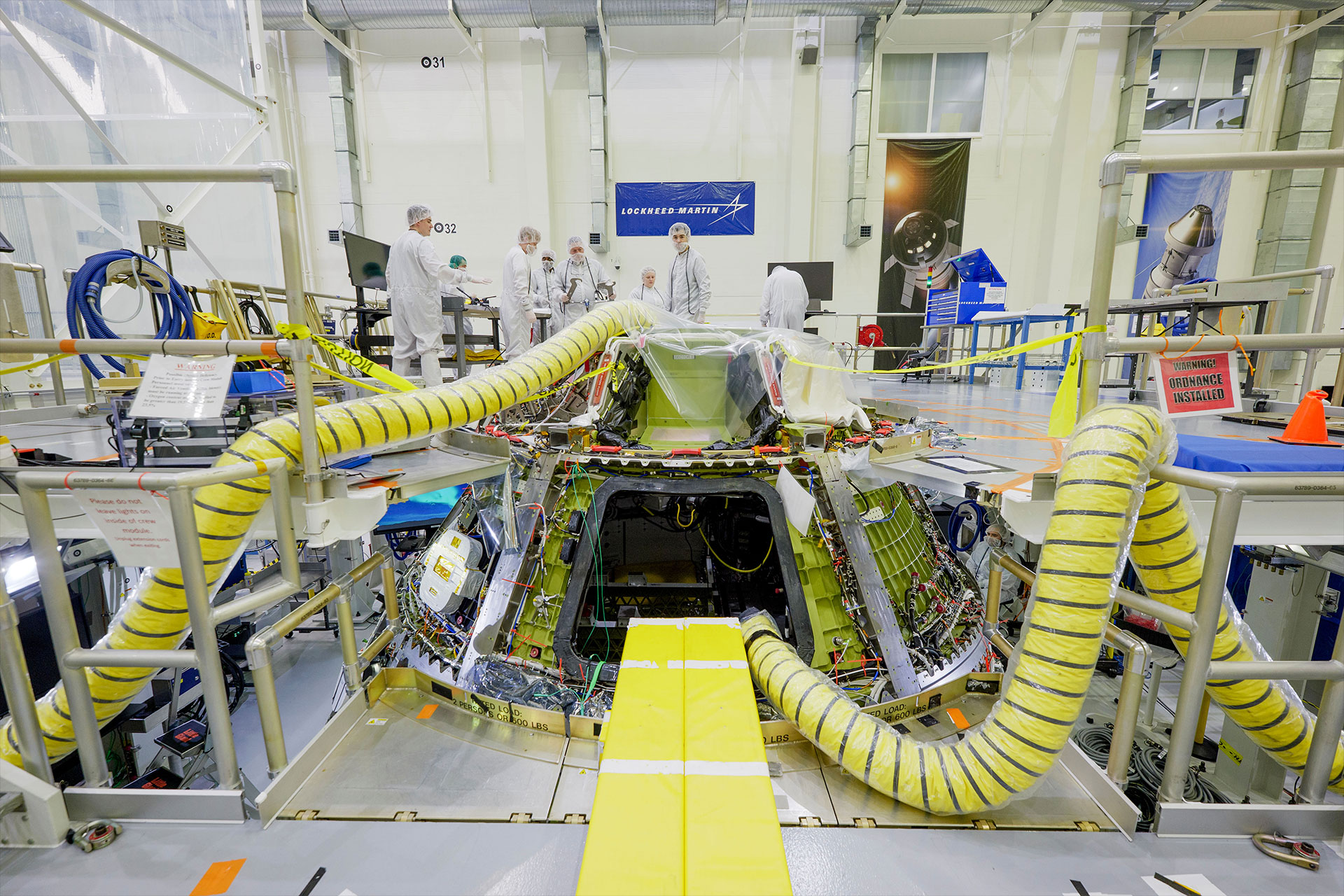
Technicians powered on the Artemis III Orion crew module for the first time in May 2025 inside the Neil A. Armstrong Operations and Checkout Building at Kennedy Space Center in Florida. (NASA)
Animation still of Orion docked with Blue Origin's Blue Moon Mk1 in Earth orbit during the Artemis III mission. (NASA)
SpaceX Starship v3 seen in space by a Starlink satellite during a test flight in May 2026. (SpaceX)
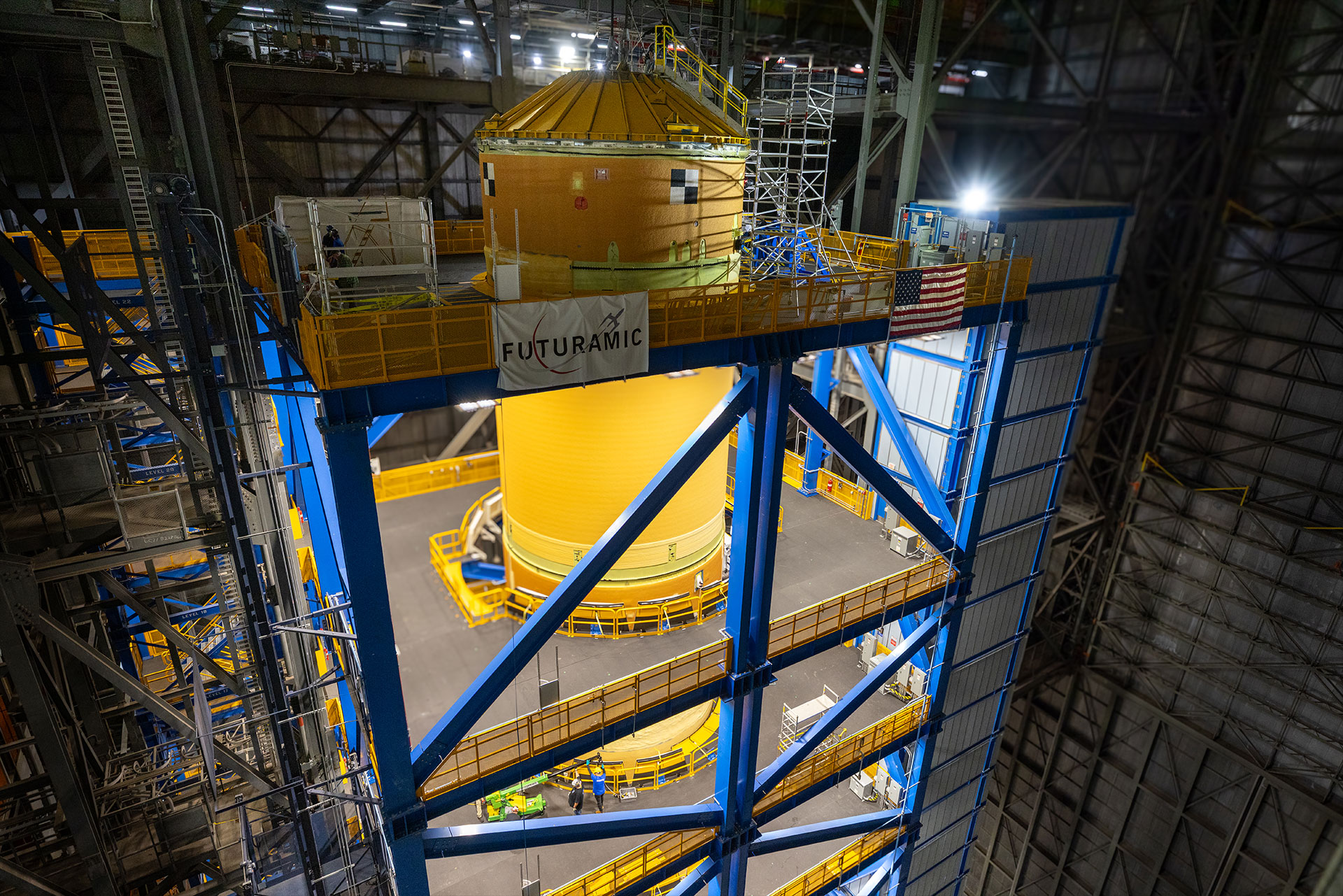
The Artemis III Space Launch System (SLS) core stage as seen in the Vehicle Assembly Building's (VAB) High Bay 2 at Kennedy Space Center in Florida on May 4, 2026. (NASA/Frank Michaux)