June 6, 2026 — NASA's Artemis II crew are the fastest people alive, and now they have the patch to prove it.
Mission commander Reid Wiseman, pilot Victor Glover and mission specialists Christina Koch and Jeremy Hansen (the latter with the Canadian Space Agency) spent 10 days in early April flying by the moon. Their journey took them farther away from Earth than any humans have gone (52,756 miles [406,771 km]) and then, on the way back on board their Orion spacecraft "Integrity," they sped up to about 24,664 miles per hour (39,693 k/ph) reentering the atmosphere.
Only three other people in history have traveled faster. NASA's Apollo 10 astronauts Thomas Stafford, John Young and Eugene Cernan set the record for the highest speed attained by a crewed vehicle relative to the Earth's surface: 24,791 mph (39,897 kph) on May 26, 1969.
Cernan died in 2017, Young in 2018 and Stafford in 2024.
"The number that we saw on the displays — and I was very in tune with what Orion thinks it is going to do — was 38.89 as the Mach. But it depends on how you measure that number. It is actually challenging how you measure from space," said Glover at the crew's post-flight press conference at NASA's Johnson Space Center in Houston on April 16, six days after landing.
Mach, as a measurement, compares the speed of an object to the local speed of sound. So the number changes based on altitude, air temperature and air density. At sea level, 24,664 mph would be Mach 32, or 32 times the speed of sound.
At the point where the Artemis II crew reached peak velocity, the air was thinner and the temperature was colder than at sea level.
Mach 39
"There will be a new [Mach patch] coming out when we figure it out," Glover said.
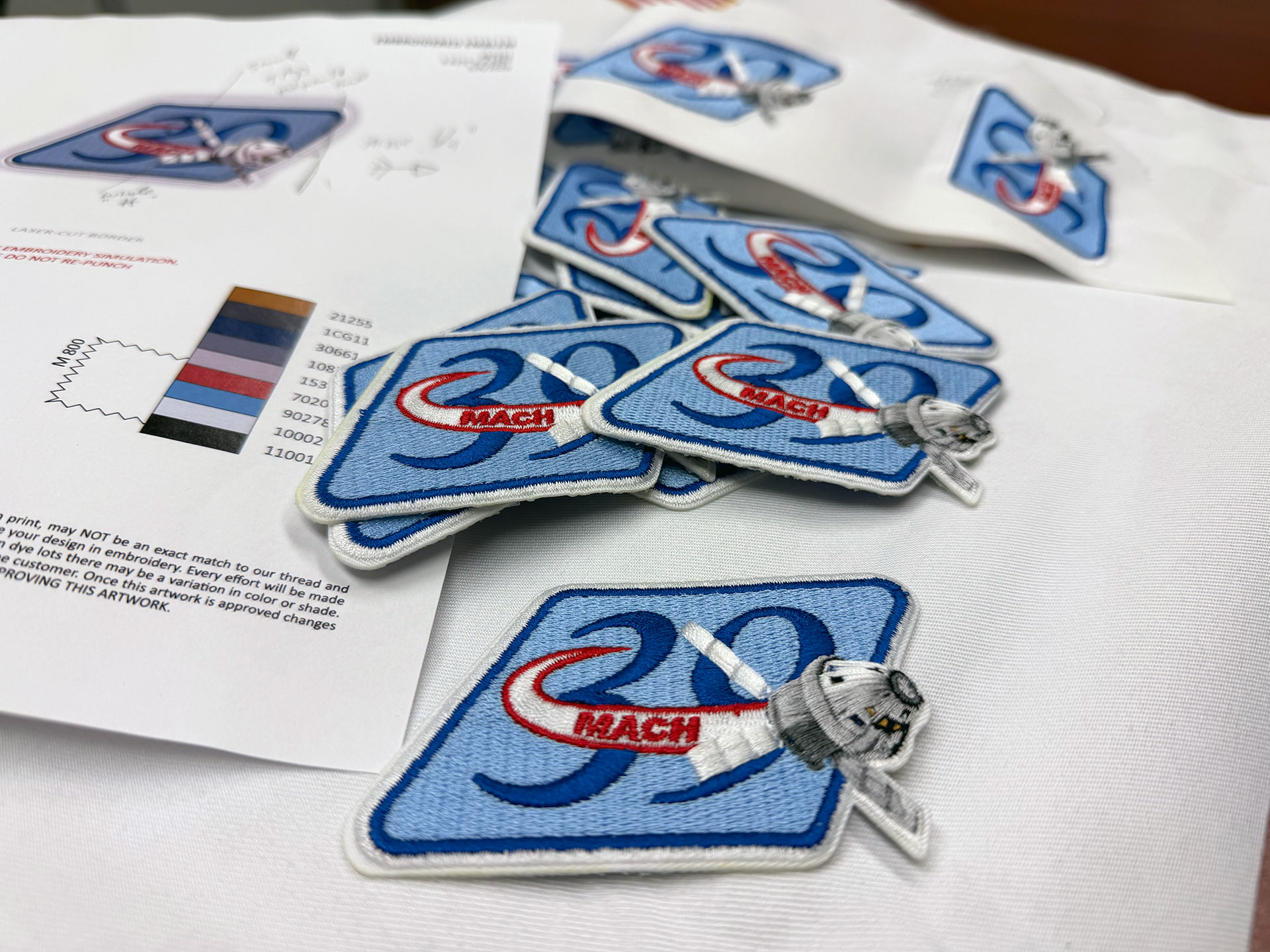
It took three weeks (including the time for NASA's embroidered patch supplier, A-B Emblem in Weaverville, North Carolina, to produce it for the crew) but the Mach 39 patch made its public debut on Friday (June 5) in a video posted on social media by Wiseman. That is, if you were paying attention for such details.
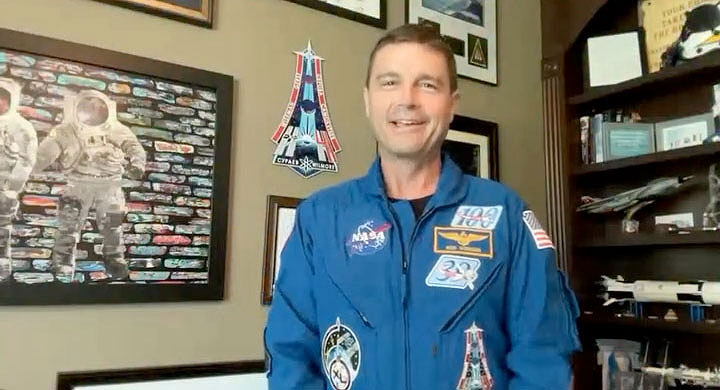
In the clip, Wiseman makes no mention of the emblem, but instead focuses on reenlisting a member of the Artemis II recovery team into the U.S. Navy (Wiseman is an active captain in the service). But on his NASA blue flight suit, the new Mach 39 patch is attached to his left chest, below his name tag and similar looking "100 Days" in space insignia.
The Mach 39 patch replaces Wiseman's Mach 25 patch, the 40-year-old original design, which inspired the new Artemis edition.
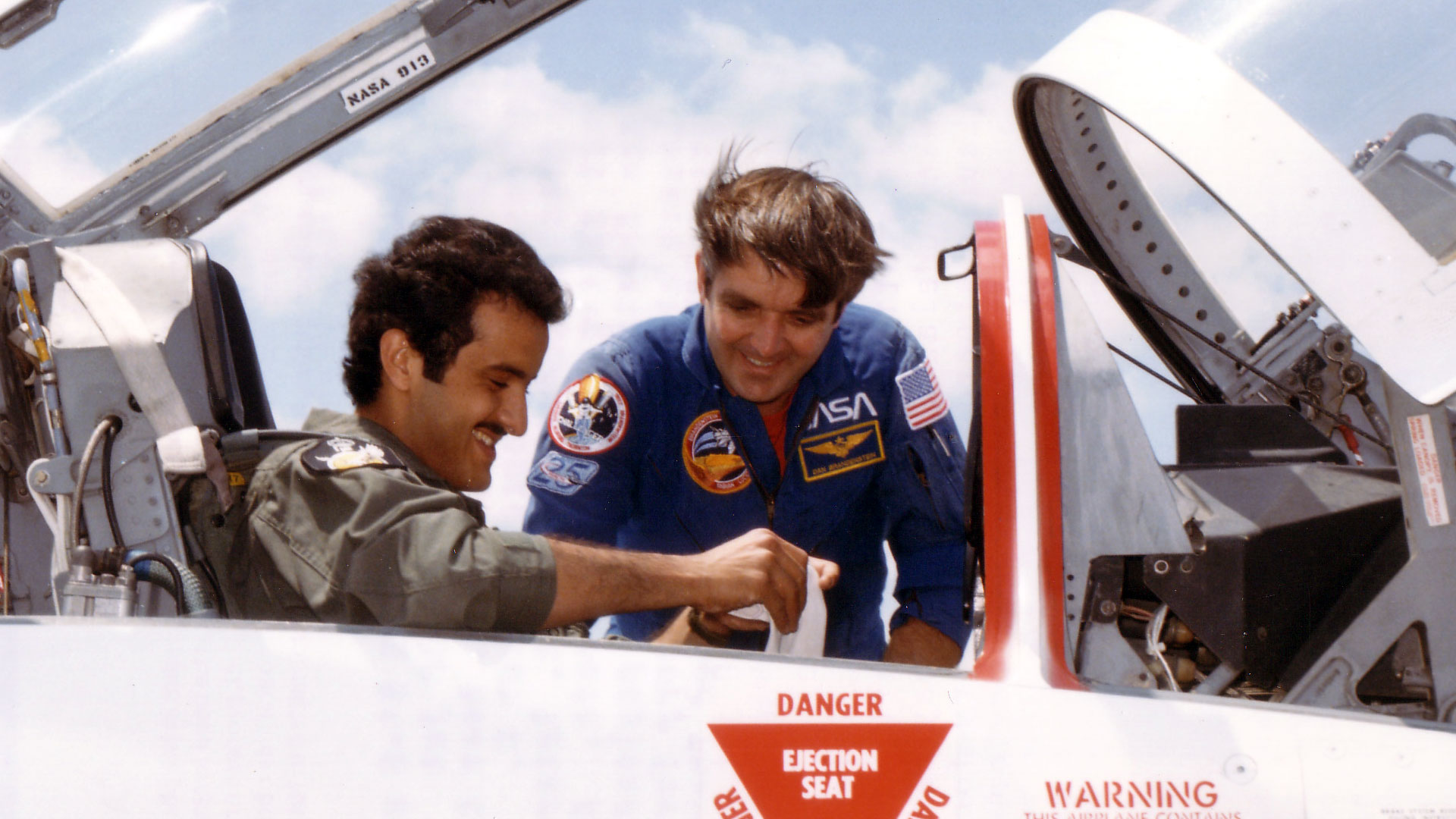
"It was after STS-1 [in 1981]," former astronaut Dan Brandenstein, referring to the origin of the patch, told collectSPACE. "I don't know where we were, it might have been in a bar, we might have been sitting around the office, I'm not sure where the discussion came up, but he [Jim Buchli] was a former Marine and I was Navy, and all the F-4 pilots, after they went Mach 2, McDonnell Douglas gave them a Mach 2 Club patch. So all of the fighter jocks that flew the F-4s had these Mach 2 patches on their flight jacket, and so we started talking about it."
Brandenstein and Buchli thought about how the space shuttle reached Mach 25 on reentry, so they should get a patch for that. Together they worked on a design, which ultimately had the number "25" in dark blue set against a light blue rectangle tilted slightly forward. A space shuttle orbiter is depicted on approach, gliding past the numbers and in its wake is a white contrail outlined and inscribed in red with the word "MACH."
From the start, the patch was intended as a badge of honor, not a souvenir.
"We had it made and gave one to John and Crip [STS-1 crewmates John Young and Bob Crippen], and then it became history. Everybody got one after they flew," said Brandenstein.
Modern Mach-inations
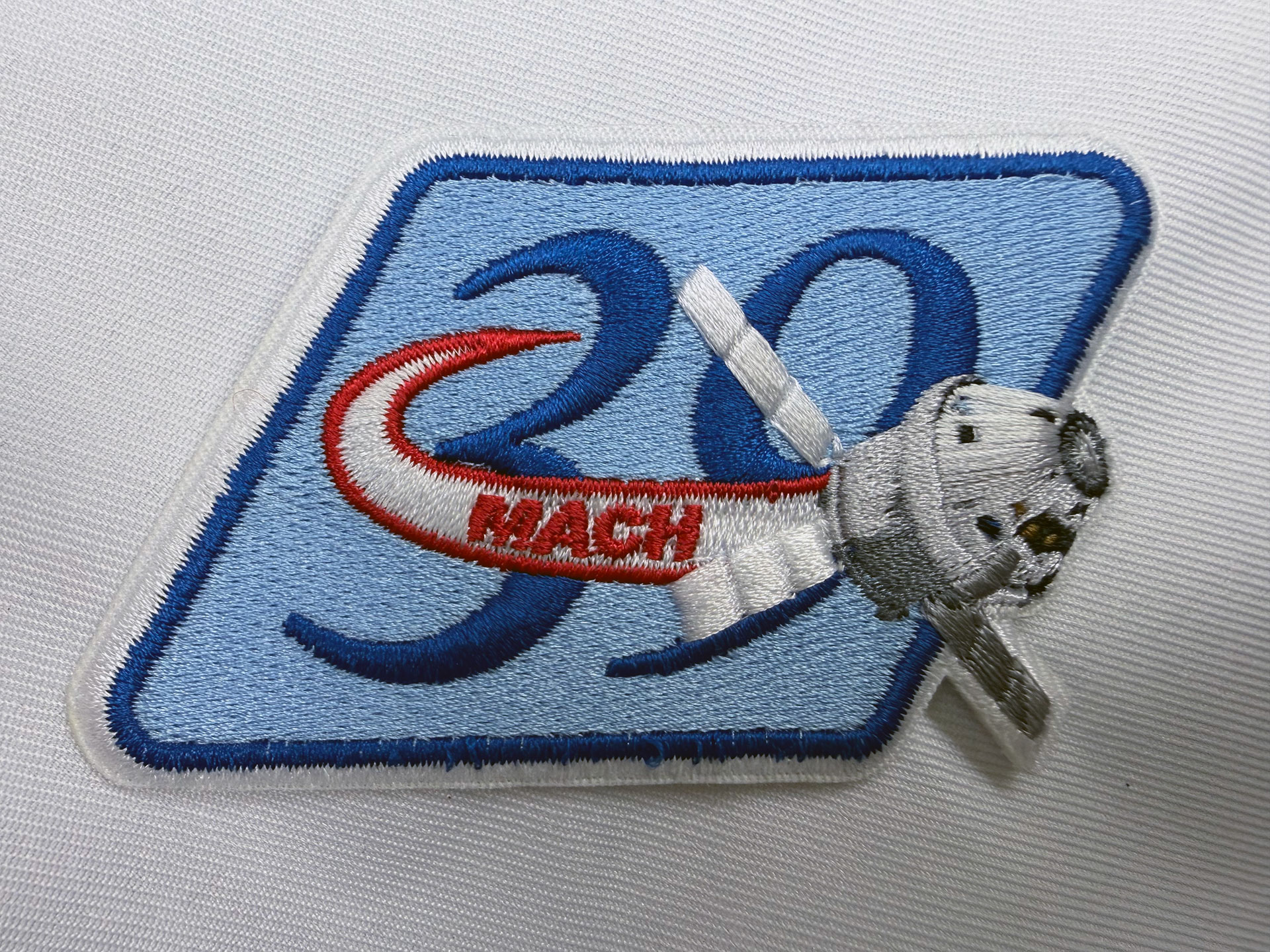
The Artemis II crew's Mach 39 patch adopts the general look of Brandenstein and Buchli's original emblem with the number updated and the winged orbiter replaced by an Orion with its solar wings deployed from the European Service Module.
This is also not the first time the Mach 25 patch has been redesigned.
In 2009, the STS-125 crew flying on space shuttle Atlantis realized that their reentry speed was going to be slightly higher than most other missions as they were entering a higher orbit to conduct the final servicing of the Hubble Space Telescope. As such, upon landing, they adopted Mach 26 patches.
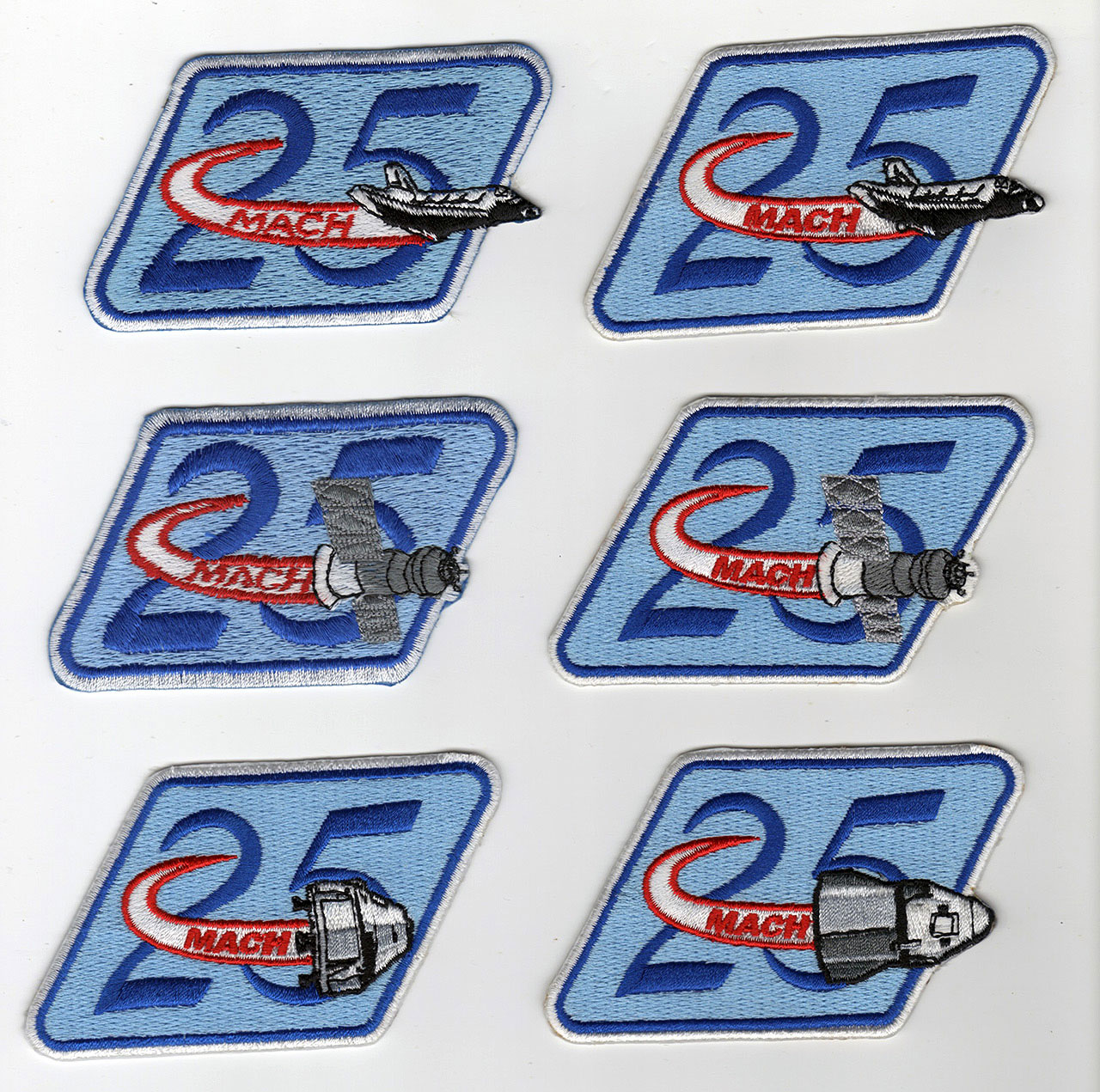
Two years later, Mike Fincke was the first astronaut photographed while wearing a "MAXA 25" patch with the shuttle replaced by a Russian Soyuz spacecraft. At that point, Fincke had flown twice to and from the International Space Station on Soyuz missions. Subsequent similar Soyuz versions of the patch retained the English "MACH" rather than use the Russian "MAXA."
In 2019, A-B Emblem mocked up and proposed to the Astronaut Office additional variants for use by SpaceX Dragon and Boeing Starliner commercial crews, with each patch depicting their respective capsules. A year later, Doug Hurley was seen wearing a Dragon patch (and a shuttle Mach 25 patch) on his blue flightsuit after becoming one of the first two people to launch on the SpaceX spacecraft.
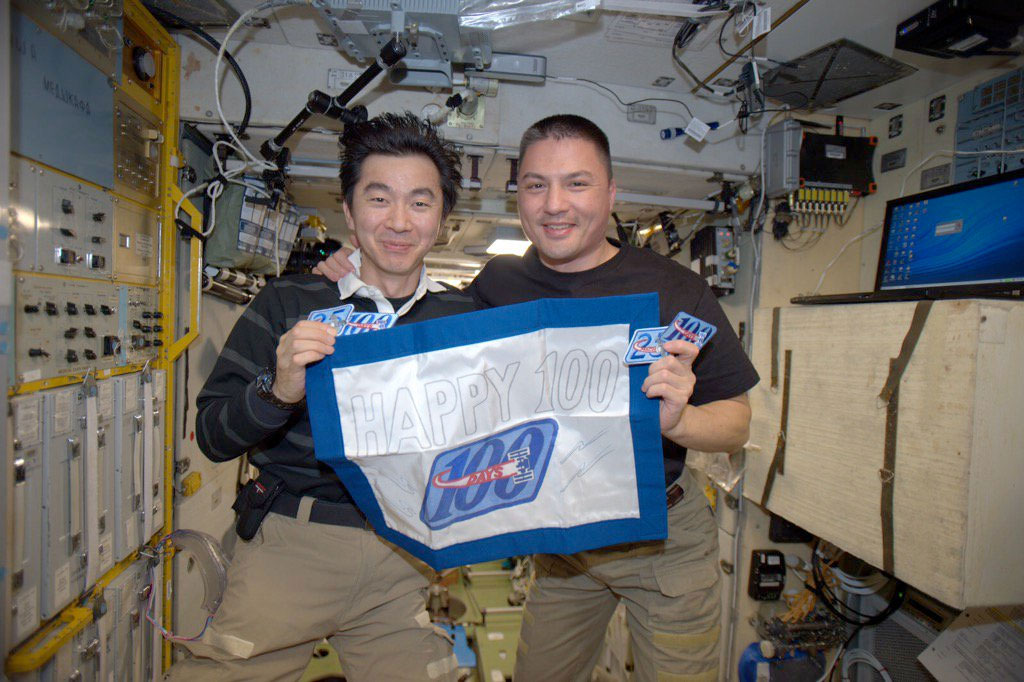
"I see that they modified the patch with '100' on it for people who spent 100 days on the space station," Brandenstein said.
Dating back to 2004, the "100 Days" patch subs out the space shuttle with the International Space Station and "MACH" with "DAYS." It has become a tradition to celebrate ISS crew members' 100th day in space with the presentation of a patch as part of the festivities.
As astronauts have logged more time over multiple stays, rather than wear multiple 100 Days patches, new versions for 200, 300 and 500 days were made. Fincke (back on the station for his third long-duration stay) presented Roscosmos cosmonaut Sergey Ryzhikov with a 600 Days patch on Dec. 5, 2025. |
|

A still from an Instagram video shows Artemis II commander Reid Wiseman wearing his NASA blue flight suit. Below his name tag on his left chest is a new patch reflecting the velocity at which he and his crewmates reached while returning to Earth. (Reid Wiseman)
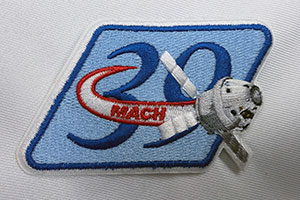
The new Mach 39 patch, as made by A-B Emblem for the Artemis II crew, continues the 40-year legacy of the badge. (A-B Emblem)
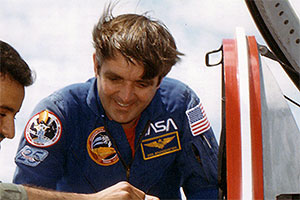
Dan Brandenstein, who with Jim Buchli came up with the idea and design for original Mach 25 patch, is seen wearing his on the right arm of his NASA flight suit in 1985. (NASA)
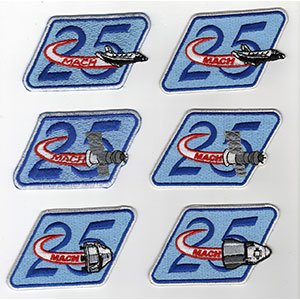
Vintage and modern examples of the Mach 25 patch and its vehicle variants, including Soyuz, Starliner and Dragon. (collectSPACE)

JAXA astronaut Kimiya Yui (left) and NASA astronaut Kjell Lindgren mark 100 days on the International Space Station in 2015. (NASA) |