|
|
|
|
Author
|
Topic: X-38 crew return vehicles on display
|
Robert Pearlman Editor Posts: 17083 From: Houston, TX Registered: Nov 1999
|
posted November 02, 2009 11:16 AM
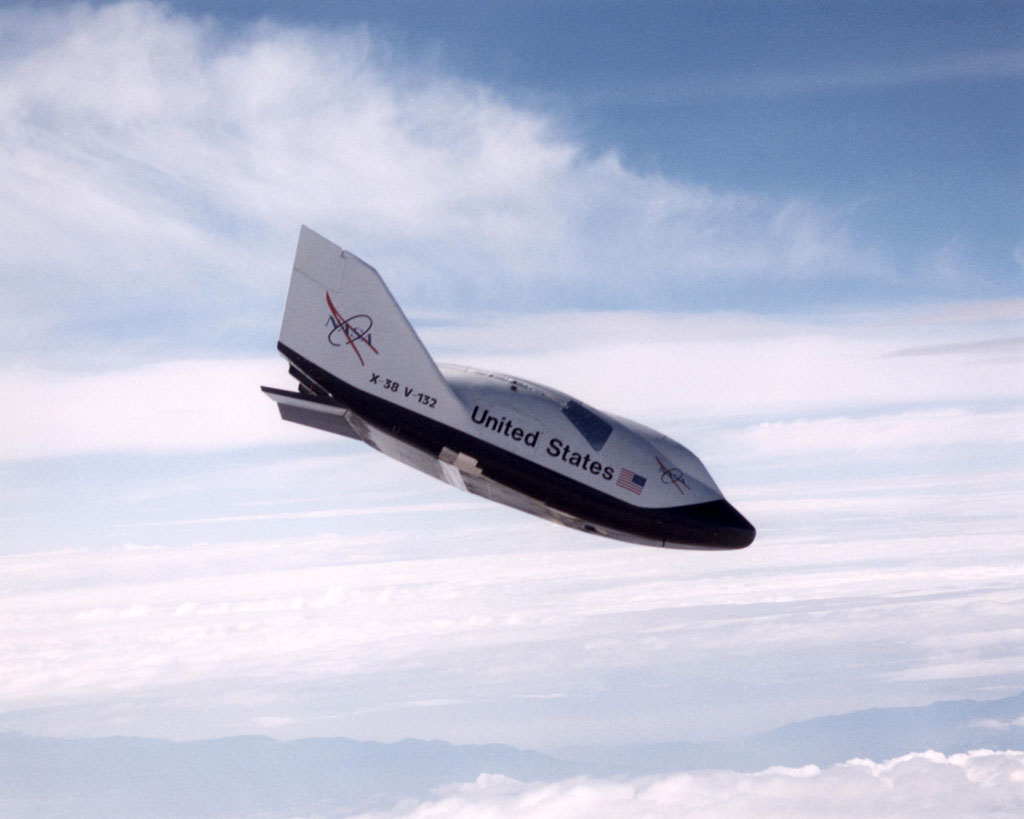
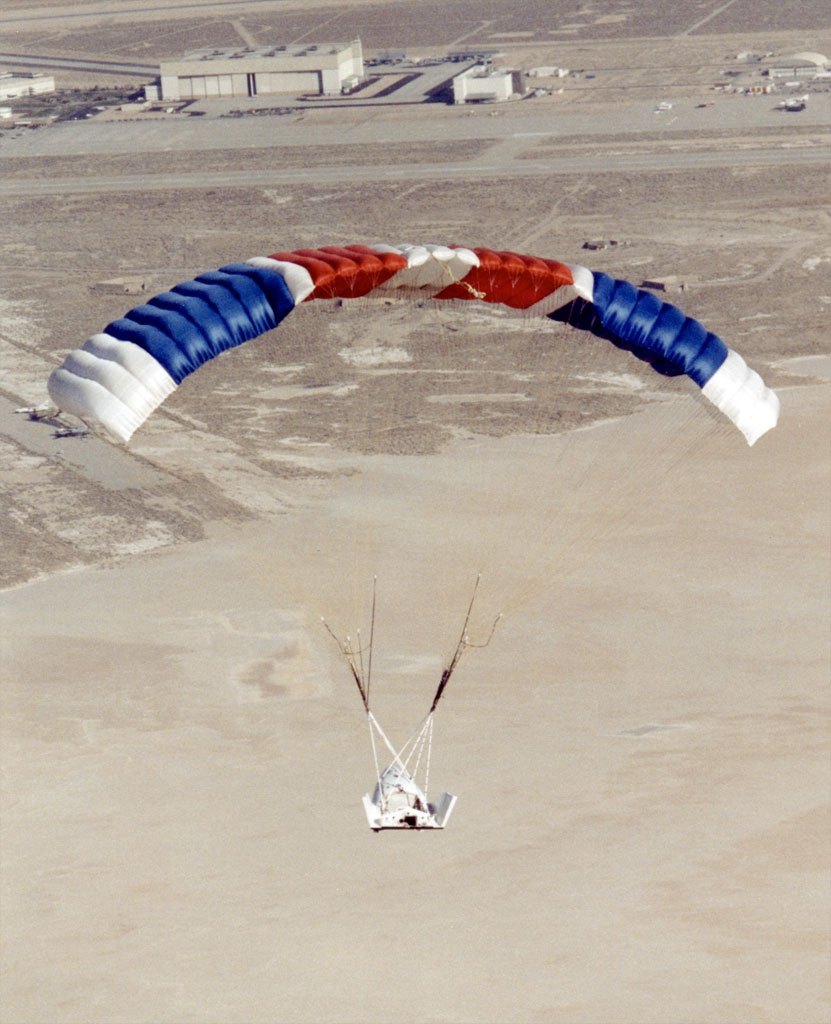
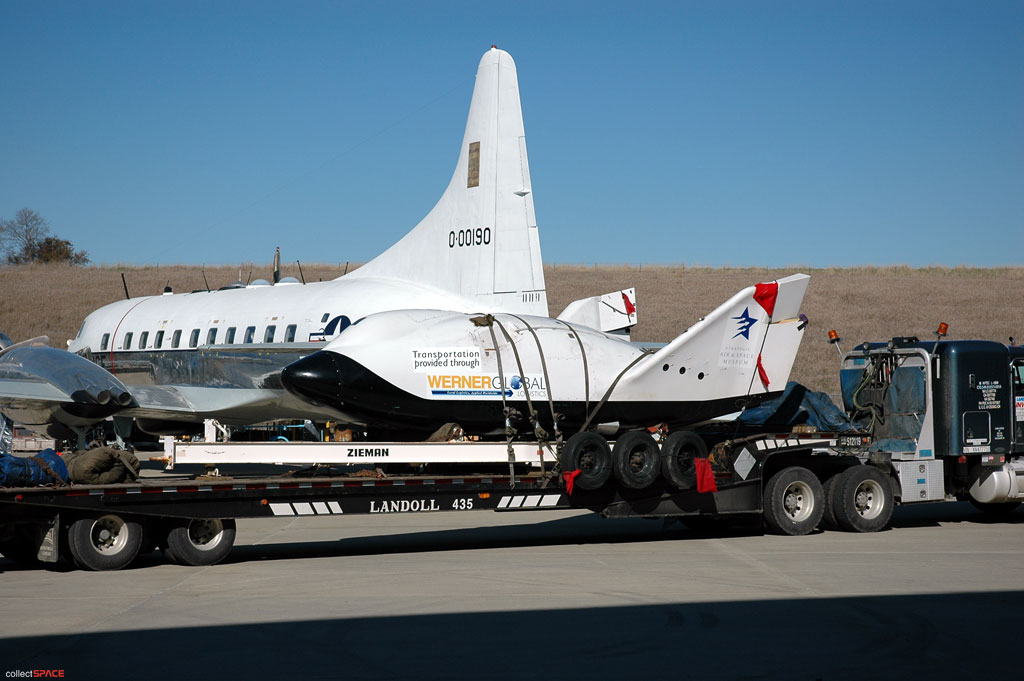
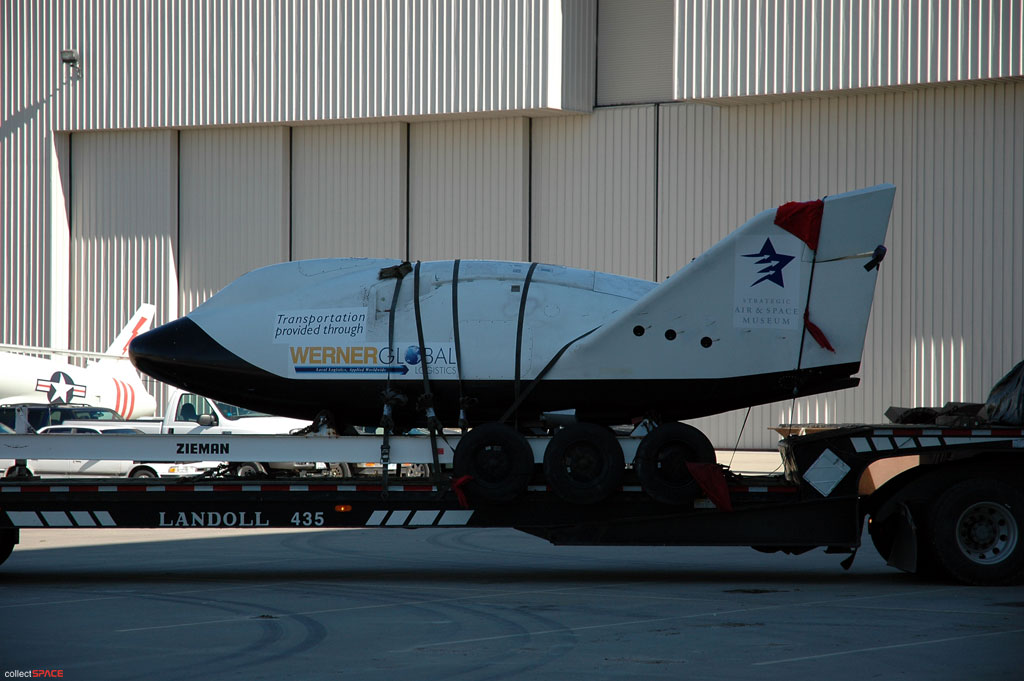
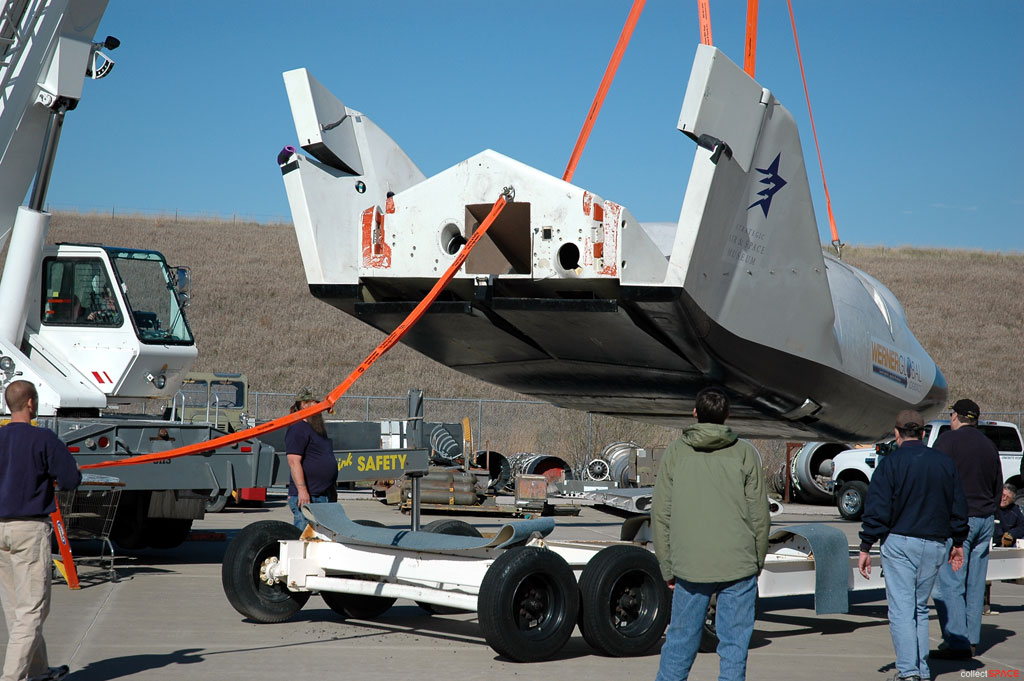
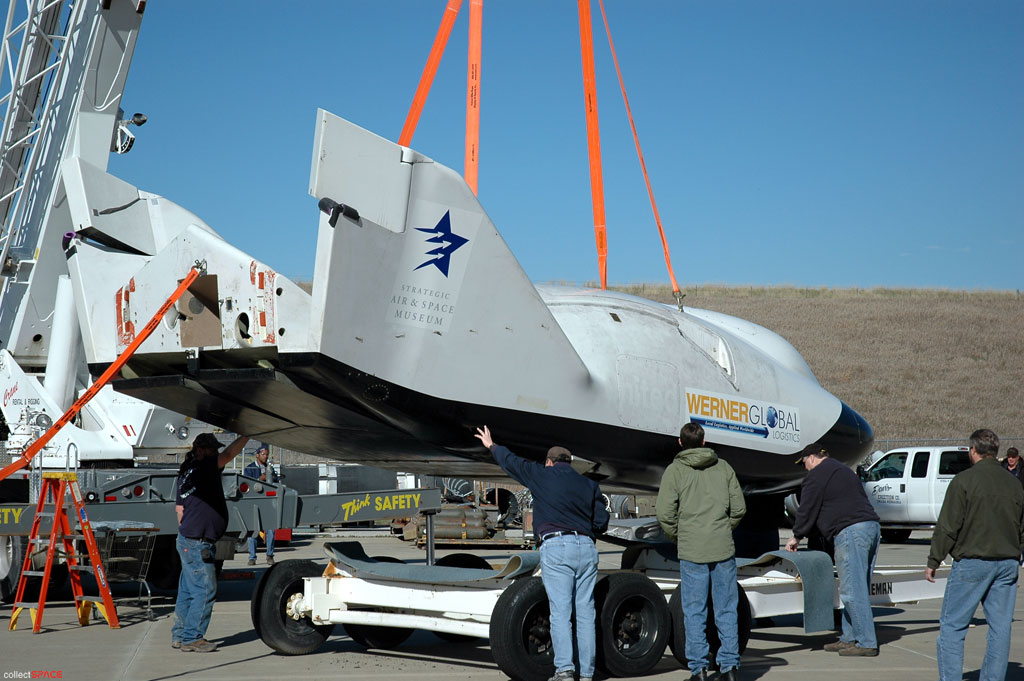
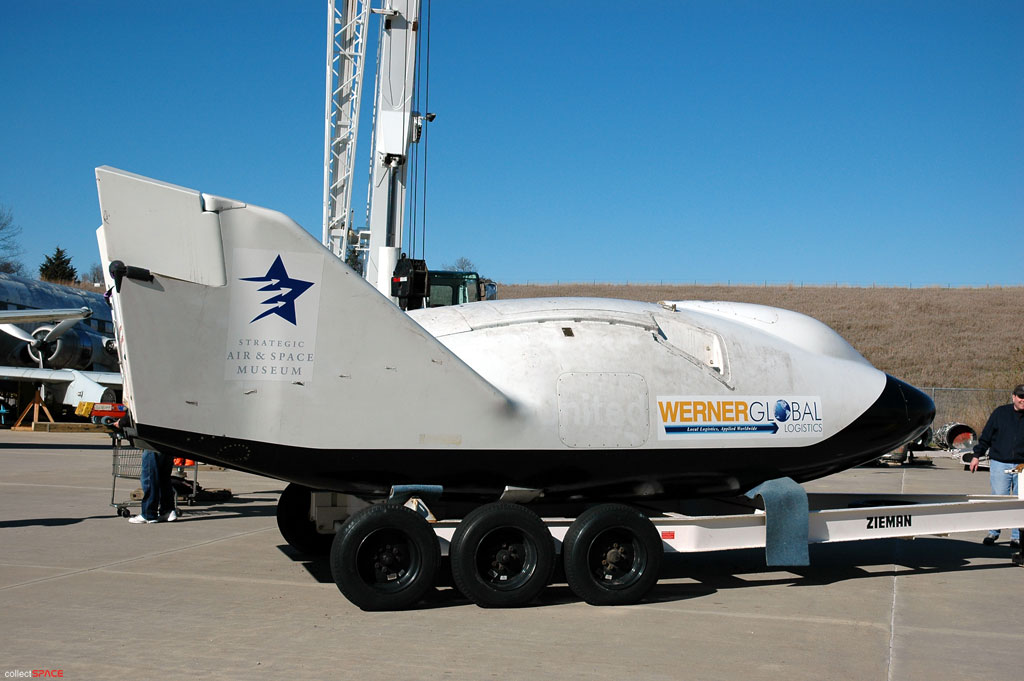
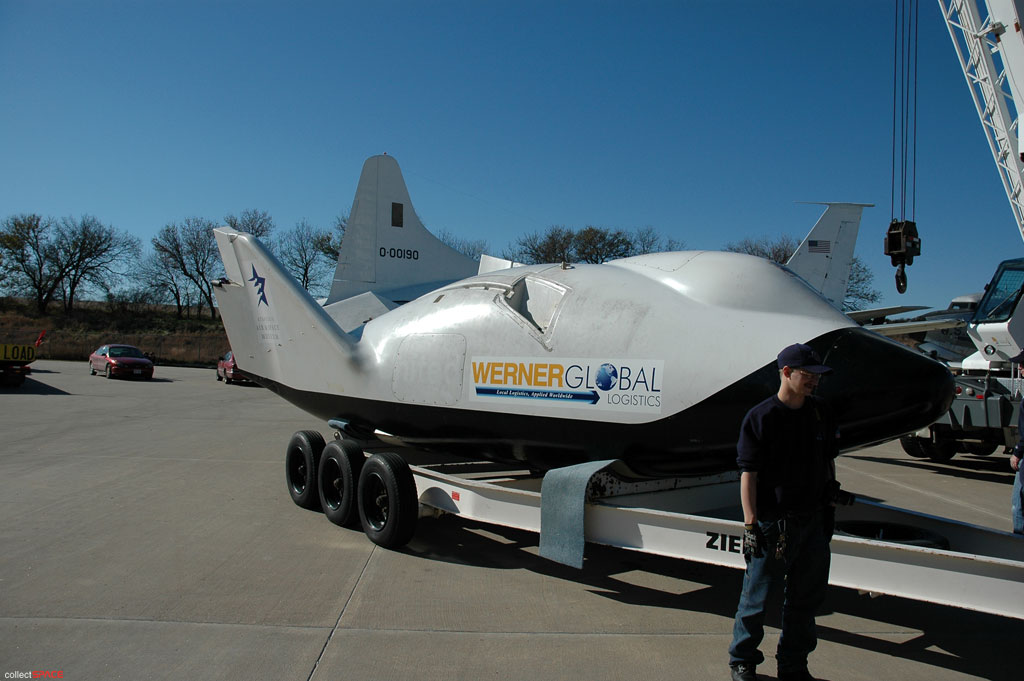
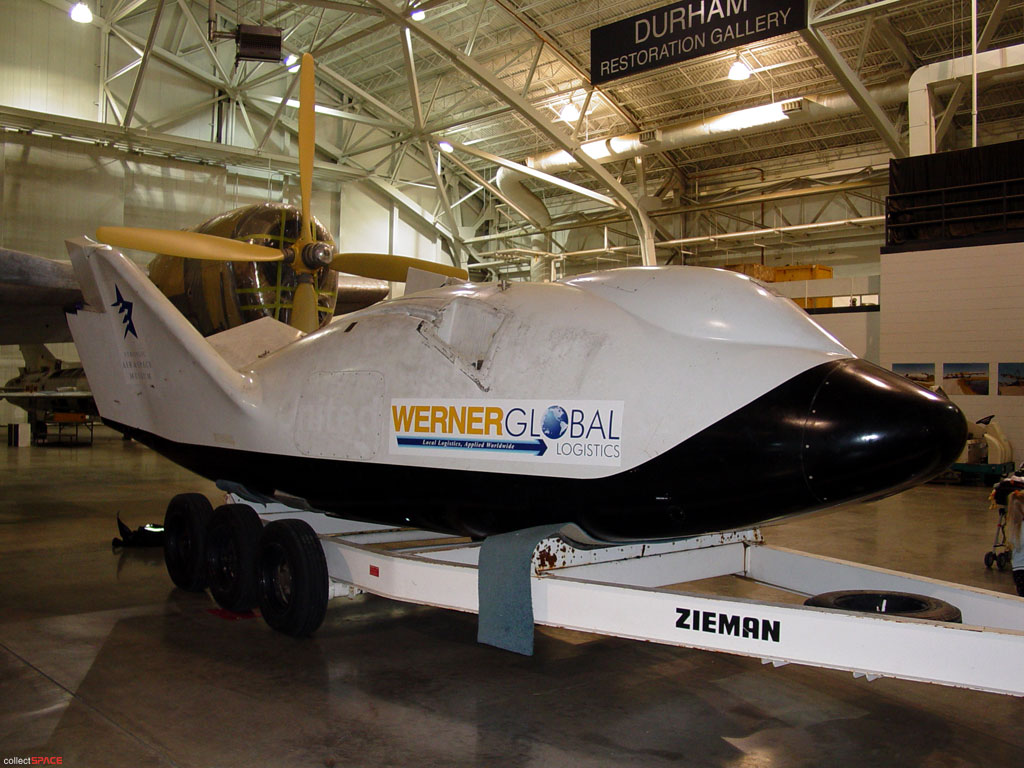
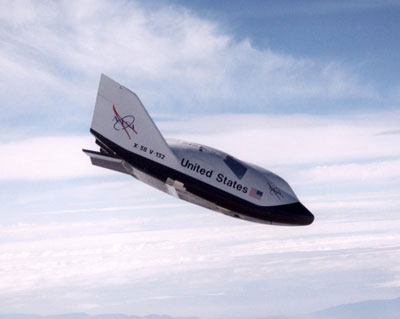
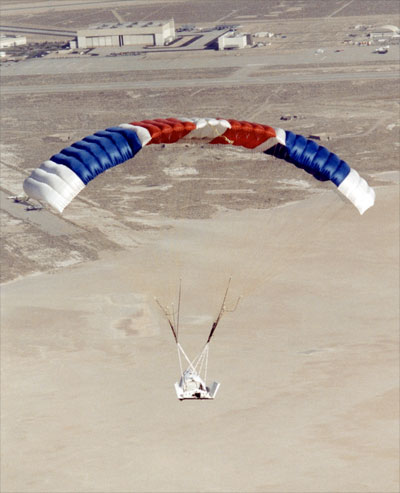
X-38 CRV (V-132) drops into Nebraska Drivers in Nebraska may have encountered an unusual sight on Saturday, October 31, as a mockup of NASA's once-planned X-38 International Space Station crew return vehicle (CRV) concluded the last leg of its journey from Space Center Houston in Texas to the Strategic Air and Space Museum near Ashland, where it is set to be restored and go on display beginning November 14, 2009. Originally delivered to NASA's Johnson Space Center in December 1996, the X-38 (V-132) mockup was the second drop test model built for the agency by Scaled Composites. Based on the design of the earlier developed X-24A lifting body, V-132 completed three parafoil and parachute-assisted flights between March 1999 and March 2000 after being dropped from a Dryden Flight Research Center B-52 Stratofortress over Edwards Air Force Base.  V-132 during its second flight on July 9, 1999. Credit: NASA V-132's third and final free flight was the highest, fastest, and longest X-38 drop test in the program's history. Released at an altitude of 39,000 feet, the mockup flew freely for 45 seconds, reaching a speed of over 500 miles per hour before deploying its parachutes for a landing on Rogers Dry Lakebed in California. Measuring 28.5 feet (8.9m) long by 14.5 feet (4.4m) wide, and weighing approximately 16,000 pounds, the mockup nearly matched the dimensions of the planned X-38 CRV, though was a few feet short. In addition to its parachutes, it was equipped with a nitrogen gas-operated attitude control system and a bank of batteries for internal power.  V-132 approaches its first landing on March 5, 1999. Credit: NASAThe V-132 was shelved after development of the X-38 CRV was cancelled due to budget cuts in 2002. The truck transporting the V-132 made a stopover in Nebraska City, where Lt. Governor Rick Sheehy and Nebraska City Mayor Jack Hobbie welcomed the craft to the state with a ribbon cutting ceremony. The mockup spent a couple of hours on display before resuming its trip to Ashland, arriving early Saturday afternoon at the museum's restoration facility. Adorned with temporary sponsorship logos for its interstate trip, plans call for V-132's original flight markings to be restored prior to it going on public display. Jay Chladek, Nebraska-based author of the upcoming "Stations in the Sky" (Univ. of Nebraska Press), contributed to this report. V-132 arrives in Nebraska on October 31, 2009. Click on photos to enlarge.


 Credit: Jay Chladek |
Robert Pearlman Editor Posts: 17083 From: Houston, TX Registered: Nov 1999
|
posted November 02, 2009 12:04 PM
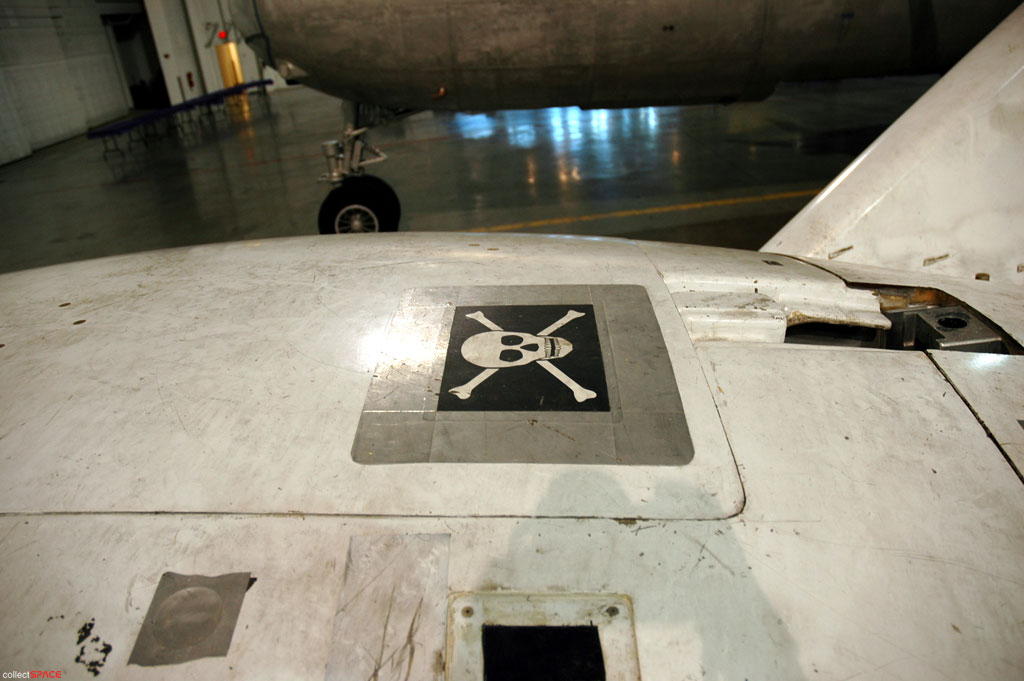
Addendum: Hidden treasureAs the below photo reveals, V-132 was marked at its top by the Jolly Roger. According to Paul Spana, Space Center Houston's exhibits manager, the skull and cross bones was the chosen mark of the X-38 avionics team, who believed they had left the symbol in a place out of public view. Their plan was foiled though as soon as they saw the video taken from the B-52 of the drop tests: the classic pirate flag could be clearly seen as the vehicle dropped away. The idea for the Jolly Roger can be traced back to X-38 project manager John Muratore, who earlier led a self-titled "pirate team" to develop a low-cost spacecraft control room using personal computers at Johnson Space Center.  Credit: Jay Chladek |
KSCartist Member Posts: 1736 From: Titusville, FL USA Registered: Feb 2005
|
posted November 02, 2009 07:11 PM
I still think it should be developed and flown. |
Jay Chladek Member Posts: 832 From: Bellevue, NE, USA Registered: Aug 2007
|
posted November 02, 2009 08:35 PM
Maybe one day it might get developed since I believe the first orbital flight test article is still at JSC in an 80% completed state (although I have no idea what condition it is in). I exchanged a couple emails with John Muratore and he mentioned that his thoughts during the return to flight phase of shuttle were if the X-38 were docked at the ISS, then NASA wouldn't need to prep a rescue shuttle as a crew could come home on the CRV if the need arose.It was a great program and it indeed died before it got to prove itself. So on one hand while I am glad my local museum was chosen to receive V-132 for display, I am still a little sad that the program never got to show what it was truely capable of. |
Robert Pearlman Editor Posts: 17083 From: Houston, TX Registered: Nov 1999
|
posted November 04, 2009 10:47 AM
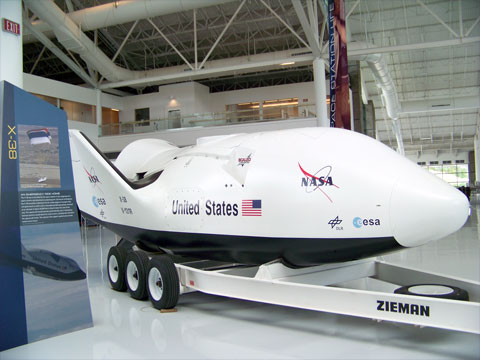
The other X-38 drop test mockup, V-131 (modified to be V-131R), is on exhibit at the Evergreen Aviation and Space Museum in McMinnville, Oregon. 
|
AFGAS Member Posts: 61 From: Merritt Island, FL Registered: Feb 2008
|
posted November 06, 2009 01:22 PM
According to NASA there were three X-38s constructed. Is the third one still at JSC?Edit: I found some old pics of V-132 in the shop at JSC, and also had some pics of V-201, which I believe was the one to do the orbital mission. I also had an image of a full size mockup at Space Center Houston. I'l try to post these on the Field Guide today.
|
Robert Pearlman Editor Posts: 17083 From: Houston, TX Registered: Nov 1999
|
posted November 12, 2009 05:04 PM
quote: Originally posted by AFGAS: According to NASA there were three X-38s constructed. Is the third one still at JSC?
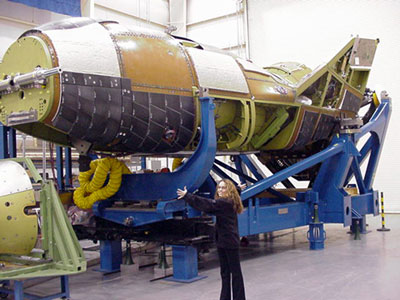
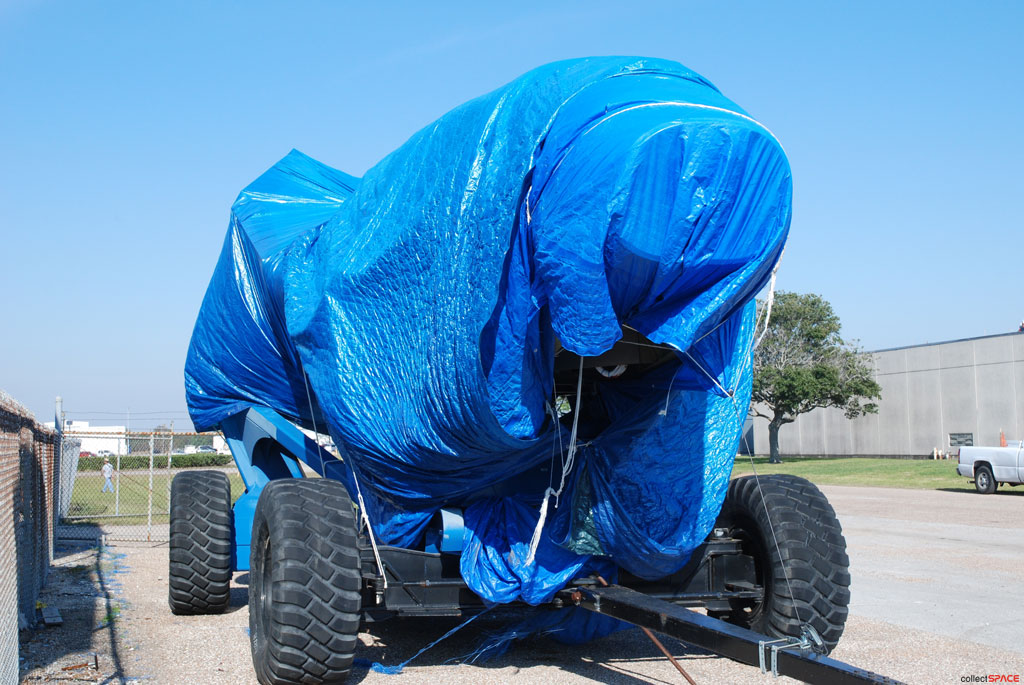
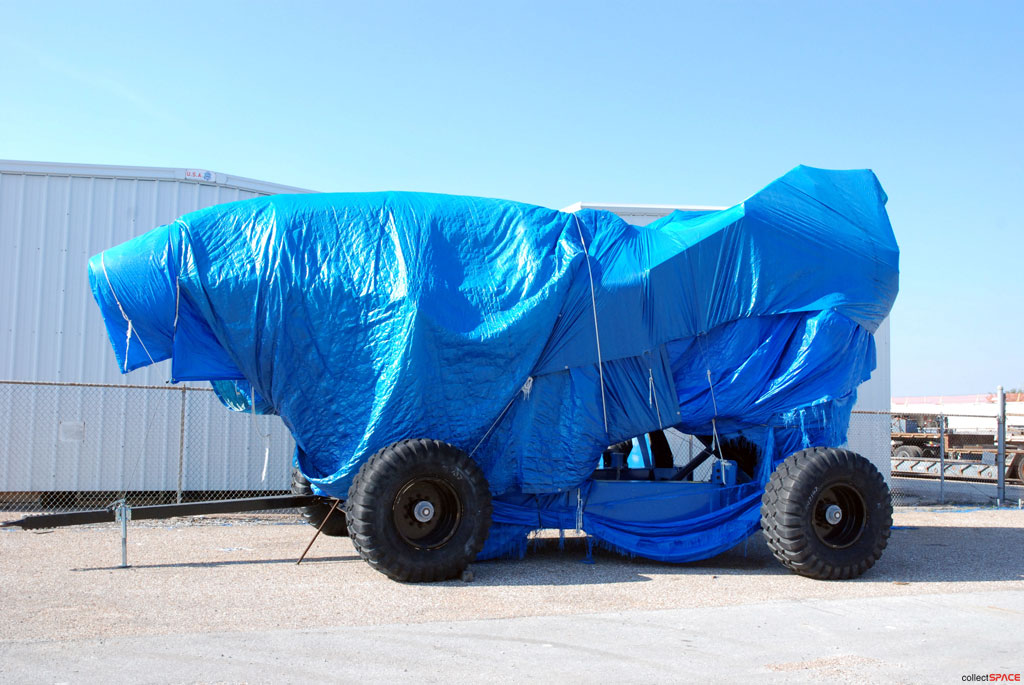
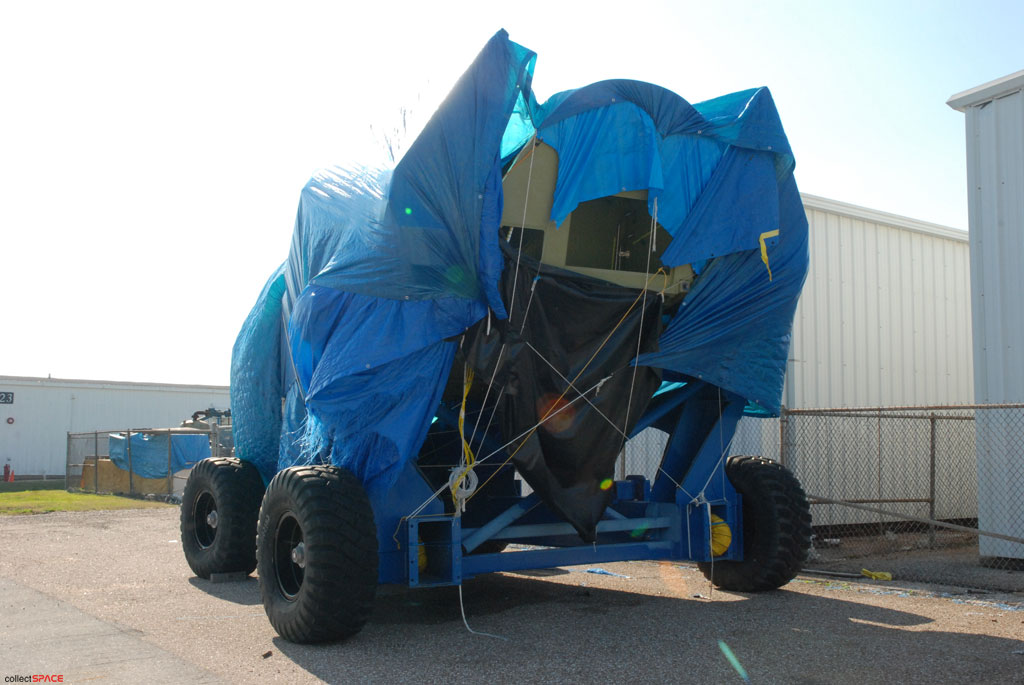
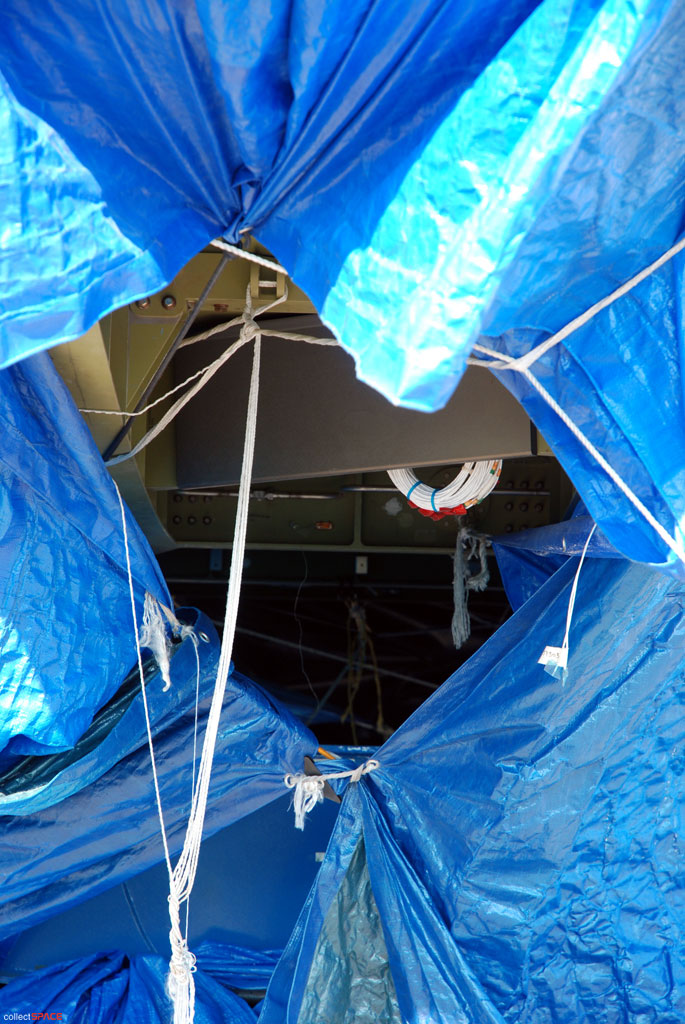
The third X-38 test craft, V-201, was still being assembled when the program was canceled in 2002. Unlike V-131 and V-132 though, V-201 was being built to fly into orbit inside the payload bay of space shuttle Columbia for an unmanned test flight back to Earth. According to NASA: Its inner compartment, representing the crew area, was to be a pressurized aluminum chamber. A composite fuselage structure was to enclose the chamber and the exterior surfaces were to be covered with a Thermal Protection System (TPS) to withstand the heat generated by air friction as the vehicle returned to Earth through the atmosphere. The TPS was to be similar to materials used on the space shuttles, but much more durable - carbon and metallic-silica tiles for the hottest regions, and flexible blanket-like material for areas receiving less heat during atmospheric reentry.  X-38 V-201 inside Hangar X in 2002. Credit: NASA Its assembly at Johnson Space Center halted, V-201 was displayed for a time inside Hangar X, the former facility used for X-38 development and was visible by tourists visiting the space center. But as that building transitioned to support the Constellation Program and specifically the development of the Altair lunar lander, V-201 was moved outside, protected by a tarp. Today, it sits outside the Media Resource Center (Building 423) at Johnson Space Center with no immediate plans for it to be moved. V-201 sits outside at Johnson Space Center. Click on photos to enlarge.


 Credit: collectSPACE
| |
Contact Us | The Source for Space History & Artifacts
Copyright 1999-2009 collectSPACE.com All rights reserved.

Ultimate Bulletin Board 5.47a
|
|
|
advertisement
|