Posts: 5591 From: Sierra Vista, Arizona Registered: Nov 1999
posted 06-04-2012 03:40 PM
The Washington Post reports that the National Reconnaissance Office (NRO) has decided to give NASA two telescopes as big as, and even more powerful than, the Hubble Space Telescope.
Designed for surveillance, the telescopes from the National Reconnaissance Office were no longer needed for spy missions and can now be used to study the heavens.
They have 2.4-meter (7.9 feet) mirrors, just like the Hubble. They also have an additional feature that the civilian space telescopes lack: A maneuverable secondary mirror that makes it possible to obtain more focused images. These telescopes will have 100 times the field of view of the Hubble, according to David Spergel, a Princeton astrophysicist and co-chair of the National Academies advisory panel on astronomy and astrophysics.
The surprise announcement Monday is a reminder that NASA isn’t the only space enterprise in the government — and isn’t even the best funded. NASA official Michael Moore gave some hint of what a Hubble-class space telescope might do if used for national security:
“With a Hubble here you could see a dime sitting on top of the Washington Monument.”
NASA officials stressed that they do not have a program to launch even one telescope at the moment, and that at the very earliest, under reasonable budgets, it would be 2020 before one of the two gifted telescopes could be in order. Asked whether anyone at NASA was popping champagne, the agency’s head of science, John Grunsfeld, answered, “We never pop champagne here; our budgets are too tight.”
But this is definitely a game-changer for NASA’s space science program...
mode1charlie Member
Posts: 1546 From: Honolulu, HI Registered: Sep 2010
posted 06-05-2012 01:20 AM
Very cool indeed. The NYT also has some good reportage on this story.
Some excerpts:
The telescope’s short length means its camera could have the wide field of view necessary to inspect large areas of the sky for supernovae.
Even bigger advantages come, astronomers say, from the fact that the telescope’s diameter, 94 inches, is twice as big as that contemplated for Wfirst, giving it four times the light-gathering power, from which a whole host of savings cascade.
Instead of requiring an expensive launch to a solar orbit, the telescope can operate in geosynchronous Earth orbit, complete its survey of the sky four times faster, and download data to the Earth faster.
Equipped with a coronagraph, which blocks light from the sun’s disk to look for exoplanets, another of Wfirst’s goals, the former spy telescope could see planets down to the size of Jupiter around other stars.
If it sounds almost too good to be true, it might be, cautioned Adam Riess, one of the three dark energy Nobelists, who noted that a thorough estimate of the new mission’s costs had not been done yet.
But still, he said, “When someone hands you a hand-me-down like that, you have to be excited,” Dr Riess said. “They’re not sitting around at Walmart.”
SpaceAholic Member
Posts: 5591 From: Sierra Vista, Arizona Registered: Nov 1999
posted 06-05-2012 05:48 AM
Additional background at Ars Technica.
In the meantime, the agency has to work within some limits imposed by the telescopes' history. It won't be able, for example, to release any pictures until after the lenses are covered by all that additional hardware. USA Today's Dan Vergano was given an image of the telescope that was used at a recent meeting of the National Research Council. The level of redaction indicates that there will be some significant limits on any NASA design teams.
There are a couple of things that really need to be emphasized: NASA did not get a complete system and still has a lot of work to do. It could save them money, but those savings will mostly go toward taking a project in development and making it more likely to fly in an era when NASA is strapped for funds. And despite the similarities in mirror sizes, this is not a replacement for when Hubble inevitably starts to fail, since the hardware is quite different. But that's not a bad thing, given that it will answer questions we can't currently address.
As for the fact that NASA was given two pieces of hardware? Michael Moore of the Astrophysics group said, "We don't anticipate ever being rich enough to use both of them, but it sure is fun to think about, isn't it?"
Blackarrow Member
Posts: 3988 From: Belfast, United Kingdom Registered: Feb 2002
posted 06-05-2012 09:15 PM
What rocket would be needed to launch this? Would Delta IV Heavy or Atlas V be up to the job, or would it require the new super-booster?
I'm assuming it was designed as a shuttle military payload.
Jay Chladek Member
Posts: 2272 From: Bellevue, NE, USA Registered: Aug 2007
posted 06-06-2012 01:04 AM
If these are KH-11s like I believe they are, Titan III and IV boosters were used to fly those (and I believe likely at least one shuttle mission as hints have been dropped on that).
A Delta IV Heavy could likely loft one of these, but if they are talking about sticking one in Geosynch orbit, it is going to take a pretty massive trans stage to get it up that high. The KH-11s to my knowledge were placed in LEO orbits since they were intended to look down at targets on the Earth and pass over large swatches of terrain.
Saying these are "more powerful than" Hubble might be a bit misleading. Sure, they could be as large as Hubble, if not larger. But the mirrors were ground to a different spec as this thing was looking for different targets. Plus, Hubble is designed to focus on some very distant targets and take some rather long exposures compared to a recon satellite designed to shoot on the fly over a fast moving target on the ground (due to the speed of the orbit). It is going to take a bit of work to convert these for sky watching in the same class as Hubble.
Jim Behling Member
Posts: 2069 From: Cape Canaveral, FL Registered: Mar 2010
posted 06-06-2012 08:35 AM
quote:Originally posted by Jay Chladek: A Delta IV Heavy could likely loft one of these, but if they are talking about sticking one in Geosynch orbit, it is going to take a pretty massive trans stage to get it up that high.
Not really, prop requirements are much different in GSO than LEO. Reconsats carried thousands of pounds of propellant for orbital adjustments and drag makeup.
Delta IV Heavy can put more than 15klb into GSO directly. HST weighed around 24klb but had more instruments and was man and EVA rated. These are only mirrors and a spacecraft can be built around them within Delta and Atlas capabilities.
quote:Plus, Hubble is designed to focus on some very distant targets and take some rather long exposures compared to a recon satellite designed to shoot on the fly over a fast moving target on the ground...
Those are spacecraft/instruments characteristics and not applicable to mirrors/telescopes.
Robert Pearlman Editor
Posts: 56995 From: Houston, TX Registered: Nov 1999
posted 03-18-2014 11:19 AM
National Academy of Sciences release
Redesign of Planned Space Telescope Would Add Scientific Capabilities, Costs to Original Mission
The opportunity to increase the aperture and resolution on NASA's planned Wide-Field Infrared Survey Telescope (WFIRST) would significantly expand the scientific capabilities of the mission, but the risk of cost growth is significantly higher than for NASA's original design, says a new report from the National Research Council.
WFIRST was ranked the top-priority large space mission in the National Research Council's 2010 decadal survey of astronomy and astrophysics research. WFIRST would probe the nature of dark energy – the as yet unexplained driver behind the accelerating expansion of the universe; study the architecture of other solar systems; and advance understanding of how galaxies, stars, and black holes evolve. This science program, together with the mission's moderate cost, low technical risk, and mature design were key factors in its top ranking among large space missions.
NASA initially considered a design of WFIRST with a 1.3-meter aperture. In 2012, the National Reconnaissance Office gave NASA hardware for two 2.4-meter telescopes -- the same size as the currently operating Hubble Space Telescope. NASA dubbed these the Astrophysics Focused Telescope Assets (AFTA) and began to study an alternative to the original telescope design. After the NRO telescopes were acquired, NASA also began to consider the addition of a coronagraph, an instrument that would advance goals in the study of exoplanets.
The new Research Council report compares the WFIRST/AFTA design both with and without a coronagraph to the original mission concept, on the basis of their science objectives, technical complexity, and programmatic rationale, including projected cost. The report does not recommend which design NASA should adopt.
The committee that wrote the report found that the larger aperture provided by the 2.4-meter design "will significantly enhance the scientific power of the mission" for cosmology, exoplanet surveys, and general infrared survey science, such that the mission is consistent with the scientific goals described in the decadal survey. This new design also makes inclusion of a coronagraph attractive.
However, the inherited hardware was designed for another purpose, and the degree to which changes to the hardware must be made to accommodate a different launch vehicle and scientific requirements is uncertain at this time. This uncertainty contributes to higher technical risk and a greater likelihood that costs will increase beyond current estimates, the report says. The WFIRST/AFTA without the coronagraph was estimated to cost $2.1 billion, up from an estimate of $1.8 billion for an earlier design which was more similar to the mission recommended in the 2010 survey report.
A coronagraph was not envisioned by the 2010 Research Council report as being a part of WFIRST, but it has the potential to advance objectives aimed at the eventual realization of a future Earth-like planet imaging mission. However, the coronagraph design is immature, and there has been limited study of accommodating the instrument on the mission, the report says. Recognizing the scientific importance and public excitement surrounding exoplanet science, the committee recommended that NASA move aggressively to mature the coronagraph design and develop a credible cost, schedule, performance, and observing program so that the coronograph's impact on the WFIRST mission can be determined.
Subsequently, an independent cost and technical evaluation of WFIRST/AFTA with a coronagraph should be conducted to determine whether the instrument's impact on the mission and the NASA astrophysics program is acceptable or if the coronagraph should be removed from the mission. The report says that if pursuing the WFIRST/AFTA with the coronagraph compromises the overall balance of the NASA astrophysics program, then it is inconsistent with the 2010 survey's guidance.
Robert Pearlman Editor
Posts: 56995 From: Houston, TX Registered: Nov 1999
posted 05-20-2020 10:10 AM
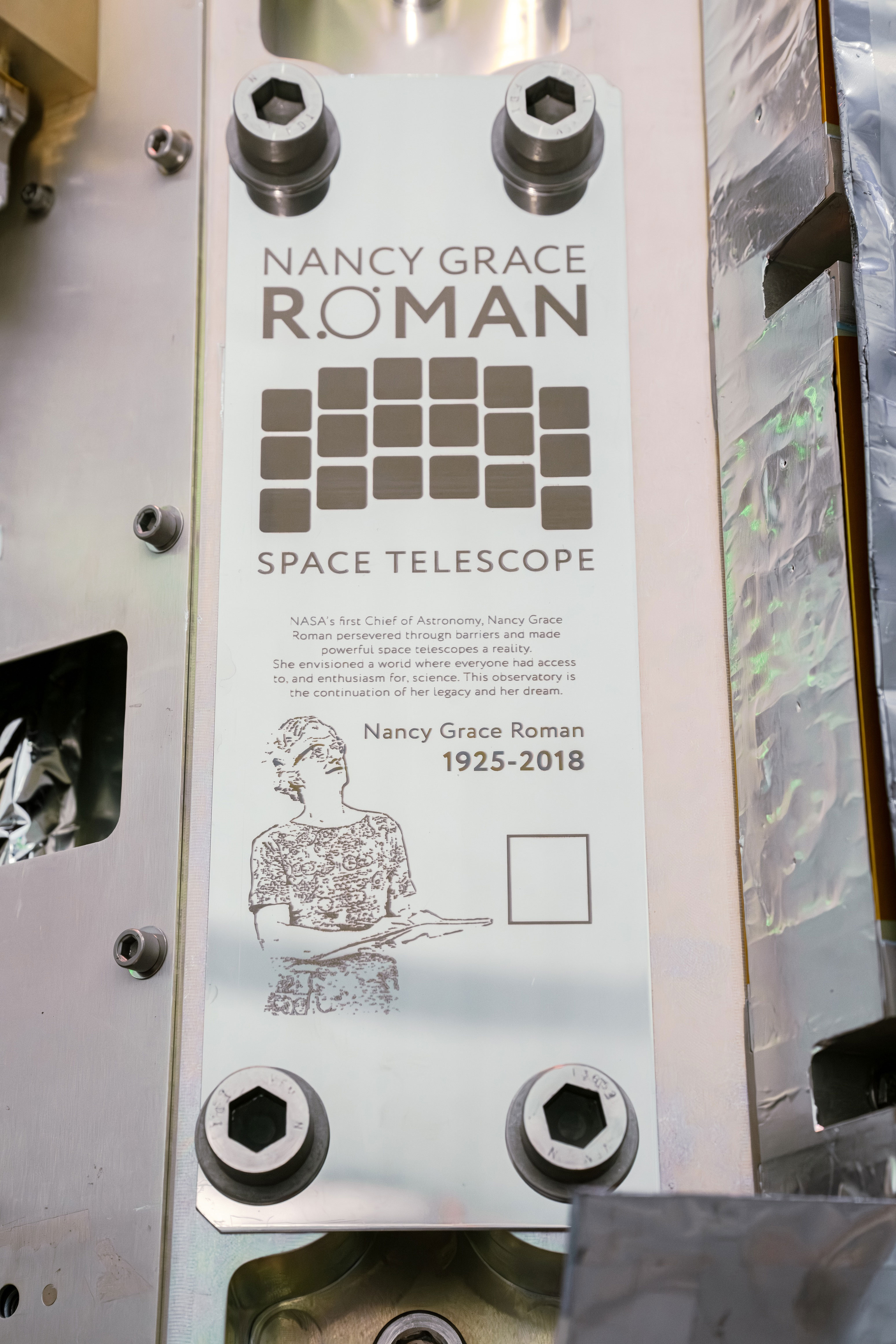
Family Statement: Nancy Grace Roman Space Telescope
Laura Bates Verreau and Barbara Bates Brinker
When the family first heard about the decision to name the Wide Field Infrared Survey Telescope after Nancy Grace, we were delighted that she would receive such public recognition for her great contributions to our understanding of the universe. We want to thank NASA and all of her colleagues who worked so hard to realize this wonderful idea. For many years, Nancy Grace worked in relative obscurity, known only to a few scientists, but this never deterred her. She firmly believed that space observation would offer years of good science, and this has proven to be the case.
Nancy Grace was a modest person but very determined when she believed in something. We are very proud that she stood up for herself in the early years when everyone told her that women could not be astronomers. She ignored people who told her it was not appropriate or that women didn't have the ability to work in the physical sciences and forged ahead with her studies. If she had not persisted, then we wouldn't have the benefit of her scientific contributions, and NASA wouldn't be naming a telescope after her!
Her own early experiences led her to a lifelong commitment to promoting opportunities for women in science. After her retirement from NASA, she devoted her time and efforts to advancing opportunities for women and encouraging young people to go into careers in science. Although the professional recognition of havinga telescope named after her would certainly be gratifying to Nancy Grace, we think the possibility of inspiring other girls to reach for their own stars would give her the greatest satisfaction.
Mike Dixon Member
Posts: 1625 From: Kew, Victoria, Australia Registered: May 2003
posted 05-20-2020 05:25 PM
What a fitting tribute!
Robert Pearlman Editor
Posts: 56995 From: Houston, TX Registered: Nov 1999
posted 06-12-2026 08:39 PM
NASA release
Fly with Nancy Grace Roman
Explore the universe with us! The Nancy Grace Roman Space Telescope is NASA's next space observatory, launching to a point in space one million miles away.
Submitted names will be uploaded to an SD card attached to the observatory.
Robert Pearlman Editor
Posts: 56995 From: Houston, TX Registered: Nov 1999
posted 07-29-2026 01:09 PM
NASA video
Preview the Nancy Grace Roman Space Telescope mission one month ahead of its scheduled launch on Aug. 30! Experts from NASA are providing an overview of the mission and its current status:
Shawn Domagal-Goldman, director, Astrophysics Division, NASA Headquarters
Jackie Townsend, Roman telescope project manager, NASA’s Goddard Space Flight Center
Julie McEnery, Roman telescope senior project scientist, NASA Goddard
Jeremy Perkins, Roman telescope integration and test scientist, NASA Goddard
Robert Pearlman Editor
Posts: 56995 From: Houston, TX Registered: Nov 1999
posted 08-28-2026 01:58 PM
From a NASA release:
Meteorologists with the U.S. Space Force's Space Launch Delta 45 Weather Squadron are predicting a 60% chance of favorable weather conditions for launch, which is targeted for 7:26 a.m. EDT on Sunday, Aug. 30 from Launch Complex 39A at Kennedy Space Center.
Robert Pearlman Editor
Posts: 56995 From: Houston, TX Registered: Nov 1999
posted 08-29-2026 08:41 AM
NASA video
Watch as mission experts discuss the science objectives for NASA's Nancy Grace Roman Space Telescope.
Participants include:
Shawn Domagal-Goldman, director, Astrophysics Division, NASA Headquarters
Julie McEnery, Roman telescope senior project scientist, NASA Goddard Space Flight Center
Vanessa Bailey, Roman Coronagraph Instrument scientist, NASA Jet Propulsion Laboratory
Kristen McQuinn, Roman Science Operations Center lead, Space Telescope Science Institute
Lee Armus, Roman Science Support Center lead, Caltech/IPAC
Robert Pearlman Editor
Posts: 56995 From: Houston, TX Registered: Nov 1999
posted 08-29-2026 08:43 AM
NASA video
Join us for the latest news on NASA's Nancy Grace Roman Space Telescope, scheduled to lift off from NASA Kennedy on Sunday, Aug. 30. Participants include:
Nicky Fox, associate administrator, Science Mission Directorate, NASA Headquarters
Lucas Paganini, Roman telescope program executive, NASA Headquarters
Jackie Townsend, Roman telescope project manager, NASA Goddard
Denton Gibson, launch director, NASA’s Launch Services Program, NASA Kennedy
Julianna Scheiman, director, NASA Science and Dragon Programs, SpaceX
Justin McReynolds, launch weather officer, 45th Weather Squadron, U.S. Space Force
At 11:45 a.m. EDT (1545 UTC), NASA Administrator Jared Isaacman is expected to fly past the Roman launchpad in his jet. This flyby will be shown on the same stream as this news conference, with a view of the launchpad between the two events.
Robert Pearlman Editor
Posts: 56995 From: Houston, TX Registered: Nov 1999
posted 08-30-2026 12:00 AM
NASA video
Tune in to watch our newest orbiting observatory launch to space. Our Roman Space Telescope is scheduled to lift off at 7:26 a.m. EDT (1126 UTC) on a SpaceX Falcon Heavy rocket from Launch Complex 39A at NASA's Kennedy Space Center in Florida.
Robert Pearlman Editor
Posts: 56995 From: Houston, TX Registered: Nov 1999
posted 08-30-2026 08:41 AM
NASA video
NASA's Nancy Grace Roman Space Telescope launched successfully from the agency's Kennedy Space Center in Florida at 7:26 a.m. ET (1126 UTC) on Aug. 30, 2026. Now, watch as experts discuss the mission and answer questions from the media.






 posted 06-04-2012 03:40 PM




 advertisement