Posts: 53448 From: Houston, TX Registered: Nov 1999
posted 12-14-2009 08:21 AM
NASA release
Liftoff! NASA's WISE Spacecraft Heads for Orbit
NASA's Wide-field Infrared Survey Explorer is rocketing toward orbit aboard a Delta II launch vehicle after a spectacular early-morning liftoff from Vandenberg Air Force Base in California. After a smooth countdown, the rocket's main engine and three graphite-epoxy solid-rocket motors roared to life for an on-time liftoff at 6:09 a.m. PST (9:09 a.m. EST).
The WISE spacecraft will circle Earth over the poles, scanning the entire sky one-and-a-half times in nine months. The mission will uncover hidden cosmic objects, including the coolest stars, dark asteroids and the most luminous galaxies.
Robert Pearlman Editor
Posts: 53448 From: Houston, TX Registered: Nov 1999
posted 07-16-2010 02:01 PM
NASA release
NASA's WISE Mission Ready to Complete Extensive Sky Survey
NASA's Wide-field Infrared Survey Explorer, or WISE, will complete its first survey of the entire sky on July 17. The mission has generated more than one million images so far, of everything from asteroids to distant galaxies
"Like a globe-trotting shutterbug, WISE has completed a world tour with 1.3 million slides covering the whole sky," said Edward Wright, the principal investigator of the mission at the University of California, Los Angeles.
Some of these images have been processed and stitched together into a new picture being released today. It shows the Pleiades cluster of stars, also known as the Seven Sisters, resting in a tangled bed of wispy dust. The pictured region covers seven square degrees, or an area equivalent to 35 full moons, highlighting the telescope's ability to take wide shots of vast regions of space.
The new picture was taken in February. It shows infrared light from WISE's four detectors in a range of wavelengths. This infrared view highlights the region's expansive dust cloud, through which the Seven Sisters and other stars in the cluster are passing. Infrared light also reveals the smaller and cooler stars of the family.
"The WISE all-sky survey is helping us sift through the immense and diverse population of celestial objects," said Hashima Hasan, WISE Program scientist at NASA Headquarters in Washington. "It's a great example of the high impact science that's possible from NASA's Explorer Program."
The first release of WISE data, covering about 80 percent of the sky, will be delivered to the astronomical community in May of next year. The mission scanned strips of the sky as it orbited around the Earth's poles since it launched last December. WISE always stays over the Earth's day-night line. As the Earth moves around the sun, new slices of sky come into the telescope's field of view. It has taken six months, or the amount of time for Earth to travel halfway around the sun, for the mission to complete one full scan of the entire sky.
For the next three months, the mission will map half of the sky again. This will enhance the telescope's data, revealing more hidden asteroids, stars and galaxies. The mapping will give astronomers a look at what's changed in the sky. The mission will end when the instrument's block of solid hydrogen coolant, needed to chill its infrared detectors, runs out.
"The eyes of WISE have not blinked since launch," said William Irace, the mission's project manager at NASA's Jet Propulsion Laboratory in Pasadena, Calif. "Both our telescope and spacecraft have performed flawlessly and have imaged every corner of our universe, just as we planned."
So far, WISE has observed more than 100,000 asteroids, both known and previously unseen. Most of these space rocks are in the main belt between Mars and Jupiter. However, some are near-Earth objects, asteroids and comets with orbits that pass relatively close to Earth. WISE has discovered more than 90 of these new near-Earth objects. The infrared telescope is also good at spotting comets that orbit far from Earth and has discovered more than a dozen of these so far.
WISE's infrared vision also gives it a unique ability to pick up the glow of cool stars, called brown dwarfs, in addition to distant galaxies bursting with light and energy. These galaxies are called ultra-luminous infrared galaxies. WISE can see the brightest of them.
"WISE is filling in the blanks on the infrared properties of everything in the universe from nearby asteroids to distant quasars," said Peter Eisenhardt of JPL, project scientist for WISE. "But the most exciting discoveries may well be objects we haven't yet imagined exist."
JPL manages the Wide-field Infrared Survey Explorer for NASA's Science Mission Directorate in Washington. The mission was selected under NASA's Explorers Program managed by the Goddard Space Flight Center in Greenbelt, Md. The science instrument was built by the Space Dynamics Laboratory in Logan, Utah, and the spacecraft was built by Ball Aerospace & Technologies Corp., in Boulder, Colo. Science operations and data processing take place at the Infrared Processing and Analysis Center at the California Institute of Technology in Pasadena.
Robert Pearlman Editor
Posts: 53448 From: Houston, TX Registered: Nov 1999
posted 08-22-2013 07:09 PM
NASA release
NASA Spacecraft Reactivated to Hunt for Asteroids
Probe Will Assist Agency in Search for Candidates to Explore
A NASA spacecraft that discovered and characterized tens of thousands of asteroids throughout the solar system before being placed in hibernation will return to service for three more years starting in September, assisting the agency in its effort to identify the population of potentially hazardous near-Earth objects, as well as those suitable for asteroid exploration missions.
The Wide-field Infrared Survey Explorer (WISE) will be revived next month with the goal of discovering and characterizing near-Earth objects (NEOs), space rocks that can be found orbiting within 45 million kilometers (28 million miles) from Earth's path around the sun. NASA anticipates WISE will use its 16-inch (40-centimeter) telescope and infrared cameras to discover about 150 previously unknown NEOs and characterize the size, albedo and thermal properties of about 2,000 others -- including some of which could be candidates for the agency's recently announced asteroid initiative.
"The WISE mission achieved its mission's goals and as NEOWISE extended the science even further in its survey of asteroids. NASA is now extending that record of success, which will enhance our ability to find potentially hazardous asteroids, and support the new asteroid initiative," said John Grunsfeld, NASA's associate administrator for science in Washington. "Reactivating WISE is an excellent example of how we are leveraging existing capabilities across the agency to achieve our goal."
NASA's asteroid initiative will be the first mission to identify, capture and relocate an asteroid. It represents an unprecedented technological feat that will lead to new scientific discoveries and technological capabilities that will help protect our home planet. The asteroid initiative brings together the best of NASA's science, technology and human exploration efforts to achieve President Obama's goal of sending humans to an asteroid by 2025.
Launched December 2009 to look for the glow of celestial heat sources from asteroids, stars and galaxies, WISE made about 7,500 images every day during its primary mission from January 2010 to February 2011. As part of a project called NEOWISE, the spacecraft made the most accurate survey to date of NEOs. NASA turned most of WISE's electronics off when it completed its primary mission.
"The data collected by NEOWISE two years ago have proven to be a gold mine for the discovery and characterization of the NEO population," said Lindley Johnson, NASA's NEOWISE program executive in Washington. "It is important that we accumulate as much of this type of data as possible while the WISE spacecraft remains a viable asset."
Because asteroids reflect but do not emit visible light, infrared sensors are a powerful tool for discovering, cataloging and understanding the asteroid population. Depending on an object's reflectivity, or albedo, a small, light-colored space rock can look the same as a big, dark one. As a result, data collected with optical telescopes using visible light can be deceiving.
During 2010, NEOWISE observed about 158,000 rocky bodies out of approximately 600,000 known objects. Discoveries included 21 comets, more than 34,000 asteroids in the main belt between Mars and Jupiter, and 135 near-Earth objects.
The WISE prime mission was to scan the entire celestial sky in infrared light. It captured more than 2.7 million images in multiple infrared wavelengths and cataloged more than 560 million objects in space, ranging from galaxies faraway to asteroids and comets much closer to Earth.
"The team is ready and after a quick checkout, we're going to hit the ground running," said Amy Mainzer, NEOWISE principal investigator at NASA's Jet Propulsion Laboratory in Pasadena, Calif. "NEOWISE not only gives us a better understanding of the asteroids and comets we study directly, but it will help us refine our concepts and mission operation plans for future, space-based near-Earth object cataloging missions."
JPL manages WISE for NASA's Science Mission Directorate at the agency's headquarters in Washington. The mission is part of NASA's Explorers Program, which NASA's Goddard Space Flight Center in Greenbelt, Md., manages. The Space Dynamics Laboratory in Logan, Utah, built the science instrument. Ball Aerospace & Technologies Corp. of Boulder, Colo., built the spacecraft. Science operations and data processing take place at the Infrared Processing and Analysis Center at the California Institute of Technology in Pasadena.
Robert Pearlman Editor
Posts: 53448 From: Houston, TX Registered: Nov 1999
posted 01-07-2014 03:10 PM
NASA release
Recently Reactivated NASA Spacecraft Spots Its First New Asteroid
NASA's Near-Earth Object Wide-field Infrared Survey Explorer (NEOWISE) spacecraft has spotted a never-before-seen asteroid — its first such discovery since coming out of hibernation last year.
NEOWISE originally was called the Wide-field Infrared Survey Explorer (WISE), which had made the most comprehensive survey to date of asteroids and comets. The spacecraft was shut down in 2011 after its primary mission was completed. But in September 2013, it was reactivated, renamed and given a new mission, which is to assist NASA's efforts to identify the population of potentially hazardous near-Earth objects (NEOs). NEOWISE also can assist in characterizing previously detected asteroids that could be considered potential targets for future exploration missions.
NEOWISE's first discovery of its renewed mission came on Dec. 29 — a near-Earth asteroid designated 2013 YP139. The mission's sophisticated software picked out the moving object against a background of stationary stars. As NEOWISE circled Earth scanning the sky, it observed the asteroid several times over half a day before the object moved beyond its view. Researchers at the University of Arizona used the Spacewatch telescope at the Kitt Peak National Observatory southwest of Tucson to confirm the discovery. Peter Birtwhistle, an amateur astronomer at the Great Shefford Observatory in West Berkshire, England, also contributed follow-up observations. NASA expects 2013 YP139 will be the first of hundreds of asteroid discoveries for NEOWISE.
"We are delighted to get back to finding and characterizing asteroids and comets, especially those that come into Earth’s neighborhood," said Amy Mainzer, the mission's principal investigator from NASA's Jet Propulsion Laboratory (JPL) in Pasadena, Calif. "With our infrared sensors that detect heat, we can learn about their sizes and reflectiveness."
2013 YP139 is about 27 million miles (43 million kilometers) from Earth. Based on its infrared brightness, scientists estimate it to be roughly 0.4 miles (650 meters) in diameter and extremely dark, like a piece of coal. The asteroid circles the sun in an elliptical orbit tilted to the plane of our solar system and is classified as potentially hazardous. It is possible for its orbit to bring it as close as 300,000 miles from Earth, a little more than the distance to the moon. However, it will not come that close within the next century.
WISE discovered more than 34,000 asteroids and characterized 158,000 throughout the solar system during its prime mission in 2010 and early 2011. Its reactivation in September followed 31 months in hibernation.
NEOWISE will continue to detect asteroids and comets. The observations will be automatically sent to the clearinghouse for solar system bodies, the Minor Planet Center in Cambridge, Mass., for comparison against the known catalog of solar system objects and to determine orbit if the object is not known. A community of professional and amateur astronomers will provide follow-up observations, establishing firm orbits for the previously unseen objects.
Infrared sensors, similar to the cameras on NEOWISE, are a powerful tool for discovering, cataloging and understanding the asteroid population.
Some of the objects about which NEOWISE will be collecting data could become candidates for NASA's announced asteroid initiative, which will be the first mission to identify, capture and relocate an asteroid for astronauts to explore. The initiative represents an unprecedented technological feat that will lead to new scientific discoveries and technological capabilities that will help protect our home planet and achieve the goal of sending humans to an asteroid by 2025.
Robert Pearlman Editor
Posts: 53448 From: Houston, TX Registered: Nov 1999
posted 08-08-2024 06:09 PM
NASA release
NASA Mission Concludes After Years of Successful Asteroid Detections
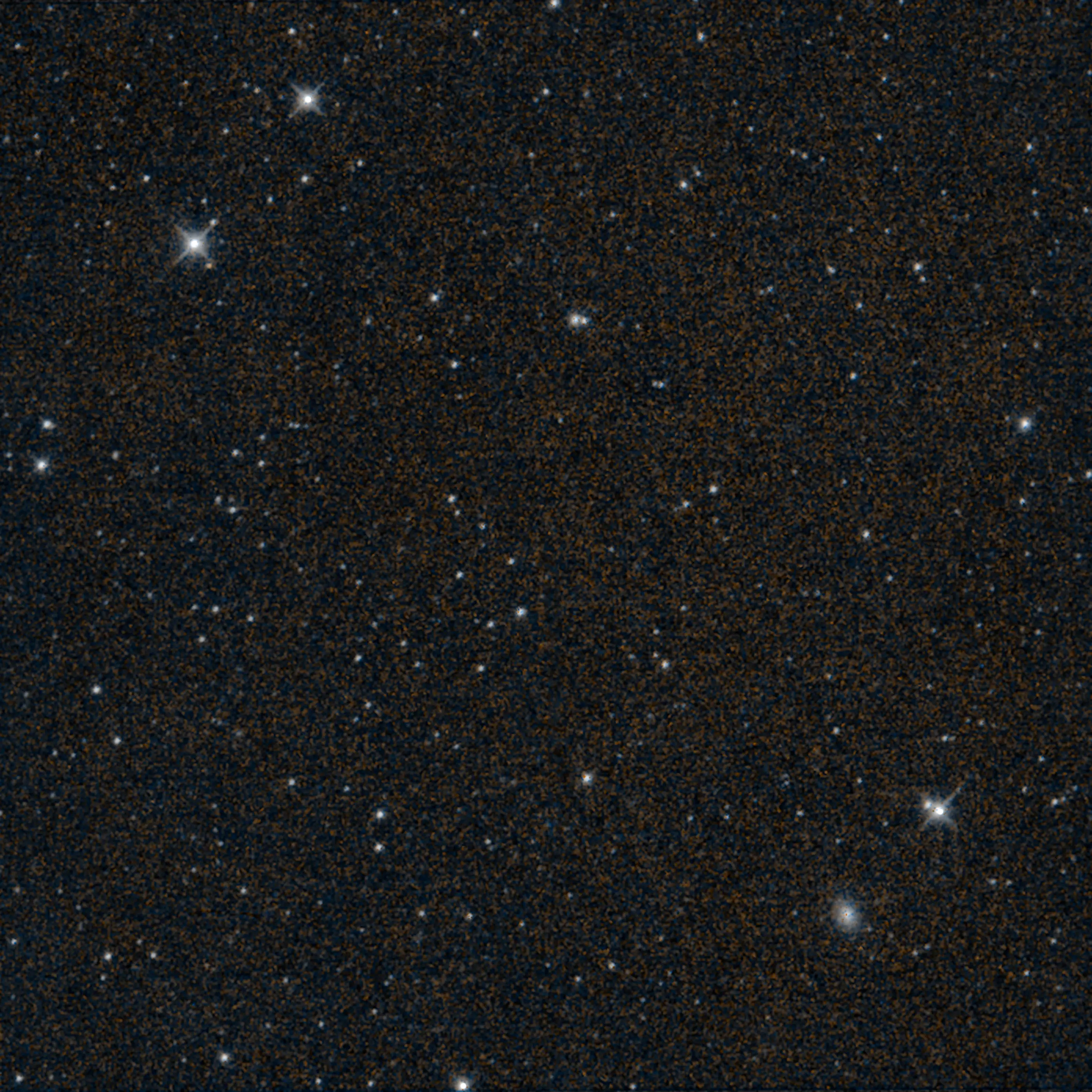
Engineers on NASA's NEOWISE (Near-Earth Object Wide-field Infrared Survey Explorer) mission commanded the spacecraft to turn its transmitter off for the last time Thursday. This concludes more than 10 years of its planetary defense mission to search for asteroids and comets, including those that could pose a threat to Earth.
Above: This final image captured by NASA's NEOWISE shows part of the Fornax constellation in the Southern Hemisphere. Processed by IPAC at Caltech, this is the mission's 26,886,704th exposure. It was taken by the spacecraft just before 3 a.m. EDT on Aug. 1, when the mission's survey ended. (NASA/JPL-Caltech/IPAC/UCLA)
The final command was sent from the Earth Orbiting Missions Operation Center at NASA's Jet Propulsion Laboratory in Southern California, with mission members past and present in attendance alongside officials from the agency's headquarters in Washington. NASA's Tracking and Data Relay Satellite System then relayed the signal to NEOWISE, decommissioning the spacecraft. As NASA previously shared, the spacecraft's science survey ended on July 31, and all remaining science data was downlinked from the spacecraft.
"The NEOWISE mission has been an extraordinary success story as it helped us better understand our place in the universe by tracking asteroids and comets that could be hazardous for us on Earth," said Nicola Fox, associate administrator, Science Mission Directorate at NASA Headquarters. "While we are sad to see this brave mission come to an end, we are excited for the future scientific discoveries it has opened by setting the foundation for the next generation planetary defense telescope."
NASA ended the mission because NEOWISE will soon drop too low in its orbit around Earth to provide usable science data. An uptick in solar activity is heating the upper atmosphere, causing it to expand and create drag on the spacecraft, which does not have a propulsion system to keep it in orbit. Now decommissioned, NEOWISE is expected to safely burn up in our planet's atmosphere in late 2024.
During its operational lifetime, the infrared survey telescope exceeded scientific objectives for not one but two missions, starting with the WISE (Wide-field Infrared Survey Explorer) mission. Managed by JPL, WISE launched in December 2009 with a seven-month mission to scan the entire infrared sky. By July 2010, WISE had accomplished this with far greater sensitivity than previous surveys. A few months later, the telescope ran out of the coolant that kept heat produced by the spacecraft from interfering with its infrared observations. (Invisible to the human eye, infrared wavelengths are associated with heat.)
NASA extended the mission under the name NEOWISE until February 2011 to complete a survey of the main belt asteroids, at which point the spacecraft was put into hibernation. Analysis of this data showed that although the lack of coolant meant the space telescope could no longer observe the faintest infrared objects in the universe, it could still make precise observations of asteroids and comets that generate a strong infrared signal from being heated by the Sun as they travel past our planet.
NASA brought the telescope out of hibernation in 2013 under the Near-Earth Object Observations Program, a precursor for the agency's Planetary Defense Coordination Office, to continue the NEOWISE survey of asteroids and comets in the pursuit of planetary defense.
"The NEOWISE mission has been instrumental in our quest to map the skies and understand the near-Earth environment. Its huge number of discoveries have expanded our knowledge of asteroids and comets, while also boosting our nation's planetary defense," said Laurie Leshin, director, NASA JPL. "As we bid farewell to NEOWISE, we also celebrate the team behind it for their impressive achievements."
By repeatedly observing the sky from low Earth orbit, NEOWISE created all-sky maps featuring 1.45 million infrared measurements of more than 44,000 solar system objects. Of the 3,000-plus near-Earth objects it detected, 215 were first spotted by NEOWISE. The mission also discovered 25 new comets, including the famed comet C/2020 F3 NEOWISE that streaked across the night sky in the summer of 2020.
In addition to leaving behind a trove of science data, the spacecraft has helped inform the development of NASA's first infrared space telescope purpose-built for detecting near-Earth objects: NEO Surveyor.
"The NEOWISE mission has provided a unique, long-duration data set of the infrared sky that will be used by scientists for decades to come," said Amy Mainzer, principal investigator for both NEOWISE and NEO Surveyor at the University of California, Los Angeles. "But its additional legacy is that it has helped lay the groundwork for NASA's next planetary defense infrared space telescope."
Also managed by JPL, NEO Surveyor will seek out some of the hardest-to-find near-Earth objects, such as dark asteroids and comets that don't reflect much visible light, as well as objects that approach Earth from the direction of the Sun. The next-generation infrared space telescope will greatly enhance the capabilities of the international planetary defense community, which includes NASA-funded ground surveys. Construction of NEO Surveyor is already well under way, with a launch date set for no earlier than 2027.
More Mission Information
The NEOWISE and NEO Surveyor missions support the objectives of NASA's Planetary Defense Coordination Office at the agency's headquarters. The NASA Authorization Act of 2005 directed NASA to discover and characterize at least 90% of the near-Earth objects more than 460 feet (140 meters) across that come within 30 million miles (48 million kilometers) of our planet's orbit. Objects of this size can cause significant regional damage, or worse, should they impact the Earth.
NASA JPL manages and operates the NEOWISE mission for the agency's Planetary Defense Coordination Office within the Science Mission Directorate. The Space Dynamics Laboratory in Logan, Utah, built the science instrument. BAE Systems of Boulder, Colorado, built the spacecraft. Science data processing, archiving, and distribution is done at IPAC at Caltech in Pasadena, California. Caltech manages JPL for NASA.
Robert Pearlman Editor
Posts: 53448 From: Houston, TX Registered: Nov 1999
posted 11-01-2024 11:04 PM
From Jonathan McDowell (via X):
The WISE infrared astronomy satellite reentered at 0049 UTC [8:49 p.m. EDT on Nov. 1] over the ocean west of Exmouth, West Australia.
Update from NASA:
As expected, due to increased solar activity, NEOWISE reentered and burned up in Earth's atmosphere at 8:49 p.m. EDT on November 1, 2024.







 posted 12-14-2009 08:21 AM



 advertisement