October 27, 2026 — John Larsen has not flown to the moon, but in his new book he chronicles the personal story of the first such journey in more than 50 years.
In "Earthrise," a Canadian becomes the first person from outside the United States to launch to the moon. The flight offers views of the lunar far side never seen before by human eyes, including those of a first-time flyer who was experiencing spaceflight for the first time.
"I didn't know him. He was 10 years younger than me, so we didn't really cross paths, but I had heard that a fighter pilot had been selected for the Artemis II mission and I was curious and interested in that," said Larsen, who spent 34 years serving in the Royal Canadian Air Force.
That was three years ago. After seeing Jeremy Hansen on a late night talk show and getting a sense for his humility and sense of humor, Larsen decided to reach out to the Canadian Space Agency.
"I had no contacts, but I pitched the book. I'd done a lot of writing and have the military connections, and that's what I think it would take to tell the story properly," said Larsen, who was a senior military public affairs officer and published author.
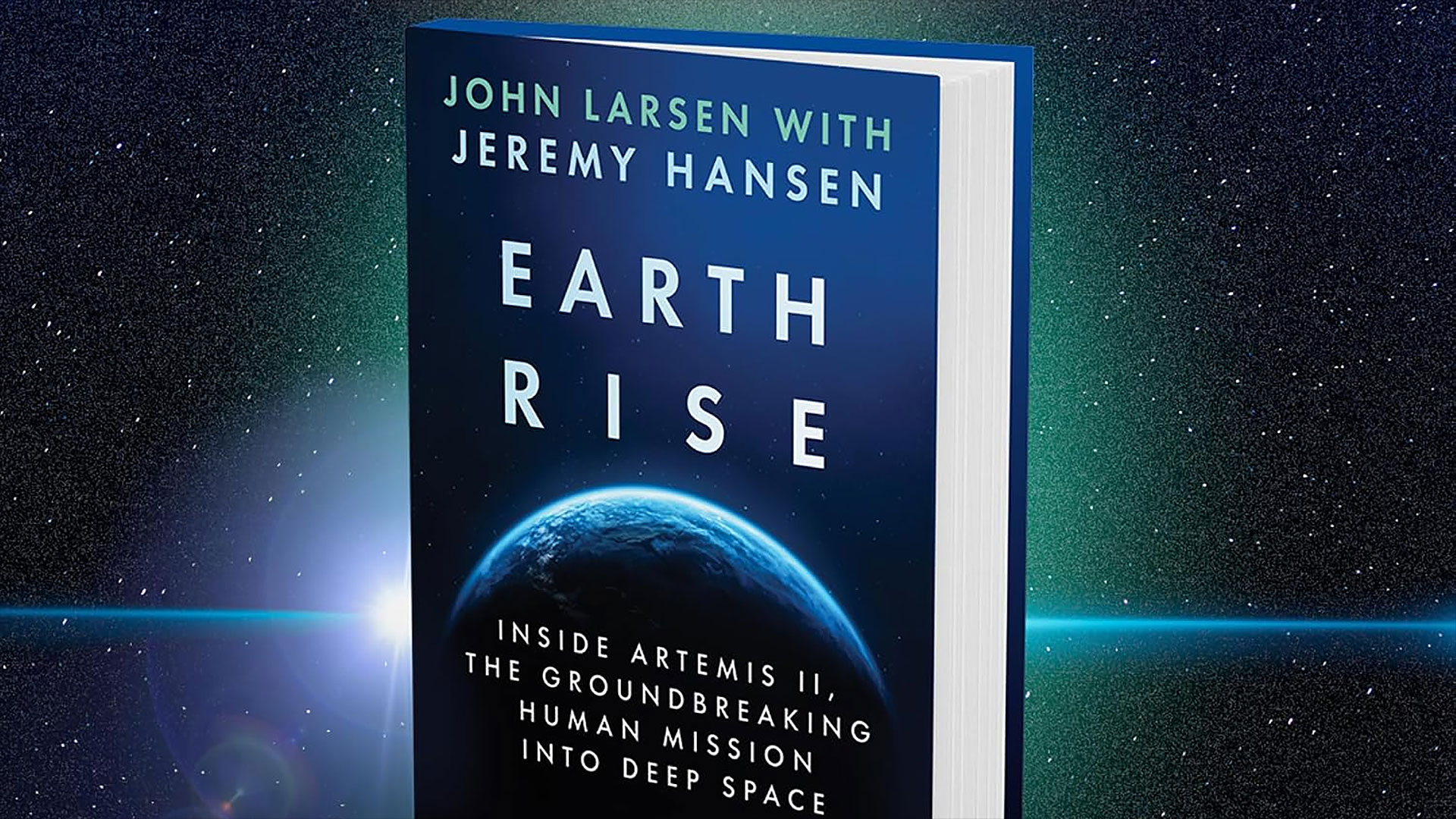
As it turned out, it did not take much to convince the agency, and in turn Hansen, to get on board. "Earthrise: Inside Artemis II, the Groundbreaking Human Mission Into Deep Space" (or as in Canada, "A Canadian Astronaut's Journey Into Deep Space") was released by HarperCollins on Tuesday (Oct. 27).
The following interview has been edited for length and clarity.
collectSPACE (cS): The byline on the cover of "Earthrise" reads John Larsen with Jeremy Hansen, however, the book is written in part in Hansen's voice. Can you clarify for readers who wrote it?
John Larsen: "The book itself. overall, is a composite. About half of it is in first-person voice, Jeremy's voice, and the other half is in third person.
"Having said that, I wrote every word. I represented Jeremy's perspectives and thoughts in the first person. It was a collaboration between he and I, and the reason for that is when we crafted this deal with the Canadian Space Agency — who were supportive of the book being produced — they were very, very clear that Jeremy was mission centric, that he was planning to go to the moon and did not have time to be writing anything.
"So I cast his words on the page for him in those sections."
cS: How often did you speak with Jeremy during his training for the flight? Was it all by phone and email, or did you also travel to Johnson Space Center in Houston to meet with him?
Larsen: "I met Jeremy for the first time in the summer of 2024 at his cottage up here in Canada, where I interviewed him and his family. A year later, I came down to Johnson for three days of media briefings and had a chance to talk to him again, as well as his flight directors and his crewmates.
"On average, though, every couple of weeks I spent an hour or so with Jeremy on the phone. As we got later in the process, once he came back from the mission, almost the entire back third of the book was written in about five weeks. I devoted about 15 hours per day, every day and Jeremy was heavily engaged in that because I really needed to draw on his expertise and get his impressions about the mission."
cS: Who else did you speak with as part of your research for the book?
Larsen: "In terms of getting Jeremy's backstory, I spoke to his teachers from when he was in school. He was very active in the air cadet program. That's how he got his pilot's license. I took the same path. I was an air cadet. I got a pilot's license too, so I could relate to that trajectory. We did it in different parts of the country, but it's a similar program.
I talked to his cadet officers, and then at one point, I drove to the other side of Toronto and met his parents — wonderful, wonderful people. I really tried to get a sense of who was this man, what was his constitution, his core being, before he even put his name into the hat to become an astronaut. I thought it was a very important part of the story to tell."
cS: Did you have any contact with Jeremy during the mission? Did he email you from space?
Larsen: "There would only have been one opportunity for me to do that and that was at the Canadian Space Agency in Montreal. I discussed that with with officials at the CSA, and we mutually agreed that I already had tons of access to him so I was happy enough just to draw from what he was saying to others. For example, our prime minister talked with Jeremy and with school children during the mission, so I pulled from that.
"We did reconnect as soon as he came back. In fact, it was either late that evening or very, very early the following morning that I got a text from him that literally said, 'Hey, I'm back.' That's it. I laughed, and replied, 'Yeah, dude, I know.' But it just goes to show the humility of the man that he thought to send me a note letting me know he's back, and not that millions of people weren't watching the entire trip and knew every element of the reentry, splashdown and recovery.
"Then we were very closely connected for the next five weeks because I had to file the final 30,000 words or so. I had to get his story and then he had to edit it. There were a lot of technical details, particularly where we go into some of the elements of the trip that were unexpected — and there were unexpected elements. I wanted to make sure I captured those authentically and properly."
cS: Of all of the things that happened during the mission, what struck you as being the really great stories you wanted to include in the book?
Larsen: "We saw four astronauts who were real human beings. They weren't the stereotypical cigar chomping, whiskey drinking fighter pilots of the 1960s. They were highly evolved, emotional human beings who weren't reluctant to show that, and that's what I think people gravitated to.
"Obviously, the mission itself was a great adventure, but that's not what drew people in. What drew people in is they saw this humanity. I heard somebody refer to them the other day as 'our emotional support astronauts,' and that's almost what happened. I think Jeremy captured it beautifully, and I'm paraphrasing it a bit here, but he said something to the effect of, 'If you liked what you saw up there in space over the last 10 days, and my sense is a lot of you did, look at yourselves. We all have this capacity within ourselves. It's all in you.'
"I think that ability to be self-reflective and asking people to do that was very powerful.
"And then, of course, the moment I think that just got me, and it got everybody, and it's exactly what I'm talking about here, was the moment the crew named the crater on the moon after Reid [Wiseman, the mission commander's] wife who passed. They had planned to do it, but I think the raw energy of the moment and authenticity of the moment, it just took everybody's breath away."
cS: So what do you hope readers take away from reading "Earthrise"?
Larsen: "Honestly, believe in humanity. Believe in the great things we can do when we come together. It was always a message behind the mission, but I think it really came to life when people saw it. It was one of the few experiences in the last year that transcended geopolitical boundaries, that joined us as humans — as spaceflight has always intended to do and as it has in the past. We needed it. We needed it at this point in time.
"The second thing is a more personal message, which is around finding joy. Find joy in what you're doing. We live our lives and they are often very hectic, and sometimes they're infused with acrimony and dissent. It doesn't mean it's always going to be easy, but you need to have a sense of joy in what you're doing.
"I think those are the takeaways. And it's ironic, isn't it? Because neither of those messages are about space exploration, itself." |
|

"Earthrise," the dramatic, high-stakes account of Artemis II, the first human journey to the moon in 50 years, told from the perspective of astronaut Jeremy Hansen to John Larsen. (HarperCollins)
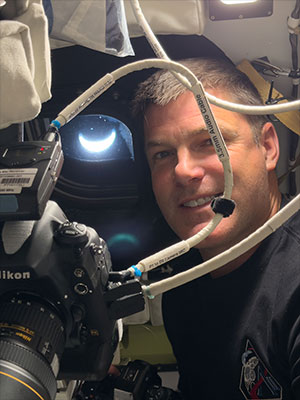
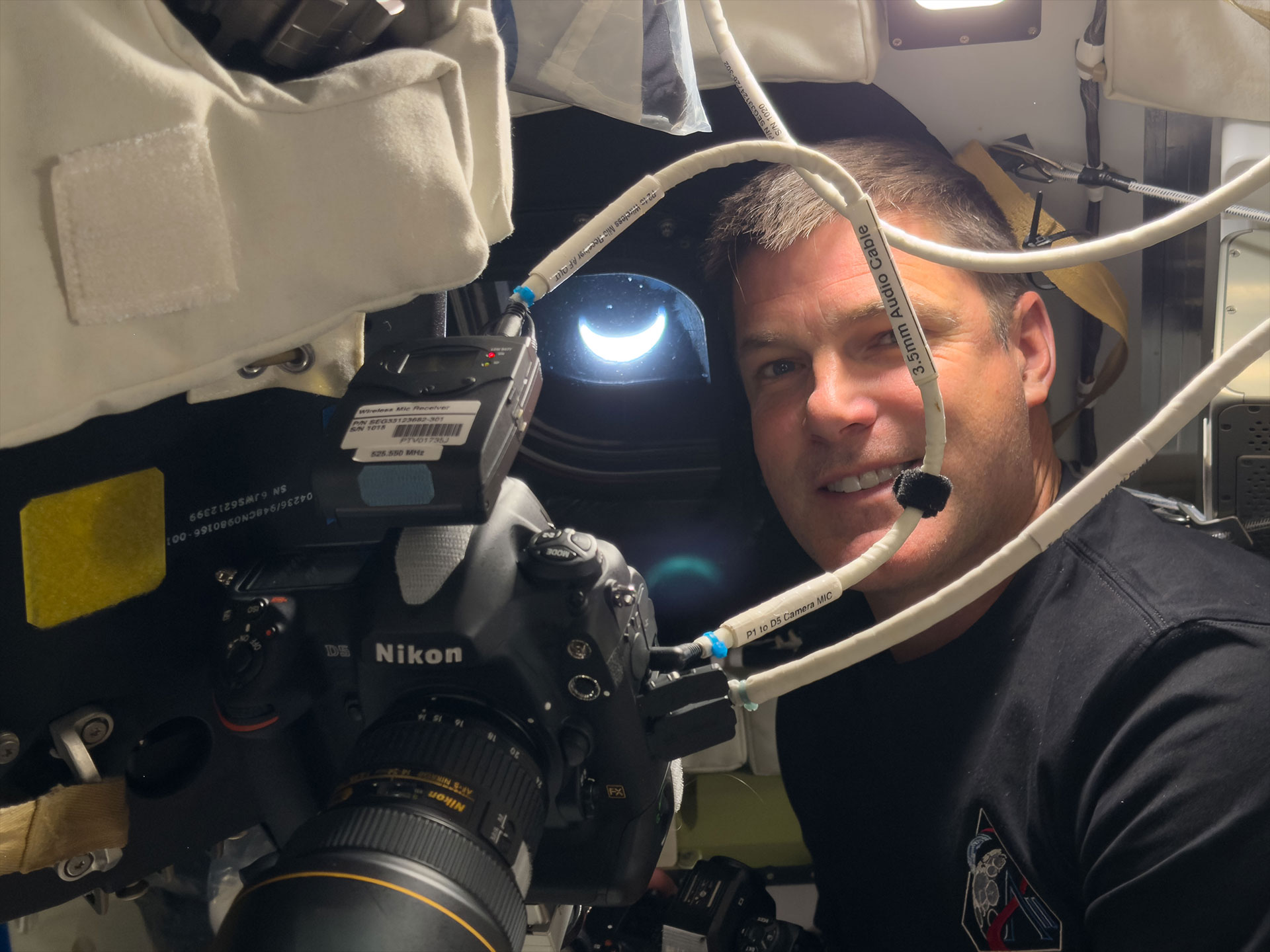
Artemis II mission specialist Jeremy Hansen pictured on board the Orion spacecraft Integrity with the crescent Earth pictured through the window behind him, on the way back from the moon. (NASA)
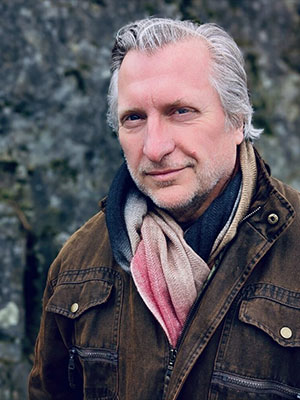
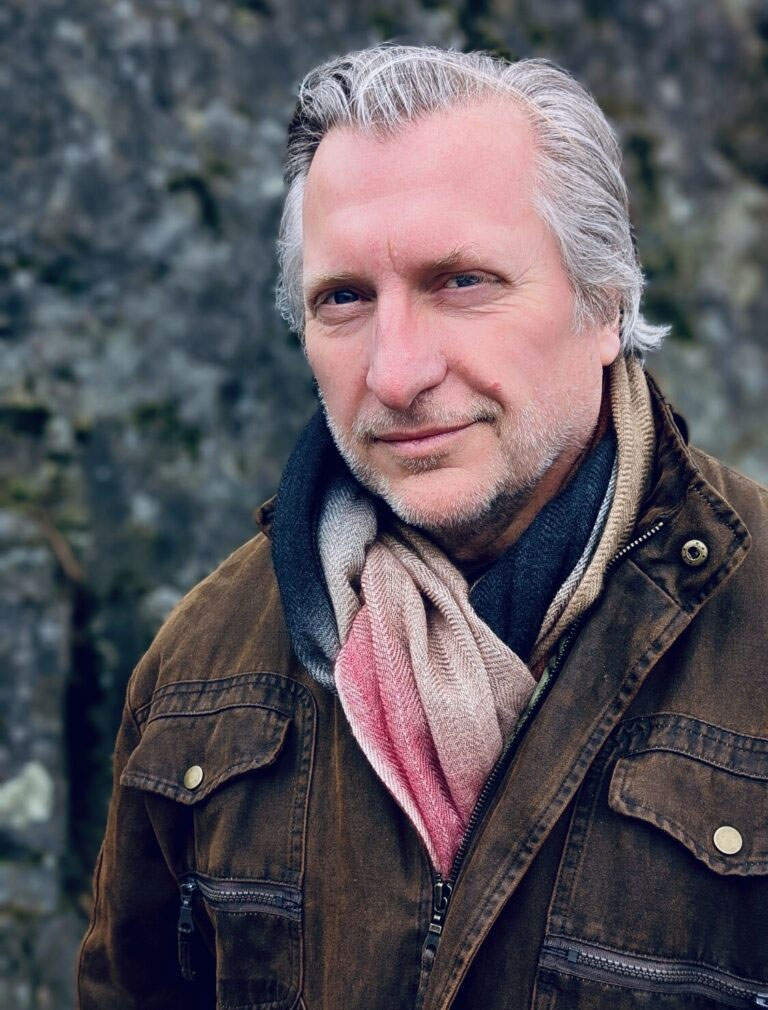
"Earthrise" author John Larsen, a former colonel and public affairs spokesperson in the Royal Canadian Air Force. (HarperCollins)

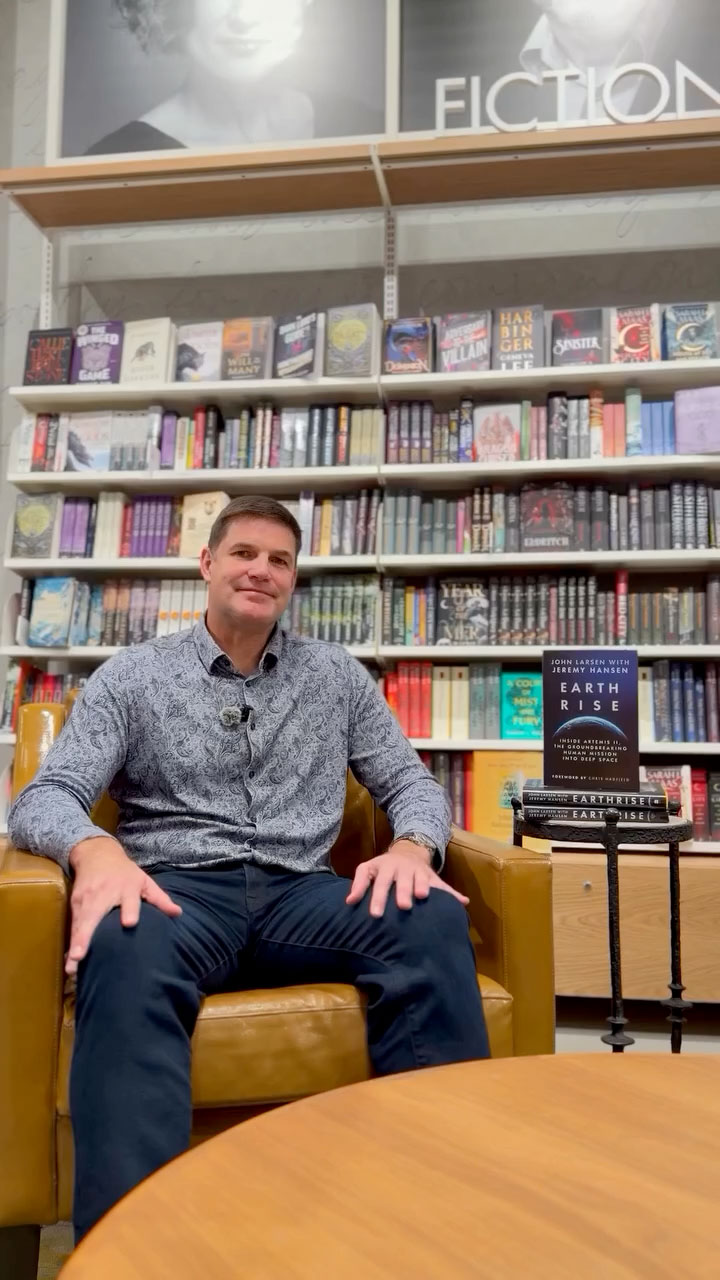
Former Canadian Space Agency astronaut Jeremy Hansen with the book about his Artemis II journey, "Earthrise." (HarperCollins) |