advertisements advertisements
|

|
'Project Hail Mary,' Artemis II and the trouble with flying flags
April 12, 2026 — "Project Hail Mary," now in movie theaters, and NASA's Artemis II mission, now back from the moon, share an unusual similarity in the trouble that both epic space adventures encountered with international flags.
The sci-fi film stars Ryan Gosling, who in service of the plot, wears garments with the NASA insignia. The mission was led by Reid Wiseman, who in service to NASA did the same — as did two of his crewmates, the third is from the Canadian Space Agency.
Wiseman, Victor Glover, Christina Koch and Jeremy Hansen got a private look at "Project Hail Mary" while waiting in their crew quarters for launch. That is why they understood the reference later during their journey outbound when Mission Control reacted to Wiseman's description of seeing Earth and the moon at the same time with "Amaze. Amaze. Amaze," a catchphrase from the film.
In reply, Amazon MGM Studios created a video of the film's rock-like, spidery alien with a message for the astronauts. (It is not known if the clip reached them.)
"Good job! Good job! Good job! Artemis II crew, you good brave humans pilots," said Rocky through a computer translator. "Complete mission and return to Earth comfortable safe."
The Artemis II crew did as Rocky said and returned to Earth on Friday (April 11).
But what about the flags?
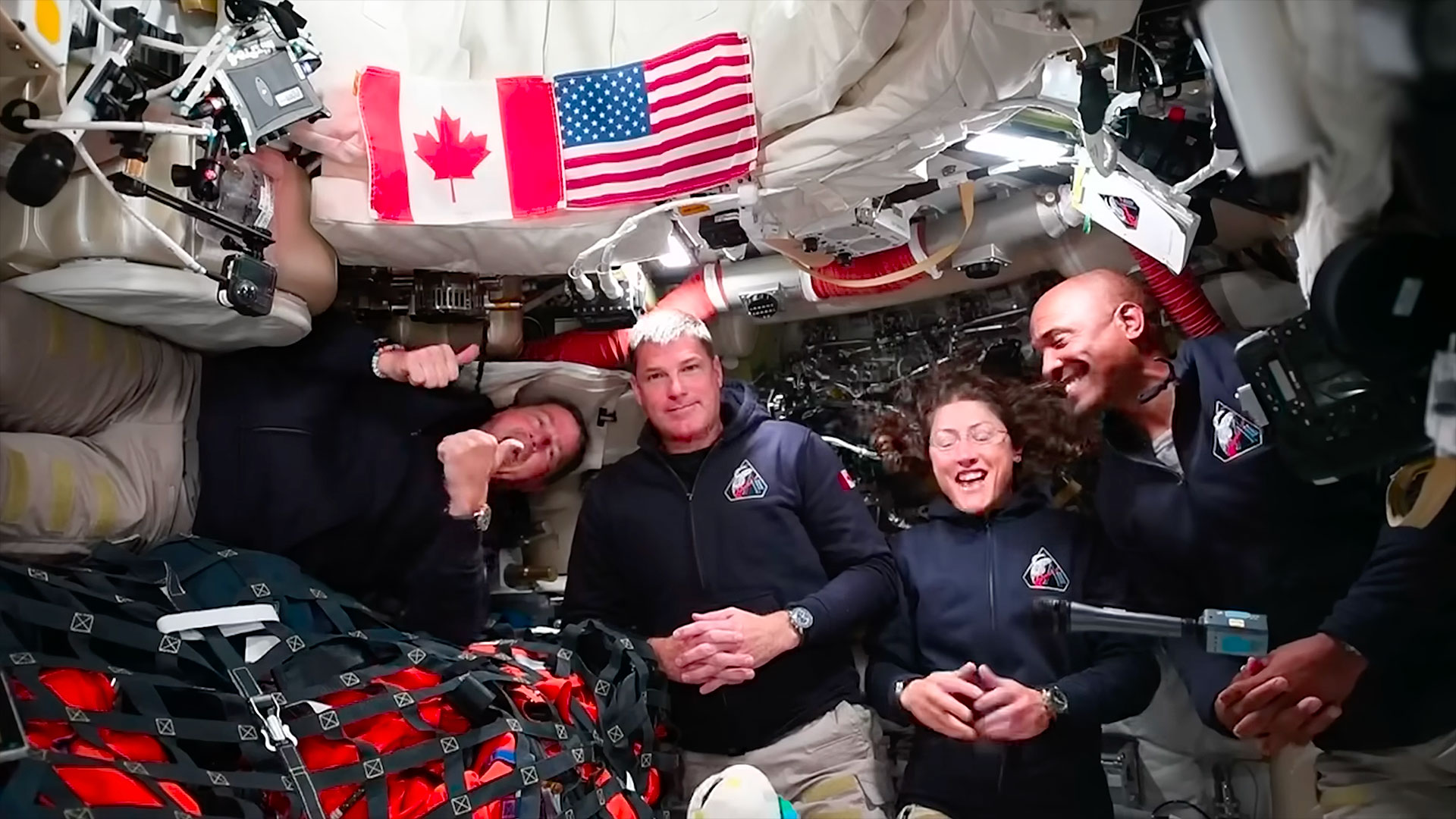
As Wiseman and his crewmates worked to set up their spacecraft for upcoming TV broadcasts, they mounted a small Canadian flag and an American flag — in that order — on a wall. The Maple Leaf and Stars and Stripes stayed that way for the next four days of the mission until it came time for a call from the President of the United States.
Someone must have remembered the U.S. Flag Code, which states, "no other flag or pennant should be placed above or, if on the same level, to the right of the flag of the United States of America..." and they had the two banners swapped. (There is also a rule about displaying the flag so that the field of stars, or union, faces the direction of travel, but it is difficult to tell where the moon is from the vantage point of the Orion spacecraft's interior camera alone).
As fixes go, it was an easy one. Far simpler than what the "Project Hail Mary" film crew faced when creating the movie's flag-lined mission patch.
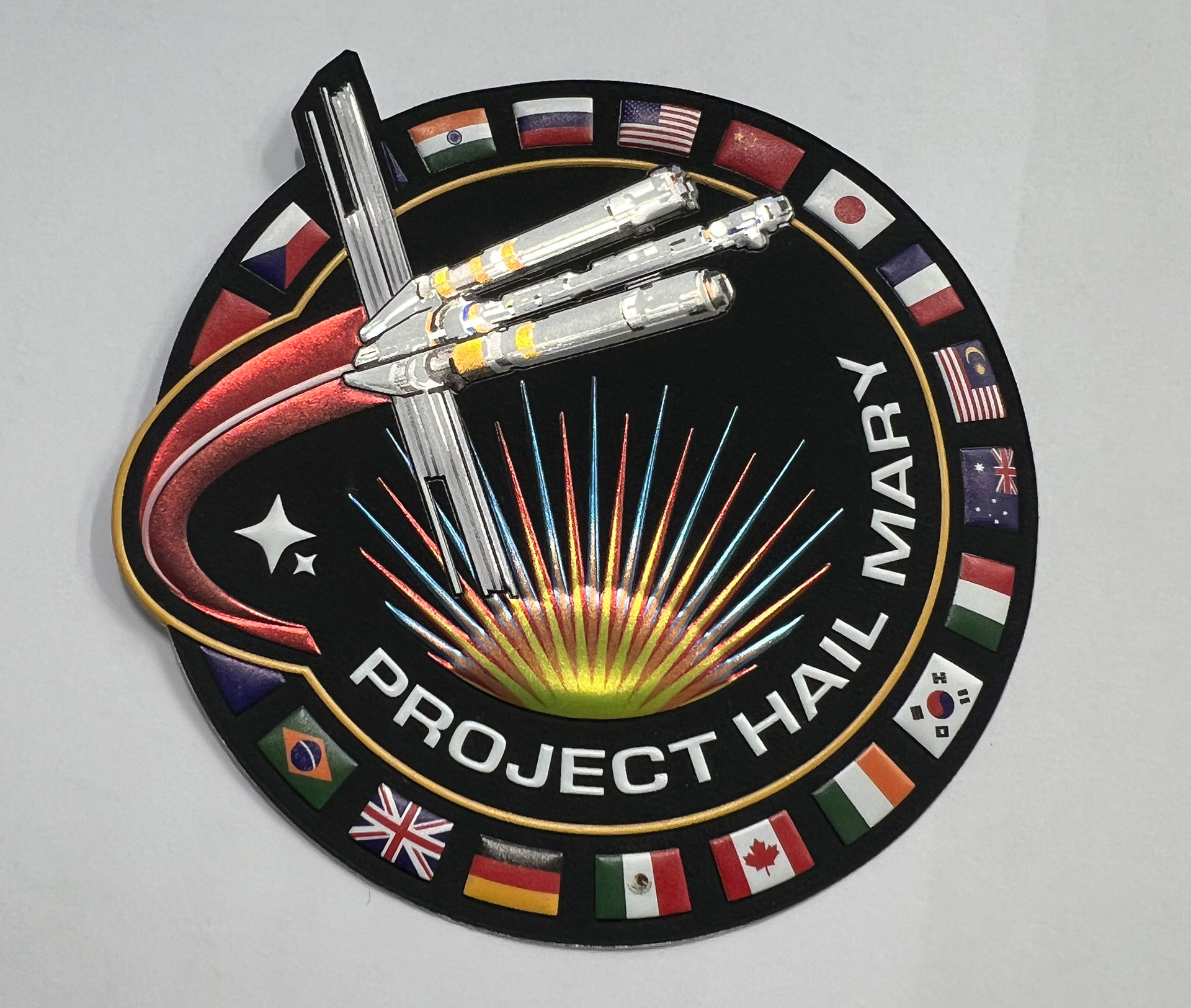
In the book (by the same title) on which the movie is based, author Andy Weir described a blue and white circular crest with "'Hail Mary' across the top and 'Earth' across the bottom." The directors, however, wanted something more colorful and which showed off their design for the Hail Mary spacecraft, according to costume designer Glyn Dillon.
"Initially all we were going to do was put the names of the astronauts on it, but then that led to some issues with storytelling and spoilers," Dillon said in an interview with collectSPACE. "And then what they [Phil Lord and Chris Miller] had done with the spaceship, they wanted to feature that on the patch."
So Dillon and his fellow costume designer David Crossman pulled together some of their own concepts for the patch along with a starburst created by Helen Koutas and Chris Tooth from the film's graphics department to assemble the final patch. Then someone had the idea to line the border with the flags representing all of the countries that worked on Project Hail Mary (the in-movie international effort, not the film itself).
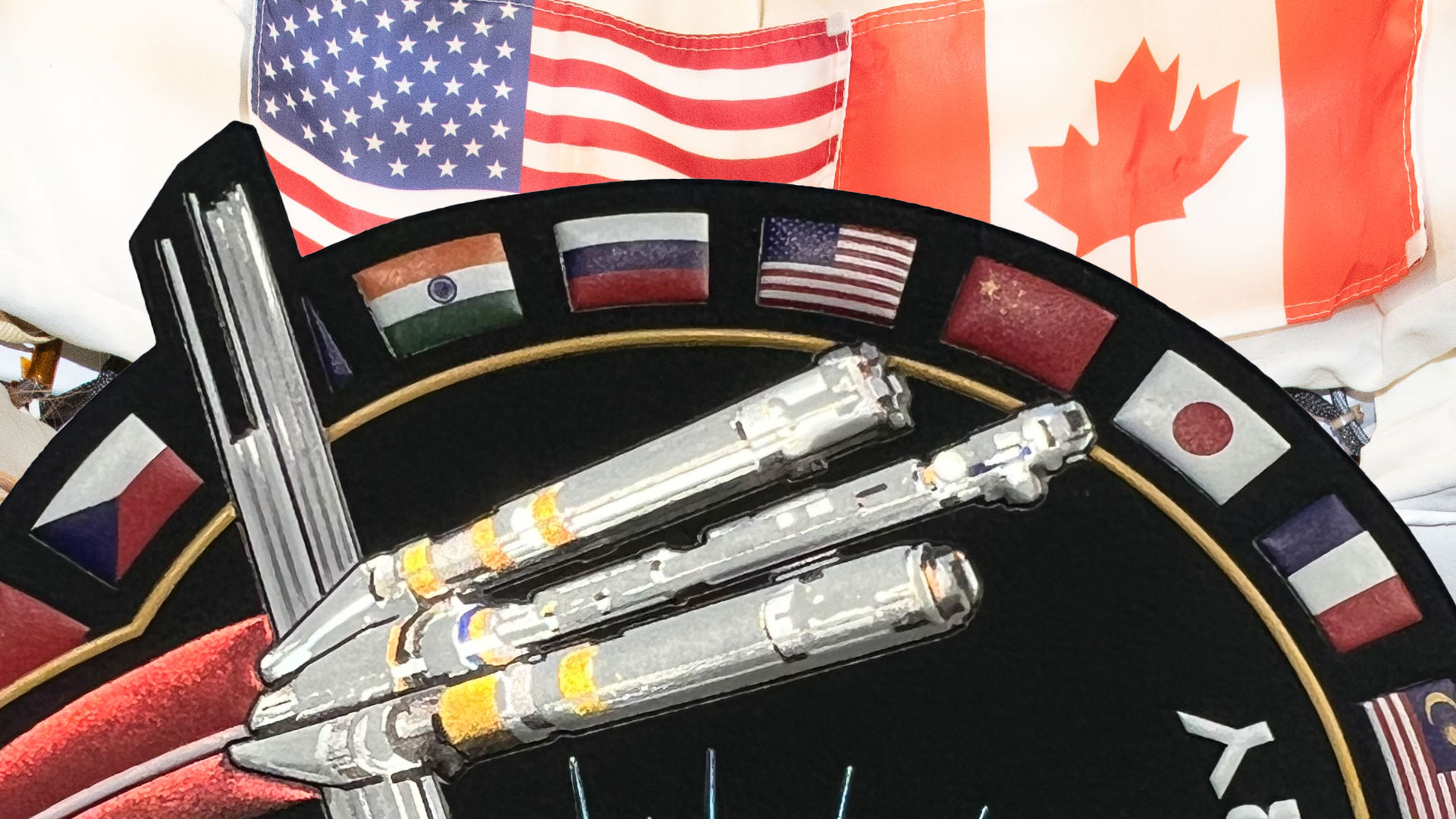
The metallic-sheen mission patch, as seen on screen lines up the banners for 17 countries: Czechia, India, Russia, the United States, China, Japan, France, Malaysia, Australia, Italy, South Korea, Ireland, Canada, Mexico, Germany, the United Kingdom and Brazil.
"Whenever you make a film, absolutely everything you do has to go through clearance," said Dillon. "So when it came to the patch and the use of the flags, we found out that we needed permission."
Some of the nations were quicker to sign off than others. And it was not just about the appearance of the flag but also its placement. Some countries wanted to approve where on the patch their flag was placed, while still others had concerns about what other flags would be bordering their own.
It took weeks to finalize the flags on the patch. And that was just for the emblems in the film. The patches made for sale or as promotional giveaways, or were to appear in marketing materials either had their flag count reduced or did away with them altogether.
All of that effort for a level of detail you might not even notice, let alone be able to discern at how quickly it goes by on screen — like a spacecraft flying by the moon. Amaze, amaze, amaze, indeed. |
|
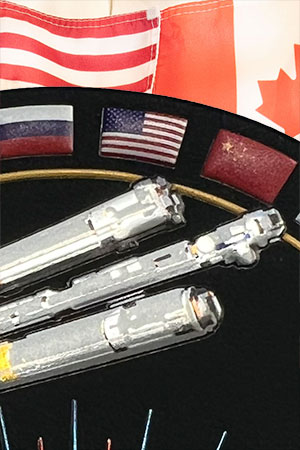
Whether on board a moon mission or on a movie's mission patch, the rules governing the display of international flags can be a real concern, as the "Project Hail Mary" filmmakers and NASA Artemis II crew learned. (NASA / Amazon MGM/Glyn Dillon / collectSPACE)
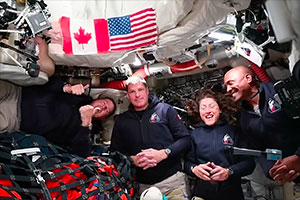
Canadian and American flags, as displayed on the Orion spacecraft Integrity for the first several days of the Artemis II mission. (NASA)

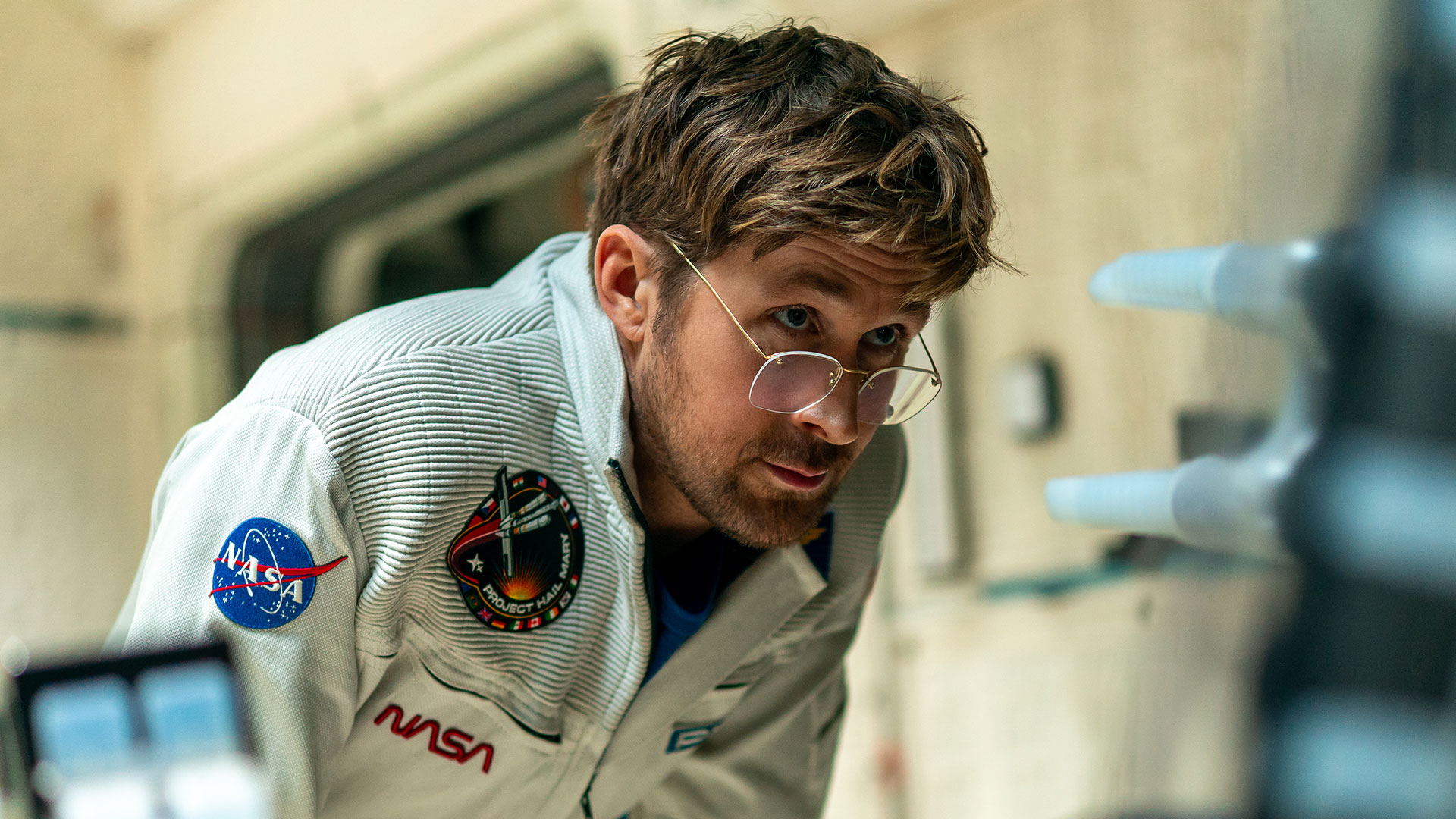
Ryan Gosling, as Ryland Grace in "Project Hail Mary," is seen with a mission patch that appears to be missing flags. (Amazon MGM) |
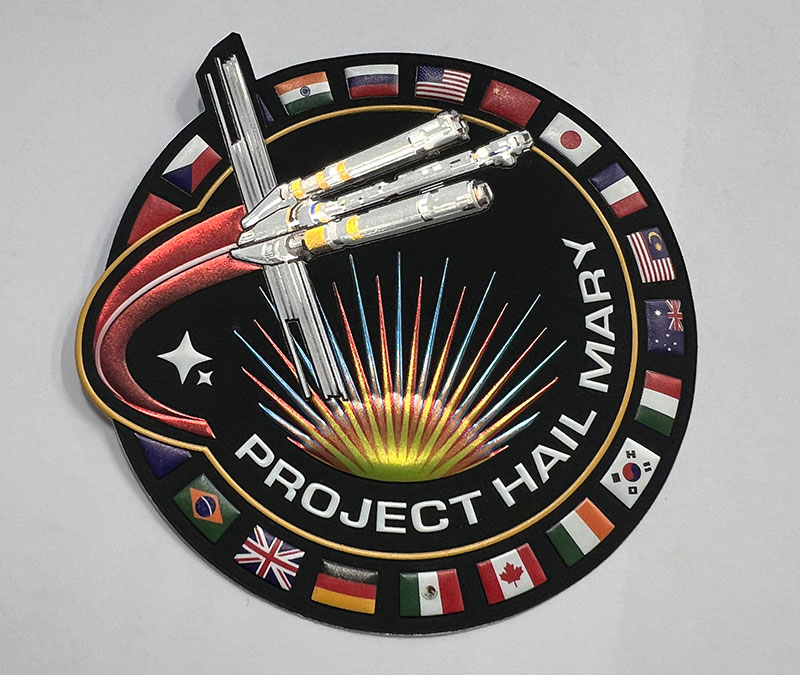
The "Project Hail Mary" mission patch was created by directors Phil Lord and Chris Millers, costume designers Glyn Dillon and David Crossman, costume cutters Jenny Alford and Ian Jones, graphic artists Helen Koutas and Chris Tooth and the team at FBFX. (Amazon MGM/Glyn Dillon) |
|

© collectSPACE. All rights reserved.
|
|
|
|