advertisements advertisements
|

|
LEGO Education moon, Mars kits challenge kids: Build. Solve. Invent.
February 16, 2026 — LEGO is returning space exploration to its building blocks.
The toy company, which in recent years has released a line of detailed historic NASA spacecraft, is now providing kids with the pieces needed to not just build, but also solve and invent the next-generation architecture needed to live on the moon and Mars.
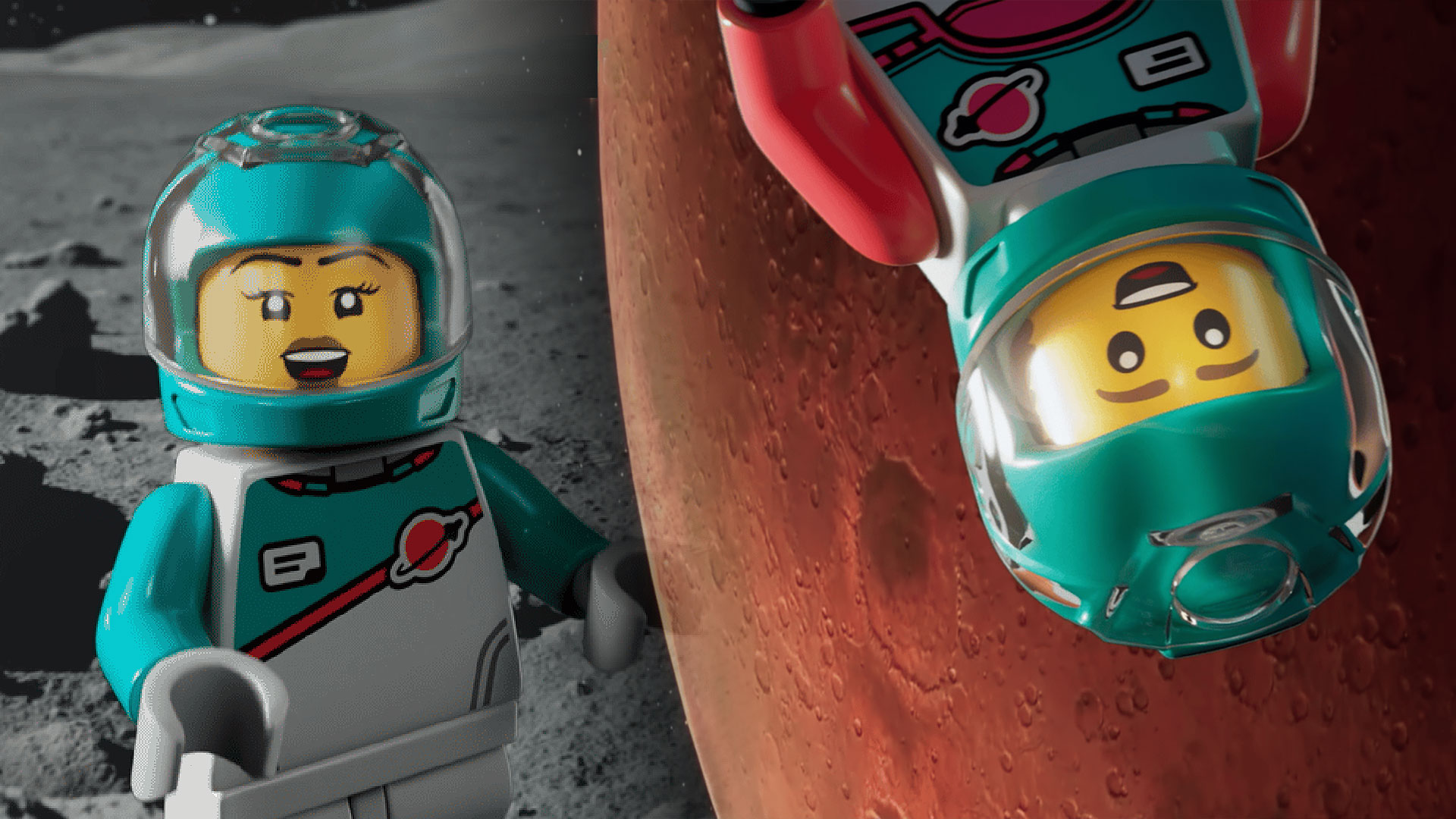
"What if your kids could learn about science and develop problem-solving skills all while playing? Now with 'Build, Solve and Invent' from LEGO Education, they can do all that in the comfort of their own home," says a LEGO astronaut minifigure in an animated video introducing one of the two newly-released space sets.
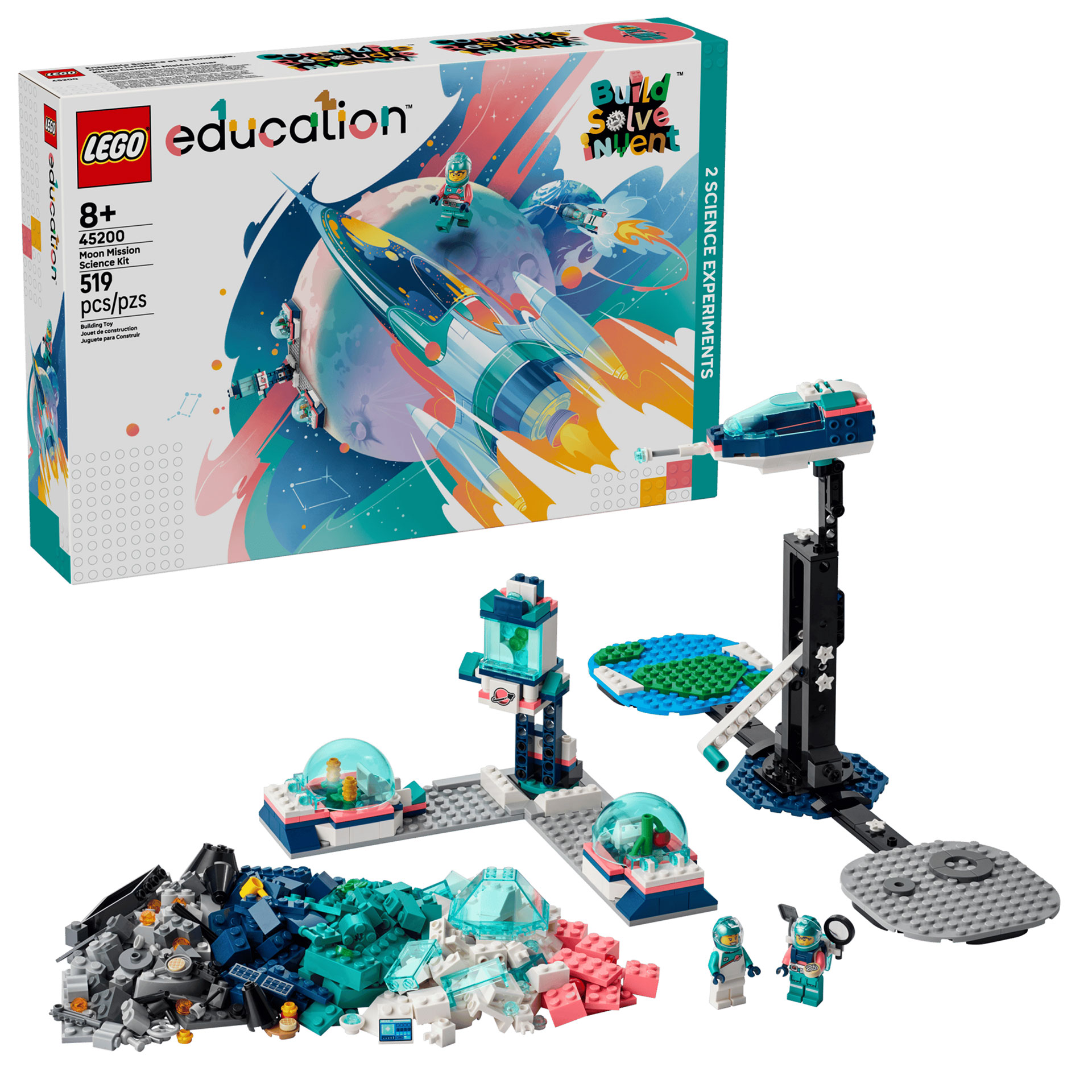
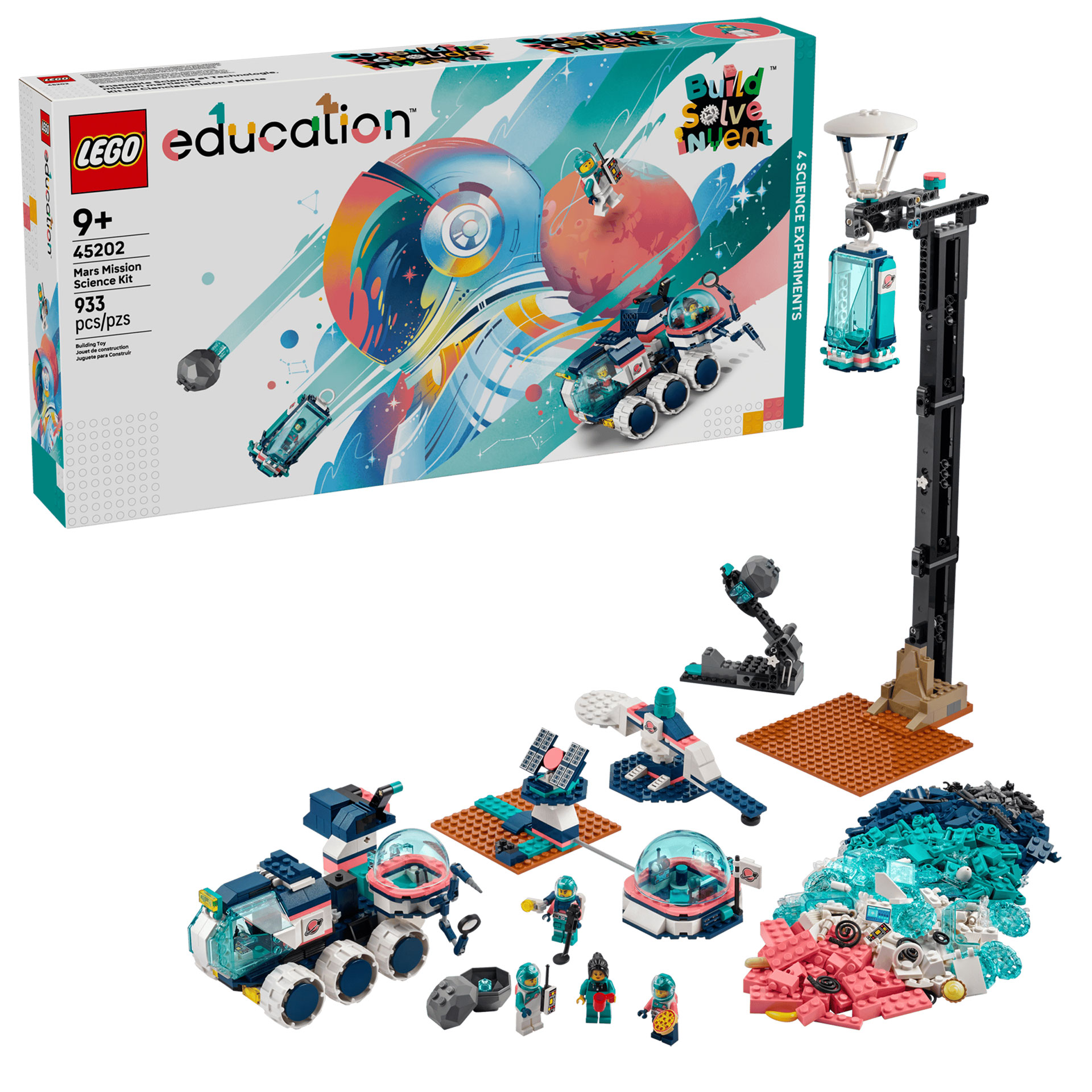
The 519-piece Moon Mission Science Kit and more advanced 933-piece Mars Science Mission Kit retail for $50 and $100, respectively, and are intended for children ages 8 (for the moon) and 9 (for Mars) on up. Both kits are shipping now from LEGO's online shop.
"Kids can launch a love for space with a LEGO Education set that has science experiments to fire up creativity and imaginations," reads the company's website.
'One giant leak for mankind'
The LEGO Education Moon Mission Science Kit challenges kids to think about how they might be able to live and work on the lunar surface. NASA and other space agencies around the world are currently working towards establishing a sustainable human presence on the moon, including building a moon base at the south pole where water ice can be found in the permanently shadowed craters.
The set features a model rocketship toy, takeoff and landing pad, a buildable habitat with greenhouses, two astronaut minifigures and two experiments. Of the latter, one involves the growth of plants using hydroponics, a method that uses nutrient-rich water in place of soil.
Kids can follow the included digital instruction book to assemble a greenhouse and separate water tower, but will find that is the only the start.
"Oops! The water is spilling on the ground. That's one giant leak for mankind," says the LEGO minifigure from the introductory video. "Can you build something to make sure the water and nutrients get to the plants? Play around until you find a solution that works."
By encouraging children to look beyond the instructions for how to troubleshoot, test and find the best ways to address the issue, they go through some of the same steps that NASA's engineers follow when developing the equipment for the Artemis moon program.
"The next step is to harness your creativity to build upon the experiment. Now that you've got running water, can you build a kitchen to prepare the food?" asks the astronaut minifigure. "I'm starving."
'Umm, Houston, we have a problem!'
The LEGO Education Mars Mission Science Kit includes a drop tower experiment, drop pod, Mars rover, Mars base and four astronaut minifigures. Like the moon set, the Mars version also includes a digital instruction booklet that kids can follow to set-up for their creative builds.
"Our first challenge is to land on the Martian surface safely," says another of the astronaut miniatures in the Mars kit's animated video.
Kids can assemble a drop tower that stands 19 inches tall (49 cm) to simulate the final approach to the red planet's soil. Building the drop pod as instructed, though, results in it breaking apart on impact.
"Umm, Houston, we have a problem! Can you build some landing legs to absorb the shock of the landing?" asks the minifigure.
Children can then experiment using different designs and number of legs to see what works and what does not. Once they get a workable solution to their liking, the set further challenges them to next design a different pod to deliver supplies, rather than crew members, to Mars.
This activity is similar to how NASA and Grumman (today, Northrop Grumman) engineers used drop tests to validate their design and structural strength of the legs used on the Apollo lunar module more than 50 years ago. More recently, NASA has tested a scale model of a four-legged lander designed to collect and return samples form the surface of Mars.
The other experiments have kids building a g-force simulator that spins, a catapult that launches boulders and a rover that features am opening cockpit and a "kicker" to move rocks.
Modern minifigures
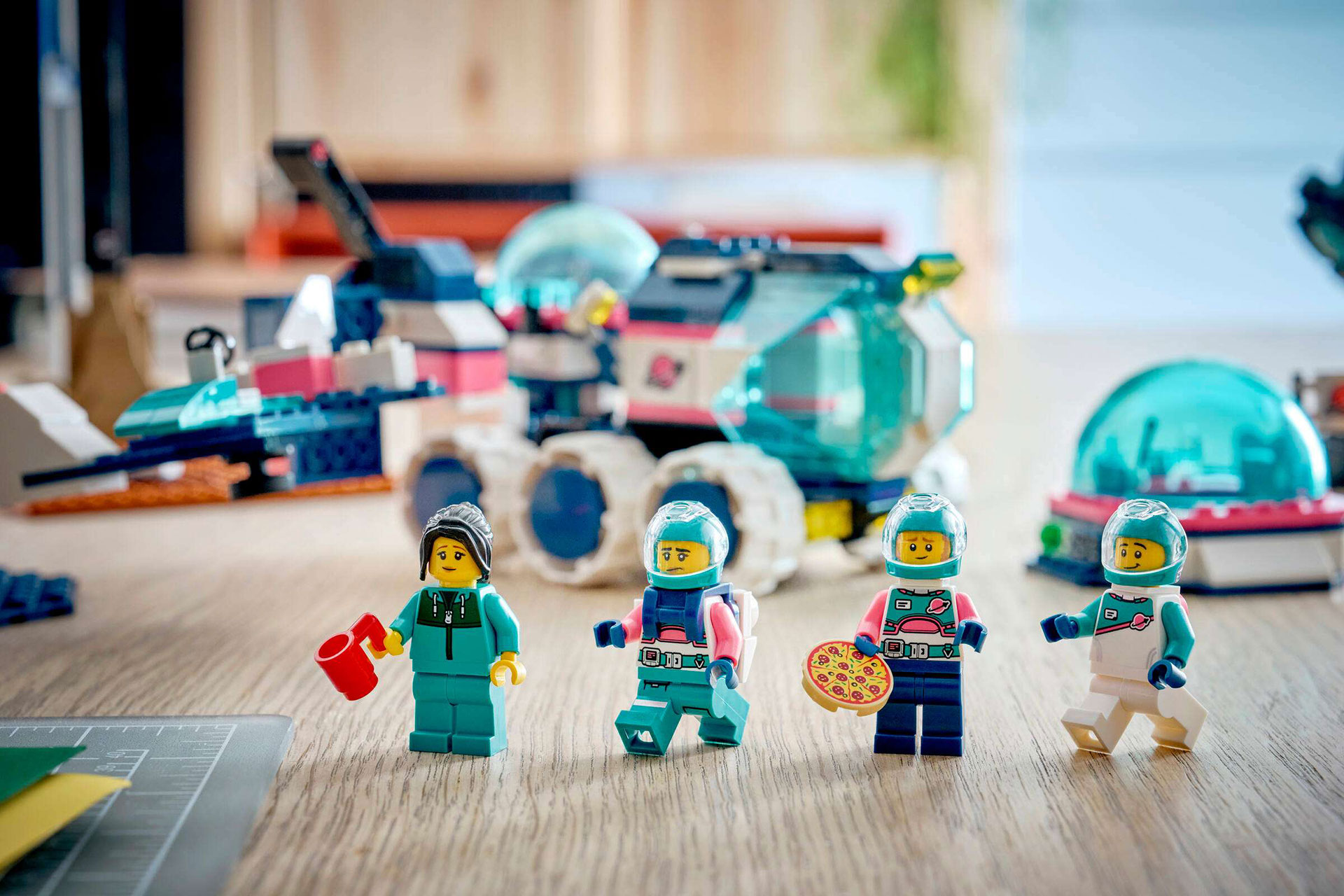
The LEGO minifigures featured in the Moon and Mars Mission science kits sport a different look from their LEGO City counterparts. Whereas the latter have gained orange suits to more closely match the look of modern Artemis astronauts, the LEGO Education figures — as well most of the other toy bricks included one each set — feature turquoise and salmon pink pieces.
The new colors not only sets apart the different LEGO lines, but also helps to unify the sets as being attractive to both boys and girls.
Of course, as Moon and Mars sets, they also include parts in gray and red hues.
The minifigures also have a number of accessories. Each has a helmet and two facial expressions. Also included are a backpack, magnifying glass and seeds with the Moon set and a mug, communication device, pizza and material scanner with the Mars Mission science kit. |
|
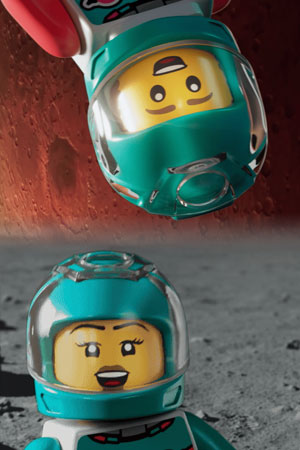
LEGO Education's new Moon and Mars Mission Science Kits give kids the pieces they need to design their futures in space. (LEGO)
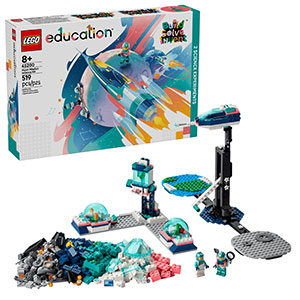
The new LEGO Education Moon Mission Science Kit features two experiments, including one focused on water on the moon. (LEGO)
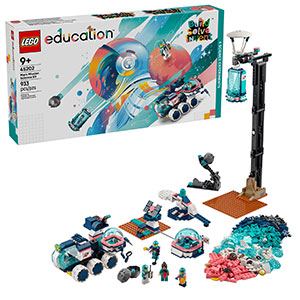
Kids build and use a drop tower to test Mars pod landing legs as part of the new EGO Education Mars Mission Science Kit. (LEGO)
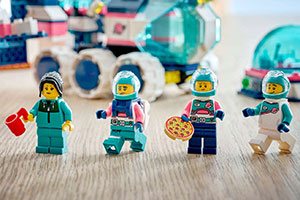
The LEGO Education Moon and Mars Mission Science kits feature new LEGO astronaut minifigures and other play elements. (LEGO) |
|
When you purchase through links on our site, we may earn an affiliate commission. Here's how it works.

© collectSPACE. All rights reserved.
|
|
|
|