advertisements advertisements
|

|
Robert Goddard's rocket recreated as flying model kit 100 years later
February 14, 2026 — You can now celebrate the 100th anniversary of the world's first liquid-fueled rocket launch by flying a replica — powered by a solid-fuel motor.
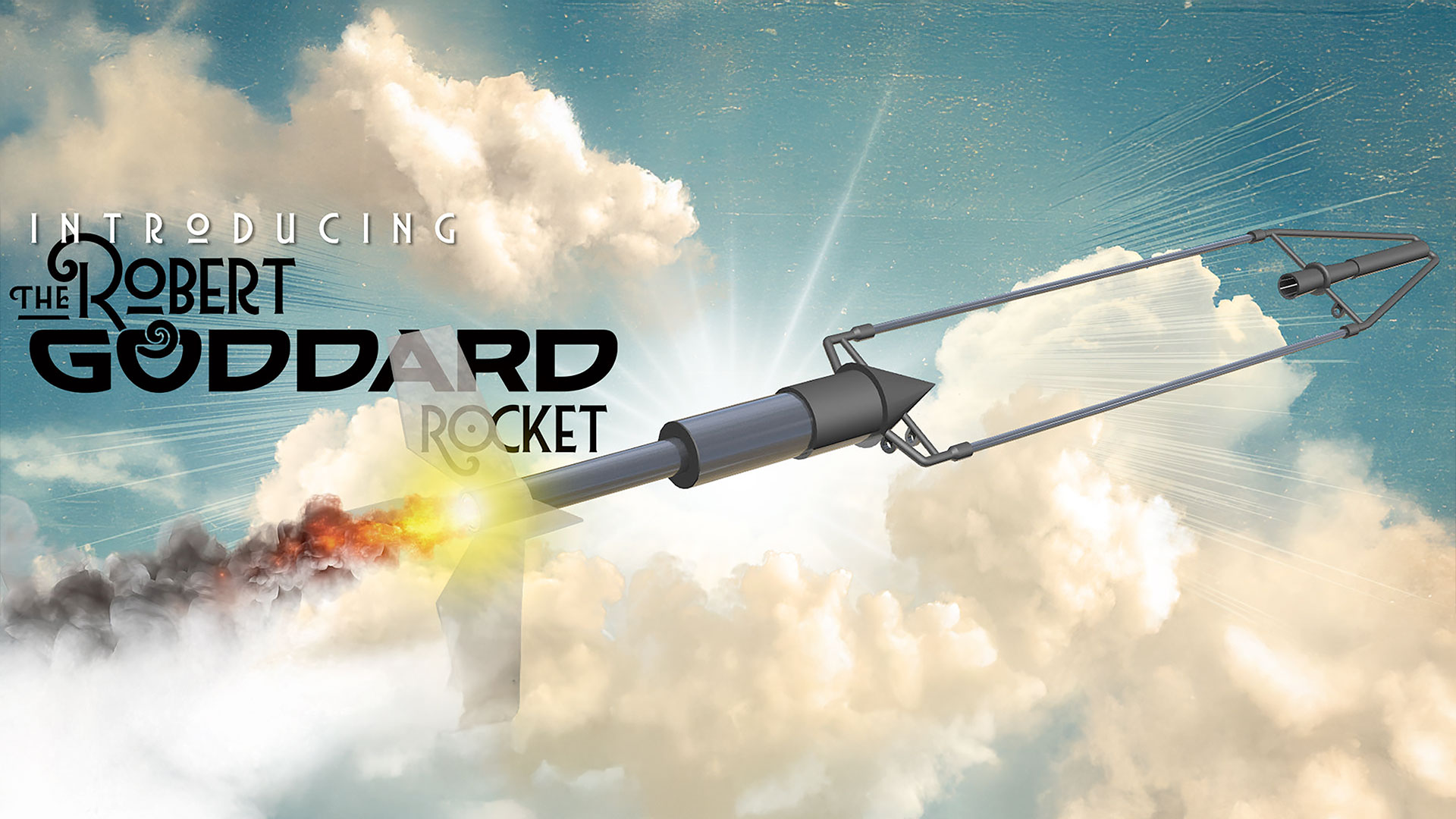
That minor bit of irony aside, Estes Rockets has released a 1/5th scale Robert Goddard Rocket flying model. The $30 kit, once assembled, is a nearly 2-foot-tall (60.7-cm) molded-plastic recreation of the rocket "that changed the future of flight." What's more, with a high-thrust, single-stage mini engine installed, the Estes Rockets version can fly more than six times as high as the original soared.
Following the rocket equation, Goddard realized that using liquid propellants rather than solid fuel would lighten a launch vehicle's mass, increasing its final velocity. After a number of static trails, Goddard put his research to test on March 16, 1926.
"The first flight with a rocket using liquid propellants was made yesterday at Aunt Effie's farm in Auburn [Massachusetts]," wrote Goddard in his journal the next day. "The rocket did not rise at first, but the flame came out, and there was a steady roar. After a number of seconds it rose, slowly until it cleared the frame, and then at express train speed, curving over to the left, and striking the ice and snow, still going at a rapid rate."
The gasoline-powered projectile rose 41 feet (12.5 meters) and traveled 184 feet (56 meters) in 2.5 seconds before coming to rest in a cabbage field.
A century later, Goddard is considered one of the founding fathers of modern rocketry and his first liquid-fuel rocket is both replicated (in full scale) and partially preserved by the Smithsonian National Air and Space Museum in Washington, D.C. (the institution owns a redesign rocket that Goddard attempted to fly in May 1926, which may include the nozzle that was used for the historic March flight).
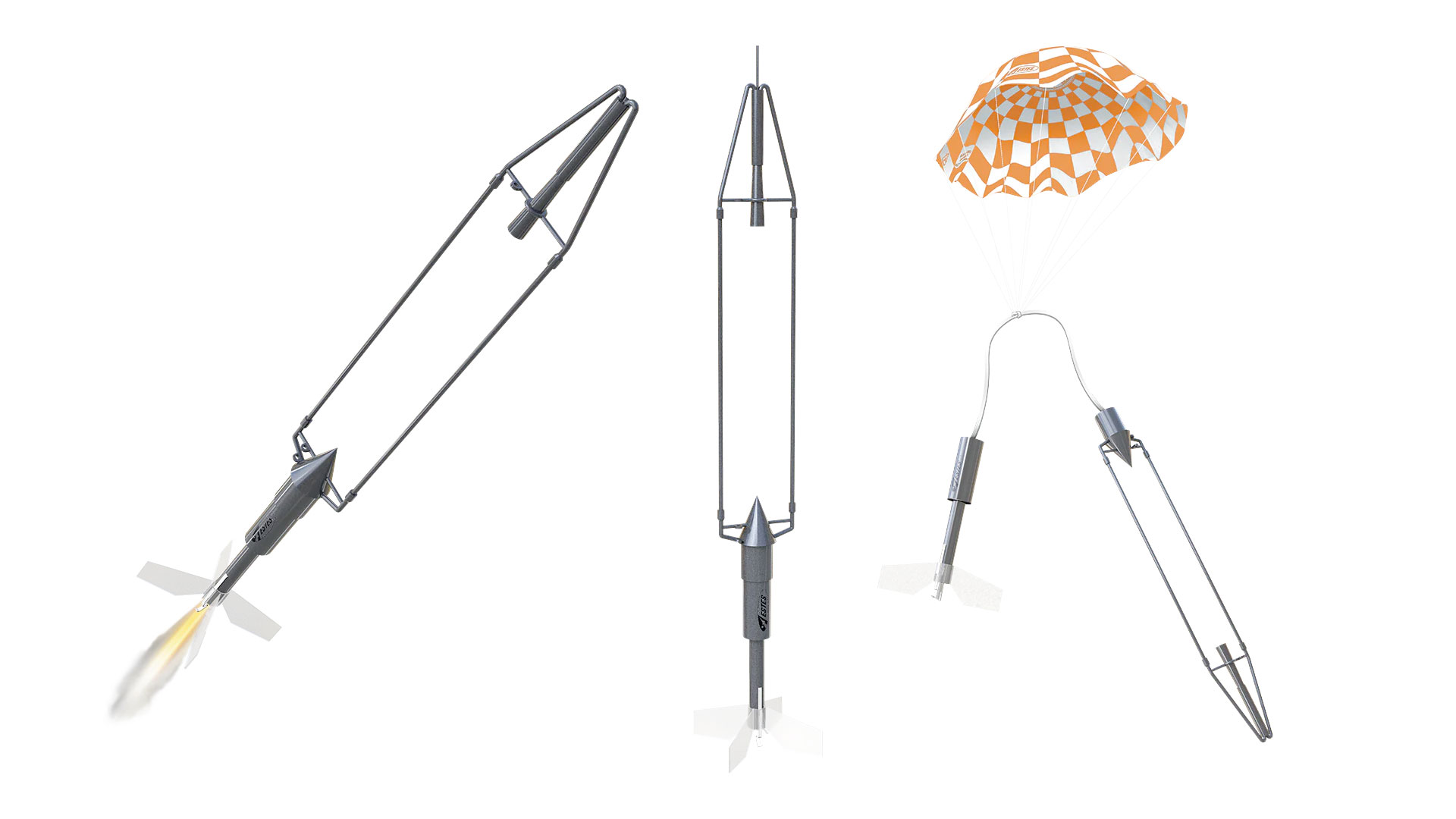
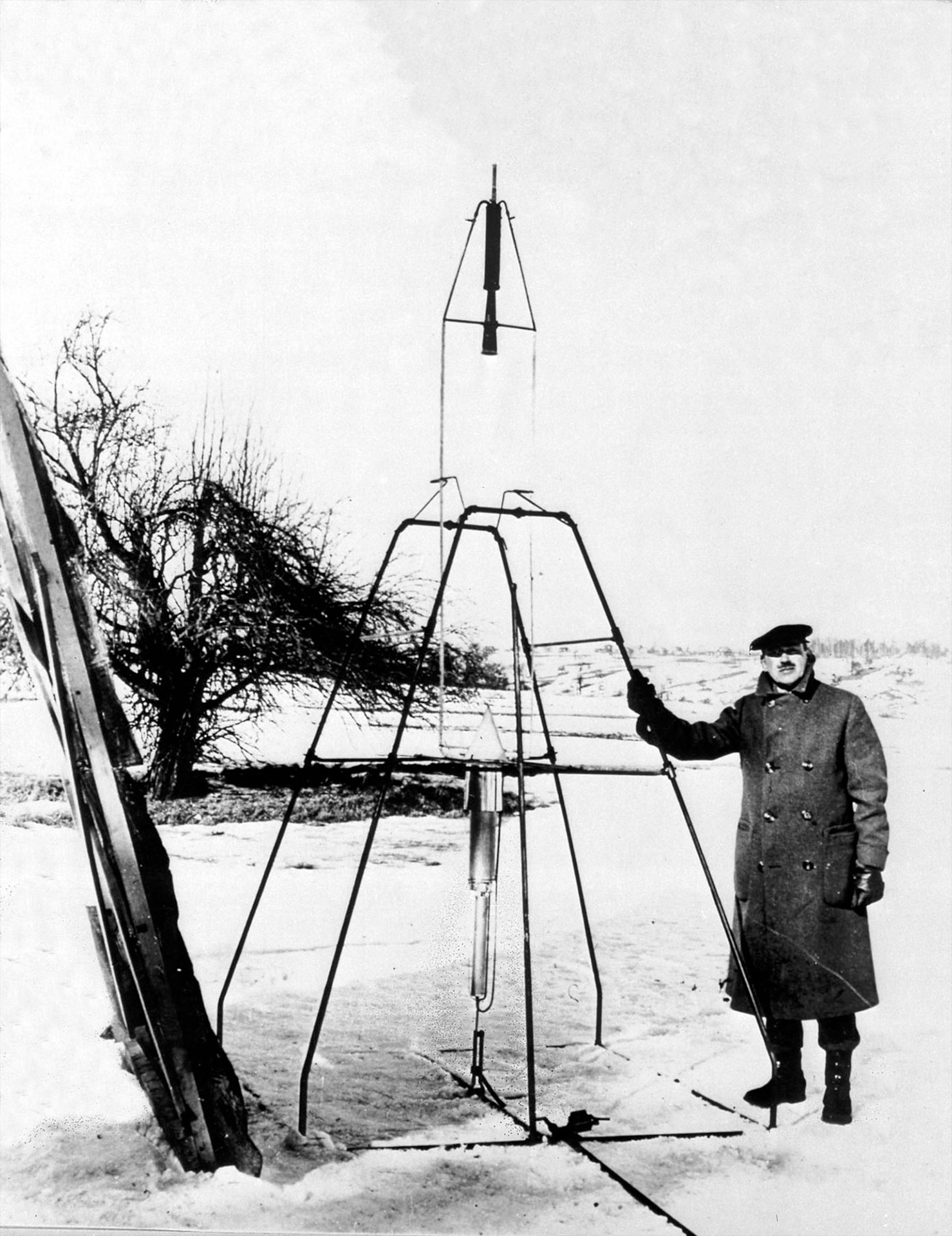
Estes' model of Goddard's first flown rocket only includes the parts that lifted off. The rocket (later nicknamed "Nell") is often depicted standing in its launch support frame (including in an iconic photo of the physicist and engineer holding his invention on the day it made history). The kit replicates the combustion chamber and nozzle at the rocket's top and nosecone-capped fuel tank at bottom.
To make it flight-worthy, though, Estes placed the solid fuel engine mount and additional fins for aerodynamic stability below the fuel tank. The replica also adds a recovery parachute that is jettisoned by splitting the tank into pieces.
"Building this rocket is more than putting parts together," reads the flying model rocket kit's description on Estes' website. "It is a hands on connection to curiosity, experimentation and the moment humanity first proved that reaching space was possible."
The new Robert Goddard Rocket is the latest addition to Estes' series of model kits and ready-to-fly desktop displays that span the past 100 years of rocket development. Other offerings include the Mercury-Redstone booster, the Saturn IB and Saturn V rockets, the space shuttle, Russia's Soyuz FG, SpaceX's Falcon 9, United Launch Alliance's Vulcan, Blue Origin's New Shepard and New Glenn and NASA's Space Launch System (SLS). |
|
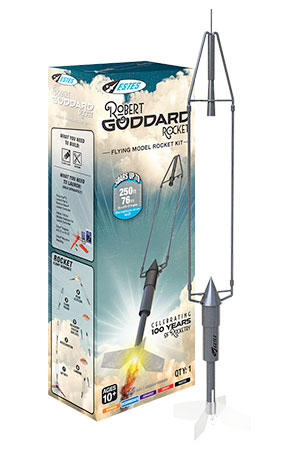
Estes Rockets' new Robert Goddard Rocket replicates the world's first liquid-fuel rocket as a 1:5 flying model kit. (Estes Rockets)
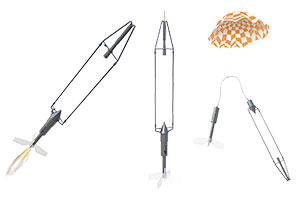
To make it flight-worthy, Estes had to alter the location of the engine and add fins and a parachute to the 1926 Goddard rocket. (Estes) |
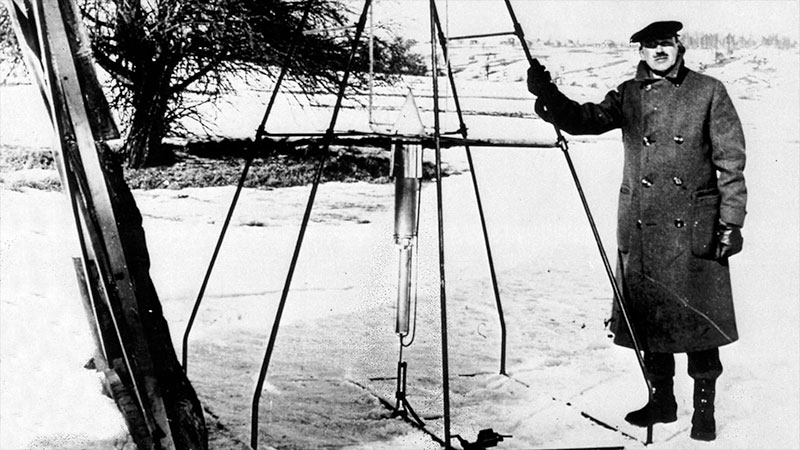
Robert Goddard and his invention, a liquid oxygen-gasoline rocket, at Auburn, Massachusetts on March 16, 1926. (Esther C. Goddard/NASA) |
|
When you purchase through links on our site, we may earn an affiliate commission. Here's how it works.

© collectSPACE. All rights reserved.
|
|
|
|