Hayabusa2 captures images of asteroid TorifuneThe Japan Aerospace Exploration Agency (JAXA) successfully conducted a flyby of asteroid Torifune, the first asteroid exploration of the Hayabusa2 Extended Mission. On 5 July at 18:35 JST, the Hayabusa2 spacecraft was confirmed from ground communications to be operating normally.
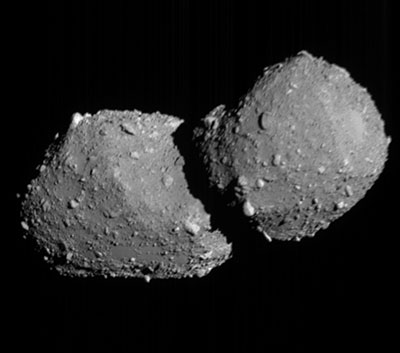
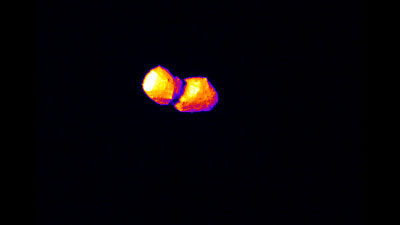
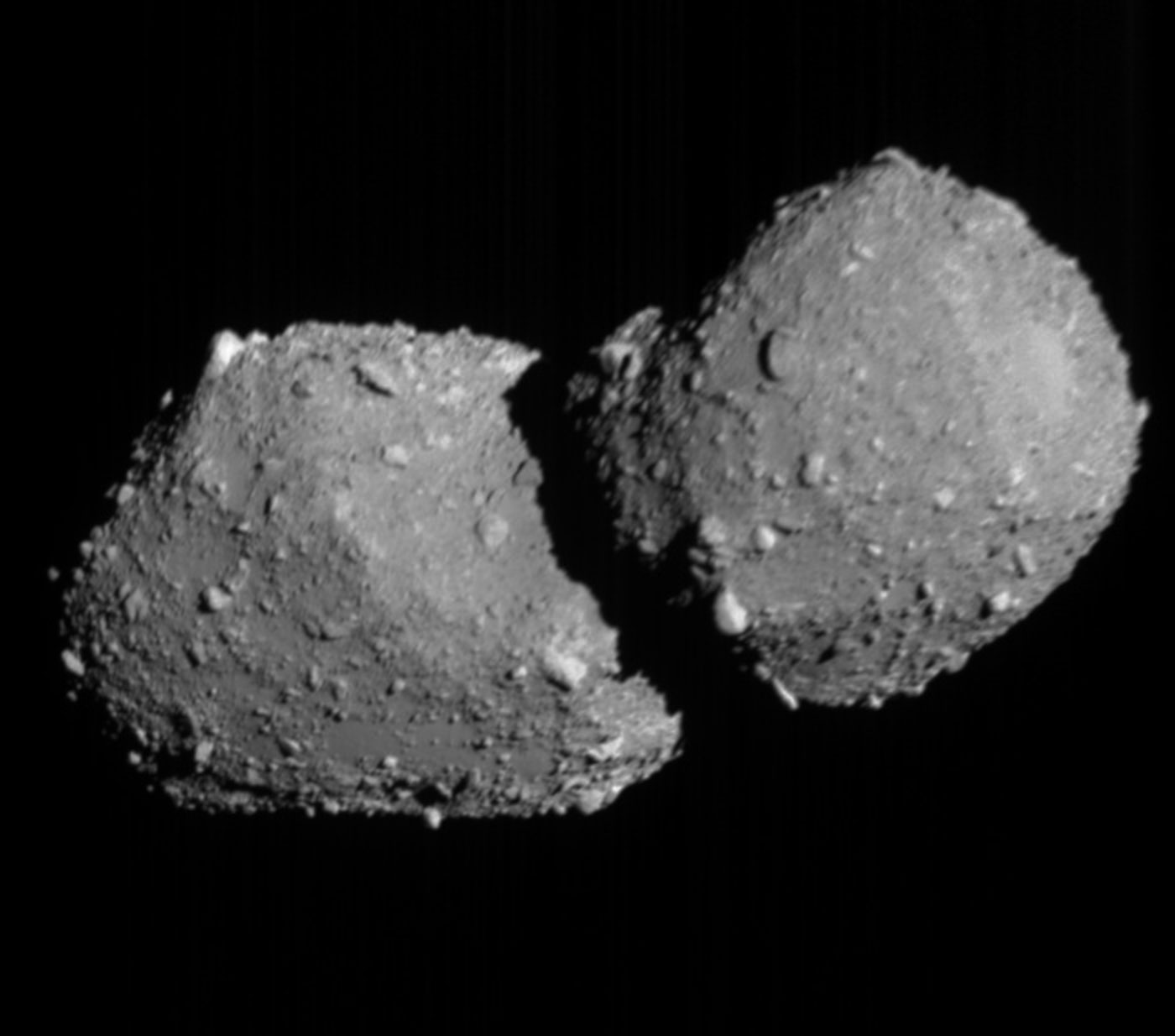
We are pleased to share the following images and scientific data that were successfully obtained of asteroid Torifune.
Asteroid Torifune imaged with the onboard Optical Navigation Camera –Telescopic (ONC-T)
Asteroid Torifune imaged with the onboard Thermal InfraRed Imager (TIR)
Flyby of Torifune
The asteroid explorer Hayabusa2 was launched in December 2014 onboard the H-IIA Launch Vehicle No. 26. The mission explored asteroid Ryugu, delivering samples from Ryugu to Earth on 6 December 2020. Since then, the spacecraft returned to deep space on an Extended Mission. On 5 July 2026 at 18:30 JST (error margin: ±1 second), Hayabusa2 successfully performed a flyby of Torifune, the asteroid selected as the first exploration target of the Extended Mission. (Time is a preliminary estimate.)
Observations with the onboard scientific instruments began in mid-June with the Optical Navigation Camera – Telescopic (ONC-T), which directly imaged Torifune on June 20. Observations with the ONC-T then continued with the primary purpose to support optical-radio hybrid navigation for the spacecraft during the approach to Torifune. From about one hour before the closest approach, observations were also conducted using the NIRS3 (Near-Infrared Spectrometer), TIR (Thermal InfraRed Imager), and LIDAR (Light Detection and Ranging) instruments. These observations continued until immediately before the closest approach to Torifune but could not be conducted after the spacecraft had passed the asteroid. At present, only part of the data acquired by the scientific instruments has been transmitted to Earth. The remaining data will be transmitted to the ground during future operations.







 posted 07-06-2026 12:37 PM




 advertisement