Firefly Aerospace Wins $75 Million NASA JPL MoonFall Subcontract to Deliver Drones to the Moon's South PoleFirefly's Elytra spacecraft will deliver four drones above the lunar south pole to support NASA's MoonFall mission and the agency's Moon Base initiatives
Firefly Aerospace, a market leading space and defense technology company, today (May 26) announced it was awarded a $75 million subcontract from NASA's Jet Propulsion Laboratory (JPL) to deliver four drones to the Moon's south pole in support of the agency's MoonFall mission, targeted to launch no earlier than 2028. MoonFall is part of the first phase of NASA's Moon Base, a long-term lunar exploration and infrastructure initiative designed to enable sustained human presence and expanded scientific and commercial activity at the lunar south pole.
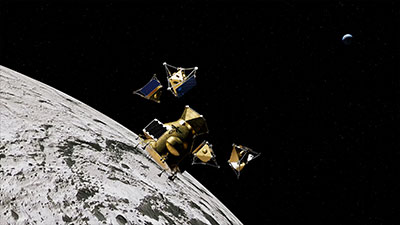
"NASA's MoonFall is an incredible breakthrough mission well aligned with the bold innovation and successful execution that Firefly is known for," said Jason Kim, CEO of Firefly Aerospace. "This subcontract underscores our commitment to executing challenging missions that push the boundaries of lunar exploration. Built upon the same proven systems that landed Blue Ghost on the Moon, our Elytra spacecraft are equipped to deploy critical high-mass payloads across cislunar space."
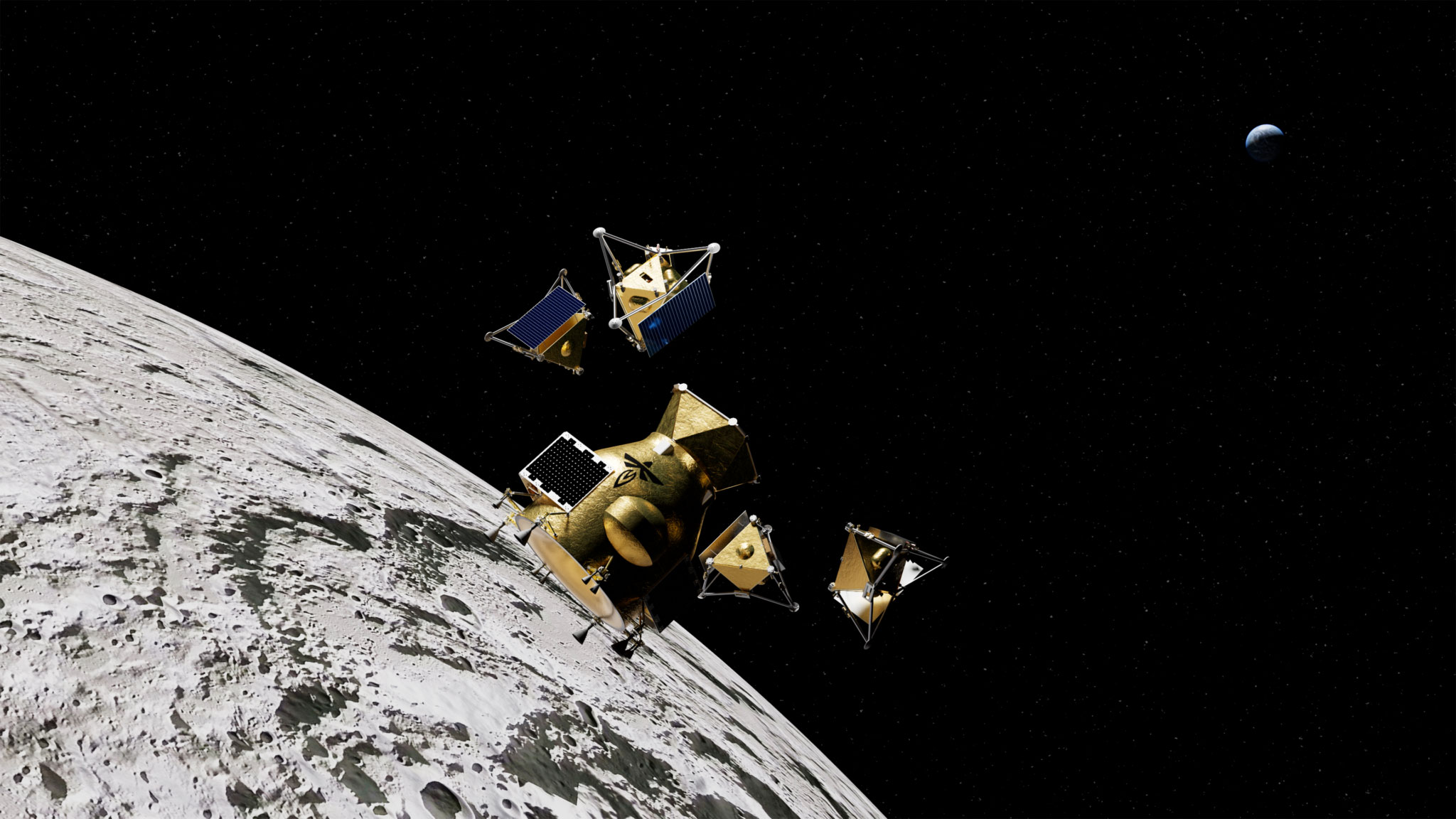
JPL is building the drones and managing the mission for NASA, which will source the launch vehicle for MoonFall. Upon launching, Firefly's Elytra spacecraft will carry the drones over a 45-day transit to the Moon and enter lunar orbit before deorbiting and performing a braking maneuver to deploy the drones approximately 50 km above the Moon's south pole.
The MoonFall drones will then land and operate over the course of a single lunar day (up to 14 Earth days) to survey the lunar south pole terrain, including permanently shadowed regions, with high-definition optical cameras and instruments. Based on the legacy of NASA's Ingenuity Mars Helicopter, the drones will be capable of multiple propulsive hops to explore hard-to-reach areas and map safe landing spots and resources, such as water ice, in support of future human missions under NASA's Artemis program. After each drone's final flight, its survive-the-night payload will continue to operate for several months, marking a sustained U.S. presence at the lunar south pole.
The MoonFall subcontract builds on Firefly's growing portfolio of spacecraft missions, including three additional missions to the Moon through NASA's Commercial Lunar Payload Services (CLPS) initiative. Firefly recently completed critical test milestones for Blue Ghost Mission 2 and is making significant progress on Blue Ghost Missions 3 and 4 as the company simultaneously expands its cleanroom to enable an assembly line of lunar landers and spacecraft.
"As NASA accelerates its Moon Base initiatives, Firefly is rapidly scaling spacecraft production to support these missions and subsequent Blue Ghost lunar landings," said Ray Allensworth, Vice President of Spacecraft at Firefly aerospace. "This is a transformational era for our industry, and we're excited to add this innovative mission to our growing manifest."
Firefly's Elytra spacecraft are built with proven systems from Blue Ghost Mission 1, including the core avionics, carbon composite structures, and Spectre engines that enabled the first successful commercial Moon landing. With high delta-V and added payload capacity, the Elytra Dark configuration for the MoonFall mission is equipped to deliver 1,000 kg of drones.






 posted 05-26-2026 03:43 PM



 advertisement