Tianwen-2 successfully launched: China begins asteroid exploration and sample return missionAt 1:31 a.m. Beijing Time on May 29 [1:31 p.m. EDT on May 28], China successfully launched the planetary exploration project Tianwen-2 into space using the Long March 3B Y110 carrier rocket at the Xichang Satellite Launch Center. After about 18 minutes of flight, the rocket sent the probe into the transfer orbit around Earth to the asteroid 2016HO3. After that, the probe's solar panels unfolded normally, and the launch mission was a complete success.

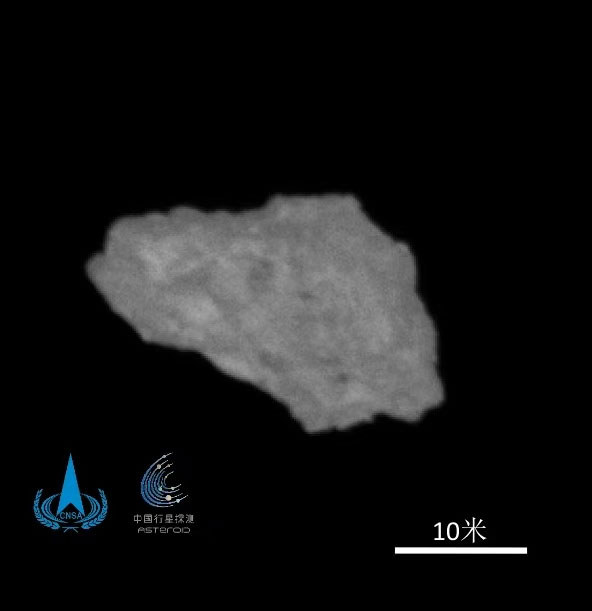
The main mission goal of Tianwen-2 is to detect and sample asteroid 2016HO3, return to Earth and then conduct scientific exploration of the main belt comet 311P. Asteroid 2016HO3 is one of the quasi-satellites of Earth discovered by humans.
The engineering goals of the Tianwen-2 mission are to break through a series of key technologies, such as surface sampling of weak gravity celestial bodies, high-precision relatively autonomous navigation and control, and low-thrust transfer orbit design, and to provide detection data and precious samples for cutting-edge scientific research such as the origin and evolution of asteroids.
The scientific goals are focused on determining a number of physical parameters of asteroids and main-belt comets. First, to determine the orbital parameters, rotation parameters, shape and size, thermal radiation characteristics and other physical parameters of asteroids and main-belt comets, and conduct orbital dynamics research; second, to conduct research on the morphology, material composition, internal structure and possible ejecta of asteroids and main-belt comets; third, to conduct laboratory analysis of samples, determine the physical properties, chemical and mineral composition, isotopic composition and structural structure of samples, and conduct research on the formation and evolution of asteroids and the early solar system.
The successful launch mission is only the "first step" of the long exploration process of the Tianwen-2 mission. The Tianwen-2 mission is technically difficult and has high engineering risks. It includes 13 flight phases, including the launch phase, asteroid transfer phase, asteroid approach phase, asteroid rendezvous phase, asteroid close-range exploration phase, asteroid sampling phase, return waiting phase, return transfer phase, reentry recovery phase, main-belt comet transfer phase, main-belt comet approach phase, main-belt comet rendezvous phase, and main-belt comet close-range exploration phase.
Among them, asteroid exploration and sampling return include 9 phases. After the launch phase is successfully completed, the probe enters the asteroid transfer phase. This phase will last for about one year, during which deep space maneuvers and mid-course corrections will be required until it is about 30,000 kilometers away from the asteroid. It will then enter the asteroid approach phase, rendezvous phase, and close-range exploration phase in turn.
In the close-range exploration phase, according to the principle of "flying and exploring, gradually approaching," hovering and active flyby will be carried out on the asteroid, and the sampling phase will be entered after the sampling area is determined. After completing the sampling mission, the probe will go through the return waiting phase and the return transfer phase. During the return transfer phase, it will approach the Earth, and the return capsule will separate from the main probe. It will then enter the reentry recovery phase alone, and is expected to land on Earth and complete recovery at the end of 2027. After that, the main probe will continue to fly to the main belt comet 311P to carry out subsequent exploration missions.

The probe is equipped with a total of 11 scientific equipment, including a medium field color camera, a multispectral camera, a visible infrared imaging spectrometer, a thermal radiation spectrometer, a detection radar, a magnetometer, a charged particle and neutral particle analyzer, an ejecta analyzer, a narrow field navigation sensor, a laser integrated navigation sensor, and a rotating diffraction hyperspectral camera. These advanced equipment will help the probe detect asteroids and main belt comets during flight and obtain scientific data.
Shan Zhongde, chief commander of the Tianwen-2 mission command of the planetary exploration project and director of the National Space Administration, said that the National Space Administration has thoroughly implemented General Secretary Xi Jinping's important expositions and important instructions on the construction of a space power, led the implementation of the Tianwen-2 mission, promoted the interstellar exploration journey, and took a new step in deep space exploration. The mission implementation cycle is long, the risks and difficulties are high, and the project has overcome difficulties and coordinated efforts to ensure the successful launch mission. We look forward to Tianwen-2 completing various exploration tasks as planned, achieving more original scientific results, revealing more mysteries of the universe, and enhancing human cognition.
The Tianwen-2 mission consists of five major systems: overall engineering and probes, launch vehicles, launch and recovery, measurement and control, and ground applications. The Lunar Exploration and Space Engineering Center of the National Space Administration is responsible for the overall engineering work and the overall design and implementation management of the mission; the Space Technology Research Institute of China Aerospace Science and Technology Corporation is responsible for the development of the probe system; the Launch Vehicle Technology Research Institute of China Aerospace Science and Technology Corporation is responsible for the development of the launch vehicle system; the National Astronomical Observatory of the Chinese Academy of Sciences is responsible for the ground application system.
This mission is the 578th launch of the Long March series of carrier rockets. The Long March 3B carrier rocket that carried out the launch mission is my country's main rocket for high-orbit launches and the rocket with the most launches in my country's aerospace industry. It has completed 108 launches before and has carried out lunar exploration missions such as Chang'e 3 and Chang'e 4. In order to ensure that the "Long March 3B rocket is reliable, accurate, and on time" and to run the "first leg" of the Tianwen-2 mission well, the designers completed multiple rounds of design iterations in two years, while meeting the constraints of all parties and achieving a perfect "handover" between the rocket and the probe. (Li Yi, Cai Jinman, Zhang Wei)







 posted 05-29-2025 07:48 AM



 advertisement