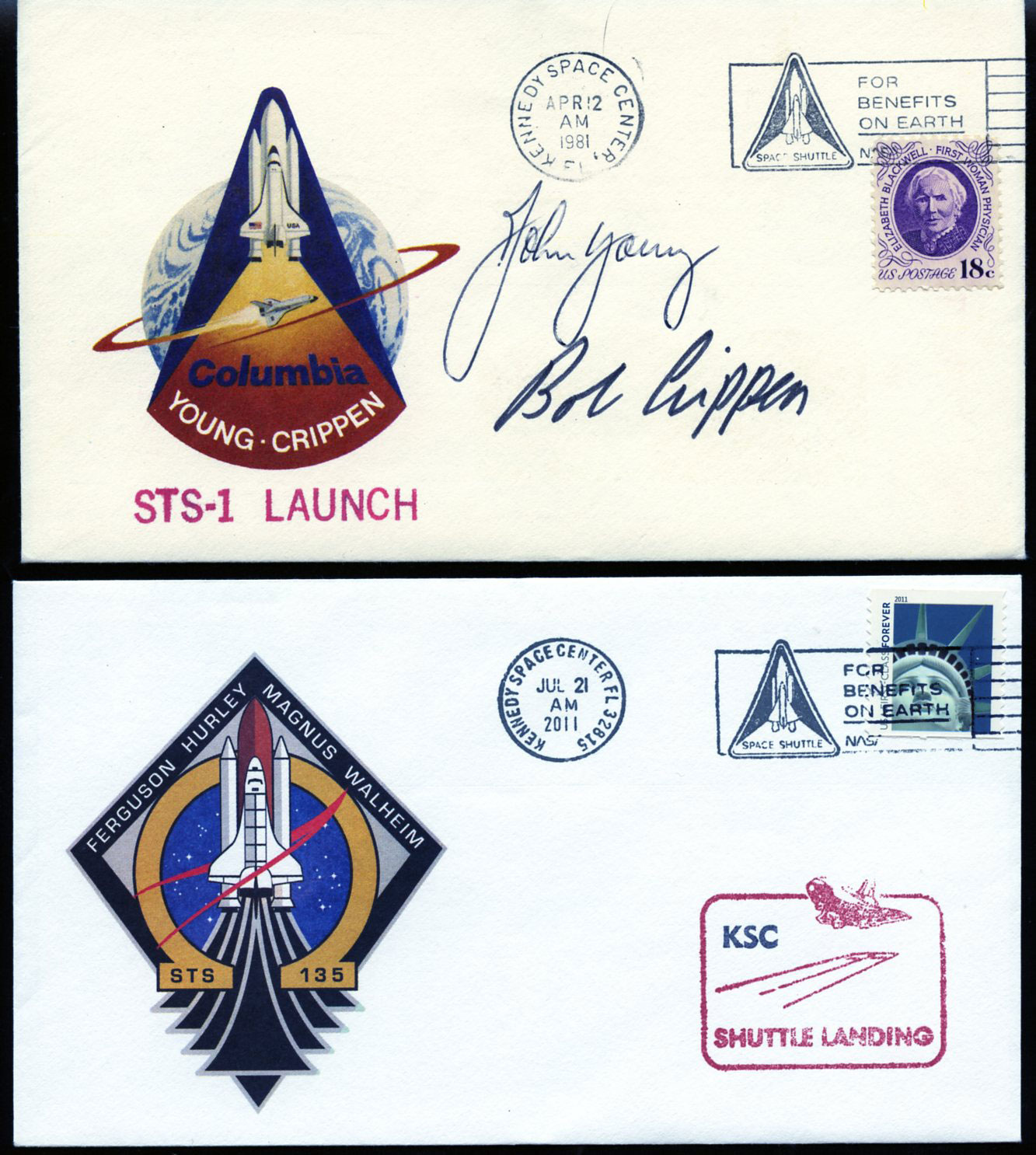
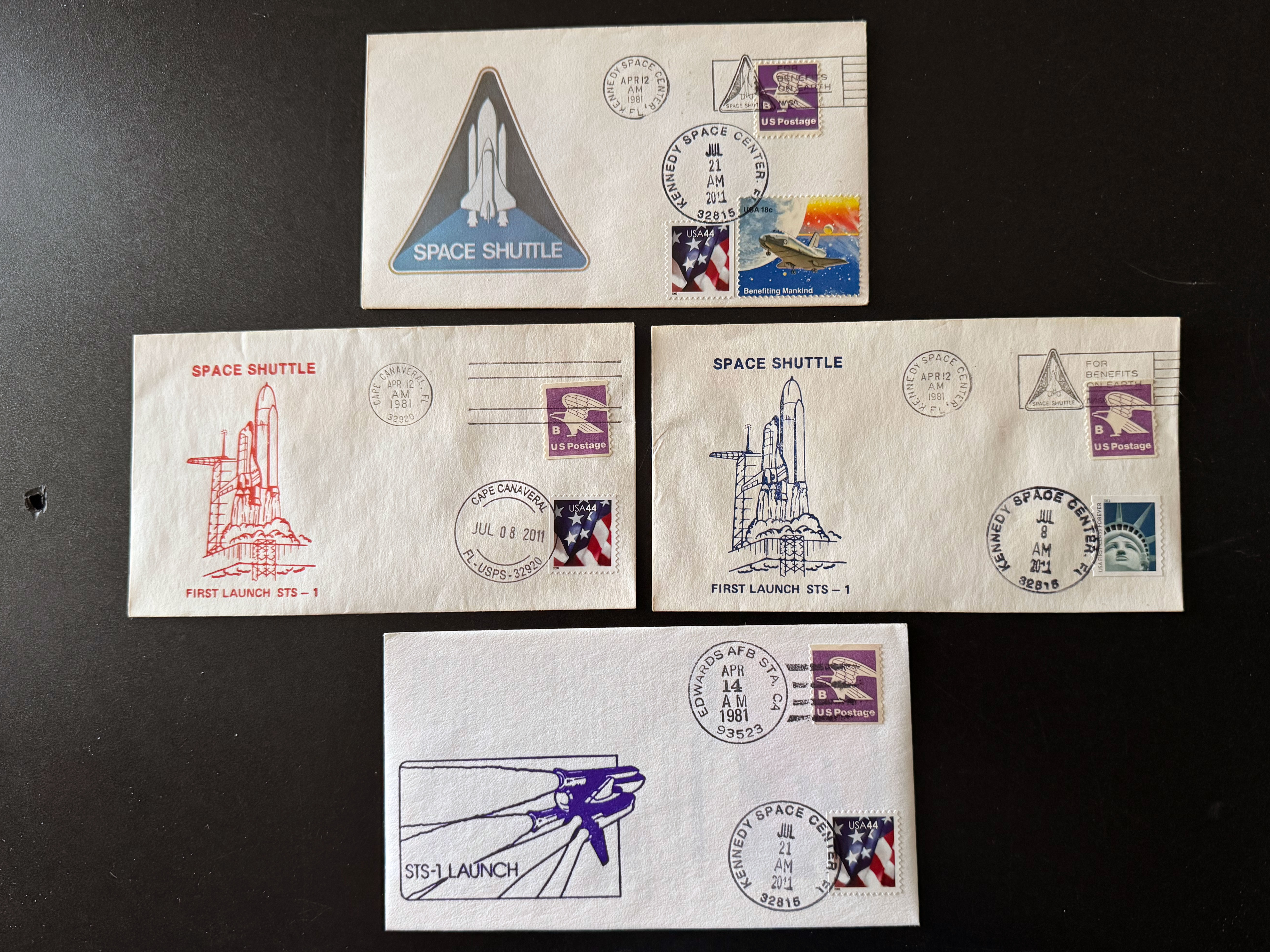
Space Cover 871: Shuttle — First launch to final landingSTS-1 Launch: Kennedy Space Center commentator Hugh Harris: "We have main engine start and we have liftoff!"
STS-135 Landing: Atlantis commander Chris Ferguson: "...STS-135 mission complete...the shuttle has earned its place in history. It's come to a final stop."
The space shuttle flights began in 1981 with STS-1 and the launch of space shuttle Columbia, and ended 30 years later in 2011 with STS-135 and the landing of Atlantis at Kennedy Space Center.
From April 12, 1981 and the liftoff of space shuttle Columbia on STS-1, to July 21, 2011 and the landing of space shuttle Atlantis on STS-135, in total, the five space shuttle orbiters spent 1,323 days in space, orbited the earth 21,152 times and traveled over 542 million miles.
During their 135 flights, the shuttles deployed 180 satellites, payloads, and space station components. They docked at the International Space Station 37 times and nine times at the Russian space station Mir. The orbiters launched 833 crew members on 135 missions and flew 355 individual astronauts and cosmonauts, which included 49 women.
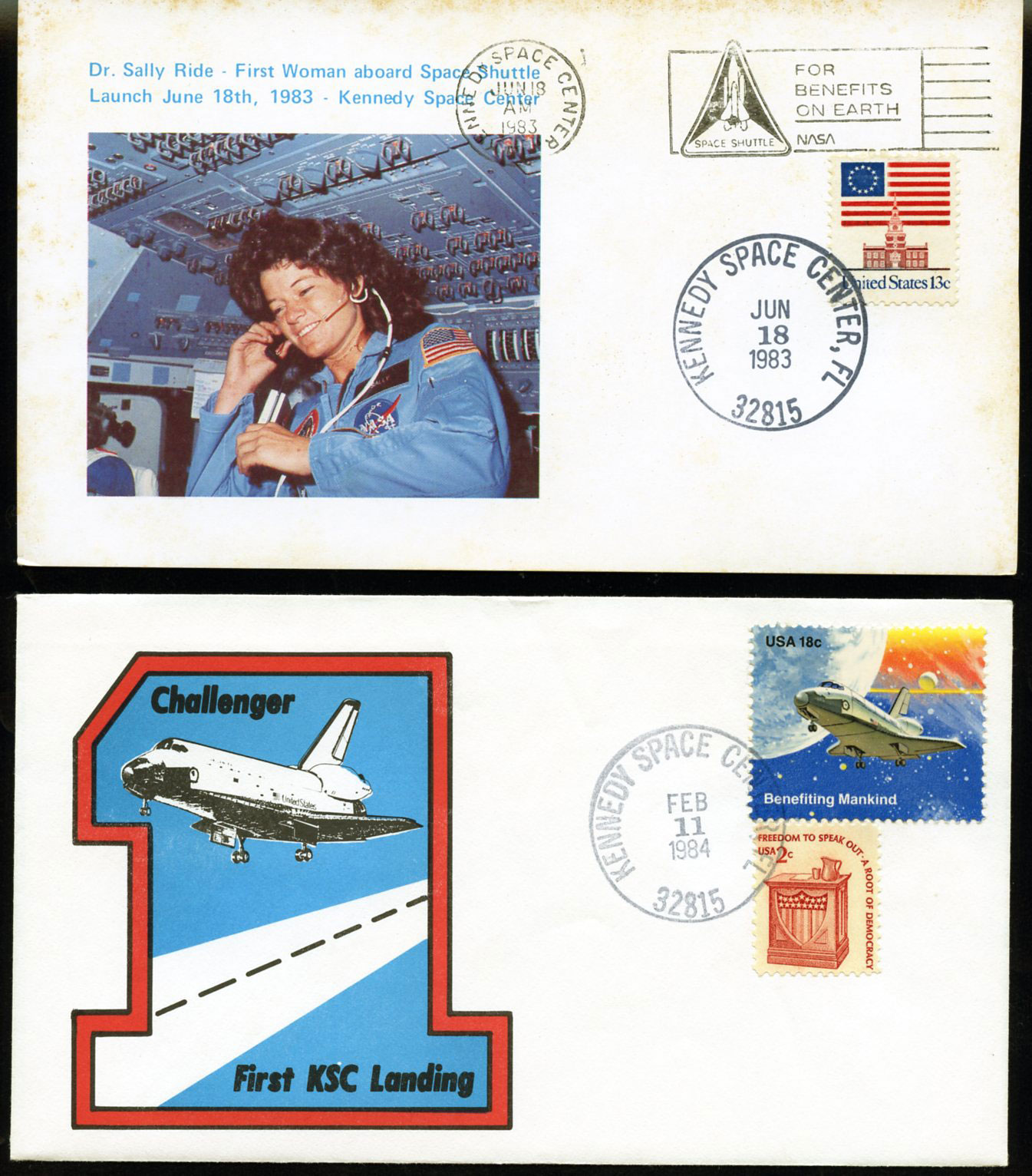
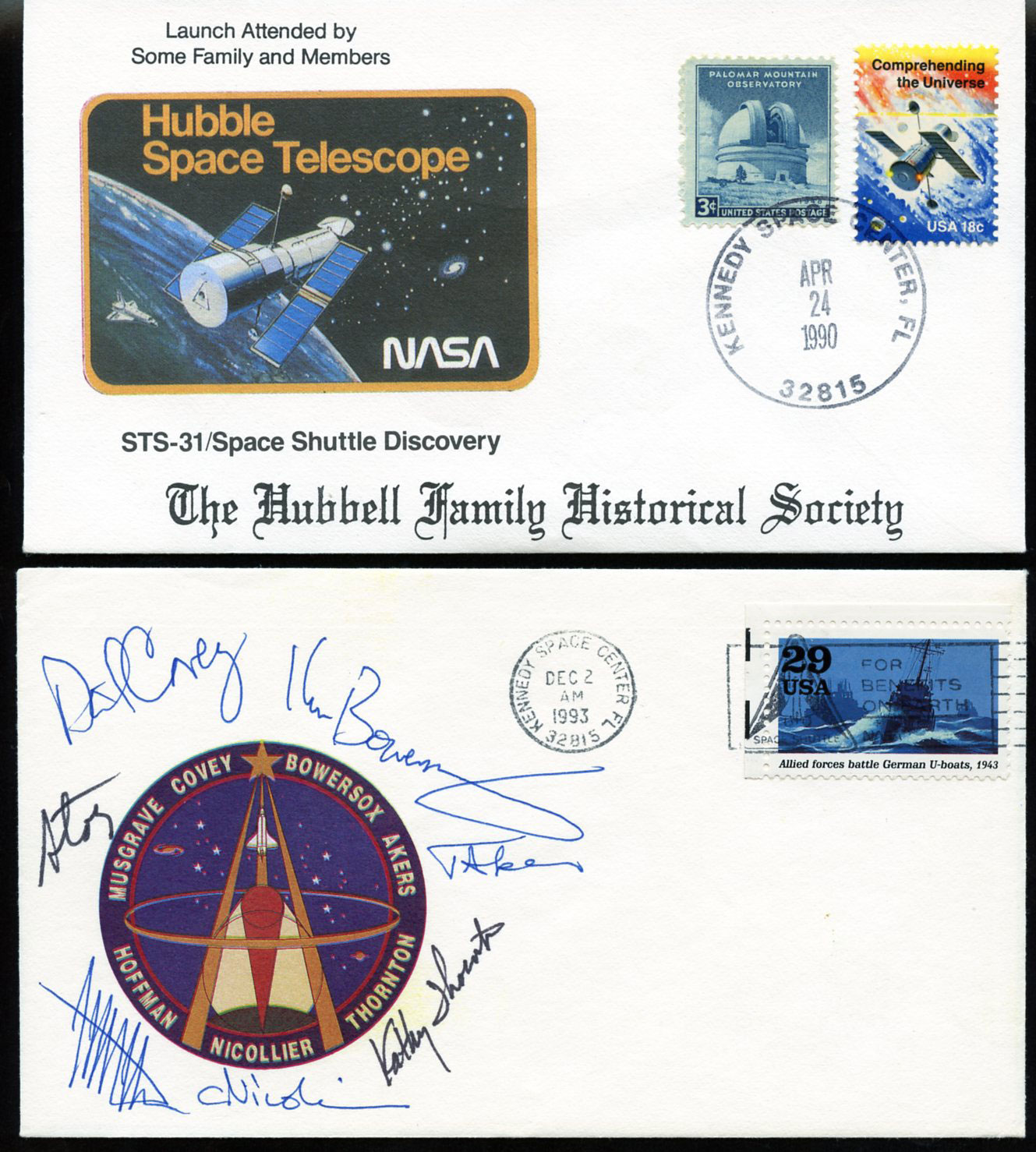
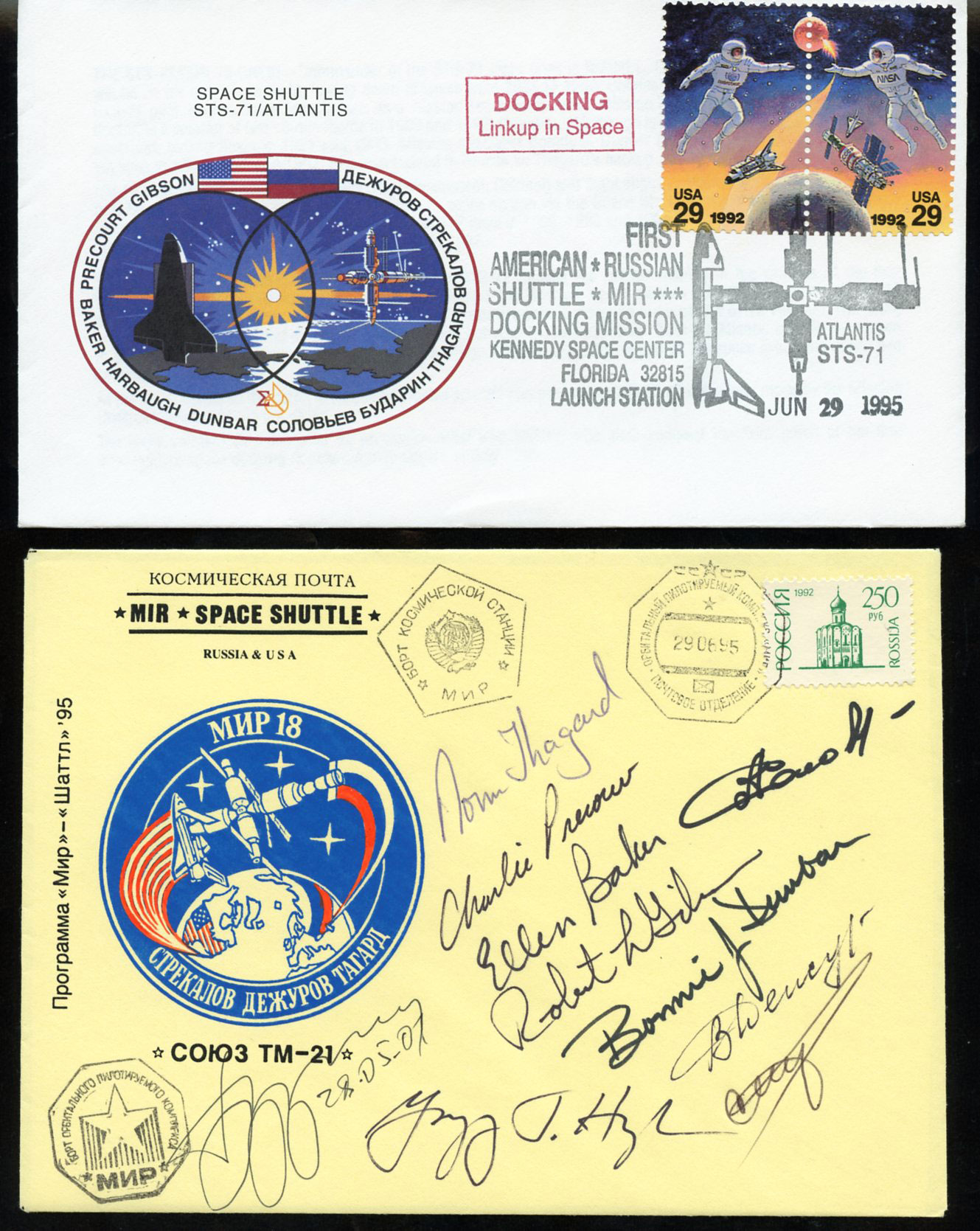
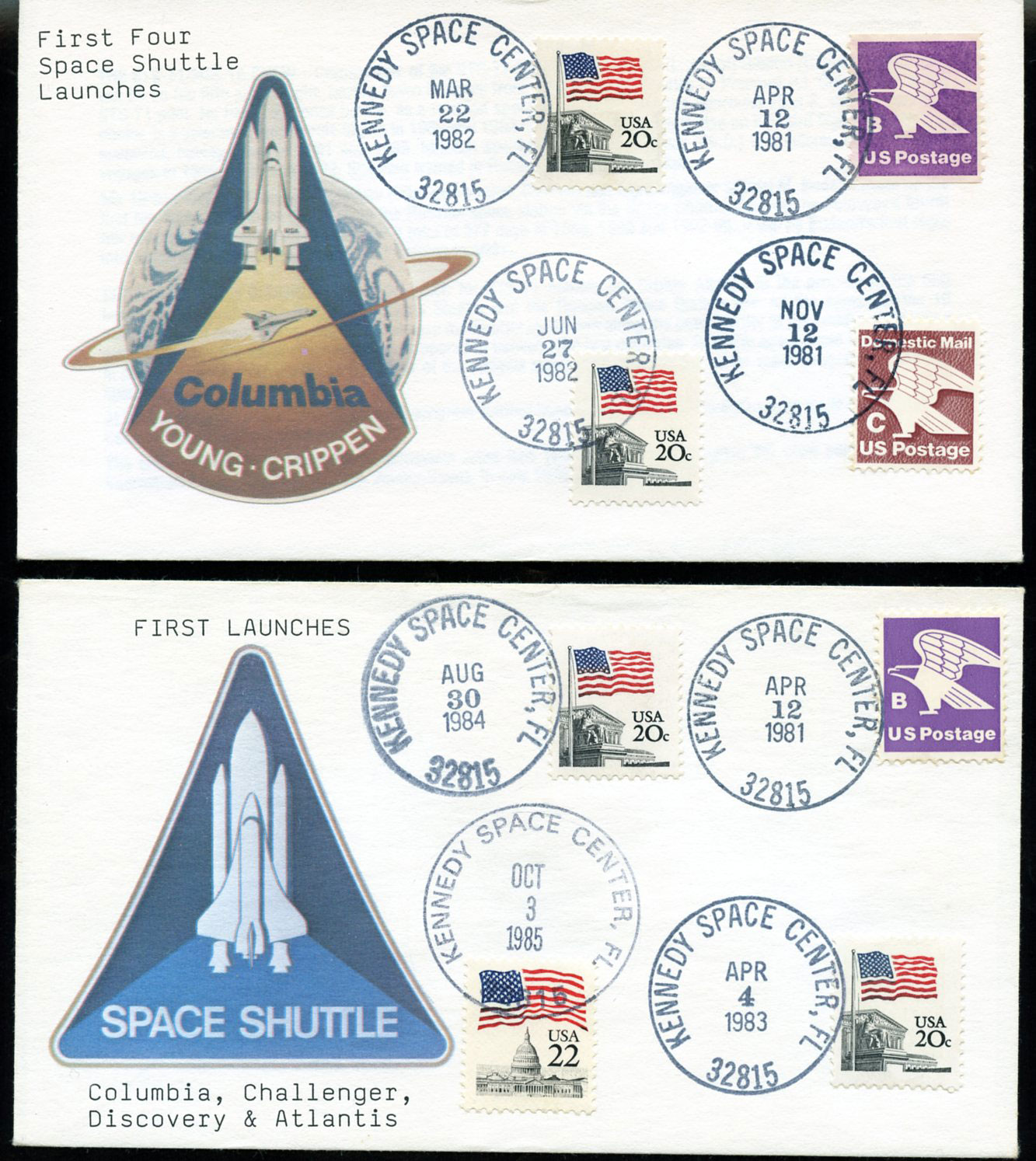
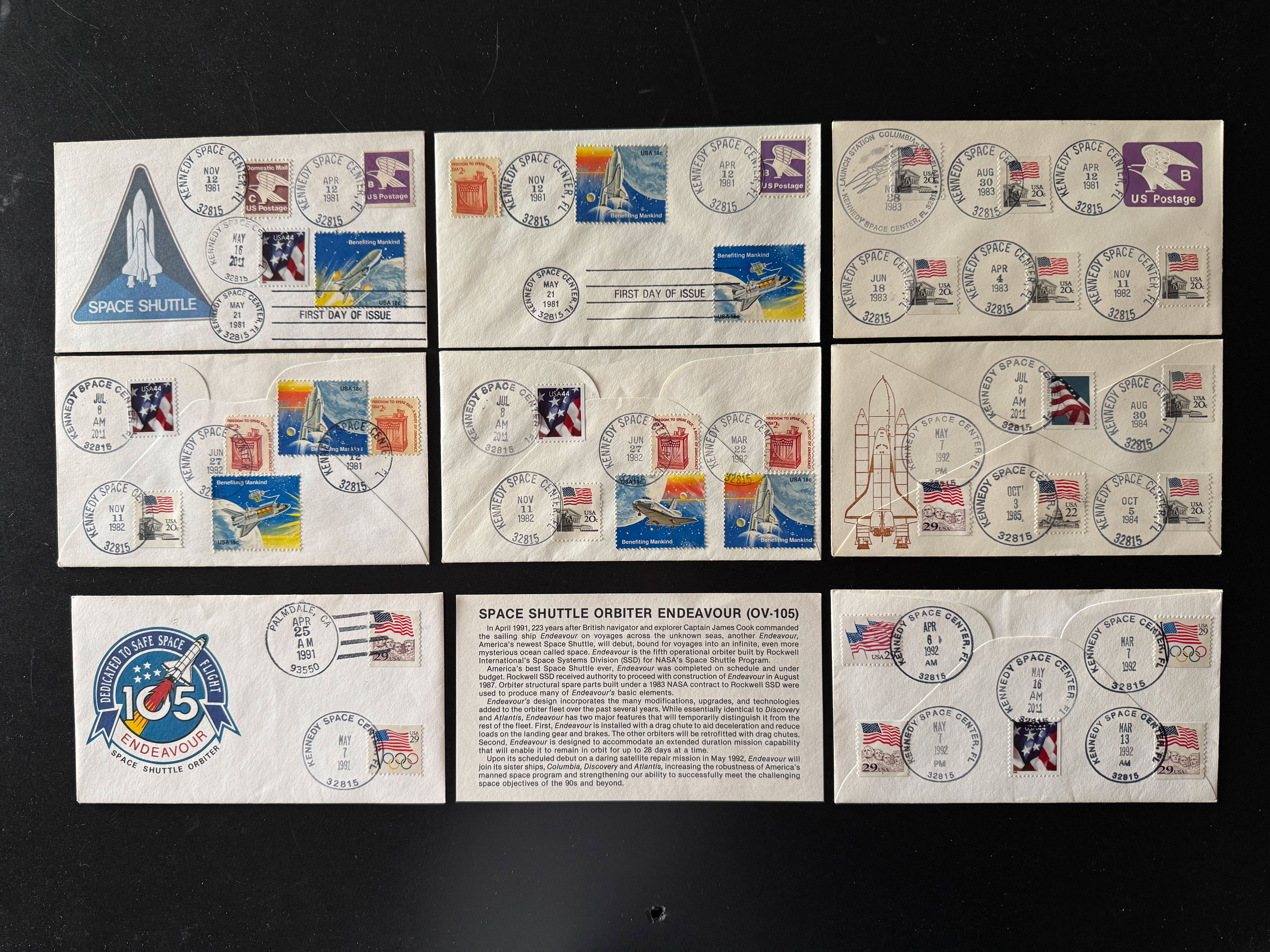
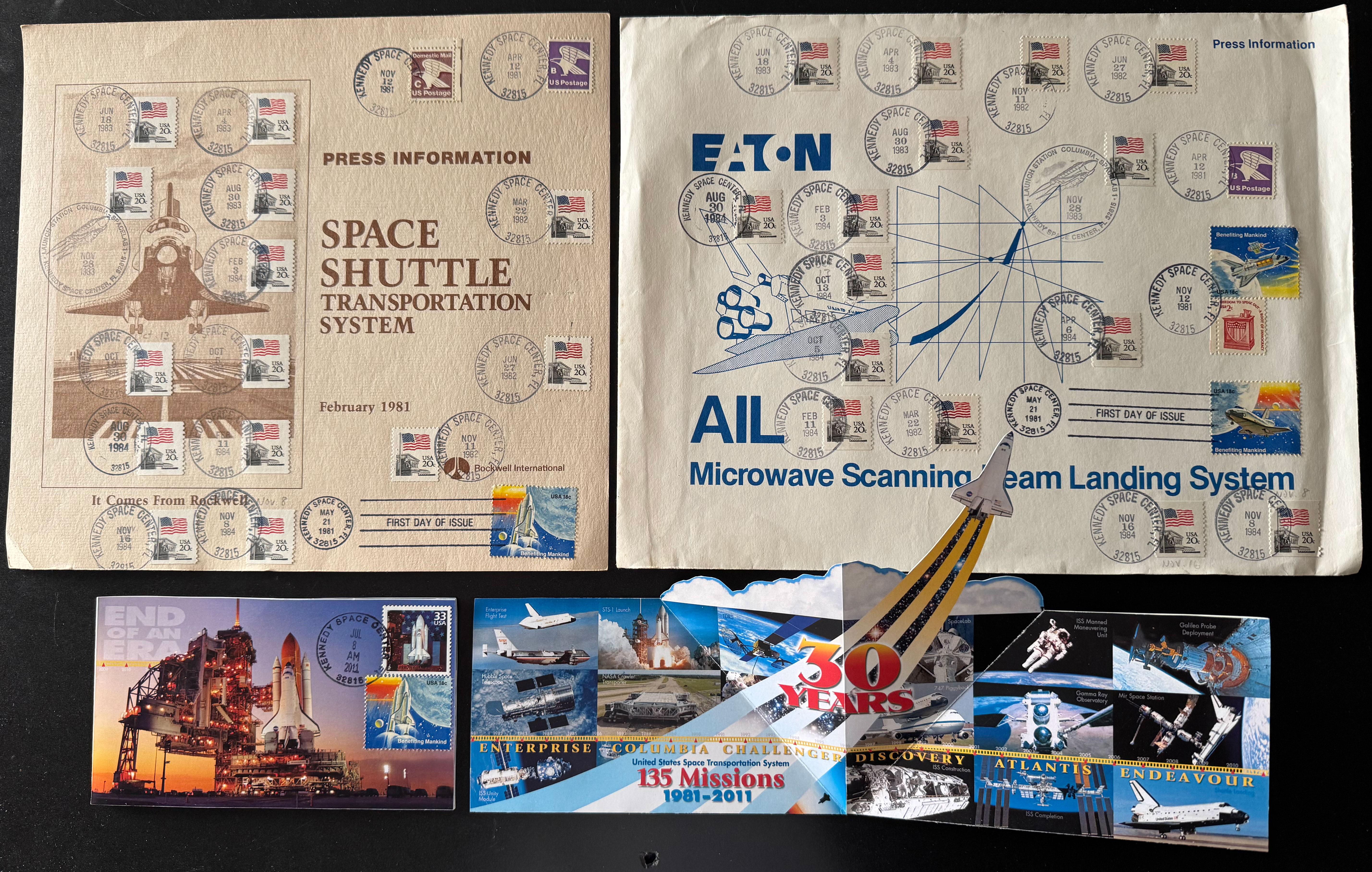
Above and below, are covers for ten of the most significant flights during the shuttle's 30 year history.
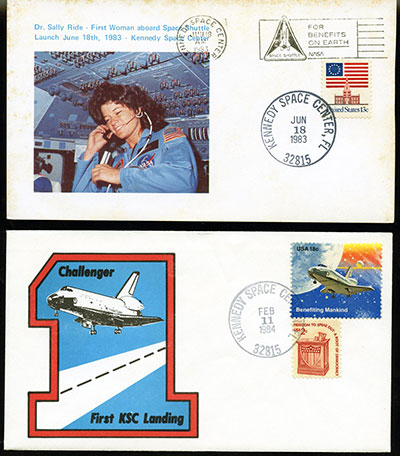
STS-7: Sally Ride becomes the first American women in space
STS-41B: Space shuttle Challenger makes the first Shuttle landing at Kennedy Space Center and was the first manned spacecraft to land at its launch site.
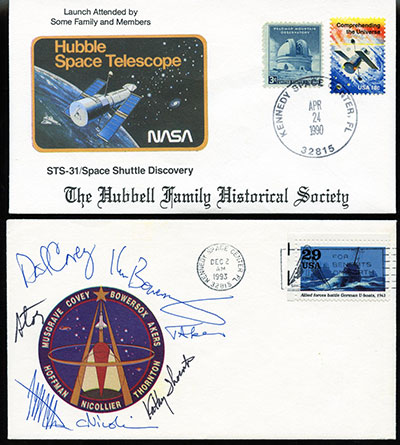
STS-31: Space Shuttle Discovery deploys the Hubble Space Telescope.
STS-61: the Hubble Space Telescope has its flawed optics corrected during five spacewalks, with the cover autographed by the crew.
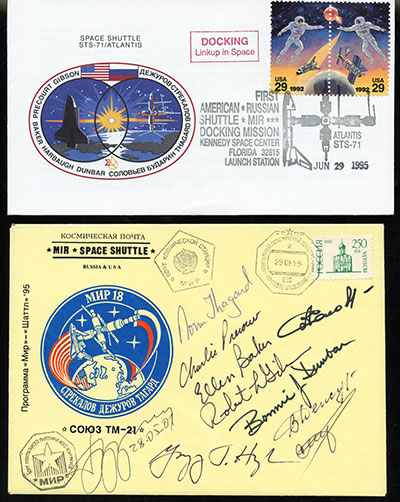
STS-71: Discovery accomplished the first shuttle docking with the Russian space station Mir. A crew transfer involved two American astronauts being transferred to Mir, while two Russian cosmonauts from Mir were returned to earth on Discovery. STS-71 was the 100th US manned spaceflight.
This cover was flown to Mir on a Soyuz spacecraft, spent months on Mir and was returned to Earth on Discovery. The cover was signed by all ten crew members while on board Mir.
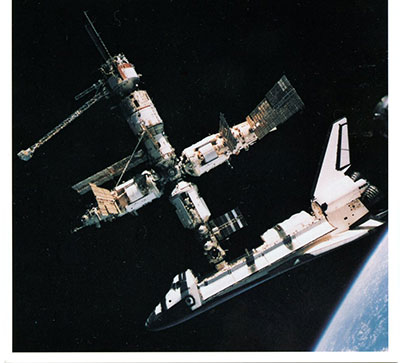
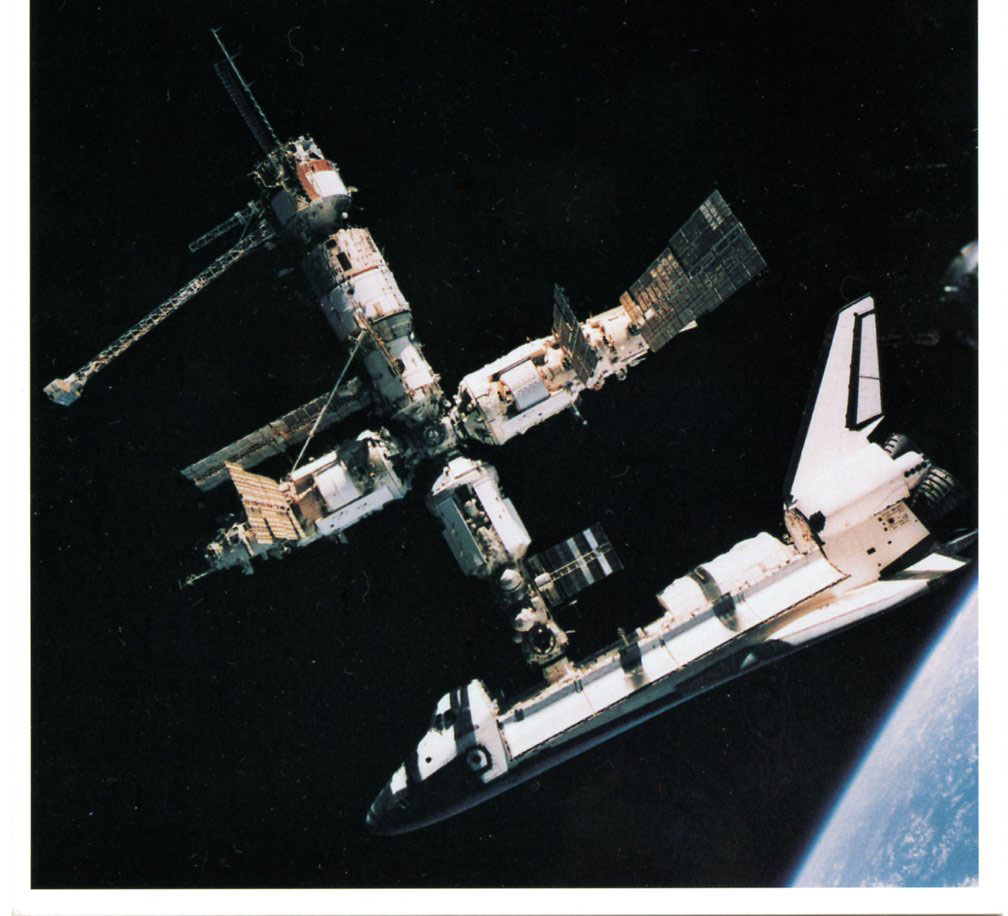
This photo taken from a Soyuz capsule, shows Discovery docked with Mir during the STS-71 flight.
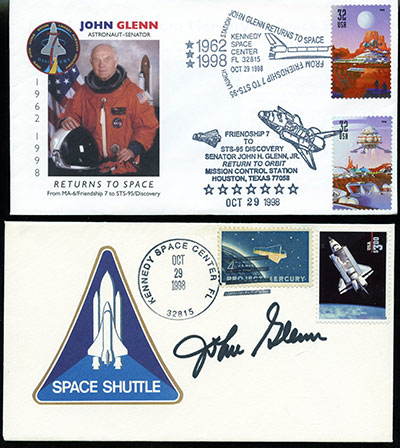
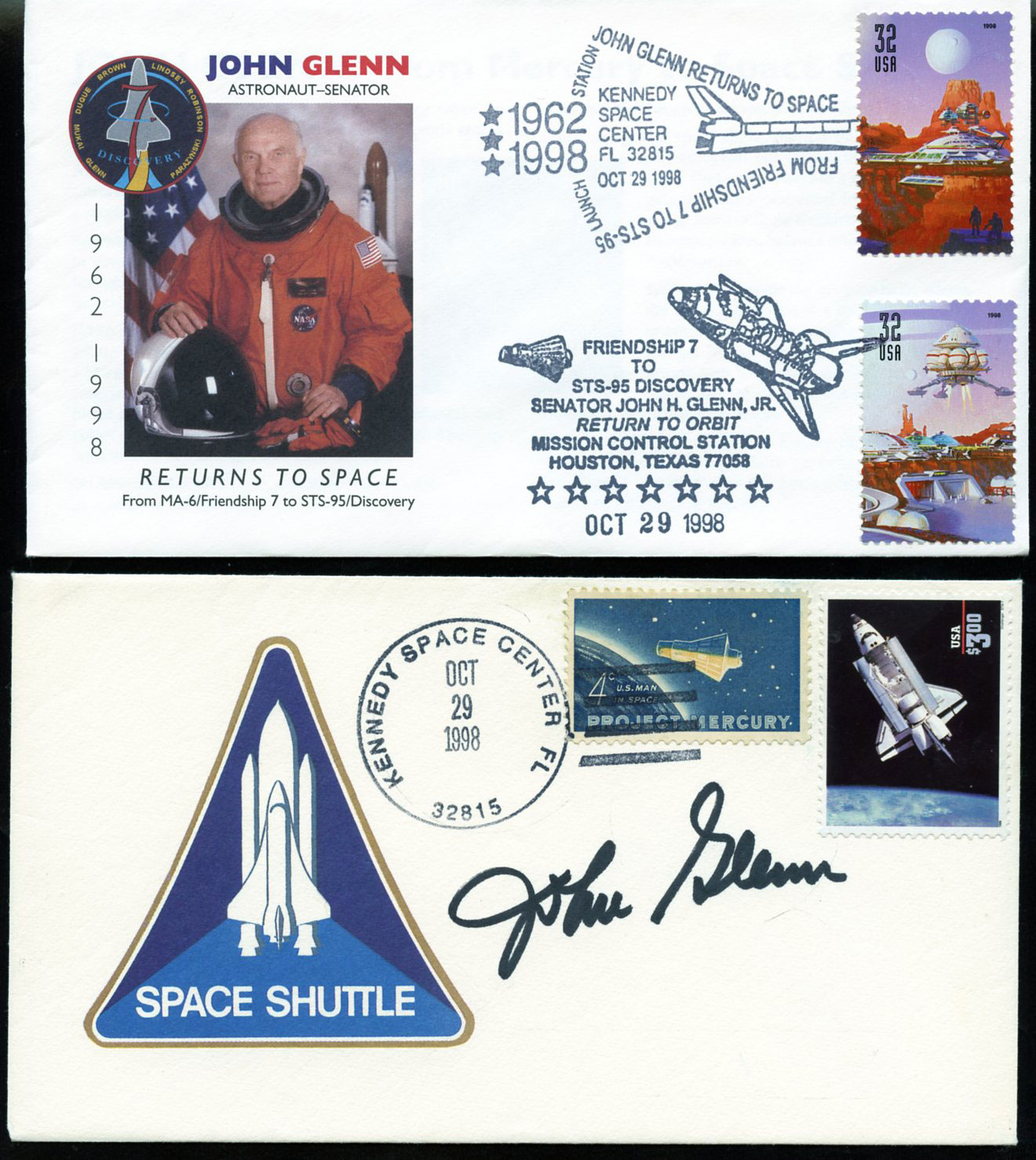
John Glenn became the first American to orbit Earth in 1962, then in 1998, became the oldest person at that time to fly in space on STS-95. This STS-95 launch cover, signed by Mercury and Shuttle astronaut John Glenn, appropriately has both a Mercury and shuttle stamp affixed.
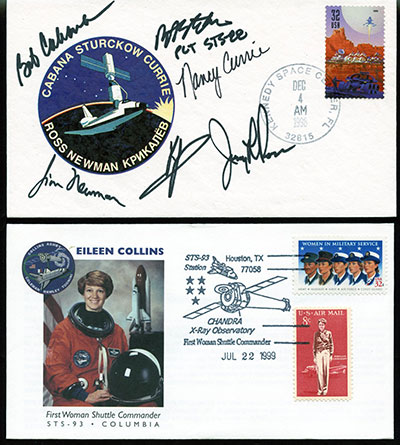
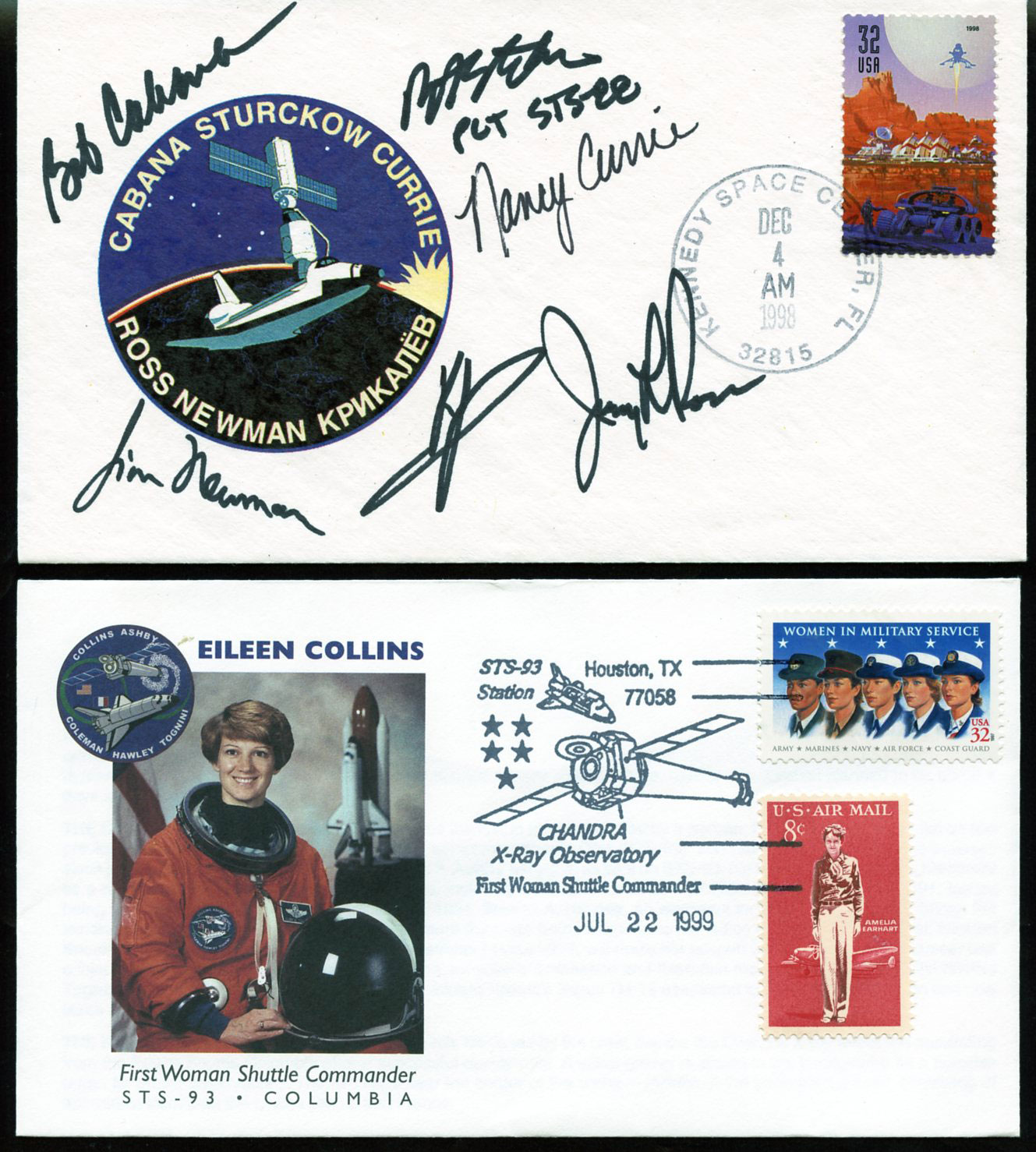
The assembly of the International Space Station began with the Unity connecting module being attached to the Russian Zarya control module during the STS-88 mission. This STS-88 cover is autographed by the crew.
On STS-93, Eileen Collins became the first woman shuttle commander. During the flight, shuttle orbiter Columbia deployed the Chandra X-Ray Observatory telescope.
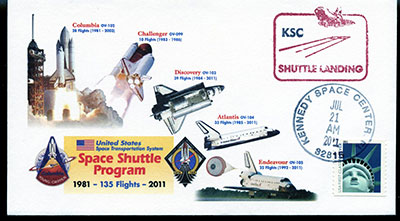
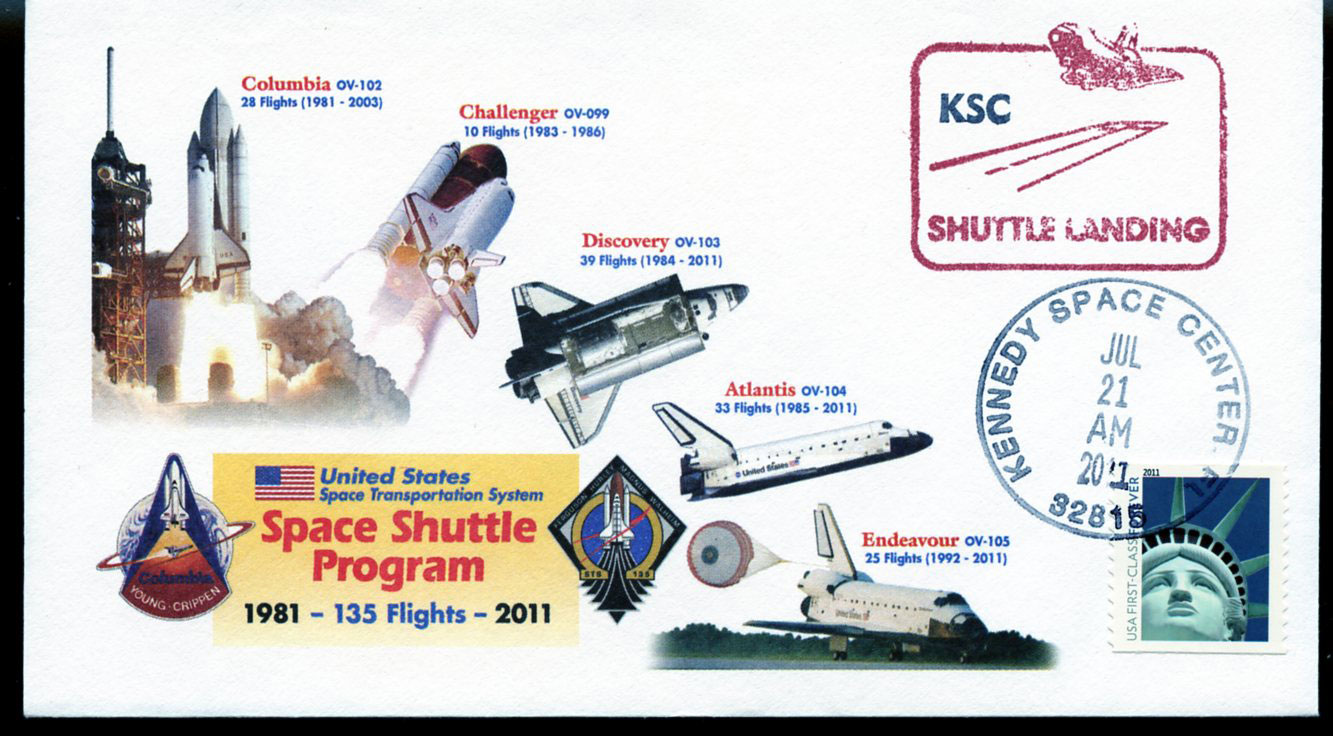
After 134 previous flights, shuttle orbiter Atlantis, completing its 33rd flight, landed at Kennedy Space Center at the conclusion of the shuttle program's final flight. The four remaining orbiters, Enterprise (who carried out approach and landing tests at Edwards Air Force Base, California), Discovery, Endeavour and Atlantis, now are proud exhibits at museums in the U.S.
This STS-135 landing cover's impressive cachet pictures each shuttle orbiter with the number of flights and time of service of each, and illustrates a typical flight sequence from launch to landing. This cover, along with most of the non-autographed covers above, were acquired from Ken Havekotte's Space Coast Cover Service.
Certainly there were many more significant shuttle flights than just these ten highlighted here. Unfortunately, the 135 flights also included two tragic flights that we all know too well.







 posted 08-30-2026 08:29 AM



 advertisement