advertisements
|

|
First Pakistani in space is first foreign member on a Chinese mission
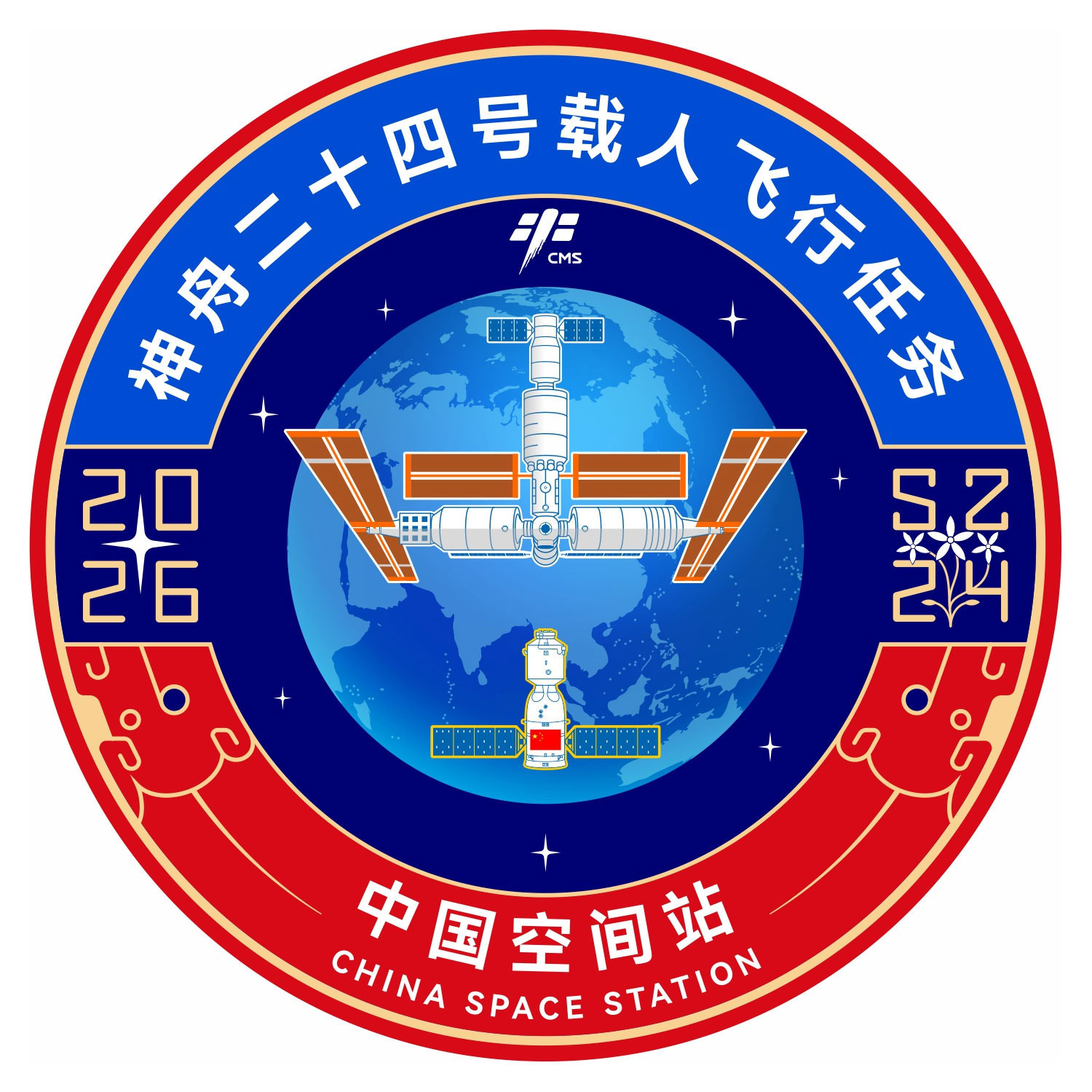
November 24, 2026 — In a subtle nod to the history it represents, the crew patch for China's newly-launched Shenzhou-24 mission includes three white Chameli — the national flower of Pakistan.
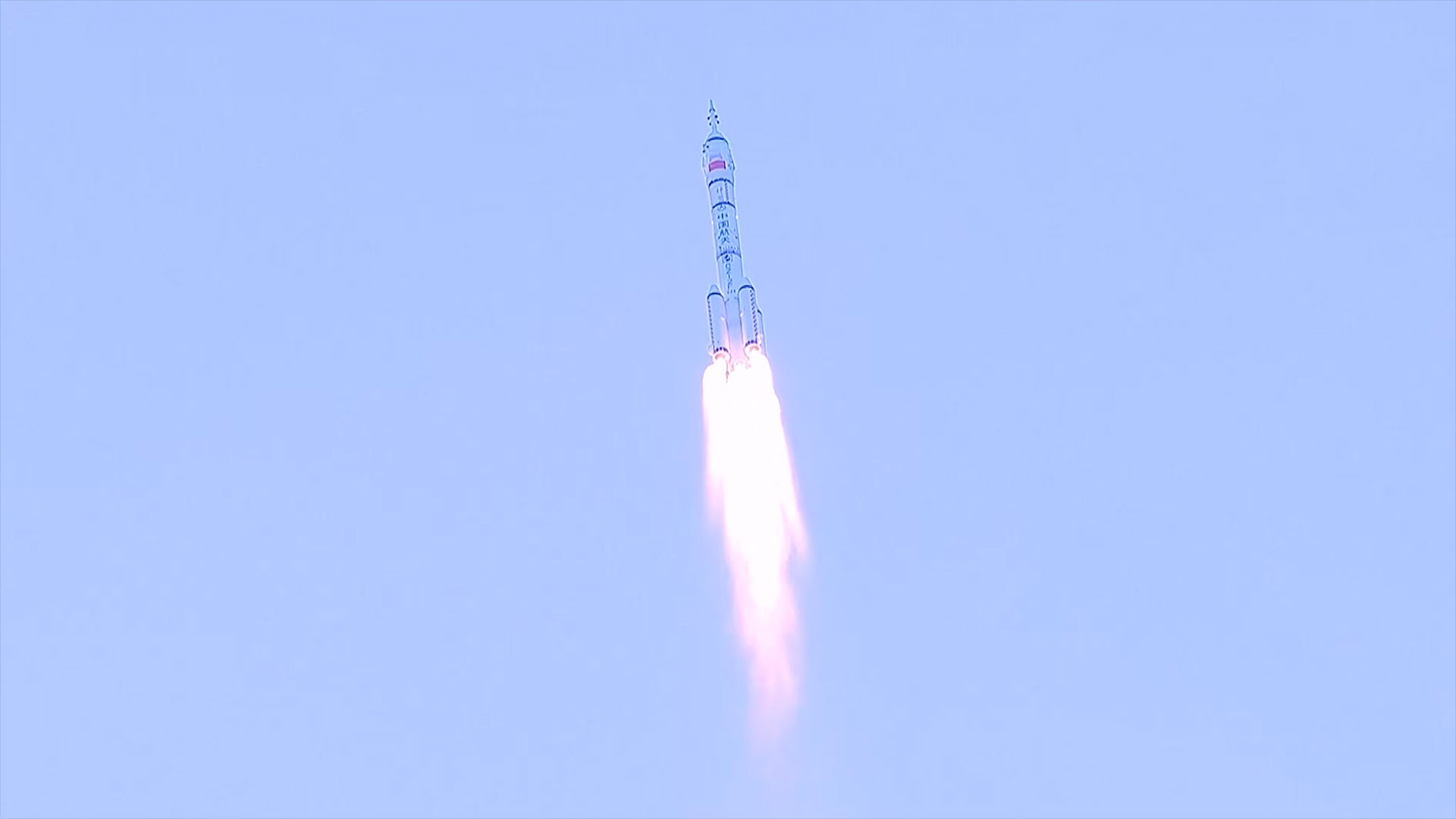
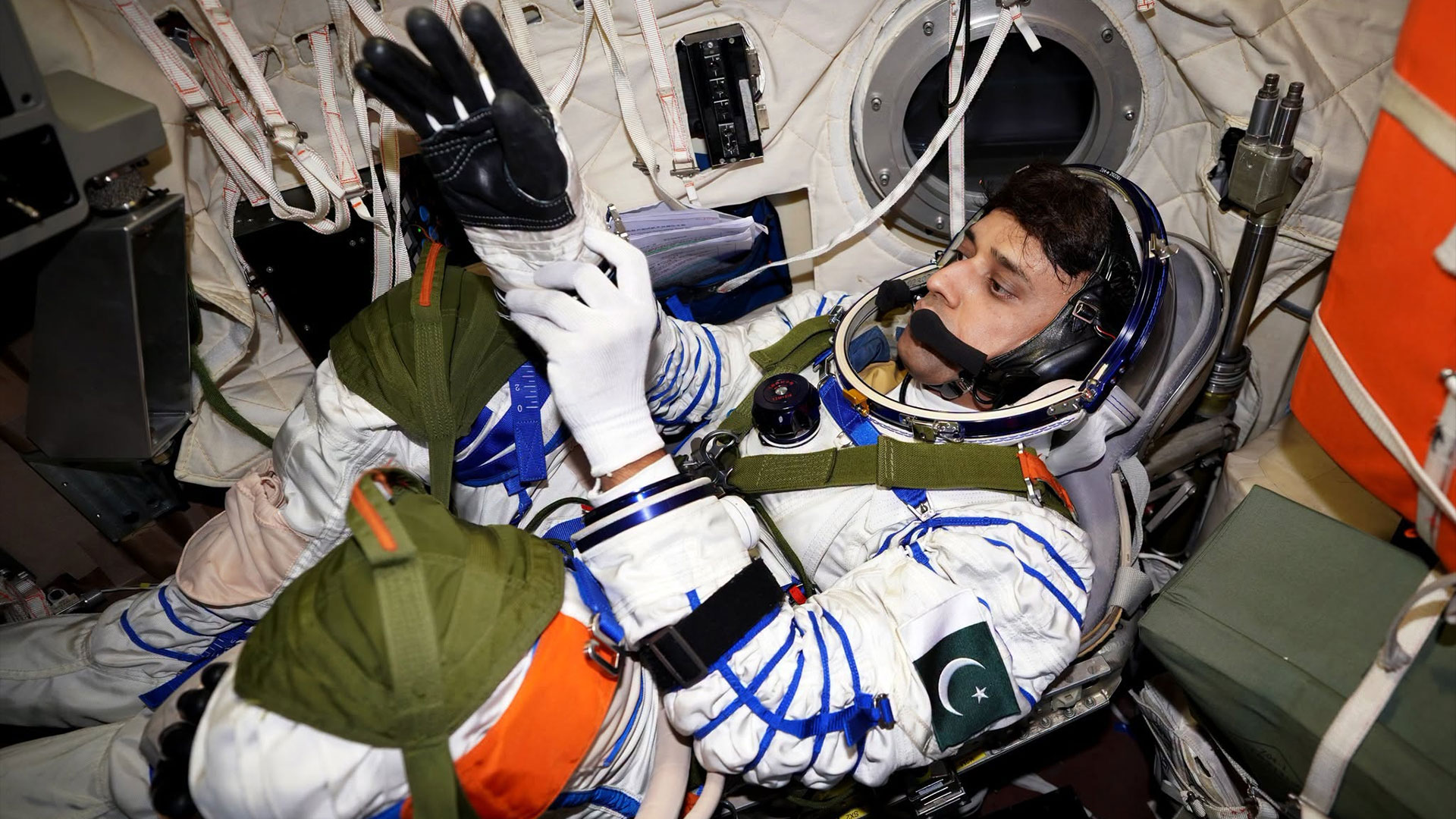
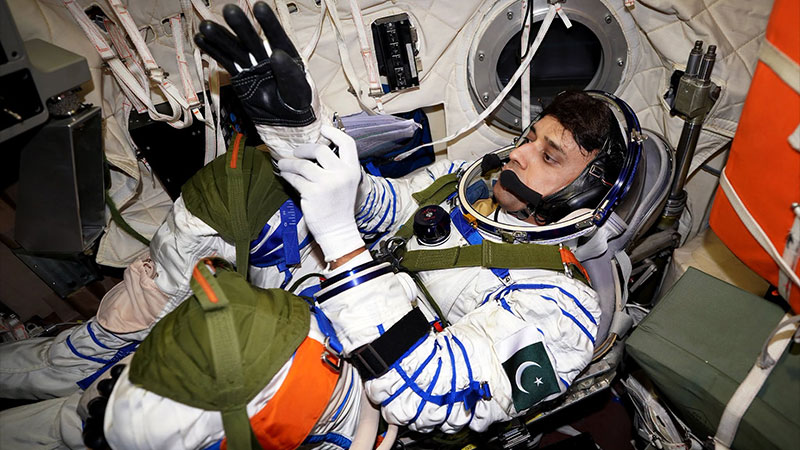
Muhammad Zeeshan Ali is the first astronaut from the South Asian country to fly into space and the first foreign crew member to fly on a Chinese spacecraft. Shenzhou-24 lifted off on Tuesday (Nov. 24) at 7:18 p.m. EST (0018 GMT or 8:18 a.m. Beijing Time on Wednesday) on a Long March 2F rocket from the Jiuquan Satellite Launch Center in northwest China.
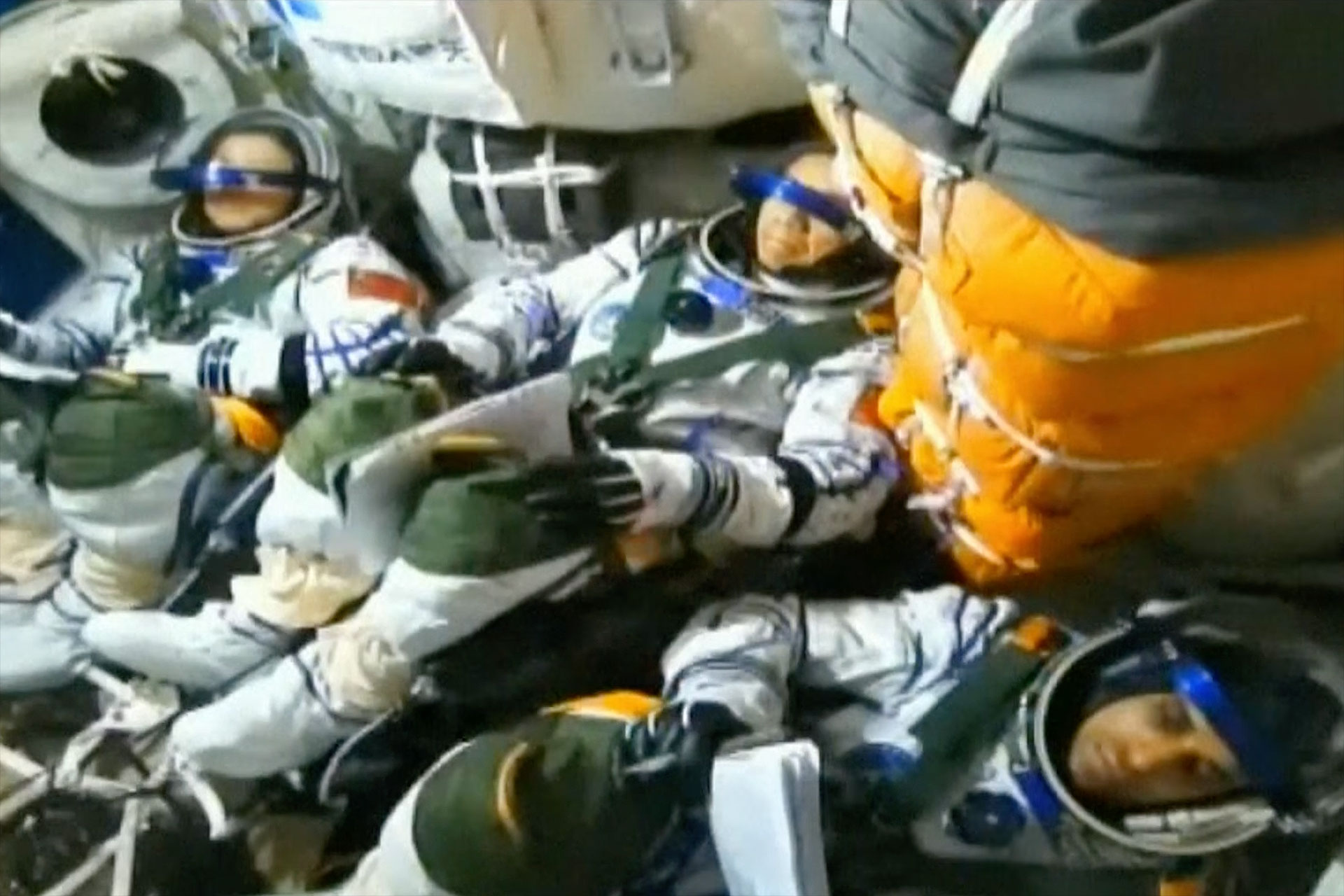
Ali, together with Chinese taikonauts Tang Hongbo and Wu Yi, are bound for the Tiangong space station. Tang, as a veteran of two earlier missions, Shenzhou-12 in 2021 and Shenzhou-17 in 2023, will be the first person to visit Tiangong three times. Wu is on his first mission.
Tang and Wu have begun a planned six-month stay on orbit, while Ali is scheduled to return to Earth in about a week on Shenzhou-23 with Zhang Zhiyuan and Lai Ka-ying, who have been on Tiangong since May. Shenzhou-23 commander Zhu Yangzhu will join the Shenzhou-24 crew, becoming the first Chinese taikonaut to spend a year in space.
"Although we come from different countries, our dreams of looking up at the stars are connected," said Tang, referring to Ali during a pre-launch press conference, according to China's Xinhua state news agency. "Space belongs to all humanity, and exploring the universe is our shared dream."
"Now it is time to show this great achievement in orbit and send the world a message that we work hand in hand for the peaceful utilization of space," said Ali, adding that he hoped the China-Pakistan partnership will build off his own flight to become multiple joint missions to the moon and ultimately Mars.
During the handover period when both the Shenzhou-23 and Shenzhou-24 crews are aboard Tiangong together, Ali will contribute to the resident crew's routine work, as well as conduct joint China-Pakistan space science experiments, primarily installing experiment samples, according to Zhang Jingbo, a spokesman for the China Manned Space Agency (CMSA).
Ali's studies will primarily focus on biotechnology and materials science, including research on photosynthetic cyanobacteria.
More than 90 scientific experiments and technology demonstrations are planned for the longer Shenzhou-24 mission, to be performed by Tang, Wu and Zhu. These tests will expand into the life sciences, microgravity fluid physics and combustion science, fundamental physics, space medicine and new space technologies.
Specific areas of study include using vascular chips and multi-type organ chips to develop new strategies for preventing and treating age-related diseases; research on novel quantum states; and tests on a chem-electric hybrid propulsion system that uses new ionic liquid propellants as part of efforts to develop new spacecraft propulsion technologies.
"China will continue to use the space station as a national space laboratory to steadily advance space science, space applications and space technology, better serving sci-tech progress and economic and social development," said Zhang, as quoted by Xinhua.
Ali, 40, was one of the two Pakistanis chosen as astronaut candidates by the country's Space and Upper Atmosphere Research Commission (SUPARCO) in April. Together with fellow Pakistan Air Force pilot Khurram Daud, Ali underwent seven months of training at the Astronaut Center of China.
The Shenzhou-24 launch establishes Pakistan as the 55th country to sponsor sending a citizen into space. China considers Pakistan its "all-weather strategic cooperative partner," and together are marking 75 years of diplomatic relations.
Ali is the 789th person worldwide to fly above 50 miles (80 kilometers) altitude and the 653rd to enter Earth orbit.
"I'm not flying for myself, I carry the name of Pakistan on my shoulder, the hope of 250 million Pakistanis," he said. "To every child who is watching while I'm in orbit, just look up at the sky and remember that I am up there with your dreams."
Shenzhou-24 is the 12th crewed mission to the Tiangong space station and 41st mission as part of China's crewed space program since 2003 (including spacelab module and Tianzhou cargo spacecraft launches). |
|
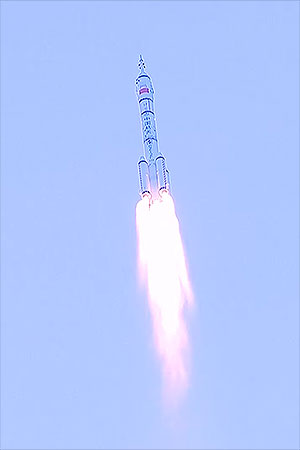
A Long March 2F rocket lifts off with the Shenzhou 24 spacecraft and taikonauts Tang Hongbo and Wu Yi along with the first Pakistani to fly into space, Muhammad Zeeshan Ali, from Jiuquan Satellite Launch Center on Tuesday, Nov. 24, 2026. (CCTV)
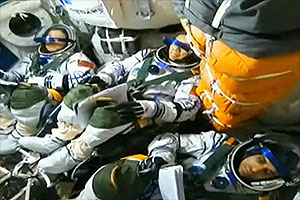
Chinese taikonauts Tang Hongbo and Wu Yi, along with Pakistani Muhammad Zeeshan Ali are seen on the Shenzhou 24 spacecraft prior to the liftoff from the Jiuquan Satellite Launch Center. (CCTV)
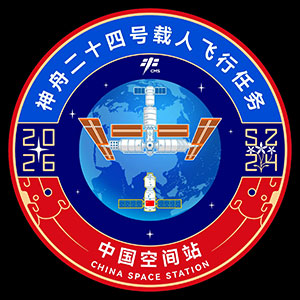
The Shenzhou 24 mission patch includes an illustration of Chameli flowers as a nod to Pakistan's first astronaut on the crew. (CMSE) |
"I carry the name of Pakistan on my shoulder, the hope of 250 million Pakistanis," said Shenzhou-24 crew member Muhammad Zeeshan Ali, the first of from his nation to fly into space. (Xinhua/Wang Xiayang) |
|

© collectSPACE. All rights reserved.
|
|
|
|