advertisements advertisements
|

|
China launches Shenzhou 23 with first taikonaut from Hong Kong
May 24, 2026 — China's first taikonaut to come from Hong Kong and its first yearlong expedition member are part of the three-person crew now in space.
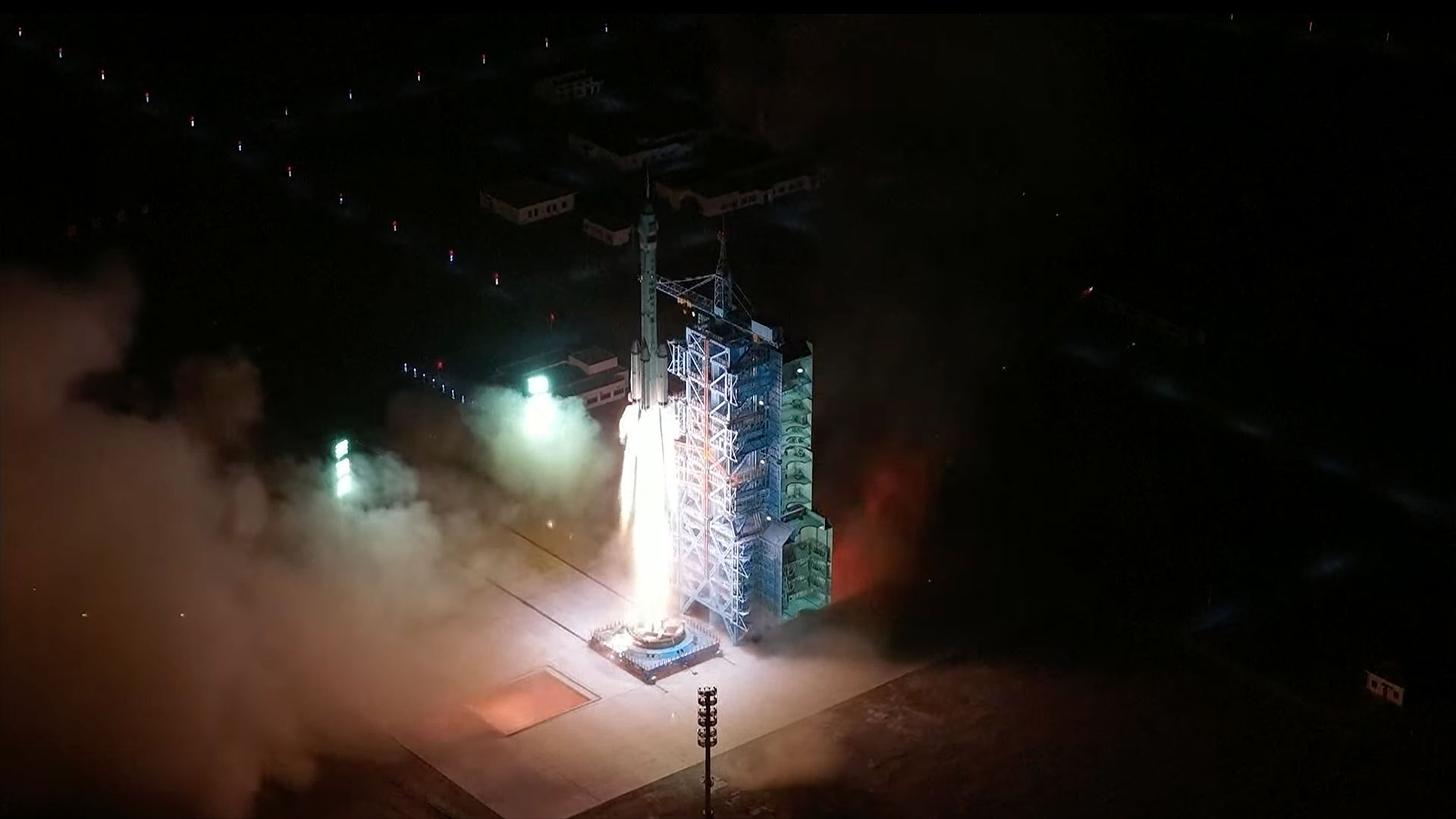
Zhu Yangzhu, Zhang Zhiyuan and Lai Ka-ying launched on the China Manned Space Agency's (CMSA) Shenzhou 23 spacecraft to the country's Tiangong space station on Sunday (May 24). The three taikonauts' ride into orbit, a Long March-2F carrier rocket, lifted off from the Jiuquan Satellite Launch Center in northwest China at 11:08 p.m. Beijing Time (11:08 a.m. EDT or 1508 GMT).
The Shenzhou 23 spacecraft is following an expedited, autonomous rendezvous and docking plan. It is expected to arrive at the radial port of the space station's Tianhe core module within hours of leaving the ground. Awaiting Zhu, Zhang and Lai's arrival are the Shenzhou 21 crew, who have been on the Tiangong three-module complex since October.
Zhang Lu, Wu Fei and Zhang Hongzhang are slated to leave the station and return to the Dongfeng landing site in north China's Inner Mongolia region after about a two-week handover with the Shenzhou 23 crew, according to CMSA.
The Shenzhou 21 crew members have already surpassed 200 days in orbit and will set the Chinese record for the longest single mission to date. The extended mission was the result of a prior crew's spacecraft suffering a damaged window as a result of a micrometeoroid impact and the time needed to prepare a replacement vehicle after the Shenzhou 20 taikonauts landed on Shenzhou 21.
At least one of the members of the Shenzhou 23 crew will break the Shenzhou 21 record by spending a year on board Tiangong. Whether that is Zhu, Zhang or Lai will be decided by CMSA over the next six months.
"Assigning an astronaut to a one-year in-orbit stay is not simply doubling the duration of two six-month missions," said Zhang Jingbo, a spokesperson for the space agency, at a pre-flight press conference. The long stay will test medical support capabilities for taikonauts while also enabling extended, continuous scientific research and the verification of related technology demonstrations.
Before then, the three Shenzhou 23 crew members will conduct more than 100 new science and application projects, according to Zhang. They will study zebrafish, mouse and stem cell-derived "artificial embryos"; work on producing rare-Earth permanent magnets and lightweight high-entropy alloys; and test a new type of battery designed to upgrade the space station's electrical system.
They also plan to conduct spacewalks, manage cargo ship deliveries and engage in educational outreach activities with Chinese students on the ground.
Zhu, 39, is the only member of the Shenzhou 23 crew with previous spaceflight experience. He logged 153 days on Tiangong (including nearly eight hours on a spacewalk) during the Shenzhou 16 mission in 2023. He is also the first member of China's third group of taikonauts to serve as a mission commander.
"We think with one mind and pull in the same direction," said Zhu, describing his Shenzhou 23 crewmates during a pre-launch press conference.
Zhang, 39, was selected in the same class as Zhu in 2020. He was a pilot in the PLA Air Force and serves as the flight engineer (pilot) on the Shenzhou 23 crew.
Lai (or Li Jiaying in Mandarin), 43, is the first Chinese taikonaut from Hong Kong, a special administrative region of China. A member of the fourth training class chosen in 2024, Lai was a superintendent and technical specialist with the Hong Kong Police Force and has a doctorate in computer science.
"As an ordinary person from Hong Kong, being able to join the astronaut team and be selected for this mission is an opportunity I never dared to dream of," said Lai. "Every taikonaut around me is outstanding. I feel truly fortunate to have learned, trained and become friends with them. Their companionship, encouragement and shared progress have meant so much to me."
While Lai is the first Chinese taikonaut from Hong Kong, she was preceded into space by NASA astronaut William "Bill" Anders, who was born in Hong Kong in 1933. Anders' father, a U.S. naval lieutenant, was stationed there at the time.
Shenzhou 23 is the 11th crewed mission to the Tiangong space station and 40th mission as part of China's crewed space program since 2003 (including spacelab module and Tianzhou cargo spacecraft launches). |
|
A Long March 2F rocket lifts off with the Shenzhou 23 spacecraft and taikonauts Zhu Yangzhu, Zhang Zhiyuan and Lai Ka-ying from Jiuquan Satellite Launch Center on May 24, 2026. (CCTV)
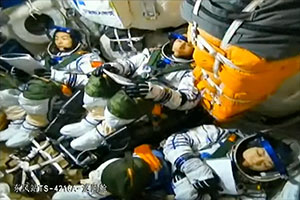
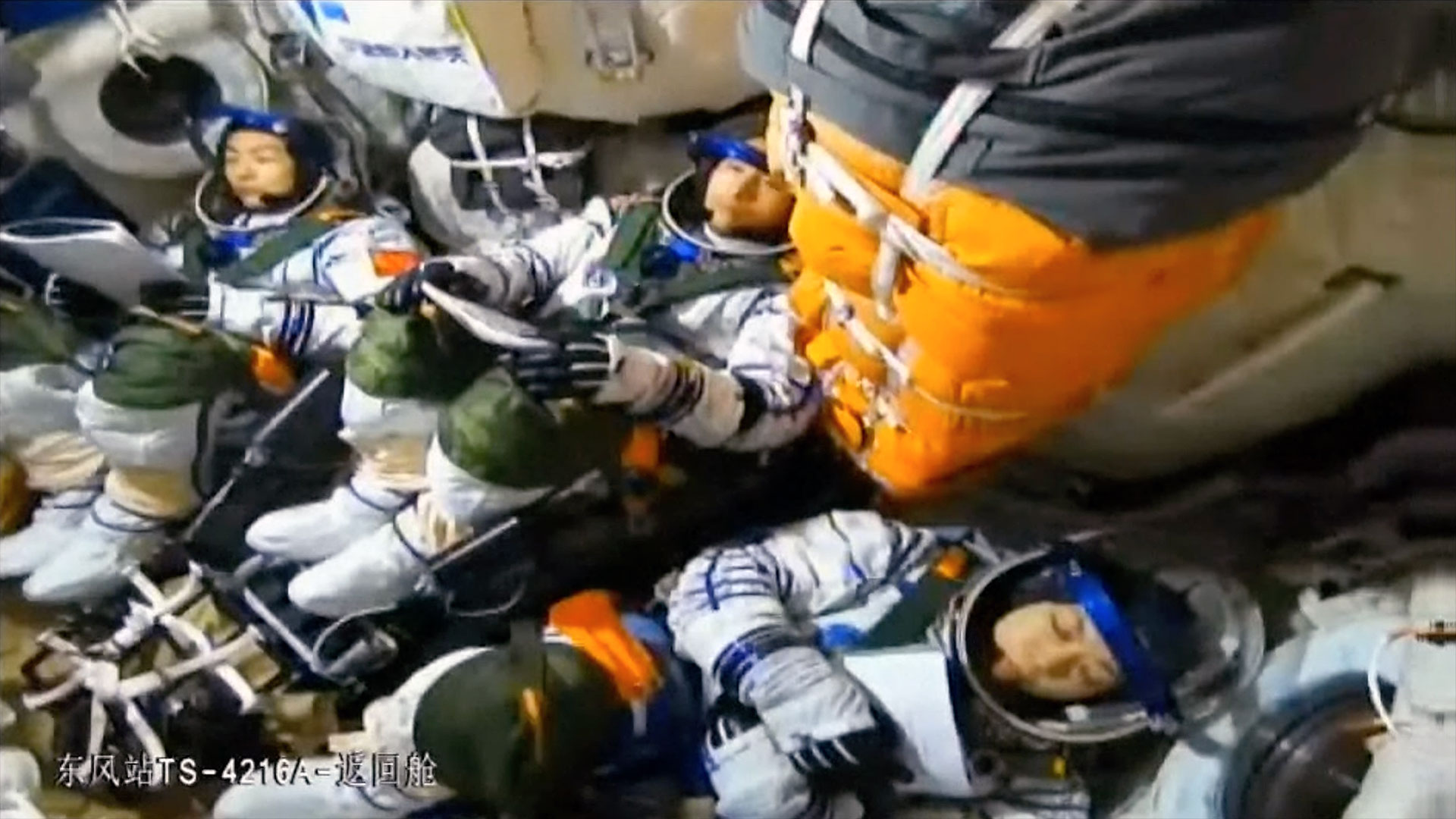
Chinese taikonauts Zhu Yangzhu, Zhang Zhiyuan and Lai Ka-ying are seen on board the Shenzhou 23 spacecraft prior to their May 24, 2026 launch from the Jiuquan Satellite Launch Center. (CCTV)
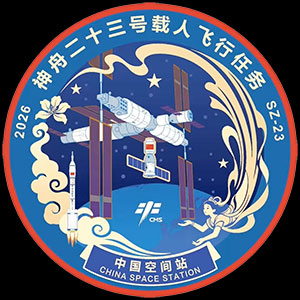
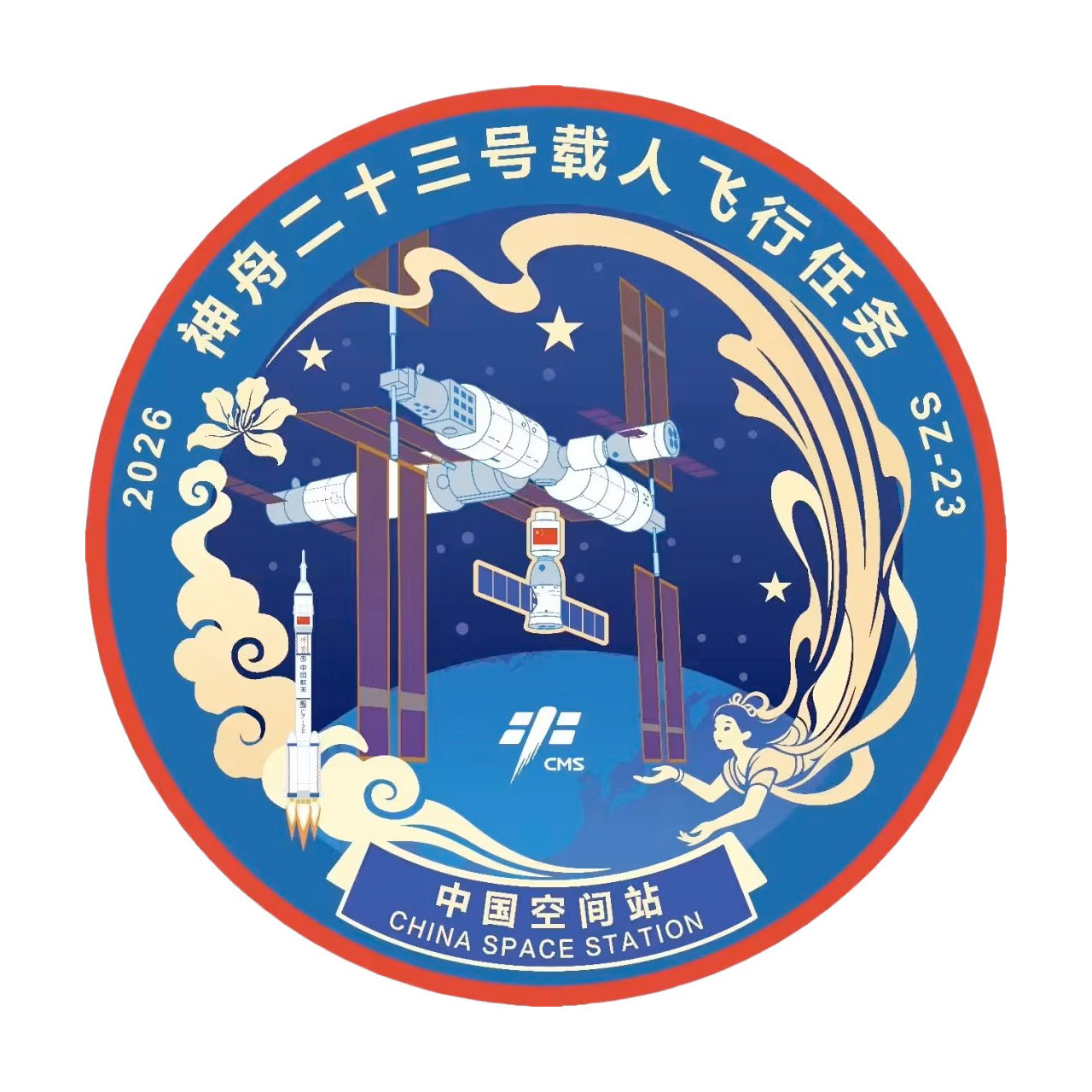
The Shenzhou 23 mission patch includes a depiction of a Bauhinia × blakeana, or Hong Kong orchid, as a nod to Lai Ka-ying. (CMSE) |

Shenzhou 23 taikonauts Zhu Yangzhu (at center), Zhang Zhiyuan and Lai Ka-ying (or Li Jiaying in Mandarin) were revealed at a press conference held at the Jiuquan Satellite Launch Center in northwest China on May 23, 2026. (Xinhau) |
|

© collectSPACE. All rights reserved.
|
|
|
|