December 8, 2025 — B-9 had Will Robinson. Twiki had Buck Rogers. And, of course, C-3PO and R2-D2 had Luke Skywalker. Now, in a scenario straight out of science fiction, MAPP will have whoever NASA names to the crew of the second Artemis mission to land on the moon.
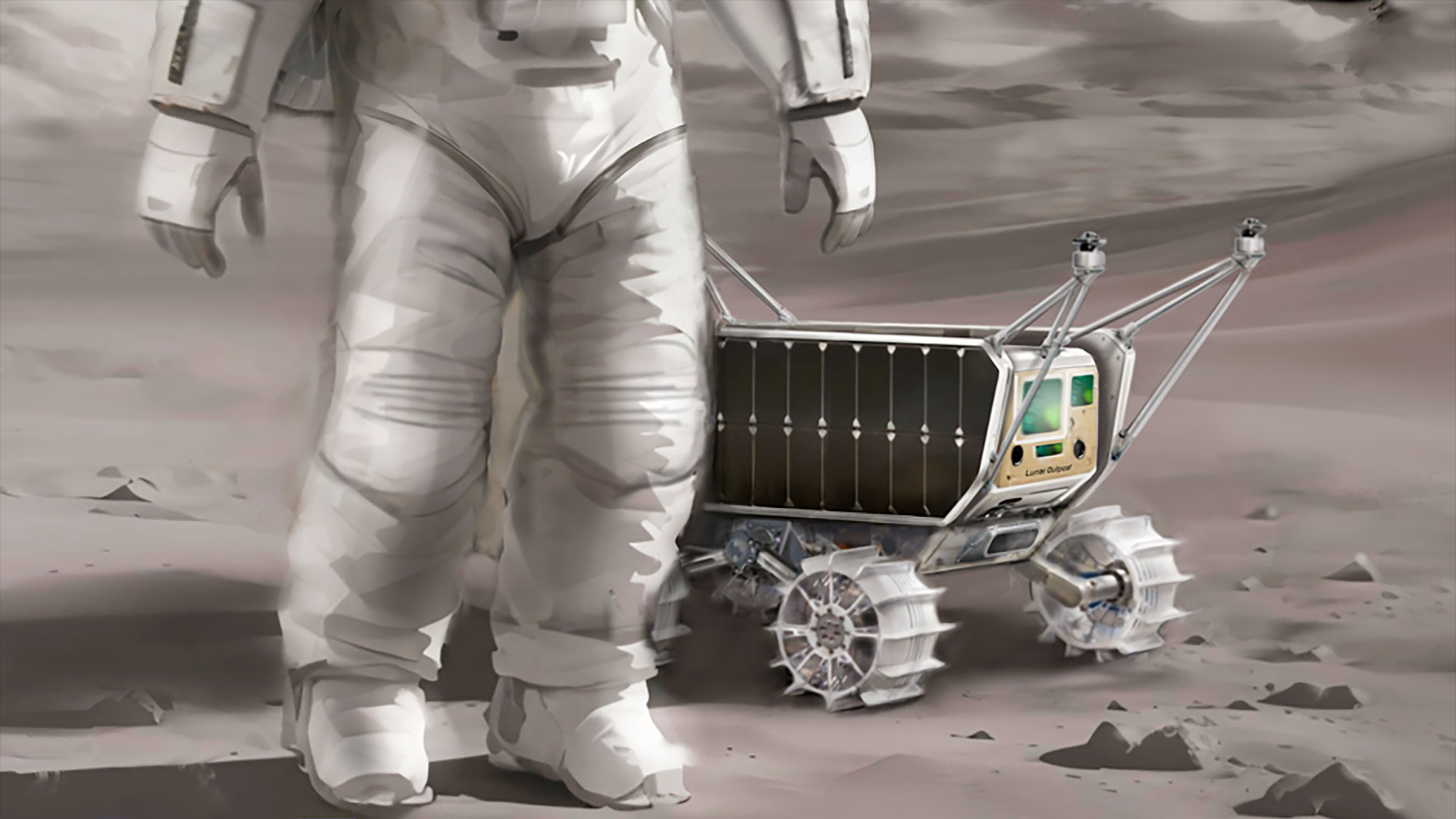
The space agency has selected Lunar Outpost's Mobile Autonomous Prospecting Platform, or MAPP, to become the first-ever robotic rover to operate on the moon alongside astronauts. Although its tasks will be far simpler than the robots seen on TV and in the movies, the autonomous four-wheeled MAPP will assist scientists learn more about the crew's surroundings. Science instruments on the rover will characterize the surface plasma and behavior of the dust in the lunar environment.
"The Apollo era taught us that the further humanity is from Earth, the more dependent we are on science to protect and sustain human life on other planets," said Nicky Fox, NASA's associate administrator for science, in a statement. "By deploying these ... science instruments on the lunar surface, our proving ground, NASA is leading the world in the creation of humanity's interplanetary survival guide to ensure the health and safety of our spacecraft and human explorers as we begin our epic journey back to the moon."
"The Apollo missions showed us the challenges posed by dust on the lunar surface, and NASA's Artemis plans to find solutions as a critical step to building a sustainable human presence in space," said Justin Cyrus, founder and CEO of Lunar Outpost. "This will be Lunar Outpost's seventh contracted mission, demonstrating our ability to serve as a platform for multiple mission profiles, and provide mobility and robotics to help astronauts conduct research on the moon."
Danger Gene Cernan, danger
NASA's next mission to launch to the moon, Artemis II in 2026, will fly four astronauts by the moon and then return them to Earth on a "shakeout cruise" for the Orion crew spacecraft. That will be followed by Artemis III, targeted for 2028, which will see the first humans return to the lunar surface since the late Gene Cernan, Apollo 17 commander, left the last (to date) boot print on the moon more than 50 years ago this month.
Artemis IV will mark the second lunar landing of the Artemis program and build upon what is learned at the moon's south pole on Artemis III.
"After his voyage to the moon's surface during Apollo 17, astronaut Gene Cernan acknowledged the challenge that lunar dust presents to long-term lunar exploration. Moon dust sticks to everything it touches and is very abrasive," read NASA's announcement of the Artemis IV science payloads.
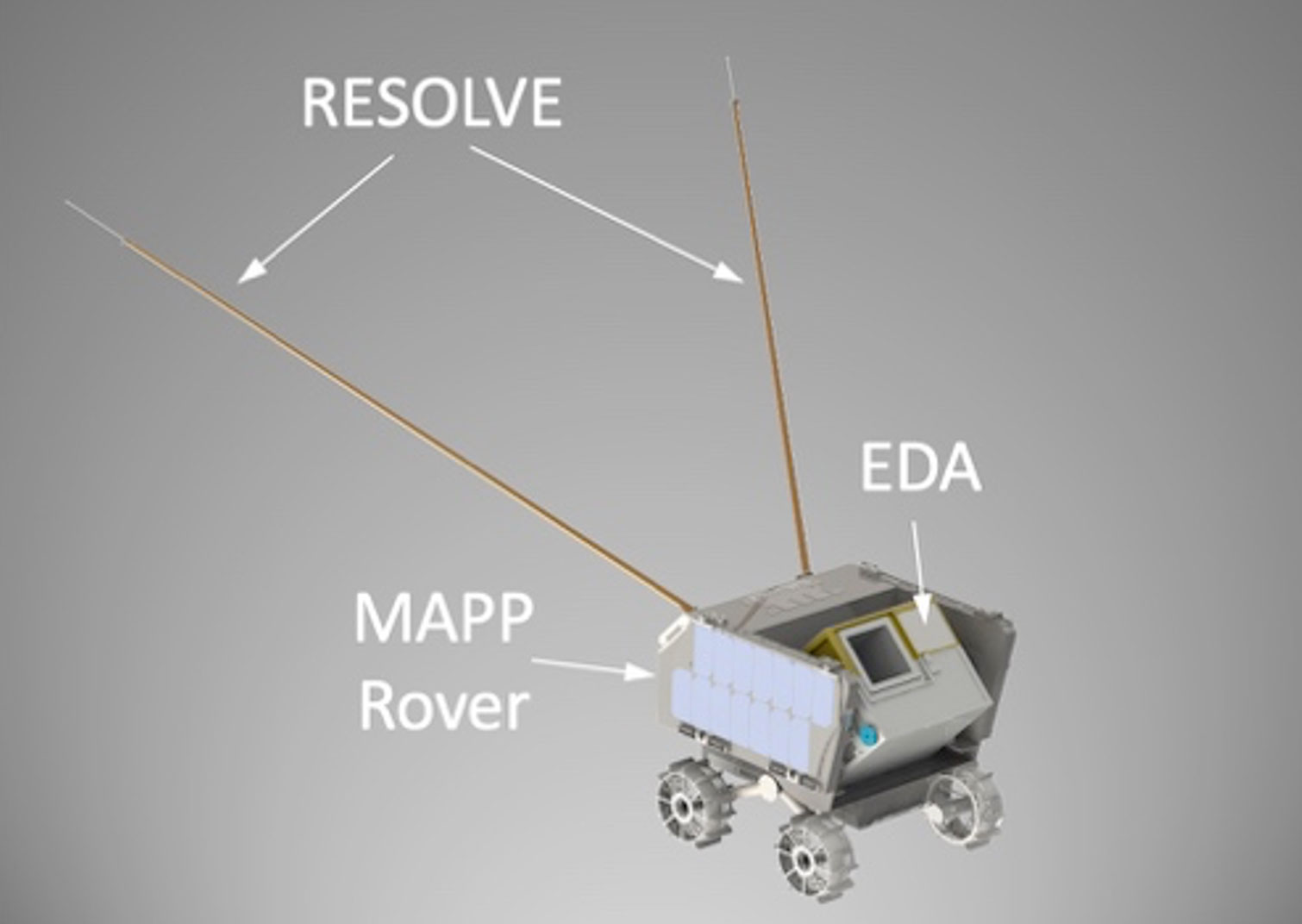
To that end, the solar-powered MAPP will support DUSTER (DUst and plaSma environmenT survEyoR), a two-part investigation from the Laboratory for Atmospheric and Space Physics (LASP) at the University of Colorado Boulder. The autonomous rover's equipment will include the Electrostatic Dust Analyzer (EDA) — which will measure the charge, velocity, size and flux of dust particles lofted from the lunar surface — and the RElaxation SOunder and differentiaL VoltagE (RESOLVE) instrument — which will characterize the average electron density above the lunar surface using plasma sounding.
The University of Central Florida and University of California, Berkeley, have joined with LASP to interpret measurements taken by DUSTER. The earlier will look at the dust ejecta generated during the Human Landing System (HLS, or lunar lander) liftoff from the moon, while the latter will analyze upstream plasma conditions.
Lunar dust attaches to almost everything it comes into contact with, posing a risk to equipment and spacesuits. It can also obstruct solar panels, reducing their ability to generate electricity, and cause thermal radiators to overheat. The dust can also endanger astronauts' health if inhaled.
"We need to develop a complete picture of the dust and plasma environment at the lunar south pole and how it varies over time and location to ensure astronaut safety and the operation of exploration equipment," said Xu Wang, senior researcher at LASP and principal investigator of DUSTER, in a University of Colorado statement. "By studying this environment, we gain crucial insights that will guide mitigation strategies and methods to enable long-term sustained human exploration on the moon."
Lunar Voyage 5
MAPP, which looks more like a mouse droid than a protocol or astromech unit, will not be new to the moon when it arrives on the surface with the Artemis IV astronauts. If all goes to plan, it will be Lunar Outpost's third wheeled-platform to reach the moon.
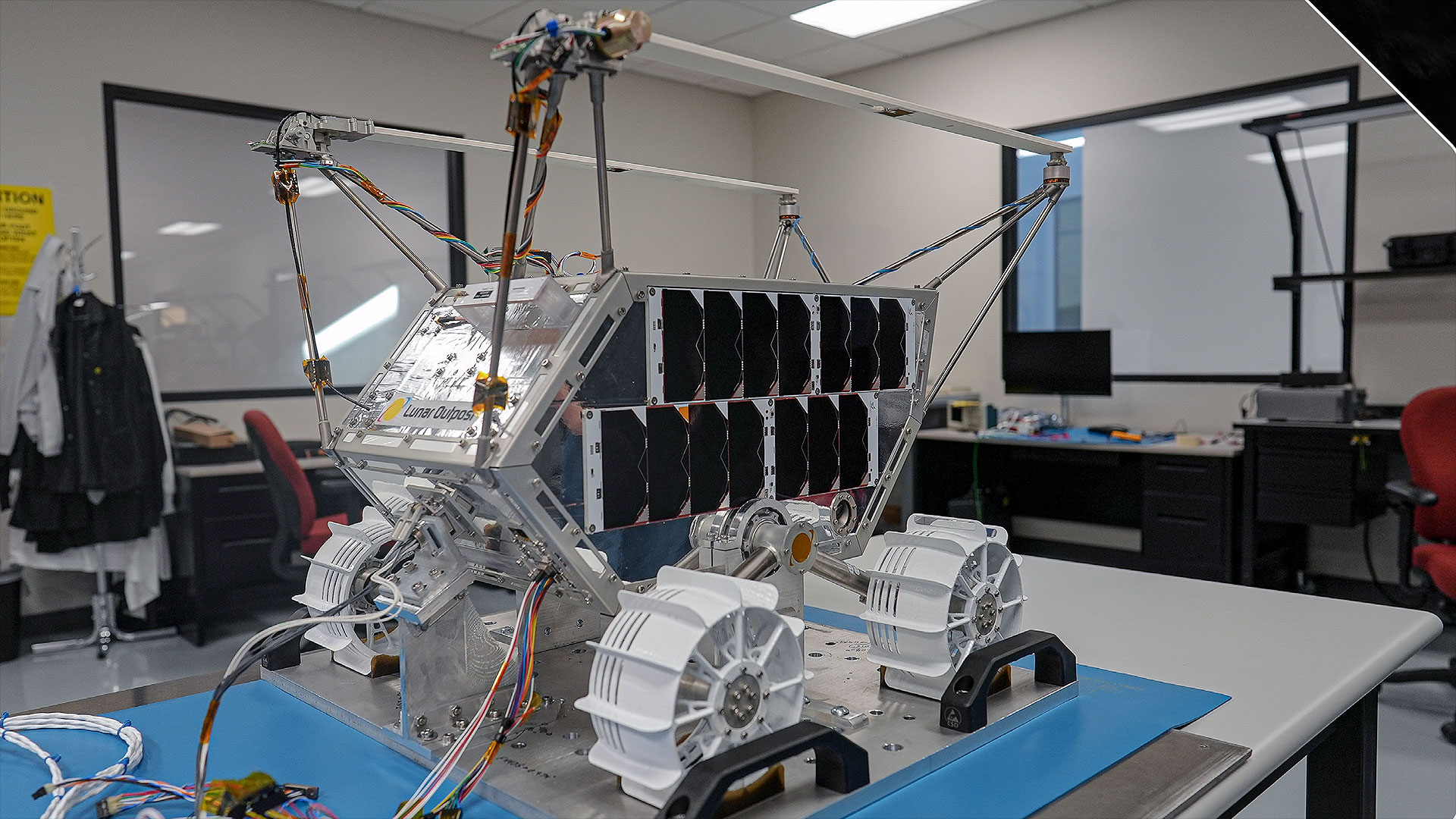
The Colorado-based company's first MAPP mission, dubbed "Lunar Voyage 1," arrived on the moon in March of this year, but was trapped in its "garage" when its ride to the surface, a commercial uncrewed moon lander, toppled over upon its touchdown. Despite being unable to move, Lunar Outpost said the LV1 MAPP was able to collect data from the lunar surface and in transit, as well as confirm that the rover was ready to drive.
The Lunar Voyage 2 (LV2) MAPP is targeted for launch on Intuitive Machines' IM-3 mission in 2026 as part of NASA's Commercial Lunar Services Program (CLPS). The LV3 rover is booked for a commercial mission, followed by "Roo-ver" by the end of the decade as the Australian Space Agency's first flagship mission and its contribution to NASA's Artemis program.
Lunar Outpost earlier deployed an environmental monitoring system based on the life support system developed for NASA's Gateway lunar orbit platform and built MOXIE (Mars Oxygen In-Situ Resource Utilization Experiment), which 16 times successfully demonstrated producing oxygen on the Red Planet while mounted to NASA's Perseverance Mars rover.
MAPP has also been celebrated in pop culture, extending its similarities with the sci-fi robots that preceded it. In August, LEGO and Lunar Outpost partnered on the release of the LEGO Technic Lunar Outpost Moon Rover Space Vehicle, a toy building block set that constructed three rovers, including a miniature MAPP. |
|
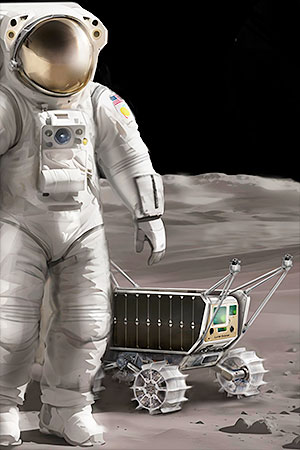
Artist's illustration of an astronaut walking alongside a Lunar Outpost Mobile Autonomous Prospecting Platform, or MAPP, rover on the surface of the moon. (Lunar Outpost)
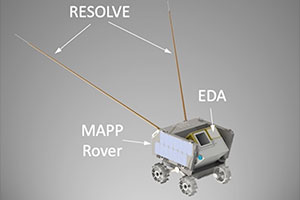
Rendering of Lunar Outpost's MAPP lunar rover with its Artemis IV DUSTER science instruments, including the Electrostatic Dust Analyzer (EDA) and Relaxation SOunder and differentiaL VoltagE (RESOLVE). (LASP/CU Boulder/Lunar Outpost)
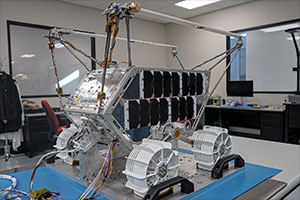
Lunar Outpost's Mobile Autonomous Prospecting Platform prior to launching to the moon on Lunar Voyage 1. (Intuitive Machines)
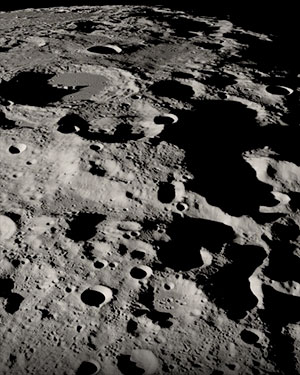
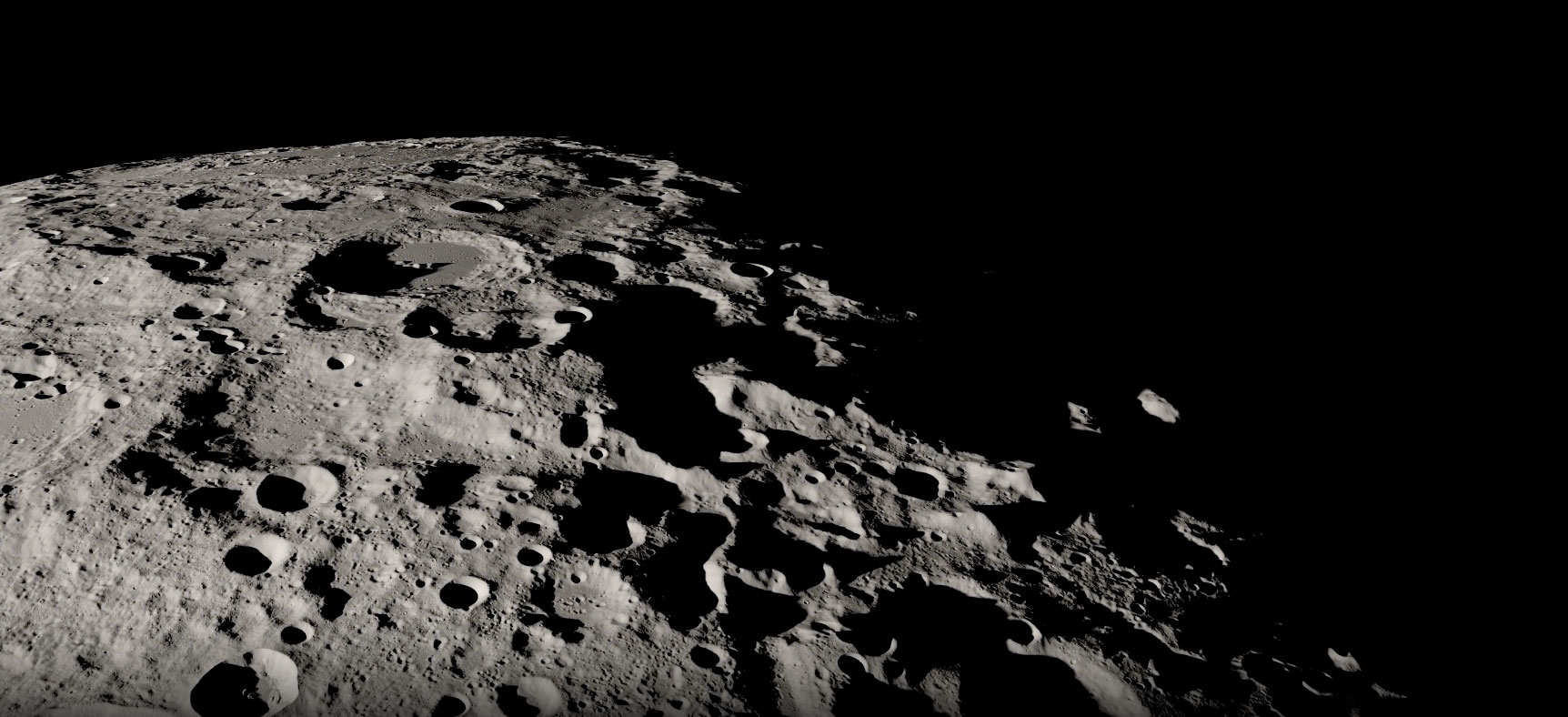
Visualization of the moon's south pole region created with data from the Lunar Reconnaissance Orbiter. (NASA's Scientific Visualization Studio/Ernie Wright) |