November 20, 2026 — As NASA works to establish a moon base as a means of preparing future astronauts to live on Mars, a new cutting-edge facility has brought swaths of both worlds to the space agency's doorstep.
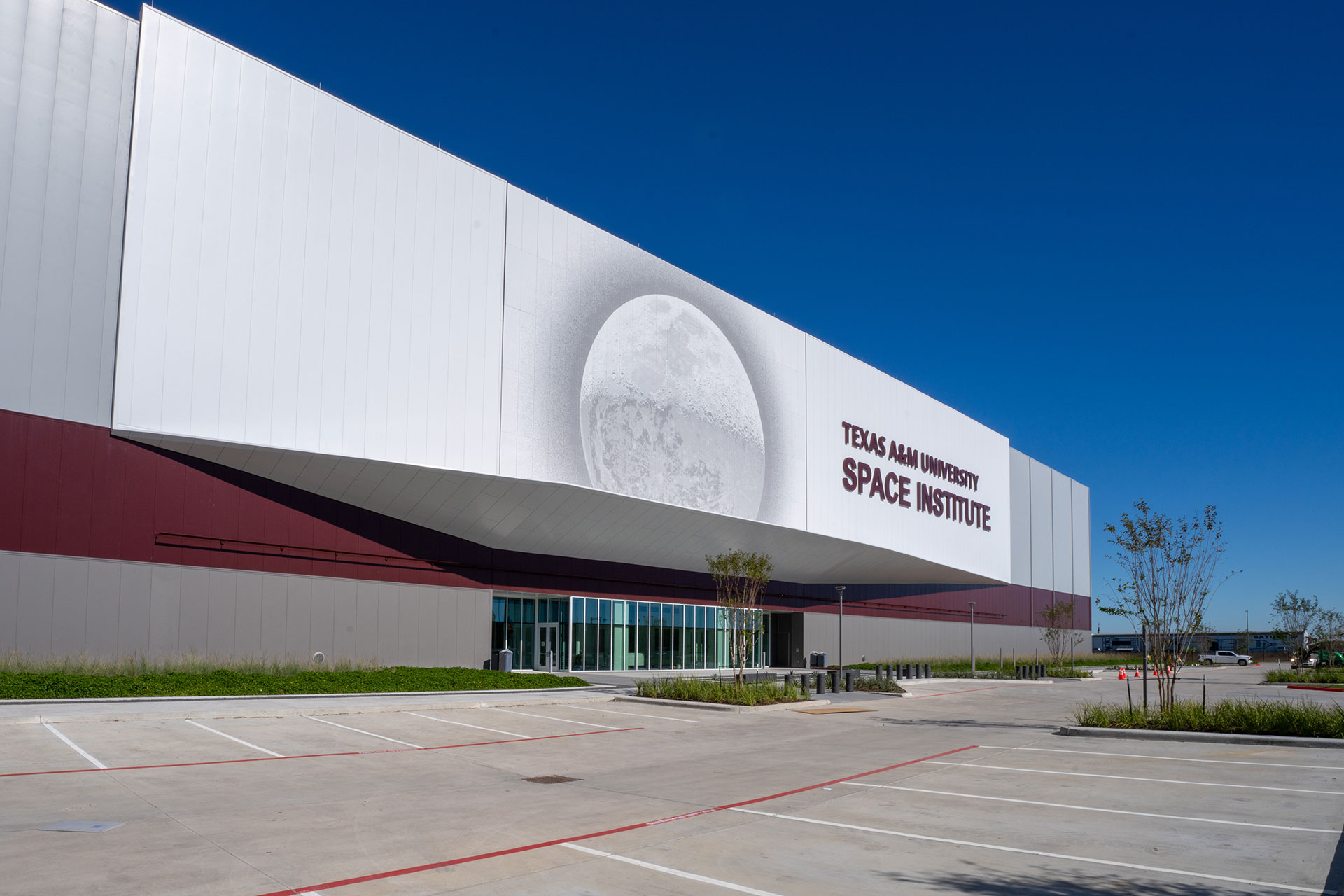
Texas A&M University on Friday (Nov. 20) celebrated the grand opening of its new Space Institute at Exploration Park. Located adjacent to NASA's Johnson Space Center in Houston, the sprawling facility houses research bays, conference rooms and presentation rooms designed to support planetary exploration-related studies by both government and private sector entities working side by side.
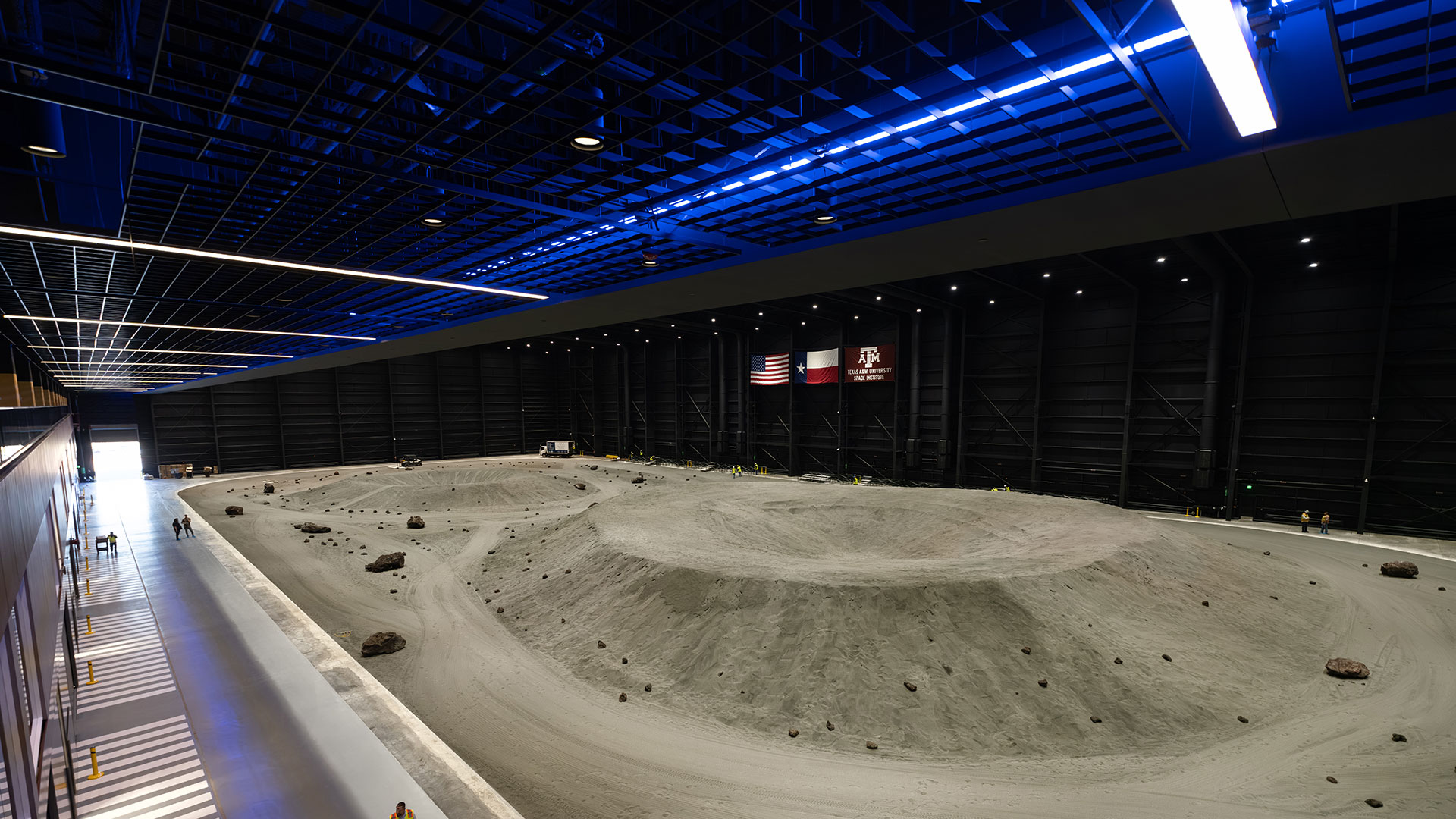
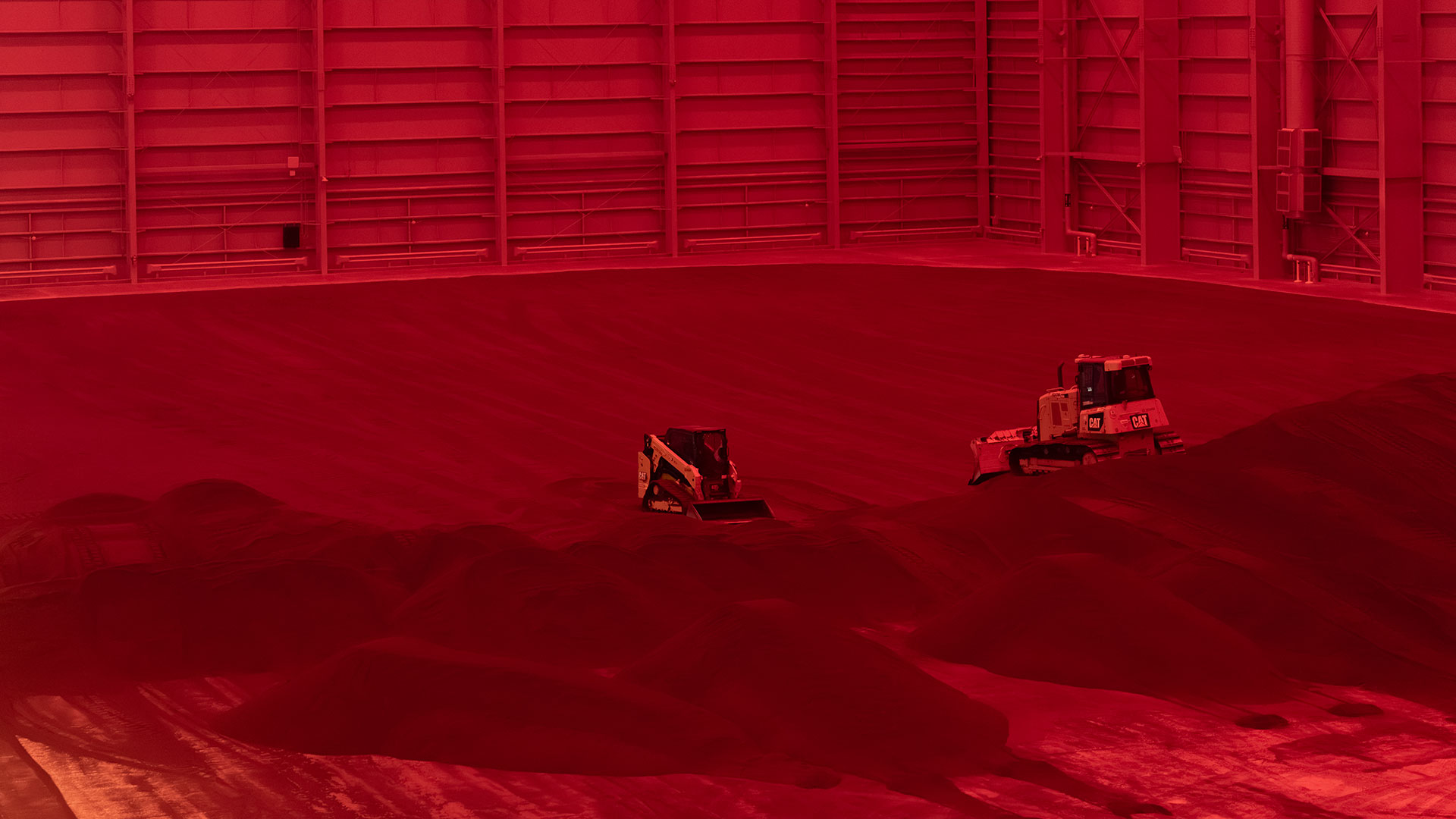
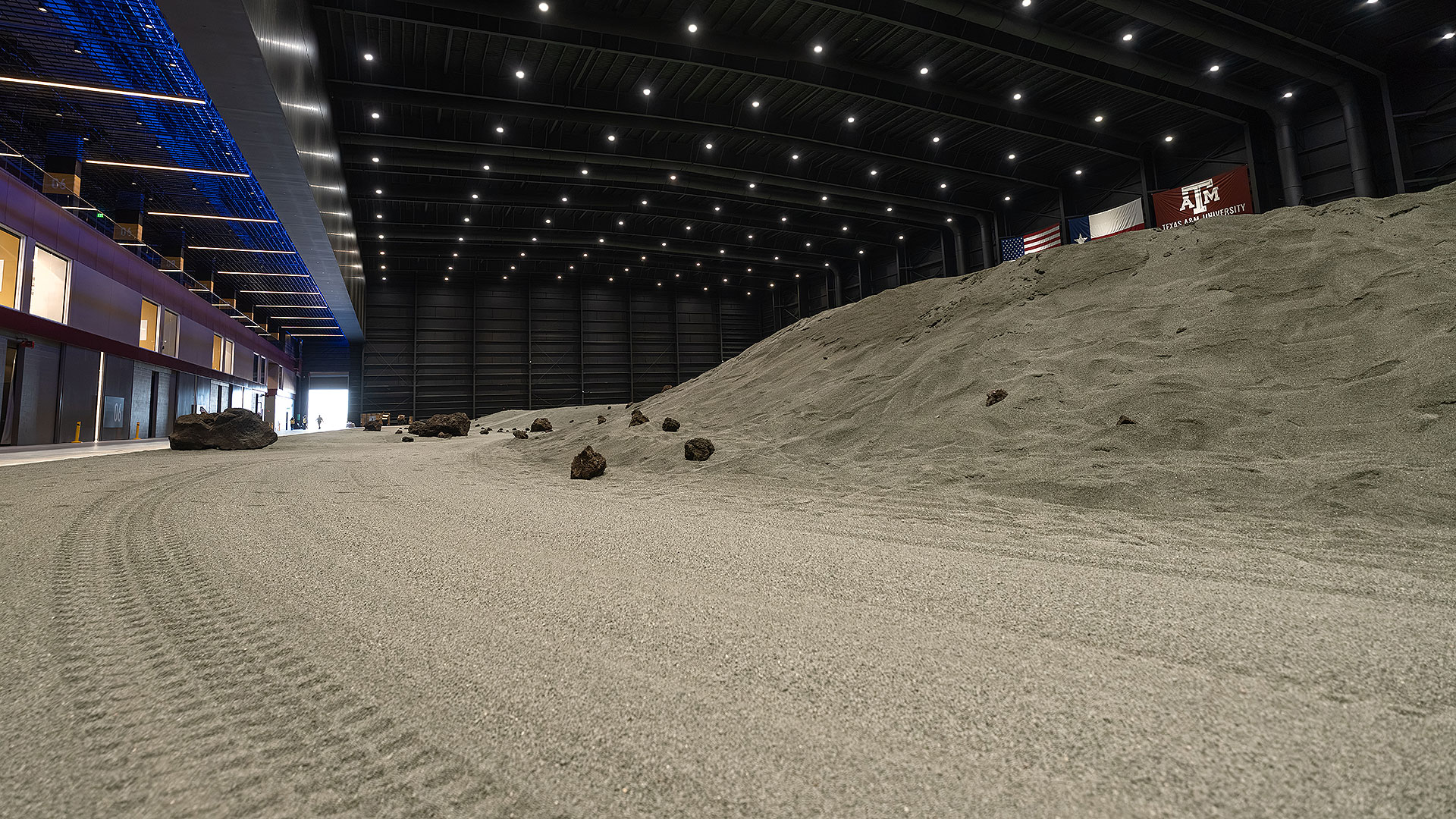
The institute's highlight, though, is the largest indoor extraterrestrial environments ever created. Each 2.5-acre area — one replicating the moon's gray terrain and the other reproducing the reddish-brown surface on Mars — has enough room to fit a football field, providing ample room to train astronauts and test robotic rovers under the lighting and geological conditions they will encounter on their missions.
The entire area of Tranquility Base, where Apollo 11 landed on the moon in 1969, could fit in the lunarscape with more than 50 percent of the facility left unused.
The moonscape is covered by 16,000 cubic yards of basalt that can be shaped to form craters of different sizes and depths as needed. The Mars surface has 6,000 cubic yards of volcanic rock rich in iron. The two "worlds" are connected by a 100-foot-long "wormhole" (tunnel).
Eight of the research bays — four bordering each of the scapes — are available for lease by academic, industry and government partners. NASA, AstroLab and Intuitive Machines have signed agreements, with others being finalized. AstroLab is developing lunar rovers to be use as part of NASA's Artemis program. Intuitive Machines is working on payload-delivery landers.
Two additional bays are set aside at no cost for use by Texas universities. Faculty members, research technicians and student groups from the state's institutions can submit a proposal for how they would use the space. An executive committee from the Texas Aerospace Research and Space Economy Consortium (TARSEC) will review proposals.
"We're preparing the next generation of engineers to lead humanity's return to deep space," Nancy Currie-Gregg, director of the Texas A&M Space Institute and a former NASA astronaut, said in a statement. "The next era of exploration will be led by the engineers we're preparing today and I have every confidence in the paths they'll forge."
The research bays were designed to be customizable to ensure they can be used for whatever mission needs there are in the future. Tenants will be able to adjust their spaces as technologies evolve.
"This facility was designed around a basic idea. If we want to prepare for the future of space exploration, we need environments that closely replicate the conditions astronauts, technologies and missions will actually encounter," said Robert Bishop, vice chancellor and dean of Texas A&M Engineering. "Most importantly, it ensures that when the next great chapter of space exploration is written, Texas A&M will be helping lead the way."
The school is also building an outdoor "technical RV park" behind the institute. Outfitted with power and data connections, the concrete area will be for researchers to bring in customized setups, such as a mobile, sterile clean room or specialized facility for technologies still to come.
"We have no idea what space research may look like in 100 years," said Robert Ambrose, associate director of the institute, Texas A&M professor and TARSEC executive committee member. "So rather than limiting what can be done in these research spaces, we decided to keep them simple so they can be customized by researchers — both now and in the future."
The 416,800 square-foot facility has rental spacesuits for researchers to use in experiments, helping add realism to the lunar and Martian landscapes as instruments, rovers and other equipment are tested. In addition to supporting the work of other organizations, Texas A&M plans to use it for the benefit of its own ongoing research projects.
"There are projects we are currently working on, like Roboball, that will continue to evolve and benefit from testing on the landscapes," Ambrose said. "What really excites me about the space institute is that it's customizable to any research needs. It really creates room for us to be surprised by what will be created and accomplished here." |
|
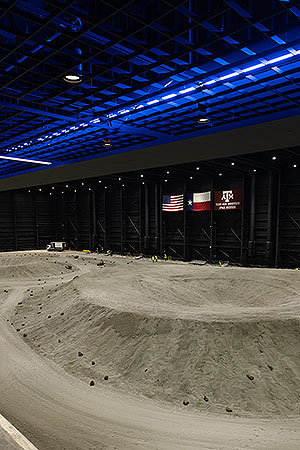
The lunar lanscape in the new Texas A&M Space Institute is large enough to fit all of the Apollo 11 landing site, Tranquility Base, and is covered in basalt from a quarry near Uvalde, Texas. (TAMU)
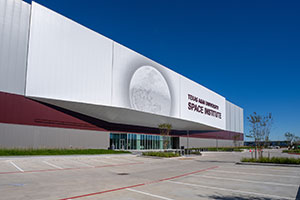
The Texas A&M University Space Institute, which is located outside the gates of the Johnson Space Center, opened Nov. 20. (TAMU)
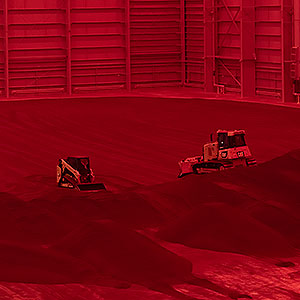
The Mars scape in the Texas A&M Space Institute in Houston has a distinct maroon-tint, matching the school's color. (TAMU) |