advertisements advertisements
|

|
Smithsonian opening space history hangar
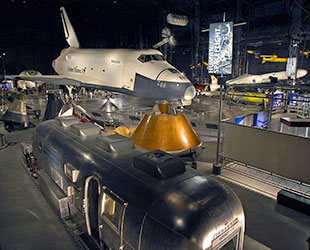
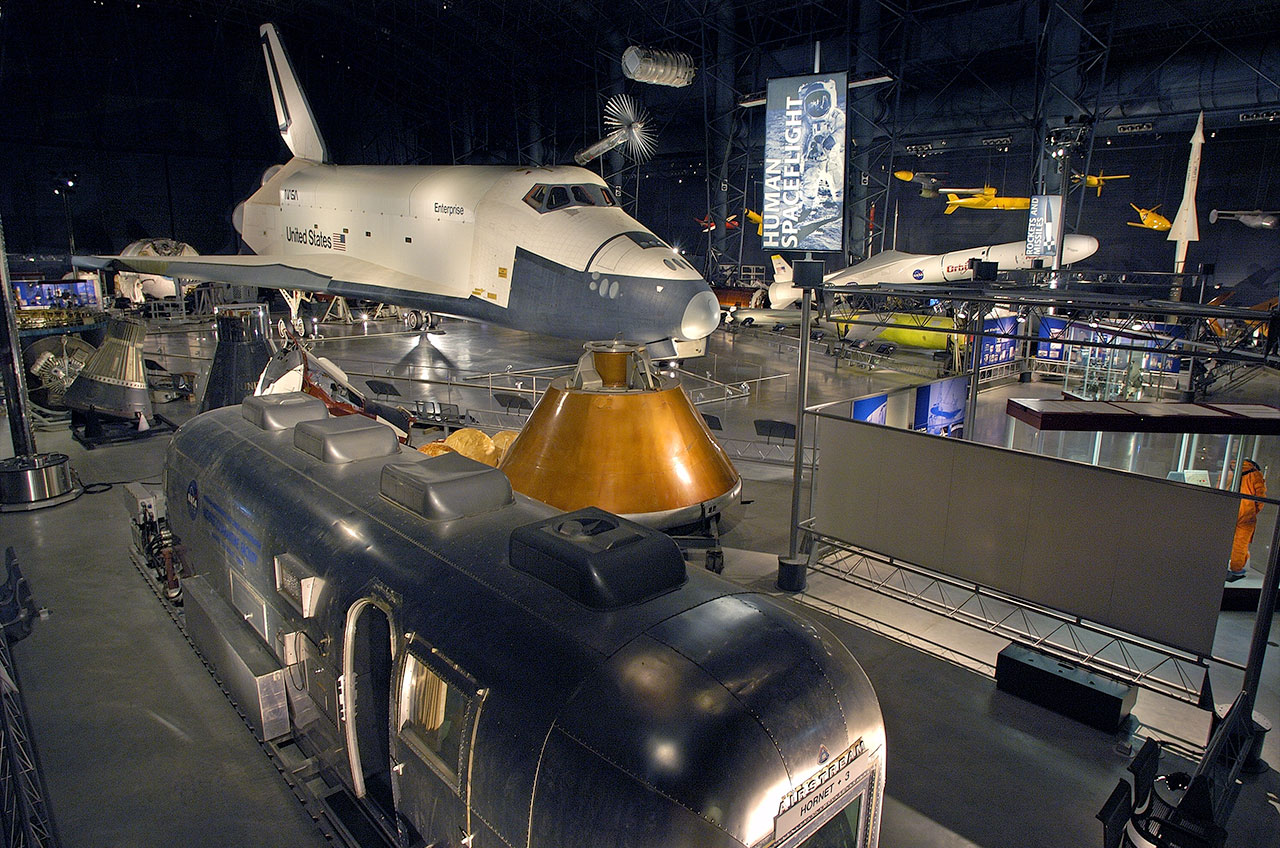
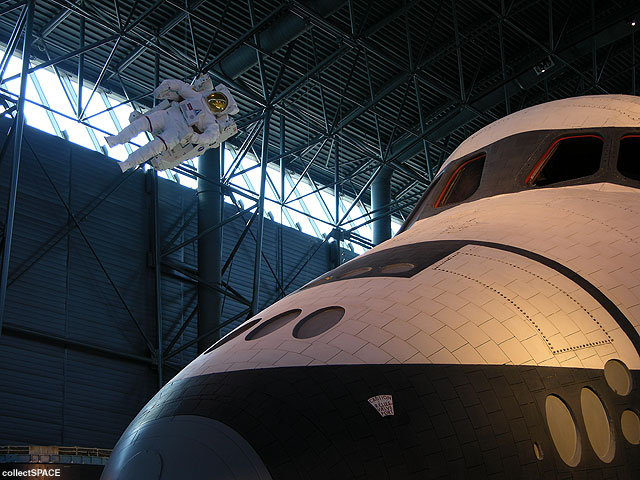
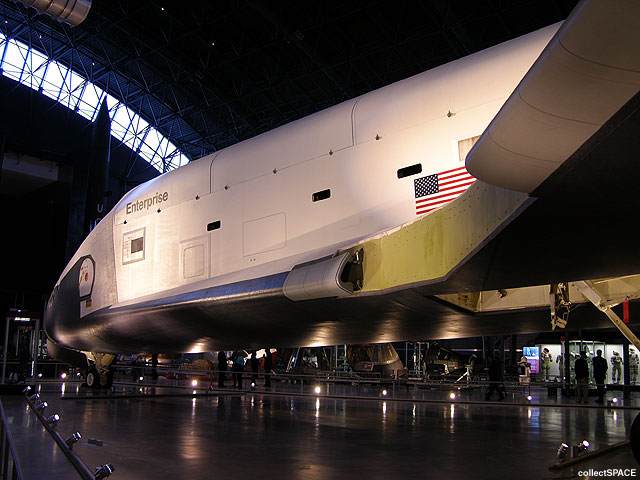
The newly-restored space shuttle Enterprise is the centerpiece of the James S. McDonnell Space Hangar at the National Air and Space Museum's Steven F. Udvar-Hazy Center. (Smithsonian) |
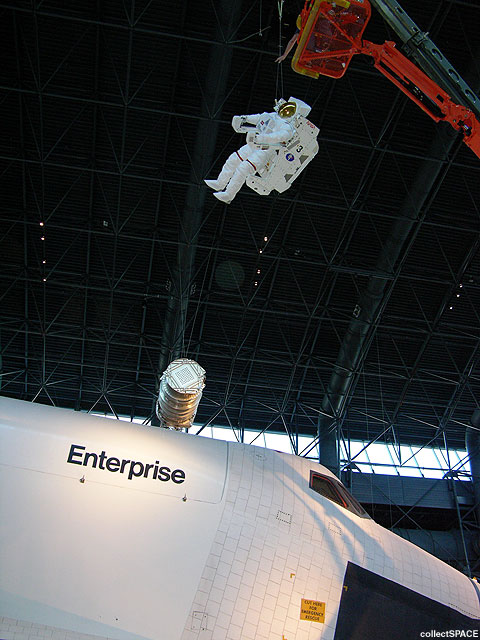
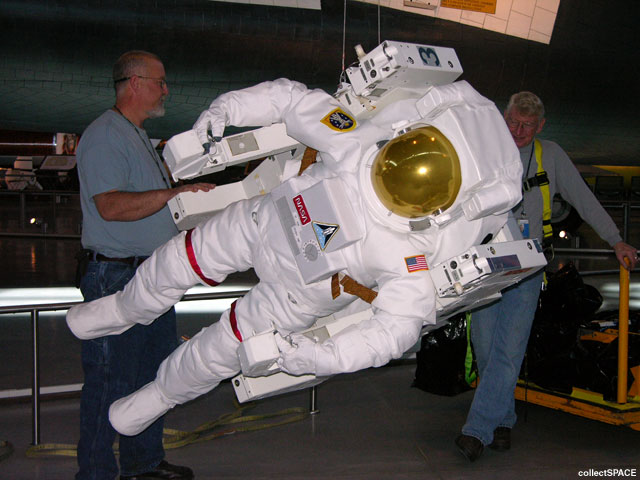
UPDATE: Oct. 26, 2004 — The propulsion backpack that made the world's first untethered spacewalk possible, flew again today — if only with the help of cranes and wires.
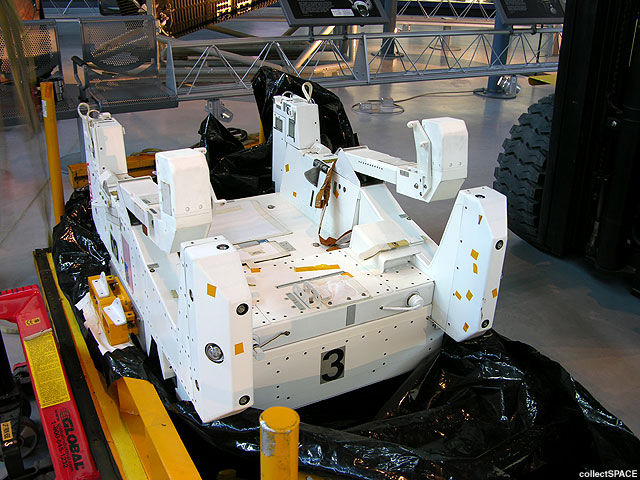
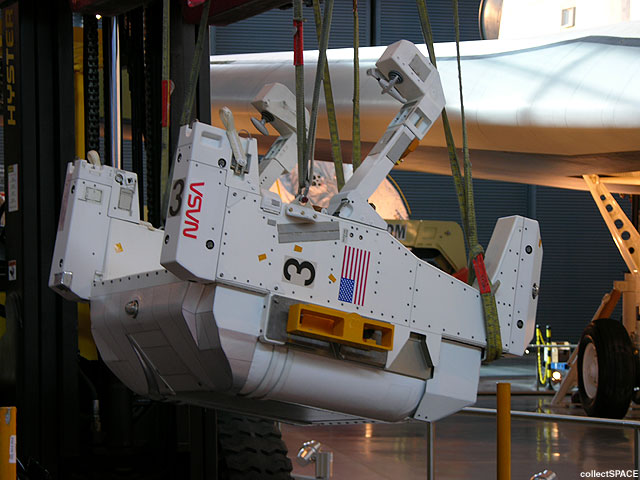
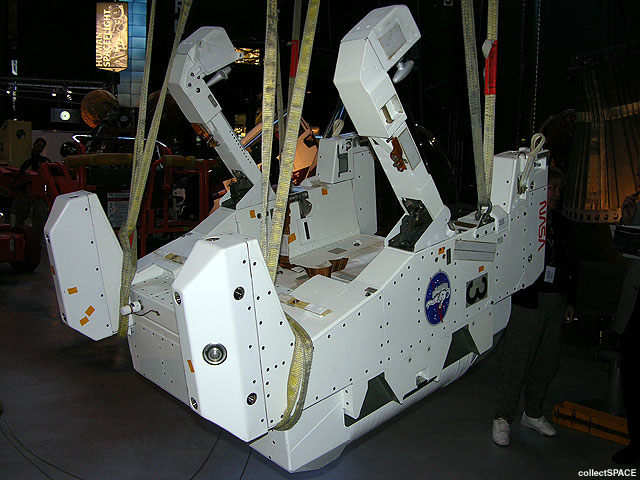
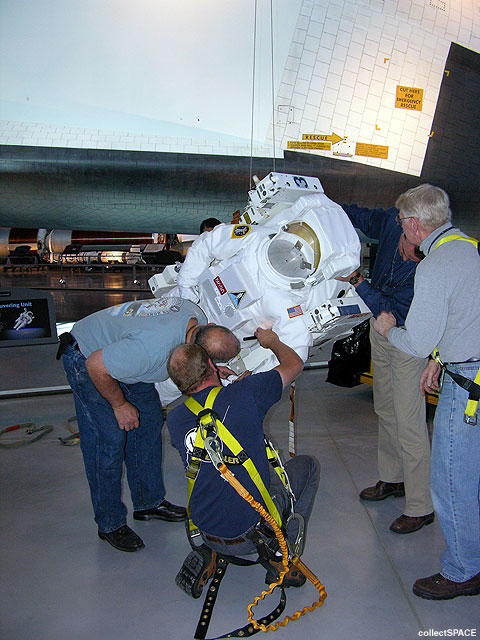
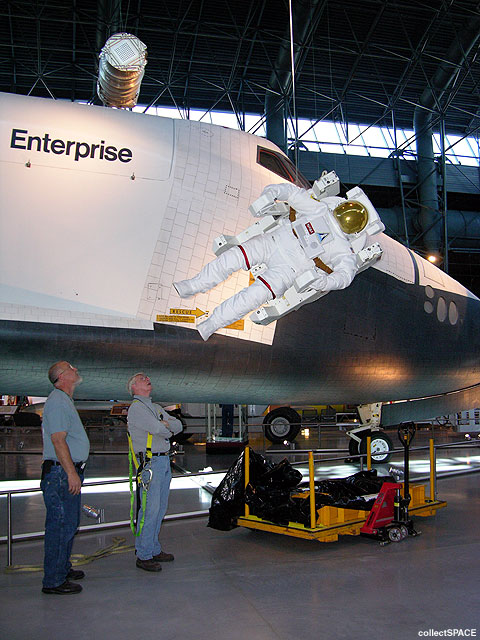
In advance of it opening on Nov. 1, the McDonnell Space Hangar at the National Air and Space Museum's Steven F. Udvar-Hazy Center in Chantilly, Virginia, added one more exhibit to its wide collection of space history artifacts: the Manned Maneuvering Unit.
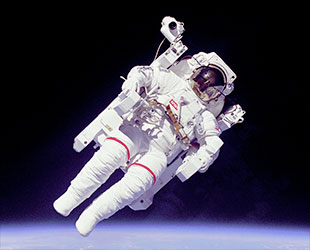
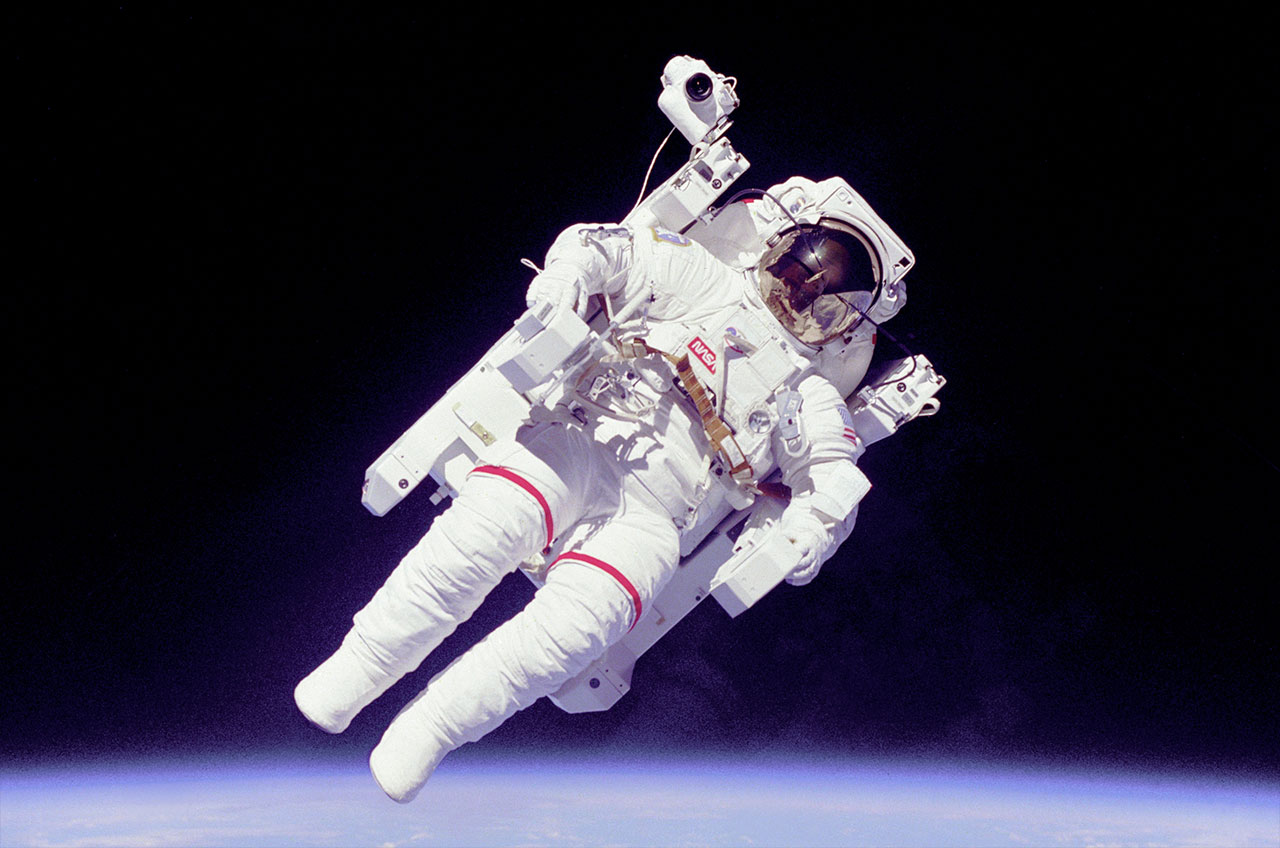
Bruce McCandless ventures further away from the confines and safely of his ship than any previous astronaut ever had in this February 1984 photo. This space first was made possible by the Manned Maneuvering Unit, or MMU, a nitrogen-jet propelled back-pack now on display at the Smithsonian's Udvar-Hazy. (NASA) |
The "MMU" was first flown in space by astronaut Bruce McCandless in February 1984, followed in short order by his STS-41B crewmate Robert Stewart. In total, the MMU was used by six astronauts on three missions, the latter two to facilitate the capture and repair of satellites.
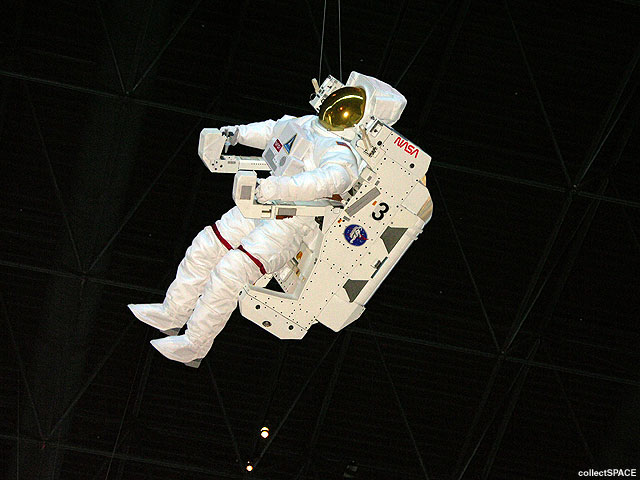
Designed to fit over an astronaut's life support backpack, the MMU used gaseous nitrogen fed through 24 nozzles to control movement. To maneuver, controls were located at the end of the device's two arms, which in turn could be adjusted to fit different astronauts' reaches.
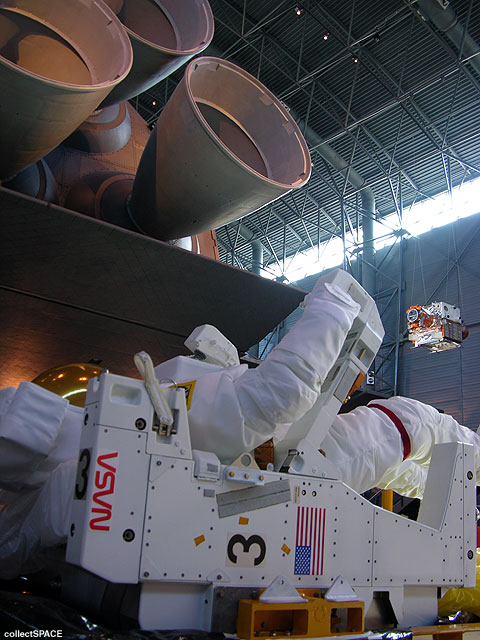
The Smithsonian took possession of MMU number 3, the same unit used by McCandless in space, from NASA in 1998. It sat in storage until today's installation.
A custom mannequin and replica spacesuit were built for the suspended exhibit, which is positioned over the space shuttle Enterprise. The MMU is displayed at an angle that is reminiscent of the photo captured of McCandless flying detached, over the Earth's horizon.
Click on thumbnails to enlarge
October 20, 2004 — Visitors to the Smithsonian National Air and Space Museum Steven F. Udvar-Hazy Center will have their first opportunity to explore its newly-filled space hangar when it opens on Monday, Nov. 1.
Though the Udvar-Hazy in Chantilly, Virginia, opened last December, the 53,000-square-foot (4,920 sq.km.) James S. McDonnell Space Hangar was inaccessible because of the required restoration for its centerpiece, space shuttle Enterprise. With that project now complete, hundreds of additional artifacts have been installed in the exhibit hall, from a 69-foot floor-to-ceiling Redstone missile to the tiny "Anita," a spider flown aboard the Skylab space station for web formation experiments.
The hangar's holdings illustrate space exploration history as organized around four themes: rocketry and missiles; human spaceflight; satellites; and space science.
"The James S. McDonnell Space Hangar at the Udvar-Hazy Center gives us the chance to share much more of our vast collection as we present the history of space exploration in richer detail," Gen. J.R. "Jack" Dailey, the museum's director, said.
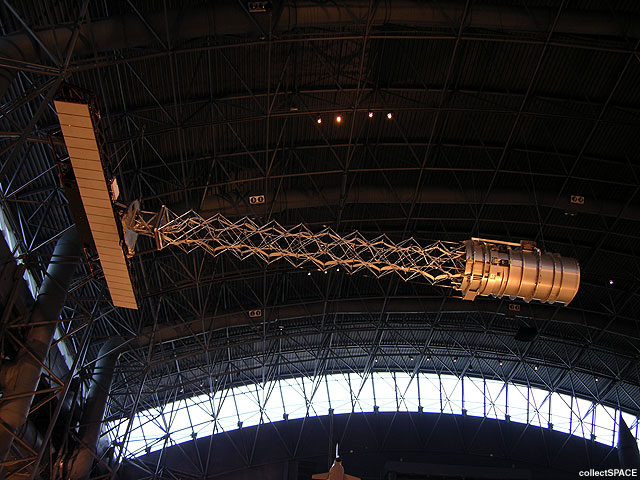
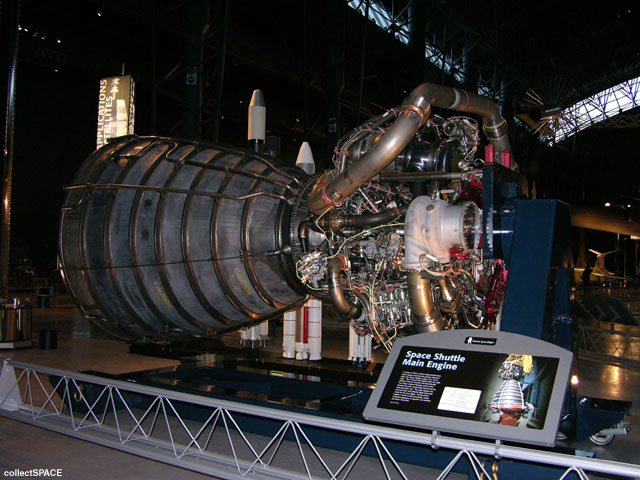
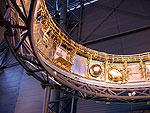
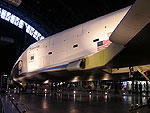
More than 100 large space artifacts are housed inside the hangar. The biggest and heaviest, including Enterprise, an instrument ring segment from a Saturn V rocket that was never built and a space shuttle main engine (SSME) are displayed at ground level. An array of missiles, satellites and space telescopes hangs from above.
Click on thumbnails to enlarge
 |
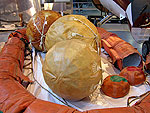 |
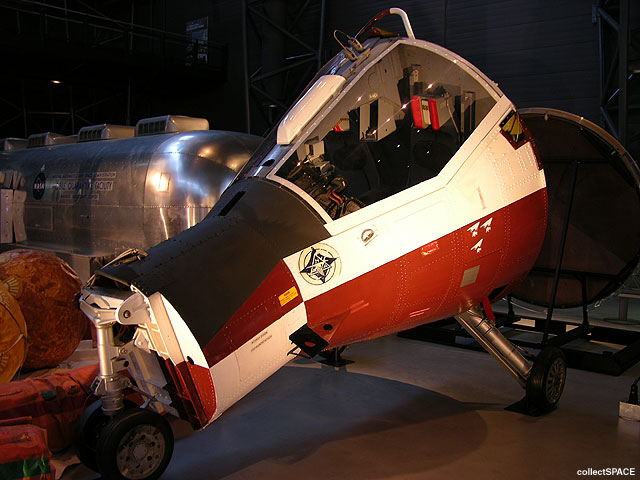
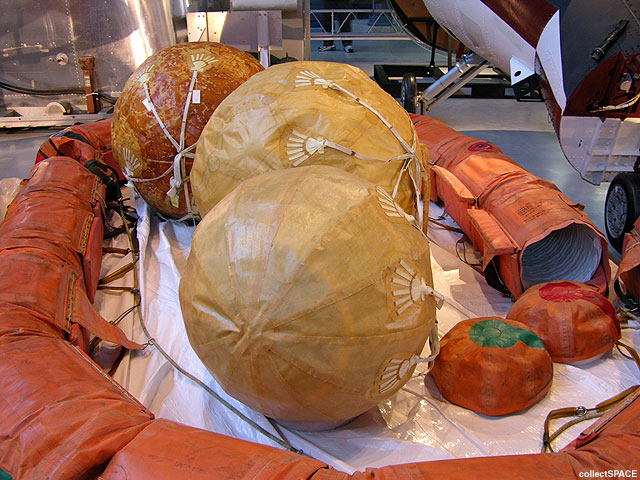
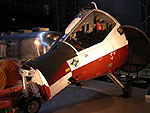
| LEFT: Gemini TTV-1 paraglider capsule with an inflatable wing; RIGHT: flotation collar and uprighting balloons used by Apollo 11; |
 |
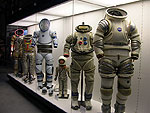 |
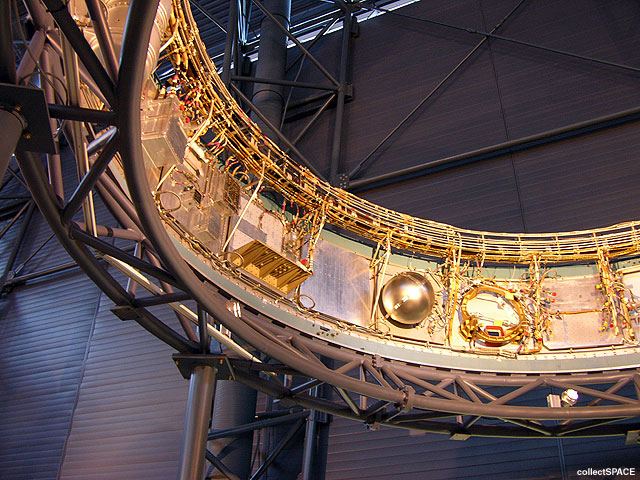
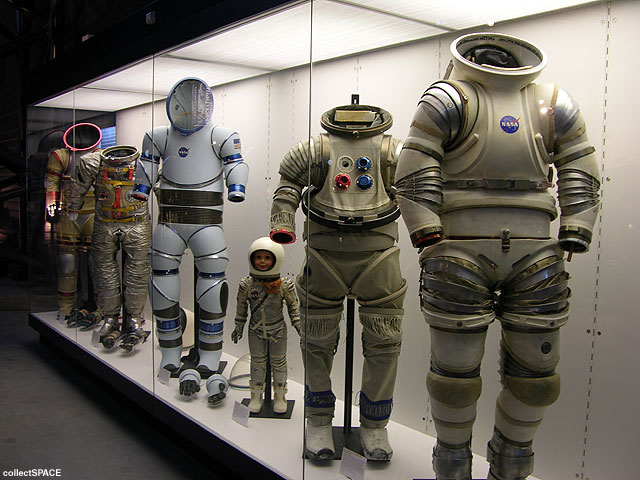
| LEFT: inside view of a segment of a Saturn V instrumentation unit; RIGHT: prototype spacesuits both from the past and for the future; |
 |
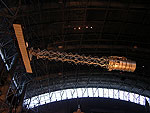 |
| LEFT: Enterprise, sans leading edge panels now being used by NASA for return to flight studies; RIGHT: Shuttle Radar Topography Mission payload flown aboard Endeavour in 2000; |
 |
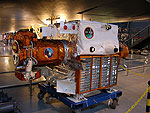 |
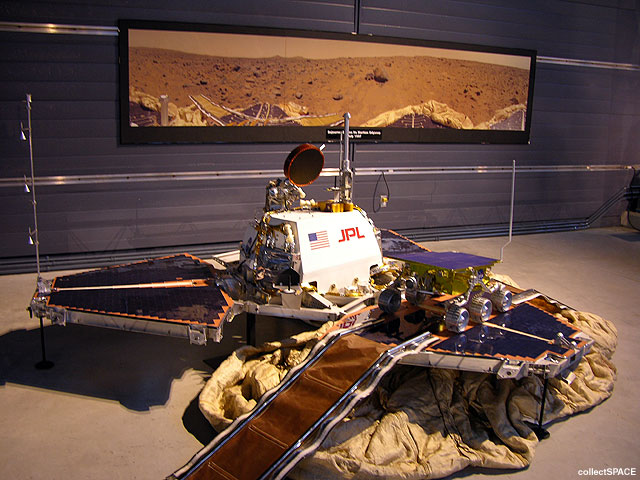
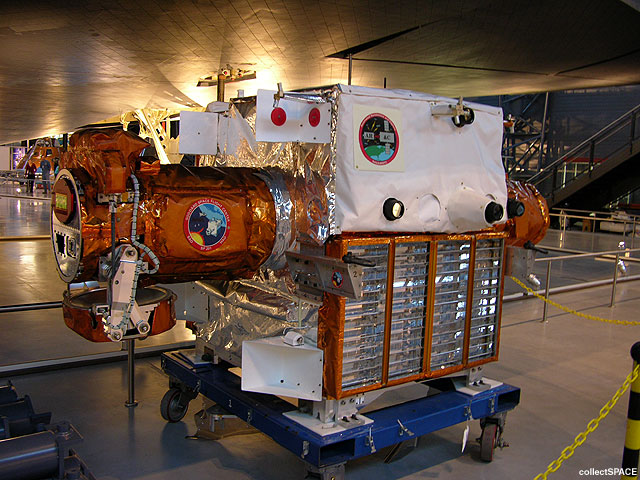
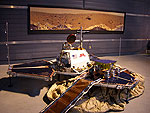
| LEFT: full-scale engineering prototype of Mars Pathfinder lander; RIGHT: Spartan 201 satellite, used during five shuttle missions; |
 |
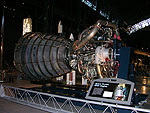 |
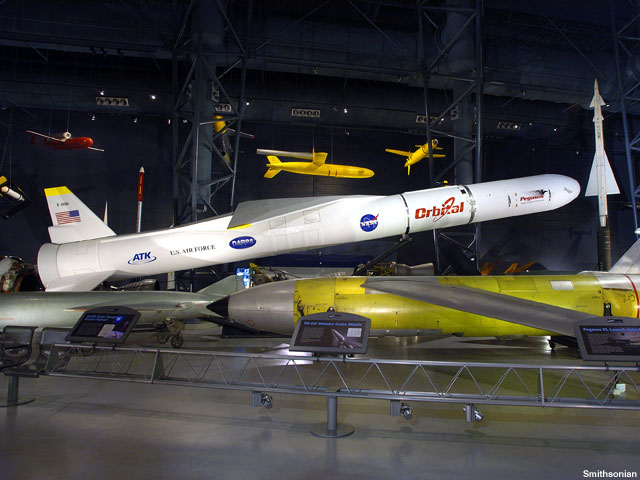
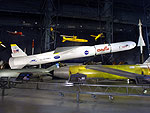
| LEFT: Pegasus, the first aircraft-launched rocket booster to carry satellites into space; RIGHT: a Space Shuttle Main Engine; |
The hangar features two elevated overlooks that provide visitors the chance to study suspended artifacts straight-on and ground-level displays from above.
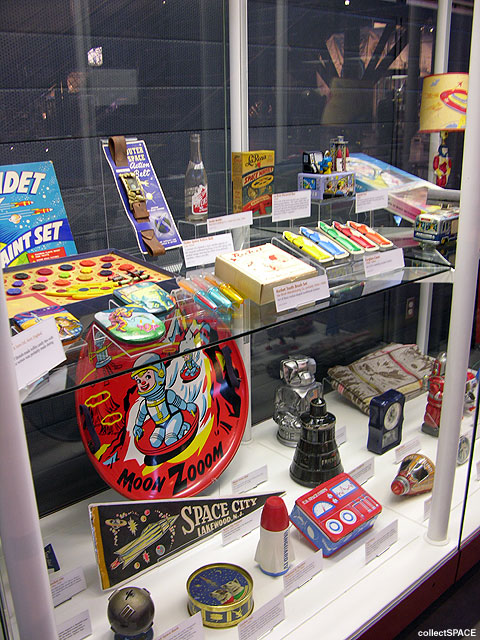
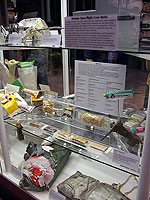
More than 500 smaller artifacts are arranged inside cases spread throughout the hangar including displays dedicated to spacesuit prototypes; research crystals formed in orbit; sounding rocket payloads; space-themed toys from the 1950s and 1960s, and even borscht in tubes prepared for Soviet cosmonauts.
The oldest artifact inside the hangar, the Ritchey Grinding Machine, dates back to the 1890s, when it was used to craft a 60-inch mirror for use in a telescope in Wisconsin. The newest artifact is an engineering model created by Naval Academy midshipmen of a PCSat communications satellite that was launched in 2001 and is still in orbit.
 |
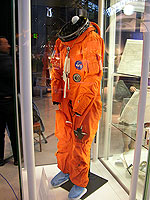 |
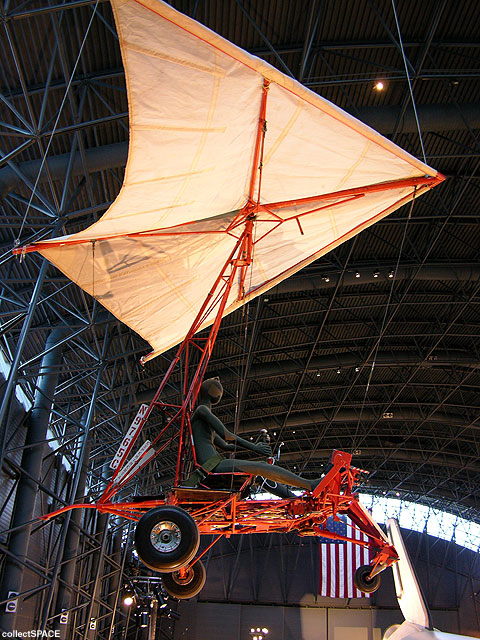
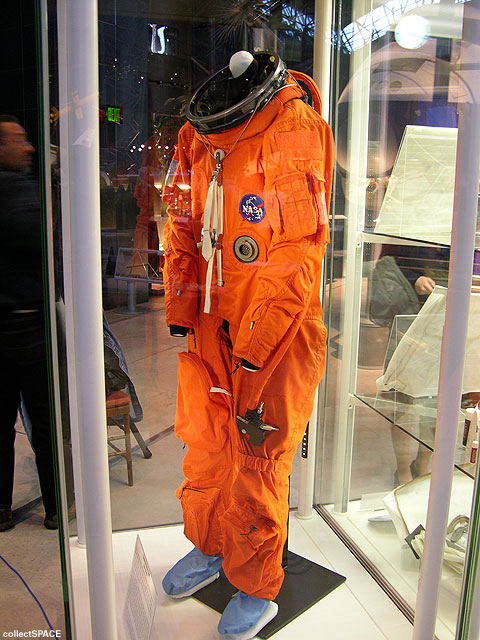
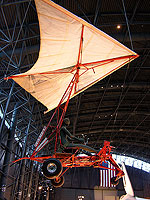
| LEFT: a Gemini paraglider research vehicle for potential ground landings; RIGHT: ACES launch and reentry shuttle pressure suit; |
 |
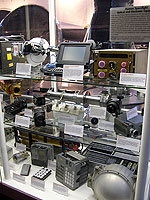 |
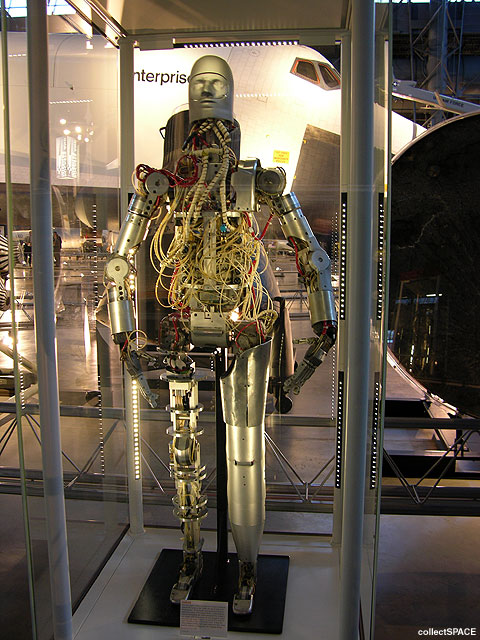
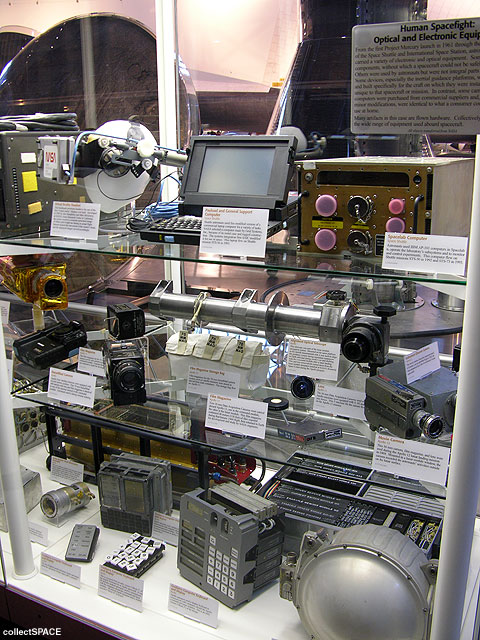
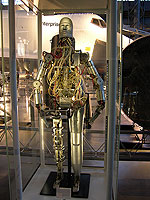
| LEFT: a human-sized, NASA-built android built for spacesuit tests; RIGHT: optical and computer equipment for Apollo and the shuttle; |
 |
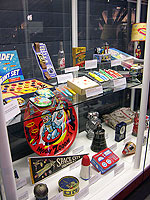 |
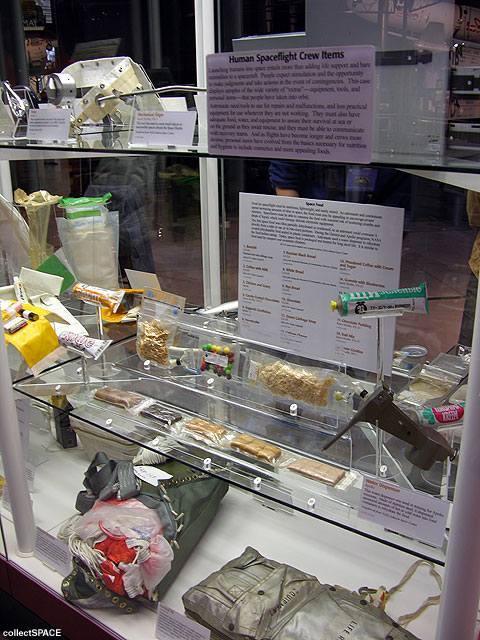
| LEFT: U.S.- and Russian-packaged food and crew items for space; RIGHT: space-themed toys and products from the 1950s-1960s; |
Many of the objects now in the space hangar had been in storage for decades. A portion was previewed during the past months in the Udvar-Hazy Center's aviation hangar.
The museum's space collection is built on an agreement that gives the Smithsonian the first option to acquire any equipment used and then retired by NASA. The collection includes all but one retired American spacecraft that flew humans and returned to Earth; all the spacesuits used to walk on the Moon and backups or engineering models of nearly every major American satellite or probe.
Space artifacts from other nations have been donated by individuals and governments or are displayed on loan.
Other artifacts now or soon-to-be exhibited in the space hangar include:
the manned maneuvering unit (MMU) used for the first-ever untethered spacewalk
a film return capsule from the last Corona satellite spy mission over the USSR
a form-fitting centrifuge seat that was made for use by Mercury astronaut John Glenn
The hangar is named after aerospace pioneer James S. McDonnell, whose company built a number of pioneering aircraft and both the Mercury and Gemini spacecraft, as were flown by the first American astronauts.
The museum plans to install more artifacts in the hangar over the next few years.
Since its opening, the Steven F. Udvar-Hazy Center has attracted more than 1.5 million visitors, making it the most popular museum site in Virginia. |

© collectSPACE. All rights reserved.

|
|
|
|