October 5, 2026 — Last fall, a company working to develop a commercial space station sent a satellite into orbit to verify the technologies it needs to operate its inaugural module. Now, Vast is selling the pieces left over from its Haven Demo mission, continuing an aerospace industry tradition.
The Haven Demo testbed ran through 49 objectives, from generating continuous power using a deployed solar array to putting the systems needed to run a space station through their paces, including communications; guidance, navigation and control; cameras; and thermal regulation.
"Haven Demo gave us exactly what we needed: real flight data," said Jim Martz, senior vice president of engineering at Vast, in a statement. "You can model propulsion, radiation effects and navigation on the ground, but until you operate in orbit, you don't truly know how your systems perform."
The Haven Demo mission also established Vast as the first commercial space station company to design, manufacture, fly, operate and deorbit a spacecraft. It is now planning the launch of the Haven-1 space station in 2027.
On Feb. 4, 2026, under Vast's command, the Haven Demo spacecraft broke apart and disintegrated as it fell back into Earth's atmosphere for a destructive reentry. Nothing from the satellite survived.
'Not flown in space'
So if nothing was left, what is there for Vast to now sell as a "Haven Demo Artifact"?
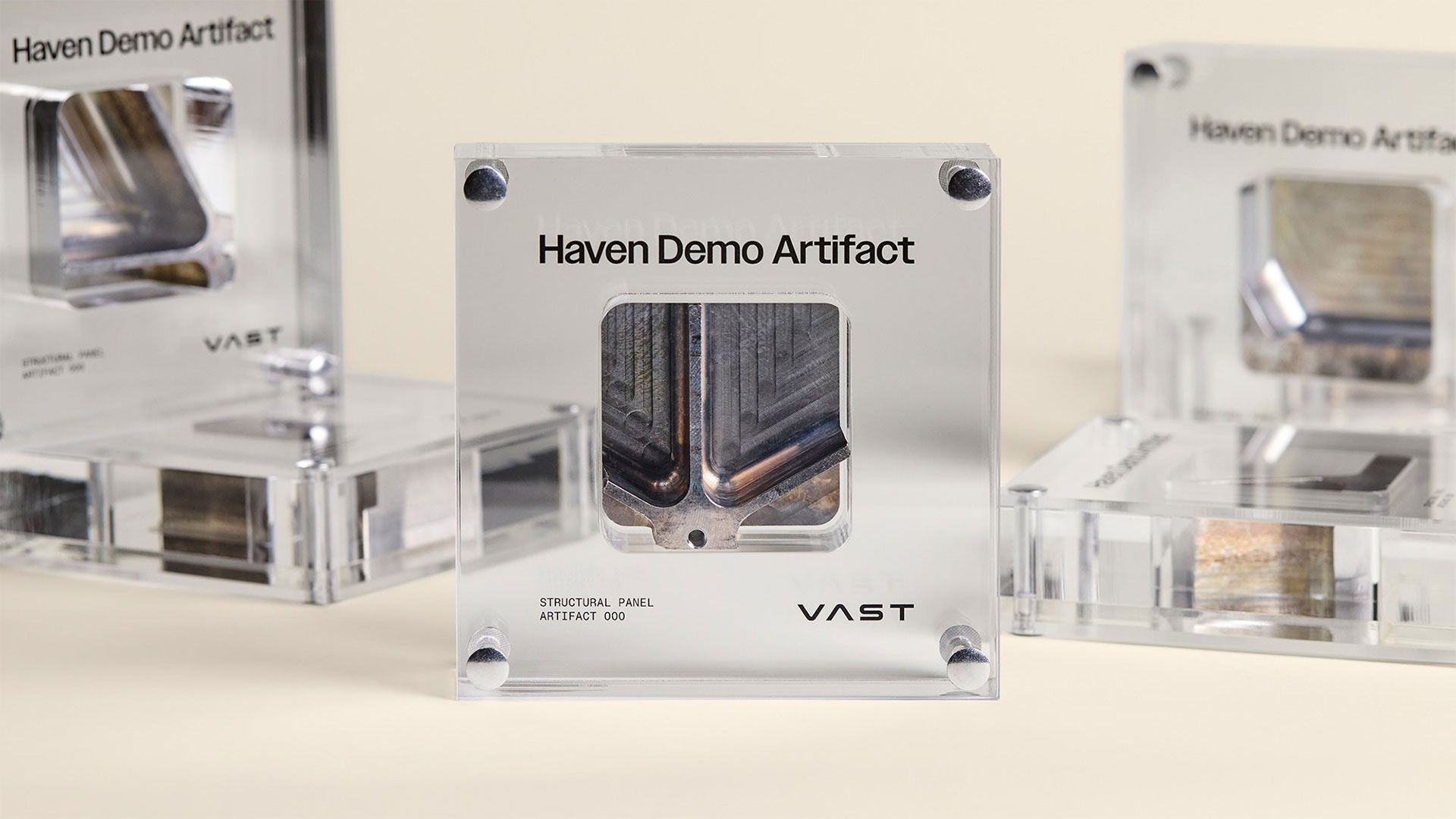
"The limited edition Haven Demo Artifact is an encased piece of a structural panel for Haven Demo," reads the description on the company's online shop. "[It] was not a piece of the actual spacecraft."
At its center, Haven Demo was built upon a metal-formed body that provided the structure to mount computers and other mission hardware. This body was formed from metal panels, of which the "Artifact" pieces are spare remnants.
Vast has embedded each individually-cut segment in acrylic with inscriptions that read, "Haven Demo Artifact" and "Structural Panel Artifact 000." According to the company, no two artifacts are exactly the same.
Each Haven Demo Artifact is priced at $250.
First chips
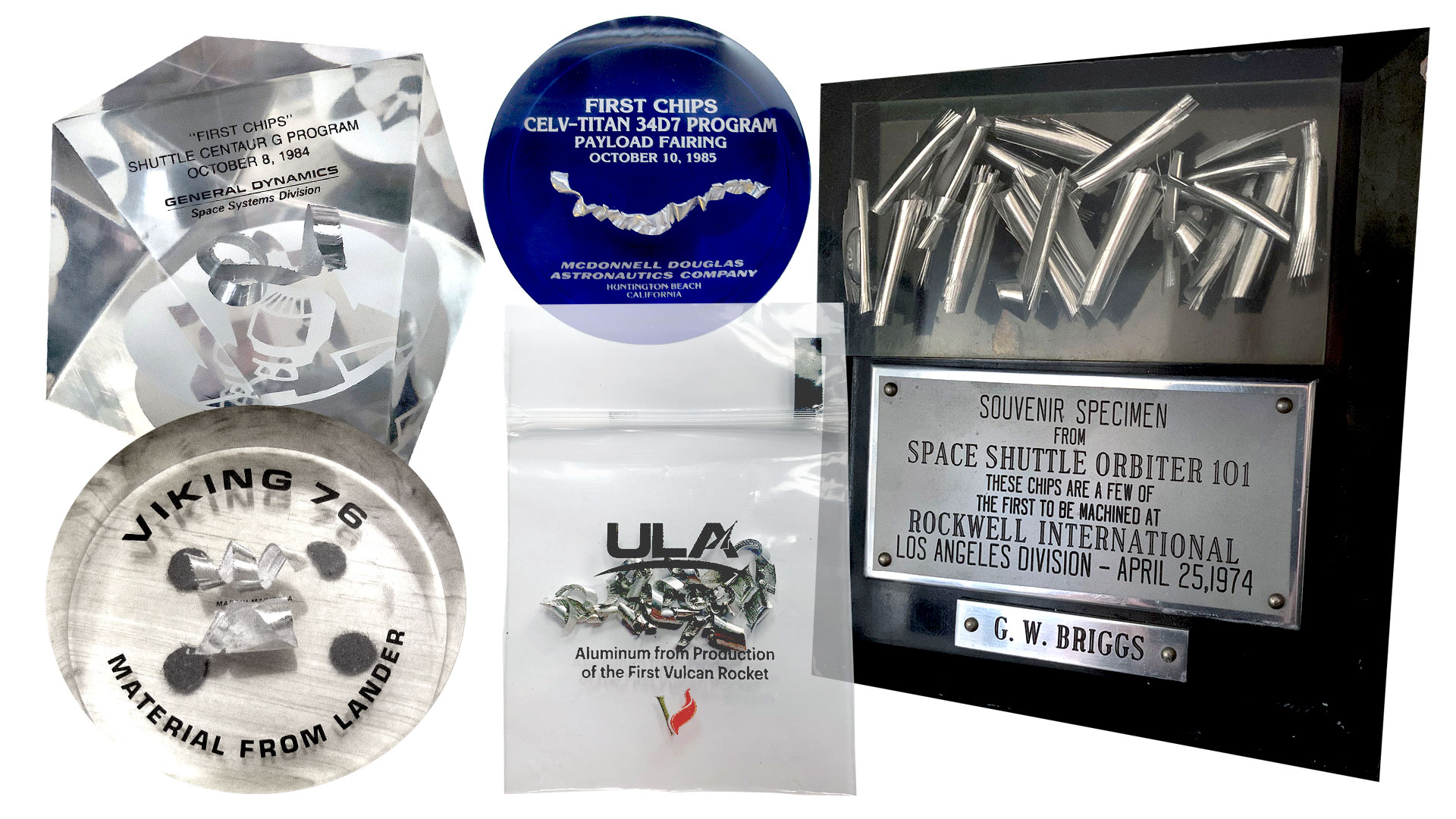
Beginning decades ago, machinists working to shape metal into the first parts of a new type of aircraft (and later, spacecraft) would set aside the first curls that came off the lathe and hold on to them as souvenirs. As the practice grew into a tradition, these "first chips" were embedded in acrylic and became paperweights or other types of mementos for company executives and employees.
Examples of space age first chip displays have included metal curls saved from the production of Delta and Atlas rockets, the Viking I Mars lander, OV-101 (better known as the prototype space shuttle orbiter "Enterprise") and Centaur-G (the never-realized boost stage to be deployed from the shuttle). More recently, United Launch Alliance (ULA) bagged shavings from its first Vulcan rocket.
Vast's Haven Demo Artifact displays are not first chips in the traditional sense but still represent fragments of a new type of spacecraft being saved as a collectible. And like the Viking chips, they are some of the only remaining metal with a direct link to a history-making spacecraft left on Earth. |
|
Vast's Haven Demo Artifact display includes a segment cut from the structural panels left over from the manufacturing of the commercial space station testbed. (Vast)
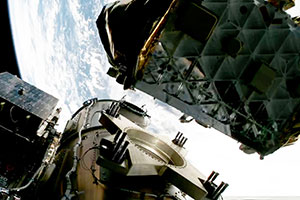
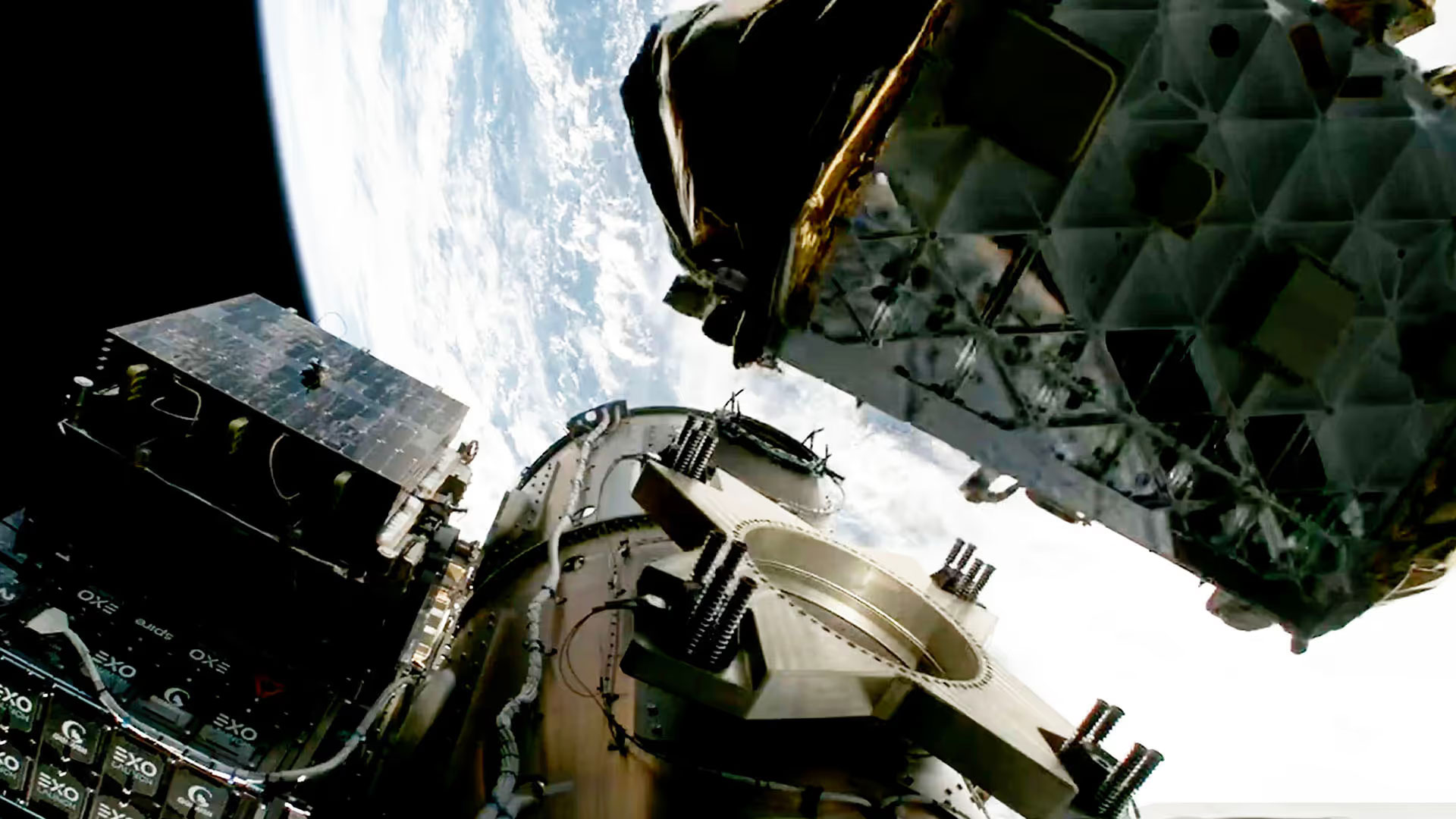
Vast's Haven Demo spacecraft, a testbed for the company's space station, is seen (at right) deploying into orbit on Nov. 2, 2025. (Vast)
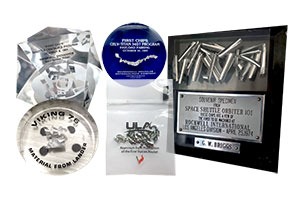
A collection of spacecraft and rocket "first chips," metal scraps from the vehicles' fabrication, as has become traditional. (collectSPACE) |