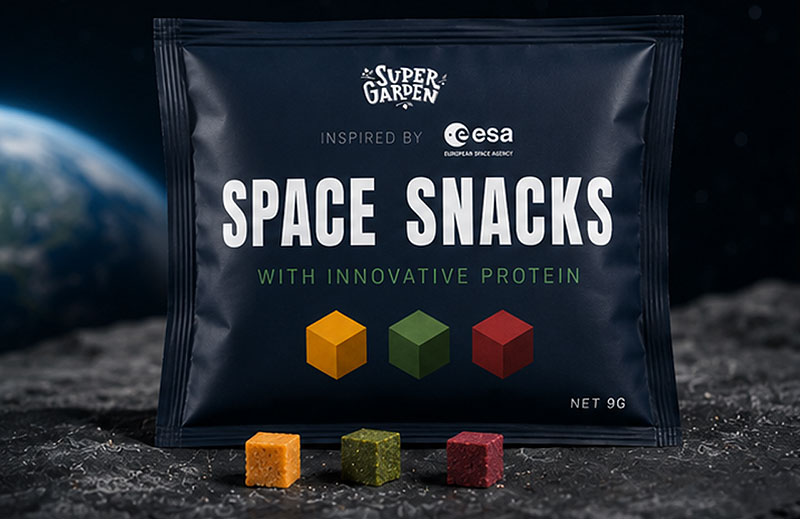
August 18, 2026 — A European Space Agency (ESA) research project has resulted in the launch of a new market for space commercialization: snacks.
Space Snacks from the Lithuania-based company UAB Geld Baltic are colorful, freeze-dried cubes enriched with spirulina, pea protein and other innovative ingredients. Developed with the French Space Agency (CNES), the Institute for Space Medicine and Physiology (MEDES) in Toulouse and Lithuanian R&D company Biordico, Space Snacks are the evolution of a concept with a potential for use in space.
"These snacks began as a research project funded by ESA, and today they become products anyone can taste," said Laura Kaziukonienė, founder and CEO of Geld Baltic, in a statement. "This is an important milestone not only for our company but for Europe's space ecosystem, because it shows that technologies developed for space can become products for everyday life."
Flavors, textures and ideas
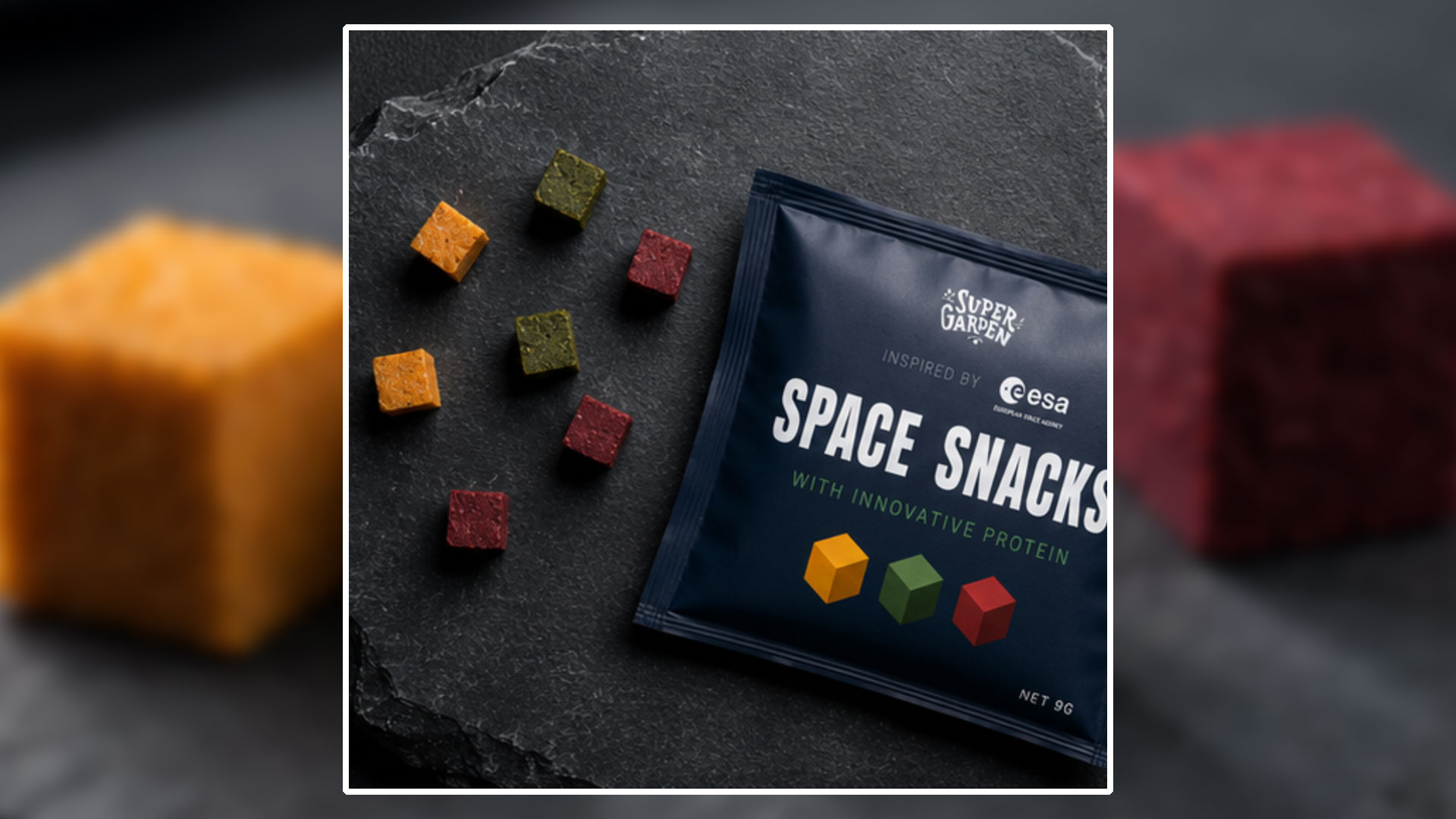
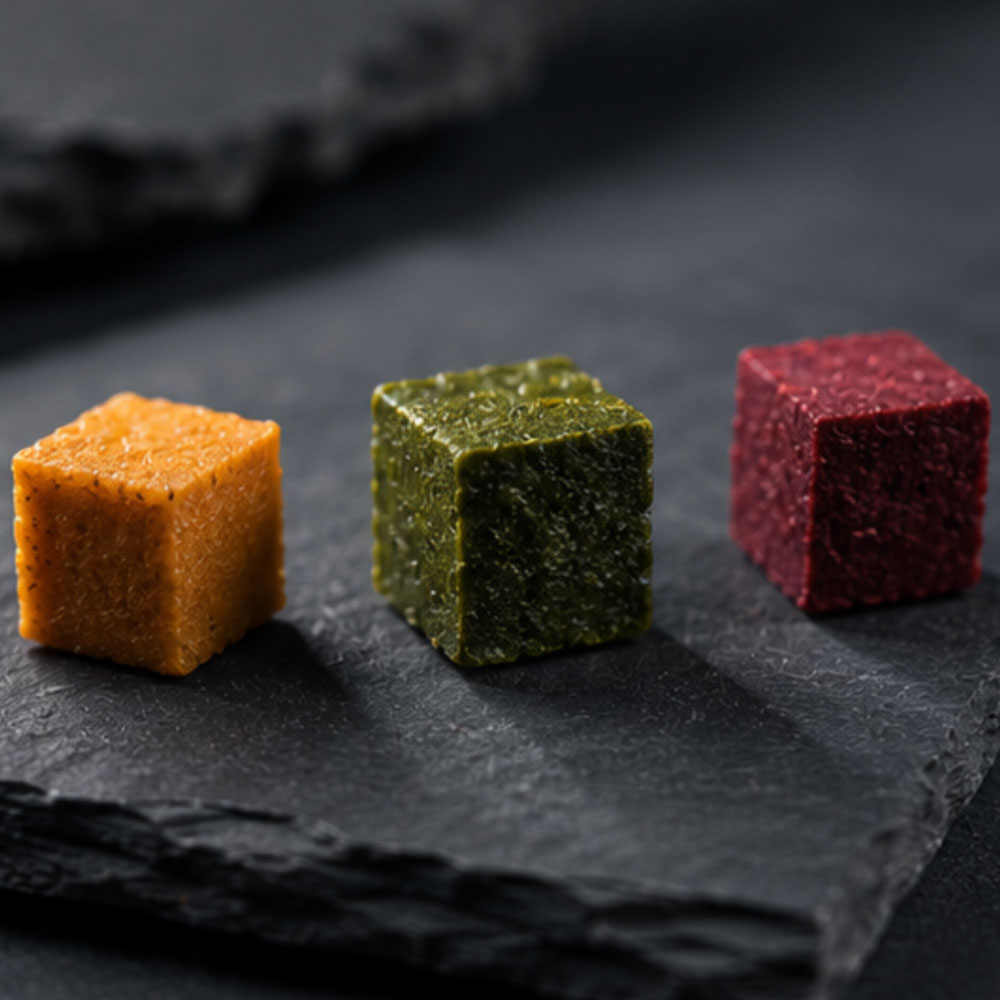
Advertised as combining "unusual flavors, unexpected textures and space-inspired ideas," Space Snacks is now reaching consumers in two initial varieties: "innovative protein," such as pea protein isolate and chlorella powder, and spirulina, a microscopic blue-green algae that is a nutrient-dense superfood.
The same characteristics that makes Space Snacks a fit for astronauts is also applicable to every day life on Earth, as evident by how Kaziukonienė got started.
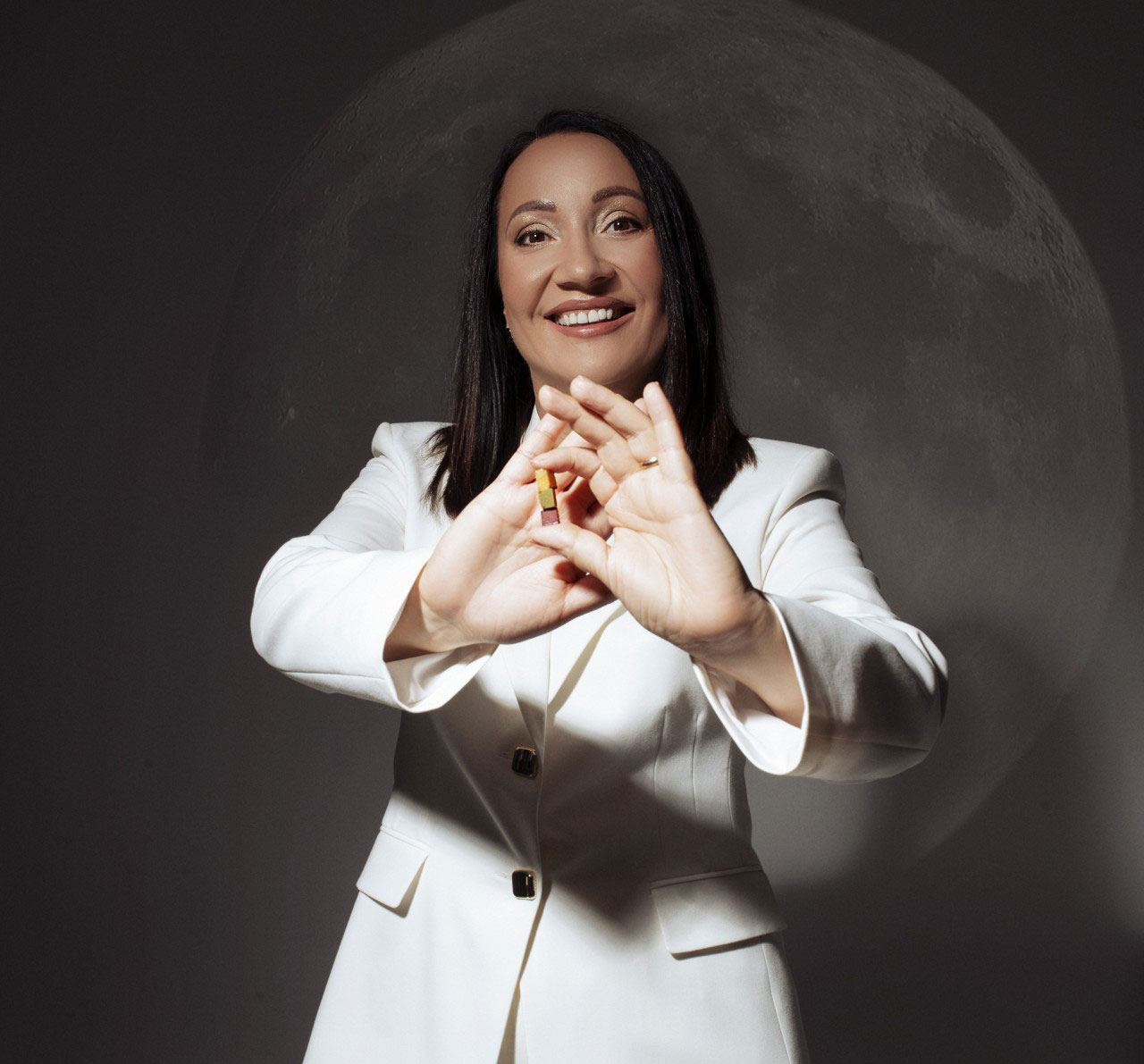
"My children refused to eat vegetables, I was looking for a way to get vegetables into their diet without a daily battle at the table," she told collectSPACE. "The very first cube was a carrot: an entire carrot compressed into a one-gram, one-centimeter cube. No preservatives, no added sugar, a clean label of freeze-dried vegetable powder, plant fats and proteins."
"Years later, that same format became the basis of the patented recipe behind Space Snacks. So the honest version of the story is that the cube was developed against the toughest test audience in existence, children who hate vegetables, and space requirements turned out to be the easier customer," Kaziukonienė said.
Space Snacks is not only Geld Baltic's first product line to be marketed under an ESA trademark license (each pack or tin includes "inspired by ESA" with the space agency's logo), but also the first by any Lithuanian food product. The company's other brands and products include Star Candies' freeze-dried ice cream and Super Garden freeze-dried fruits, berries and vegetables.
There is also "S.T.A.R.M.Y.", long-shelf-life (up to 10 years) freeze-dried food including meal rations, freeze-dried meals and snacks designed for hiking, travel, survival, extreme conditions, military use and emergency supplies for home.
"We sell snack cubes not only for the national [Lithuania] military, but it is used in real war conditions in Ukraine. Also for Alpinists and sailors," said Kaziukonienė. "We focus on special-purpose food. Food for astronauts, soldiers and extreme sports have so much in common."
Next stop: space?
Having just launched this month, Space Snacks are currently only available for sale through Super Garden's online store. Kaziukonienė hopes to follow that up by distributing to space and science museum gift shops.
"When Lithuania holds the presidency of the council of the EU in the first half of 2027, Space Snacks will serve as the official business gift for visiting guests," said Kaziukonienė.
The original ESA-sponsored project ("Development of Future Snacks for Space" conducted in 2024) included testing and evaluating other types of ingredients, as well. Those varieties of Space Snacks are still awaiting authorization under the European Union's Novel Food regulations.
"In the ESA project we confirmed also Space Snacks with Solein, the protein grown from air and electricity by Finland's Solar Foods, and further recipes are built on proteins such as [the iron-binding protein] lactoferrin in forms not yet authorized for the EU market — so those will have to wait for the regulatory side to catch up," Kaziukonienė told collectSPACE.
In addition to other ingredients, Kaziukonienė is also waiting for the opportunity to see Space Snacks consumed by international astronauts in space.
"What we are submitting is a proposal for the next phase, prepared with our project team (CNES, MEDES and Biordico)," she said. "If ESA approves the proposal, the research would cover radiation and microgravity effects as well as sensory and emotional aspects. I want the sensory work to include astronauts of different cultures and genders, because a Japanese astronaut experiences food differently than a European one, and that difference is exactly the depth this field is missing."
"The process is competitive and ESA has yet to decide, so flying Space Snacks to space remains our ambition, not yet our plan," said Kaziukonienė. |
|
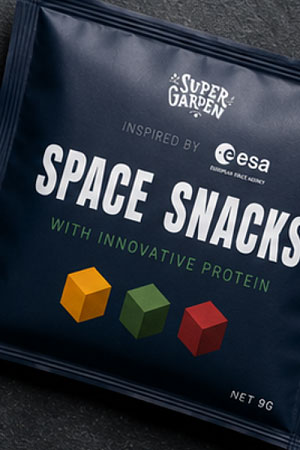
Inspired by an ESA-funded research project, Super Garden's Space Snacks combine unusual flavors, unexpected textures and space-inspired ideas. (UAB Geld Baltic)
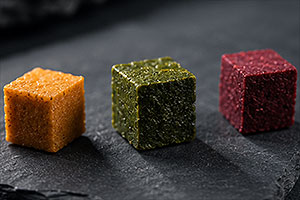
Space Snacks are available in two varieties: spirulina or innovative proteins, with more recipes to come. (UAB Geld Baltic)
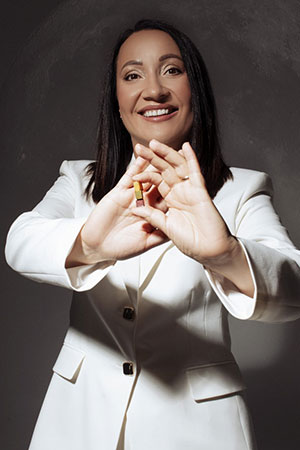
UAB Geld Baltic founder and CEO Laura Kaziukonienė can trace the history of Space Snacks back to her attempts to get her young children to eat vegetables. (UAB Geld Baltic) |