July 29, 2026 — The unusual tools that an astronaut-turned-artist famously used to infuse not just what it felt to walk on the moon, but pieces of the moon itself, have now commanded auction results higher than some of the works they helped to create.
Heritage Auctions' latest space exploration-themed auction included consignments from the estate of Apollo 12 moonwalker and artist Alan Bean. The two-day sale included 660 lots, of which about 40 came from the collection of the fourth person to step onto the lunar surface. Of those, seven were complete artifacts, cuttings or shavings that came from Bean's career as an astronaut and later became integral to his painting the moon.
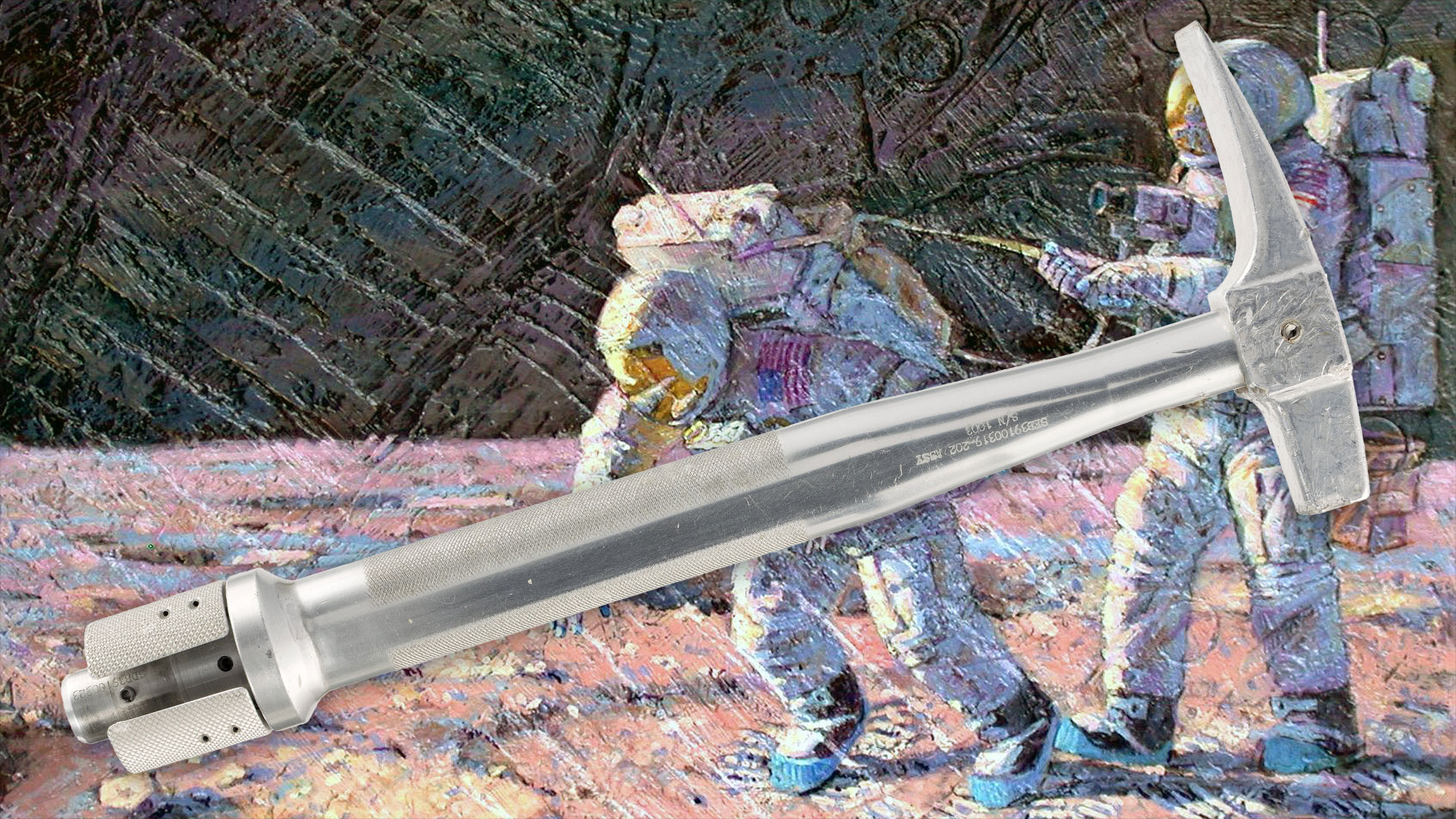
"That hammer's a universal tool," said Bean during the first of his two outings on the surface in November 1969. The hammer, with its steel head and aluminum handle, was taken to help Bean and Apollo 12 commander Charles "Pete" Conrad to collect geological samples. But it was also indispensable when Bean had to troubleshoot establishing a live TV connection with Earth and having to encourage a stubborn plutonium-filled cask into a radioisotope thermal generator (RTG).
"Don't come to the moon without a hammer," Bean said at the time. Decades later, he might have said the same thing as he used the same hammer to add texture to the heavy acrylic surfaces of the lunar scenes he was painting.
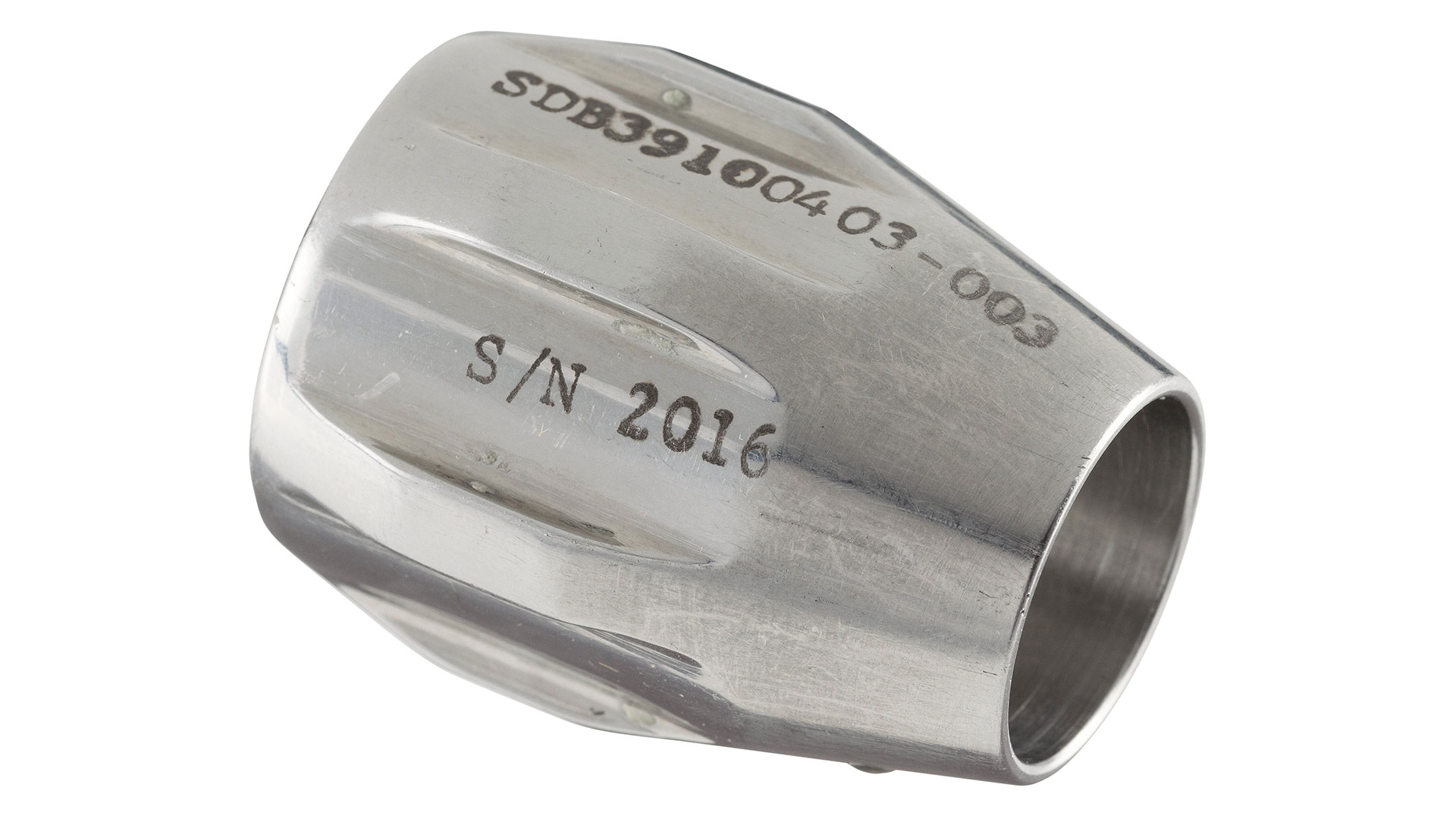
"As an artist, I use replicas of my moon boots and the actual hammer and an actual bit from the front of one of the core tubes that I drove one meter into the lunar surface when I was exploring the moon. With these tools I sculpt a textured surface unique in all of art history," Bean explained for his online art gallery, prior to his death in 2018.
Bean's hammer brought in a hammer price of $650,000 ($812,500 with the 25% buyer's premium) on July 23.
Examples of Bean's original works have sold for six figures, but not the $800K spent on the hammer. A recent sale of "Earth Is Watching," a 1983 painting showing Apollo 17 geologist Harrison Schmitt on the moon, sold for $131,054 (with buyer's premium) in April 2025. Bean's gallery lists a pair of 2007 portraits of Apollo 11 astronauts Neil Armstrong and Buzz Aldrin selling for $228,600 each.
Heritage also sold the lunar core tube bit that Bean mentioned as part of his creative process. That 1.625-inch-long (4.1 cm) metal piece sold for $81,250 (with buyer's premium).
In addition to striking, dragging and rolling the artifacts across the canvas, Bean also mixed into his paints bits of moon dust and spacecraft heat shield. The Apollo-returned lunar material, which loose would have been illegal for him to own, was sourced from the dust-stained patches removed from his spacesuit. (NASA gifted each of the crews with their flown patches as part of a post-flight tradition.)
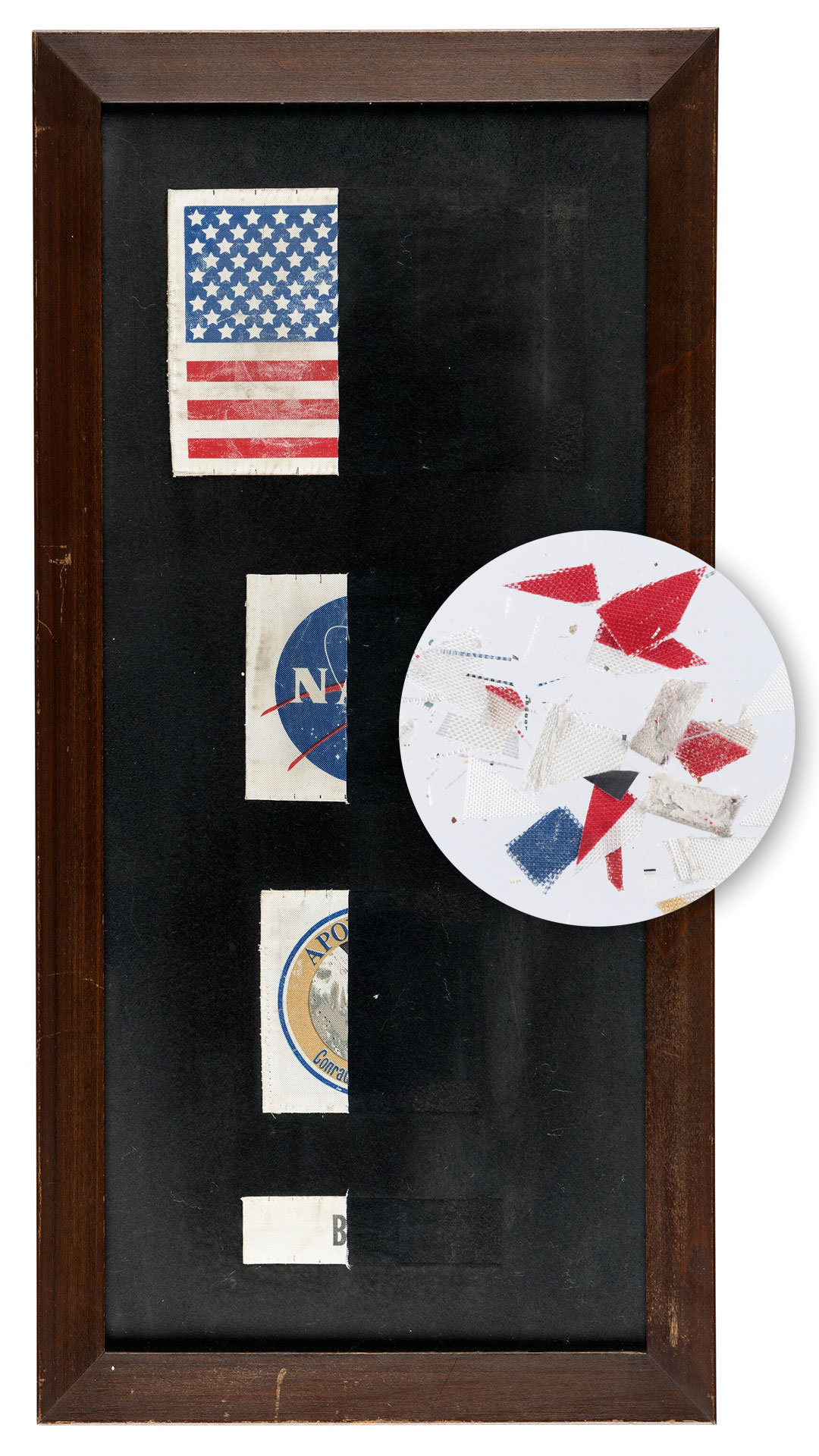
The auction offered one lot of 12 small cuttings of Bean's American flag, mission insignia, NASA logo and name tag worn on his Apollo 12 lunar spacesuit that he would have mixed into his texturing paste and acrylics, embedding a small amount of moon dust into each of works. The Beta cloth patch remnants sold for $18,750 (with buyer's premium).
The one-third of the patches that were left uncut remained in their frame and, for many years hung over Bean's desk. Heritage sold the four suit emblem remains for $84,375 and what was left of the patches off his portable life support system (PLSS) backpack for $78,125.
Small bags of heat shield plug fragments and shavings, as well as RCS (reaction control system) o-ring shavings, used by Bean in the same way he used his patch cuttings were auctioned for $2,750, $1,625 and $1,562.50, respectively.
Other highlights from the Bean estate that were not associated with his paintings included the cuff checklist that Bean wore and that infamously included Playboy centerfolds as a gag ($400,000) and his extravehicular gloves worn outside of the United States' first space station, Skylab, in 1973 ($68,750).
In total, the Bean estate lots brought in $1.7 million out of the sale's overall $3.1 million. The auction the largest at Heritage since the Neil Armstrong Family Collection brought $4,6 million during its third in a series of sales held in 2019.
Heritage earlier offered a selection of artifacts from Bean's collection while the moonwalker was still alive in 2014. That sale included one of the shoulder straps from his Apollo 12 PLSS backpack ($93,750) and the scissors he had in his pocket while on the moon ($100,000). |
|
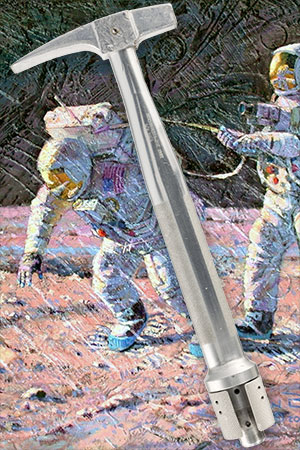
The moon rock hammer that Alan Bean used during the Apollo 12 mission and later to add texture to his paintings has sold at auction for $812,500. (Heritage Auctions/Alan Bean Gallery)
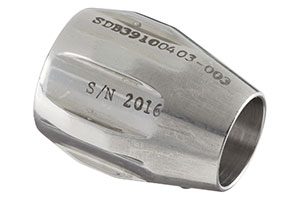
This bit was used by Apollo 12 moonwalker Alan Bean to collect lunar core samples before he repurposed it to use with his paintings. It sold for $81,250 on July 23, 2026. (Heritage Auctions)
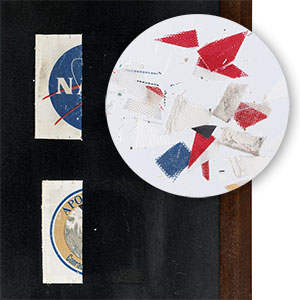
Alan Bean's cut apart moon dust-stained Apollo 12 mission patches sold for $18,750 for the cuttings and $84,375 for the approximately one-third that was left intact and framed. (Heritage Auctions) |