Space Newsspace history and artifacts articlesMessagesspace history discussion forumsSightingsworldwide astronaut appearancesResourcesselected space history documents
advertisements
Artemis II and ISS astronauts take the ball for 2026 FIFA World Cup
June 21, 2026
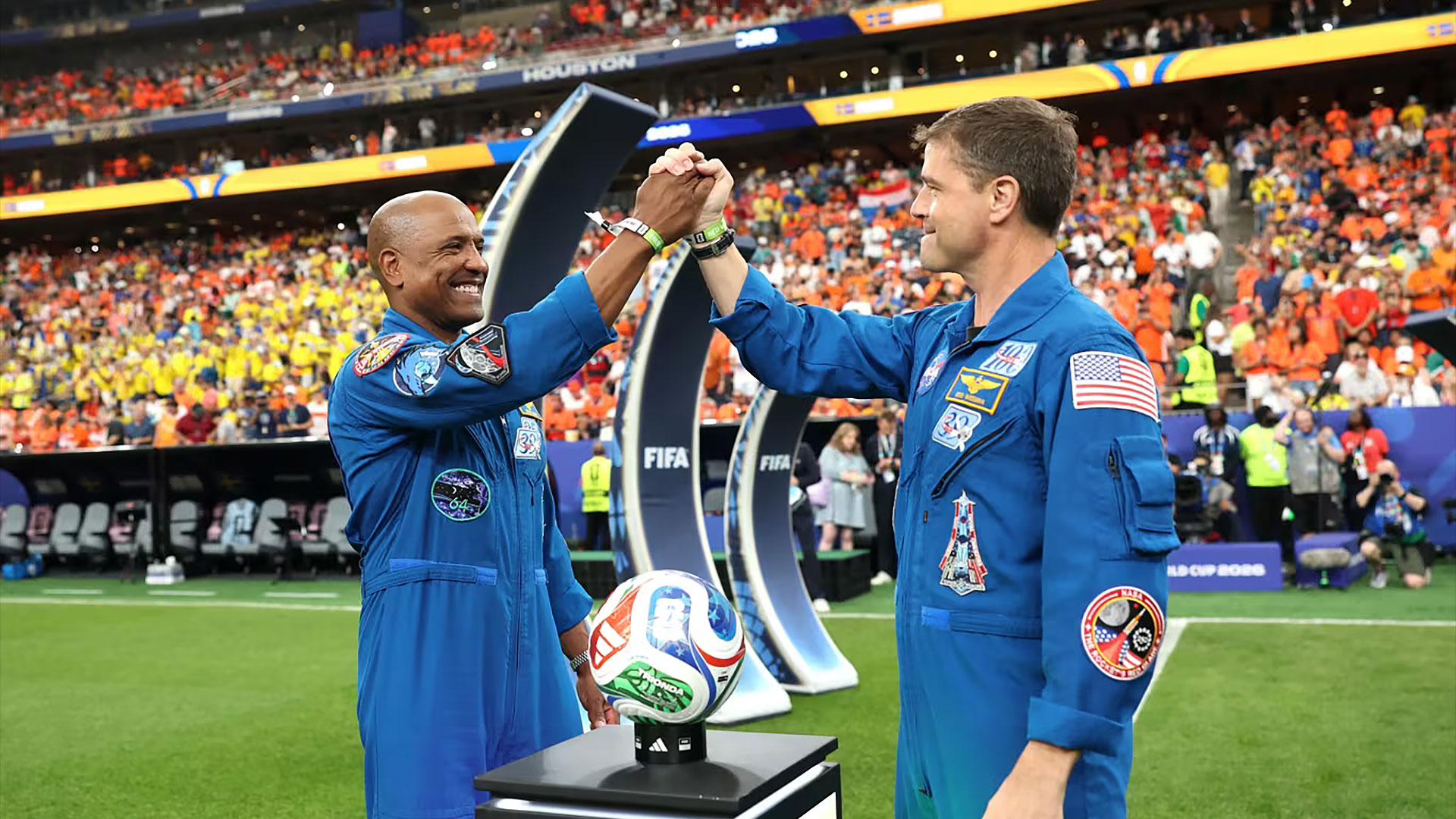
— Astronauts Reid Wiseman and Victor Glover once again found themselves in the vicinity of a worldwide-recognizable orb on Saturday (June 20), as thousands, if not millions of people watched on live.
The commander and pilot of NASA's Artemis II mission — which flew by the moon in April — delivered the match ball on the plinth before the FIFA World Cup game between the Netherlands and Sweden in Houston, Texas.
"Football and space exploration have the power to inspire future generations, and it was wonderful to share this special occasion," said Gianni Infantino, FIFA's (Federation Internationale de Football Association) president, after meeting with Wiseman and Glover.
Houston is home to the U.S. astronaut corps, as well as NASA's mission control and the agency's spaceflight training facilities at the Johnson Space Center. The city is also now one of 16 locations in the United States, Mexico and Canada where matches for this year's World Cup are being played.
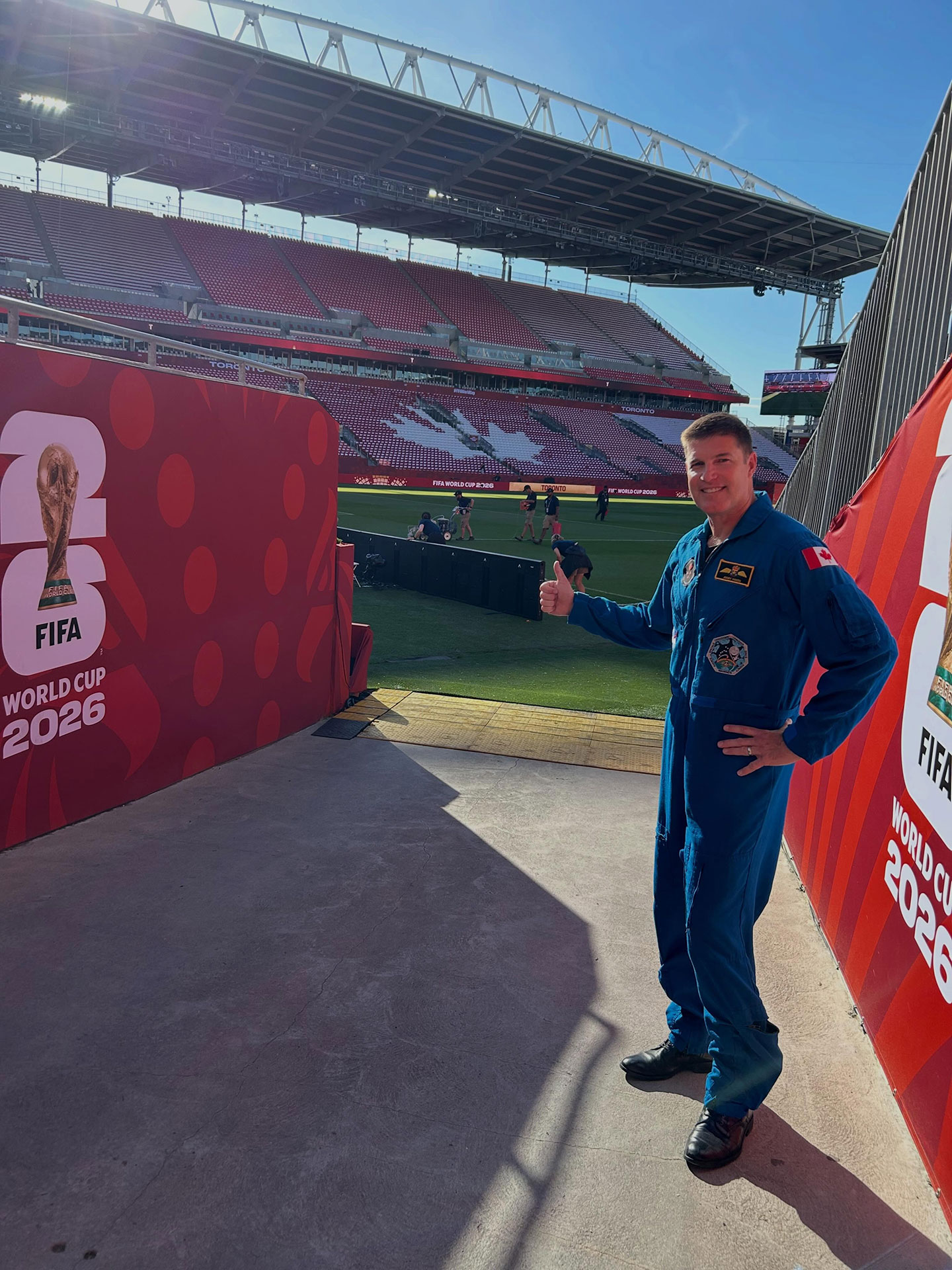
"One of the things that makes space exploration inspiring is how challenging it is and that pursuit of excellence to do something really hard. And, of course, on the soccer pitch, we're going to see that pursuit of excellence, people bringing their all, leaving it all on the field. That's just a great remeinder to all of us; that is why we love to watch it," said Wiseman and Glover's crewmate, Jeremy Hansen, who was aboard Artemis II representing the Canadian Space Agency.
"I'll be excited seeing Team Canada there just doing it," Hansen told CTV News in an interview on June 12.
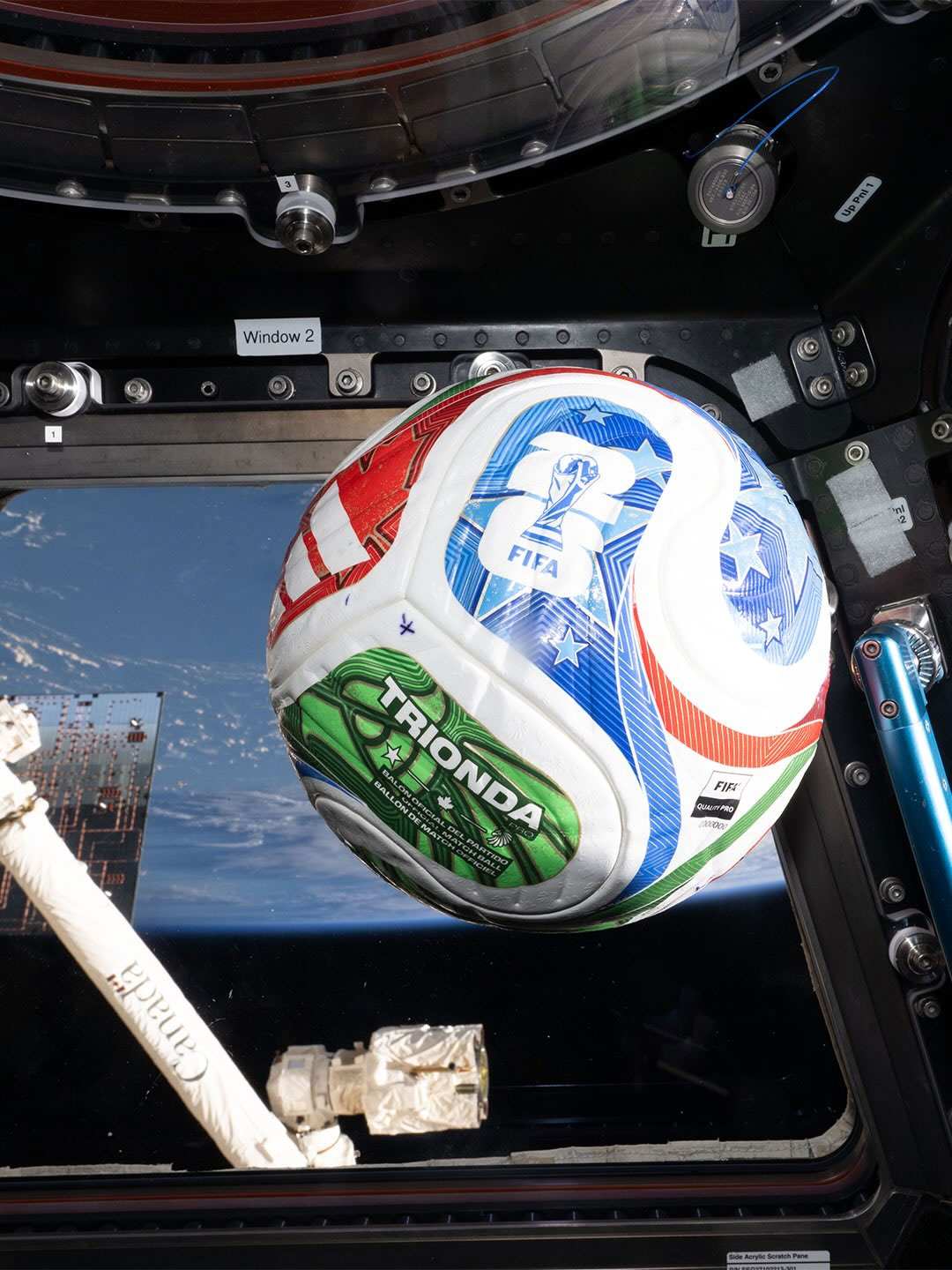
The official 2026 World Cup match ball is named "Trionda," Spanish for "Three Waves," given that this is the first time that three countries have come together to host the games.
Made by Adidas for FIFA, the Trionda features connected ball technology that tracks the ball's movement across the field. Its state-of-the-art motion sensor chip benefited from research conducted on the International Space Station (ISS).
"Because of research conducted on the space station, electronics are now included in major tournament soccer balls for the 2026 World Cup, which ensure the soccer ball is balanced statically and dynamically," said Expedition 74 flight engineer Chris Williams in a video recorded aboard the orbiting outpost.
In 2019, the U.S. National Lab on the ISS was used to study how a soccer ball's internal mass affects its motion, stability and rotation. The findings have improved understanding of how embedded technologies, including match-ball sensors, can influence performance during play.
Beyond the focus on technology, the station's crew also found similarities between the World Cup and the way they work together in space.
"The World Cup is more than a tournament, it's a global phenomenon that pushes the boundaries of innovation, pioneers new technology and drives human performance, similar to what we do here at NASA," said Jack Hathaway, a fellow Expedition 74 flight engineer.
"We are focused on sending humans to the surface of the moon and to Mars," added French astronaut Sophie Adenot with the European Space Agency, "but whether on the soccer pitch or in orbit, it's the connection to each other that is so special."
Video clips included with the crew's message showed the Trionda spinning in microgravity alongside the galaxy-themed Nativo Questra that was used by Major League Soccer for its 2019 season and a black-and-white ball that was designed by Adidas to purposely have a mass imbalance for use in the tests.
Other soccer balls flew inside the Official Flight Kit (OFK) aboard the space shuttle. Discovery, for example, carried deflated balls for the 1989 NCAA Soccer Championship Team (which ended in a tie between the University of Virginia and Santa Clara University), the U.S. Air Force Academy and Adidas Sports Museum, whereas a ball for the South Texas Youth Soccer Association flew on STS-31, the mission that deployed the Hubble Space Telescope in 1990.
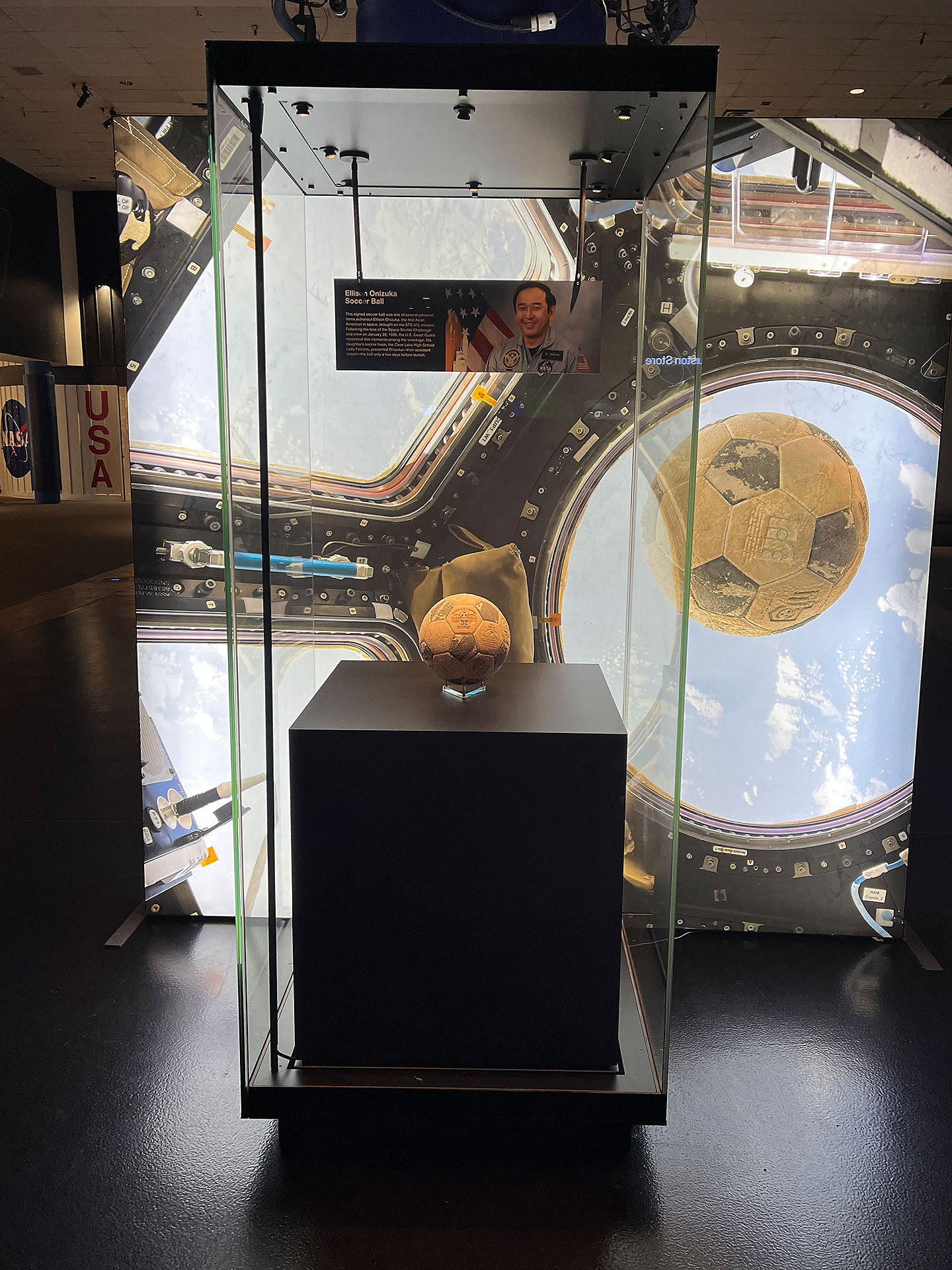
In celebration of the 2026 World Cup, a soccer ball recovered from among the debris of the fallen space shuttle Challenger in 1986 is now on rare public display at Space Center Houston, the visitor center for NASA's Johnson Space Center. The exhibit is part of a larger display at both the center and at the FIFA Fan Festival in Houston's East Downtown (EaDo) celebrating the connection between sports and space exploration.
Artemis II astronauts Victor Glover (left) and Reid Wiseman deliver the match ball on the plinth before the FIFA World Cup game between the Netherlands and Sweden on June 20, 2026. (FIFA)
Canadian Space Agency astronaut Jeremy Hansen, who flew to the moon on NASA's Artemis II mission in April, gives a thumbs up from the arena in Toronto where Team Canada would play their first match in the FIFA World Cup on June 12, 2026. (Jeremy Hansen)
An Adidas Trionda FIFA World Cup match ball is seen floating on board the International Space Station. (NASA)
A soccer ball that was recovered among the debris from the fallen space shuttle Challenger in 1986, as currently on display at Space Center Houston in Texas for the 2026 World Cup. (collectSPACE)