advertisements advertisements
|

|
Towers for California shuttle launches demolished for SpaceX rockets
June 17, 2026 — One of the United States' most-storied space launch sites has been cleared of its decades-old support towers, making way for modern rockets to use the pad. Space Launch Complex-6 (SLC-6) at Vandenberg Space Force Station is arguably more famous for what did not lift off from there then what did.
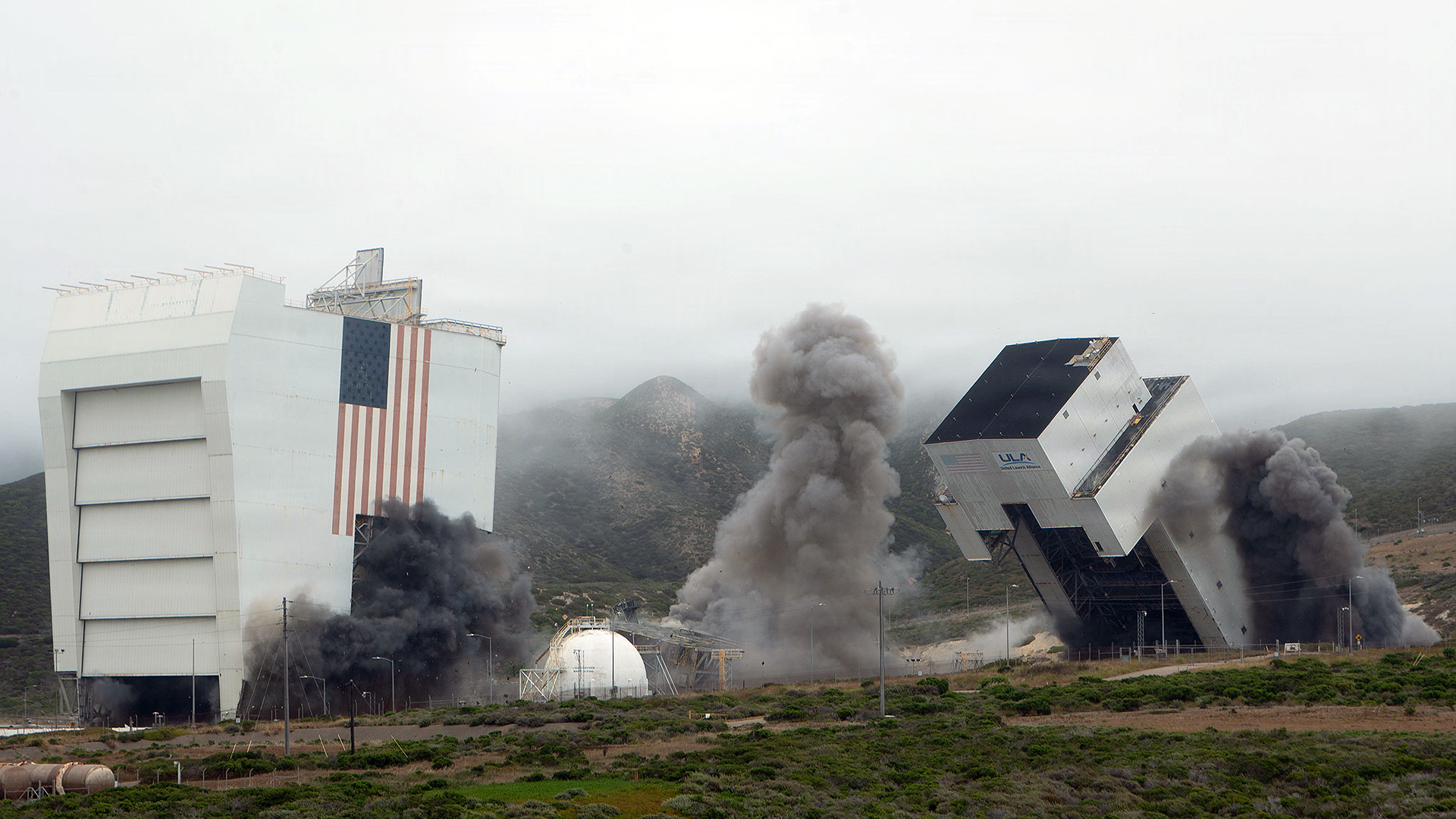
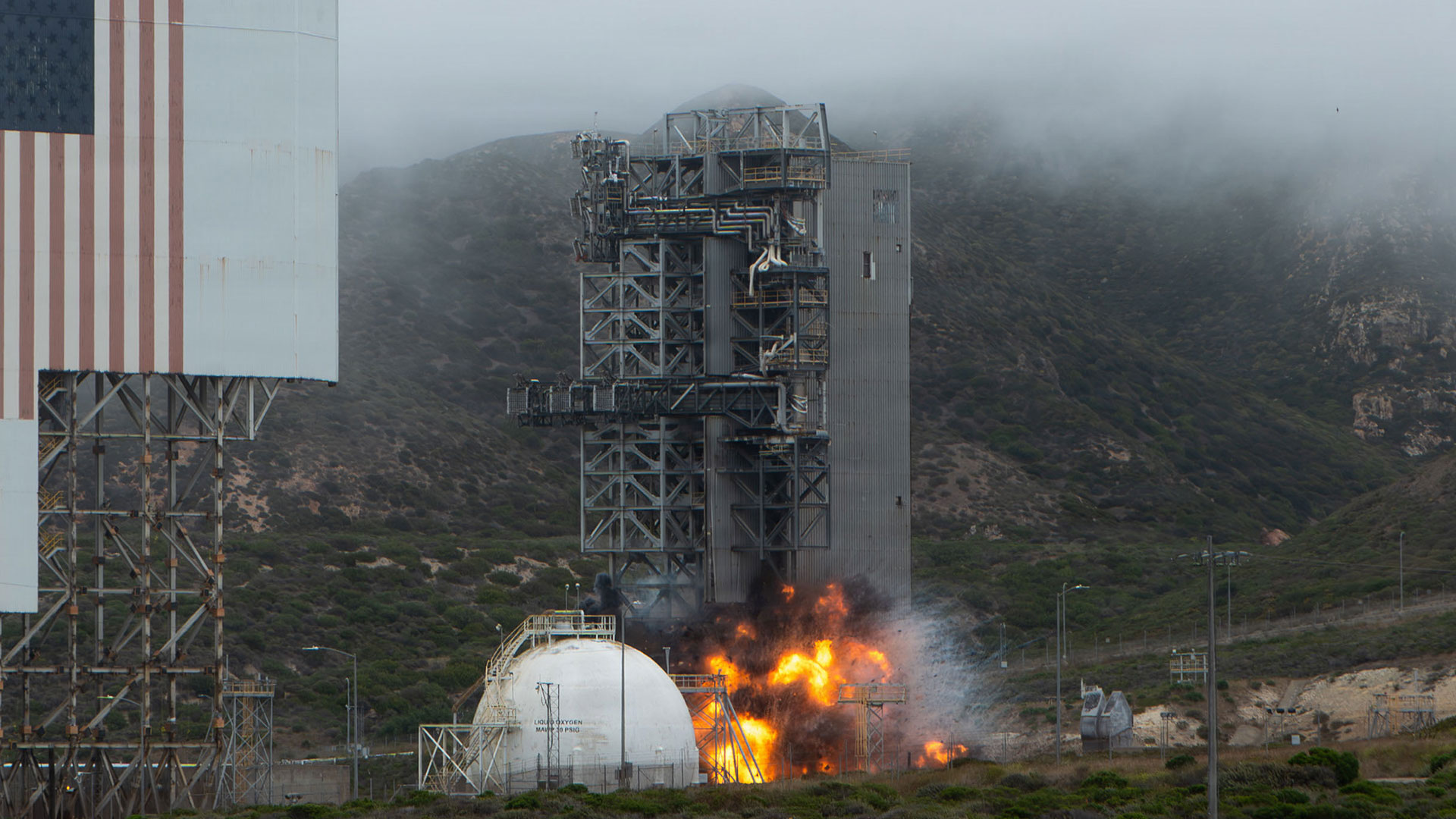
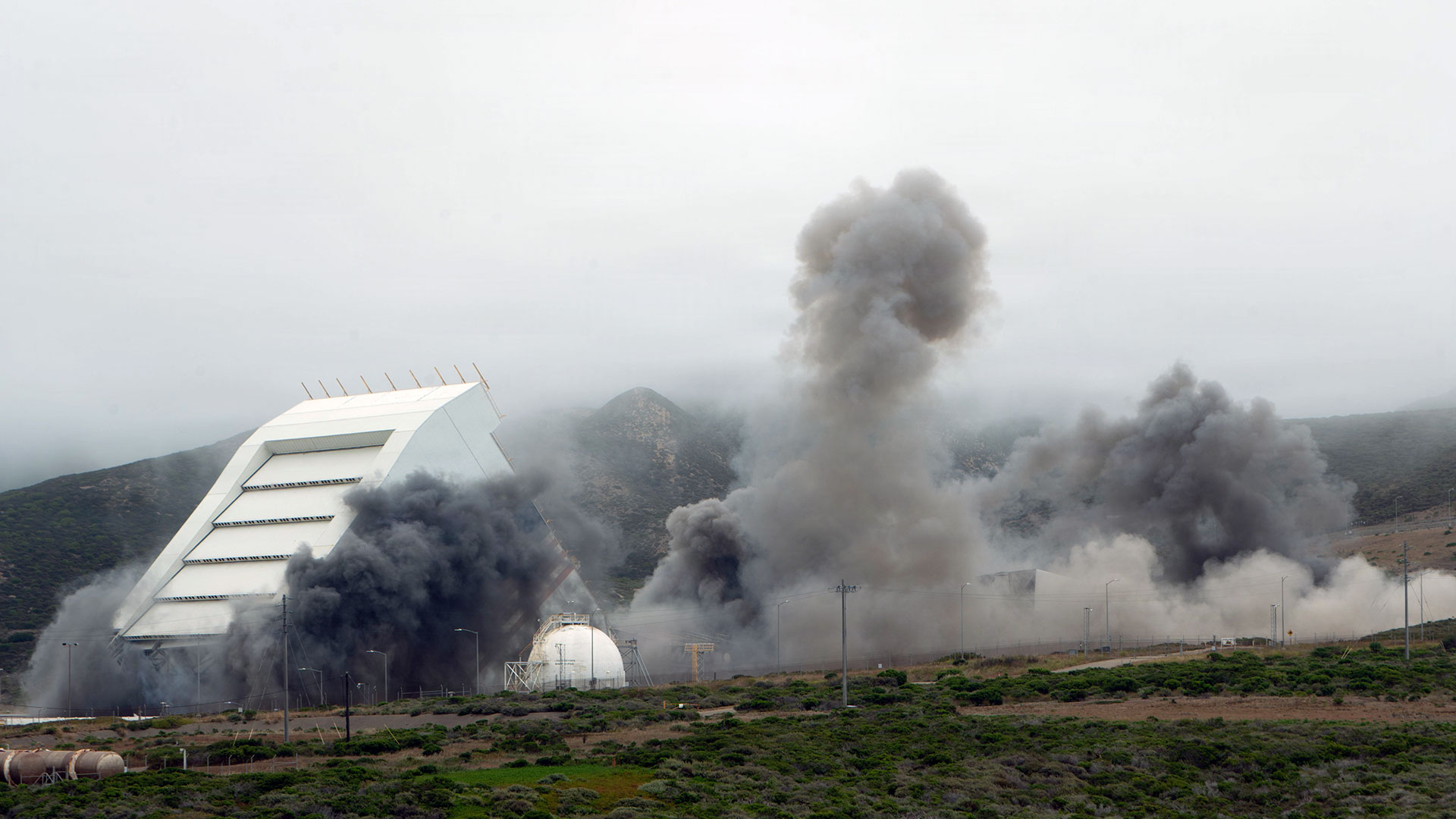
A series of demolition charges on Tuesday (June 16), brought down the access tower, mobile service tower and what remained of the assembly building at SLC-6 — pronounced "slick-six" — in southern California. Once the location for the U.S. Air Force's first effort to put humans into space and later, the almost West Coast launch site for the space shuttle, SLC-6 will next be used by SpaceX in support of Falcon 9 and Falcon Heavy missions.
"Space Launch Complex-6 represents six decades of American innovation and our unwavering commitment to securing space superiority," Col. James T. Horne III, commander of Space Launch Delta 30 at Vandenberg, said in a statement. "By modernizing this historic footprint in partnership with our defense industrial base, we are building directly upon the foundation of our pioneers."
The demolition was known to be planned, but was only announced hours after it was completed at 11 a.m. PDT (1800 GMT) on Tuesday. The detonations brought down the access tower first, followed by the mobile service tower and then the large American flag-adorned assembly building. Typical of Vandenberg weather, a marine layer of low clouds and fog added a somber look to the scene.
Have pad, will not launch
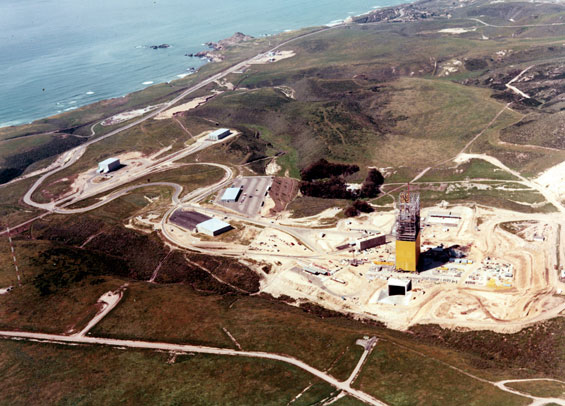
SLC-6 was first developed beginning in 1966 to support the Air Force's first effort to send astronauts into Earth orbit to conduct reconnaissance using a vehicle and hardware adapted from NASA's Project Gemini. The site's mobile service tower and concrete apron were built for the Titan IIIM modified missile, but the program was canceled in June 1969 before any launches from SLC-6 could be conducted.
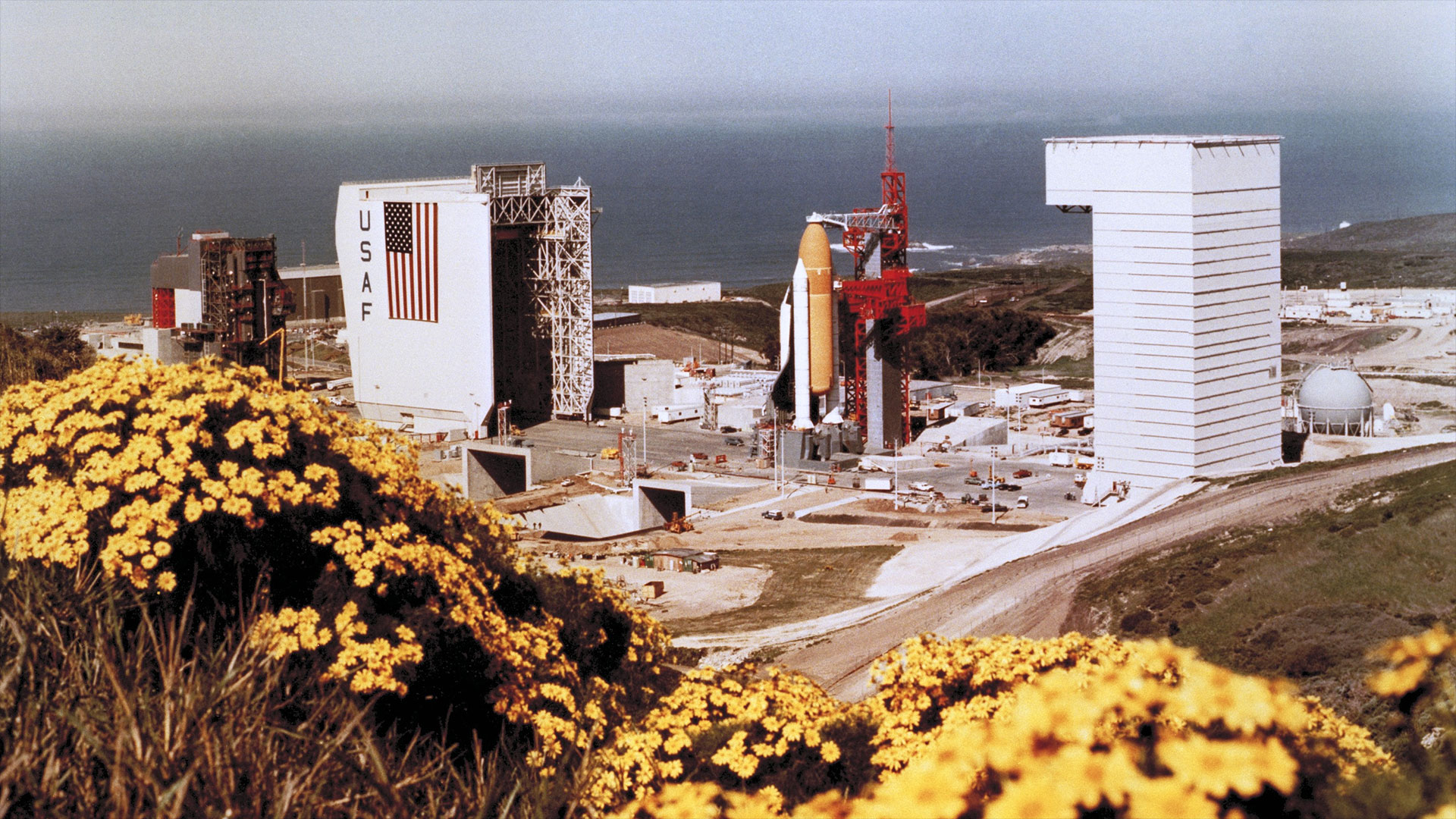
Looking to recoup some of its investment from the MOL infrastructure, the Air Force next chose SLC-6 as its launch site for Department of Defense (DOD, now Department of War) dedicated space shuttle missions. With the intention of moving the orbiter Discovery permanently to California, the Air Force designed SLC-6 differently from NASA's Kennedy Space Center, most notably by stacking the vehicle directly on the pad rather than in a more distant assembly building.
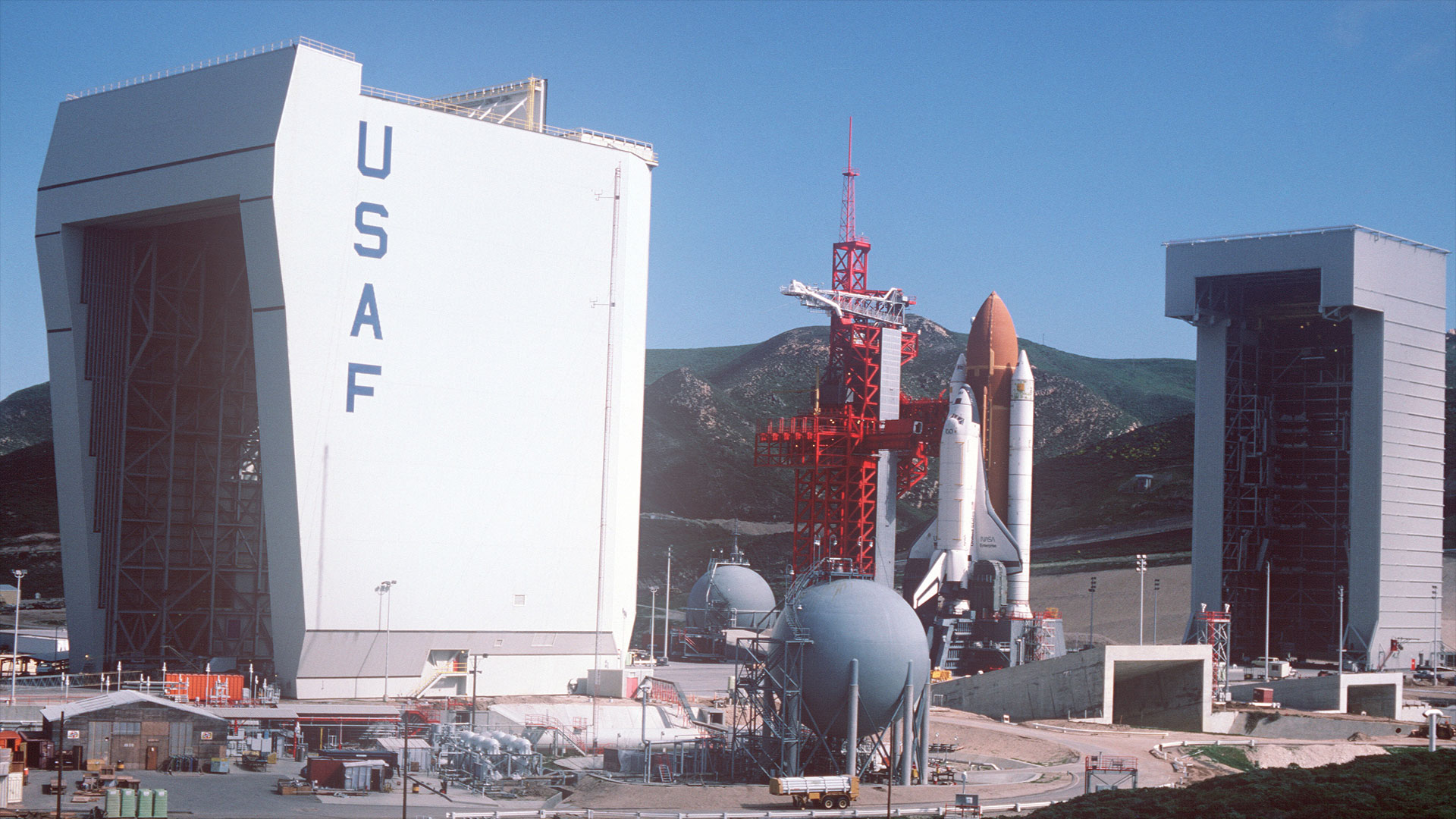
In the end, only the prototype Enterprise was stood up with an external tank and solid rocket boosters on SLC-6 before the Challenger tragedy in 1986 caused the DOD to rethink its reliance on the shuttle. Again the Air Force walked away from the built-up facility, having never launched a single mission.
After a brief effort to revive SLC-6 for use with the Titan IV in the early 1990s, the site finally saw its first operational use with the launch of Lockheed Martin's LMLV-1 in 1995, followed by Athena I and Athena II rockets with payloads for NASA and Space Imaging (later GlobalEye) in 1997 and 1999, respectively.
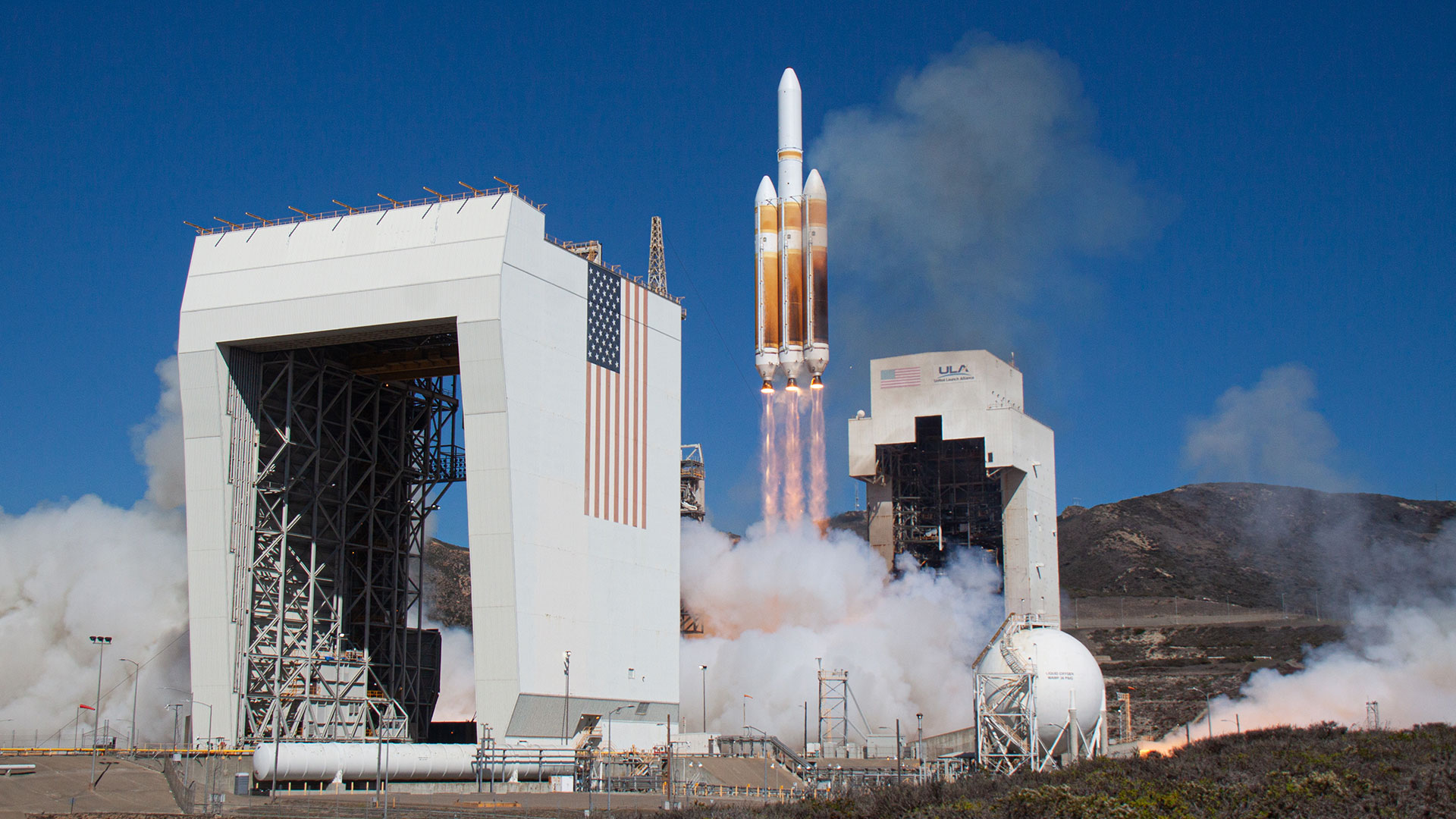
Boeing (later United Launch Alliance or ULA) then leased the site and modified the shuttle-legacy structures, including the assembly building, mobile service tower and access tower, for a series of 10 Delta IV rocket launches on missions for the National Reconnaissance Office (NRO). The final launch from SLC-6 to date was of a Delta IV Heavy on Sept. 24, 2022.
SpaceX at SLC-6
In 2023, SpaceX signed a lease to use SLC-6 for its Falcon rockets. Tuesday's demolition advanced the company's plans toward modernizing the site.
Since 2013, SpaceX has and continues to launch Falcon 9 rockets from Space Launch Complex-4 (SLC-4) at Vandenberg.
In addition to now having use of SLC-6 itself, SpaceX in 2016 acquired the orbiter transporter system (OTS) originally developed for the West Coast site. The 76-wheel motorized vehicle is now used to transport flown Falcon 9 first stages from the company's Cape Canaveral facilities to its Florida launch pads.
According to a 2025 environmental impact study, SpaceX expects it will take an additional 18 months to complete modifications for SLC-6, including building two landing pads for the reusable Falcon 9 first stage boosters. Falcon Heavy launches could then begin as soon as 2030, pending the needs of the NRO.
"We are not just updating infrastructure," said Horne. "We are leveraging industry capabilities to field a more resilient space enterprise, ensuring the United States is prepared to protect our national interests and meet future challenges for decades to come." |
|
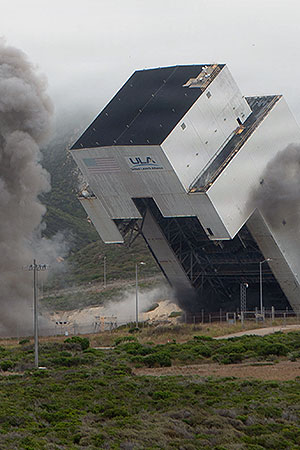
Towers originally built to support early Air Force spaceflight efforts and later never-realized West Coast launches of the space shuttle were toppled at Vandenberg Space Force Base's Space Launch Complex-6 (SLC-6) in California on June 16, 2026. (Space Launch Delta 30/Staff Sgt. Daekwon Stith)
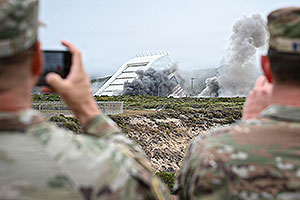
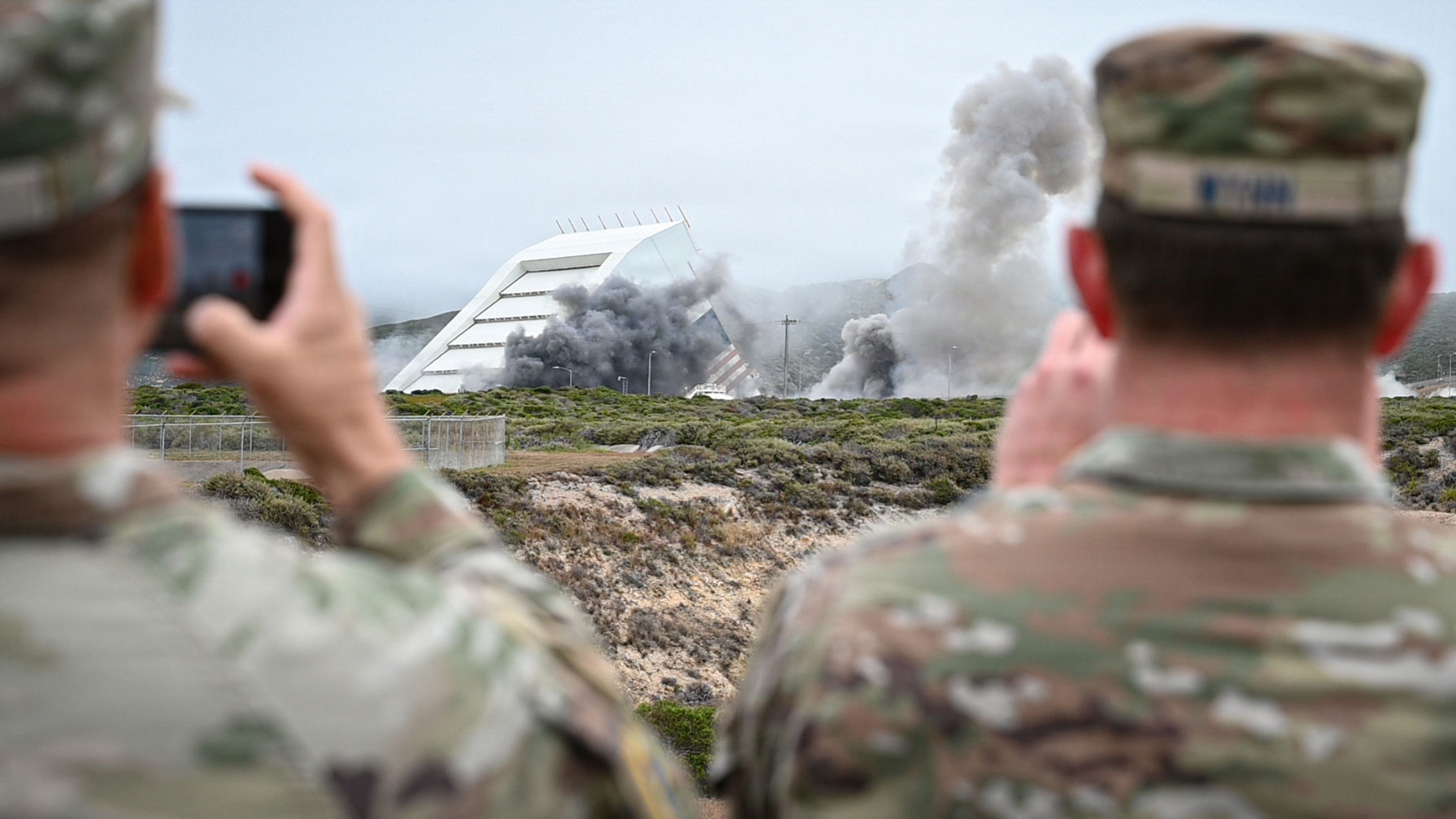
Vandenberg Space Force Base personnel watch as the assembly building at Space Launch Complex-6 (SLC-6) is toppled on June 16, 2026 to make way for SpaceX's use of the site. (Space Launch Delta 30/Tech. Sgt. Draeke Layman)
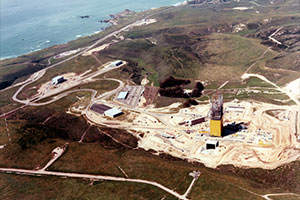
Space Launch Complex-6 (SLC-6) as seen under construction in 1966 in support of the U.S. Air Force's Manned Orbiting Laboratory (MOL) program. (U.S. Air Force/1369th Audiovisual Squadron) |
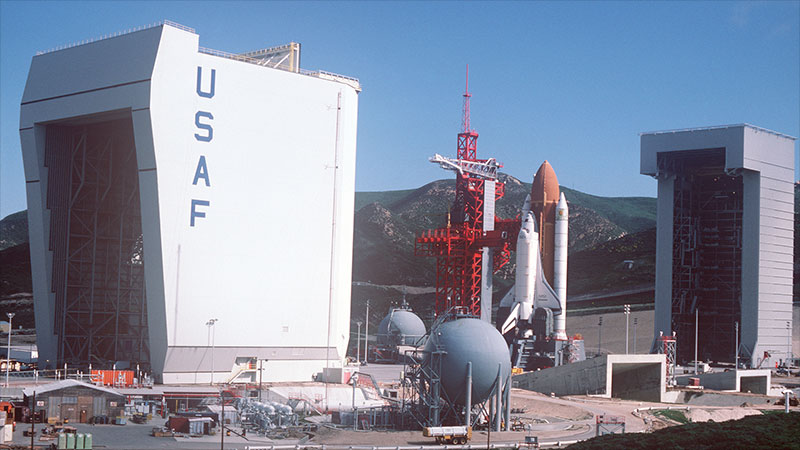
NASA's prototype space shuttle orbiter Enterprise, stacked with an external tank and two solid rocket boosters, stands at Space Launch Complex-6 (SLC-6), flanked by the assembly building and mobile service tower at Vandenberg Air Force Base (today Vandenberg Space Force Base) in California in February 1985. (U.S. Air Force/Tech. Sgt. James Pearson) |
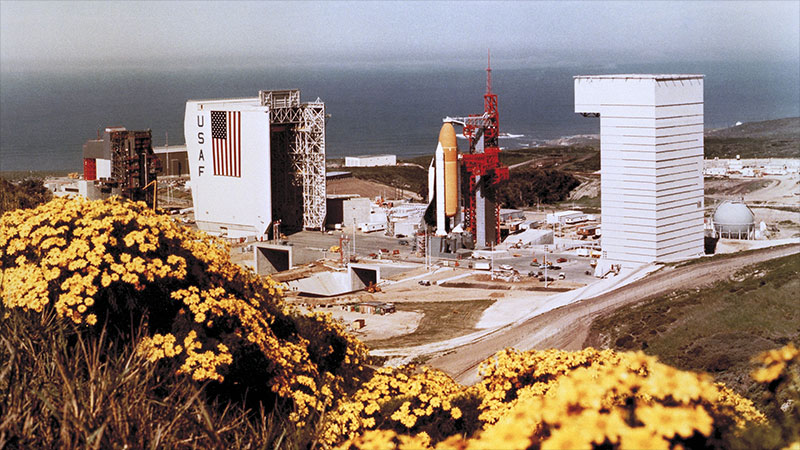
Built as a test article, NASA's prototype space shuttle orbiter Enterprise was used in 1985 for facility fit checks at Space Launch Complex-6 (SLC-6) at Vandenberg Air Force Base (today Vandenberg Space Force Base) in southern California. (NASA) |
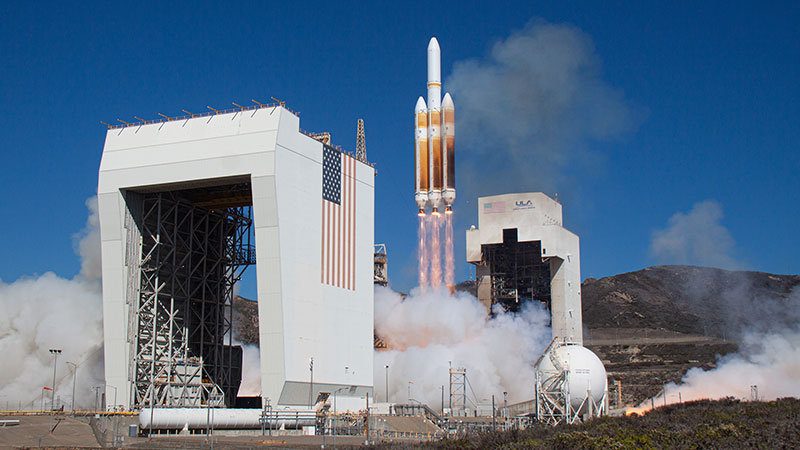
A United Launch Alliance (ULA) Delta IV Heavy rocket carrying a payload for the National Reconnaissance Office (NRO) lifts off from Space Launch Complex-6 (SLC-6) at Vandenberg Space Force Base in California on Sept. 24, 2022. (United Launch Alliance) |
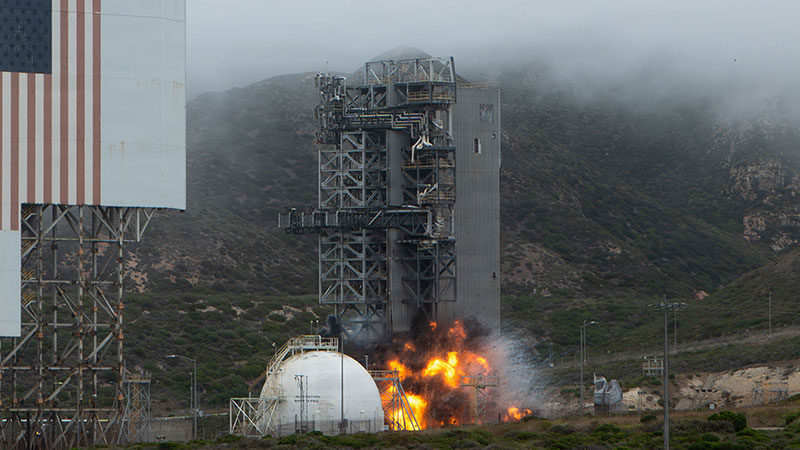
Explosive charges sever structural supports of the Fixed Umbilical Tower at Space Launch Complex-6 during a controlled demolition on June 16, 2026, at Vandenberg Space Force Base in California. (U.S. Space Force/Staff Sgt. Daekwon Stith) |
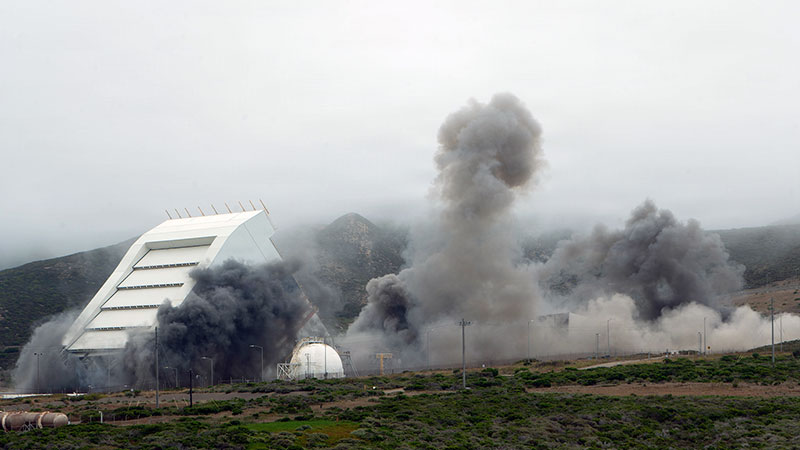
Dust plumes rise above Space Launch Complex-6 (SLC-6) following a controlled demolition of the access tower, mobile service tower and assembly building on Tuesday, June 16, 2026, at Vandenberg Space Force Base in California. (U.S. Space Force/Staff Sgt. Daekwon Stith) |
|

© collectSPACE. All rights reserved.
|
|
|
|