Space Newsspace history and artifacts articlesMessagesspace history discussion forumsSightingsworldwide astronaut appearancesResourcesselected space history documents
advertisements
Smithsonian panels on why, what, how of space station preservation
May 22, 2026
— For anyone in their mid-twenties or younger, it is just a fact of life: humans do not just visit space, they live there. But a major part of that is coming to an end. The platform that made possible the longest continuous human presence in space is becoming history, itself.
With NASA and its partners having already begun preparations for the destructive end of the International Space Station (ISS) as soon as 2030, those who collect, curate and study what has been much of humanity's home away from home are now asking how to preserve such a historic and culturally-significant artifact when it is far too large and too complex to keep intact.
The Smithsonian National Air and Space Museum on Thursday (May 21) hosted a three-part panel discussion, bringing together space program officials, museum curators, an archeologist and an astronaut to begin answering the why, what and how the ISS might be saved. The sessions were part of the American Institute of Aeronautics and Astronautics' (AIAA) ASCEND conference in Washington.
Disclosure: collectSPACE's editor, the author of this article, was also a panel member, representing the worldwide community of space memorabilia collectors.
"I had a friend who works on the Artemis [moon] program come up to me when we had 25 years [of continuous human residency]. 'Congratulations guys! You made space boring.' And we did — and that's a good thing, actually," said Jacob Keaton, acting director of the International Space Station for NASA's Space Operations Directorate at the agency's headquarters in Washington. "Not only did we make it boring because of the technical competence that the team brings to the table, we made it boring because it became part of our national fabric, almost."
"This is just something that we do. We have people in space," said Keaton. "The ticket tape parades after Apollo were wonderful. That's a historic achievement — for Artemis, too, absolutely. But for the space station, this is just who we are now. I think it's under-appreciated the amount of work that it took to become boring."
From 'boring' to 'evocative'
So how do you capture "boringness" and make it accessible in how the program will be exhibited in museums beginning for the many years to come?
"I like spaceflight nominal, that's my favorite type of spaceflight," said Stephen Bowen, acting director of cross-directorate technical integration at NASA and an astronaut who has spent 227 days in space including 186 on the International Space Station in 2023. "Nominal is the way to be. I don't need any excitement."
Bowen said what should be preserved are the crews' experiences from the 74 expeditions to date, and those still to come.
"Having the opportunity to train around the world and throughout, you get to meet amazing people. Just that aspect can get lost if we don't continue these international missions, and I think that's really important going forward," he said.
"I'm not a big person on holding onto things," said Bowen. "The biggest legacy, and what we should preserve, is just continue to fly similar missions. I think that's the biggest thing we can continue to do to maintain those specific items."
"We can't bring everything back from the space station, so I'll leave it up to others to figure out what that is, and what priority," he said.
Some of those others include Justin Walsh, a professor of art history, archeology and space studies who performed the first archeological fieldwork to occur off Earth as the creator of the International Space Station Archeological Project, and Jennifer Levasseur, curator for the International Space Station collection at the National Air and Space Museum.
"The cupola has long held a fascination with people," said Levasseur as the moderator of the day's second panel, speaking of the station's multi-windowed module. "Obviously, bringing it back may not be the best answer, but how can we preserve that view is a really important one, because it is such a cherished view."
"It's also a physical space, a space one has to go into to be able to experience, and so there's something unique and special about that," she said.
Given Walsh's interest in the lived experiences of the crews, his choices centered on those that emphasized the international nature of those who were there.
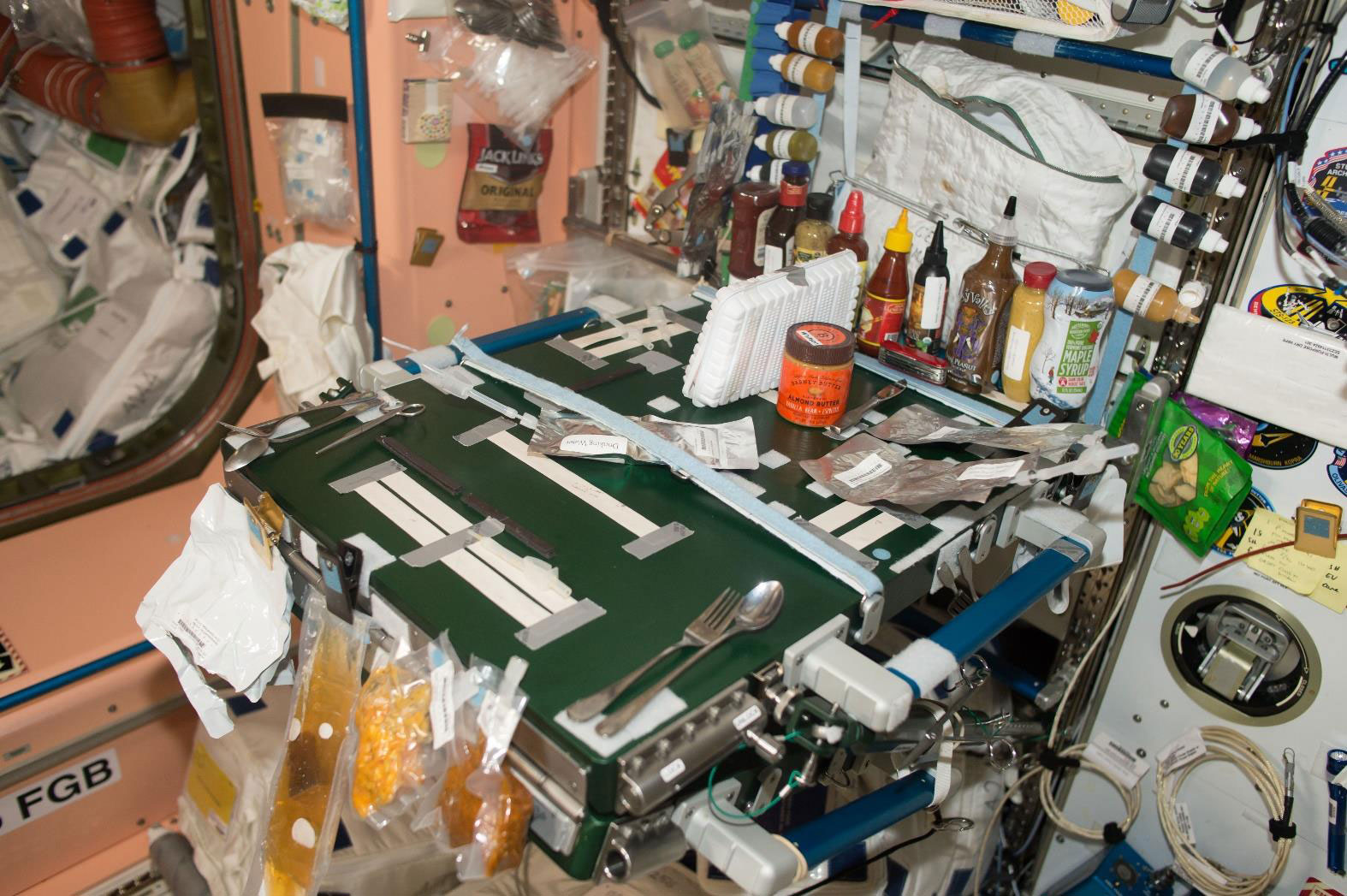
"I think everybody's mentioned the [galley] table — that's a really obvious thing — but I was also thinking of the physical library of books on board the ISS in all of the languages that are spoken by crew members — certainly Russian and English," he said. "I think it would be great to bring some or all of that back."
"And then the other thing I was thinking of, because it keeps appearing in my photographs from our experiment on ISS, is there's a paper notebook. A bound paper notebook that is used by the crew in the Destiny [U.S. Laboratory], where they're writing down the things that they have to do," said Walsh. "That there is a kind of communication station."
"They are getting their instructions from the ground, but they're also leaving notes for each other, and as a collaborative device to use this old technology, it's just wonderful. I like that as an evocative aspect of the ISS," he said.
Space on the rides home
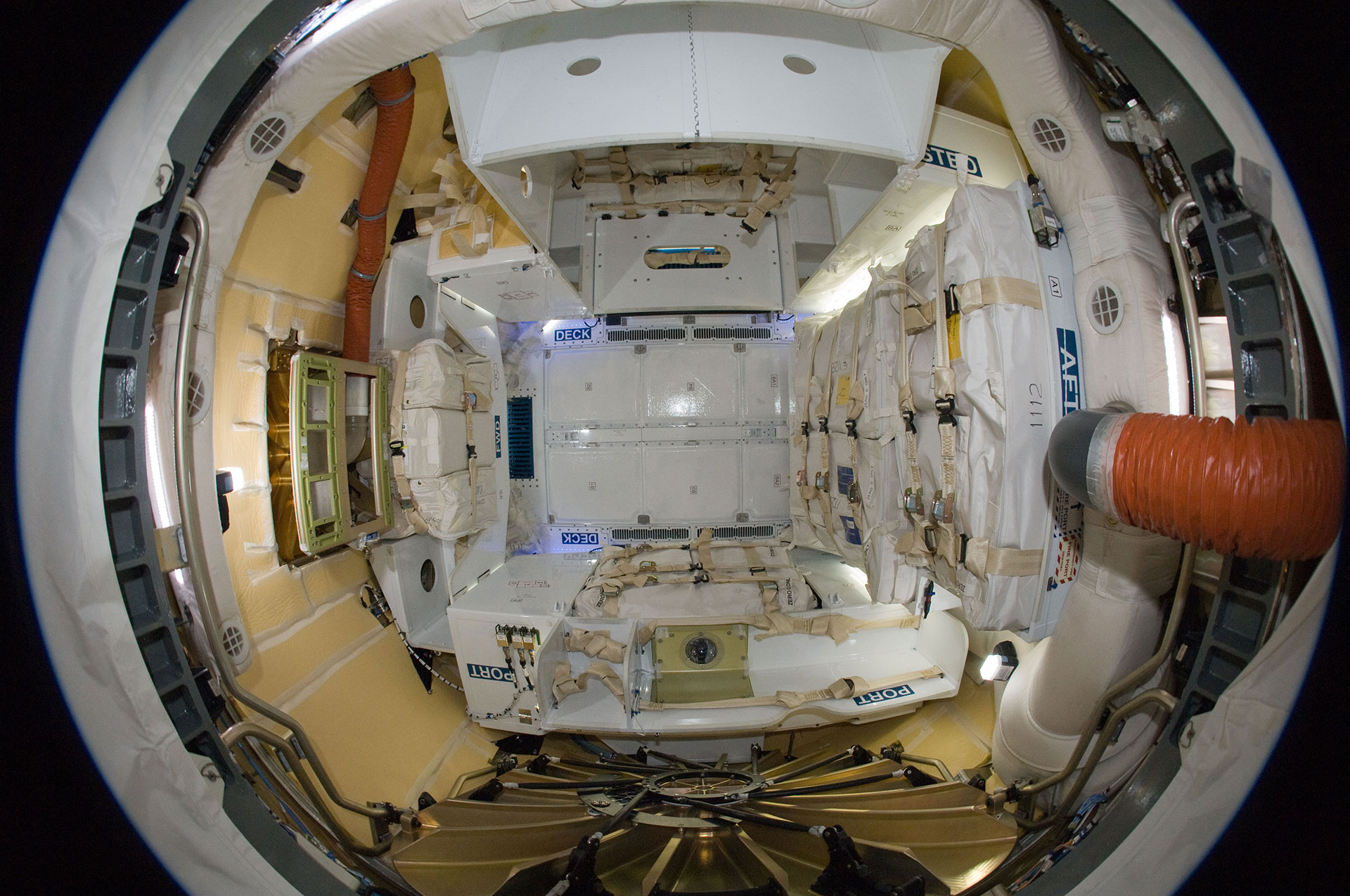
What is returned from the ISS will ultimately be limited by how much available room there is on the dwindling number of vehicles set to land with cargo remaining in the program. If the space station is de-orbited in 2030, which is the current plan agreed upon by all of the partners, the last significant down-mass availability will be three years from now.
"2028 is really when we start letting the ISS begin its natural [orbital] decay," said Ryan Landon, manager of the International Space Station research integration office at Johnson Space Center in Houston. "About 18 months before deorbit, the USDV [U.S. Deorbit Vehicle] will come up and dock. That will be right after the last crew comes up, and so once those two vehicles are on board, we will no longer have a vehicle that can return. Our last cargo home will be in the middle of 2029."
"That's tough to think about. It's a whole lot earlier than the next year and a half that the station's going to be in orbit, and so thinking about our priorities and what we need to bring home is a big question," she said. "I probably have a better appreciation today for the legacy and the heritage and other hardware to bring home, so that'll be an interesting discussion, as far as weight and volume."
The demand for space on the remaining rides home for legacy and preservation purposes will be in competition with the station's primary purpose — conducting and returning science.
"We obviously seek to continue to utilize the International Space Station right up until that last moment when Ryan turns the lights out and send things back home, so there will be drivers to maintain as much science capacity on those final return vehicles as we can," said Michael Roberts, chief scientist for the ISS National Lab. "But it's not lost on anyone that there is a tremendous scientific knowledge, as well as historical knowledge, that can be retained from the return of some of that instrumentation that's up there."
So the likelihood of returning everything that everyone wants from the ISS before the shipments end is low.
The data that is already on the ground, as well the hardware that has been brought back over the past two and half decades, will help fill some of those gaps, but of even more importance will be capturing the stories from the people who put the space station up there and made it into the one-of-a-kind facility it is today, said Brian Odom, NASA's chief historian.
"The window of that opportunity is going to close so quickly. Let's get the historians together. Let's look at this program, people who are familiar, let's get them in contact with the practitioners, with the engineers, with the scientists, with the astronauts and really determine what have been the big themes," said Odom, calling for an oral history initiative. "Let's use this opportunity to do just that, and then begin the process of crafting a narrative."
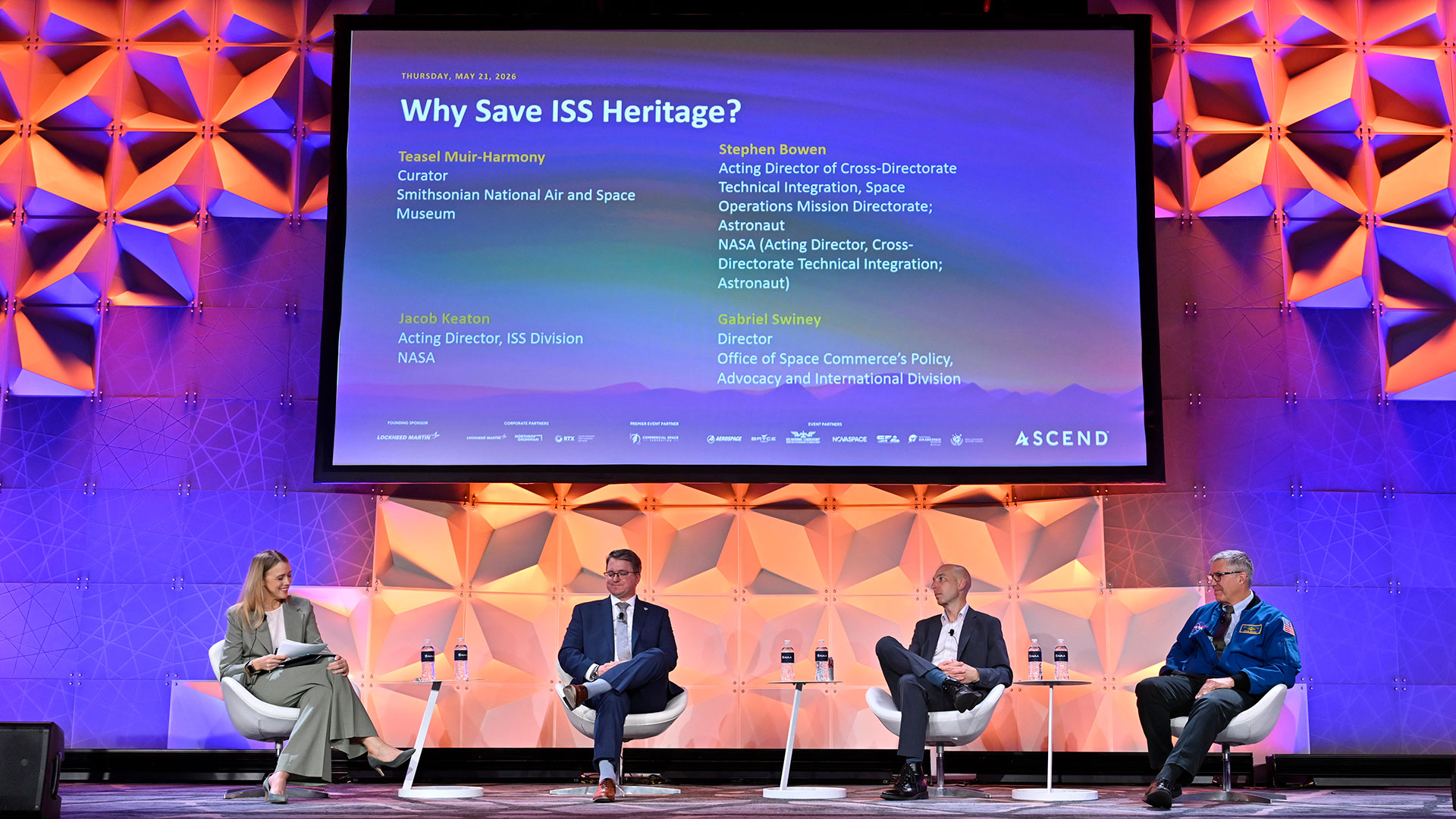
Smithsonian curator Teasel Muir-Harmony (at left) moderates a panel on "Why Save ISS Heritage" with Jacob Keaton, NASA ISS acting director; Gabriel Swiney, director of the Office of Space Commerce's Policy, Advocacy and International Division; and NASA astronaut Stephen Bowen during the ASCEND conference, May 21, 2026, in Washington, DC. (AIAA/David Becker/PWHL)
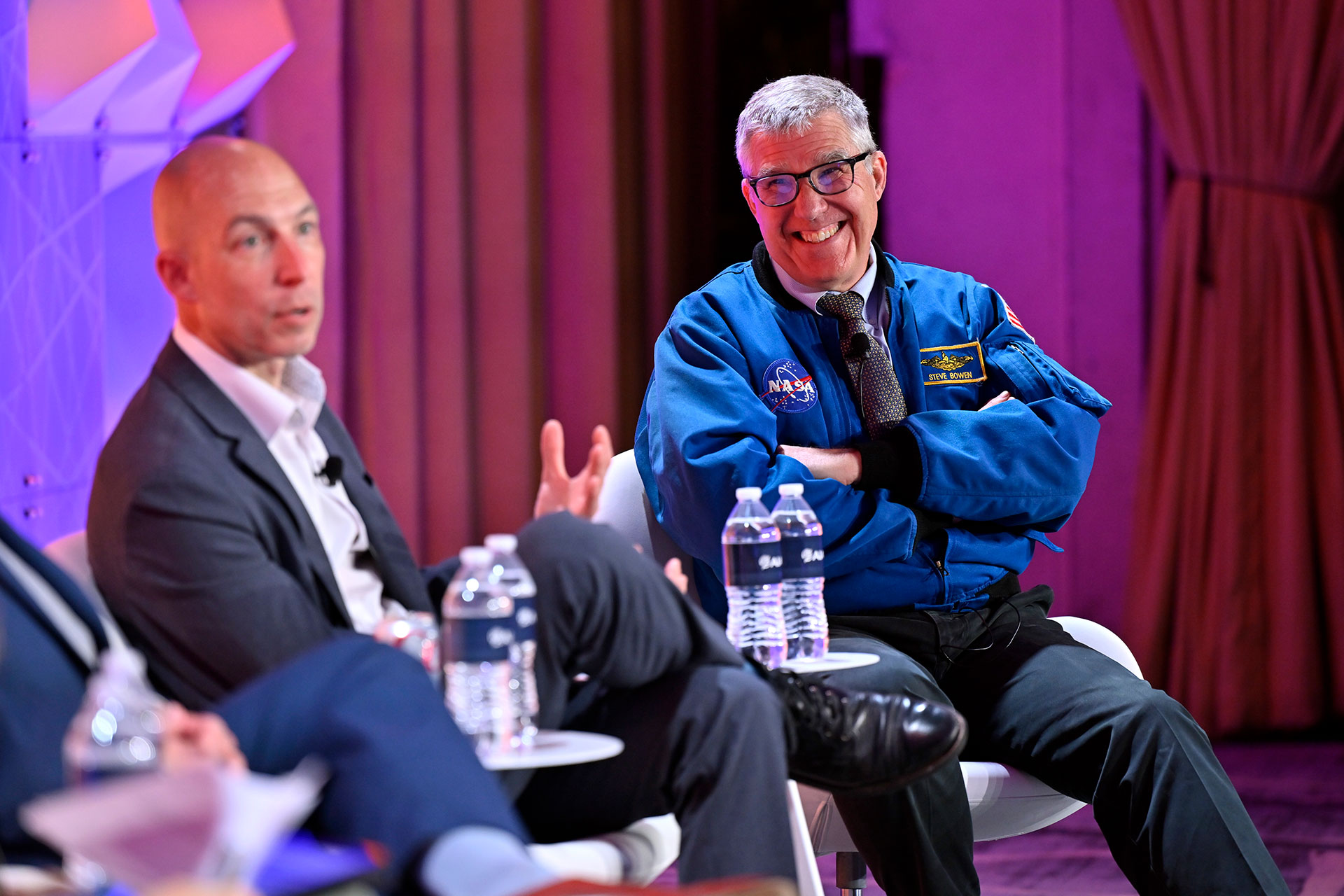
NASA astronaut Stephen Bowen on the "Why Save ISS Heritage" panel during the AIAA's ASCEND conference, on Thursday, May 21, 2026, in Washington, DC. (AIAA/David Becker/PWHL)
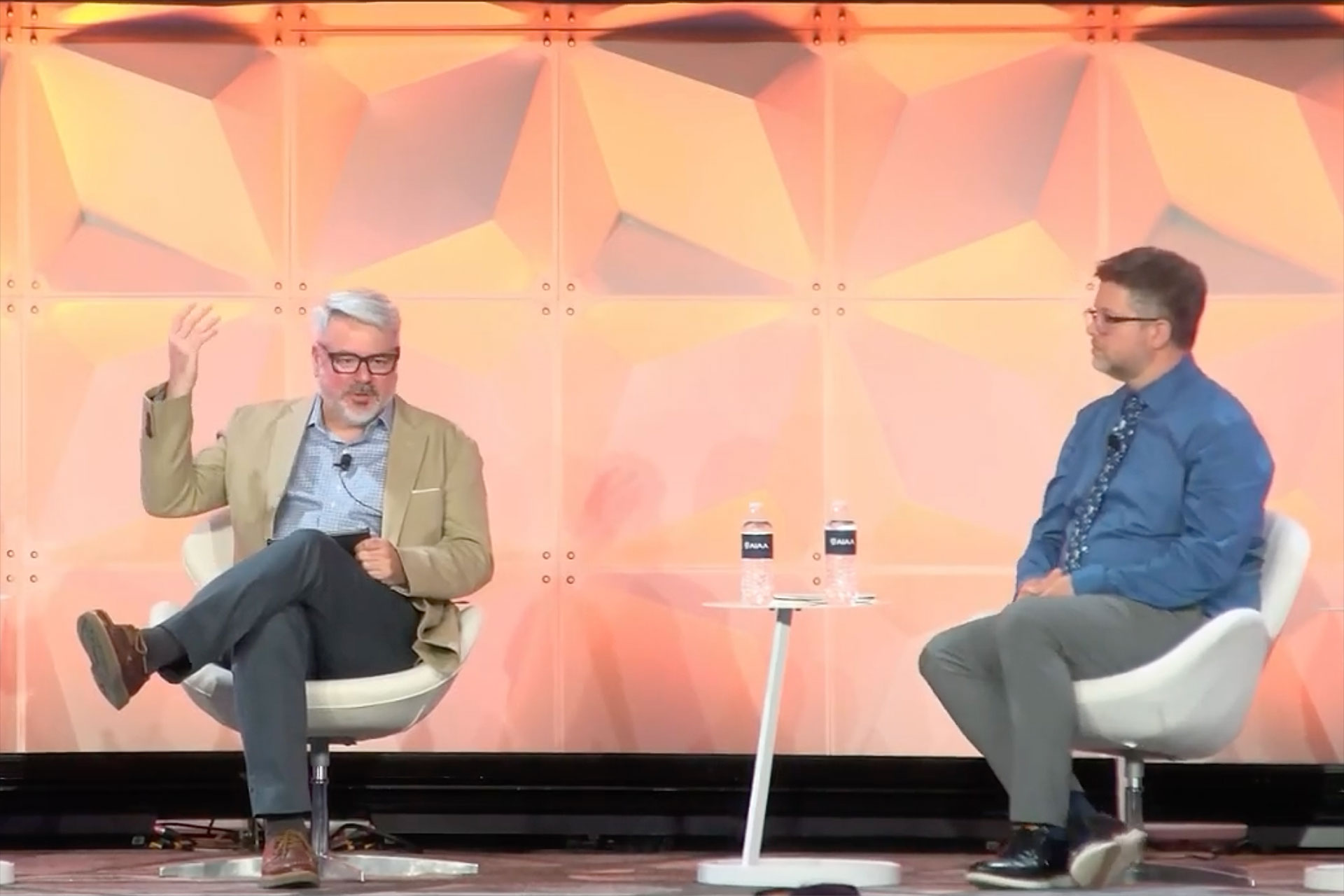
Justin Walsh (at left), professor of art history, archeology and space studies at Chapman University and Geoffrey Dunn, curator of spaceflight and contemporary aerospace at The Museum of Flight during the "What Should Be Saved From the ISS?" panel at AIAA's ASCEND conference on May 21, 2026, in Washington, DC. (AIAA)
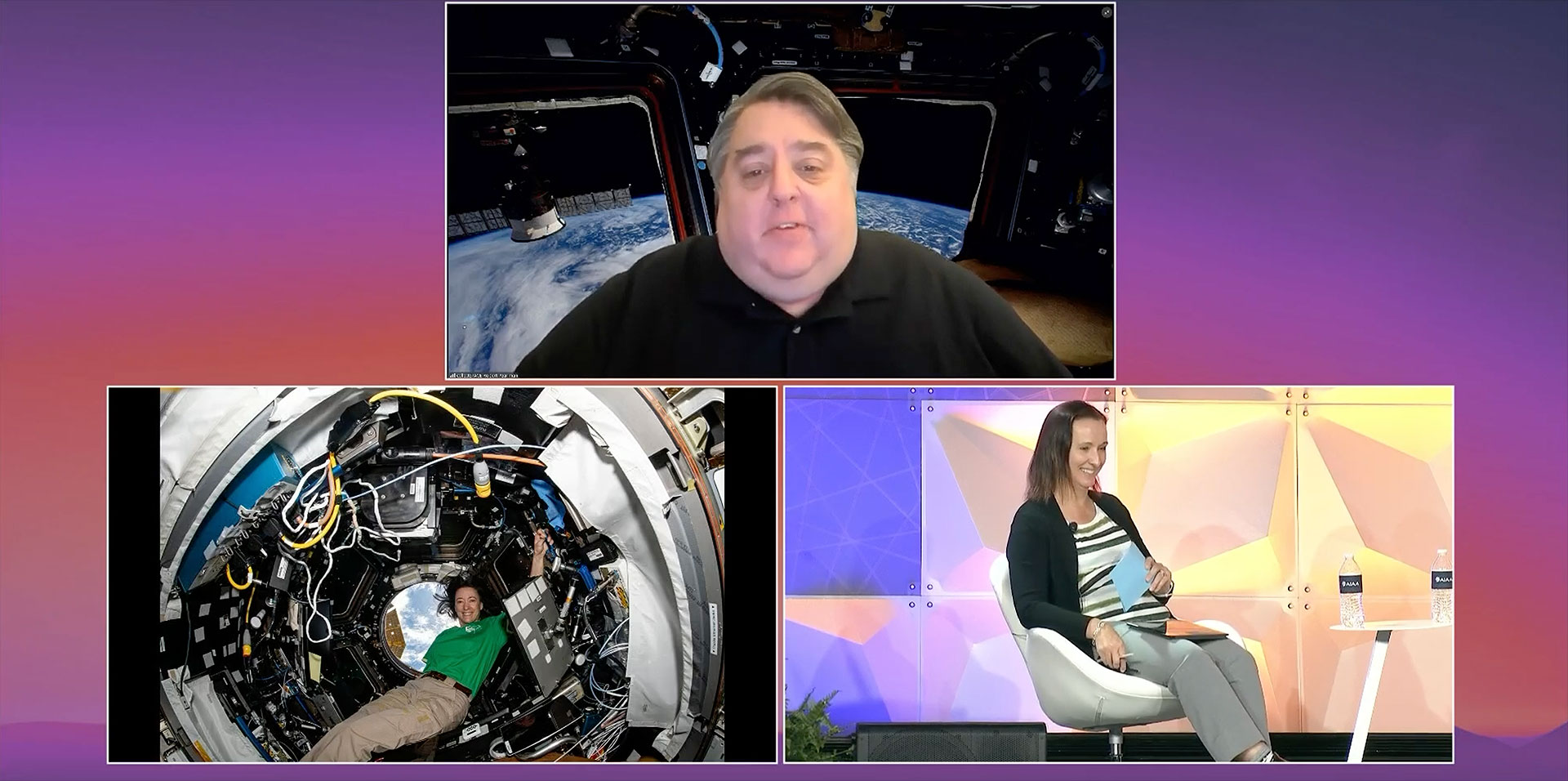
Robert Pearlman (at top), editor of collectSPACE and Jennifer Levasseur, curator of space shuttle and International Space Station programs at the National Air and Space Museum during the "What Should Be Saved From the ISS?" panel at the ASCEND conference on Thursday, May 21, 2026, in Washington, DC. (AIAA)
The galley table on the International Space Station is an often cited candidate for what to save as an artifact given its traditional role as the place where the expedition crews gathered together. (NASA)
Fisheye image of the inside of a fully-packed SpaceX Dragon cargo spacecraft like the type used to launch supplies to the International Space Station and return equipment back to Earth. (NASA)
Ryan Landon, NASA manager for ISS research integration, Michael Roberts, ISS National Lab chief scientist, and NASA chief historian Brian Odom during the "How Can We Preserve ISS Legacy?" panel moderated by Todd Mosher, scholar in residence at he University of Colorado Engineering Management Program at the AIAA ASCEND conference on Thursday, May 21, 2026, in Washington, DC. (AIAA)