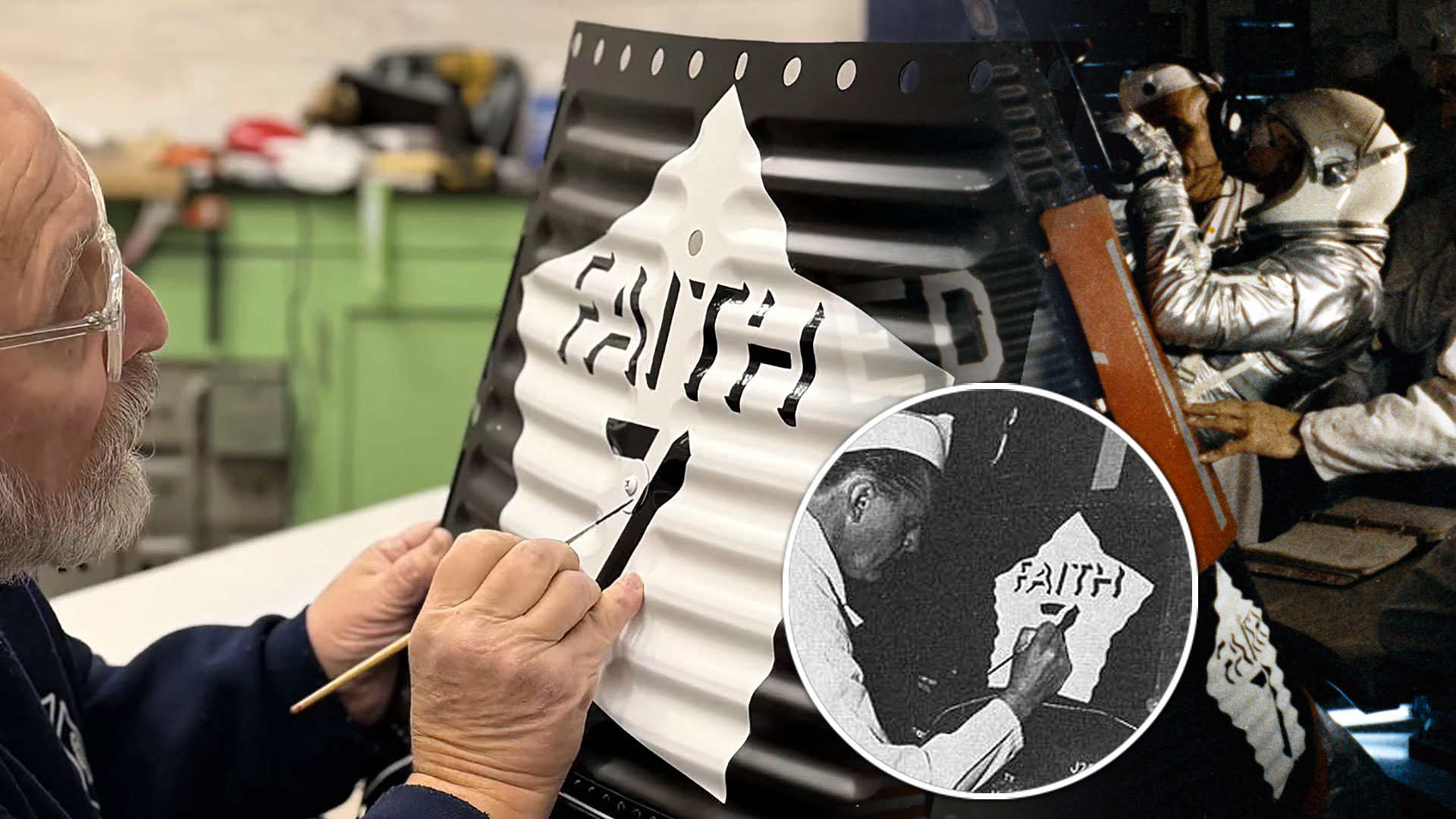
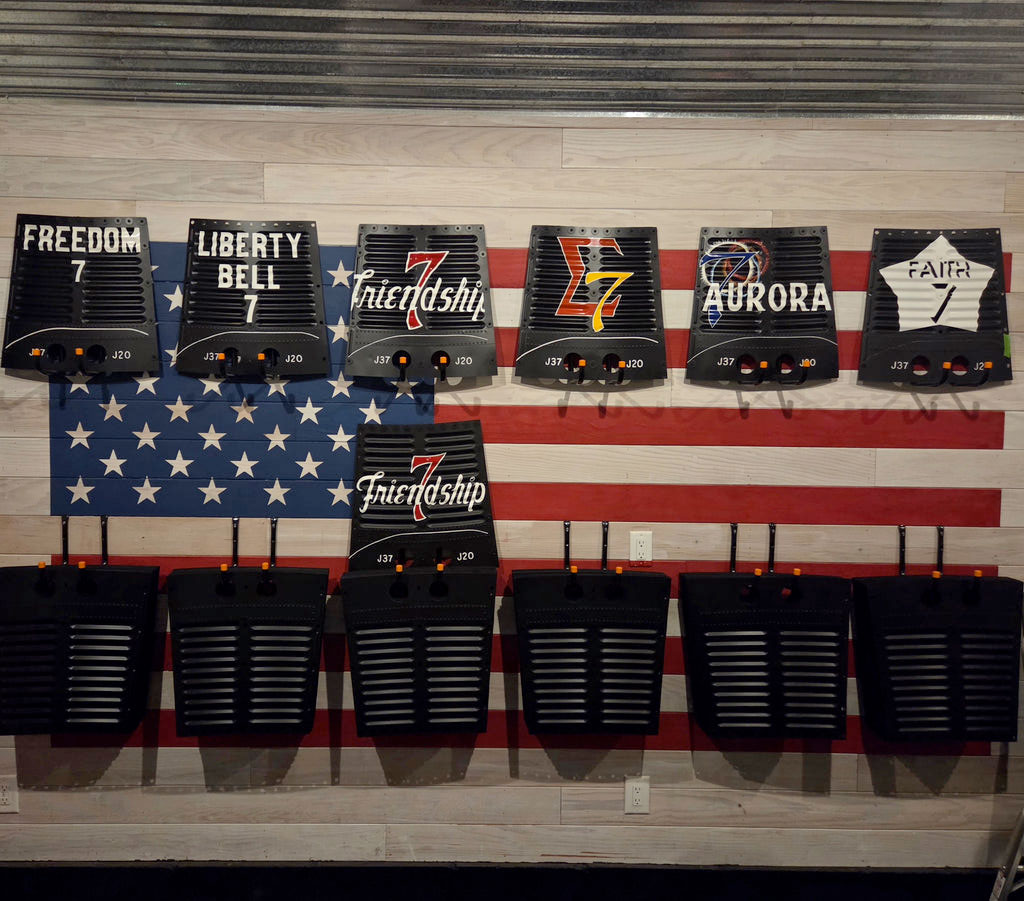
May 15, 2026 — When Gordon Cooper lifted off on the final mission of NASA's first human spaceflight program, Project Mercury, 63 years ago today (May 15), it marked the last time an astronaut flew with his call sign painted on the side of his spacecraft. Cooper's "Faith 7" star-shaped logo was painted on a shingle under his window and to the left of the hatch.
Now, a company that specializes in vintage space gear is producing 1:1 replicas of each of the name-adorned Mercury shingles as a decorative wall hanging.
"The Mercury program was the only one that really had 'nose art,' whereas everything else that followed, even Gemini, they didn't have it, they stopped doing it," said Max Kaiserman, owner and director of operations at Luna Replicas, in an interview with collectSPACE.
Luna Replicas' Mercury spacecraft full-scale reproduction shingles are part metal sculptures and part acrylic artwork. Available for each of the Mercury spacecraft — from Alan Shepard's "Freedom 7" to Cooper's "Faith 7" — the panels can be pre-ordered for $499 each.
From singles to shingles
Kaiserman first had the idea for the shingles several years ago while visiting the National Air and Space Museum in Washington, DC. At the time, the museum gift shop had wall hangings for sale that were styled directly after the nose art on World War II aircraft. Kaiserman bought the replica of the "Memphis Belle," a U.S. heavy bomber that survived 25 combat missions over Europe.
"I thought wouldn't it be neat if there was a space version of this?" he said.
As it turned out, the artist who made the aircraft panels had not just had the same idea, but had tried to do it, too. After Kaiserman reached out, Gary Velasco of Fighting Colors explained that it was difficult to sculpt each metal shingle and then paint them by hand.
Looking for a way to streamline the process, Kaiserman proposed pressing the shingles in bulk and then applying the desired logo by hand to each. All that was needed, was to find a proper shingle they could use to create a mold.
It did not take long before Kaiserman came across Tyler Wiggers, a hobbyist who was building a full-scale Mercury capsule at his home in New Jersey. According to Wiggers' extensive research, those who had tried to mass produce Mercury shingles before had all done so using vacuform plastic or similar flexible materials. It took Wiggers three years to hand form all of the metal shingles for his replica.
The original Mercury spacecraft shingles were made from Rene 41, which was developed by General Electric to withstand high temperatures, such as those encountered by the capsules on their reentry into Earth's atmosphere. As a nickel-steel alloy, Rene 41 is not conducive to being pressed, so Kaiserman chose aluminum as an alternative to provide a similar tactile experience but be able to be shaped much easier.
"McDonnell [Aircraft Corp., NASA's contractor for the spacecraft] made, I believe, two aluminum Mercury capsules for taking on the road and showing people, such as bringing them to the 1964 World's Fair," said Kaiserman.
'Faith'-ful recreation
Knowing that the shingles were of the same size and shape as the original, based on measurements from the McDonnell archives, Kaiserman next needed someone to paint them just as precisely.
The original nose art designs for John Glenn's "Friendship 7," Scott Carpenter's "Aurora 7" and Wally Schirra's "Sigma 7" were hand painted by Cece Bibby, an artist under contract to NASA by Chrysler Aerospace. Under Glenn's insistence, Bibby became the first woman allowed access to the white room that surrounded the spacecraft at the top of the launch pad gantry.
It is not known who added the more straightforward "Freedom 7" and "Liberty Bell 7" lettering to Alan Shepard and Gus Grissom's suborbital capsules, but like B.R. Schuster, who painted the "Faith 7" logo, it may have been an McDonnell engineer or technician. (By the time Cooper flew, Bibby had had moved to California.)
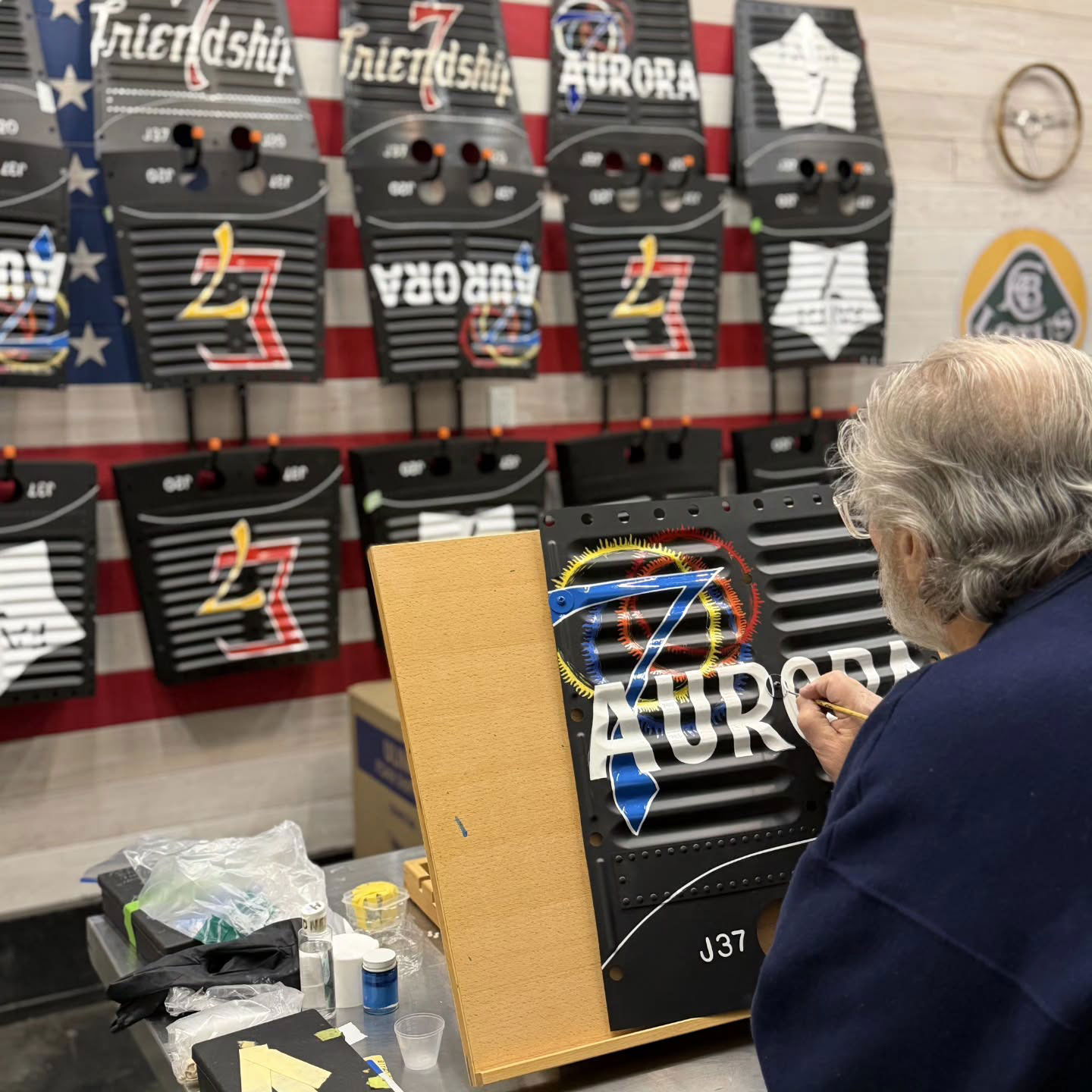
For his project, Kaiserman was referred by Wiggers to Eddie May, a professional sign painter with more than 50 years of experience. One of the first things May recalls painting was a model of Friendship 7, so now he says his career has come full circle.
"I have been a sign painter since I was maybe six years old," said May in a video posted by Luna Replicas. "I started out doing models and I remember in 1962, watching John Glenn getting blasted off on TV in school. I'd have never dreamed that I would be doing a replica. This is amazing!"
Using an acrylic paint that, if not the exact same brand, is "then pretty close" to what Bibby and Schuster used, and referencing film footage to copy the same process that Bibby used to paint the capsules, May projects high-resolution photos of the real painted shingles onto the replicas and then traces the outline to ensure the size and placement is correct.
Kaiserman tried to keep all of the logos full-scale and exactly where they were on the capsules, but due to differences in size and placement of the originals, "Freedom 7" and "Liberty Bell 7" had to be moved over and "Aurora 7" had to be ever so slightly scaled down.
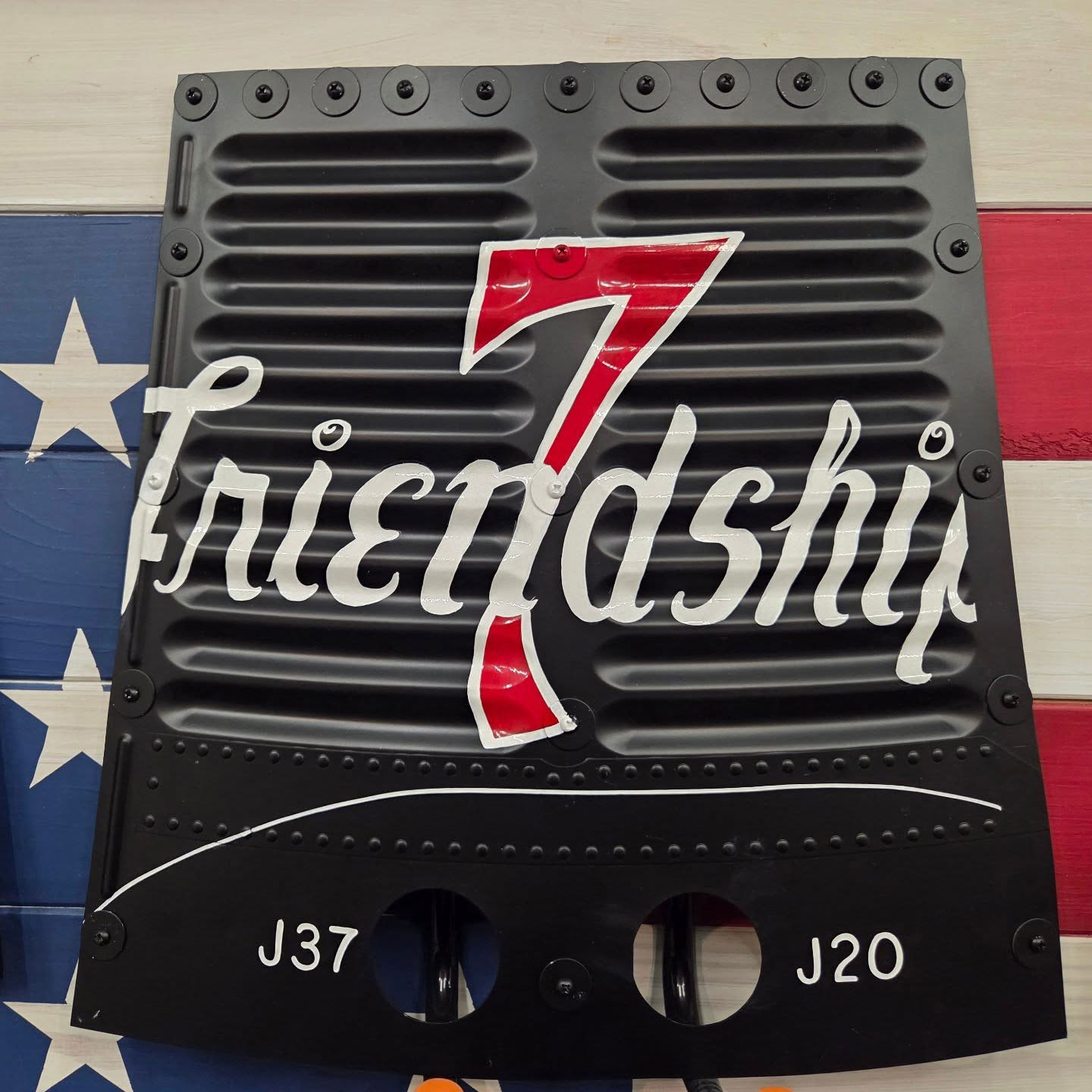
The "Friendship 7" panel, which has turned out to be the most popular based on pre-orders, is available in two styles: "Scaled," such that it all fits on one shingle, and "Exact," which partially cuts off the first and last letters just as found on the flown shingle.
"Interestingly enough, 'Faith 7' was all done in shadow. It is a white star and then a black shadow that creates the lettering and numerical," said Kaiserman. "So that was actually the toughest one to do, getting 'Faith 7' to look proper, because it's all done in negative space. It's really neat." |
|
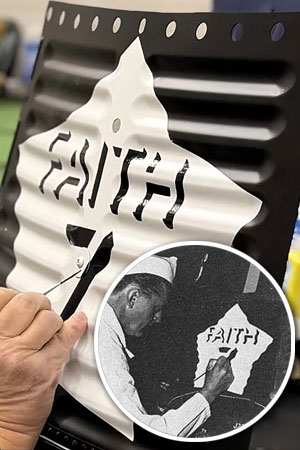
Luna Replicas' Mercury spacecraft reproduction shingles are metal, hand-painted replicas of the "nose art" from the first U.S. human spaceflight program. Seen here, Eddy May paints the "Faith 7" logo in the same style as B.R. Schuster (inset) did on Gordon Cooper's Mercury capsule in May 1963. (Luna Replicas/NASA)
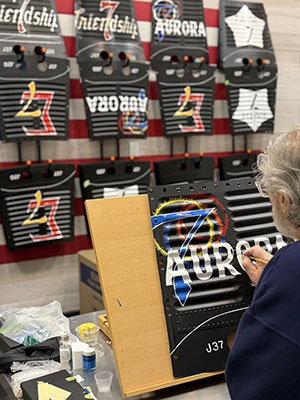
Professional sign painter Eddie May puts the final touches on a Luna Replicas' Mercury spacecraft reproduction shingle, this one for Scott Carpenter's "Aurora 7" space capsule. (Luna Replicas)
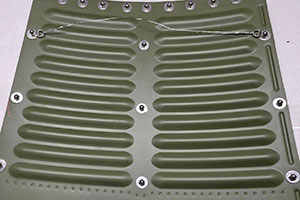
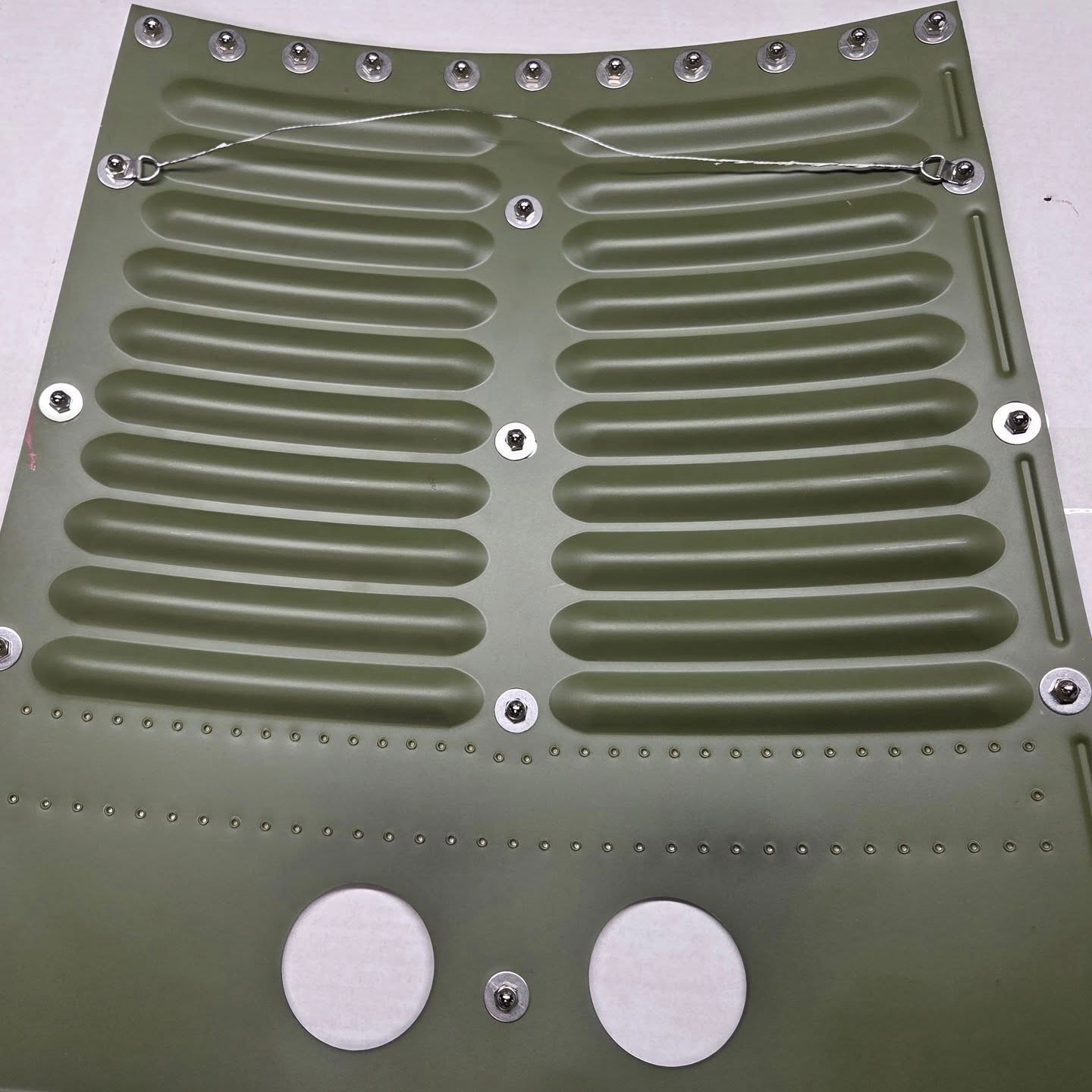
The reverse of Luna Replicas' Mercury art shingles is finished in the same color as the originals and has mounting hardware to hang the panel on the wall. (Luna Replicas)
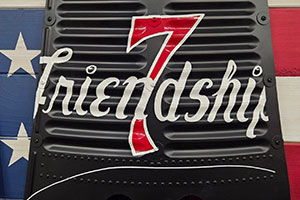
The "exact" version of Luna Replicas' "Friendship 7" cuts off part of the logo as the original ran onto other shingles. (Luna Replicas) |