advertisements advertisements
|

|
A visit to Mars: Touring For All Mankind's Happy Valley Season 5 sets
by Robert Pearlman, editor, collectSPACE
March 27, 2026 — Apple TV is welcoming viewers back to Mars.
"For All Mankind," the alternate space history series, launches into its fifth season on Friday (March 27), with the first of 10 new episodes now streaming. Over the course of its first few seasons, the show recreated in detail the real-life history of the space race, while inventing plausible reasons for its timeline diverging from our own and landing a Soviet cosmonaut on the moon first.
With season five, the focus is now on remaining close to what might be possible. No where is that seen clearer then at Happy Valley in the Valles Marineris canyon system on Mars — or, rather, Sony Pictures Studios lot in Culver City, California.
"What is cool about the sets is that we are not reinventing them each season, we are adding to them. Because that's what happens if you have a home and you're adding a bedroom," said Ben Nevidi, who was sitting in the main hub of Happy Valley next to Matt Wolpert, co-showrunner and series co-creator (with Ronald D. Moore). "It's not like you change the rest of the home, you add the bedroom, and that is the way we've approached our sets on Mars."
Come for an apple, stay for the pizza
In September 2024, I arrived at Happy Valley.
More precisely, I walked onto the set of the core module, where real hallways and mock elevators led out to other parts of the international base. In there, it was 2012, and there were several maps on the walls to help its residents (and visitors like me) with way-finding. The room was predominantly metal gray, but there was a punch of color — and life — at its center.
"I'm looking at this tree that is emblematic of our show, because this is the apple tree that in season four was this tall," says Wolpert, gesturing that it had been smaller, "and now it's that big and it's got apples on it. That's the inherent nature of our show, just this really cool evolution."
Apple invited a small group of journalists to come see the set. The production was about midway through filming season five and later in the day, we would watch as part of the fifth episode was shot.
"When you look around, and even in this room, the apple tree is emblematic of everything else that's happening on Mars in terms of the size and scope of the show," added Nevidi. The tree is on screen for a poignant rite of passage in the first episode.
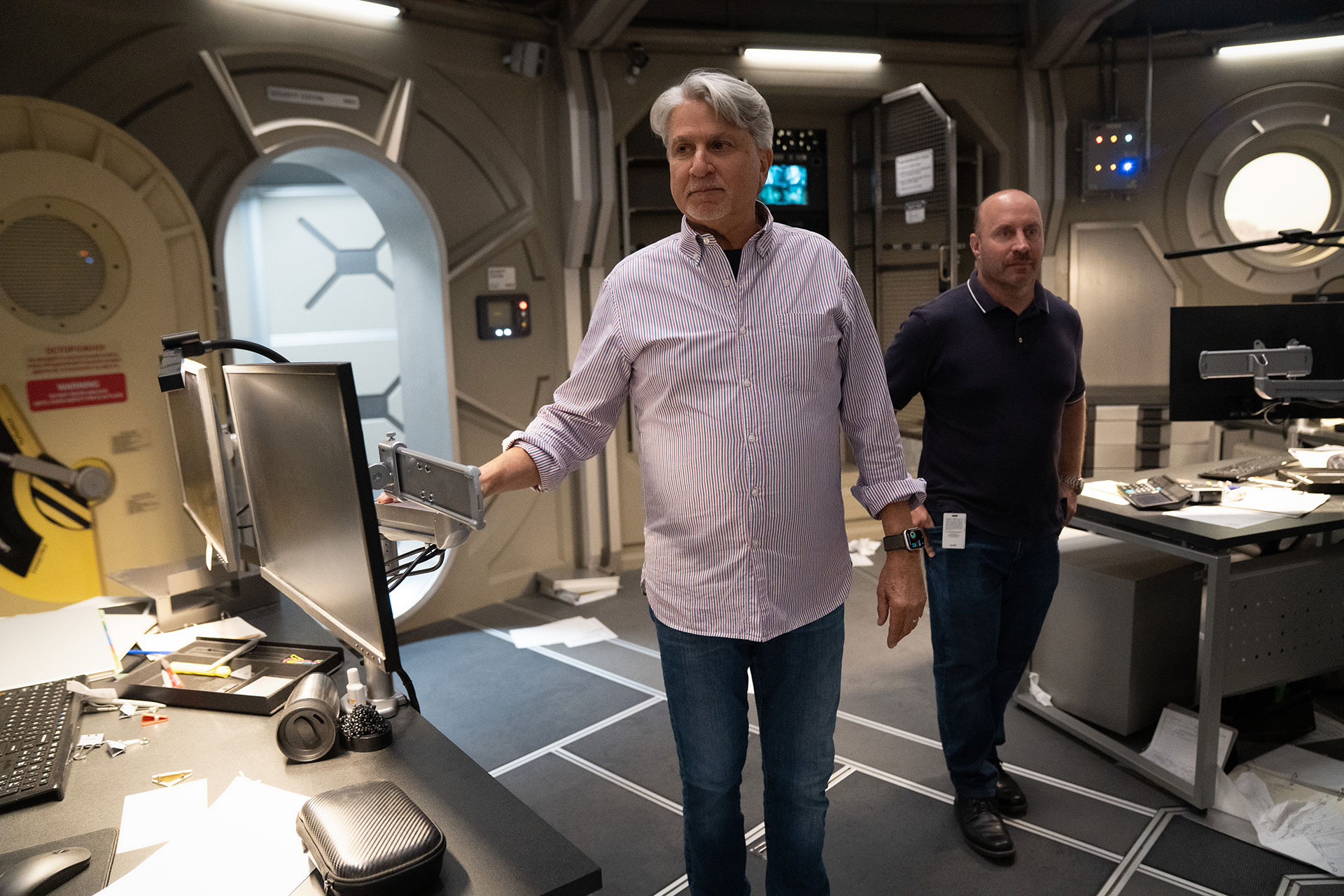
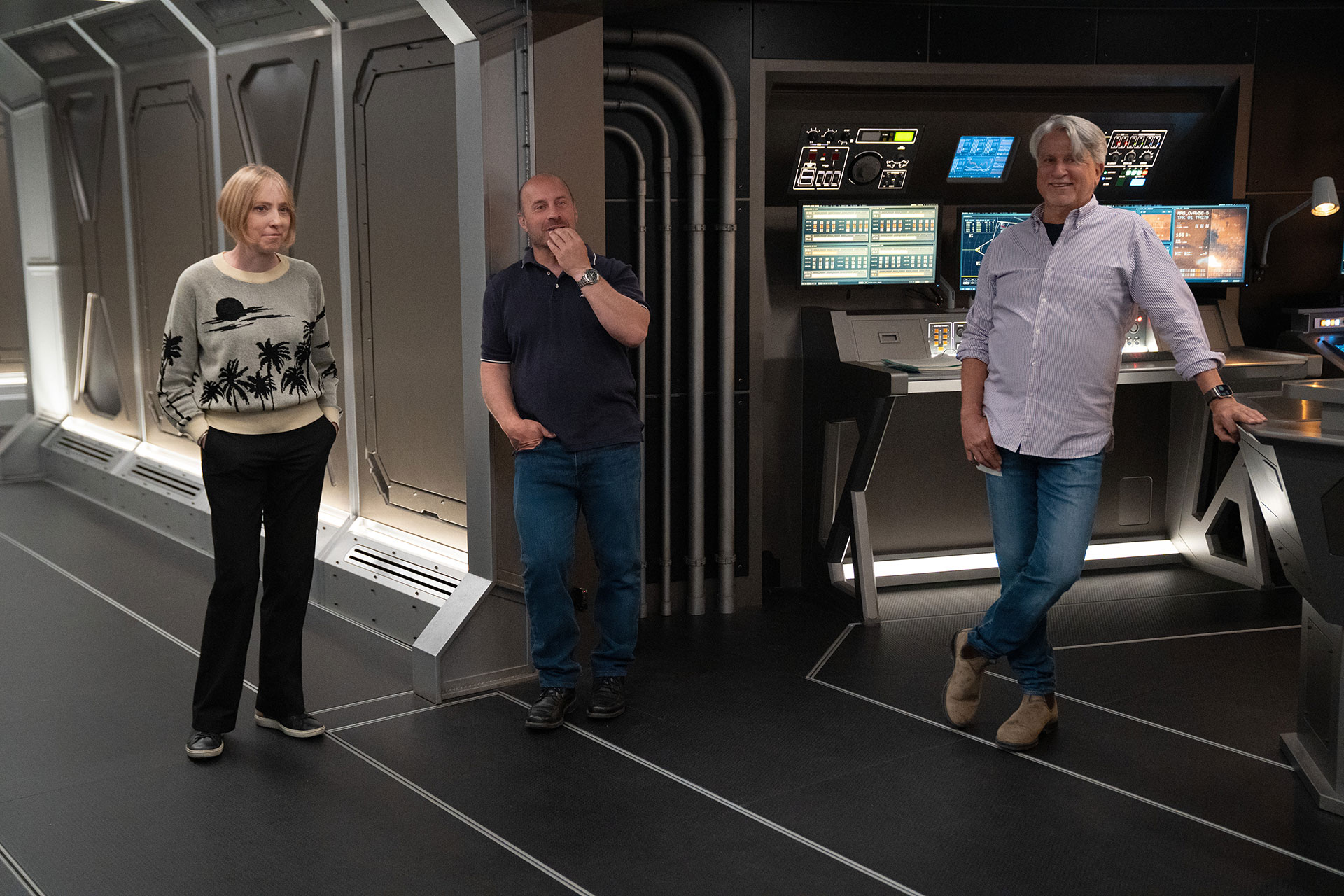
Production designer Seth Reed, set decorator Lisa Clark and technical advisor Garrett Reisman, the latter a former NASA astronaut in both real life and in the "For All Mankind" universe, joined our group as we moved from stage to stage, viewing the living quarters, work rooms and spacecraft that serve as more than just backgrounds, but like the tree, part of the story.
One particularly detail-rich set is the marketplace, where both Earth- and Mars-based vendors have set up shop.
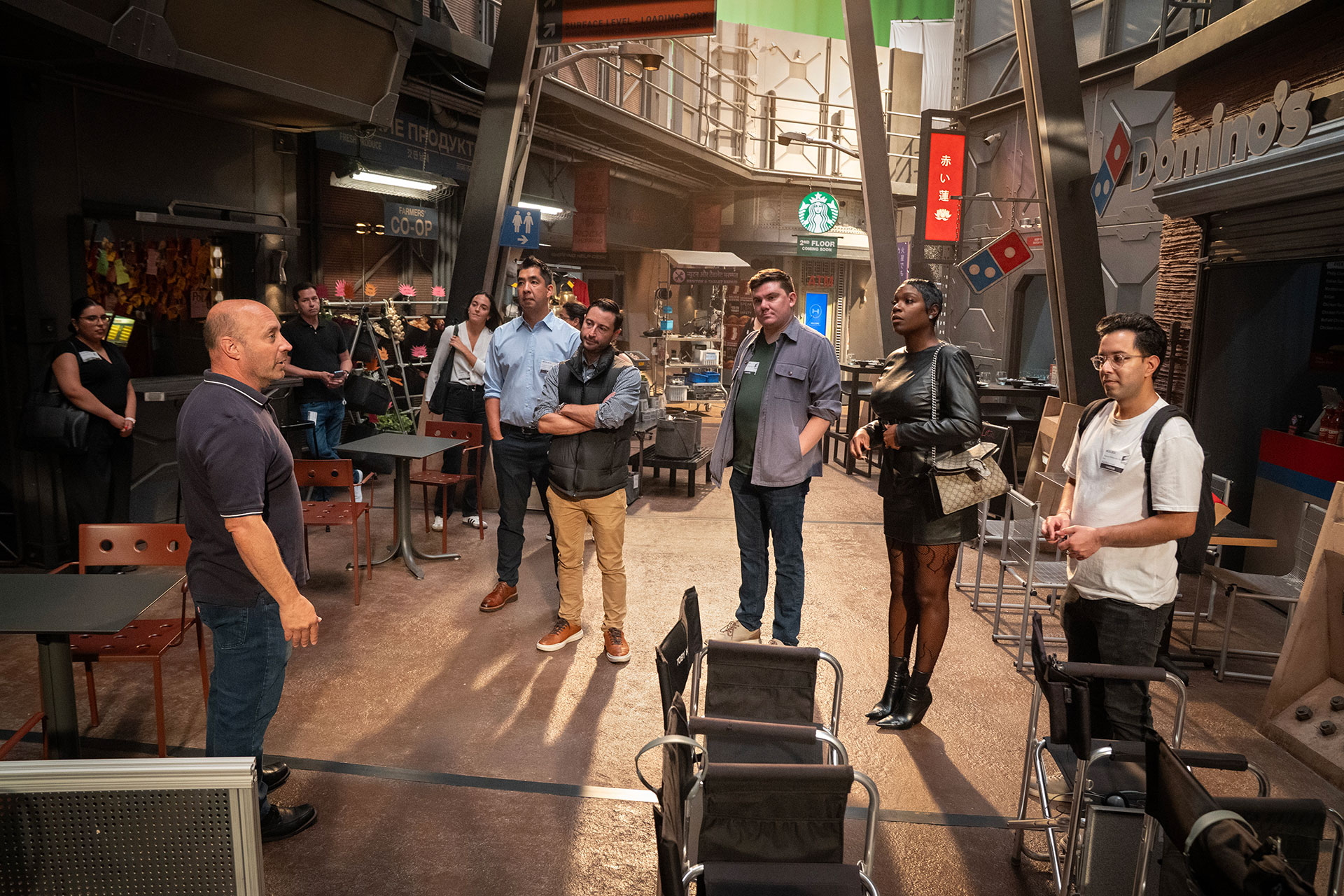
"Part of the spirit of Mars in this story is that there are a lot of cultures coming together, and there is room for everybody," says Reed. "And there's Domino's and there is Starbucks."
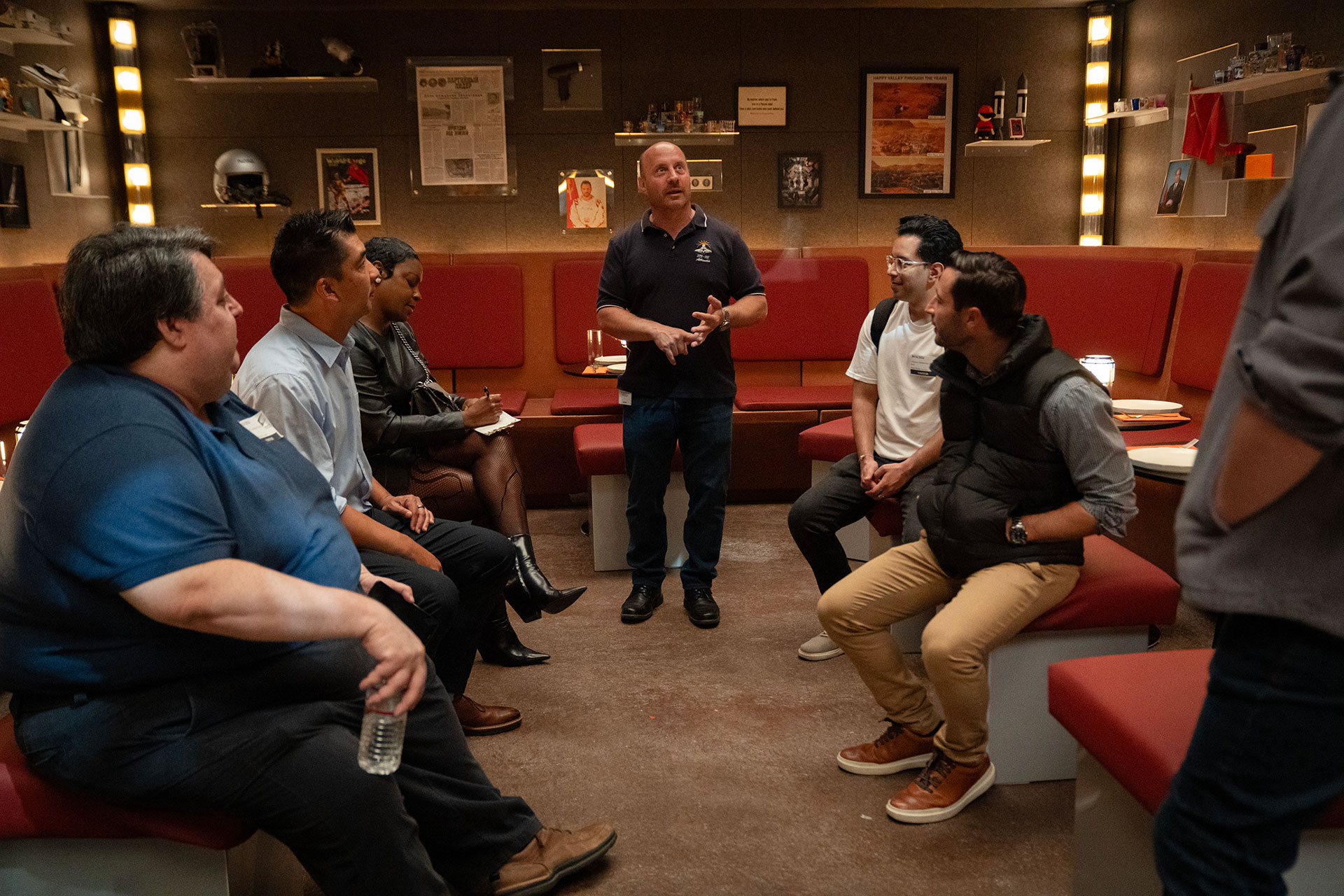
Also here is Ilya's Bar and Restaurant, an evolution from the smuggle-fed speakeasy in season four. The establishment contains a multitude of nods to past in-universe events and was inspired in part by the real-life Shep's Bar set up in Star City, Russia by NASA astronaut Bill Shepard at the start of the International Space Station.
"There are a few pieces from earlier seasons that were part of when they first settled Jamestown [on the moon]. There are elements that are from season four, on settling Mars. There are quotes from famous astronauts on the wall. There's the signed picture that all of the the characters signed of the first Thanksgiving on Mars," said Clark, pointing to each as she looked around the room.
"And then there are little elements that we added that we thought was a nice nod to this being a multicultural environment, where everybody brings an element — in this case, a shot glass — from their culture," she said. "They take a shot and they leave it here, and they become part of the Mars culture."
Behind the sets
A lot of thought went into expanding Happy Valley and its sets.
Take, for example, the hallways that link the modules together. There are older hallways that are made to look like they were fabricated from Martian regolith, as they date back to when Happy Valley was founded. Then there are the newer corridors that are styled to constructed of iridium. Last season, a group on Mars was successful in capturing an iridium-rich asteroid, nicknamed "Goldilocks," in orbit around the red planet.
"One of the fun things we had to do technically was figure out what [would happen] if iridium was plentiful and as cheap as aluminum. How would that change things and what would be the advantages?" said Reisman. "So I have this PowerPoint file that grew to over 100 slides on the iridium economy and all of the things that you could do with it."
The same was true with shielding the base from radiation. While it is not often (if ever) pointed out, views out the window show barbell-topped towers as part of the additions to Happy Valley.
"Those are intended to be electric dipole generators. They create an enormous, very powerful magnetic field to protect the entire base. Everywhere underneath one of those are protected from the radiation," Reisman said. "So that issue that we have been skirting for a while is now finally addressed with an active shield."
But don't confuse that for technobabble or a MacGuffin, the latter a plot device that keeps the story moving without needing to be understood. The science behind the towers is sound.
"There are no dilithium crystals," said Reisman. "One of my favorite emails that I hold onto from my experience working on this show is from when we were debating about something, and I was like, 'No, that can't be. It violates the laws of physics.'"
"And I got an email back from [former 'Star Trek: The Next Generation' writer and producer] Ron Moore, and he said,'You know, this was so much easier during 'Star Trek.' All we have to do is reverse the polarity of the deflector dish and connect it to the positronic network. And it works, you know.'"
"We're trying to avoid that," said Reisman. |
|
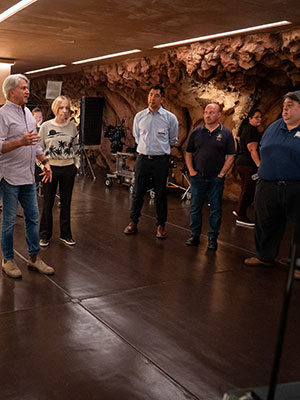
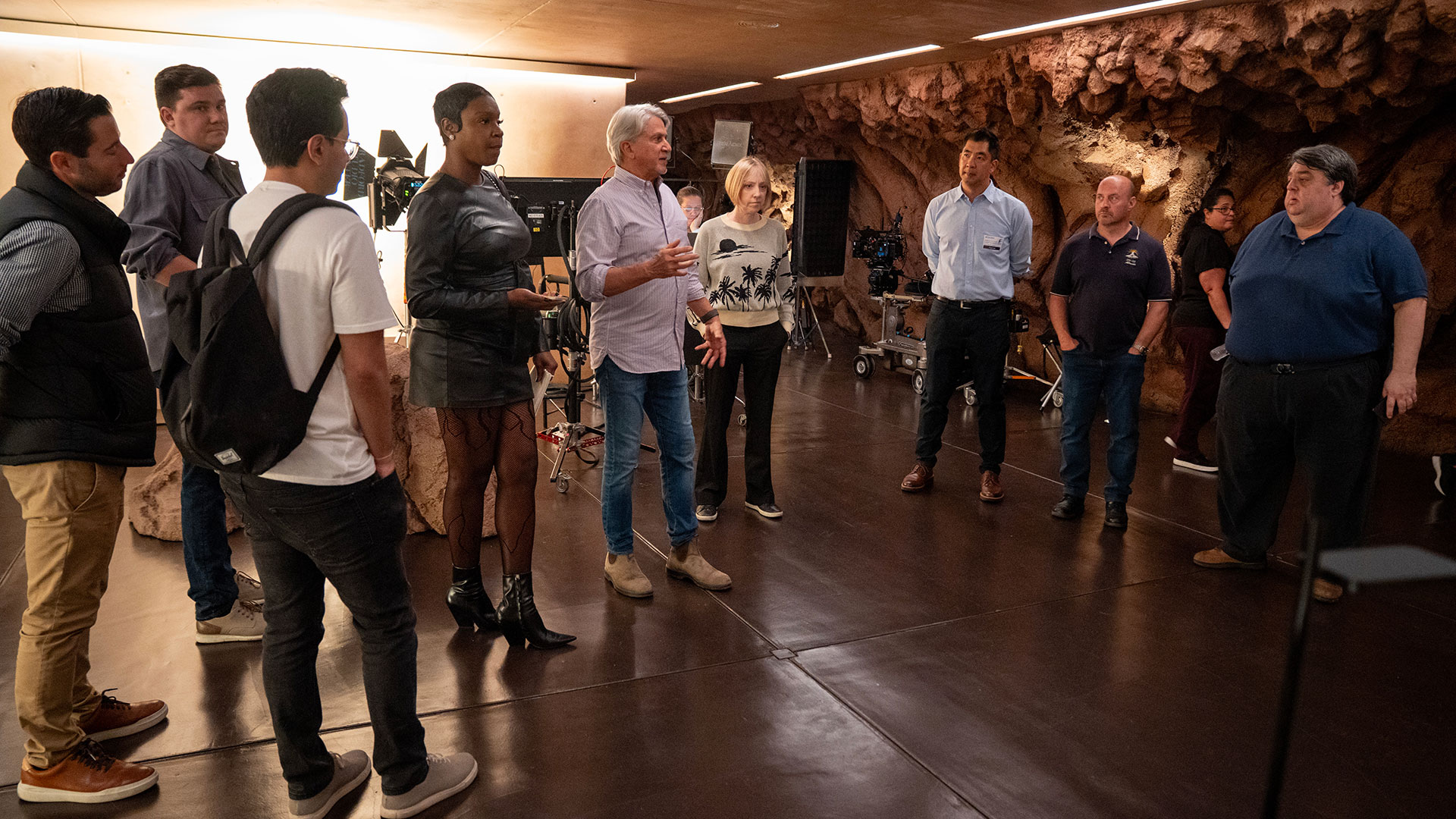
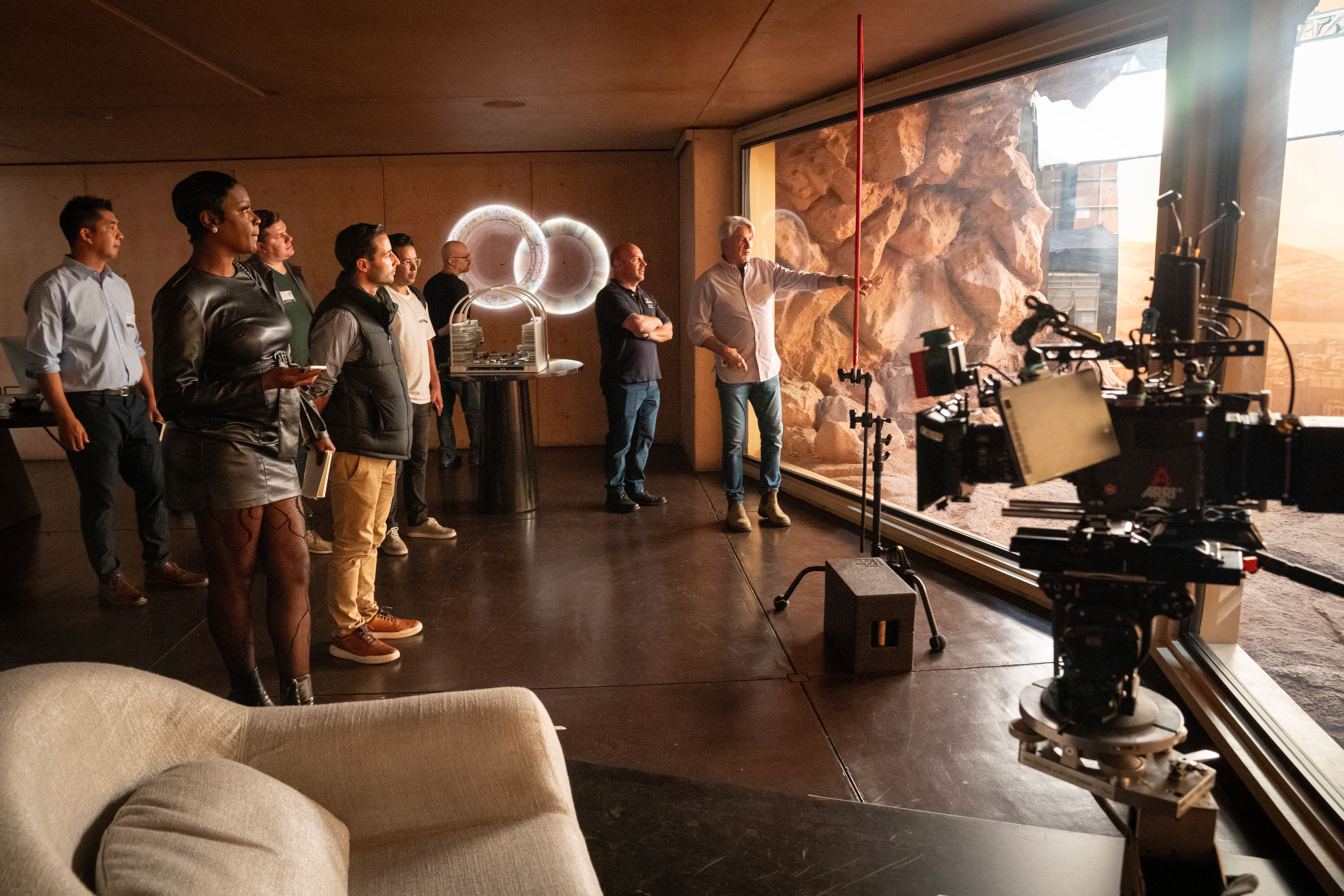
Bare Mars rock gives way to a corporate office on Mars in Season 5 of "For All Mankind." Seen here, production designer Seth Reed (sixth from right) and technical advisor Garrett Reisman (third from right) lead a press tour of the show's sets in 2024. (Apple TV)
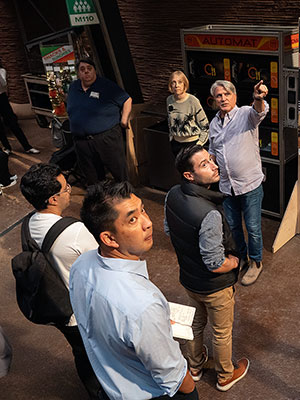
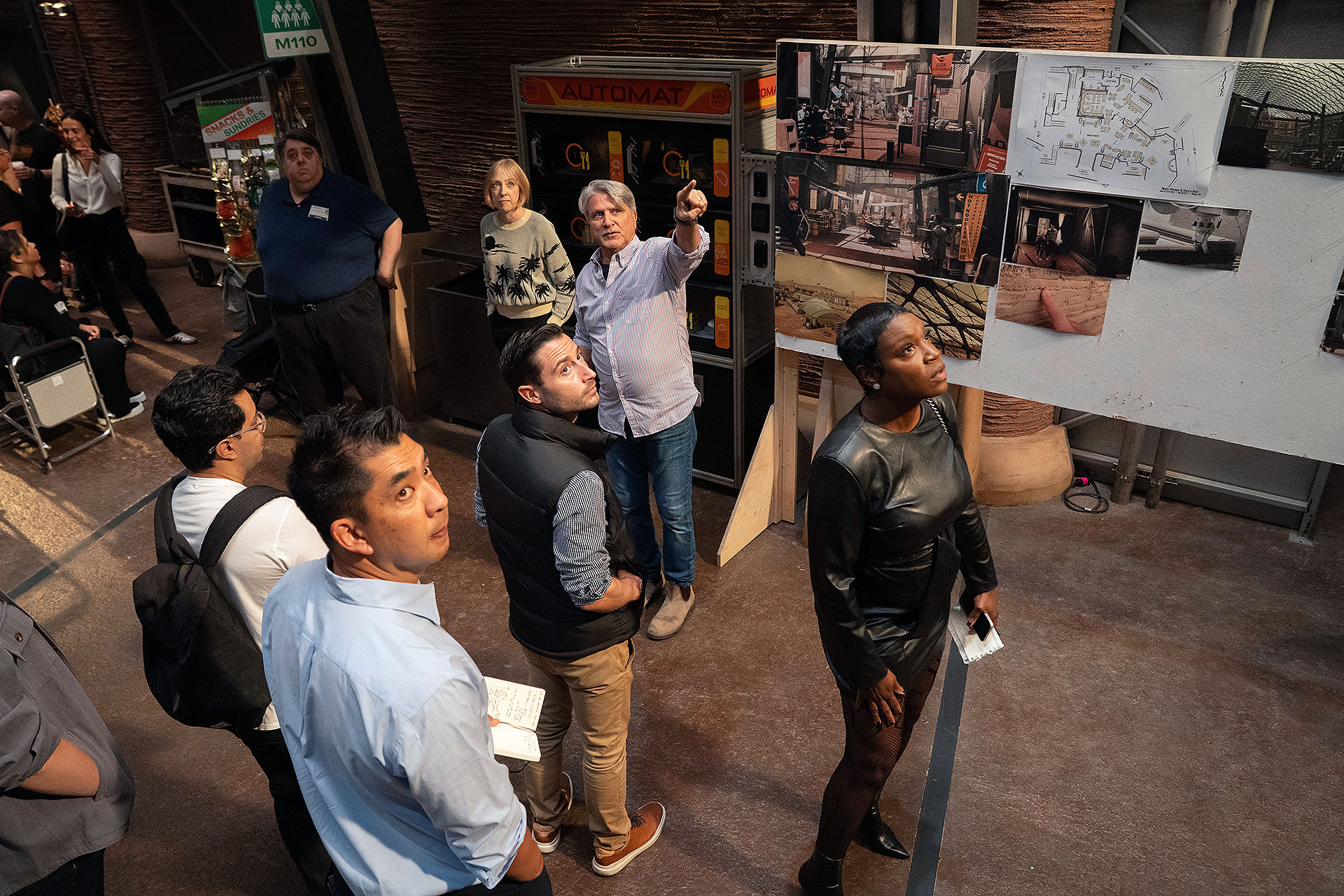
"For All Mankind" Season 5 production designer Seth Reed (at right, pointing upwards) and set decorator Lisa Clark (behind Reed) lead press through the Happy Valley marketplace. (Apple TV)
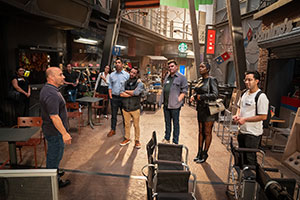
Domino's Pizza and Starbucks are among the recognizable shops at Happy Valley in season five of "For All Mankind," now streaming. Technical advisor Garrett Reisman is seen at left. (Apple TV)
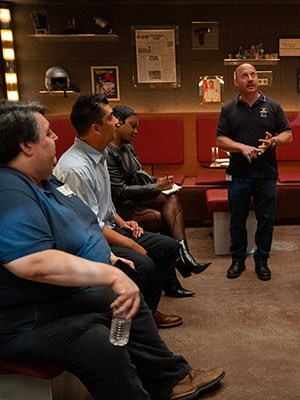
"For All Mankind" technical advisor Garrett Reisman (fourth from left), a former NASA astronaut, shares stories in Ilya's Bar and Restaurant, as created for season five of the series. (Apple TV) |
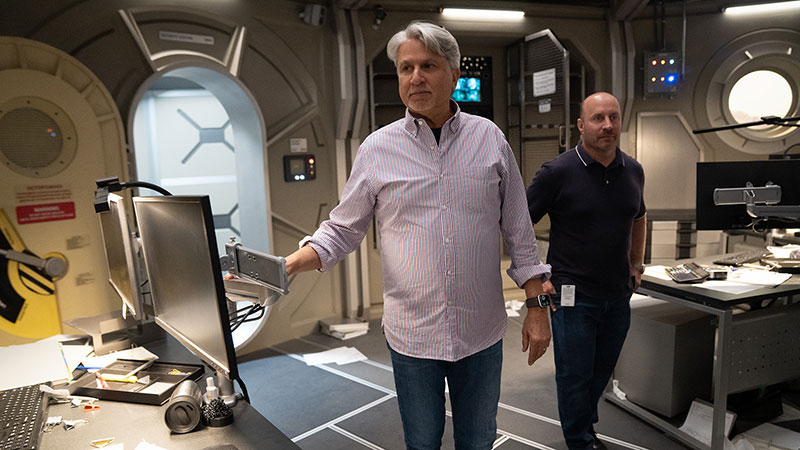
Season five production designer Seth Reed (at left) and technical advisor Garrett Reisman on the set of "For All Mankind." (Apple TV) |
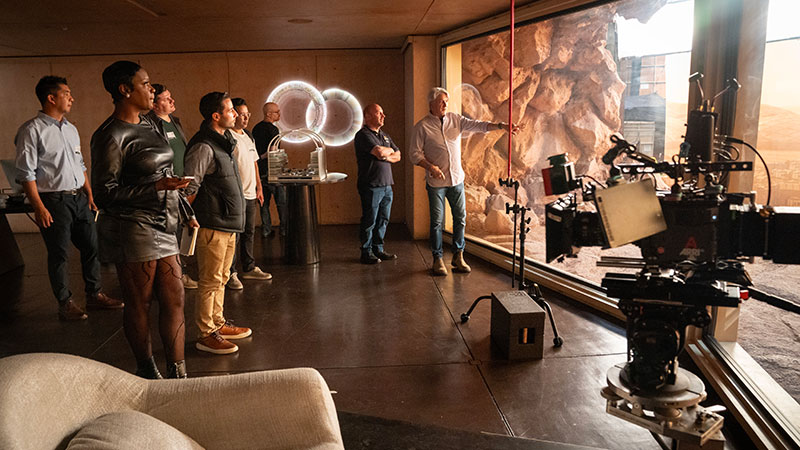
Production designer Seth Reed (at right) and technical advisor Garrett Reisman (behind Reed) lead a tour of Dev Ayesa's (Edi Gathegi) office on Mars in the fifth season of "For All Mankind." (Apple TV) |
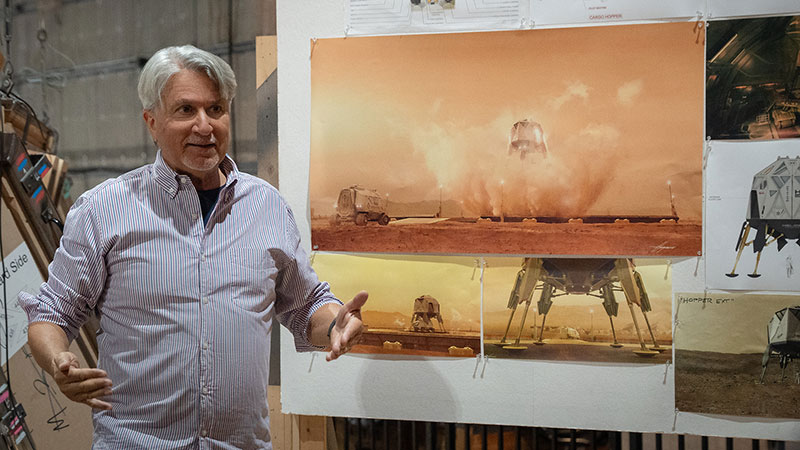
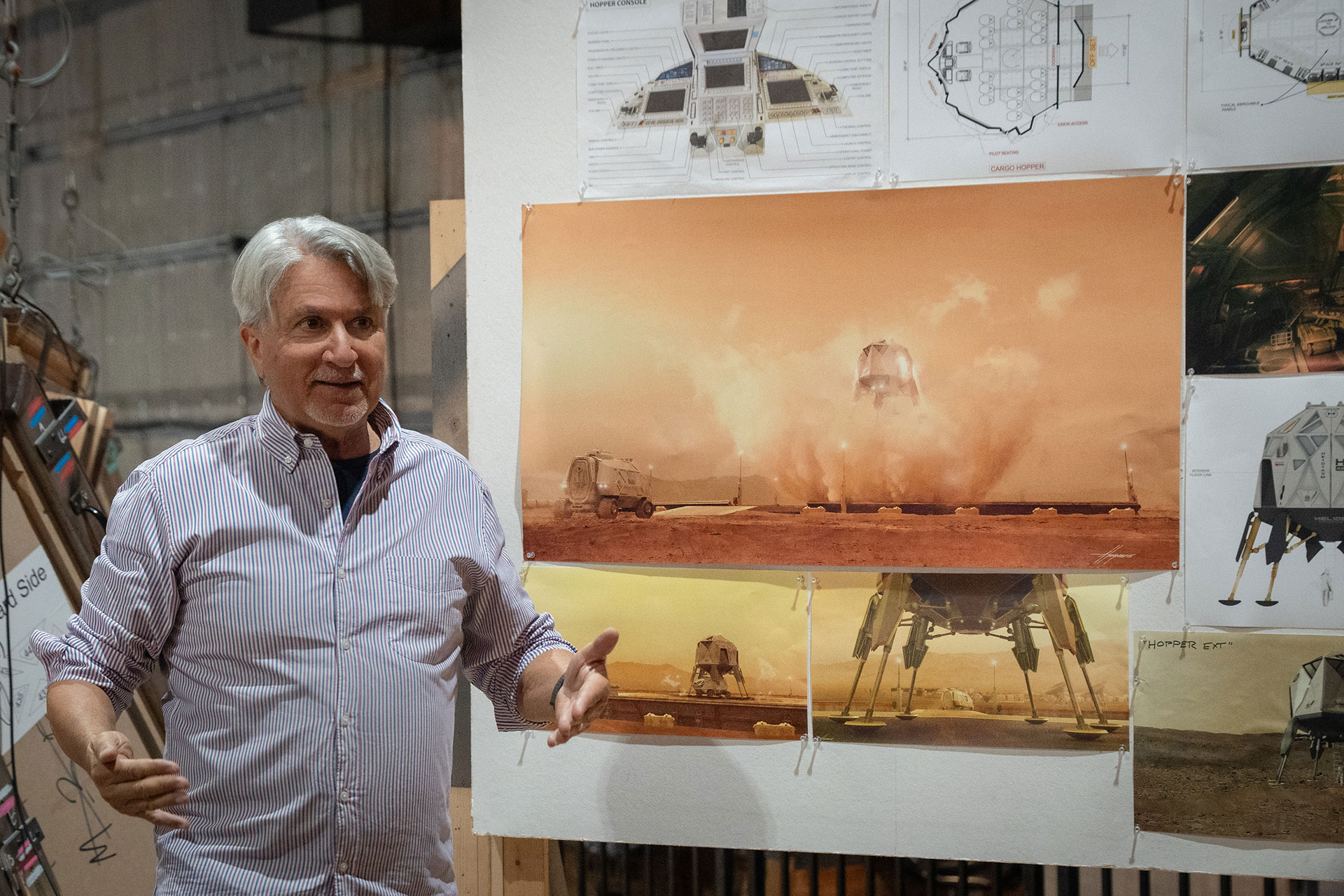
Production designer Seth Reed describes some of the concept art for the Mars "hoppers" vehicles seen in season five of "For All Mankind." (Apple TV) |
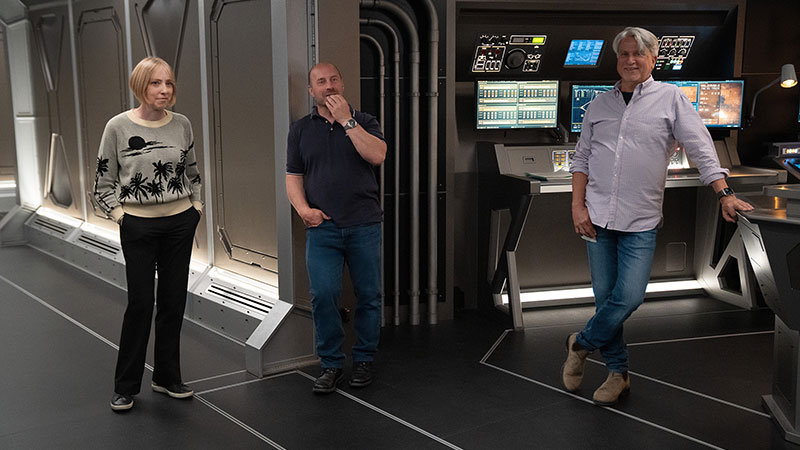
Set decorator Lisa Clark (left), technical advisor Garrett Reisman (center) and production designer Seth Reed on the "For All Mankind" set. (Apple TV) |
|

© collectSPACE. All rights reserved.
|
|
|
|