March 20, 2026 — NASA has taken a step forward to moving an undetermined spacecraft of a various size on an indefinite date to a yet-to-be-decided location.
Or to put it another way: NASA is seeking to learn more about what it would take to remove the space shuttle Discovery from the Smithsonian in Virginia and relocate it to Houston, as compared to transporting a smaller space capsule from anywhere in the country.
The space agency on Thursday (March 19) released a draft request for proposal (DRFP) for the "NASA Flown Space Vehicle Multimodal Transportation Multiple Award Contract," seeking to learn how contractors would approach transporting both "large aerospace vehicles and smaller spacecraft capsules."
The pre-solicitation request is an effort to meet the letter of the law — specifically the One Big Beautiful Bill Act — that requires NASA relocate a vehicle that flew with humans through space to a non-profit display facility within the vicinity of an agency center with ties the commercial crew program. Texas Senators John Cornyn and Ted Cruz had intended their legislation to result in Discovery being exhibited at Space Center Houston, but Senate rules required the wording to be more vague.
"My law authorizing and funding the space shuttle Discovery's movement to Houston is being set into motion thanks to NASA's announcement, and I applaud Administrator Isaacman for keeping this process moving," said Sen. Cornyn in a statement issued on Friday.
The law as enacted, though, opened the possibility for an alternate artifact to be delivered to "Space City," as NASA Administrator Jared Issacman acknowledged in December 2025.
"My job now is to make sure that we can undertake such a transportation [of Discovery] within the budget dollars that we have available. And of course, most importantly, ensuring the safety of the vehicle," said Issacman in an interview with CNBC. "If we can't do that, you know what? We've got spacecraft that are going around the moon with Artemis II, III, IV and V."
'Illustrative examples'
If NASA has a preference as to the two outcomes, the draft RFP does not say. Instead, it sets up both possibilities as "illustrative examples" and requests in-depth replies (no longer than 40 pages) on what it would take to accomplish each, including engineering analyses, transportation planning, preservation measures, specialized rigging systems, infrastructure coordination, regulatory compliance and "coordinated multimodal transportation execution."
"One example addresses the conceptual relocation of a large aerospace vehicle comparable in size and complexity to a space shuttle orbiter or solid rocket booster. The second example addresses the transportation of a smaller spacecraft capsule comparable to an Orion crew module or Mercury capsule," reads the draft request. "These examples are intended to represent the range of transportation scenarios that NASA may need to support under this contract vehicle."
NASA is also seeking cost estimates (though not binding price proposals) to plan and achieve each of moves within a five-year period.
As noted by "multimodal" in the title, NASA expects the deliveries to use multiple types of transportation. It leaves those choices up to each respondent, but identifies possibilities to include "airlift, sealift, rail transport, overland heavy haul transport and barge transport," among other specialized means of conveyance.
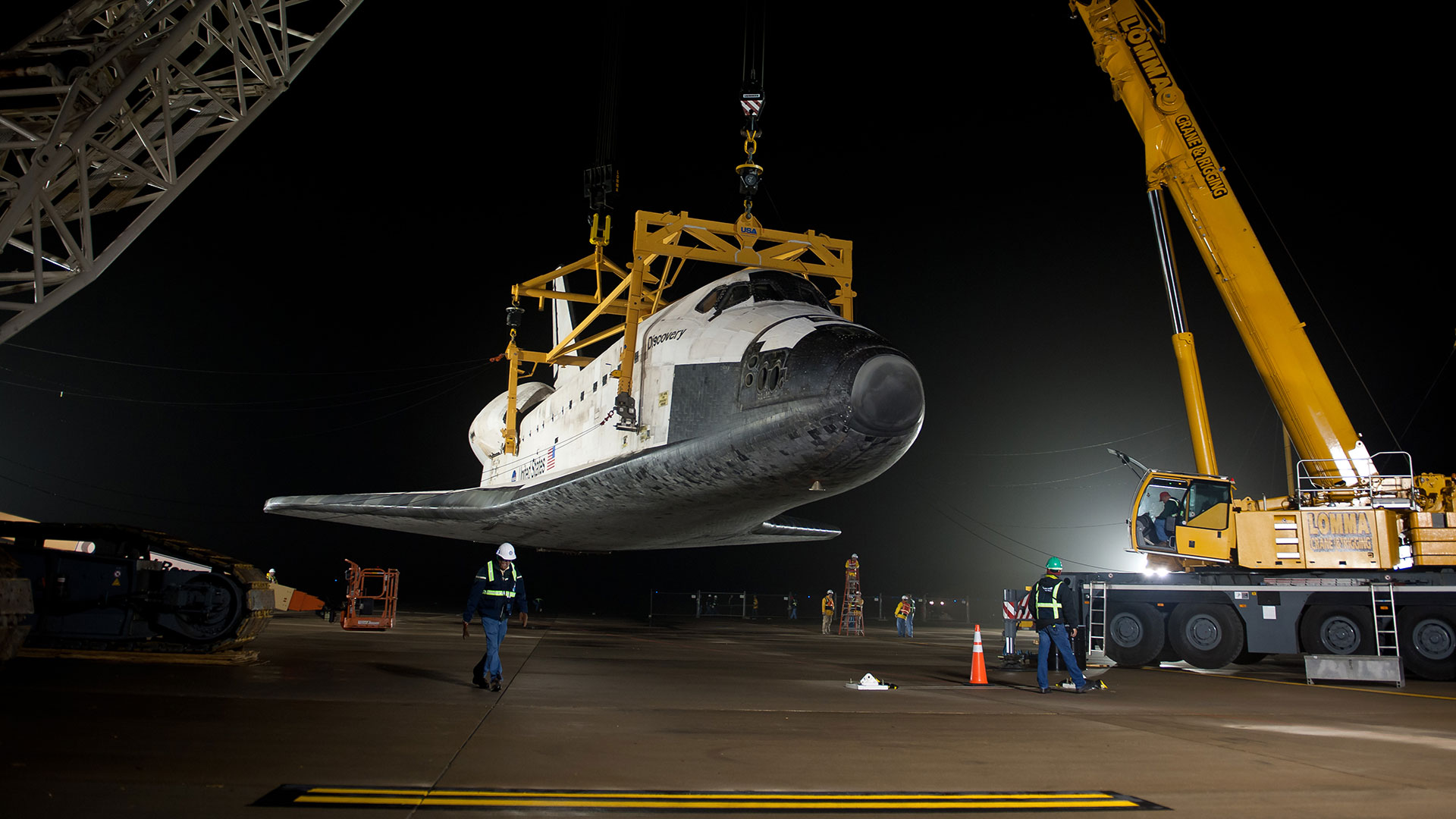
Whatever the mode of transport, the contractor will be responsible for providing the needed rigging to hoist and cradle the spacecraft during its relocation. NASA is not offering any of its own infrastructure, assuming it still exists (in the case of the space shuttle, the specialized sling used to lift the orbiters was scrapped after the California Science Center took Endeavour vertical for its display in 2024).
The contractor also must provide the "artifact preservation and curatorial support" needed to "protect the physical condition, structural integrity, finish, configuration and historical authenticity" of the spacecraft being moved. As Isaacman had alluded to, "the flown space hardware and aerospace artifacts transported under this contract [must] be treated not only as high-value cargo, but as irreplaceable national assets requiring preservation-focused handling, documentation and care."
Sustaining service
After NASA first flew to the moon in the mid-1970s, all of the Apollo command modules were transferred to the Smithsonian, which then worked out their delivery to museums around the country and world. Due to budget constraints, the retirement of the four surviving shuttle orbiters in 2011 was managed by NASA, with the National Air and Space Museum only taking over the title for Discovery.
The provision in the "One Big Beautiful Bill Act" that necessitated NASA undertake the DRFP has the agency looking beyond just satisfying the law.
"The government anticipates that if an RFP is issued, the resulting contract would enable NASA to establish a long-term enterprise capability that would be transportation operations ranging from small spacecraft capsules to extremely large aerospace vehicles," the draft reads.
Even if Cornyn and Cruz do not their way and Discovery stays where it is northern Virginia, the responses to this request may streamline the transport of future flown Orion capsules and other hardware to museums for the years to come. |
|
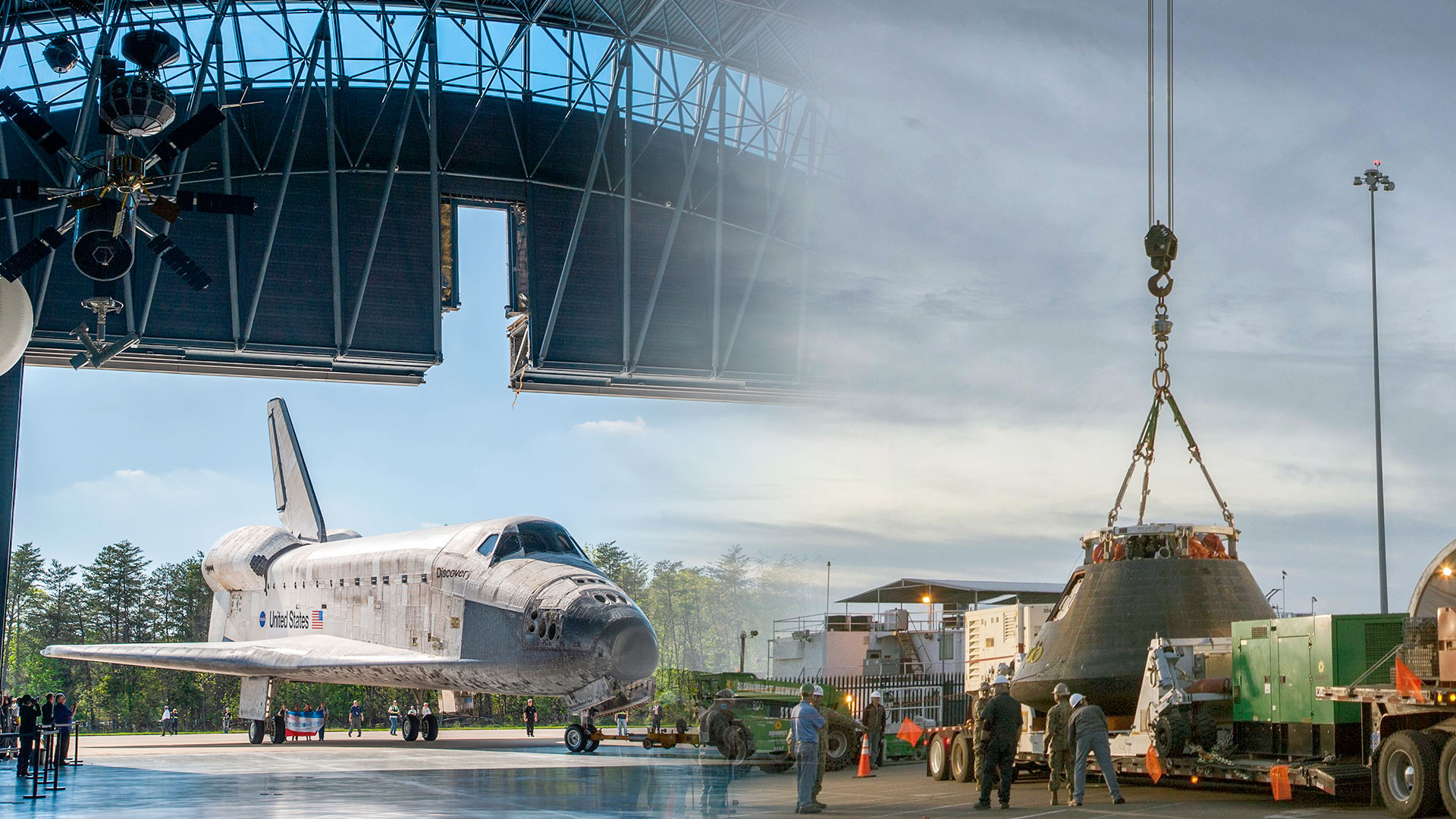
NASA has issued a draft request for proposals on how to move its historic flown space vehicles, from a large space shuttle orbiter like Discovery seen being rolled into the Smithsonian National Air and Space Museum's Steven F. Udvar-Hazy Center in 2012, to smaller capsules like Orion, seen being lowered onto a transport fixture at the naval base in San Diego, California in 2014. (collectSPACE/Ben Cooper / NASA/Cory Huston)
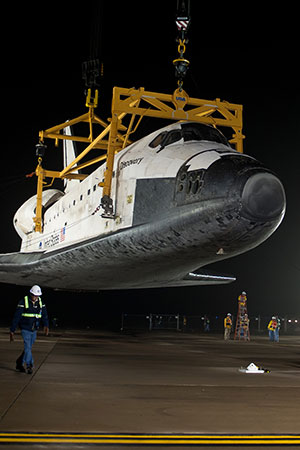
Ground support equipment, such as the yellow sling seen here attached to Discovery, was needed to lift the space shuttle orbiters for past moves. The hardware no longer exists. (NASA/Bill Ingalls)
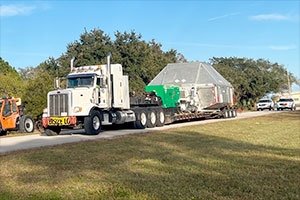
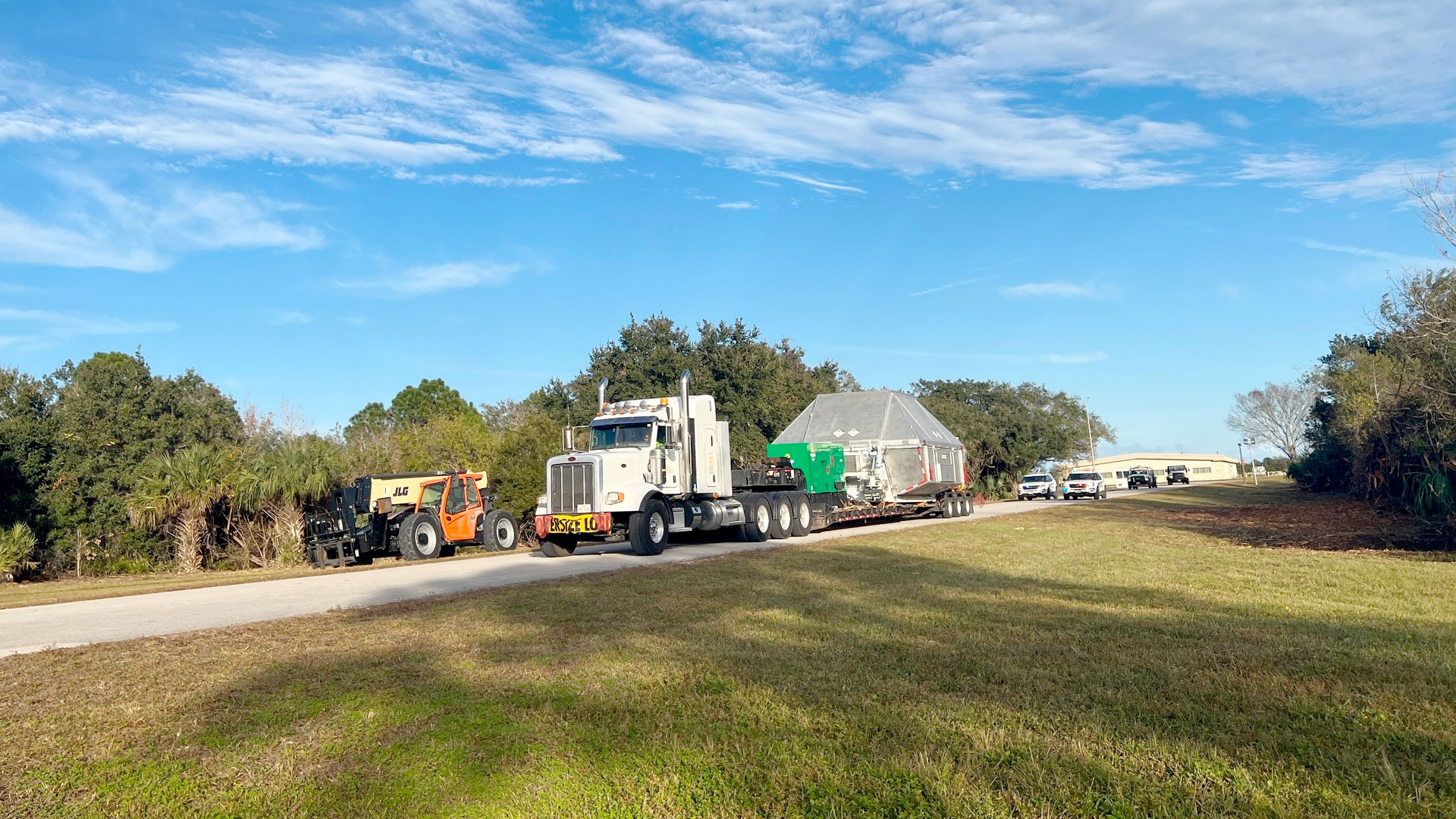
NASA's Artemis I Orion spacecraft was transported by truck across the United States back to Kennedy Space Center in 2022. (NASA) |