March 17, 2026 — A short tunnel that once led into and out of NASA's space shuttle orbiters is now a portal for the public to see the many types of people who crossed that path.
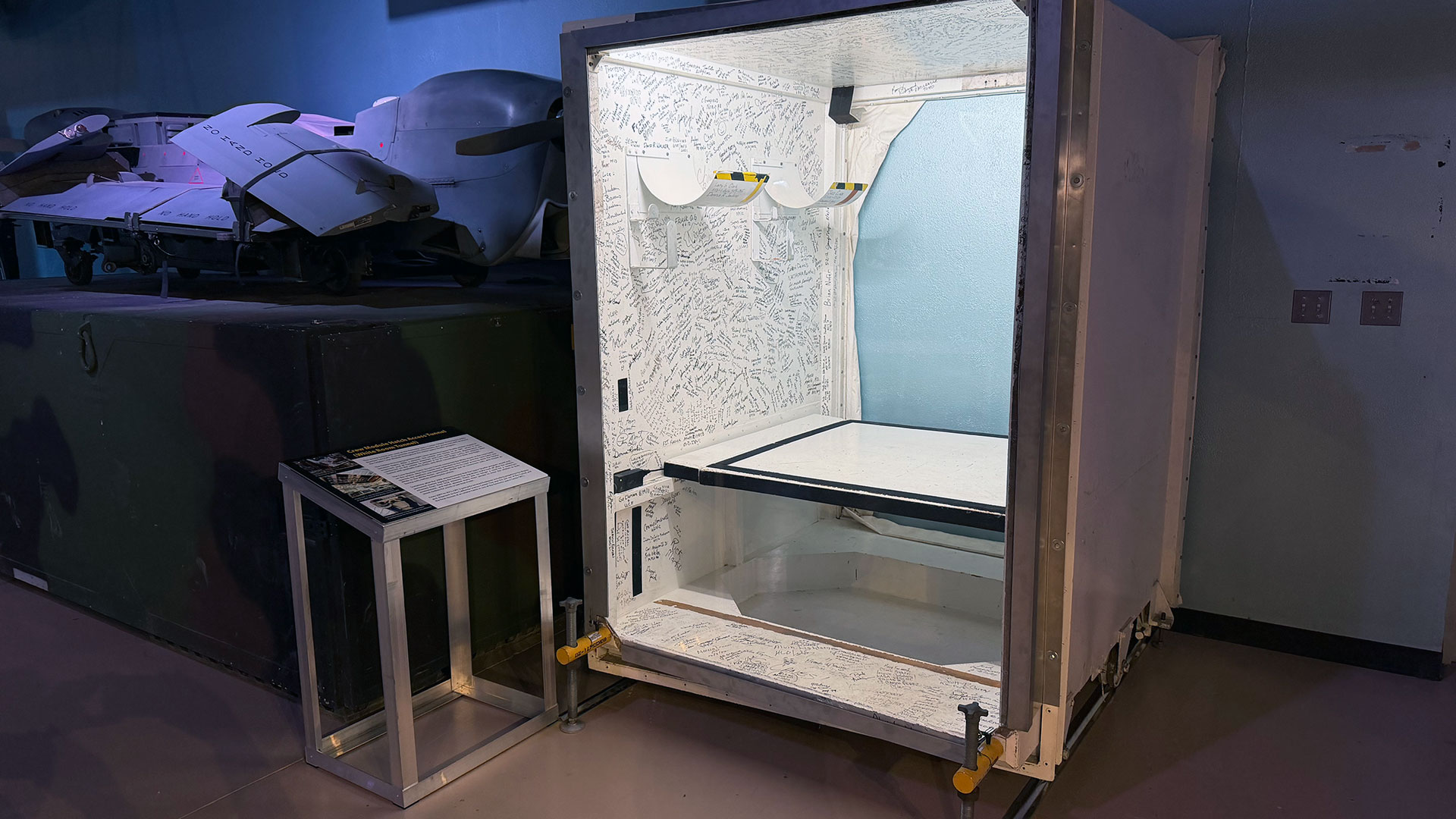
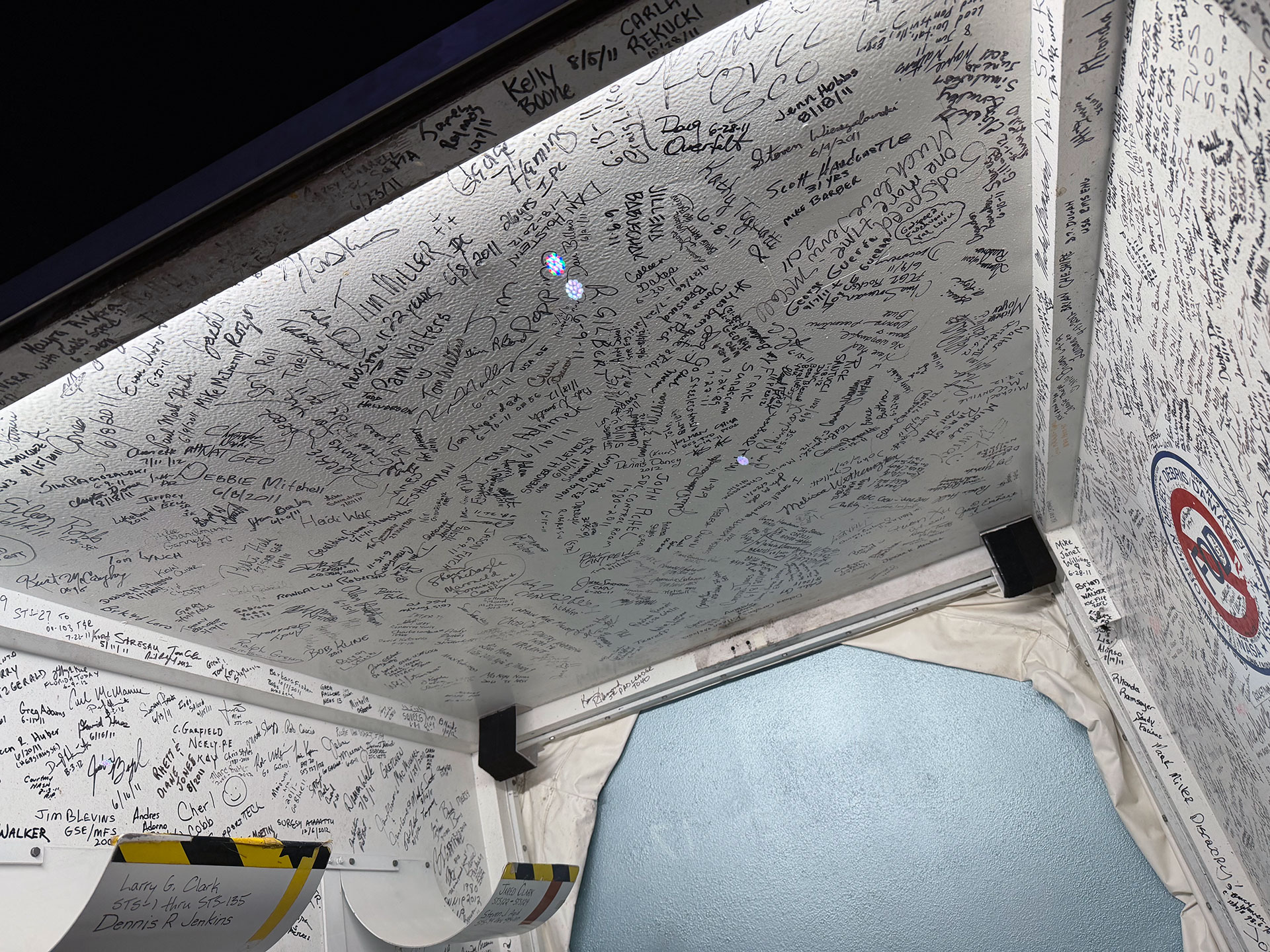
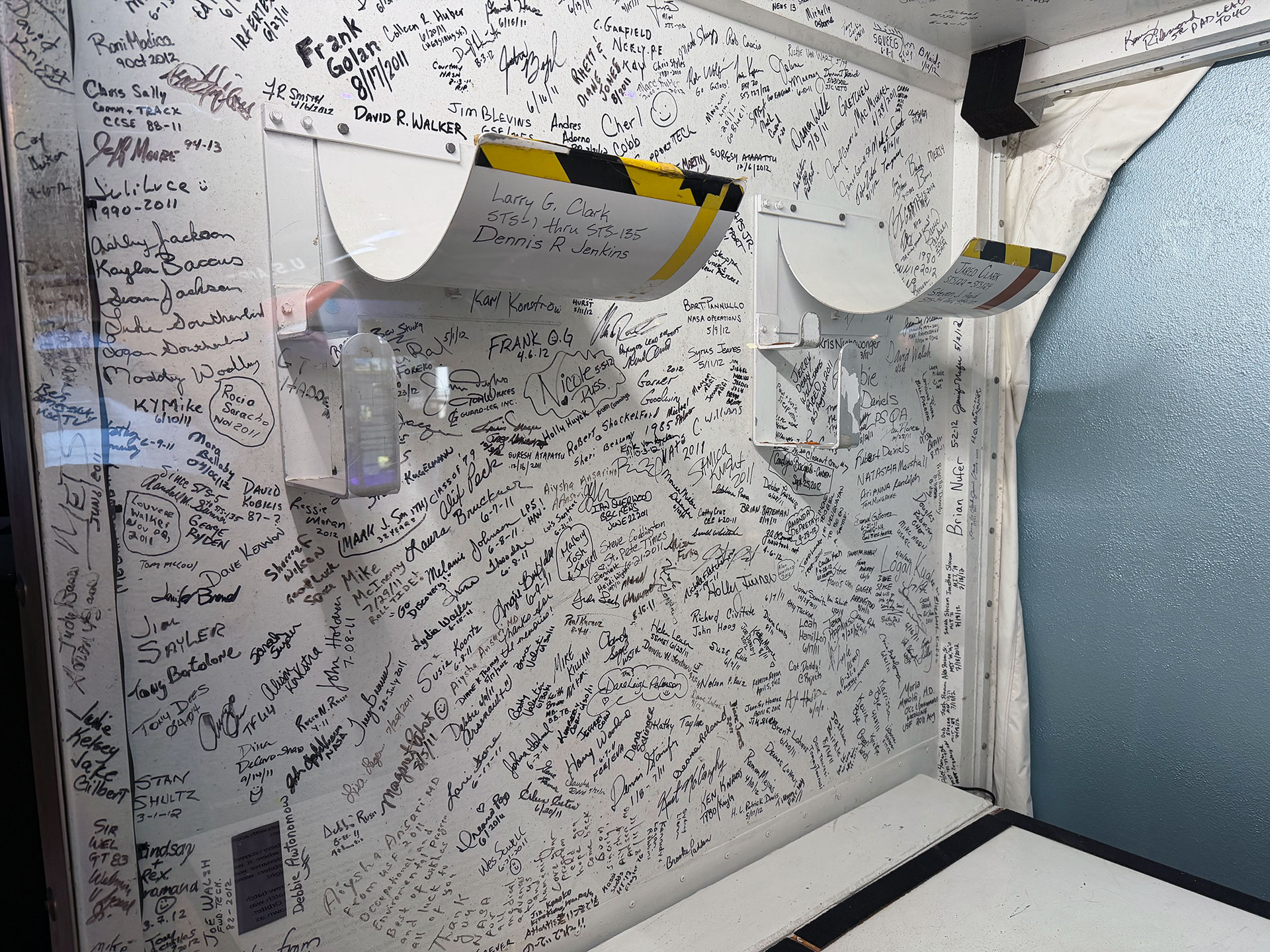
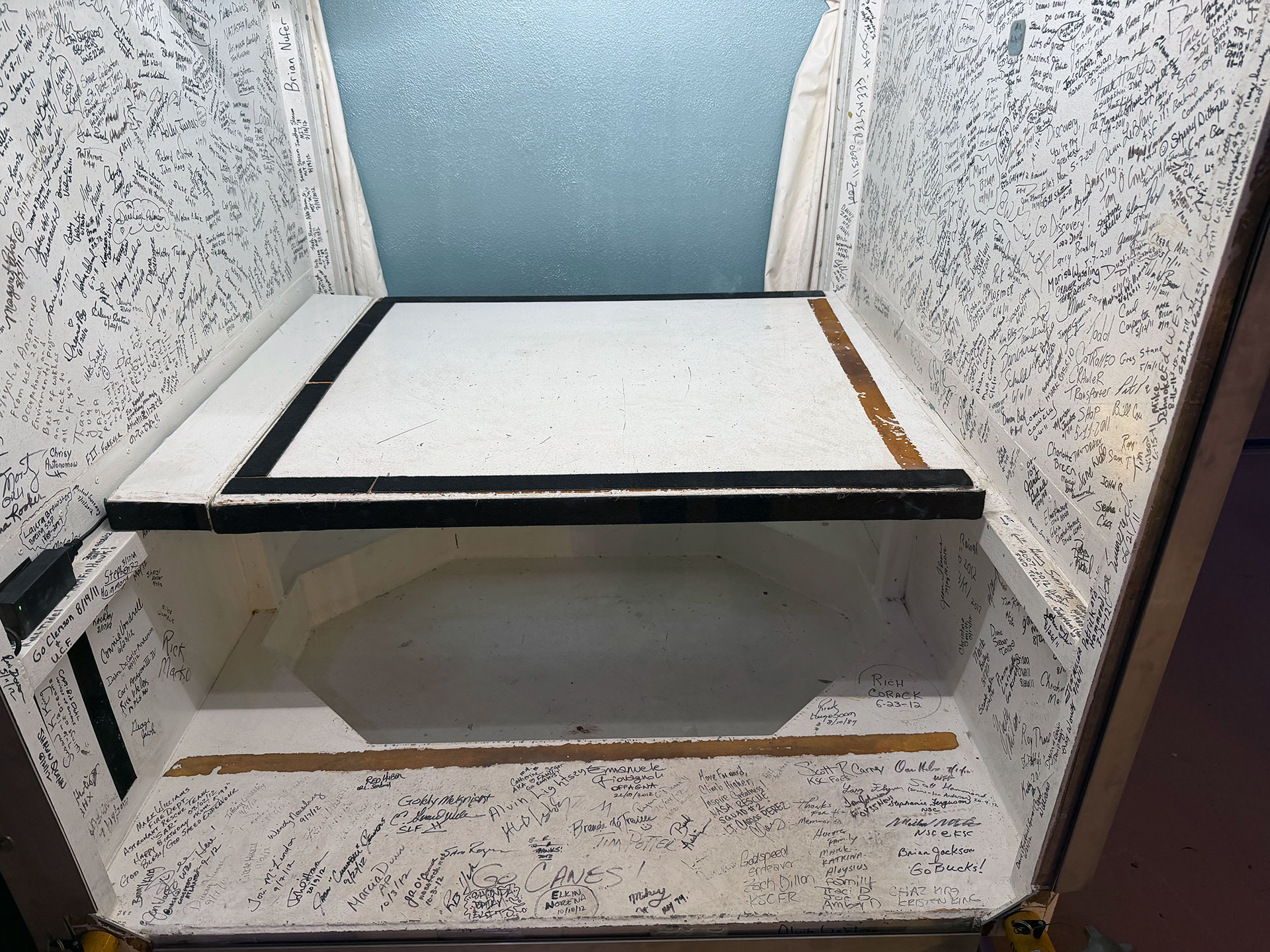
The Pima Air and Space Museum in Tucson, Arizona now displays the crew module access (or white room) tunnel from Orbiter Processing Facility-2 (OPF-2) at the Kennedy Space Center in Florida. During its last few years of service, the tunnel's walls were signed by astronauts, engineers, technicians, members of the press and special guests as both an "I was here" and farewell testament to the space shuttle program.
"I think it's important for people to see all those signatures and just realize what it took to get a shuttle into space, and also what happened to a shuttle between missions," said Andrew Boehly, director of collections at the Pima Air and Space Museum, in an interview with collectSPACE.
When in Florida and not being stacked with their launch components or counting down on the pad, the winged shuttles were serviced in three specially-built hangars. The OPFs were equipped with access platforms and support equipment that allowed payloads to be removed and installed, as well as to inspect and work on the vehicles themselves.
"There is a picture of [STS-1 astronaut] John Young getting into Columbia in the OPF from before the crew module access tunnel was installed," said Larry Clark, a former space shuttle program worker who arranged for the OPF-2 tunnel to go on exhibit. "He's walking across a pickboard that was laid from where the white room would be, over to the orbiter hatch, and just resting on the inside of the hatch. He's walking across that with one foot in front of the other to get into the orbiter."
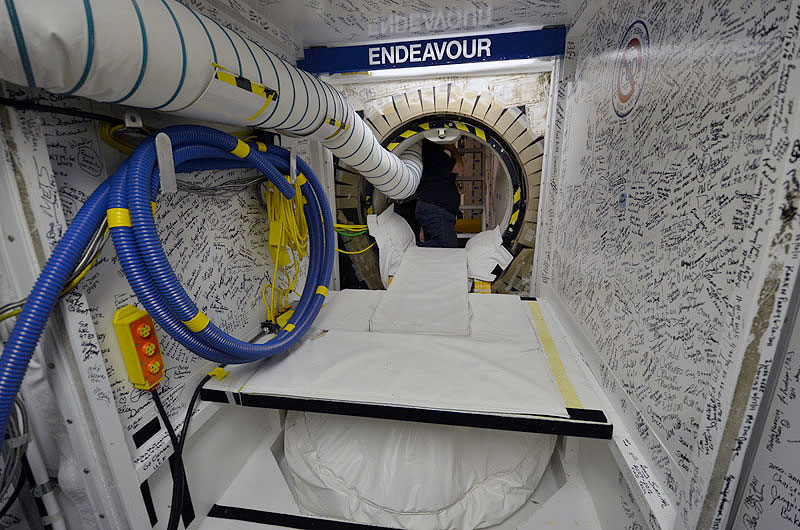
The addition of the tunnel made entering and exiting the crew cabin easier and safer, much like the white room at the end of the crew access arm on the launch pad. It was also a part of the clean room designed to prevent dirt and other foreign debris from entering the orbiters as they were being worked on in the OPF. Even after the program did away with full "bunny suits" to enter the orbiter, visitors still needed to cover their shoes with booties to prevent traipsing in detritus.
Over the course of its history, the OPF-2 tunnel was connected with Columbia for 1,282 days, 318 days with Challenger, 1,261 days with Discovery, 2,020 days leading into Atlantis and 3,606 days as the entranceway into Endeavour. Among the notable missions it supported were the maiden flights of Challenger, Discovery and Atlantis; one of the five Hubble Space Telescope servicing missions; the 1998 return to orbit by Mercury astronaut John Glenn; the ill-fated last flight of Columbia and the penultimate mission of the shuttle program.
The similarly-signed tunnels from the other two OPFs are today at the Coca-Cola Space Science Center in Columbus, Georgia (OPF-1) and in the archives of the Smithsonian's National Air and Space Museum (OPF-3).
Now on exhibit in Pima's Aerospace Technology Gallery, visitors' eyes are quickly drawn to the many signatures covering the interior of the tunnel.
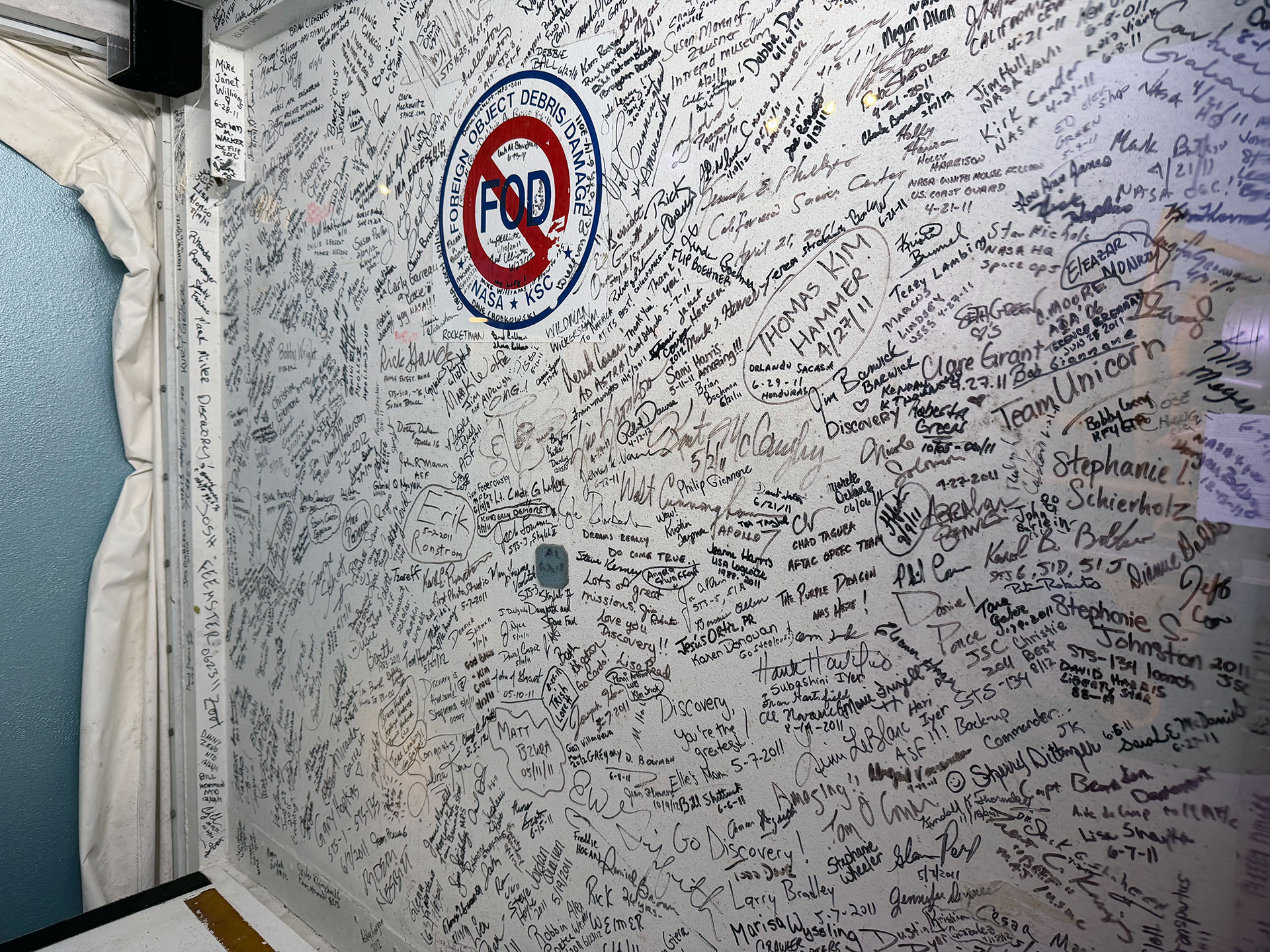
"Some of the more recognizable signatures are from the astronauts," said Clark, who signed the wall years before he became responsible for its fate. "One of the more impressive autographs is from Tom Stafford, who flew on Gemini 6, Gemini 9, Apollo 10 and the Apollo- Soyuz Test Project. Walt Cunningham from the Apollo 7 crew signed, as did Rick Hauck, who was the commander for the return to flight after the Challenger tragedy."
("And then there is some guy named Robert Pearlman," added Clark, referring to collectSPACE editor and this article's writer, who signed twice, one time each on two separate visits.)
"Every time I look at it, I see another signature," Clark said. "Lots of folks that I worked with and folks that worked for me over the years. And it is always fun."
The tunnel adds to Pima's growing collection of shuttle hardware. The museum also has a shuttle solid rocket booster that was earlier at the Kennedy Space Center Visitor Complex and a guidance and navigation simulator used to train astronauts on how to fly the orbiter. The latter, like the tunnel, had been first awarded by NASA to a now-defunct Florida museum that was unable to raise the funds to build a facility for its display.
Clark rescued the tunnel from going to a scrapyard and then offered it to the Pima.
"We like this type of artifact because a lot of what we display are procedure trainers, simulators and mockups. Having something that has a direct historical connection to a large part of the shuttle program is really a cool thing to have," said Boehly. |
|
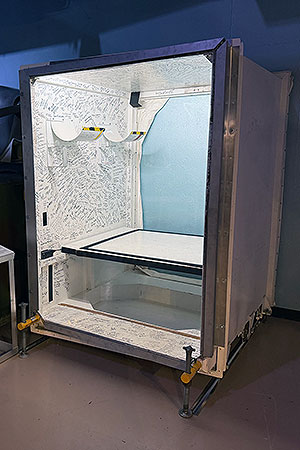
The Kennedy Space Center's Orbiter Processing Facility-2 crew module access tunnel is now on display at the Pima Air and Space Museum in Tucson, Arizona. (Pima Air and Space Museum)
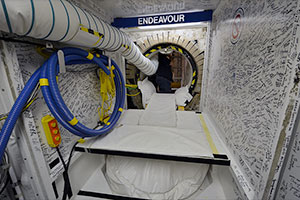
The crew module access tunnel as seen in 2012 when it was being used to enter space shuttle Endeavour in Orbiter Processing Facility-2 at the Kennedy Space Center in Florida. (collectSPACE)
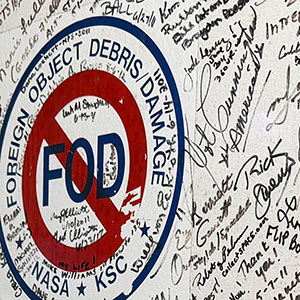
Among the many people who added their signature to the tunnel's walls were astronauts Walt Cunningham and Owen Garriott (to the right of the "No FOD" symbol). (Pima Air and Space Museum) |