February 2, 2026 — NASA has delayed the launch of its first astronauts to fly to the moon in more than 50 years.
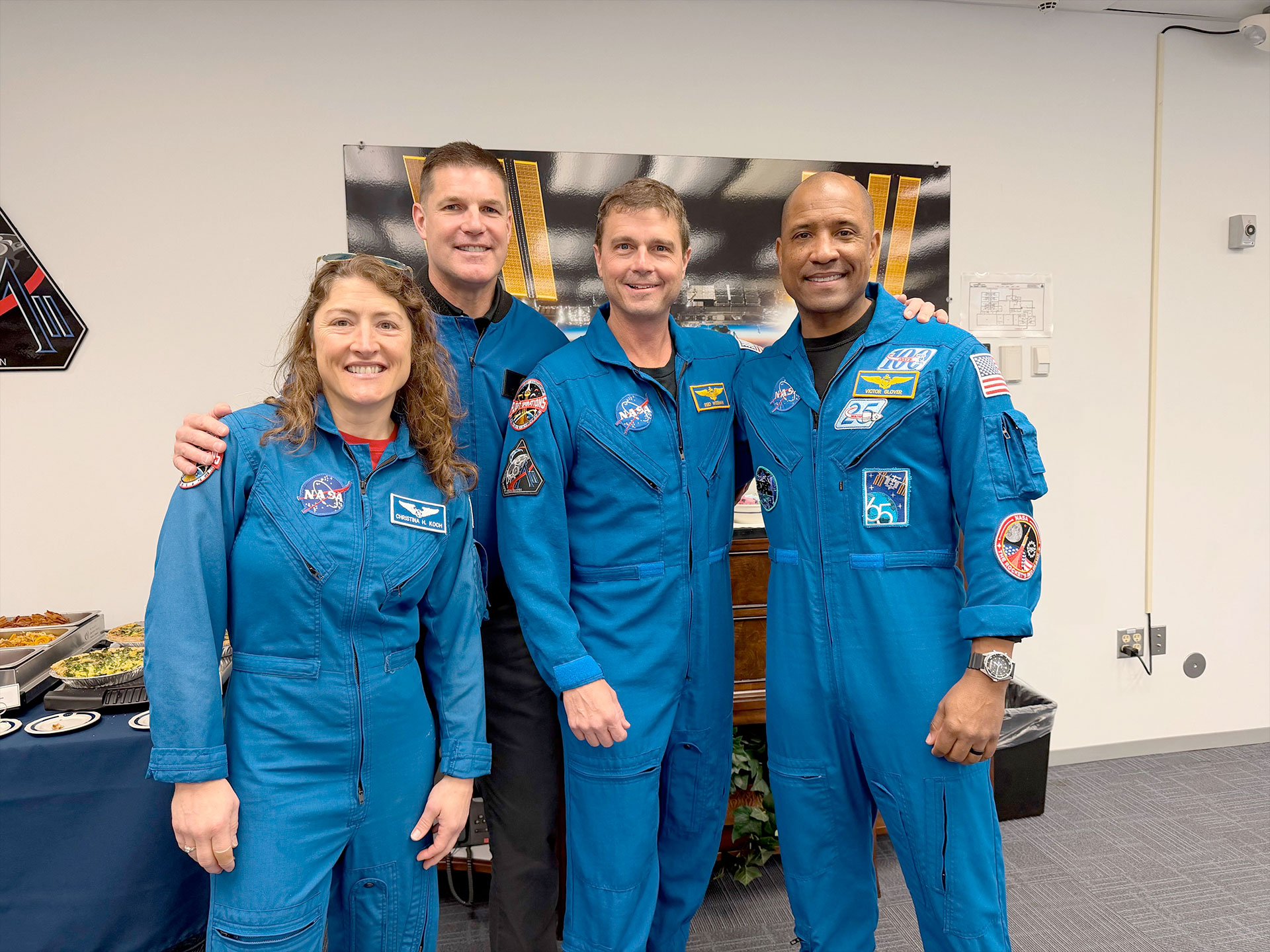
The Artemis II crew, including U.S. astronauts Reid Wiseman, Victor Glover and Christina Koch, along with Jeremy Hansen of the Canadian Space Agency, now has at least a month before they lift off on a 10-day mission to fly by and beyond the moon before returning to Earth. Artemis II will mark only the second time that NASA's Space Launch System (SLS) rocket has flown — and its first time with a crew on board.
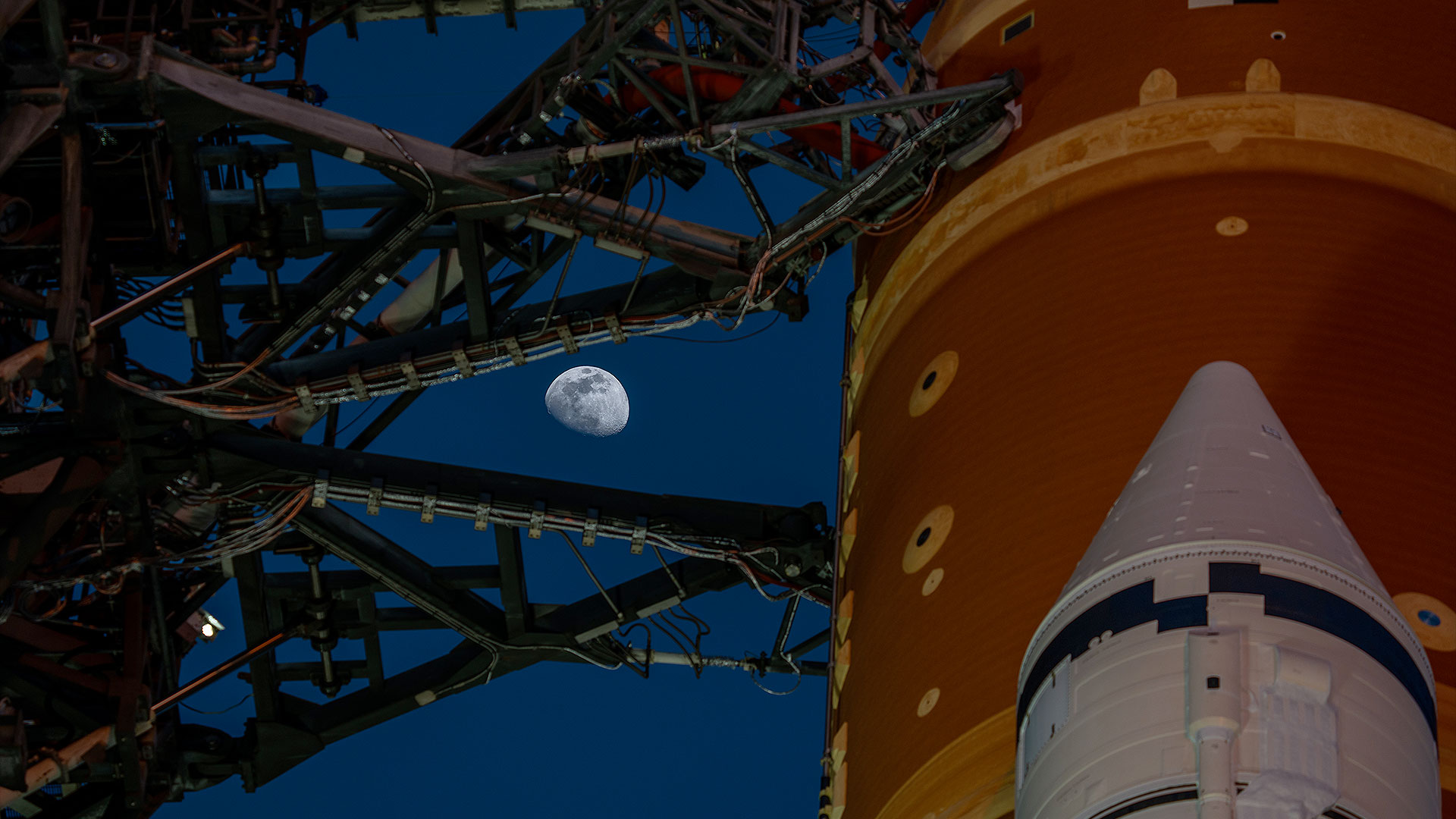
On Tuesday (Feb. 3), NASA concluded a 49-hour practice launch countdown for the upcoming Artemis II mission. Called a "wet dress rehearsal," teams loaded cryogenic propellant — 700,000 gallons of liquid hydrogen and liquid oxygen — into the SLS tanks, closed out the Orion spacecraft and then drained the rocket.
Early on in the tanking process, however, a hydrogen leak was detected from the interface that routes the cryogenic propellant into the rocket's core stage. The issue was resolved, but was added to the list of concerns that led to the mission missing the current launch window.
"With the conclusion of the wet dress rehearsal today, we are moving off the February launch window and targeting March for the earliest possible launch of Artemis II," Jared Isaacman, NASA Administrator, posted to social media early Tuesday. "We will only launch when we believe we are as ready to undertake this historic mission."
The first opportunity to liftoff next month is on Friday, March 6 at 8:29 p.m. EST (0129 GMT March 7). The launch window extends to March 11.
"Immense pride seeing the rocket reach 100 percent fuel load last night, especially knowing how challenging the scenario was for our launch team doing the dangerous and unforgiving work," Wiseman posted on social media, speaking on behalf of his crewmates. "We jump back into training tomorrow to start our preps for a March launch to the moon."
The hydrogen leak encountered early on during Monday's test was reminiscent of the leaks that forced NASA to scrub its first attempts at the launch of the uncrewed Artemis I circumlunar flight in 2022.
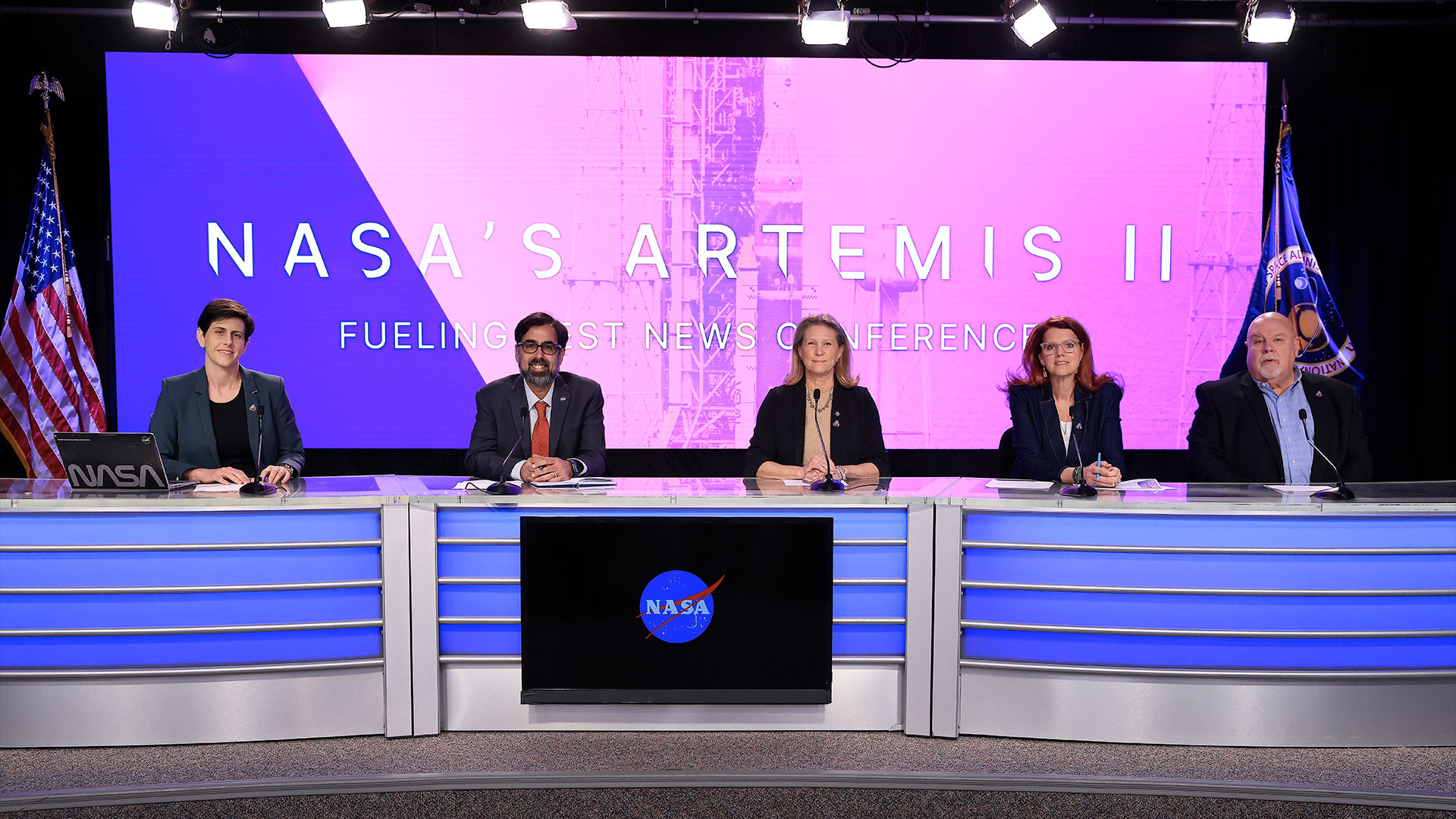
"Everyone is aware of some of the challenges with the hydrogen tanking from Artemis I, and we had made some changes," said Lori Glaze, NASA's acting associate administrator for exploration systems development, during a post-test press conference at the Kennedy Space Center in Florida. "I would say the fact that we got to full tanking yesterday on the first try was tremendous success. And we gathered an enormous amount of data on on the processes and how we want to go forward with that in the future."
The resolution for the leak on Monday involved stopping the flow of liquid hydrogen into the core stage, allowing the interface to warm up so the seals could reseat and adjusting the flow of the propellant.
Engineers conducted a first run at terminal countdown operations during the test, counting down to approximately five minutes left in the countdown before the ground launch sequencer automatically stopped the clock due to a spike in the liquid hydrogen leak rate.
In addition, a valve associated with Orion crew module hatch pressurization, which recently was replaced, required retorquing, and closeout operations took longer than planned. Cold weather that affected several cameras and other equipment didn't impede wet dress rehearsal activities, but would have required additional attention if it occurred on launch day.
Finally, engineers have been troubleshooting dropouts of audio communication channels across teams in the past few weeks. Several dropouts reoccurred during the wet dress rehearsal.
NASA mission managers will next fully review the data from the test, mitigate each issue and return to testing ahead of setting an official target launch date. The team is planning to conduct another wet dress before proceeding with the launch.
"We got some work we got to go do and and we're going to go do it," said Charlie Blackwell-Thompson, Artemis II launch director. "We'll figure it out and we'll be back here talking to you once again about when we're going to target our next wet dress and the results from that." |
|
The moon is seen shining over the SLS (Space Launch System) and Orion spacecraft, atop the mobile launcher, ahead of the Feb. 2 to Feb. 3 Artemis II wet dress rehearsal at NASA Kennedy Space Center's Launch Pad 39B in Florida. (NASA/Brandon Hancock)
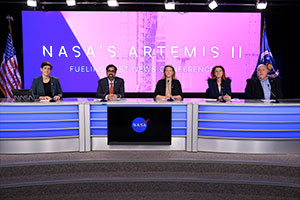
Rachel Kraft (at left), NASA public affairs; Amit Kshatriya, NASA associate administrator; Lori Glaze, acting associate administrator for exploration systems development; Charlie Blackwell-Thompson, Artemis II launch director and John Honeycutt, Artemis II mission management team chair discuss the completion of the Artemis II wet dress rehearsal at NASA's Kennedy Space Center in Florida, on Tuesday, Feb. 3, 2026. (NASA/Kim Shiflett)
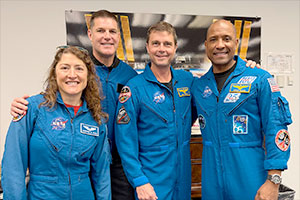
Artemis II crewmates from the left: Christina Koch, Jeremy Hansen, Reid Wiseman and Victor Glover, as seen after the wet dress rehearsal ended at Johnson Space Center, Feb. 3, 2026. (NASA) |