OASIS: a European service station for the MoonFuture exploration on the Moon will require more than landers, orbiters, rovers and astronauts. It will also need infrastructure – systems that provide the power, communications and support needed to operate long-term in a very challenging environment. This is the role of OASIS, ESA's Outpost for Advanced Scientific Investigation Station.
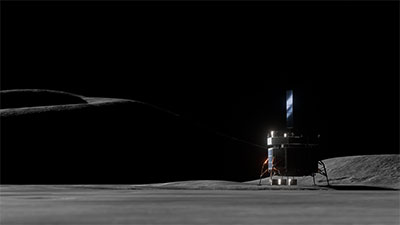
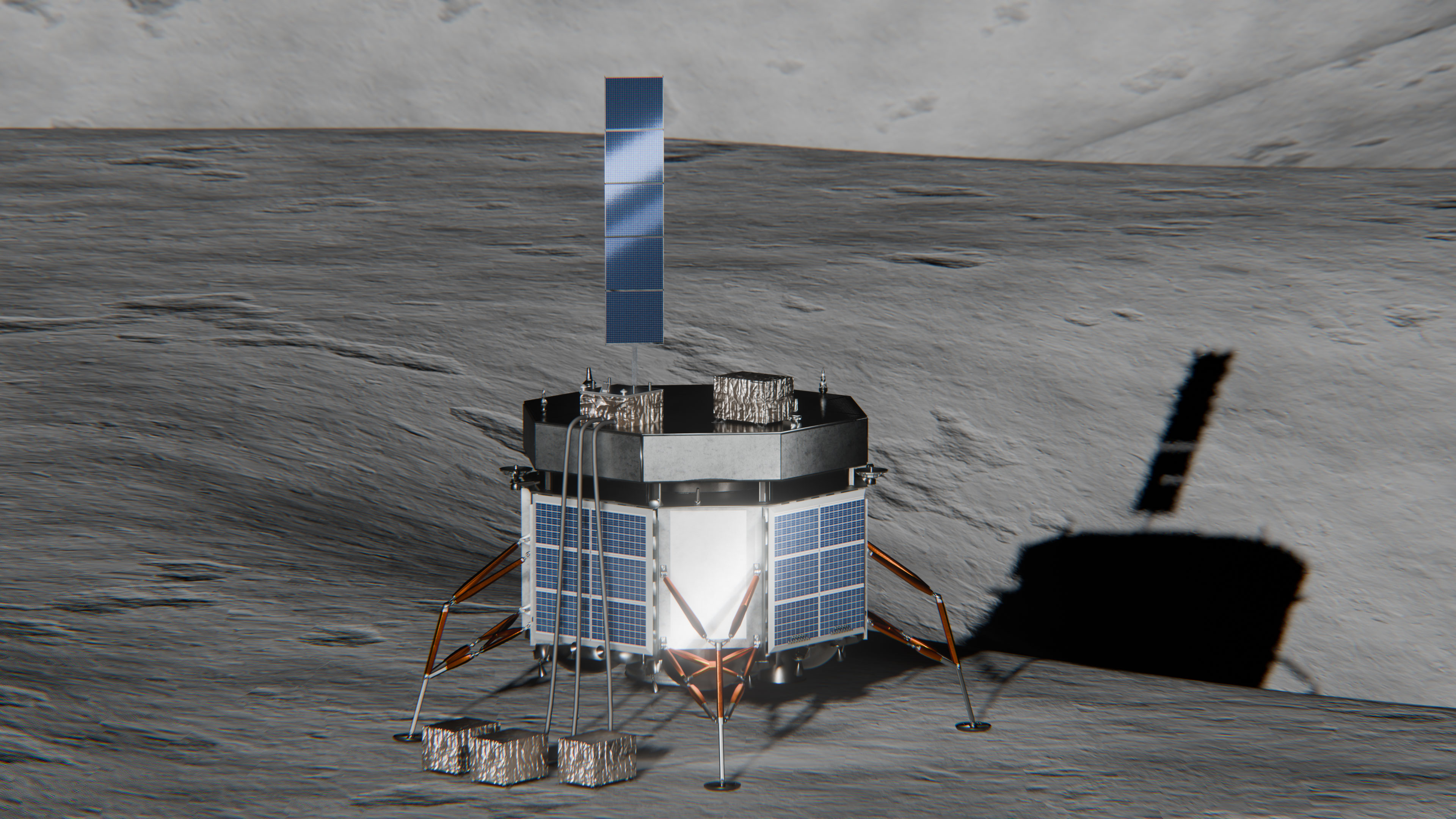
Above: OASIS is a European lunar service station that will support science experiments and technology demonstrations on the Moon. (ESA-XR Lab)
OASIS is a European lunar service station that will support science experiments and technology demonstrations on the Moon. By providing power, communications, data handling and storage, it will enable payloads to function for years on the lunar surface, operating during lunar days and hibernating during lunar nights.
An oasis in the lunar desert
One of the greatest challenges of operating on the Moon is surviving the lunar night. Lasting almost 15 Earth days, it brings prolonged darkness and plummeting temperatures that can severely damage electrical equipment without power or thermal protection.
OASIS is designed to address this challenge. During the lunar day, it collects solar energy and convert it to electricity to store in its battery. During the lunar night it provides survival power, supporting payloads until sunlight returns.
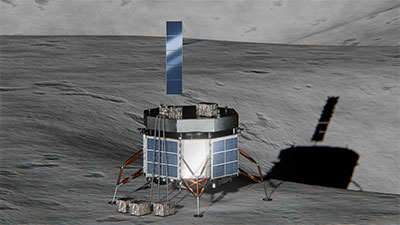
Above: OASIS on Argonaut. (ESA-XR Lab)
This approach allows scientific investigations and technology demonstrations to operate for years rather than a single lunar day. It also eliminates the need for each individual payload to carry their own heavy and complex communication and night survival systems; not only is this more cost-efficient, but it also allows the payload teams to focus almost exclusively on their science or technology objectives.
Apollo heritage
The concept continues the philosophy of NASA's Apollo Lunar Surface Experiments Package (ALSEP). During the Apollo missions, astronauts deployed scientific instruments connected to a central station, allowing them to continue transmitting data after the crews had returned to Earth.
OASIS applies the same principle to robotic exploration with a shared infrastructure that can support multiple payloads simultaneously. One of the first payloads planned for OASIS is ECHO, the Environment Characterisation and Heliophysics Observatory, which would investigate the lunar environment while demonstrating the use of OASIS infrastructure.
Europe on and around the Moon
Current plans envision OASIS operating as part of a European lunar architecture: using an Argonaut lander launched on a four-booster Ariane 6 rocket, with communications and data relay provided through ESA's Moonlight infrastructure, starting with Lunar Pathfinder.
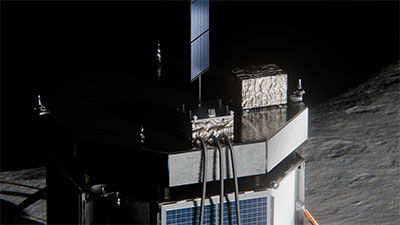
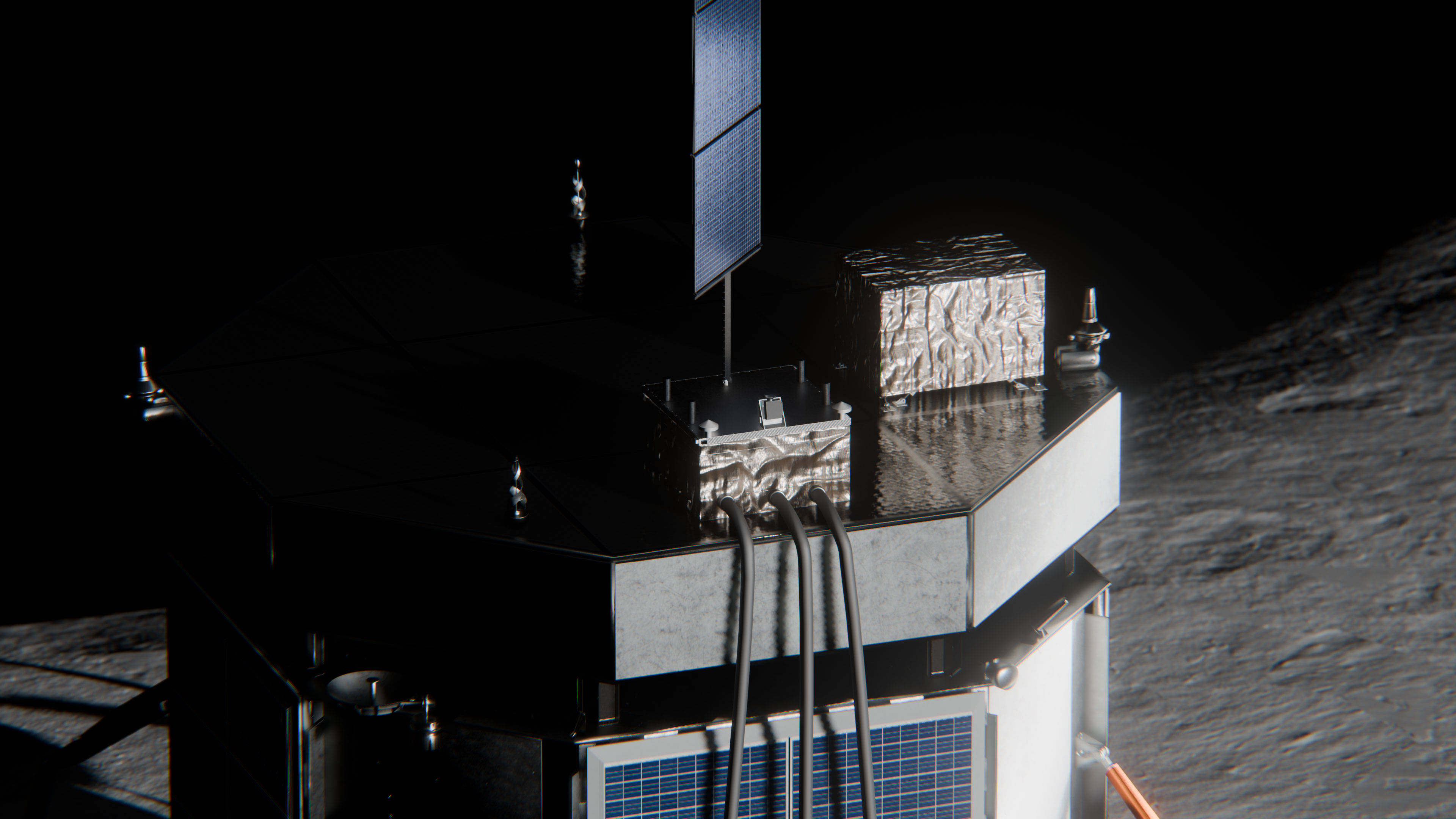
Above: OASIS power on the Moon. (ESA-XR Lab)
ESA has selected OHB in Germany to lead the current feasibility and preliminary definition studies for the concept. Following a systems requirement review that began over the summer, the baseline design of OASIS consists of a service station with a solar array and a separate battery unit.
OASIS is designed to provide at least 75 W of continuous power during the lunar day and 15 W during the lunar night, while also offering communications, data handling and data storage, as well as one harness for payloads mounted on the lander and three deployable harnesses for payloads placed on the lunar surface.
Designed to be autonomous, modular and extendable, OASIS is intended as a recurring capability rather than a one-off mission. Future versions could support science or technology demonstrators deployed further away from the lander, or even provide sheltered locations where rovers can survive the lunar night, like a Moon garage.
By providing the infrastructure needed for long-term operations, OASIS can help lay the foundations for sustained science and exploration on the Moon.







 posted 10-19-2026 02:01 PM



 advertisement