Posts: 57132 From: Houston, TX Registered: Nov 1999
posted 05-22-2026 10:06 PM
SpaceX release
Starship's Twelfth Flight Test
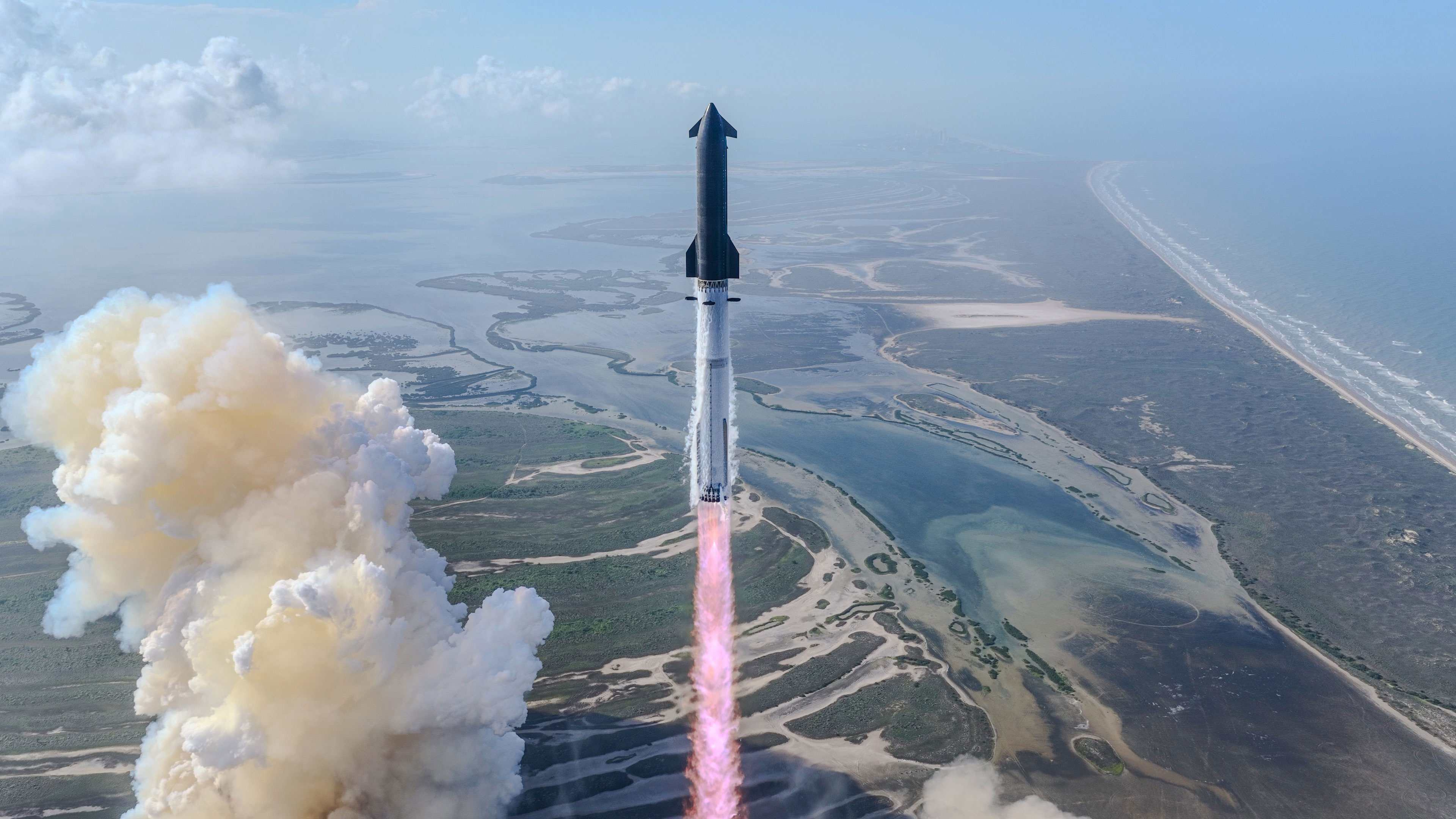
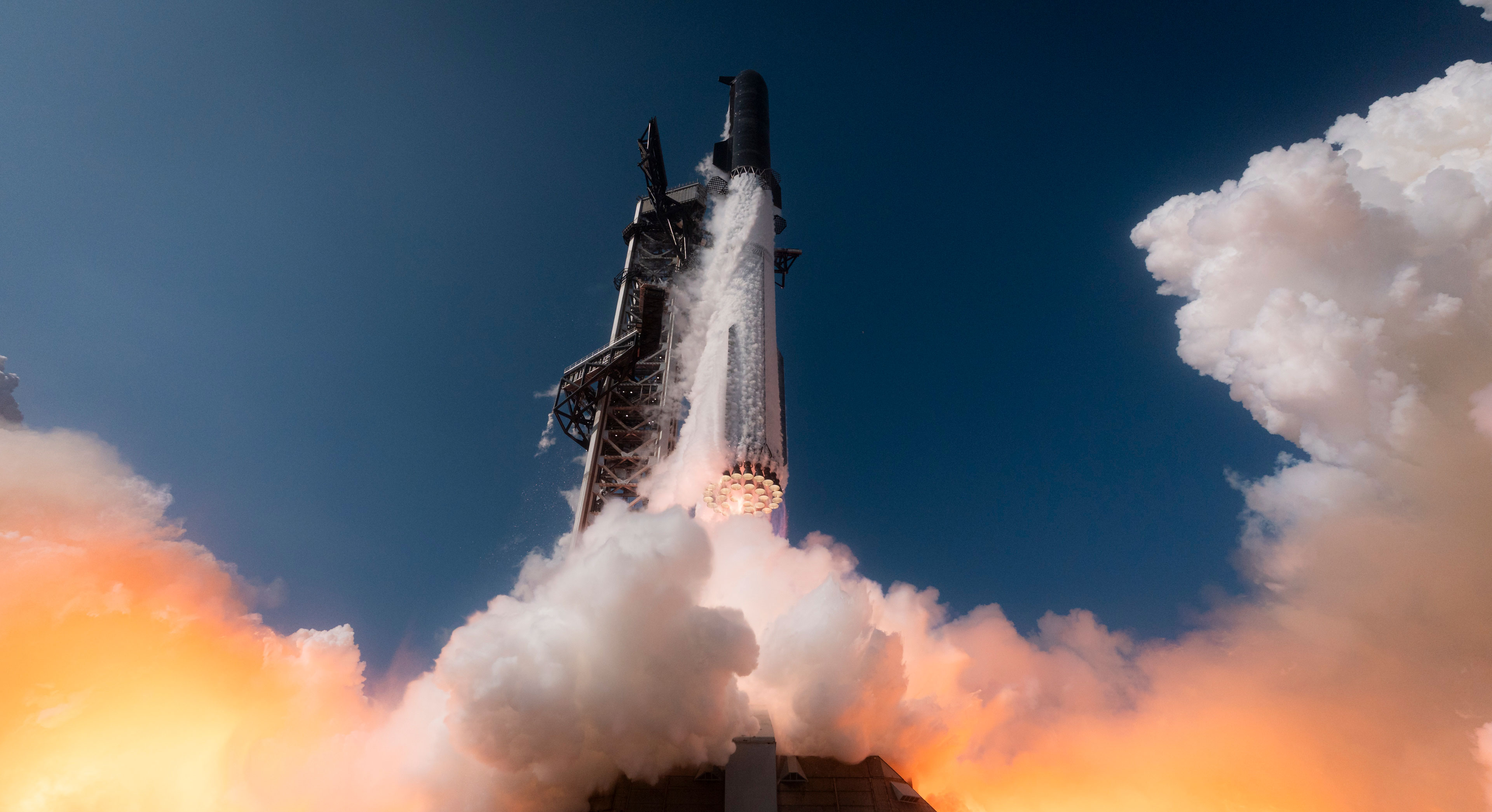
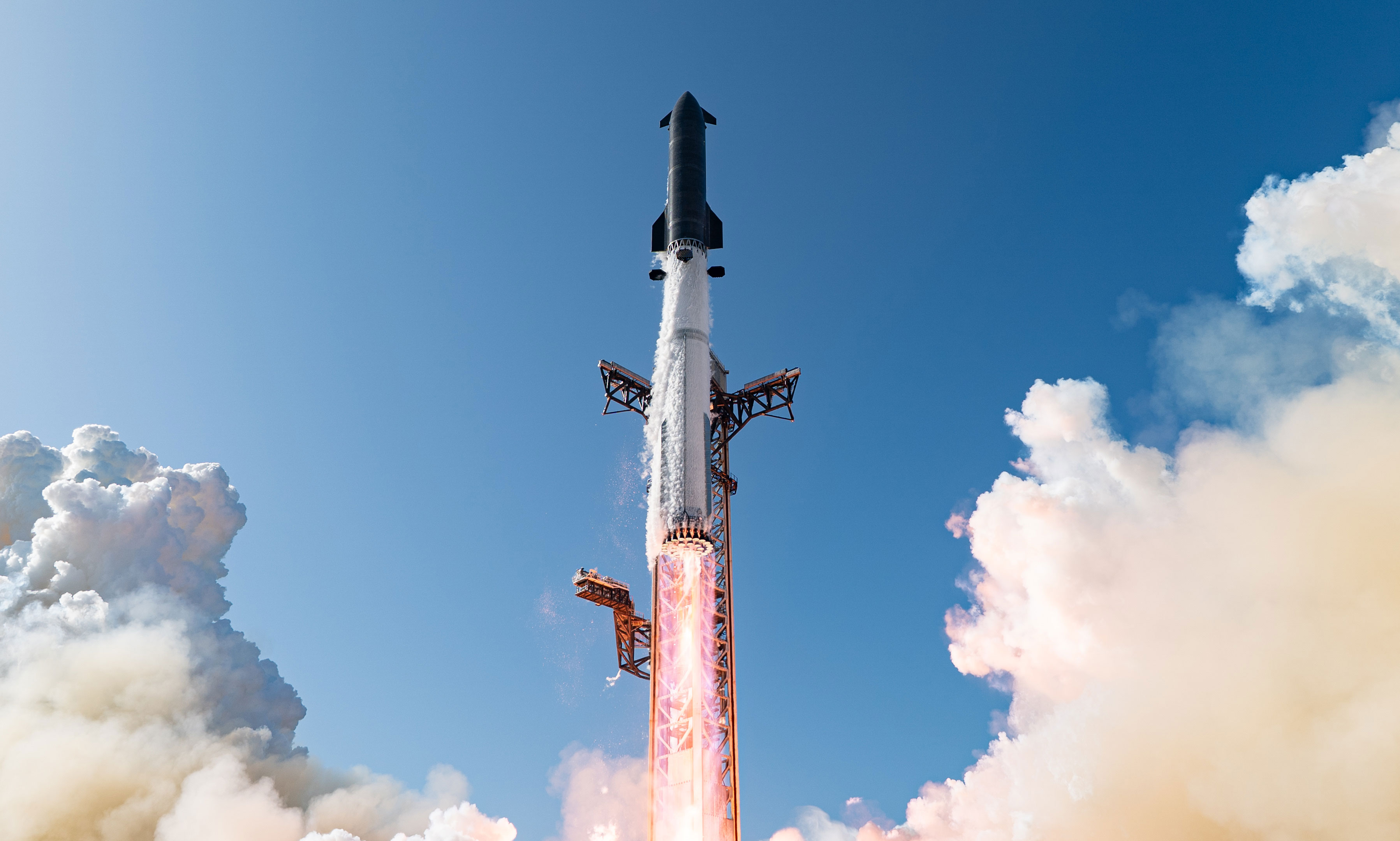
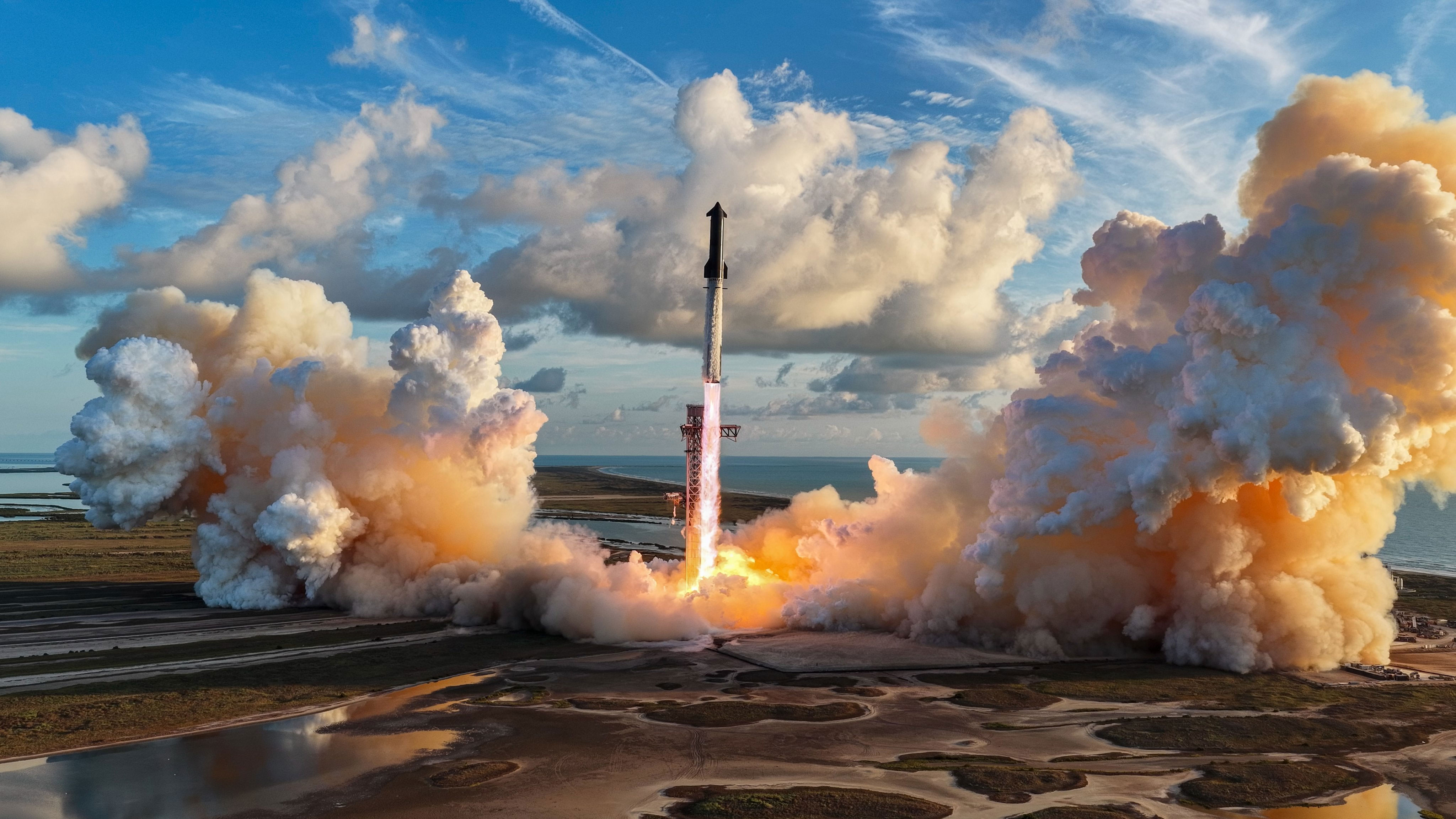
On Friday, May 22, 2026, at 5:30 p.m. CT, Starship lifted off from Starbase, Texas on its twelfth flight test. This was the first flight of the Starship and Super Heavy V3 vehicles, the Raptor 3 engines, the first flight from Pad 2, and the first Starship flight to deploy modified Starlink satellites to image Starship in space.
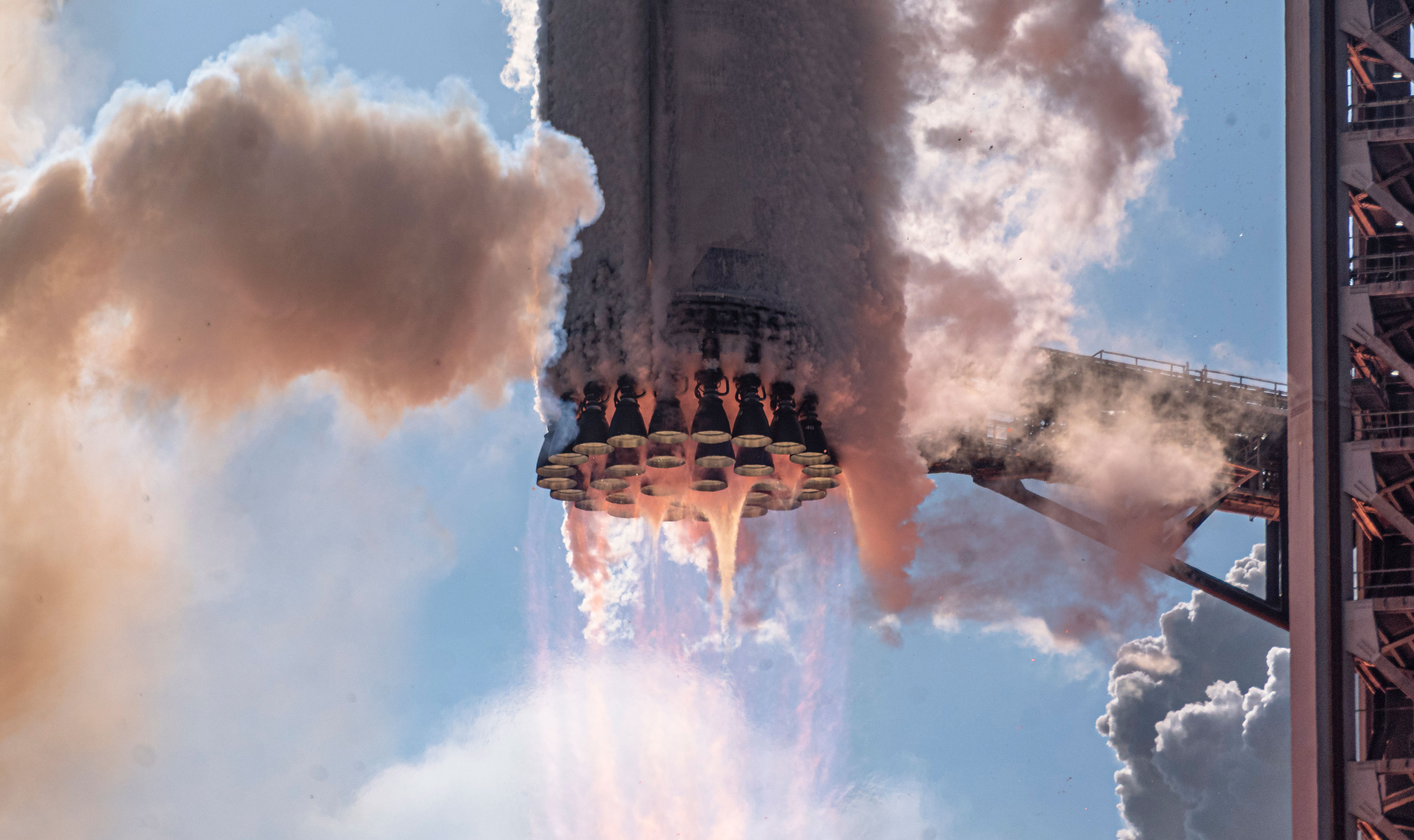
The flight test began with Super Heavy igniting all 33 Raptor 3 engines and ascending over the Gulf of America. A single Raptor engine shut down during ascent. The successful first-stage ascent was followed by a hot-staging maneuver, with Starship's upper stage igniting its six Raptor engines to continue its flight to space.
Following stage separation, the Super Heavy booster performed a directional flip maneuver and attempted its boostback burn. It was unable to light all planned engines and performed a partial boostback burn that ended early. Super Heavy attempted to reignite its engines for the landing burn before experiencing a hard splashdown in the Gulf of America.
During its ascent burn to space, Starship lost one of the Raptor 3 vacuum engines but demonstrated its engine-out capability and achieved its planned trajectory.
During coast, Starship successfully deployed all 20 Starlink simulators and two modified Starlink satellites that imaged Starship in space. These simulators and modified Starlink satellites were on the same suborbital trajectory as Starship.
Starship re-entered the Earth's atmosphere and was able to gather critical data on the performance of its heatshield and structural strength. In the final minutes of flight, Starship performed a maneuver to intentionally stress the structural limits of the vehicle's rear flaps and a dynamic banking move to mimic the trajectory that future missions returning to Starbase will fly. Starship then guided itself using its four flaps to the pre-planned splashdown zone in the Indian Ocean, and executed a landing flip, landing burn, and splashdown on two Raptor engines.
Robert Pearlman Editor
Posts: 57132 From: Houston, TX Registered: Nov 1999
posted 07-11-2026 06:04 PM
SpaceX release
Starship's Thirteenth Flight Test
The thirteenth flight test of Starship is preparing to launch as soon as Thursday, July 16. The 90-minute launch window will open at 5:45 p.m. CT.
The upcoming flight will aim to complete similar objectives targeted on the previous flight test, which debuted the Starship and Super Heavy V3 vehicles, while also carrying next-generation Starlink V3 satellites for the first time.
The booster's primary test objective will be executing a successful launch, ascent, stage separation, boostback burn, and landing burn at an offshore landing point in the Gulf of Mexico. There have been several modifications to hardware and software to address issues seen on the previous flight.
At stage separation on Flight 12, slight differences in engine startup on the ship caused the directional flip of the booster to be off by approximately 90 degrees. The startup sequence has been modified to be more robust to timing variability and more reliably flip in the desired direction, which is done to increase overall performance.
After stage separation and the flip, the Super Heavy booster attempted its boostback burn. Five of its 33 engines experienced issues when attempting to re-light causing the boostback burn to end early. The Super Heavy on this upcoming flight has hardware modifications to improve re-light reliability along with updates to engine alarms and aborts to match the conditions seen in the multi-engine flight environment.
The Starship upper stage's primary objectives include the deployment of 20 Starlink V3 satellites, a relight of a single Raptor engine while in space, and another controlled entry, descent, and splashdown in the Indian Ocean. There have also been several modifications to Starship's propulsion system to address the engine out issue experienced on the previous flight.
Approximately 40 seconds after stage separation, Starship lost one of its three Raptor vacuum optimized engines. The vehicle was able to demonstrate its engine out capability and reach its planned suborbital trajectory. Several hardware and operational modifications have been made to address the interconnected causes with additional reliability improvements planned in upcoming versions of the Raptor engine.
For the first time, Starship will carry V3 Starlink satellites to space, which aim to greatly expand the network's capacity and user speeds. As part of this initial test, Starship is planned to deploy 20 satellites which will extend solar arrays and antennas and will attempt to connect with ground stations in South Africa and the larger Starlink constellation via high-capacity lasers. The Starlink satellites will be on the same suborbital trajectory as Starship.
Six of the satellites have been modified with a suite of cameras to scan Starship's heat shield and transmit imagery down to operators to continue testing methods of analyzing Starship's heat shield readiness for return to launch site on future missions. Several tiles on Starship have been painted white to simulate missing tiles and serve as imaging targets in the test.
Several upgrades and experiments related to Starship's heatshield will also be tested to continue iteration towards a fully and rapidly reusable design. Multiple tiles will be attached to the metallic side of Starship's aft flaps along with modified tiles and attachment mechanisms in the heatshield covering the aft skirt to gather flight data on different attachment options.
Finally, Starship's heatshield will have load sensing tiles to take measurements as the vehicle experiences higher dynamic pressure on ascent than previous flights, putting added stress on the tile attachments in exchange for increased payload to orbit capability.
Robert Pearlman Editor
Posts: 57132 From: Houston, TX Registered: Nov 1999
posted 07-25-2026 10:22 AM
SpaceX release
Starship's Thirteenth Flight Test
On Friday, July 24, 2026, at 5:51 p.m. CT, Starship lifted off from Starbase, Texas on its thirteenth flight test. This was the second flight of the Starship and Super Heavy V3 vehicles and the first Starship flight to deploy the next generation Starlink V3 satellites.
The flight test began with Super Heavy igniting all 33 Raptor 3 engines and ascending over the Gulf of America. The successful first-stage ascent was followed by a hot-staging maneuver, with Starship's upper stage igniting its six Raptor engines to continue its flight to space.
Following stage separation, the Super Heavy booster performed a directional flip maneuver. The startup sequence was modified for this flight to be more robust to timing variability in engine startup and flip in the desired direction, which is done to increase overall performance. The booster successfully completed the high thrust portion of the boostback burn with all 33 engines, the first time with a Super Heavy V3, before ending the burn early. It attempted to relight its engines for the landing burn, with a subset successfully igniting before experiencing a hard splashdown in the Gulf.
After completing a full-duration ascent burn on all six Raptor engines, Starship achieved its planned velocity and trajectory. Starship then successfully deployed all 20 Starlink V3 satellites. SpaceX engineers were able to successfully communicate with every satellite using radio frequency and laser links and downloaded key telemetry from the satellites. The Starlink satellites were deployed on the pre-planned trajectory and are expected to have demised upon reentry approximately 20 minutes after deployment.
The vehicle also reignited a single Raptor engine in an in-space demonstration of a core capability for future orbital missions.
Starship re-entered the Earth's atmosphere and was able to gather critical data on the performance of its heatshield before executing a dynamic banking move to mimic the trajectory that future missions returning to Starbase will fly. Starship then guided itself using its four flaps to the pre-planned splashdown zone in the Indian Ocean. After relighting all three Raptor engines, Starship executed a landing flip, landing burn, and soft splashdown, coming to rest intact in the Indian Ocean and providing critical views of an intact heatshield for the first time.
Robert Pearlman Editor
Posts: 57132 From: Houston, TX Registered: Nov 1999
posted 09-15-2026 02:21 PM
SpaceX release
Starship Flight 14
The 14th flight of Starship is preparing to launch soon, pending regulatory approval.
The upcoming flight is planned to be the first to send Starship into orbit around Earth. Flight tests until this point have intentionally flown passively safe suborbital trajectories to maximize public safety while allowing for maximum learning. By going to orbit, the next phase of developing Starship to be fully and rapidly reusable can begin.
This will also mark the first time we plan to deploy Starlink V3 satellites into the constellation, delivering a payload that will dramatically expand connectivity speeds and reliability around the world.
Starship's initial orbital mission is expected to fly at an altitude approximately 275 km above Earth and complete approximately six orbits around the planet over the course of a nearly 10-hour flight, with splashdown targeted in the Pacific Ocean to the west of Chile. Read more about what going to orbit means, along with the mission design and safety measures for this major milestone.
The booster's primary test objective on Flight 14 will be executing a successful launch, ascent, stage separation, boostback burn, and landing burn at an offshore landing point in the Gulf of America. There have been several modifications to hardware and software to address issues seen on the previous flight.
After stage separation and flip on Flight 13, the Super Heavy booster was able to use all 33 engines on its boostback burn for the first time. In the terminal phase of the burn, the three center engines showed signs of ice clogging which triggered an early end to the maneuver. The booster went on to attempt a landing burn, with 8 of the 13 planned engines reigniting before the booster made a hard splashdown in the Gulf. The Super Heavy on this upcoming flight has hardware modifications to improve filtering to the engines and software changes to enhance relight reliability.
The Starship upper stage's primary objectives include the first orbital insertion maneuver, the deployment of 26 Starlink V3 satellites, a deorbit burn using a single Raptor engine while in space, and a controlled reentry, descent, and splashdown in the Pacific Ocean. Starship will only execute a burn to enter orbit after the flight control team has ensured there is sufficient redundancy on hardware critical to doing the subsequent deorbit burn at the end of the mission.
Starship will deliver 26 Starlink V3 satellites to orbit for the first time, which aim to greatly expand the network's capacity and user speeds. Each Starlink V3 satellite will add 1 Tbps of capacity to the constellation, for a total of 26 Tbps of capacity added on this mission alone. That's ~10x the capacity compared to a single launch of V2 mini Starlink satellites on Falcon 9.
After deploying from Starship, the Starlink V3 satellites will unfold their antennas and deploy their solar arrays and make initial contact with the ground and the rest of the Starlink constellation via radio frequency and laser links. The satellites will then begin raising their orbits with their onboard thrusters. Following their on-orbit checkouts, the satellites should begin serving customers as soon as a few weeks after launch.
Three of the satellites have been modified with a suite of cameras to scan Starship's heatshield and transmit imagery down to operators to continue testing methods of analyzing Starship's heatshield readiness for return to launch site on future missions.
Several upgrades and experiments related to Starship's heatshield will also be tested, with some improvements derived directly from data gathered from the Flight 13 Starship as it floated in the Indian Ocean. They include additional retention mechanisms added to tiles in areas deemed to be at highest risk of falling off during ascent, addressing recently discovered areas that offer flow paths behind tiles for plasma, and flying multiple areas with a curved tile design that has shown the ability to reduce heating in the gaps between tiles. And finally, two tiles recovered from Ship 40 are planned to be reflown on Ship 41, marking the first tile reuse for Starship.
Robert Pearlman Editor
Posts: 57132 From: Houston, TX Registered: Nov 1999
posted 09-29-2026 11:16 AM
SpaceX release
Starship Flight 14
On Monday, September 28 at 7:48 a.m. CT, Starship lifted off from Starbase, Texas on its 14th flight and first attempt to go to orbit. This was the first orbital Starship flight and the first to deliver meaningful payload to orbit with 26 Starlink V3 satellites.
The mission began with the Super Heavy booster igniting all of its 33 Raptor 3 engines and ascending over the Gulf of America. During the initial climb to space, a single Raptor engine on the booster shutdown. The successful first-stage ascent was followed by a hot-staging maneuver and Starship's upper stage igniting all six of its Raptor engines to continue onward to space.
Super Heavy performed its directional flip maneuver and relit 31 of the planned 33 Raptor engines for the boostback burn. The boostback maneuver on this flight was intentionally designed to burn through the remaining liquid oxygen inside the booster's main tank to test the limits of booster performance ahead of future return to launch site missions. The booster then reignited 11 of the planned 13 engines for the high-thrust portion of the landing burn before down-selecting to five engines for trajectory fine-tuning, and then down to three engines before splashing down in the Gulf. Upon landing burn shutdown, the Super Heavy's flight termination system was triggered in a demonstration of the safety hardware.
During Starship's ascent burn, a single Raptor vacuum engine shut down early. Starship still achieved its planned, passively safe suborbital trajectory by burning its remaining five engines for longer than planned to compensate for the loss of thrust.
After entering its suborbital trajectory, the flight control team assessed Starship's systems and determined the three sea-level Raptors engines needed for subsequent burns were healthy and gave a "go" for orbital operations. Starship then reignited a single Raptor sea-level engine to perform an orbit insertion burn and entered into orbit around Earth for the first time.
After a brief coast, Starship then deployed all 26 Starlink V3 satellites. Contact was made soon after with every satellite over laser links, ground stations, and Starlink user terminals. The satellites will now conduct on-orbit checkouts and raise their orbits before they begin serving customers.
Following payload deploy, Starship entered into a coast phase around Earth. Out of an abundance of caution given the engine issue experienced during ascent, the flight control team decided to limit the duration spent on orbit and proceeded with deorbiting Starship to a splashdown location in the northern Pacific Ocean. This area was one of two pre-coordinated landing zones identified before launch that was cleared of sea and air traffic.
Starship then relit a single Raptor sea-level engine and performed its first ever deorbit burn. That maneuver successfully brought the vehicle out of orbit and sent Starship through atmospheric reentry and descent to the intended splashdown point.
The first orbital Starship flight concluded with the vehicle relighting all three Raptor sea-level engines in a landing burn and flip maneuver before splashing down on target in the Pacific Ocean.







 posted 05-22-2026 10:06 PM



 advertisement