Posts: 56080 From: Houston, TX Registered: Nov 1999
posted 03-02-2026 03:11 PM
Total lunar eclipse, March 3, 2026
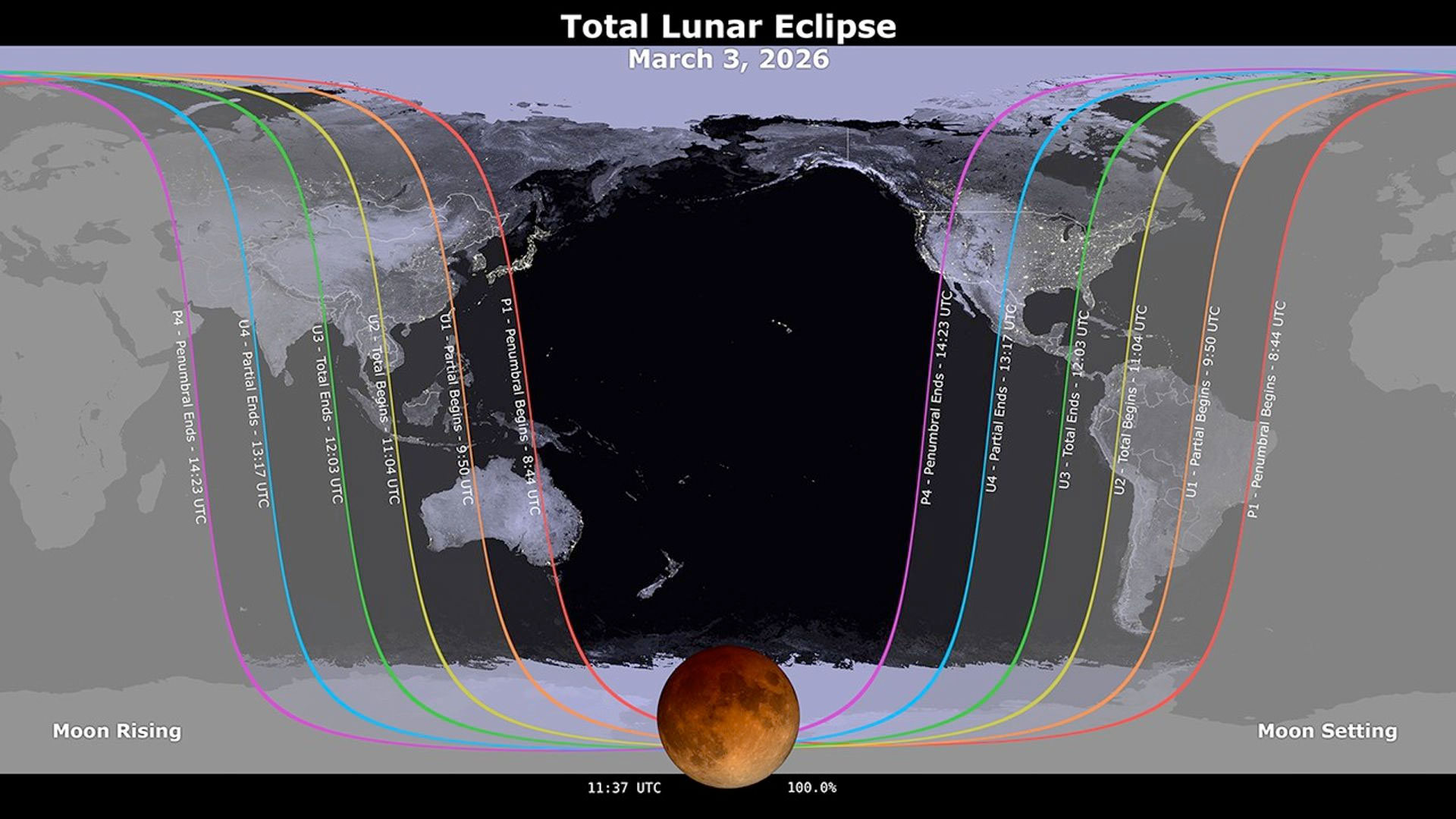
On Tuesday, March 3, 2026, a total lunar eclipse will take place across several time zones.
Totality will be visible in the evening from eastern Asia and Australia, throughout the night in the Pacific, and in the early morning in North and Central America and far western South America. The eclipse is partial in central Asia and much of South America. No eclipse is visible in Africa or Europe.
This is the last total lunar eclipse until Dec. 31, 2028, and the last to be seen in the United States until June 29, 2029.
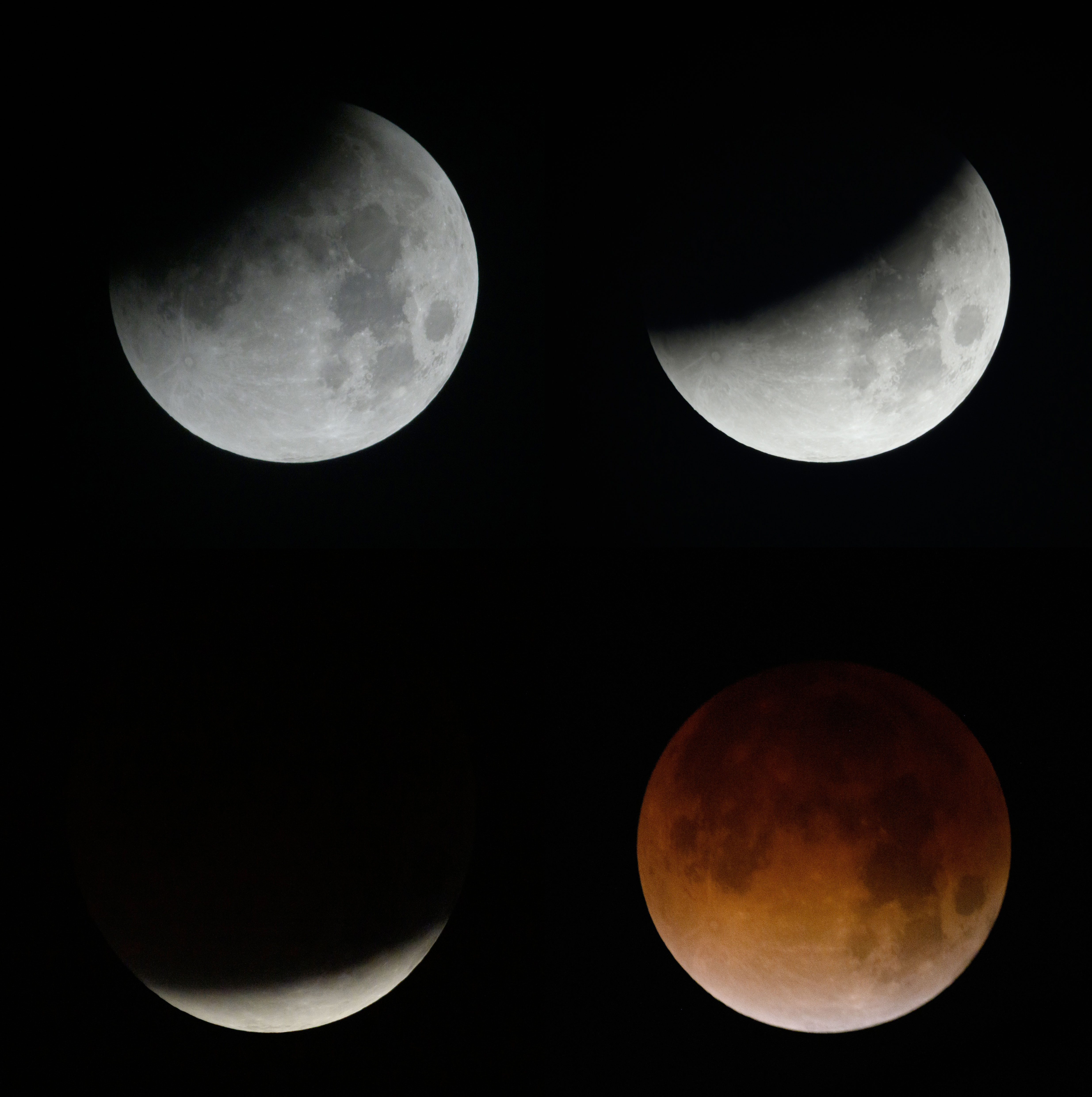
The Moon begins to enter Earth's umbra and the partial eclipse begins. To the naked eye, as the Moon moves into the umbra, it looks like a bite is being taken out of the lunar disk. The part of the Moon inside the umbra appears very dark.
Totality begins (3:04 a.m. PST, 6:04 a.m. EST, 11:04 UTC)
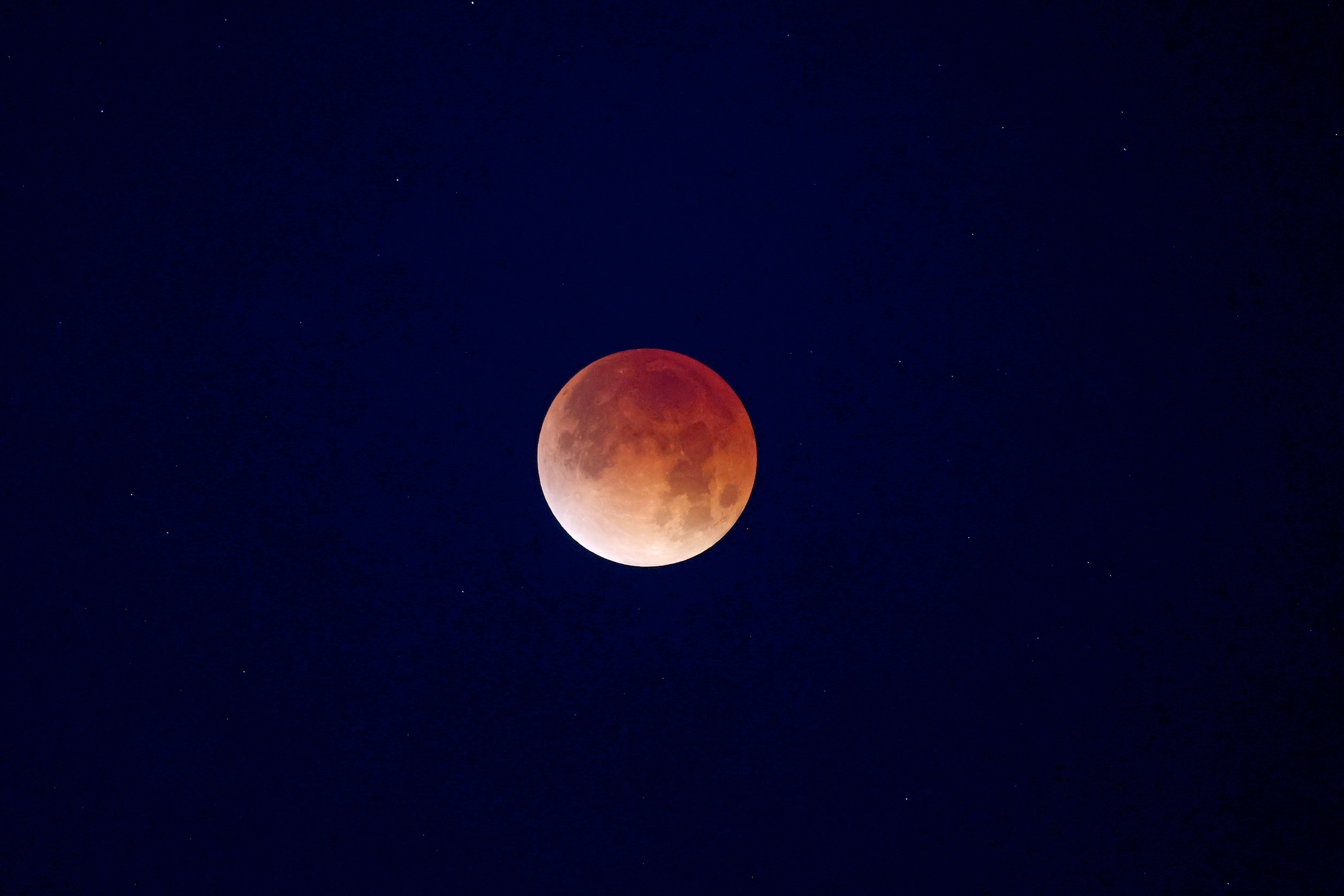
The entire Moon is now in the Earth's umbra. The Moon is tinted a coppery red. Try binoculars or a telescope for a better view. If you want to take a photo, use a camera on a tripod with exposures of at least several seconds.
Totality ends (4:03 a.m. PST, 7:03 a.m. EST, 12:03 UTC)
As the Moon exits Earth's umbra, the red color fades. It looks as if a bite is being taken out of the opposite side of the lunar disk from before.
Posts: 56080 From: Houston, TX Registered: Nov 1999
posted 03-02-2026 03:20 PM
If you cannot view the eclipse in-person, Griffith Observatory in Los Angeles is hosting a live online broadcast of the total lunar eclipse from 12:47 a.m. to 6:25 a.m., PST, weather permitting.
Blackarrow Member
Posts: 3931 From: Belfast, United Kingdom Registered: Feb 2002
posted 03-02-2026 03:59 PM
No eclipse is visible in Africa or Europe.
Bummer. If I'm spared, which will I see first: a total eclipse of the Moon on New Year's Eve 2028; or the next human footprints on the Moon?
Robert Pearlman Editor
Posts: 56080 From: Houston, TX Registered: Nov 1999
posted 03-03-2026 05:15 PM
The total lunar eclipse rises over New Orleans, home of NASA's Michoud Assembly Facility, in the early morning hours of Tuesday, March 3. (NASA/Michael DeMocker)







 posted 03-02-2026 03:11 PM



 advertisement