Space Cover 864: Return to FlightThirty-two months after the loss of Challenger and crew on STS-51L, Space Shuttle Discovery, with its five-astronaut veteran crew, blasted off on mission STS-26: NASA's first Return to Flight mission. The 4-day flight was routine and successfully deployed the third TDRS communication satellite. STS-26's successful and safe flight opened the way for the continuation of the Shuttle Program (But not so fast, as near-disaster awaited Atlantis and crew on the very next Return to Flight mission, STS-27. See below).
Prior to NASA's Shuttle fleet returning to successful flight, many significant tests and redesigns were required.
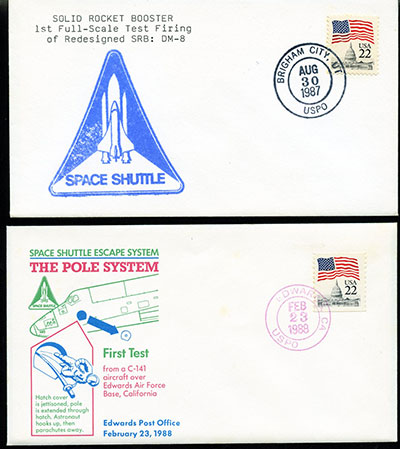
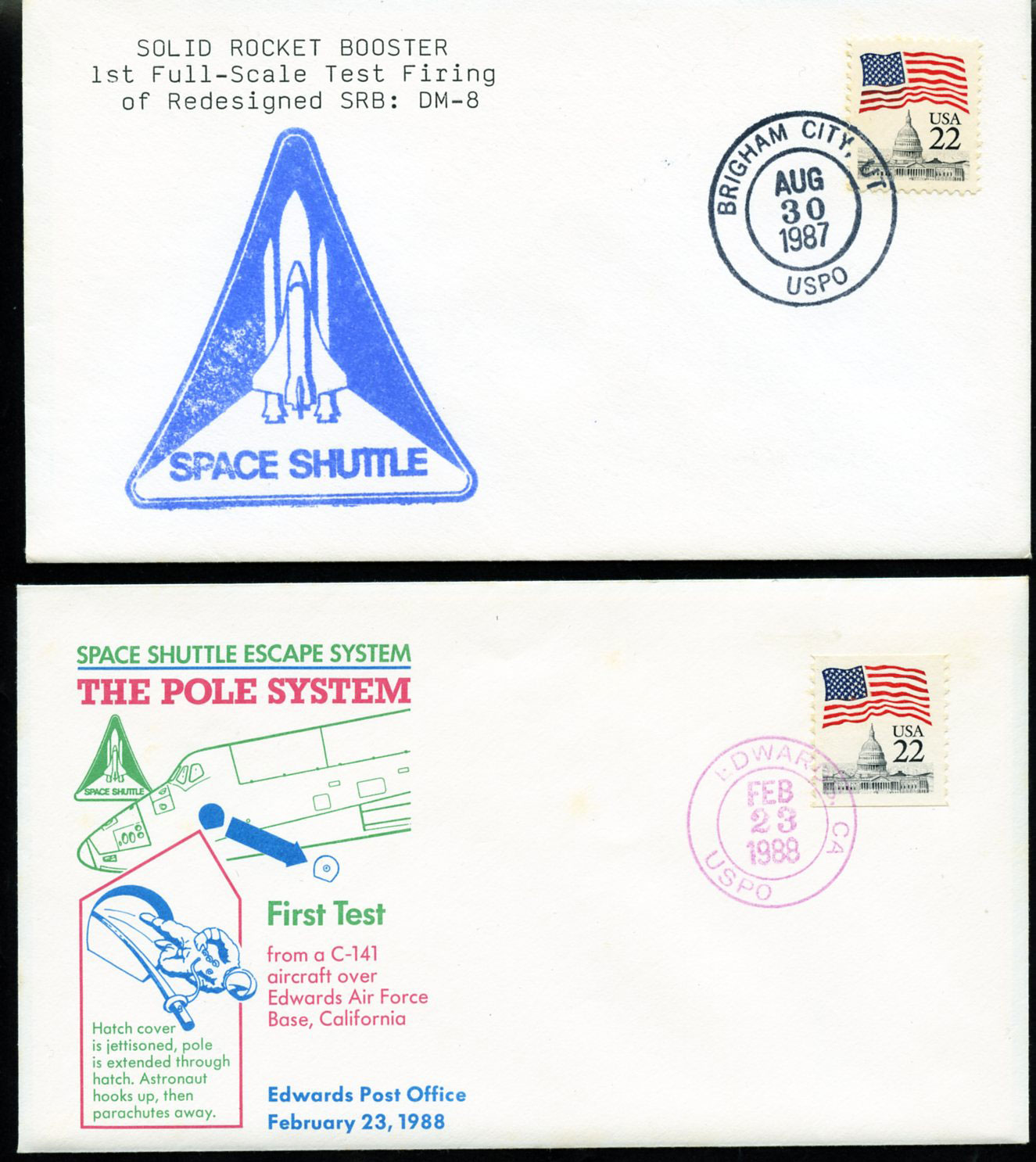
One important test was the first full-scale 2-minute test firing of the redesigned Solid Rocket Booster at Morton Thiokol in Brigham City, UT.
Many in-flight crew escape systems were considered, with most only useful under very limited circumstances. One chosen was the Bail-out Pole System. It was only useful and safe during controlled decent below 50,000 feet and not for ascent use. Nothing was practical or safe for any launch or ascent emergency.
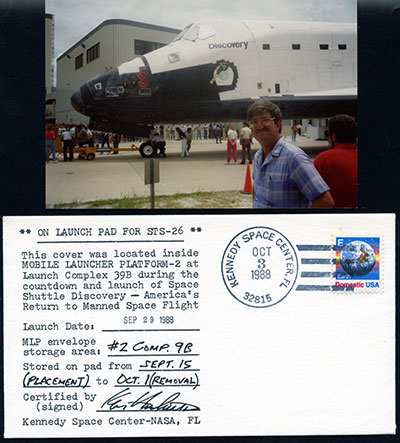
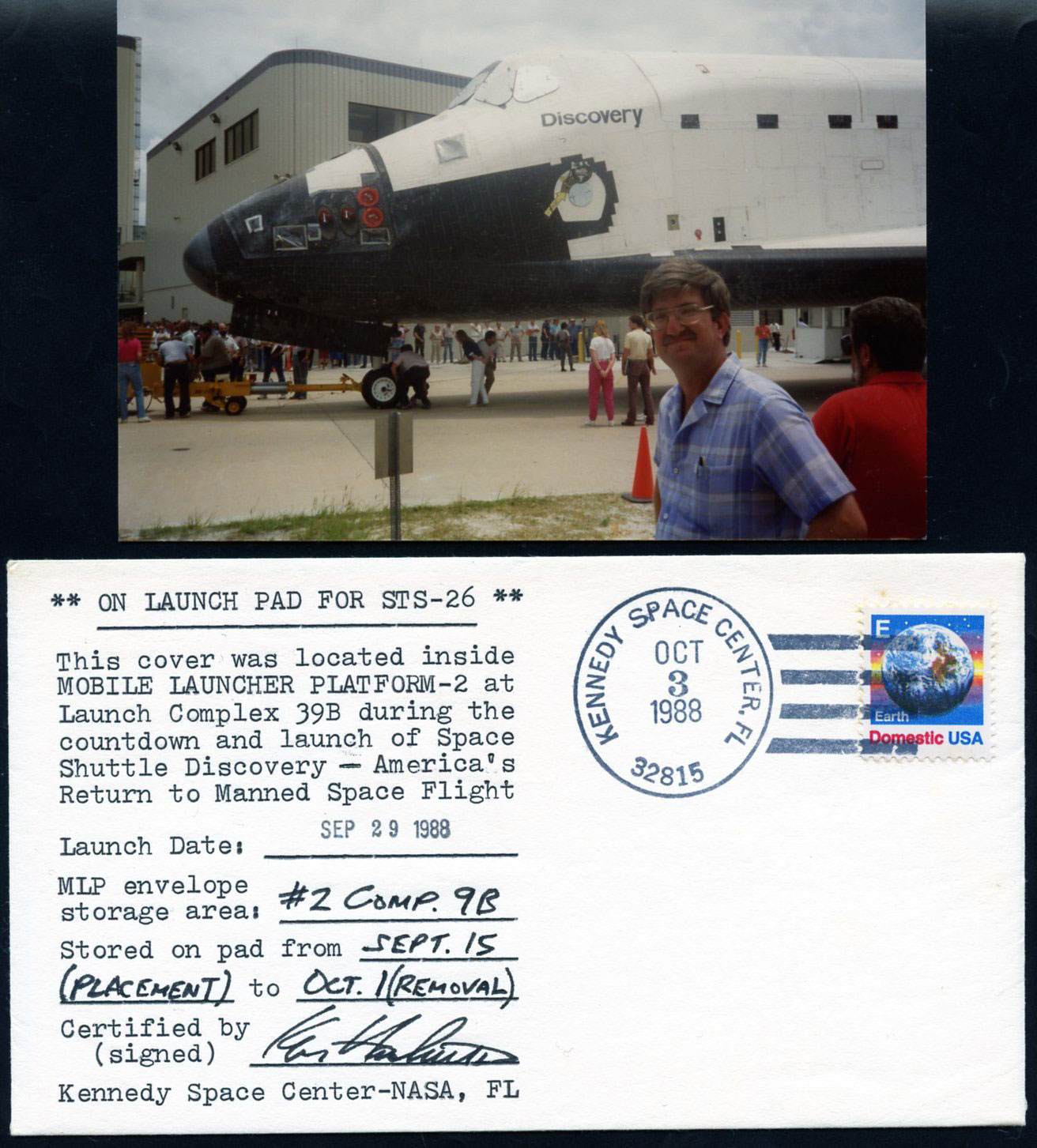
Ken Havekotte watches as Shuttle Orbiter Discovery passes by on its rollover from the Orbiter Processing Facility to the VAB on June 21, 1988.
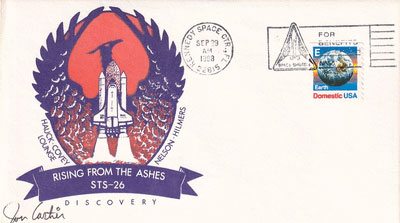
Ken prepared and documented this cover that was located inside Mobile Launch Platform-2 at the time of Discovery's launch on STS-26.
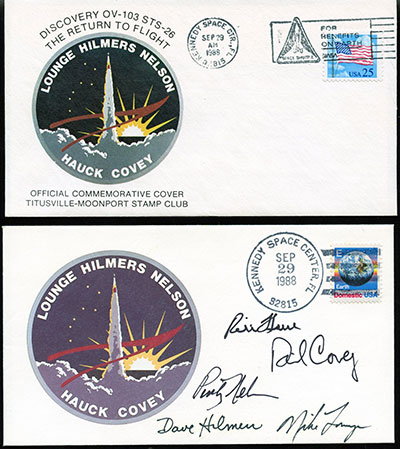
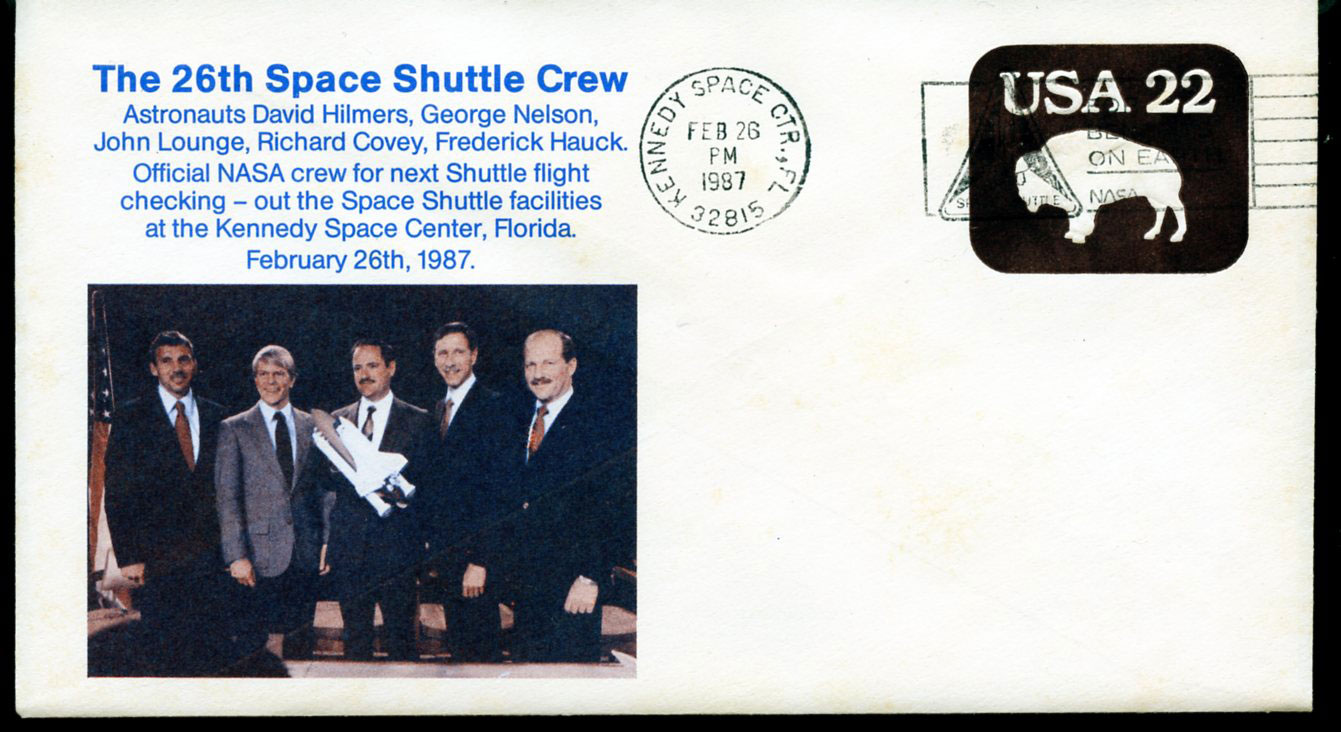
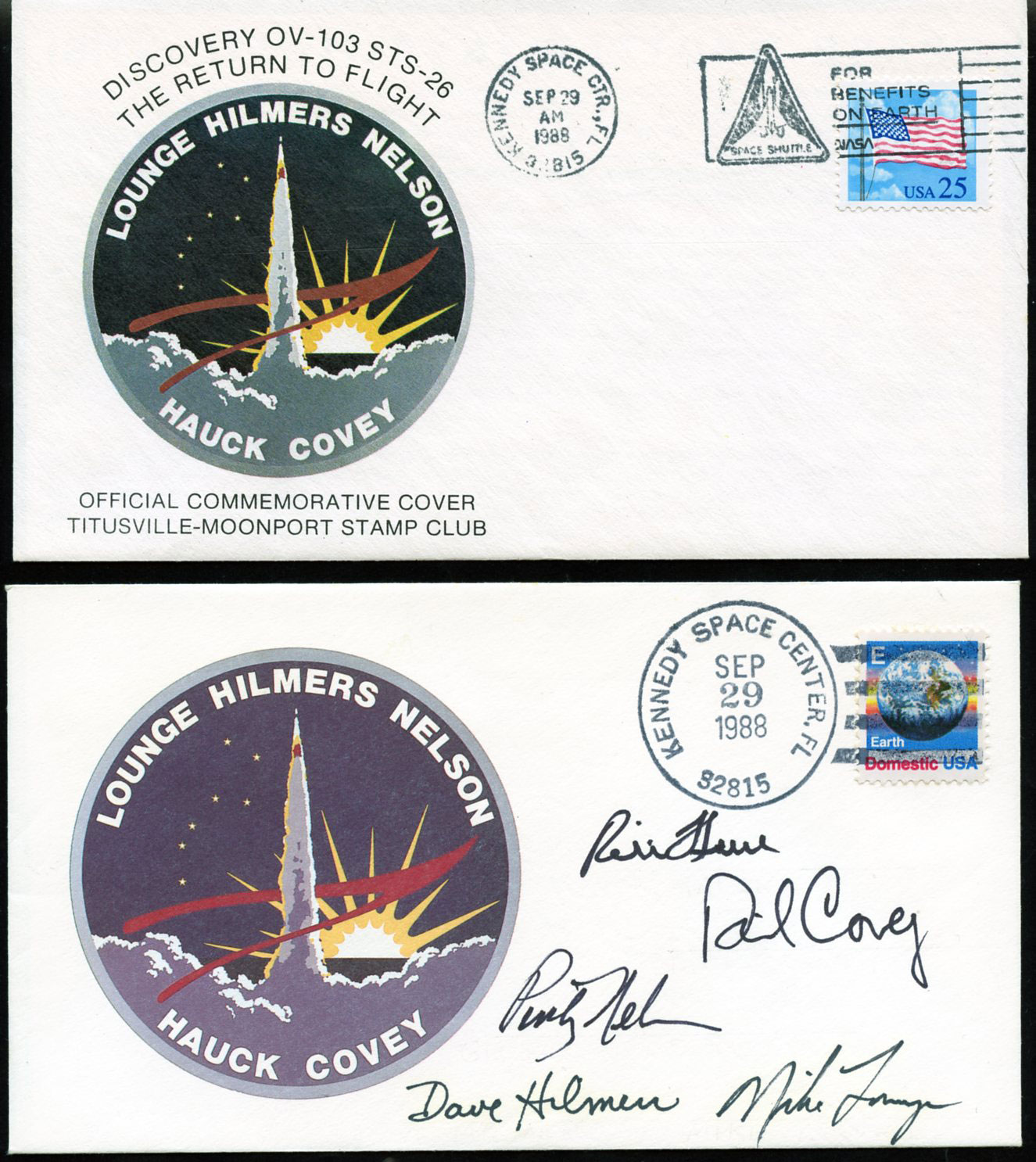
Many of us long-time collectors will remember Wanda Smith, who, with her husband, Russ, operated the Titusville-Moonport Stamp Club and produced many fine covers for us cover-hungry space cover collectors. This is a good example of the T-MSC covers, which typically had some reference included to identify it as a T-MSC cover.
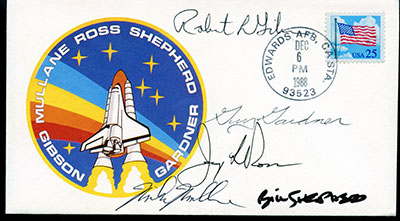
This STS-26 emblem launch cover is nicely autographed by the crew.
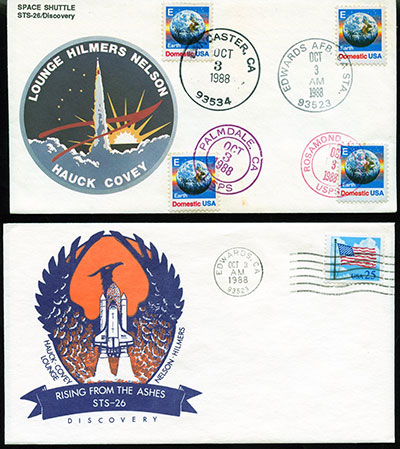
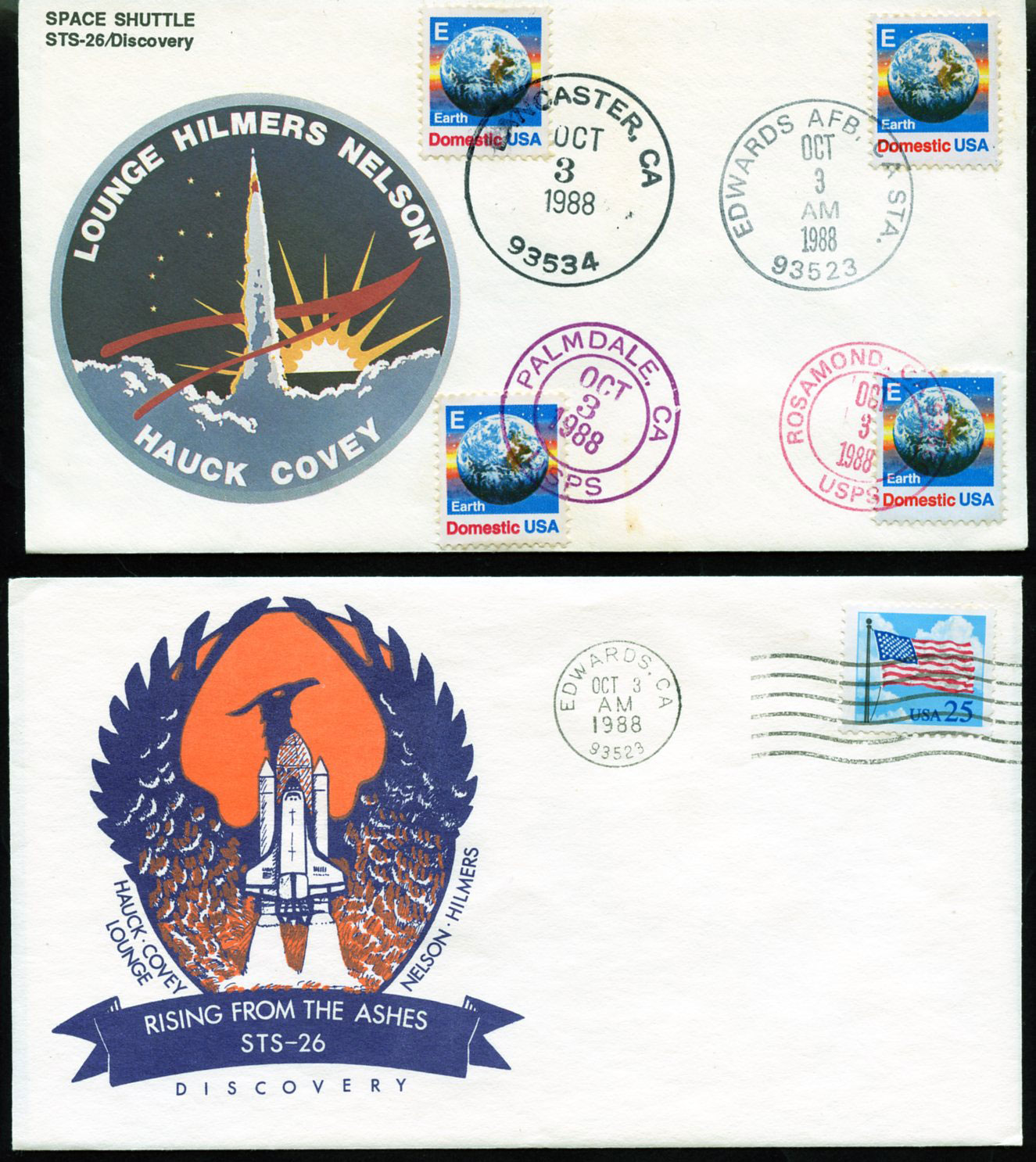
Ken Havekotte's associate, Steve Stein, had covers multi-canceled for the STS-26 landing at Edwards AFB. They included cancels from Edwards AFB and 3 other Edwards-area post offices. The bottom cover - of unknown origin - also marks Discovery's landing at Edwards AFB and the successful conclusion to the first Return to Flight mission.
However, as mentioned above, the next flight, STS-27/Atlantis, experienced near-fatal damage to its heat shield caused by a chunk of insulation breaking off a Solid Rocket Booster's nose cap (For the full story, read STS-27 crew member Mike Mullane's excellent book, "Riding Rockets"). The crew acknowledged - after seeing the extensive tile damage - over 700 tiles shredded - that they expected to die on entry. Only pure luck and where the main debris chunk hit saved them. Fifteen years later, the STS-107 Columbia crew, also with debris-caused thermal protection damage, weren't as fortunate.
In "Riding Rockets," beginning in chapter 34, read Mullane's account of Atlantis' harrowing story and return to earth with 700 damaged tiles on the orbiter's underbelly, entitled: "No reason to die all tensed up."
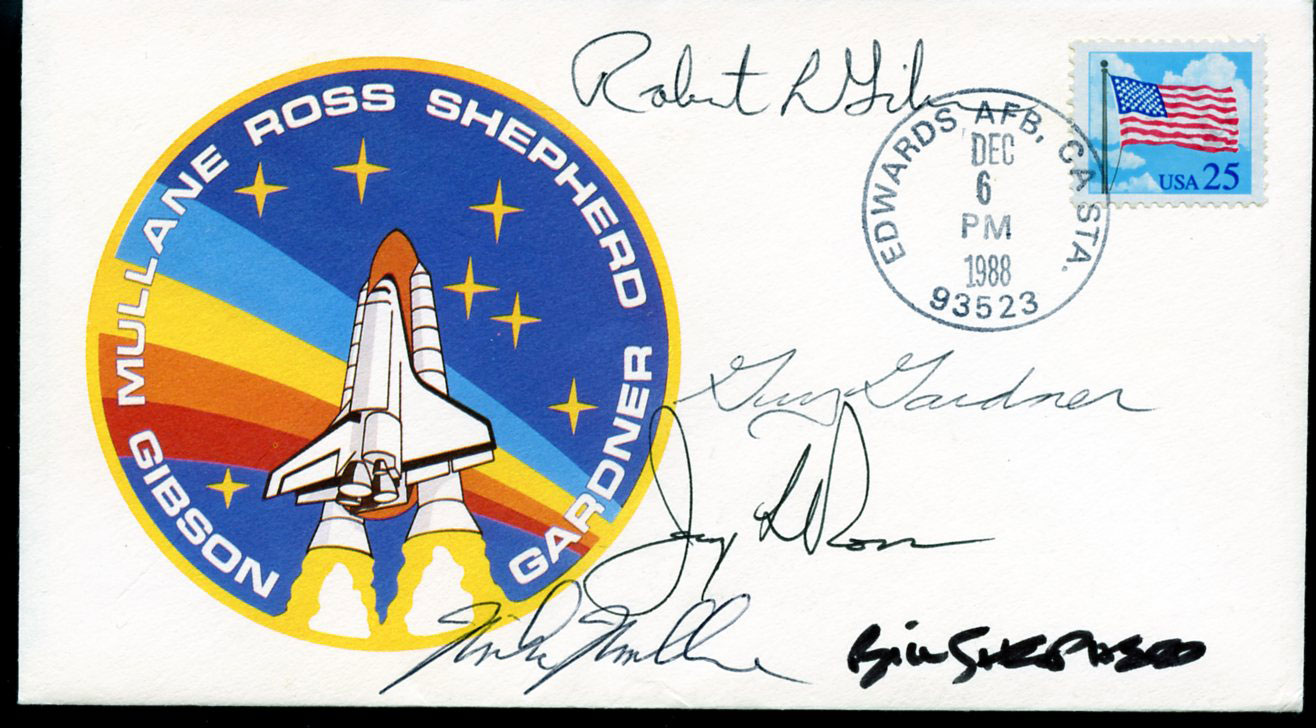
This STS-27 landing cover is autographed by the fortunate STS-27 crew.







 posted 07-12-2026 10:32 AM



 advertisement