Space Cover 861: Can We Actually Land On MarsNext month marks the 50th anniversary of the first landing on the planet of Mars by the Viking-1 spacecraft. It certainly stands as a milestone in planetary exploration. In the last couple of decades there have been a number of successful landings of various spacecraft and rovers onto the Martian surface. Landing on the surface of another planet is not easy even with the technology of today. But just think back to the early 1970's. With no high-speed computers and no digital technology like we have today, NASA came up with some ingenious ideas as to how to land a spacecraft on Mars. But would they work?
There were a number of tests carried out to see if landing on Mars was possible. I have chosen to highlight a few here. The first two covers are for the SPED test.
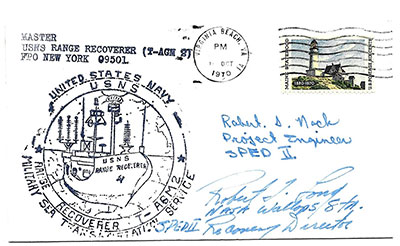
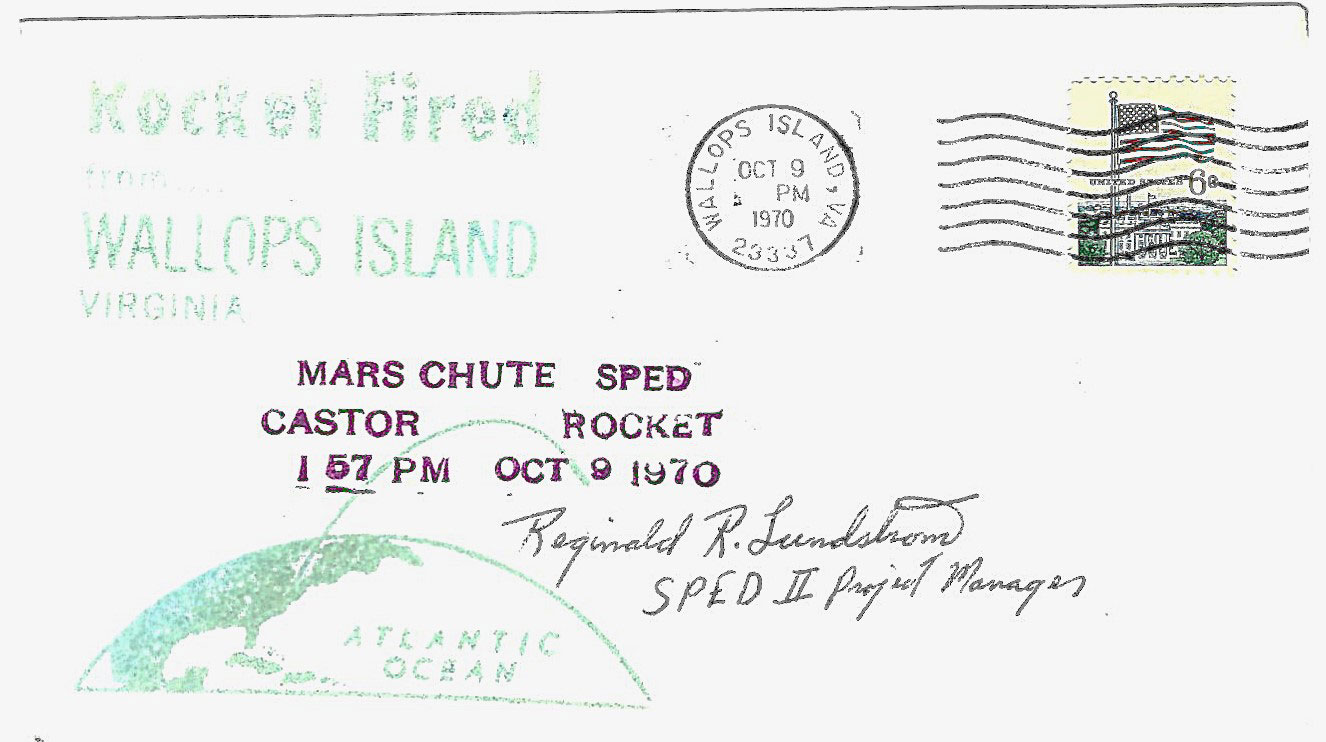
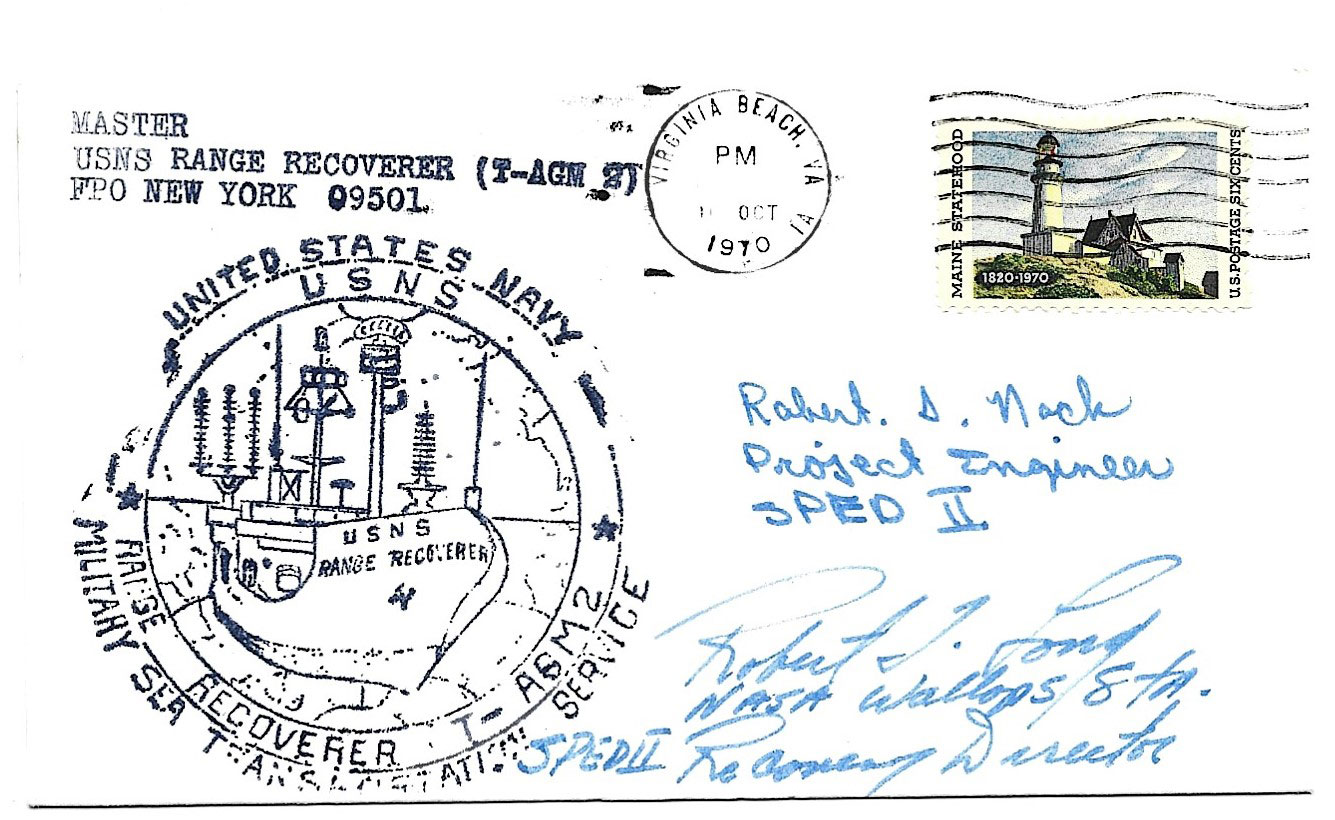
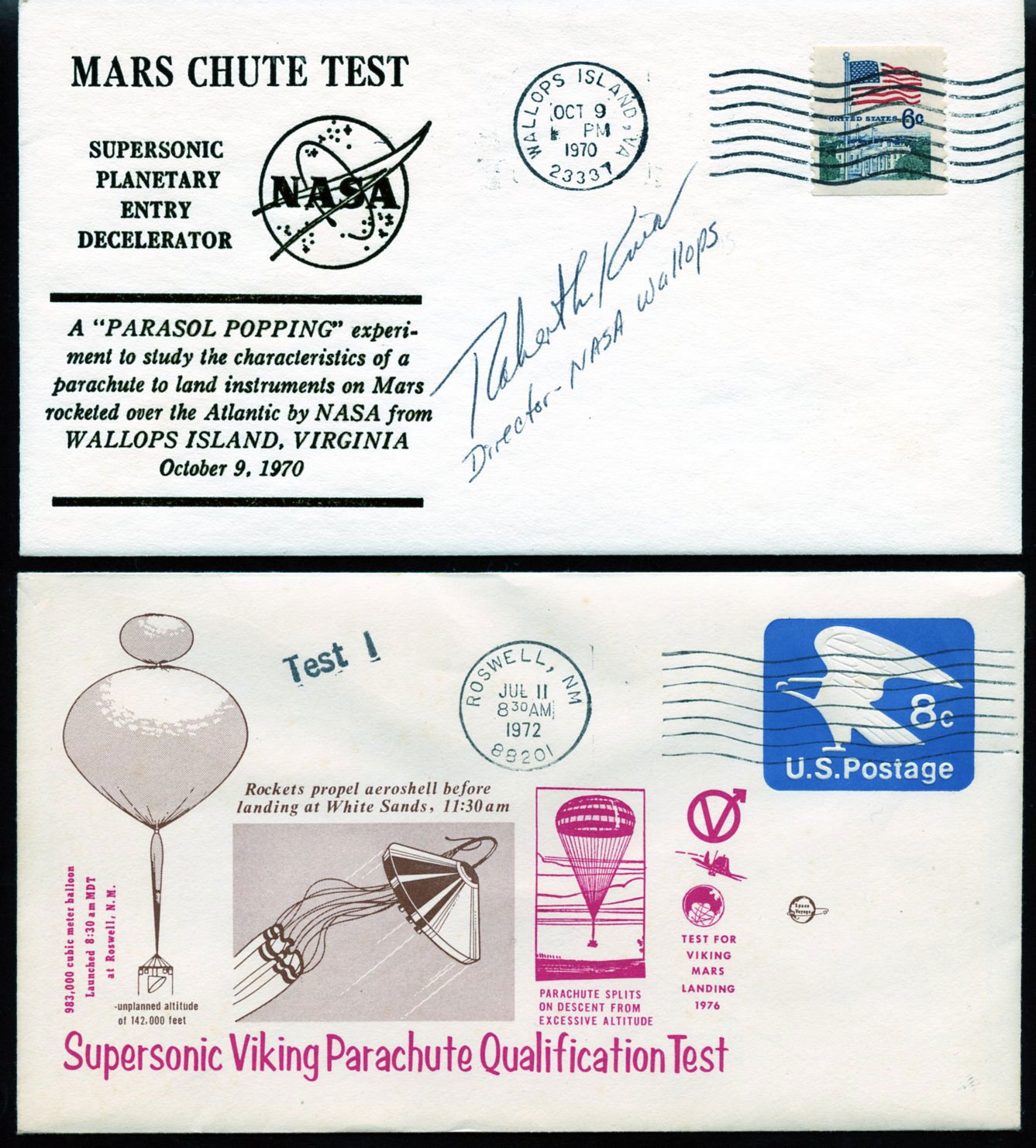
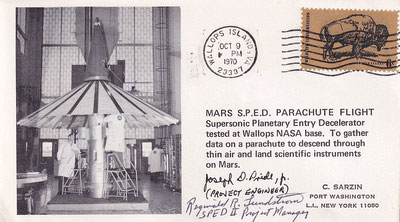
SPED (Supersonic Planetary Entry Decelerator) was a test where a payload was lofted to 57 miles in altitude before starting its descent. At 44 miles an aeroshell was opened to act as a parasol to simulate a spacecraft descending through the Martian atmosphere. A parachute was opened behind the aeroshell and the simulated spacecraft was recovered at sea.
The first cover commemorates the launch of the Castor rocket carrying SPED and has been signed by the Project Manager at Langley. The second cover commemorates the recovery of the SPED payload by USNS Range Recoverer and has been signed by the Project Engineer at Wallops Island and the NASA Recovery Director at Wallops Station. Though not directly connected with Viking, SPED added some additional data to early Viking tests.
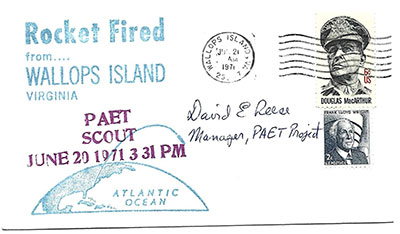
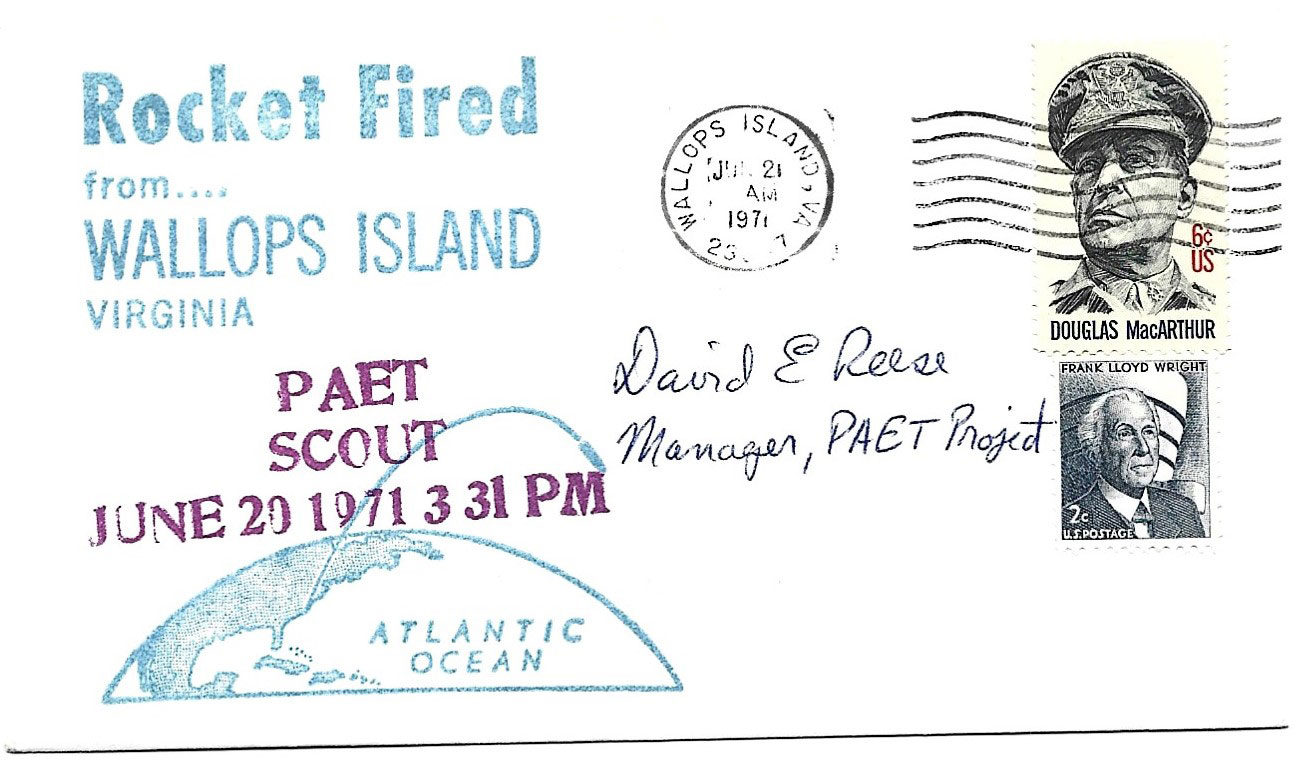
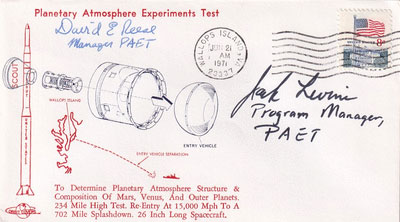
The third cover commemorates the PAET Test. PAET (Planetary Atmosphere Experiments Test) was launched aboard a 4-stage Scout booster. PAET re-entered the atmosphere at 15,000 MPH with the objective to determine the characteristics of the atmosphere at various levels. These results would be used as a technical base for missions to Mars and the other planets. The cover has been signed by the PAET Project Manager.
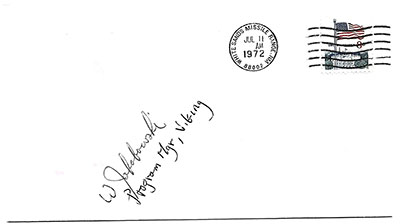
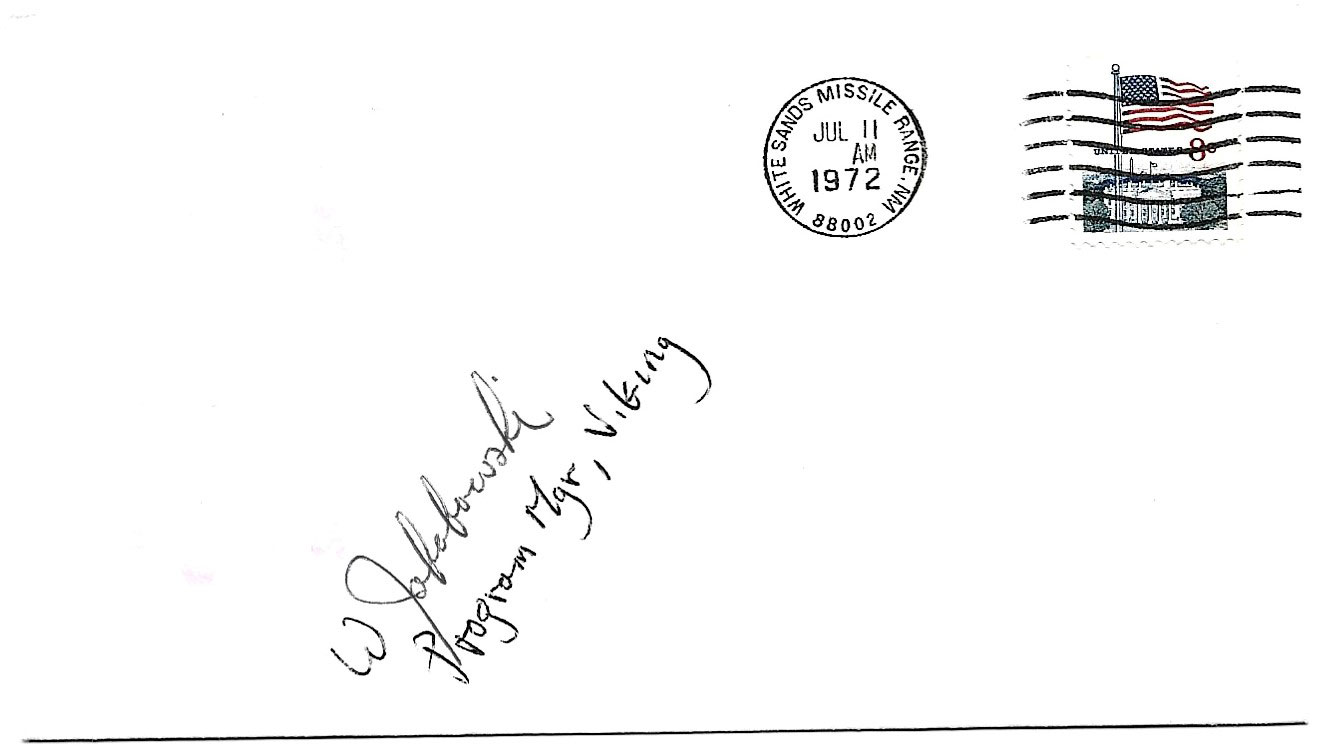
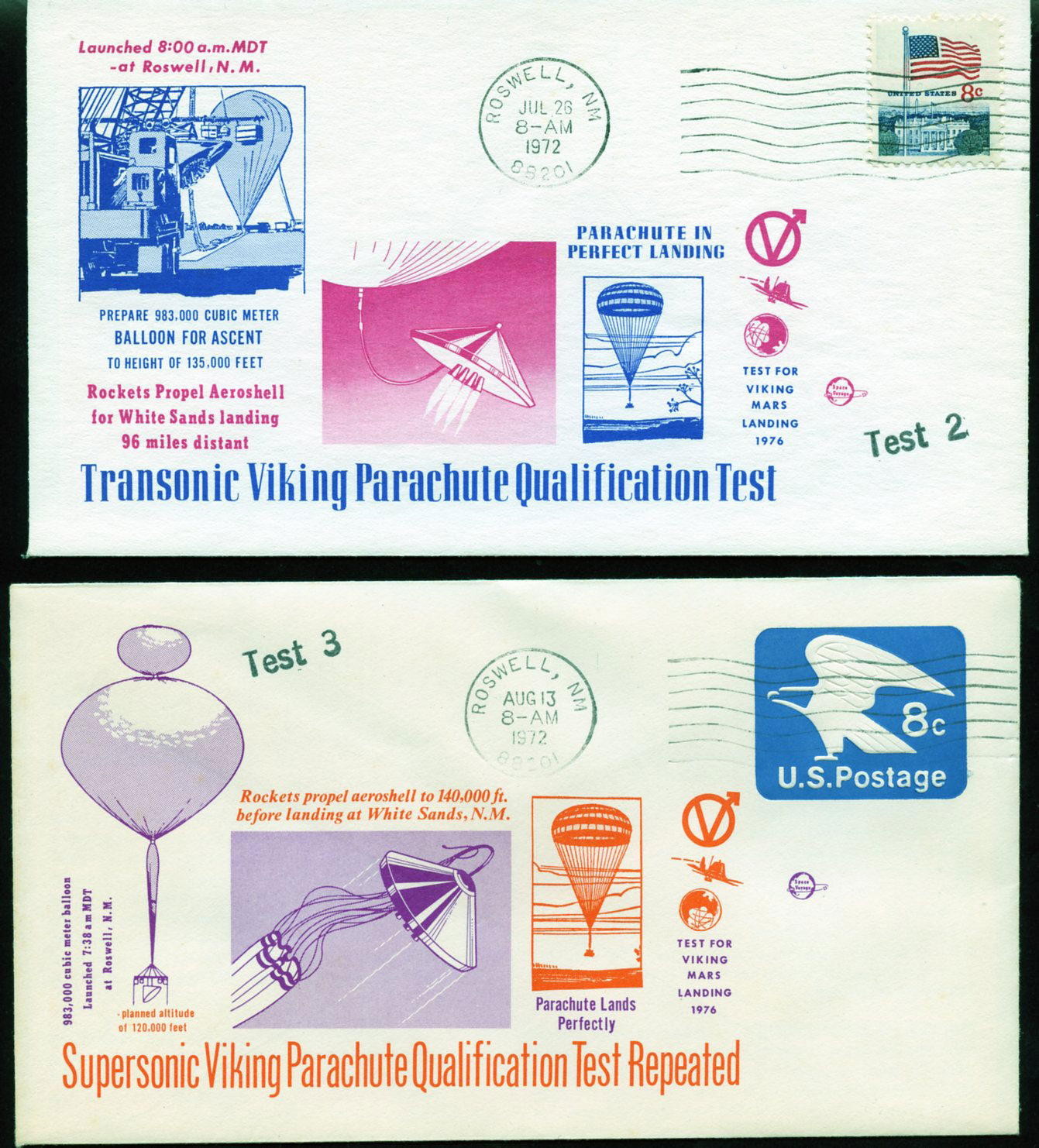
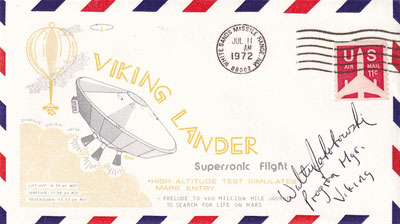
The fourth cover commemorates the first parachute test conducted for Viking at White Sands Missile Range. This was to test the parachutes at the high speeds that the Viking spacecrafts would endure during entry through the Martian atmosphere as well as the severe loading conditions. This first test resulted in damage to the parachute due to a higher altitude and higher dynamic pressure than was predicted. The cover is signed by Viking Program Manager at NASA Headquarters.
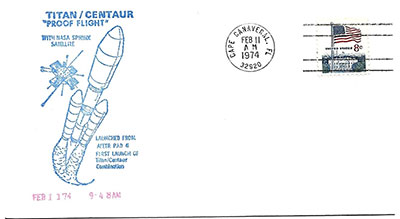
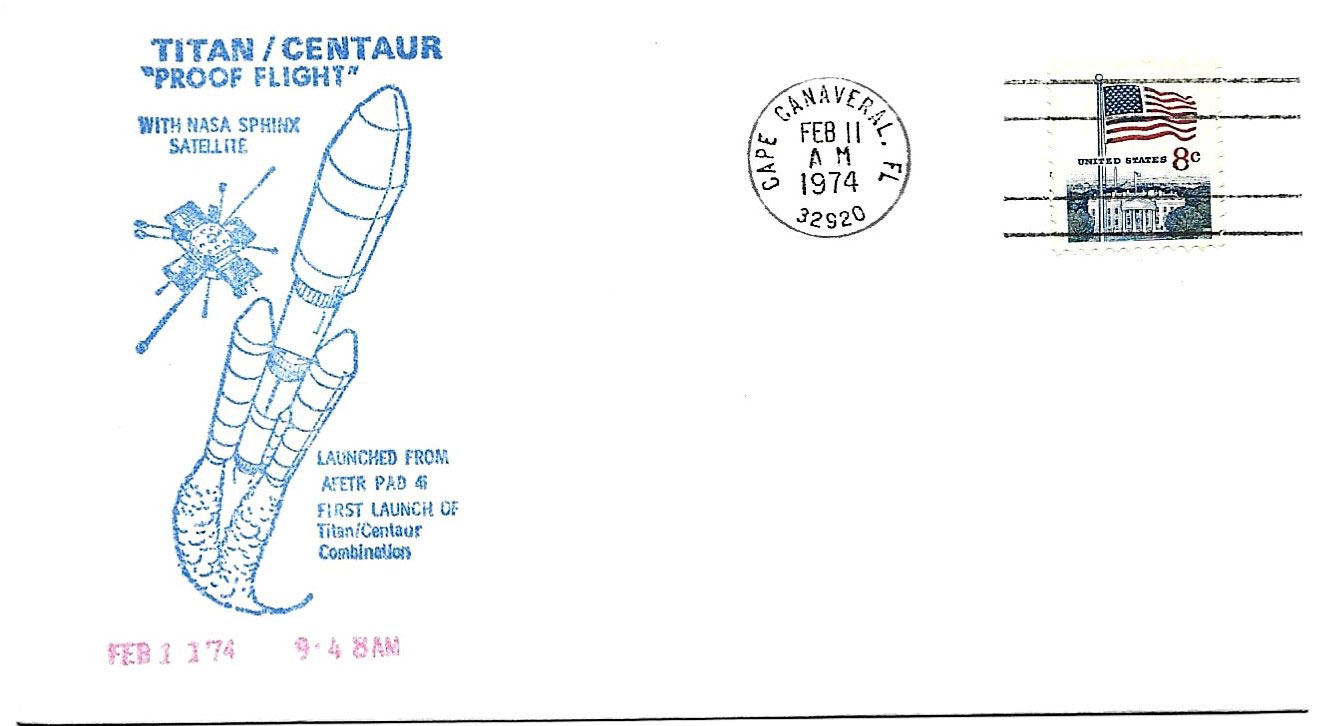
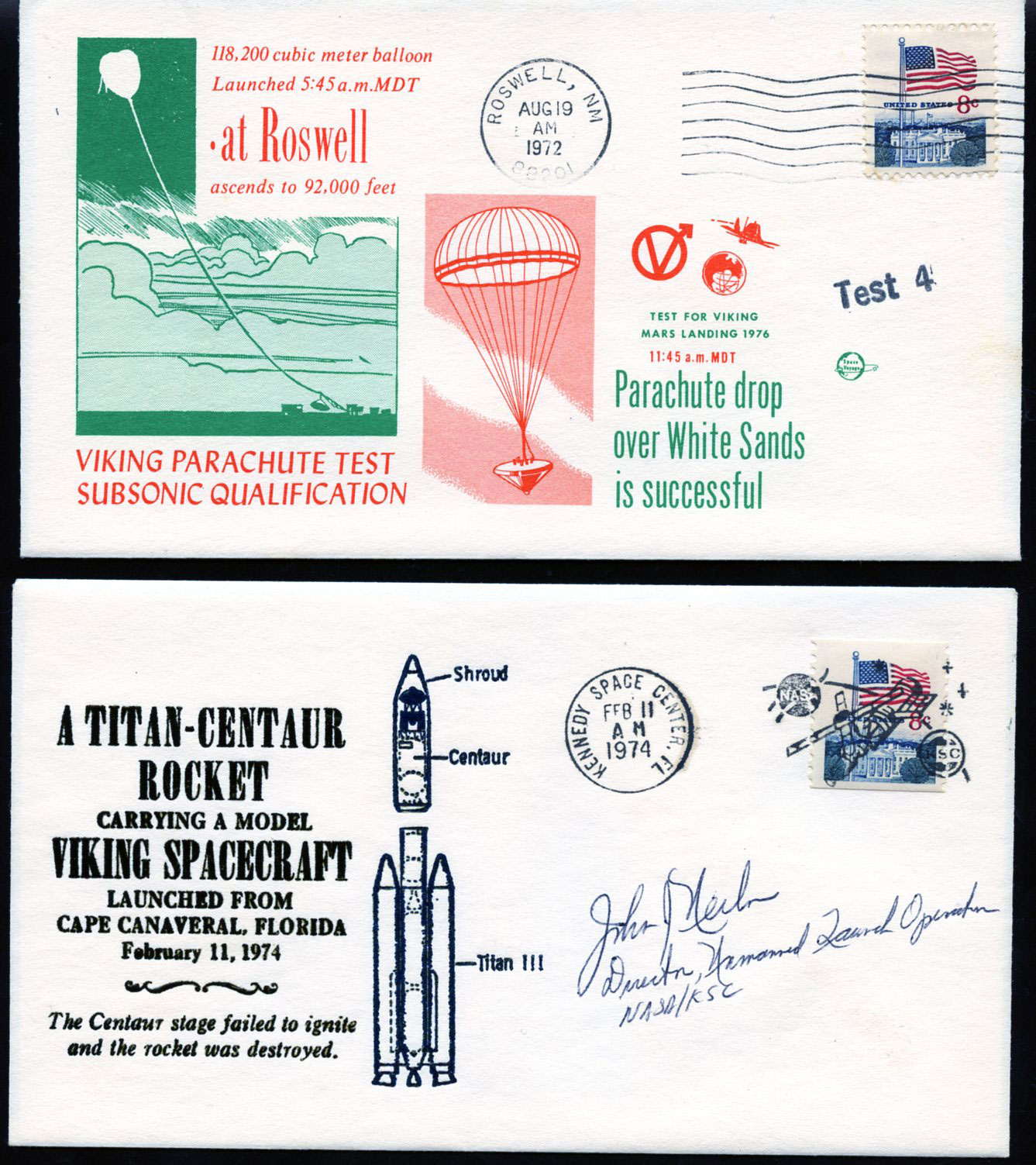
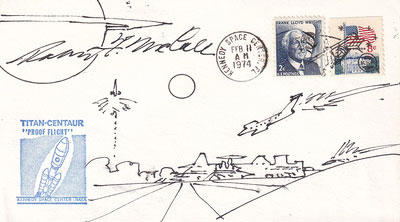
The final cover commemorates the first flight of the Titan-IIIE with the Centaur upper stage. This was to be the booster to send the Viking spacecrafts on their way to Mars. This first flight carried a Viking Dynamic Simulator as a "Proof Flight" for the Titan/Centaur/Viking combination. It was to fly the same trajectory as it would for the Viking missions.
The Titan-IIIE performed as expected but the Centaur stage failed to start. After a few attempts the destruct command was given so the stage did not survive re-entry. The fault was identified four years later as human error and an incorrect bracket used on the LOX boost pump. The flight did also note a few minor glitches with the Titan booster that were corrected and the 6 subsequent launches were all completely successful proving that one can learn even from failure. This final cover has a Bob Whitney cachet.
These are only a few. What other Viking test covers do you have in your collections?







 posted 06-07-2026 10:08 AM



 advertisement