Space Cover 838: Space History, Space Fantasy, Space FutureI was 8 years old when Apollo 11 launched fulfilling President John F. Kennedy's promise of landing a man on the moon before the decade was out. Growing up in the 1960's during the full excitement of the "space race," there was such incredible promise about the future of space travel. Since the 1950's dreams of rocket ships, moon colonies, and trips to Mars were thought to be a soon to be reality.
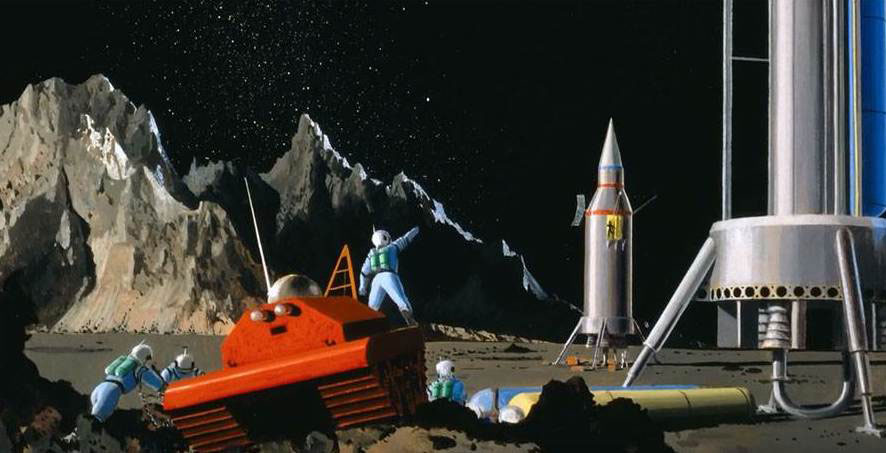
The paintings of Chesley Bonestell in LIFE magazine conjured up space travel like never before. His incredible paintings of space travel and planets combined with stories brought to life through science fiction made everyone interested and eager for the next step in space. It almost seemed like a certainly that after the moon was colonized we would be headed to Mars and beyond!
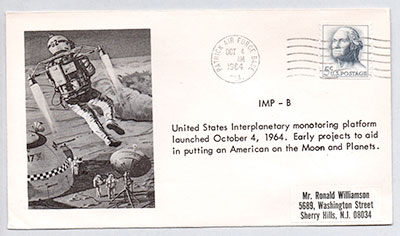
An early project to aid in putting Americans on the moon was the Interplanetary Monitoring Platform launched on Oct. 4, 1964. According to Wikipedia, the Interplanetary Monitoring Platform was a program managed by the NASA Goddard Space Flight Center in Greenbelt, Maryland, as part of the Explorers program, with the primary objectives of investigation of interplanetary plasma and the interplanetary magnetic field. The orbiting of IMP satellites in a variety of interplanetary and Earth orbits allowed study of spatial and temporal relationships of geophysical and interplanetary phenomena simultaneously by several other NASA satellites
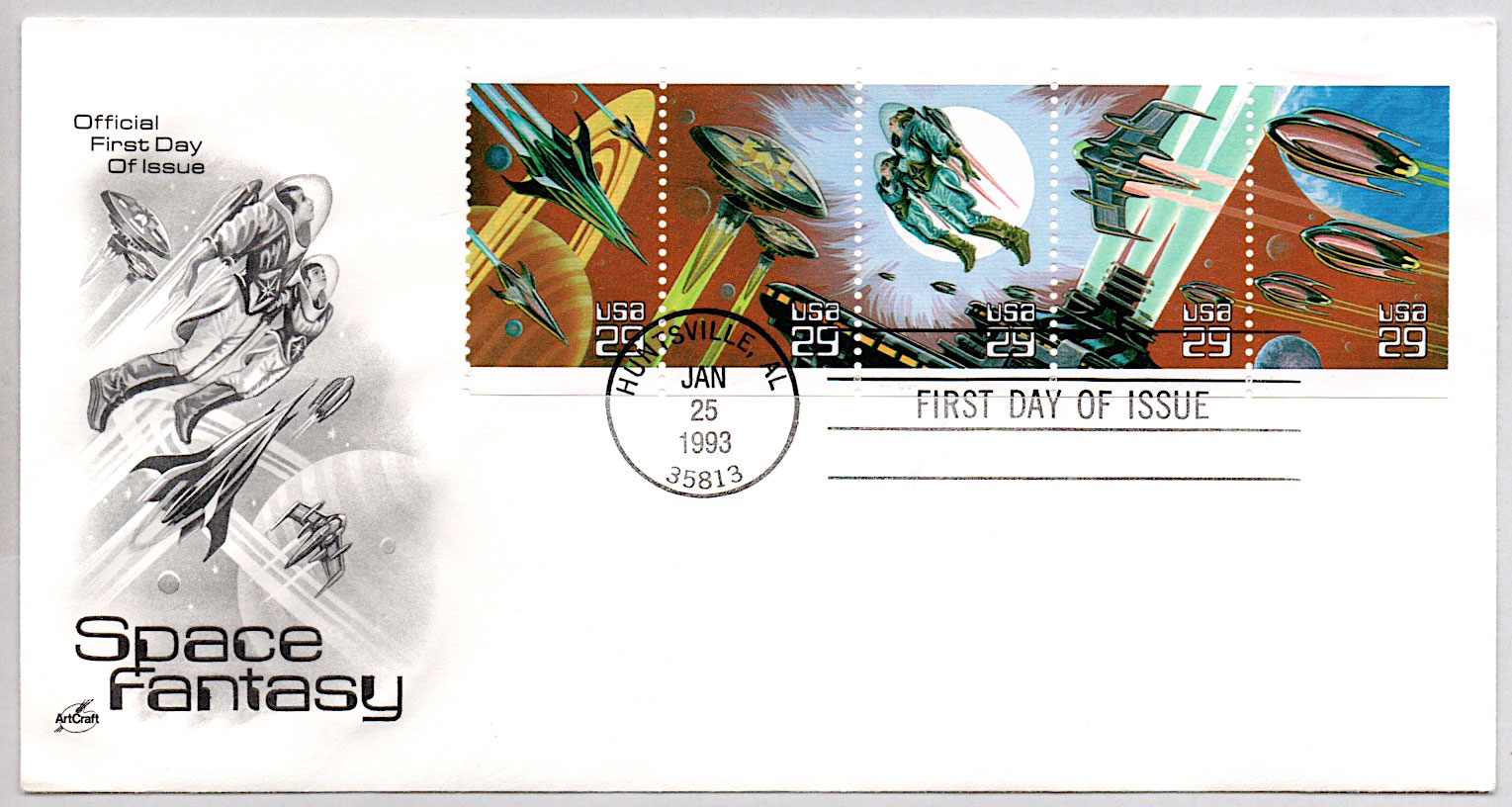
As the painting on this cover shows, we were on the way to seeing a real Buck Rogers flying through space!!
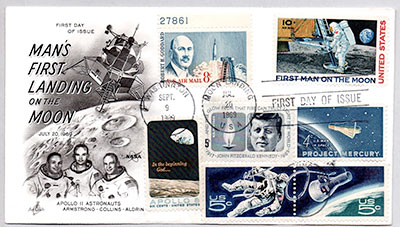
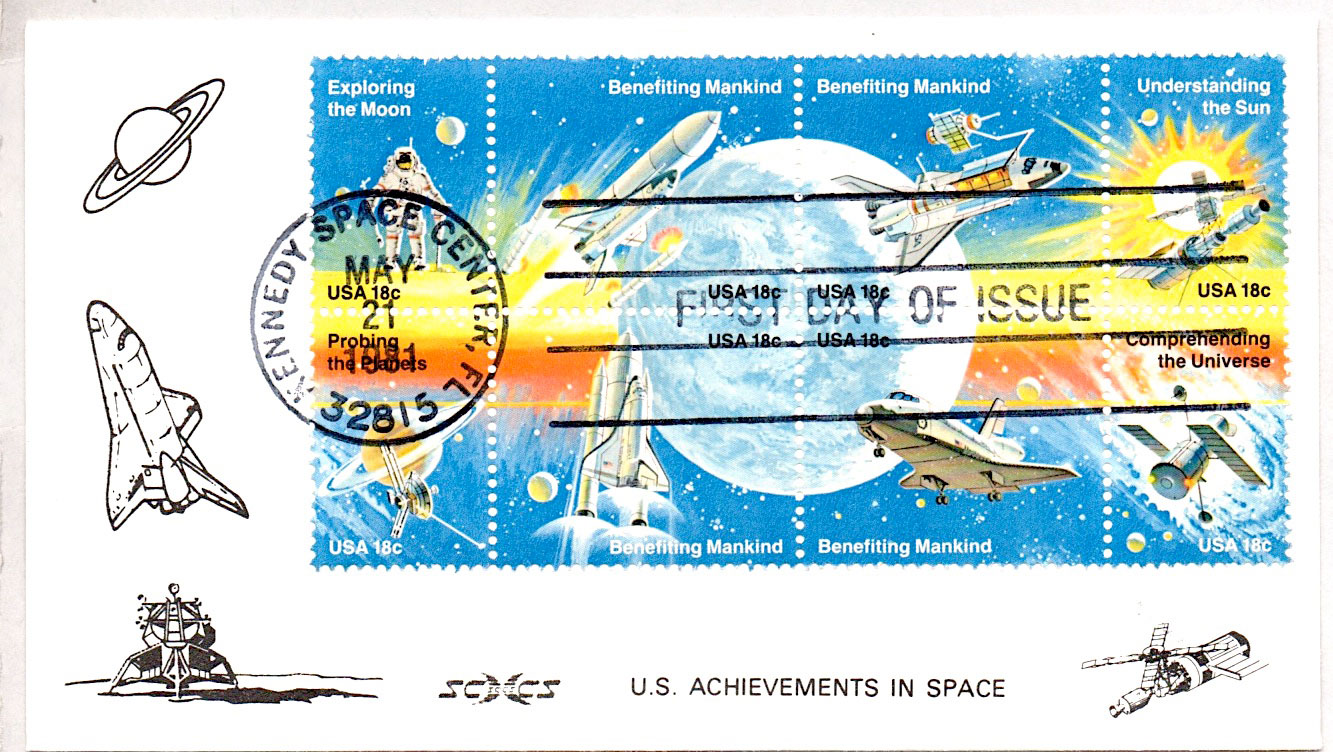
The United States Postal Service has issued many space-related postage stamps celebrating U.S. space accomplishments.
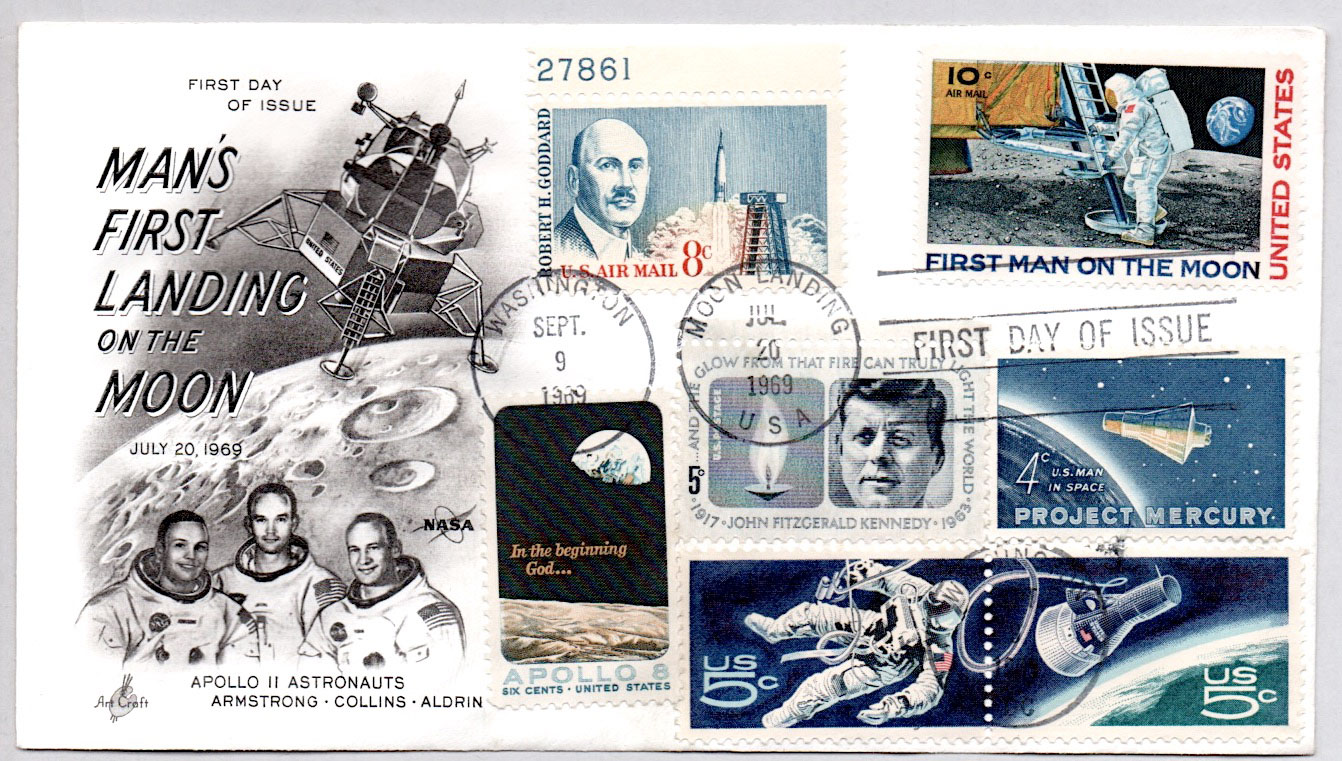
Many of you will understand for obvious reasons my favorites are the 1969 First Man on the Moon stamp designed by my father Paul Calle, and the 29-cent 1994 Moon Landing anniversary stamp designed jointly by me and my father.
This combo stamp First Day Cover includes an excellent summary of space history. Depicted is the Apollo 11 moon landing, rocket science pioneer Robert Goddard, President John F. Kennedy, Apollo 8 Earthrise, Project Mercury, and Ed White's Gemini spacewalk, which is another of my father's stamp designs.
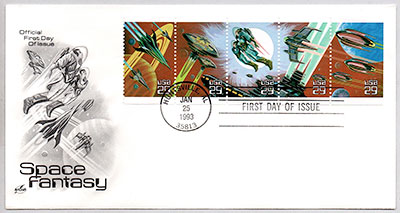
Other U.S. stamps depict a future in space that back in the 1960's seemed like foregone conclusions especially to young children. A set of five Space Fantasy stamps displays in all it's sci-fi glory what our future will be.
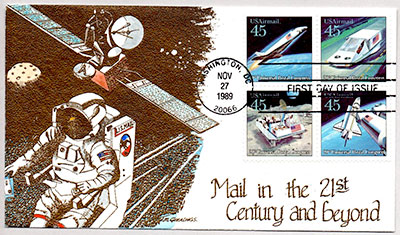
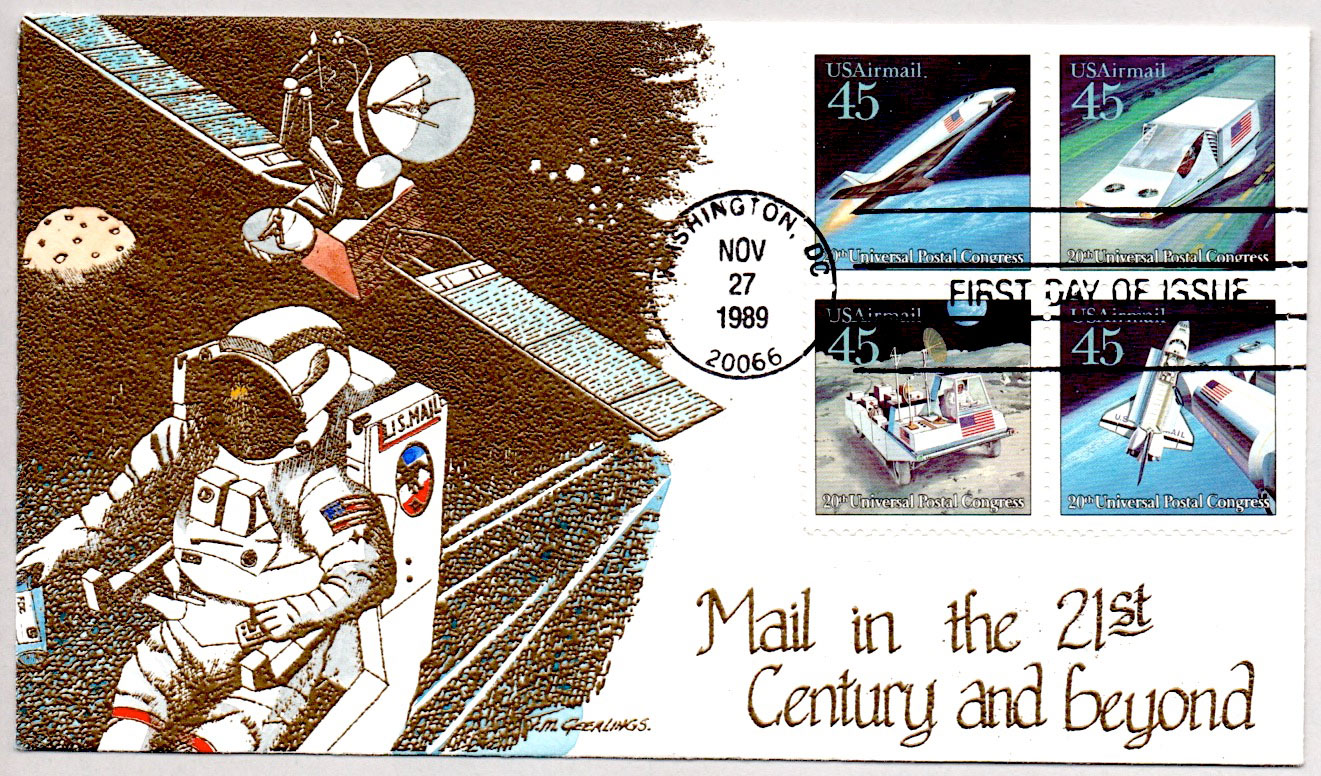
The mail will even be delivered to space colonies in this set of four stamps!
That has been the dream, a continued presence in space and continued progress toward exploring the universe, right!?
As with all good things life takes over. In the 1960's and early 70's the Vietnam War, civil unrest and budget cuts to NASA all took it's toll on interest in space travel in the United States. Sadly, the Apollo program was canceled. Then the space shuttle program came along and looked toward the future. With names for the orbiters reminiscent of past and future exploration like Columbia, Endeavour, Atlantis, Challenger and Discovery, we were poised for the next new adventures in space.
Space stations and space travel, untethered extravehicular trips, multi-country cooperation in space...
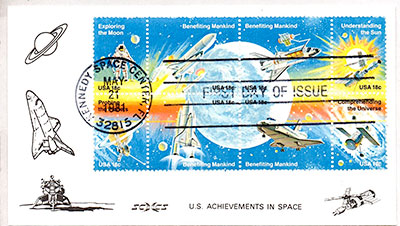
Flash forward to today. Space is exciting again and the outlook for future space exploration is bright.
People are excited, and not just those in the space community. The Florida Space Coast is buzzing and Kennedy Space Center is once again a hub of activity.
It seems like SpaceX is launching satellites every week, and Blue Origin's New Shepard rocket is ferrying space tourists beyond the Von Karman line. Former Apollo Grumman lead electrical engineer on the lunar module Marty Winkel has coined the term Karmanauts for these travelers, which seems quite appropriate. Not necessarily astronauts in the conventional way of thinking but they have seen the Earth from a unique perspective few have seen.
SpaceX is testing its Starship and Super Heavy rocket. Starship is the most powerful launch vehicle ever flown. As history has shown us with the early Mercury program tests, rockets will fail and they will explode fantastically all toward a better understanding of what needs to be accomplished to safely launch. We have seen this with Elon Musk and SpaceX, a willingness to test and fail, and test again to achieve information needed for the final result.
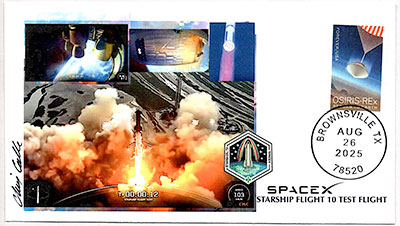
With the NASA Artemis Program planned mission to the moon early next year we may be on our way again. Reestablishing a human presence on the moon as a base toward future space exploration to Mars is a lofty and worthy goal for humankind.
Space future or space fantasy... only time will tell but I sure hope what we are seeing is the beginnings of a new age in exploration. To paraphrase Star Trek, to boldly go where no one has gone before, and beyond...







 posted 12-28-2025 11:07 AM





 advertisement