Space News
space history and artifacts articles

Messages
space history discussion forums

Sightings
worldwide astronaut appearances

Resources
selected space history documents

  collectSPACE: Messages
  Hardware & Flown Items
  Crew equipment on Artemis II moon mission

Post New Topic  Post A Reply
profile | register | preferences | faq | search

next newest topic | next oldest topic
Author Topic:   Crew equipment on Artemis II moon mission
Robert Pearlman
Editor

Posts: 56554
From: Houston, TX
Registered: Nov 1999

posted 02-05-2026 09:20 AM     Click Here to See the Profile for Robert Pearlman   Click Here to Email Robert Pearlman     Edit/Delete Message   Reply w/Quote
As the first crewed flight to the moon in more than 50 years, here's a topic to discuss the equipment used by the astronauts aboard Artemis II. (A dedicated discussion of the crew's wristwatches can found here.)

To begin, from NASA Administrator Jared Isaacman:

NASA astronauts will soon fly with the latest smartphones, beginning with Crew-12 and Artemis II.

We are giving our crews the tools to capture special moments for their families and share inspiring images and video with the world. Just as important, we challenged long-standing processes and qualified modern hardware for spaceflight on an expedited timeline.

That operational urgency will serve NASA well as we pursue the highest-value science and research in orbit and on the lunar surface. This is a small step in the right direction.

Robert Pearlman
Editor

Posts: 56554
From: Houston, TX
Registered: Nov 1999

posted 04-08-2026 09:00 AM     Click Here to See the Profile for Robert Pearlman   Click Here to Email Robert Pearlman     Edit/Delete Message   Reply w/Quote
collectSPACE
Nine brands like Nutella and Nikon that flew to the moon on Artemis II

Nutella changed its social media profile pic on Tuesday (April 7), from pancakes drizzled with its sweetened hazelnut-cocoa spread to one of its jars floating in front of the moon.

The brand was not reacting to astronauts having flown by the moon for the first time in more than 50 years, but rather its own, unexpected part in it. In a now viral video clip from NASA's live mission coverage, a jar of Nutella tumbles through the cabin, above and behind the astronauts, as preparations are underway for the fly-by aboard their Orion spacecraft "Integrity."

Robert Pearlman
Editor

Posts: 56554
From: Houston, TX
Registered: Nov 1999

posted 04-09-2026 01:27 PM     Click Here to See the Profile for Robert Pearlman   Click Here to Email Robert Pearlman     Edit/Delete Message   Reply w/Quote
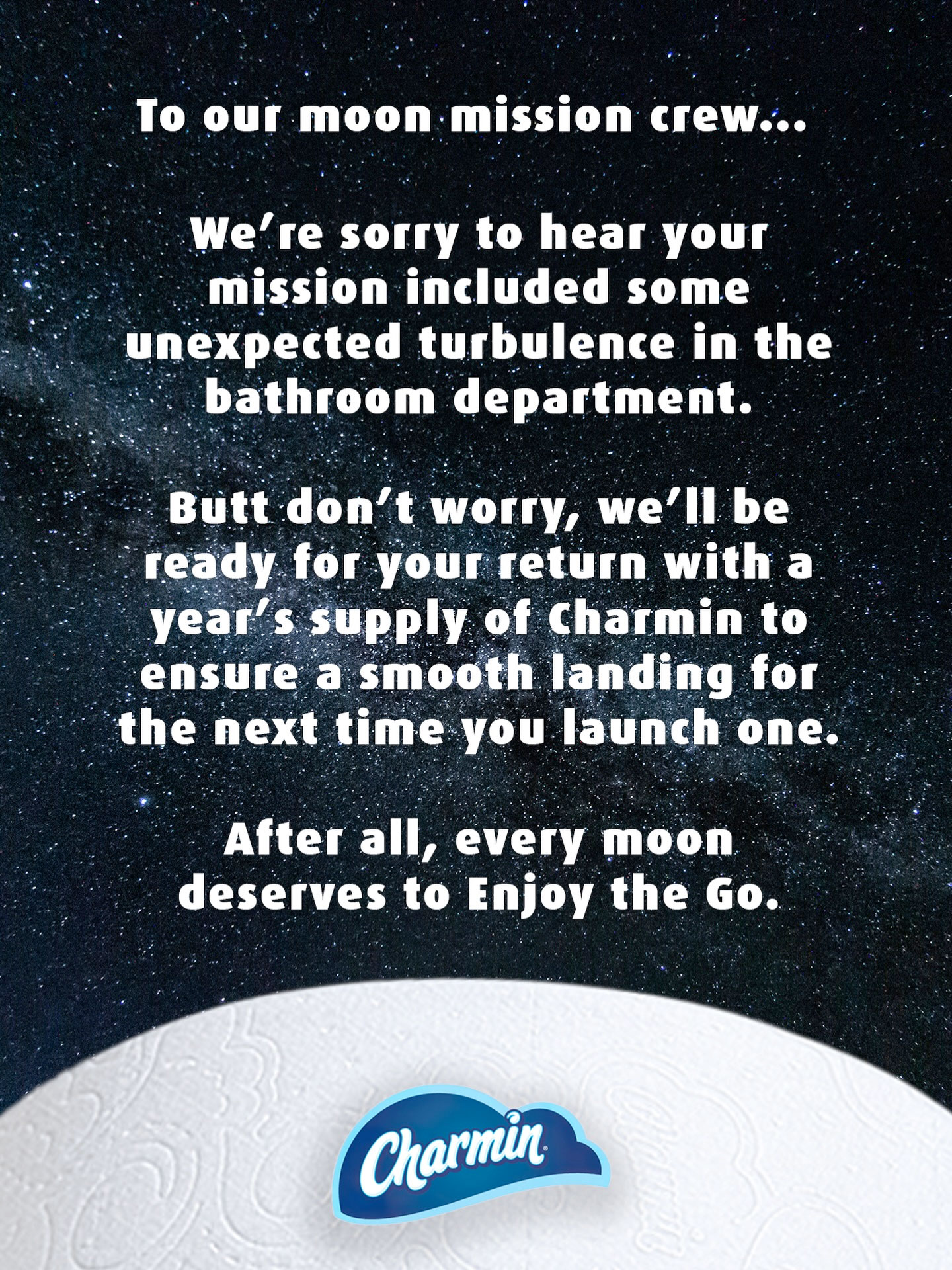
Not exactly on board, but brand-related. As seen on Instagram:
Here to support our favorite asstronauts.

Robert Pearlman
Editor

Posts: 56554
From: Houston, TX
Registered: Nov 1999

posted 04-09-2026 08:42 PM     Click Here to See the Profile for Robert Pearlman   Click Here to Email Robert Pearlman     Edit/Delete Message   Reply w/Quote
Orbit gum (credit to Scientific American):
Artemis II command Reid Weisman offers his crewmates Orbit gum.

Robert Pearlman
Editor

Posts: 56554
From: Houston, TX
Registered: Nov 1999

posted 04-10-2026 01:37 PM     Click Here to See the Profile for Robert Pearlman   Click Here to Email Robert Pearlman     Edit/Delete Message   Reply w/Quote
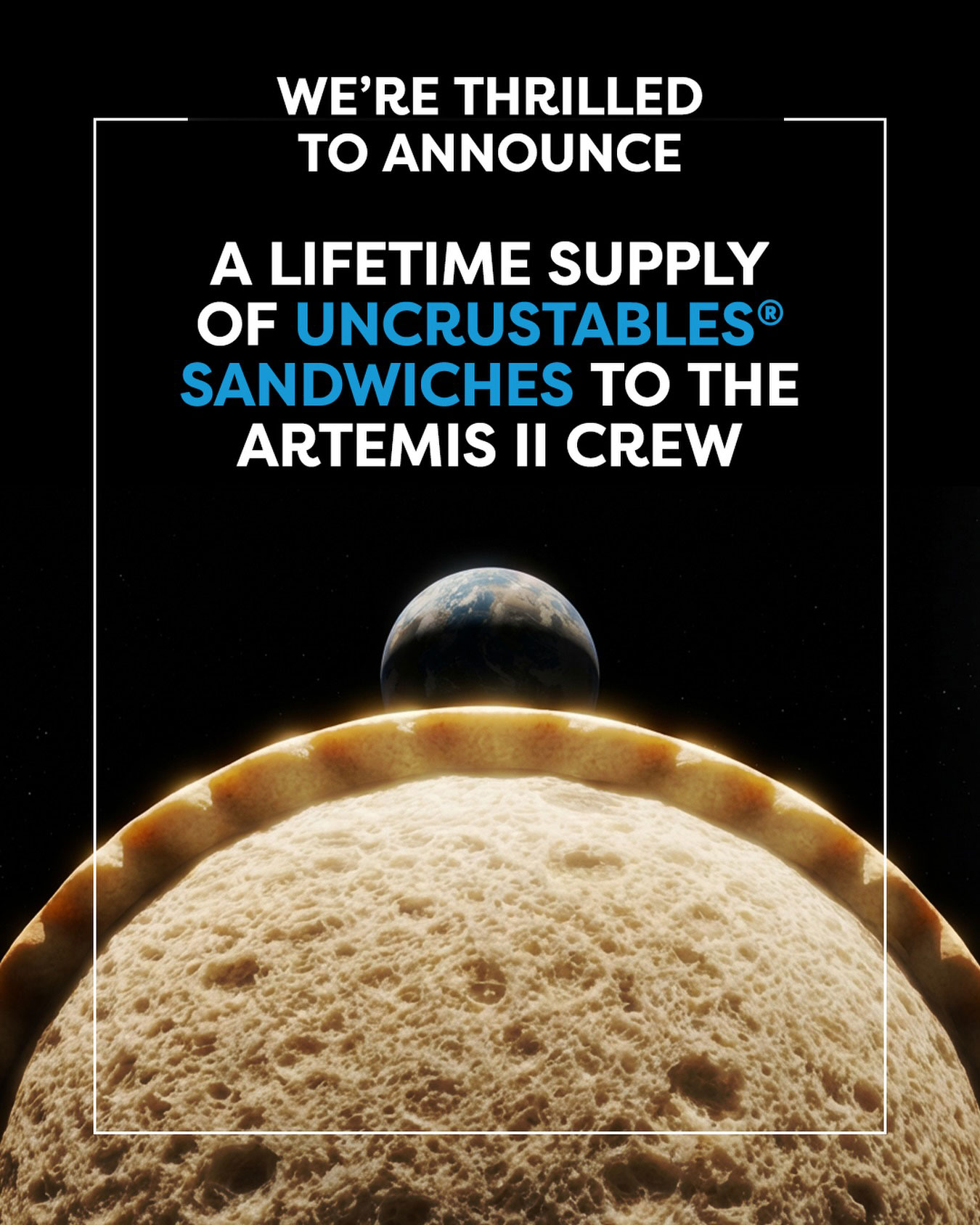
News 8 interviewed one of the Navy shipmen responsible for stocking the recovery ship. "One of the biggest requests they had were for uncrusted sandwiches."

Enter Uncrustables.

Robert Pearlman
Editor

Posts: 56554
From: Houston, TX
Registered: Nov 1999

posted 04-12-2026 11:02 AM     Click Here to See the Profile for Robert Pearlman   Click Here to Email Robert Pearlman     Edit/Delete Message   Reply w/Quote
From Apple CEO Tim Cook:
Congratulations to Artemis II on a successful mission! You captured the wonders of space and our planet beautifully, taking iPhone photography to new heights, and we’re grateful you shared it with the world. Your work continues to inspire us all to think different. Welcome home!

Robert Pearlman
Editor

Posts: 56554
From: Houston, TX
Registered: Nov 1999

posted 04-13-2026 08:04 PM     Click Here to See the Profile for Robert Pearlman   Click Here to Email Robert Pearlman     Edit/Delete Message   Reply w/Quote
collectSPACE
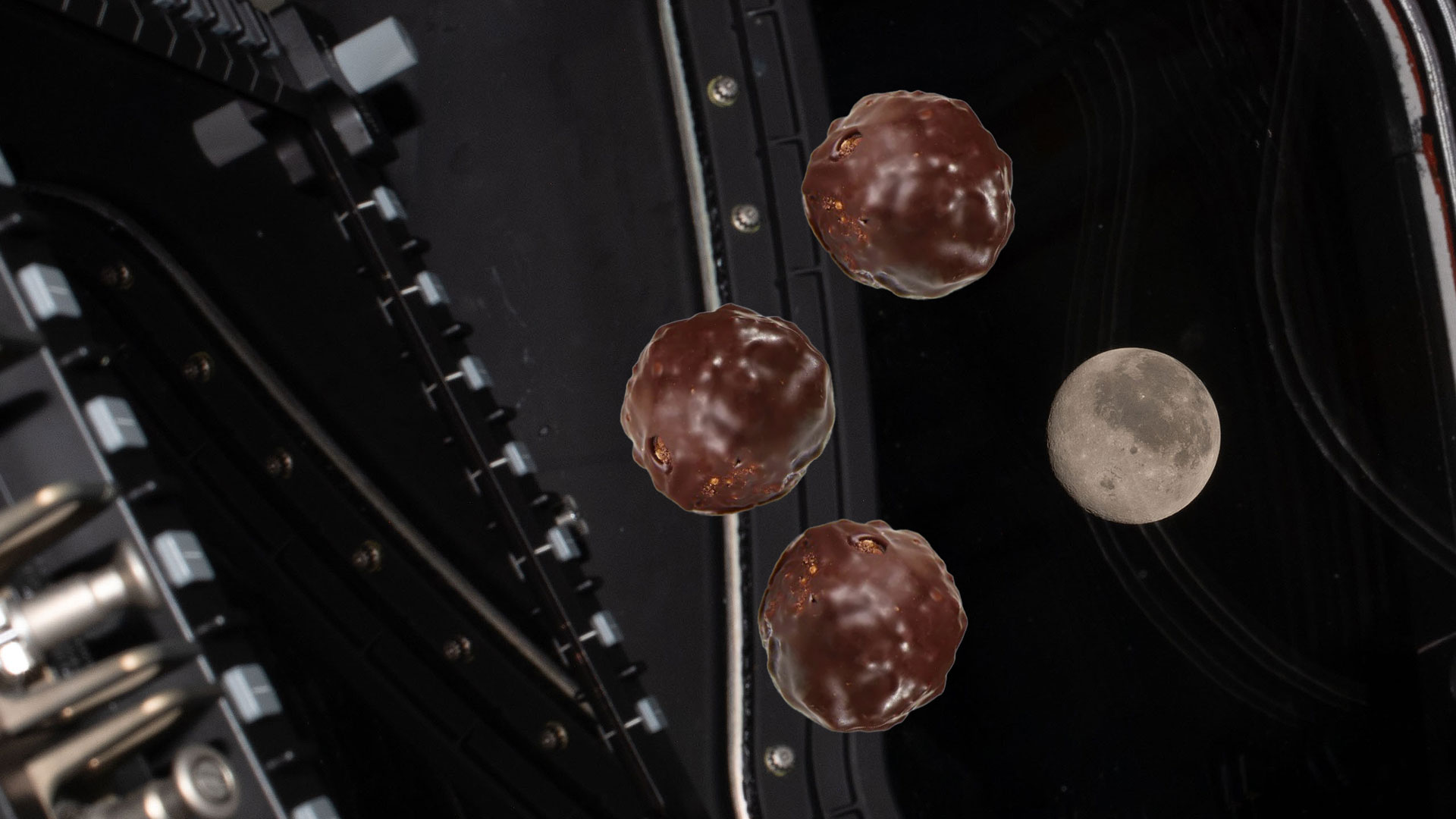
Boost to the moon: Artemis II astronauts ate Astreas energy truffles

Move over M&M's. Nudge to the side Nutella. Astronauts now have a new type of chocolate to savor on — and super charge — their flights to the moon.

Astreas, a performance nutrition company, has revealed that its chocolate truffles were eaten on board NASA's Artemis II mission as crew members Reid Wiseman, Victor Glover, Christina Koch and Jeremy Hansen became he first people to fly by the moon in more than 50 years. Although the spherical treats did not float across the camera at a key moment of the flight — just like a certain cocoa and hazelnut-sweetened spread did — the Astreas truffles made history as the first performance chocolate to be flown on a journey to the moon.

Robert Pearlman
Editor

Posts: 56554
From: Houston, TX
Registered: Nov 1999

posted 04-15-2026 04:35 PM     Click Here to See the Profile for Robert Pearlman   Click Here to Email Robert Pearlman     Edit/Delete Message   Reply w/Quote
NASA release
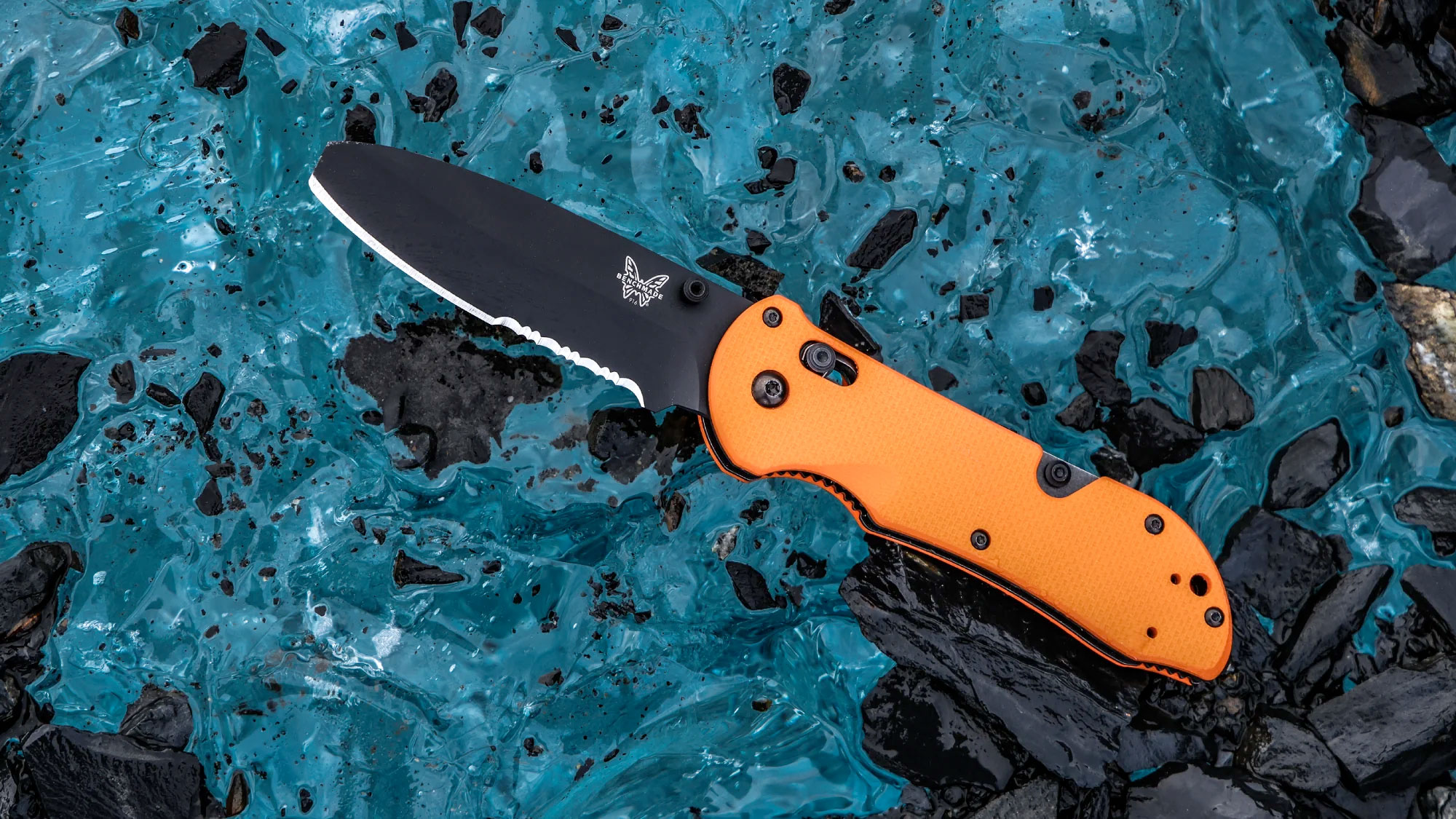
NASA Takes Benchmade Knife Company to Space

For nearly 40 years, Benchmade hasn't followed industry standards—we've rewritten them. Obsessed with performance, ruthless about precision, and unwilling to accept "good enough," we've built knives that earn trust the hard way: in the field. Now we take that mindset beyond it. Chosen for NASA's Artemis Program missions, Benchmade is stepping into space—not as a symbol, but as a tool built to perform where nothing else can. This isn't about dependability. This is about proving what the best in the world is made of.

"We at Benchmade have always believed in building premium tools that perform no matter the situation," says Vice President of Marketing Joe Prebich. "It's amazing to know the men and women of Artemis II will have a tool they can rely on as they venture into a pivotal next chapter of space exploration."

The knife chosen for upcoming NASA missions is the Benchmade 916SBK-ORG Triage. The Triage will make its first appearance on Artemis II, the first crewed voyage around the Moon since 1972, in a series of missions focused on exploring the lunar surface. A four-person crew of astronauts will man the Orion spacecraft on a 10-day flight into space. Each crew member will have a Benchmade Triage stowed in the Orion Crew Survival System (OCSS) spacesuit.

"We designed the Triage for first responders who needed a tough, reliable, and versatile tool," says Director of Product Line Management Vance Collver. "The Triage had to combine the reliability of our tactical folders, the strength and ease of the AXIS Lock, the speed and cutting efficiency of our rescue hooks, the effectiveness of a carbide glass breaker, and the convenience of carrying an EDC knife with a reversible pocket clip."

Artemis II is slated to launch in early 2026, marking the first mission use of the Benchmade Triage. NASA chose the Triage to provide additional capabilities to the Artemis crew in the Orion spacesuit. The combination of the large grip, blunt tip, and strap cutter enables safe and reliable operation by crew members in space suits with gloved hands. All subsequent Artemis missions will feature the Triage in the OCSS spacesuit as NASA continues to explore more of the Moon.

The space-ready Triage is a versatile tool for emergencies where hard-use failure is not an option. The corrosion-resistant N680 blade steel has an opposing bevel blade style that creates a flat, blunt tip for prying and scraping, increases the blade's toughness, and helps prevent accidental punctures. It's paired with the ambidextrous AXIS lock, a strong and reliable mechanism for safe one-handed opening and closing of the blade. The Triage has a partially serrated edge engineered for cutting fibrous and other tough materials, temperature and chemical-resistant G10 scales for textured grip, and a 440C stainless steel folding hook to efficiently cut through straps, cords, fabrics, or clothing without damaging the blade or injuring the user.

Benchmade knives and tools have been carried and trusted by explorers all over the globe. Now, Benchmade will go to space on adventures with NASA to explore more of the Moon than ever before.

SpaceAholic
Member

Posts: 5565
From: Sierra Vista, Arizona
Registered: Nov 1999

posted 04-15-2026 04:59 PM     Click Here to See the Profile for SpaceAholic   Click Here to Email SpaceAholic     Edit/Delete Message   Reply w/Quote
Great choice (many EMS/SAR have been carrying for years).

The carbide window breaker might come in handy if the crew locks itself out of the capsule during future lunar missions.

Robert Pearlman
Editor

Posts: 56554
From: Houston, TX
Registered: Nov 1999

posted 04-15-2026 11:46 PM     Click Here to See the Profile for Robert Pearlman   Click Here to Email Robert Pearlman     Edit/Delete Message   Reply w/Quote
MISCO Speakers release
Creating Loudspeakers for Orion Spacecraft

Beginning work with NASA in 2017, MISCO has been developing loudspeakers for the Orion spacecraft, a key component of the Artemis missions. Designed to withstand some of the most extreme conditions, these loudspeakers play a crucial role in ensuring astronauts have reliable audio communication on their journey to the Moon and, eventually, Mars.
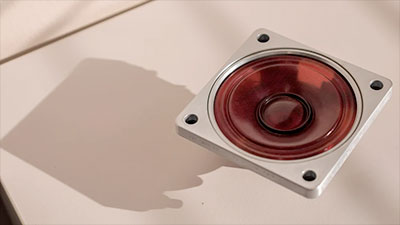
Above: MISCO loudspeaker model 88076 designed for the Orion spacecraft.

Meeting NASA's Rigorous Standards

Meeting NASA's requirements for reliability, durability, and performance under extreme conditions is no small feat. Each component must meet the highest standards to ensure mission success and astronaut safety.

So, how resilient does the loudspeaker in Orion need to be?

"It has to be able to withstand 4,000 Gs," says Rich Field, Chief Engineer at MISCO, who led the project. "And it has to withstand that force along multiple axes and still be able to perform during and after that impact. It's an example of the 'margin on margin' thinking that is critical to assure the success and safety of each NASA mission."

MISCO prides itself on designing robust loudspeakers and conducting extensive testing. However, developing and testing a loudspeaker capable of withstanding four thousand times the strength of gravity was a new challenge for MISCO.

"They do what's called a pyroshock test," Rich explains. "They use a steel beam with an explosive charge on one side and put an object on the other side to represent the loudspeaker. They detonate the explosive and then confirm it created enough force. Then they strap the real loudspeaker on and do it again."

This test simulates the extreme conditions of a rocket launch or a potential emergency mission abort. After the test, the loudspeaker is examined for any damage or loosening of parts and must meet all its original electro-mechanical-acoustical specifications.

Out of this World Engineering

MISCO engineers specialize in addressing unique acoustical challenges for customers on Earth. However, in space, the challenges become vastly different due to environmental factors such as zero gravity, fluctuating air pressures, and extreme temperatures. For instance, loudspeakers create sound by exerting force on air, generating localized variations in air pressure—essentially, sound waves. A sudden drop in air pressure aboard the Orion spacecraft could be life-threatening, and astronauts must be able to hear a loss-of-pressure alarm even if they are asleep.

The lower air pressure presents a distinct challenge for loudspeakers, which must function effectively under these conditions while still producing the required sound level in 9 PSI, along with the standard 14.7 PSI found at sea level on Earth. Modeling and measuring loudspeaker performance in various atmospheric conditions was a novel challenge for MISCO. Extensive modeling and calculations were carried out to demonstrate that the selected loudspeaker design would perform reliably, which was later validated through customer testing in pressure chambers.

These environmental challenges compelled MISCO to address every aspect of the loudspeaker's construction, including the materials used, to ensure they could endure the harsh conditions of space.

"We had 1,600 lines in our logbook related to issues on this project. Each line represented something we had to check, tweak, and resolve. That's significantly more than any other project we've worked on," says Rich. "For example, we dedicated a considerable amount of time and resources to finding the right adhesives for the speaker."

MISCO faced significant material challenges, as each component needed to meet operational requirements across all conditions and environments. NASA maintains a special list of approved materials, each rigorously tested and verified for use in space, which adds further complexity to material selection. The commercial-grade epoxy typically used by MISCO for many of its loudspeakers was not included on that list. To address this, MISCO collaborated with a specialized supplier and leveraged its decades of loudspeaker-building expertise to develop a solution that could meet the pyroshock and temperature requirements of -40°C to +85°C.

MISCO's Expertise and Innovation

MISCO was chosen for the Orion project due to its extensive experience with loudspeakers designed for military applications and its Oaktron division, which had previously developed loudspeakers for the International Space Station (ISS). This background in robust, high-reliability designs made MISCO an ideal fit to meet NASA's stringent requirements for deep-space exploration.

As the Orion project progressed, new challenges arose. The need for more equipment and laboratory space meant that the loudspeakers for Orion must be smaller than those used on the ISS. This added complexity necessitated a focus on innovative design to meet strict size and performance requirements while ensuring redundancy. Smaller loudspeakers, with their reduced diaphragm size, posed significant challenges for sound output, as they are less effective at interacting with the surrounding air.

The Orion loudspeaker incorporates two identical transducers for redundancy, providing the reliability necessary for deep-space missions. This redundancy is especially vital given the long distances involved—after all, you wouldn't want your sound system cutting out when you're 35 million miles away from home! Mars, at its closest, is about that far away, making reliable communication absolutely crucial. Each transducer utilizes a powerful neodymium magnet to optimize output while minimizing size and weight, effectively addressing both performance and spatial constraints.

Countdown to Orion Liftoff

The Orion spacecraft was launched into space for the first time atop the Artemis I rocket in November 2022—the most powerful rocket NASA has ever used. Since this mission did not carry astronauts, MISCO's loudspeaker was not yet installed inside Orion. Without a human crew, the communication system requirements were simplified, allowing NASA to focus on testing other critical systems.

On April 1, 2026, NASA successfully launched Artemis II, sending astronauts on a mission around the moon in the Orion Spacecraft. This mission will mark the farthest humans have ever traveled into space.

Everyone at MISCO is cheering on this historic mission and taking pride in our role in advancing space exploration.

Sometimes, the work MISCO does truly is rocket science.

Robert Pearlman
Editor

Posts: 56554
From: Houston, TX
Registered: Nov 1999

posted 05-13-2026 09:10 AM     Click Here to See the Profile for Robert Pearlman   Click Here to Email Robert Pearlman     Edit/Delete Message   Reply w/Quote
collectSPACE
Mickey 'wipes' by the moon: Disney mouse spotted on NASA Artemis II mission

Oh boy! Mickey Mouse made his first, real-life flight to the moon on NASA's celebrated Artemis II mission.

The global cultural icon and corporate mascot of the Walt Disney Company has been spotted in a newly-released photo taken during the 10-day flight that soared over the far side of Earth's celestial neighbor.

Robert Pearlman
Editor

Posts: 56554
From: Houston, TX
Registered: Nov 1999

posted 05-21-2026 03:29 PM     Click Here to See the Profile for Robert Pearlman   Click Here to Email Robert Pearlman     Edit/Delete Message   Reply w/Quote
Among the food items packed for Jeremy Hansen by the Canadian Space Agency was Goldy's Strawberry Lavender | Superseed Blend cereal. According to The Hustle, once news spread that this chia, pumpkin and hemp seed mix (with Buckwheat mix and real freeze-dried strawberries) was on Artemis II, the company had a hard time fulfilling orders.
[Daniel] Carson hasn't heard yet from Hansen personally, but he has heard from space groupies eager to order some of their own strawberry lavender superseed blend or asking if they sell merch.

"I didn't know there were space groupies!" he says.

The sales uptick was so big, his business partner Daniel Schreiber spent the weeks after the launch packing orders in his basement. As a team of three, Carson says, it's a hands-on operation.

All times are CT (US)

next newest topic | next oldest topic

Administrative Options: Close Topic | Archive/Move | Delete Topic
Post New Topic  Post A Reply
Hop to:

Contact Us | The Source for Space History & Artifacts

Copyright collectSPACE. All rights reserved.


Ultimate Bulletin Board 5.47a


advertisement