Space Newsspace history and artifacts articlesMessagesspace history discussion forumsSightingsworldwide astronaut appearancesResourcesselected space history documents
advertisements
NASA launches Roman Telescope to provide wide view of cosmos
August 30, 2026
— As NASA's first chief astronomer, Nancy Grace Roman championed the launch of space-based telescopes, providing astronomers the chance to "peer through a keyhole" into the cosmos. Now, an orbital observatory bearing her name has lifted off to "kick down the door," providing a much wider view of the universe.
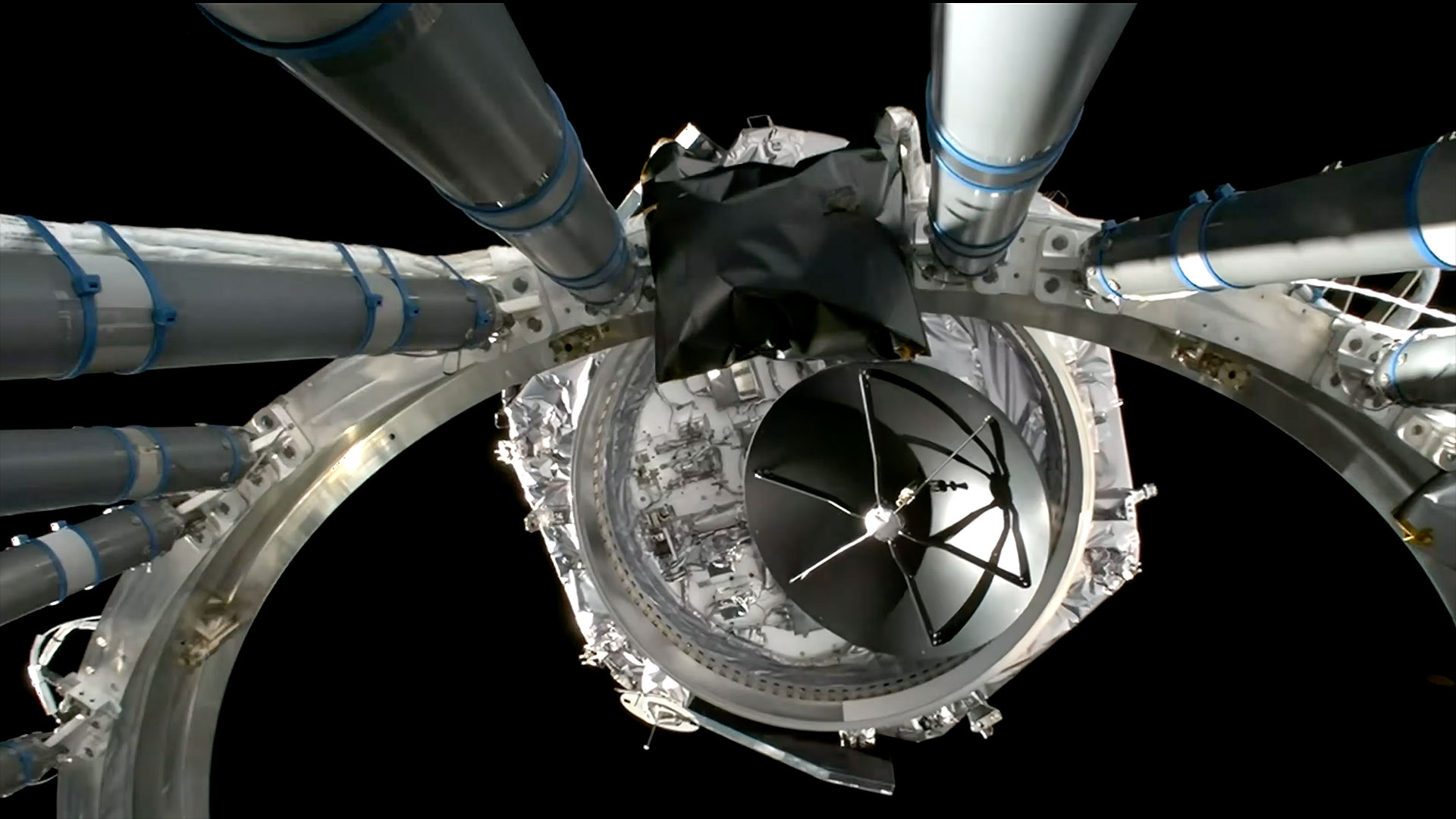
The Nancy Grace Roman Space Telescope was launched atop a SpaceX Falcon Heavy rocket on Sunday (Aug. 30). Departing Kennedy Space Center's Complex 39A in Florida at 7:26 a.m. EDT (1126 GMT), the tour-bus-sized observatory was deployed 31 minutes after leaving Earth, beginning its three-month journey to the second Sun-Earth Lagrange point (L2), the same orbit as the James Webb Space Telescope (though the two spacecraft will remain far apart).
"The Nancy Grace Roman Space Telescope will blow your mind," said Nicky Fox, NASA's associate administrator for science, during a pre-launch press conference on Saturday. "Roman's large field of view and fast survey speeds will reveal untold cosmic objects while shining a light on dark energy and dark matter. During its mission, Roman will discover tens of thousands of new planets, billions of galaxies, thousands of supernovae and tens of billions of stars, and it will do all of that at a speed about thousand times that of Hubble."
"So to put that into context, what Roman can do in a month would take Hubble a century," said Fox.
The launch was SpaceX's 13th Falcon Heavy flight since 2018. The core stage was expended, and the two first stage side boosters were recovered on SpaceX’s Landing Zones 2 and 40 at the Cape Canaveral Space Force Station. It was the first and third flight for the two boosters, respectively.
From spy satellite to space scope
The Roman telescope (or Wide Field Infrared Survey Telescope, WFIRST, as it was originally known) began in 2012 as a result of the National Reconnaissance Office (NRO) giving NASA two surveillance telescopes that it no longer needed. Each scope has a primary mirror the same size as Hubble's and a maneuverable secondary mirror making possible more focused images.
Because of Roman's optical design, it will see the most detail in a ring of light rather than a single point focused on the middle. The detectors in Roman's wide field instrument are laid out in an arch shape to sit along part of that ring. This design helps Roman capture a much wider area with equally sharp imaging and lets both the wide field instrument and coronagraph operate simultaneously.
Using the wide field, Roman will capture with each of its images a patch of the sky bigger than the apparent size of a full moon.
The coronagraph will block the glare from stars and make it possible for scientists to see the faint reflected light from planets in orbit around them. The coronagraph aims to image worlds and dusty disks around nearby stars in visible light to help us see giant worlds that are older, colder and in closer orbits than the hot, young super-Jupiters direct imaging has mainly revealed so far.
"Roman is kind of like a Swiss Army telescope," said Fox. "It will bring us into a new era of space discovery, as well as reexamine the endless sky as we know it and unlock the foundation for our future flagship missions that will take advantage of this incredible technology and the journey that we've gone on to allow us to search for habitable worlds in in the future."
Names in the stars
Nancy Grace Roman, 93, died in 2018, a year after seeing LEGO honor her with an official minifigure and two years before NASA announced that it was renaming WFIRST for her.
"It is because of Nancy Grace Roman's leadership and vision that NASA became a pioneer in astrophysics and launched Hubble, the world's most powerful and productive space telescope," said Jim Bridenstine, then the NASA Administrator, in a statement. "I can think of no better name for WFIRST."
The Roman is the first space telescope to be named for a woman.
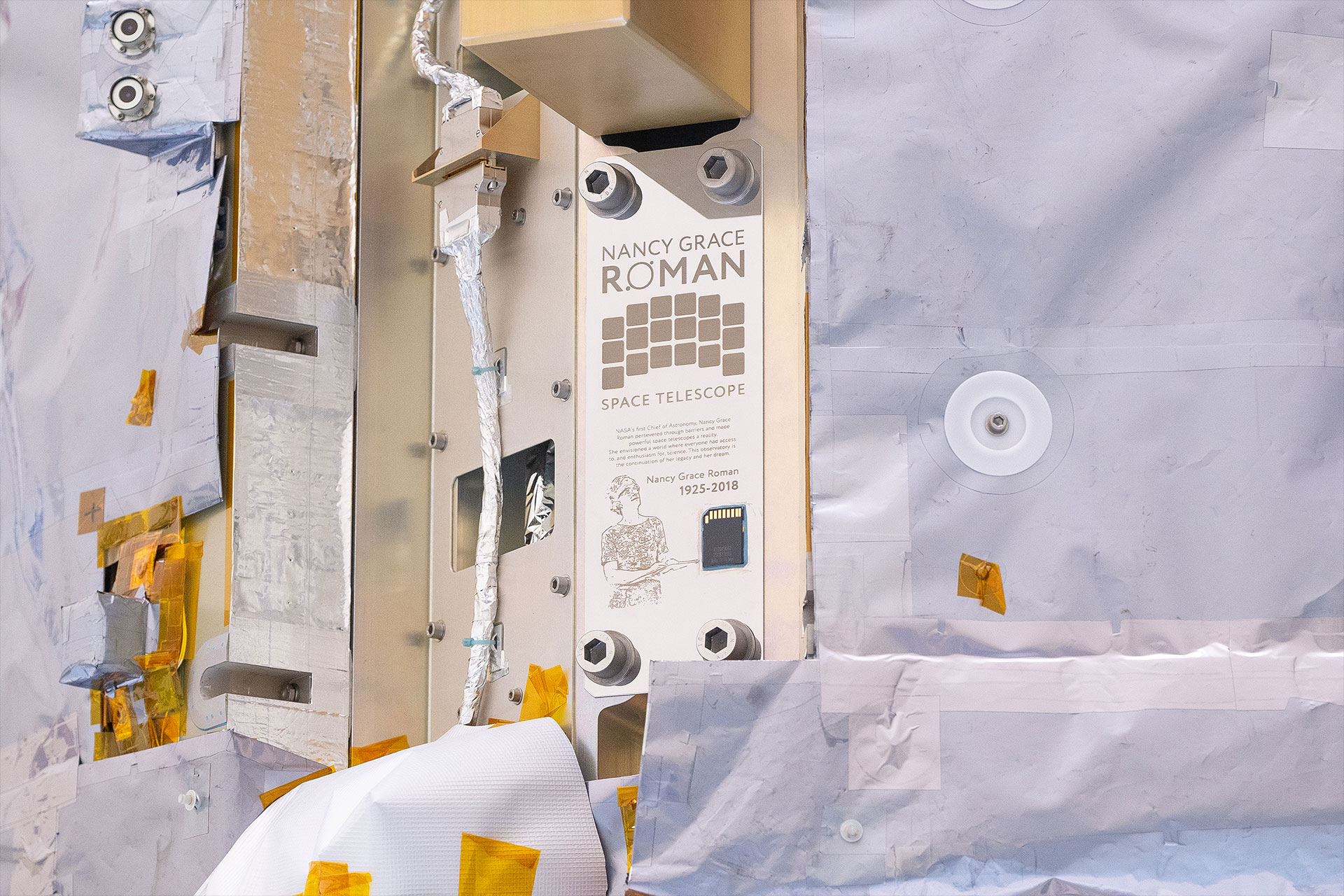
The observatory is adorned with a metal plaque etched with Roman's name, a picture of her, the years that she lived and a brief description that reads in part, "She envisioned a world where everyone has access to and enthusiasm for science. This observatory is a continuation of her legacy and her dream."
The plaque is also the mounting point for a memory card containing a total of 1,350,144 names submitted by people from across the globe, including astronauts from NASA's Artemis II and Artemis III missions.
The Nancy Grace Roman Space Telescope team at NASA's Goddard Space Flight Center in Maryland anticipates releasing its first images by early 2027.
The Roman has a primary mission lifetime of five years and is designed to support an additional five-year extended mission. While NASA currently does not have the capability to do so, the observatory is outfitted with a mounting ring for a possible refueling and servicing mission.
A SpaceX Falcon Heavy rocket launches with NASA's Nancy Grace Roman Space Telescope aboard from Complex 39A, Sunday, Aug. 30, 2026, at Kennedy Space Center, Florida. (NASA/Joel Kowsky)
A camera on the SpaceX Falcon Heavy upper stage captures NASA's Nancy Grace Roman Space Telescope as it begins its three-month journey to Sun-Earth Lagrange Point 2. (SpaceX)
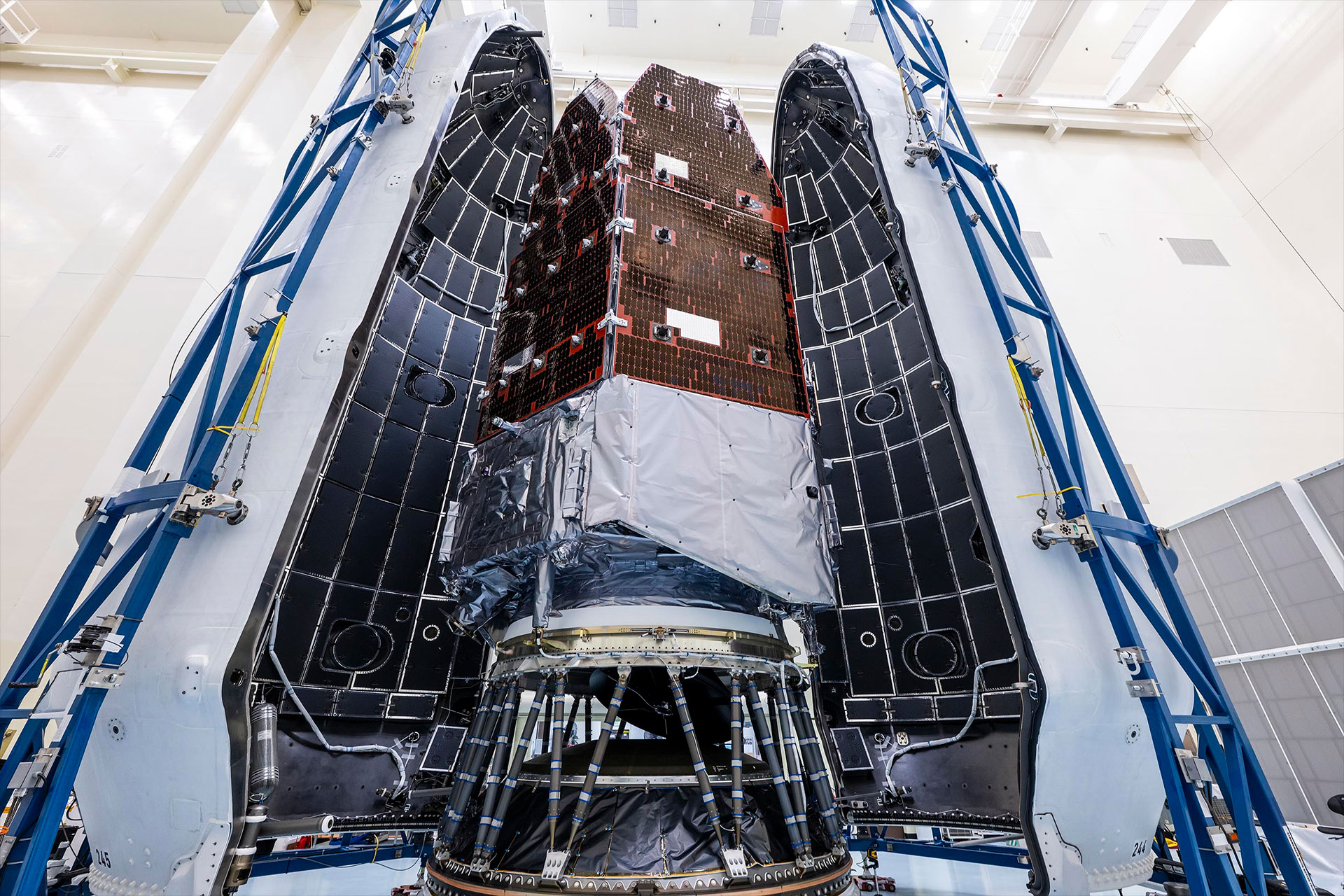
NASA's Nancy Grace Roman Space Telescope is encapsulated for its launch on a SpaceX Falcon Heavy rocket. (SpaceX)
NASA installed a commemorative plaque on NASA's Nancy Grace Roman Space Telescope honoring the legacy of NASA's first chief astronomer and featuring an SD card containing 1,350,144 names submitted by the general public. (NASA/Jolearra Tshiteya)
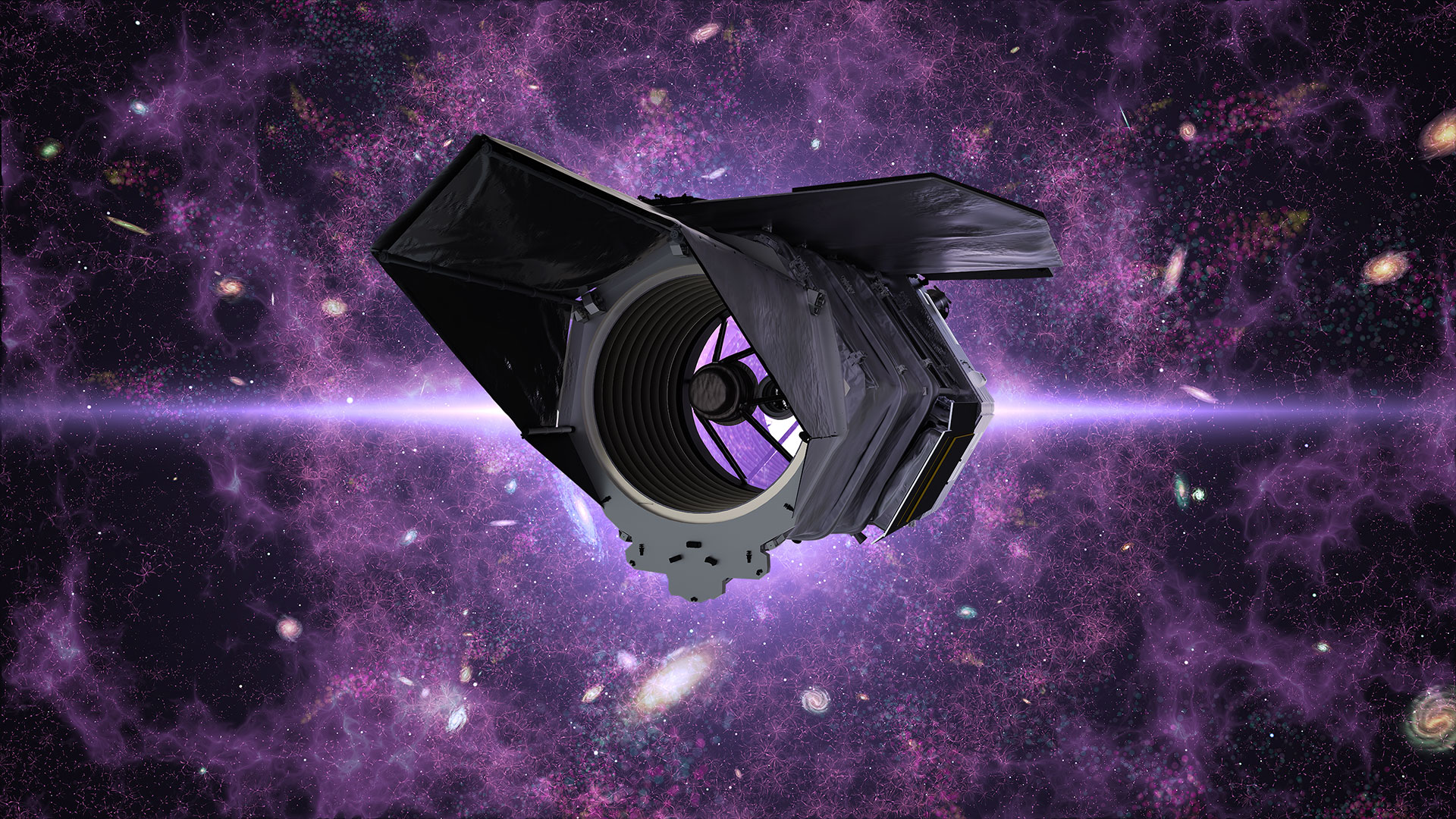
Artist's rendering of NASA's Nancy Grace Roman Space Telescope making infrared observations of wide-swaths of the universe. (NASA)