advertisements advertisements
|

|
Photos: Artemis II crew saw 'Earthset,' solar eclipse on flyby of moon
Artemis II mission coverage presented with the support of

April 7, 2026 — The Artemis II crew wrapped up a historic seven-hour lunar flyby, marking humanity's first return to the moon since Apollo 17 in 1972 and capturing images of the lunar far side.
Flying aboard their Orion spacecraft "Integrity," NASA astronauts Reid Wiseman, Victor Glover and Christina Koch, together with Jeremy Hansen with the Canadian Space Agency, reached 252,756 miles (406,771 km) away from Earth — 4,101 miles (6,600 km) farther than the record set by the Apollo 13 crew in 1970 — and came within 4,067 miles (6,545 km) of the lunar surface.
As they flew over the far side of the moon, the astronauts photographed and described terrain features including impact craters, ancient lava flows and surface cracks and ridges formed as the moon slowly evolved over time. They also noted differences in color, brightness and texture, which help scientists understand the composition and history of the lunar surface.
The crew witnessed an "Earthset" — the moment Earth dropped below the lunar horizon — as Integrity traveled behind the moon and an "Earthrise" as it emerged from the opposite edge of the moon.
As the flyby neared its end, the crew watched a nearly hour-long solar eclipse as Integrity, the moon and the Sun aligned. With a view of a mostly darkened moon, Wiseman, Glover, Koch and Hansen viewed the solar corona, the Sun's outermost atmosphere, as it appeared around the moon's edge. They also reported seeing six light flashes created by meteoroids impacting the lunar surface.
"No matter how long we look at this, our brains are not processing this image in front of us. It is absolutely spectacular, surreal," said Wiseman, Artemis II mission commander. "There are no adjectives. I'm going to need to invent some new ones to describe what we're looking at outside this window."
|
|
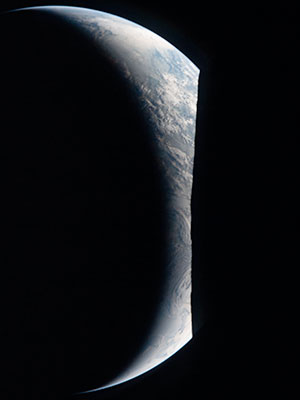
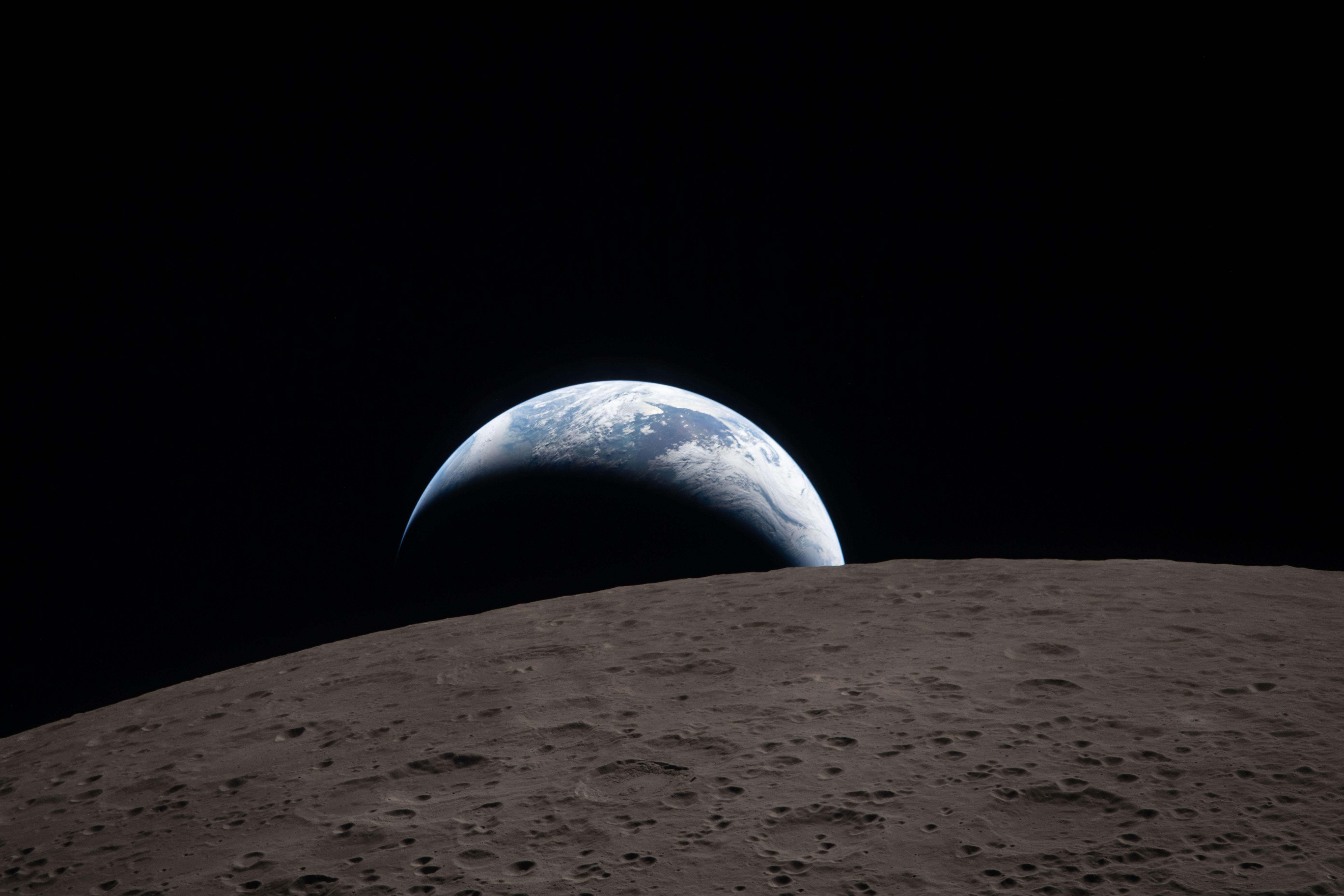
Earthrise captured during the Artemis II crew's flyby of the moon's far side on Monday, April 6, 2026. (NASA) |
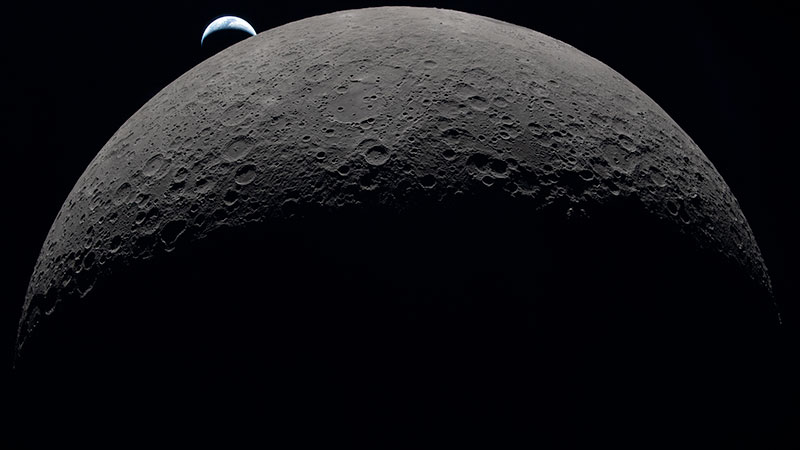
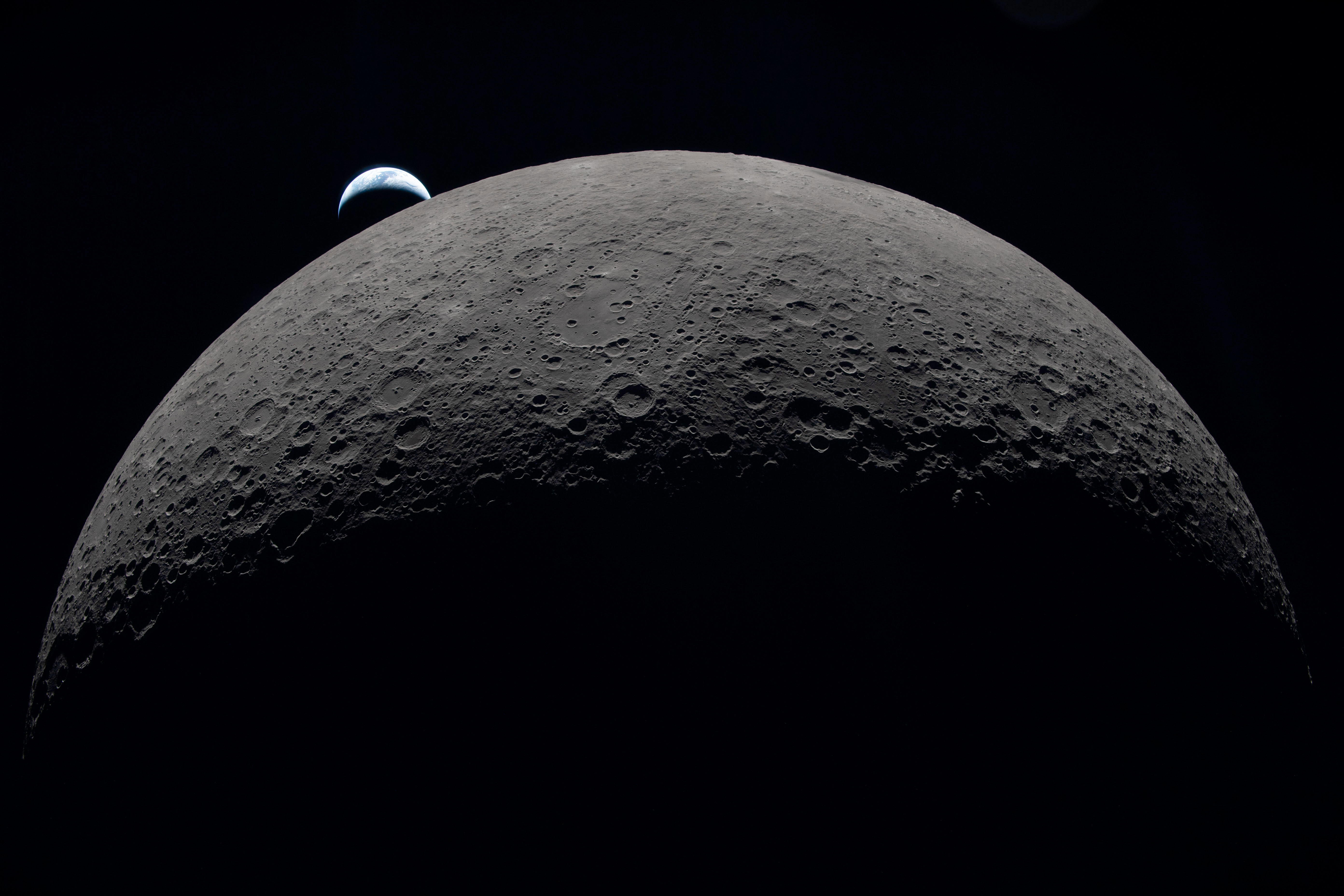
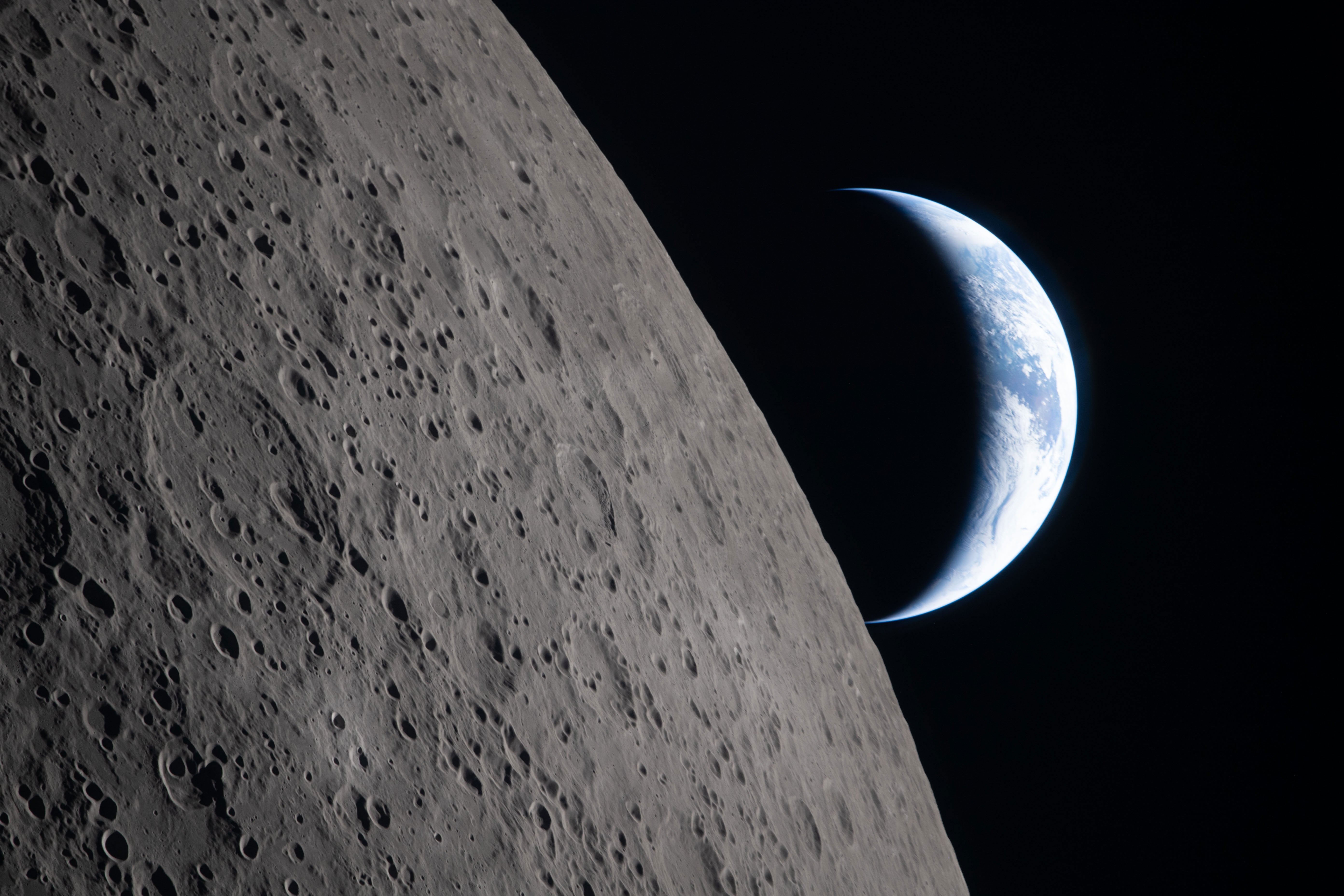
Earth sets at 6:41 p.m. EDT (2241 GMT), April 6, 2026, over the moon's curved limb. Orientale basin is perched on the edge of the visible lunar surface. Hertzsprung Basin appears as two subtle concentric rings, which are interrupted by Vavilov, a younger crater. (NASA) |
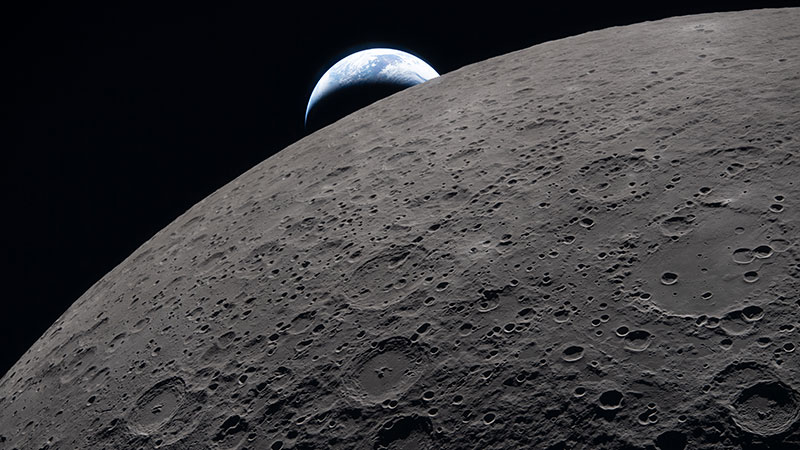
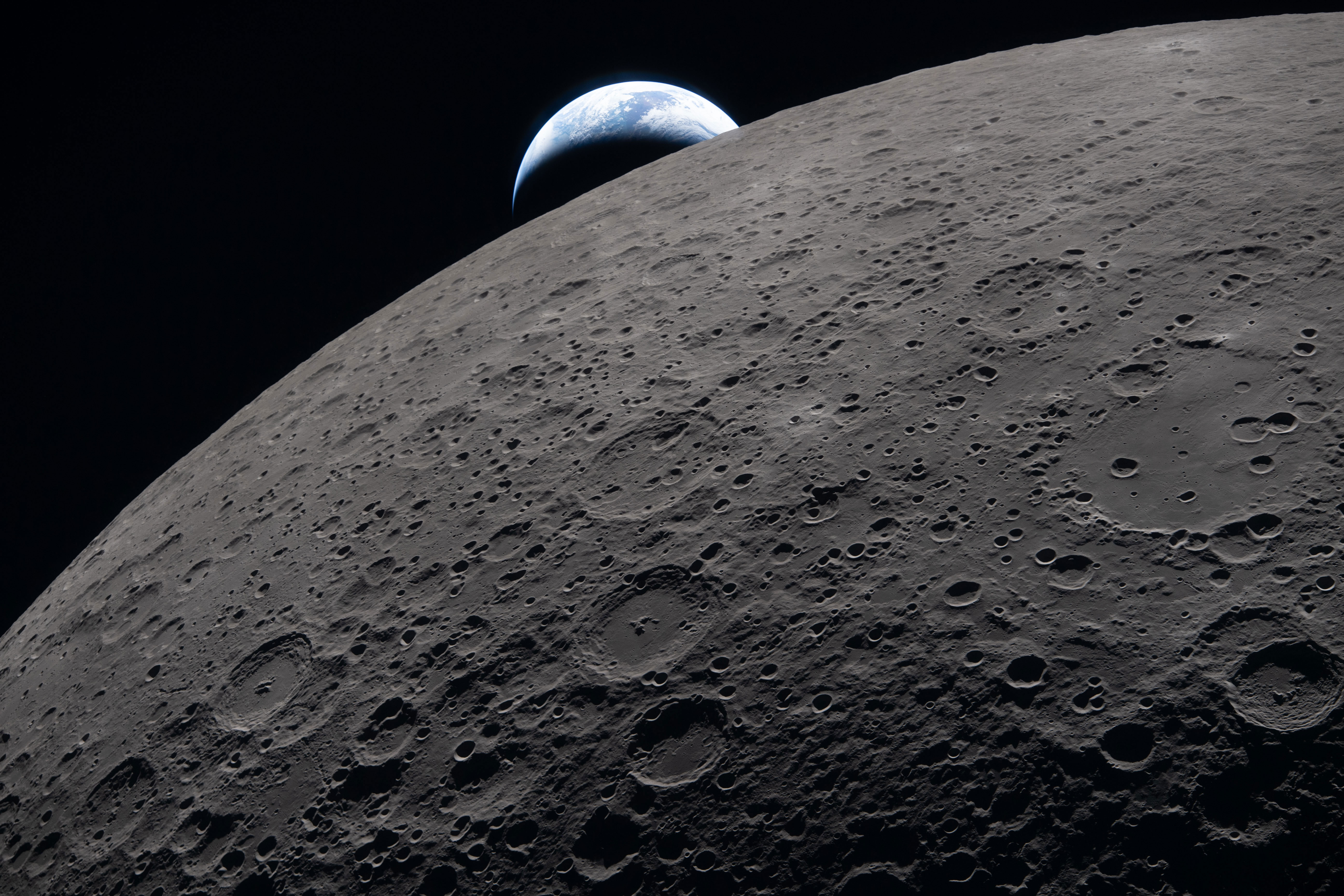
The lunar surface fills the frame in sharp detail, as seen during the Artemis II lunar flyby, while a distant Earth sets in the background on Monday, April 6, 2026. On Earth, swirling clouds are visible over the Australia and Oceania region. In the foreground is Ohm crater. (NASA) |
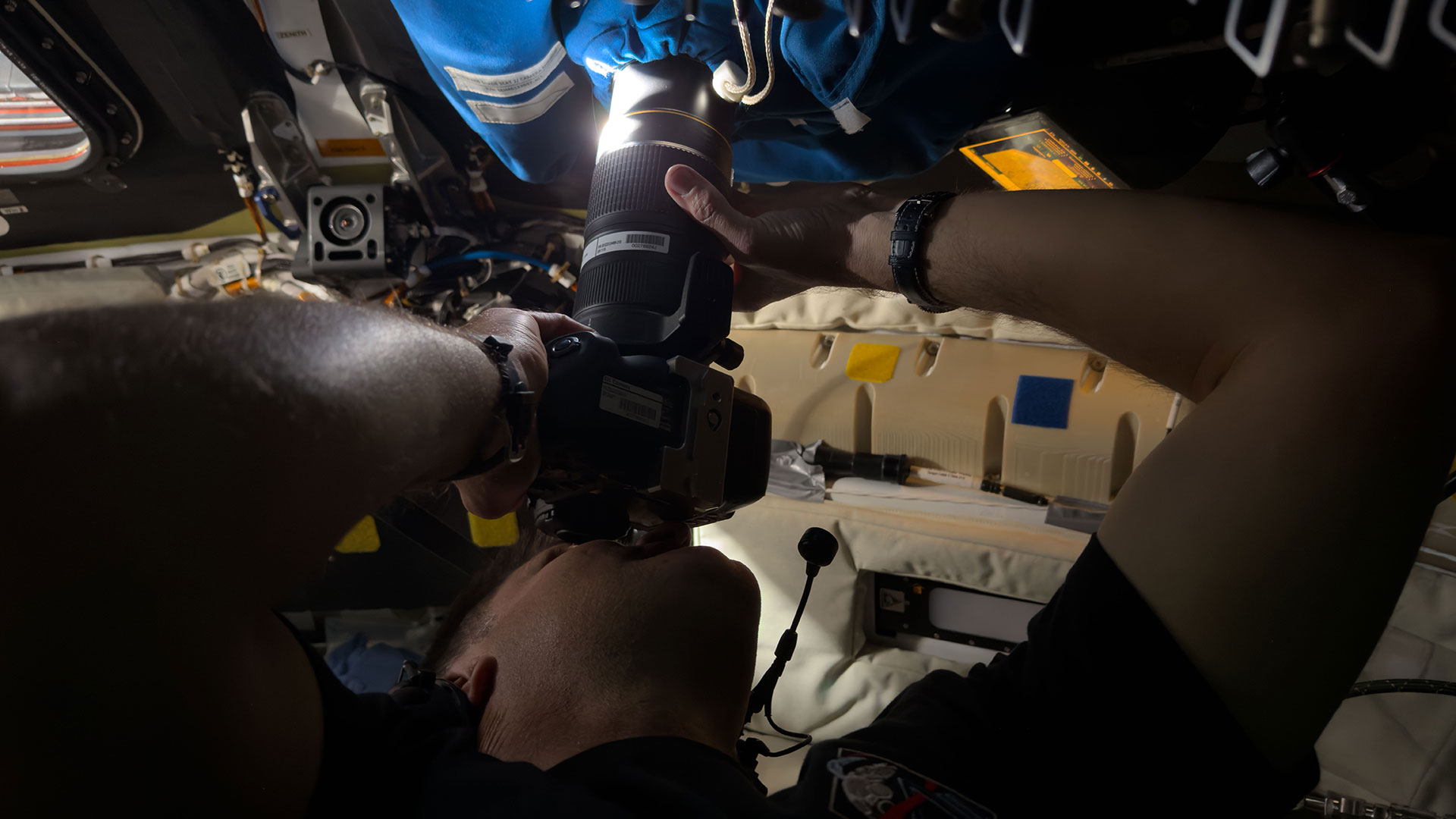
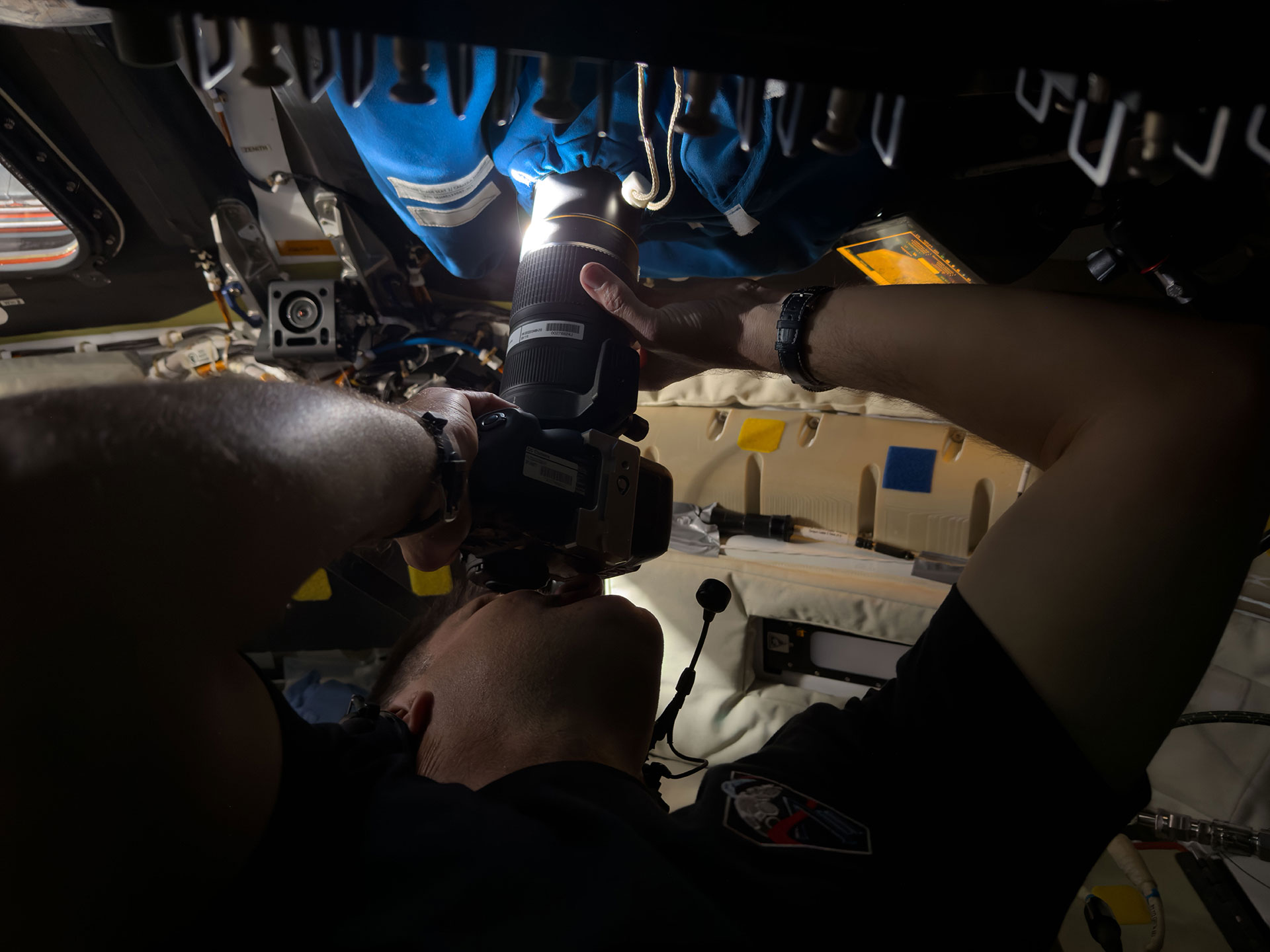
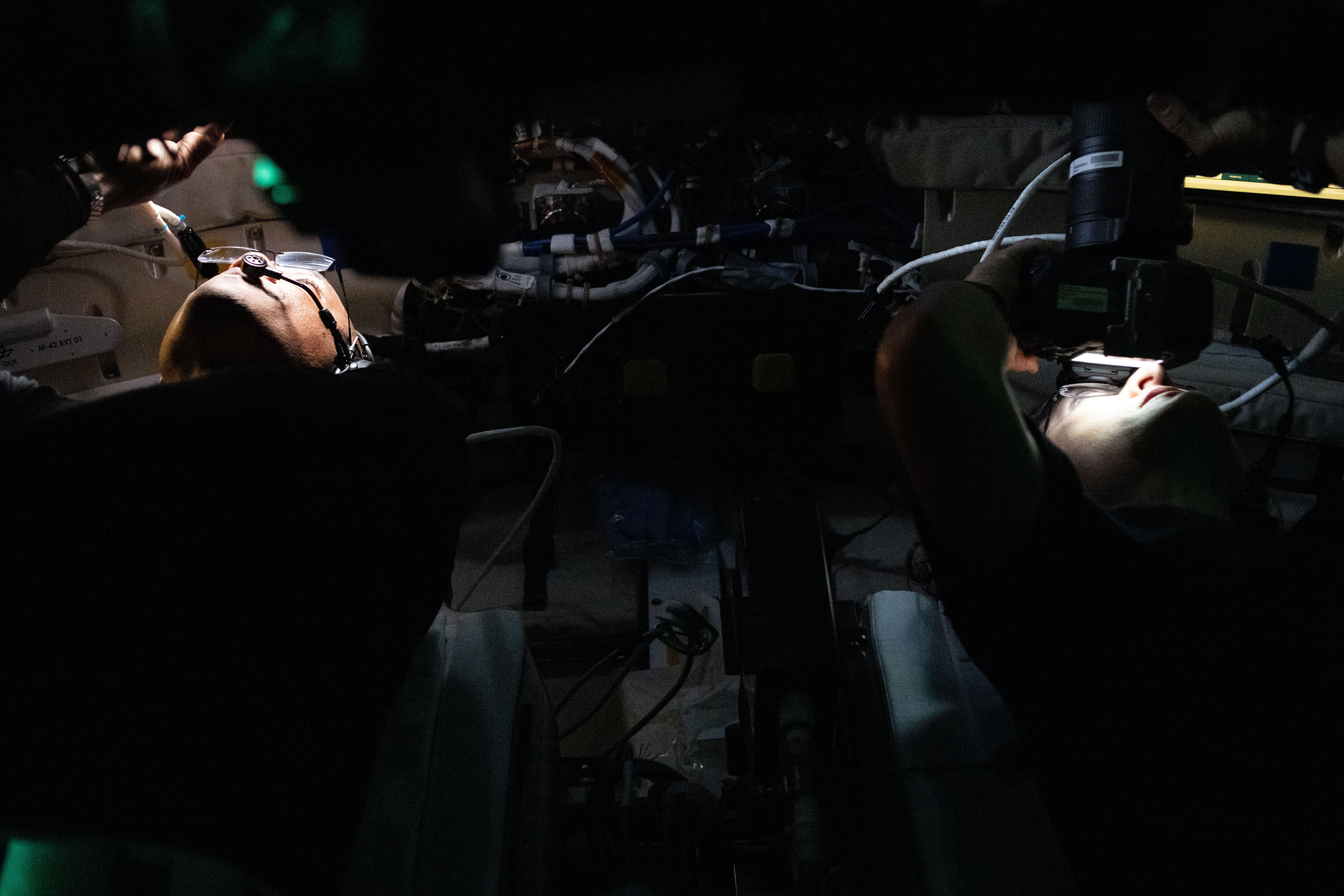
Canadian Space Agency astronaut Jeremy Hansen captures an image through the camera shroud covering window 2 of the Orion spacecraft. (NASA) |
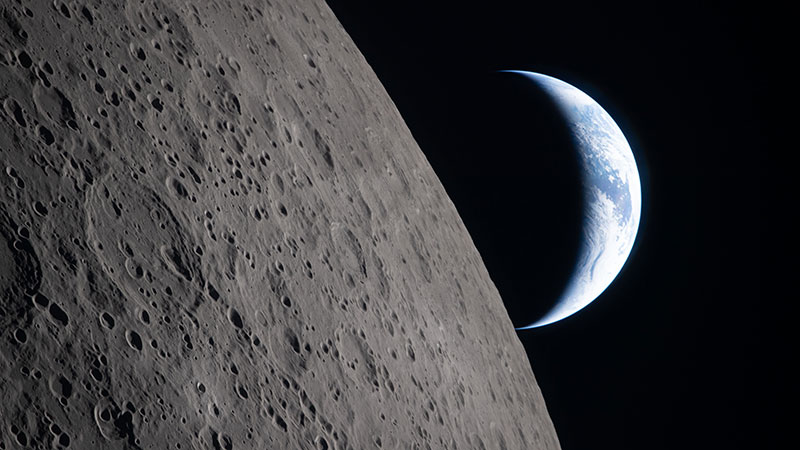
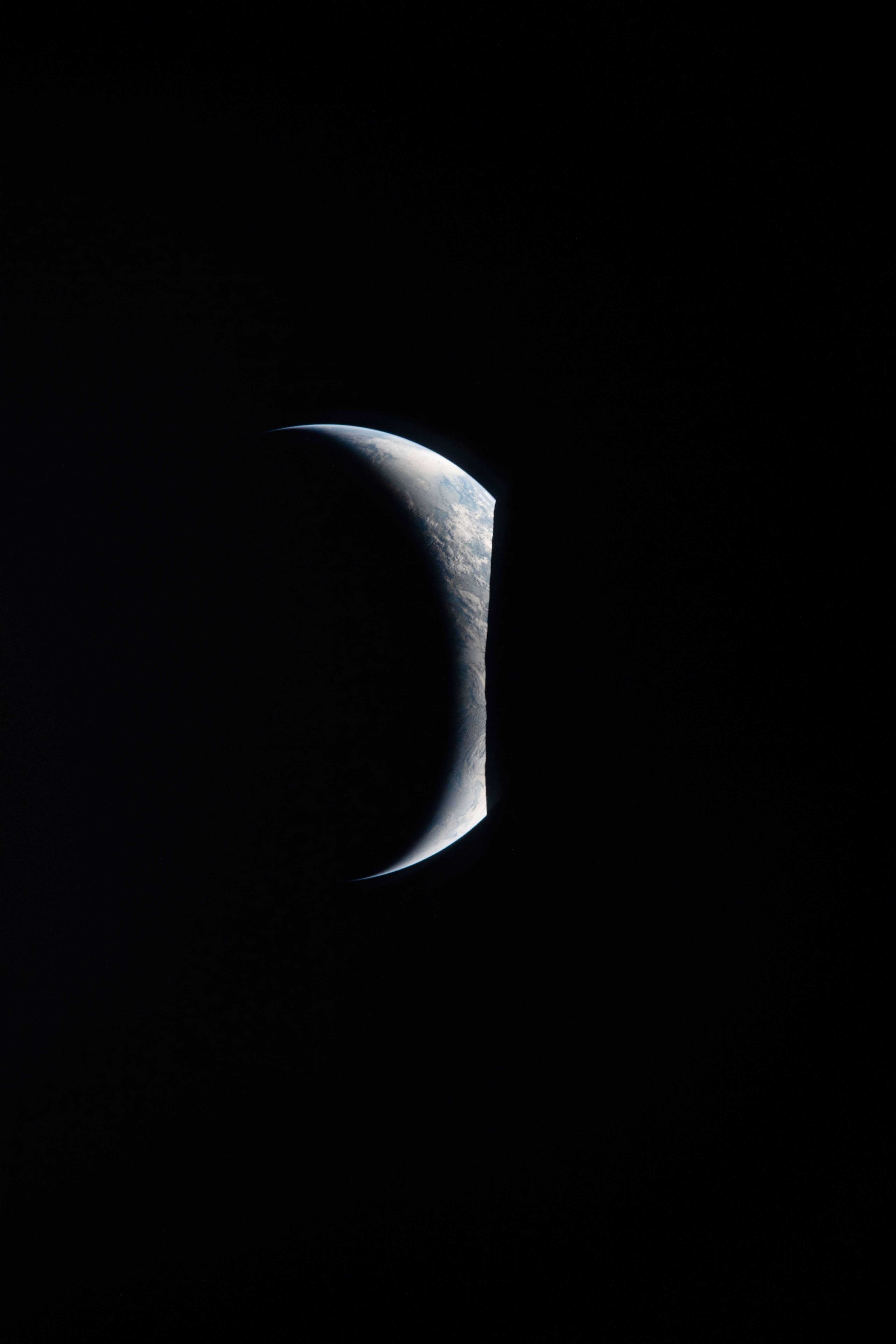
As the Artemis II crew came close to passing behind the moon, they captured this image of the crescent Earth setting on the moon's limb. (NASA) |
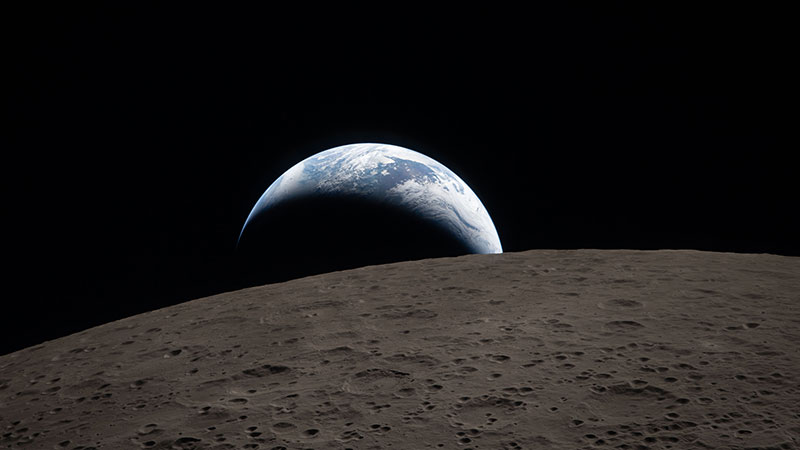
Earthset, as seen through a window on board the Orion spacecraft "Integrity," at 6:41 p.m. EDT (2241 GMT), on Monday, April 6, 2026. (NASA) |
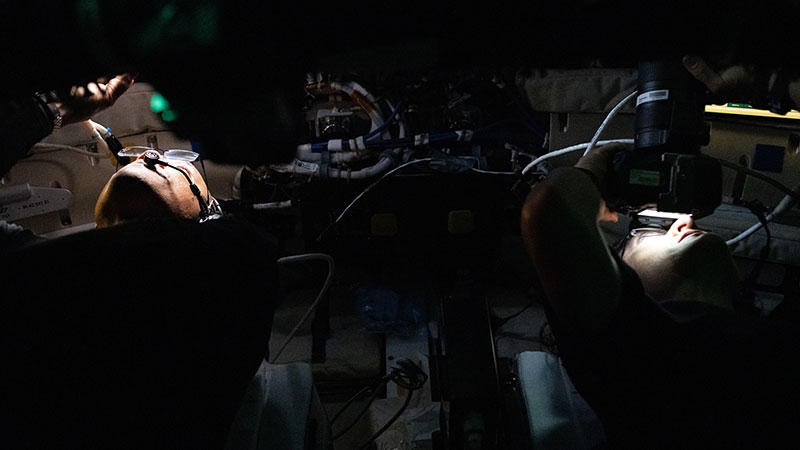
Artemis II pilot Victor Glover and mission specialist Christina Koch take photos and record observations during the mission's lunar flyby. (NASA) |
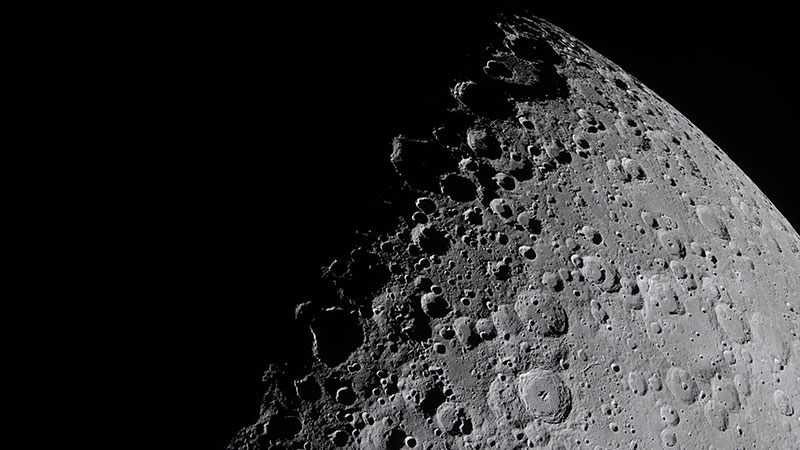
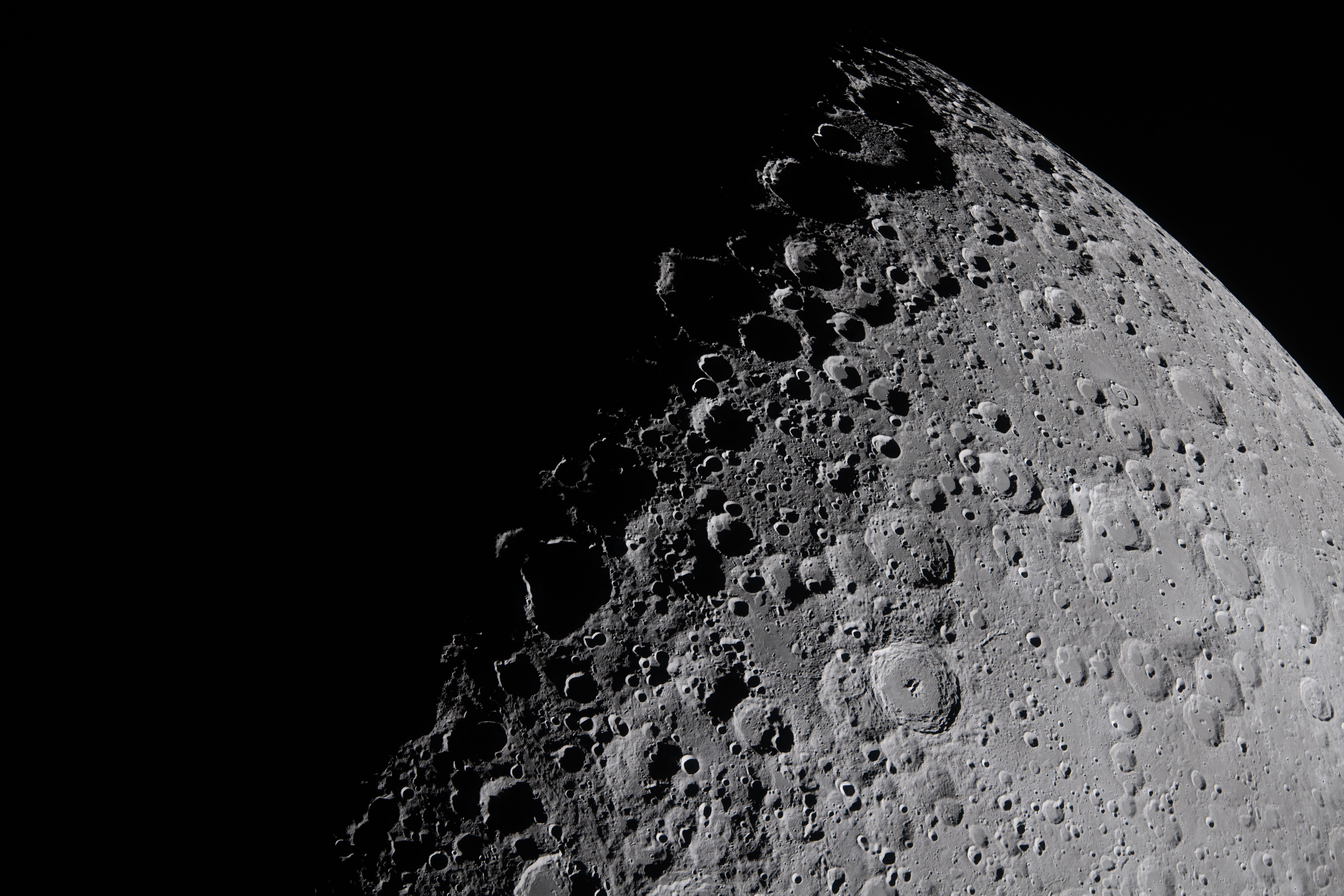
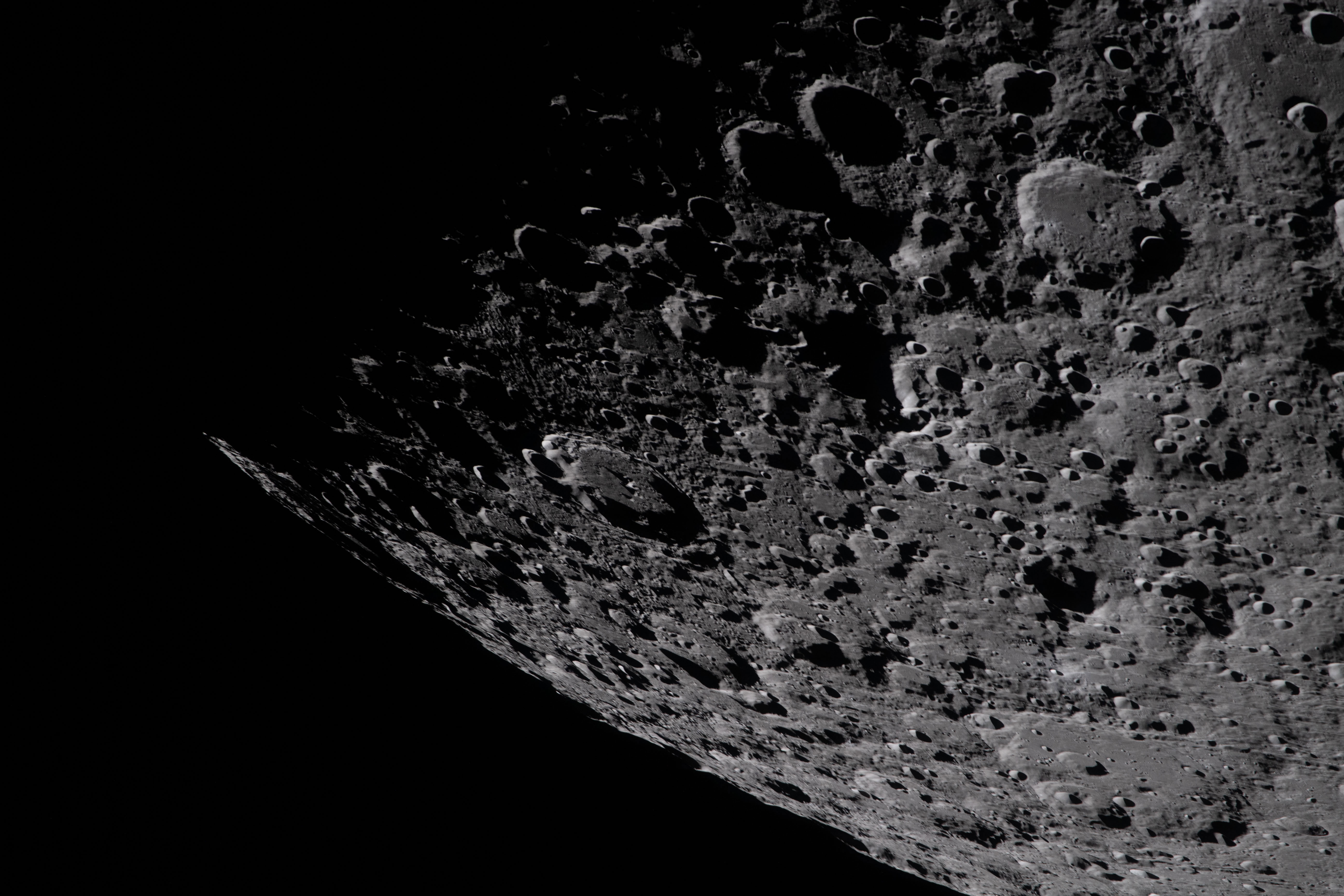
A portion of the moon coming into view along the terminator, the boundary between lunar day and night, where low-angle sunlight casts long, dramatic shadows across the surface. Features such as Jule Crater, Birkhoff Crater, Stebbins Crater, and surrounding highlands stand out. (NASA) |
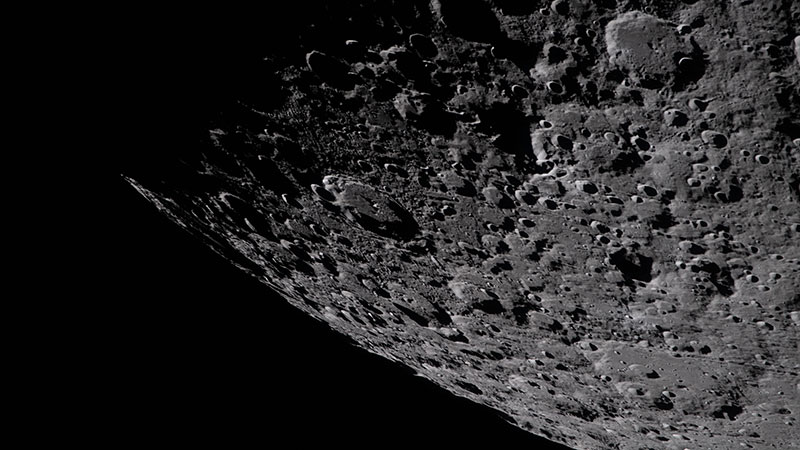
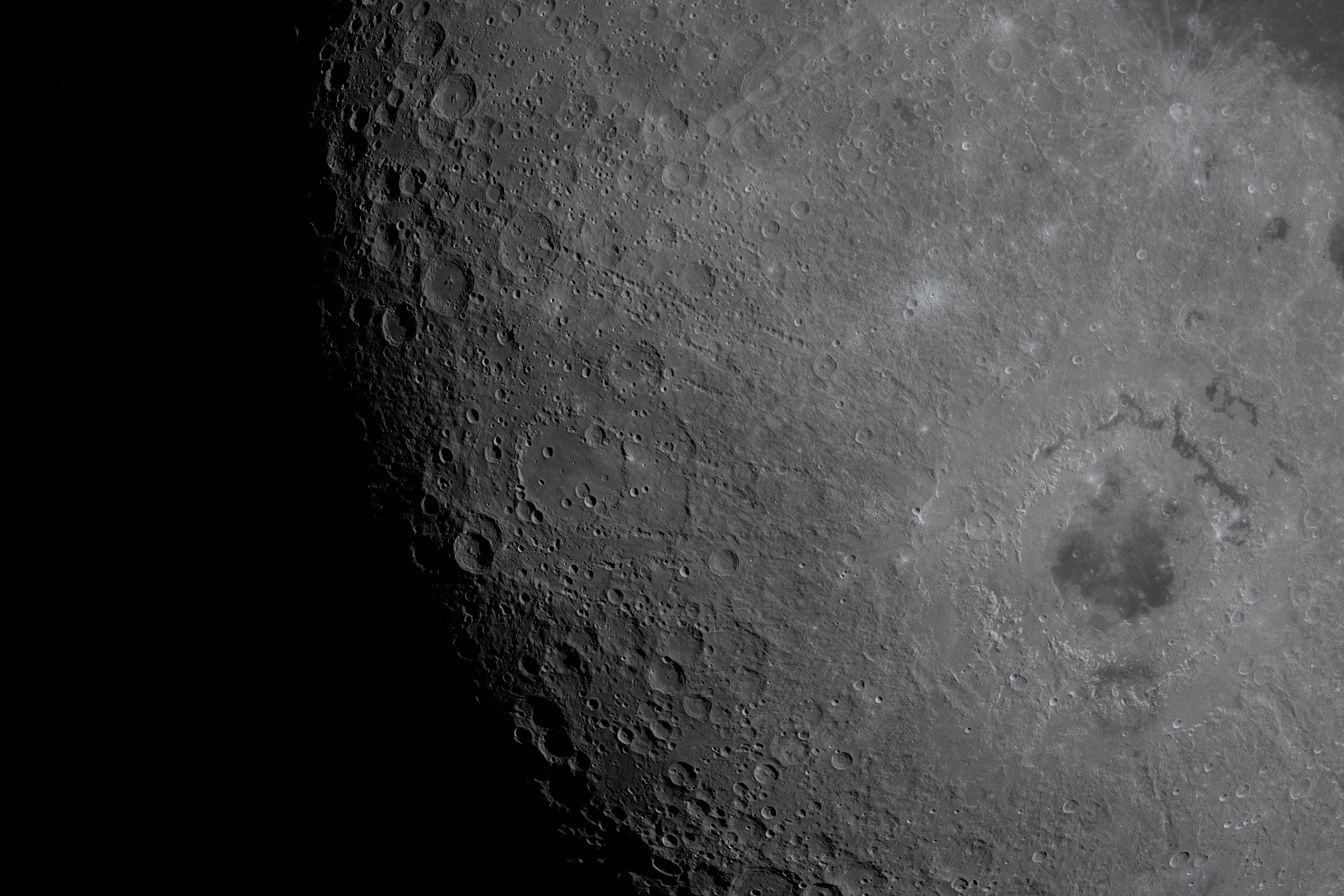
The heavily cratered terrain of the eastern edge of the South Pole-Aitken basin is seen with the shadowed terminator, the boundary between lunar day and night, at the top of the image. The South Pole-Aitken basin is the largest and oldest basin on the moon. (NASA) |
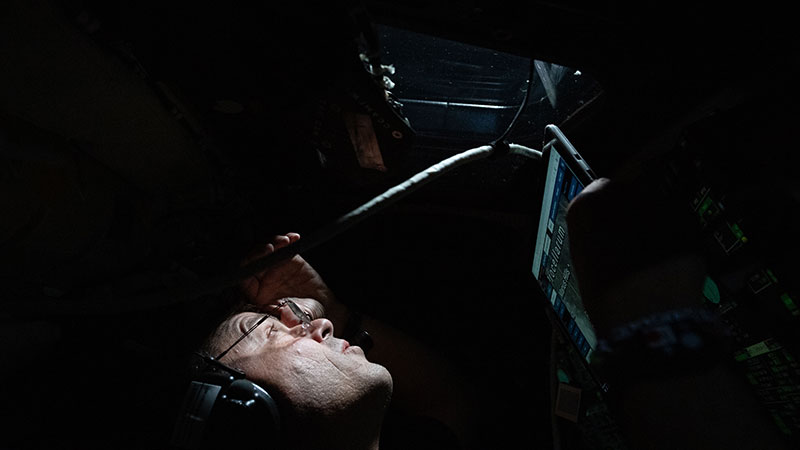
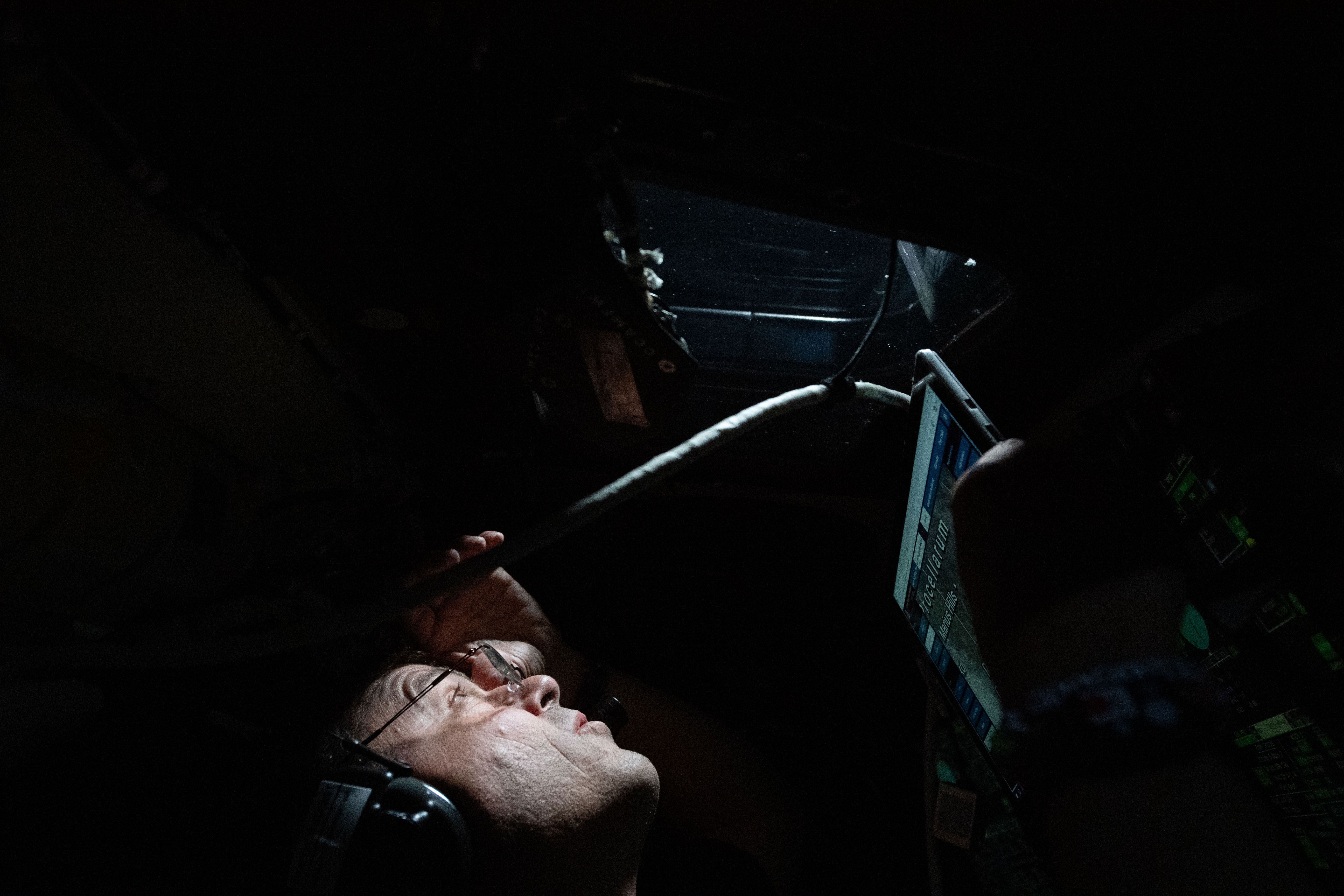
Artemis II commander Reid Wiseman peers out the window of the Orion spacecraft just as his first lunar observation period of the day begins. (NASA) |
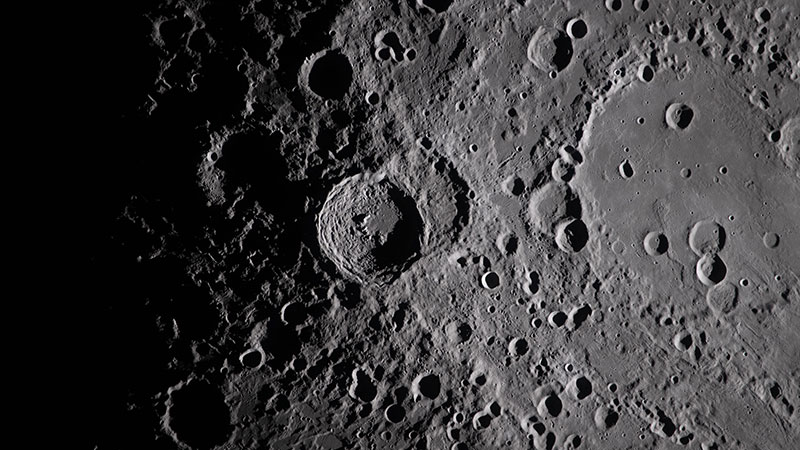
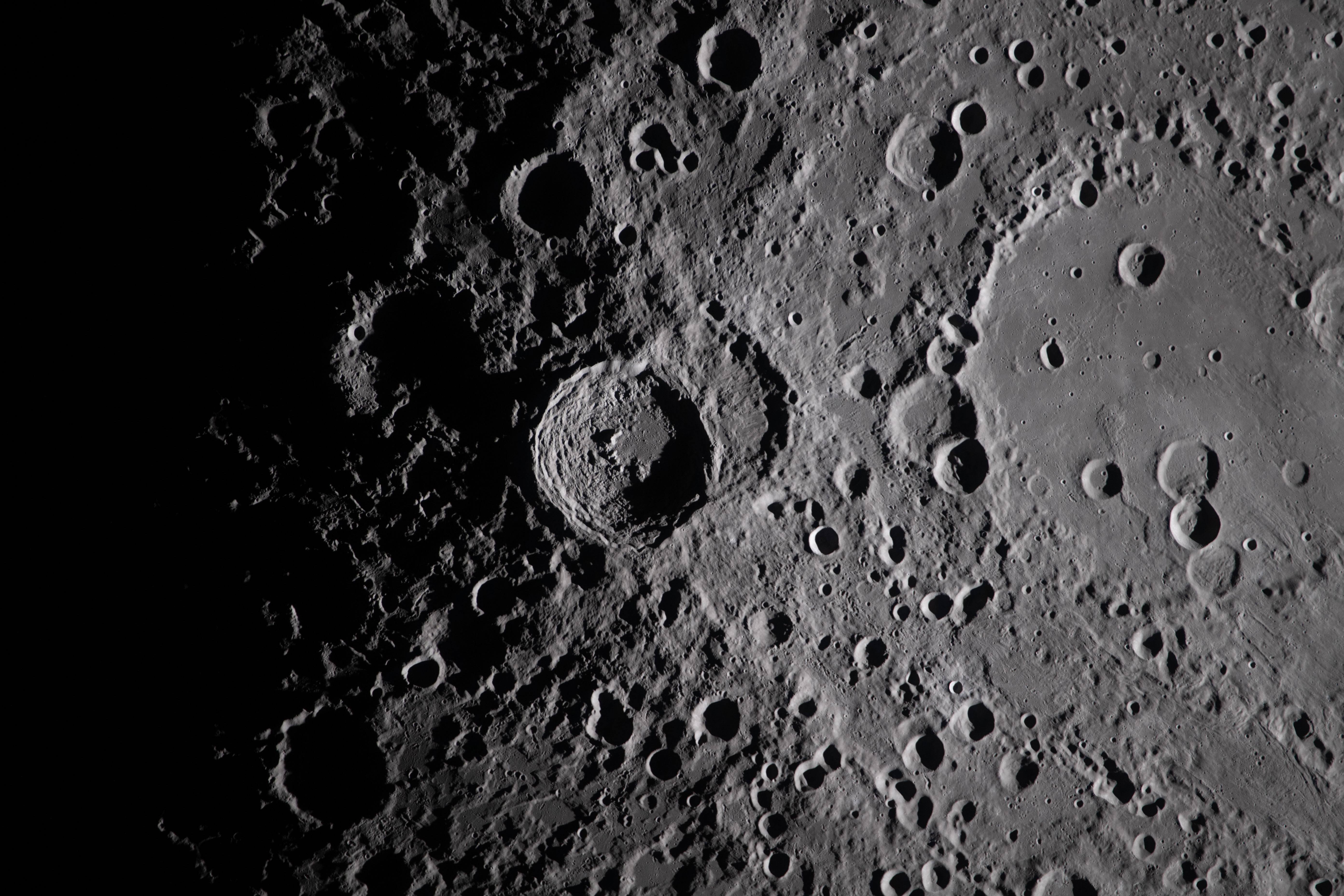
A close-up view of Vavilov Crater on the rim of the older and larger Hertzsprung basin. The right portion of the image shows the transition from smooth material within an inner ring of mountains to more rugged terrain around the rim. (NASA) |
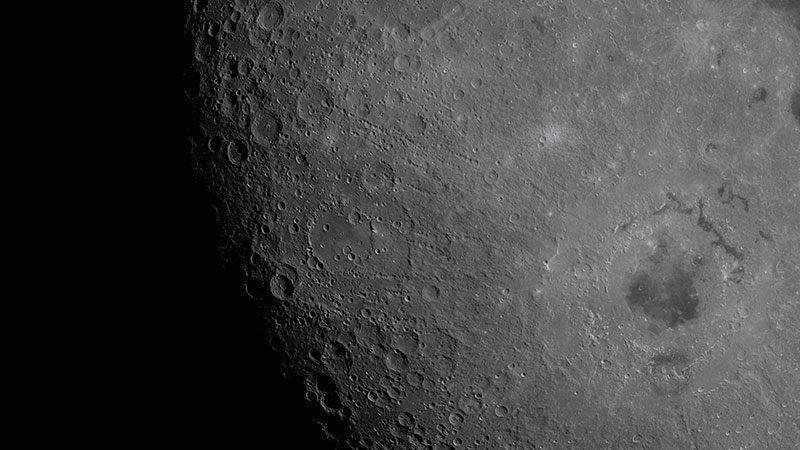
The Artemis II crew captured this image showing the rings of the Orientale basin, one of the moon's youngest and best-preserved large impact craters. At the 10 o'clock position, are two smaller craters that the crew suggested be named "Integrity" and "Carroll," the latter for Wiseman's late wife. (NASA) |
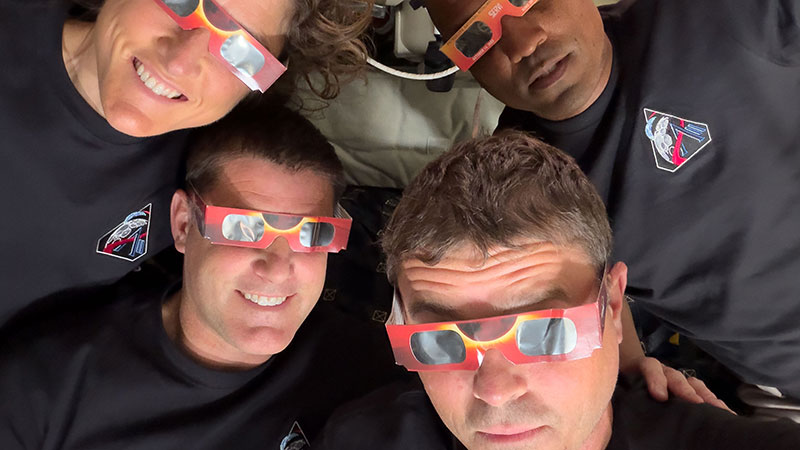
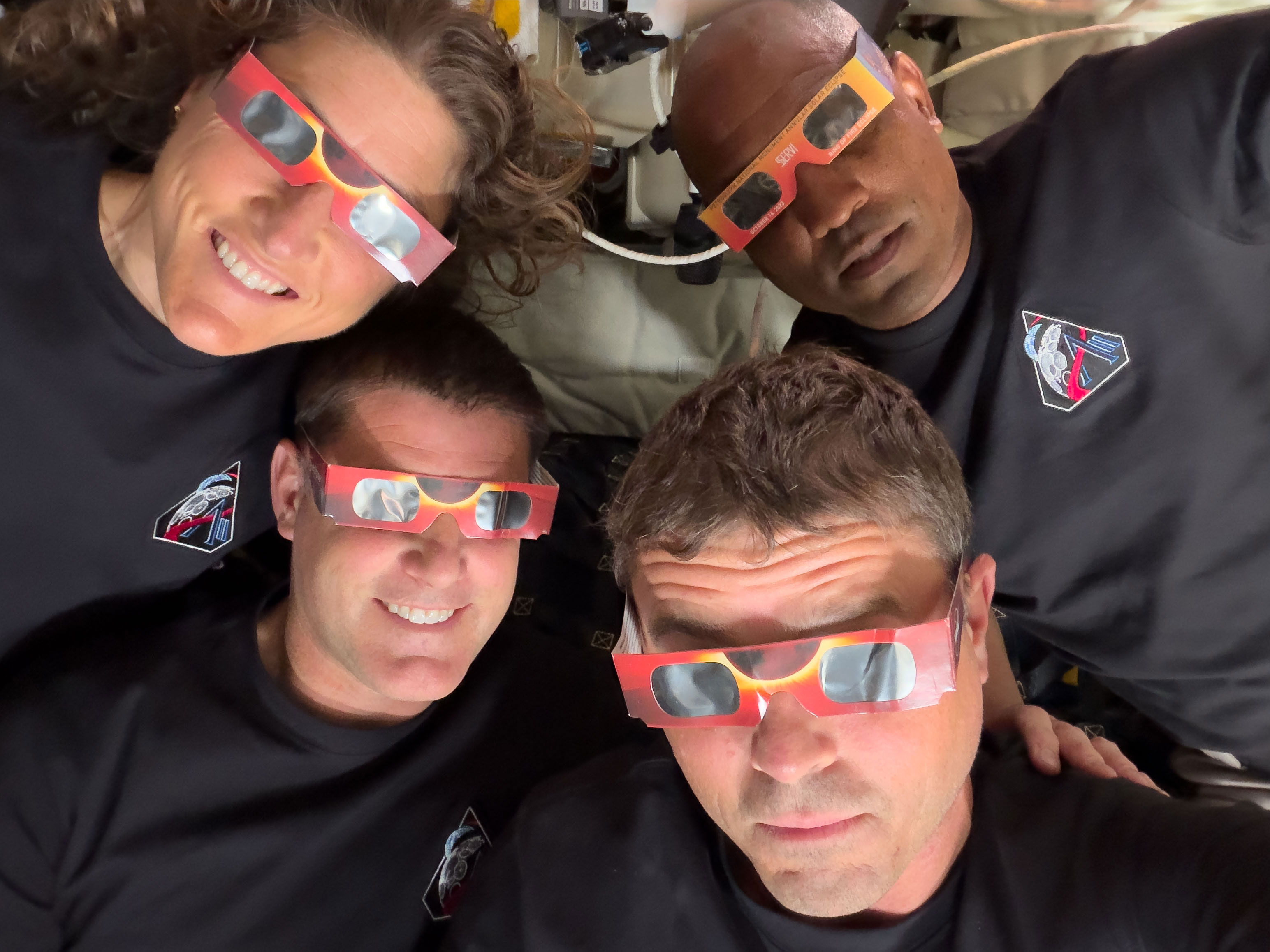
Mission specialist Christina Koch (top left), mission specialist Jeremy Hansen (bottom left), commander Reid Wiseman (bottom right) and pilot Victor Glover use eclipse viewers, identical to what NASA produced for the 2023 annular eclipse and 2024 total solar eclipse. (NASA) |
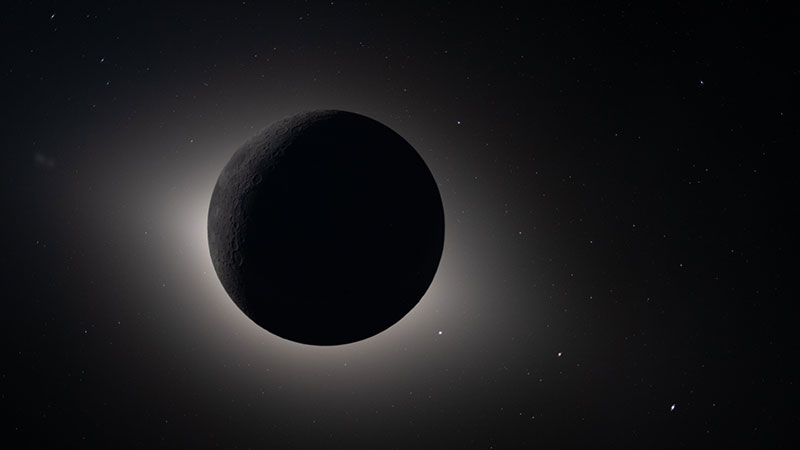
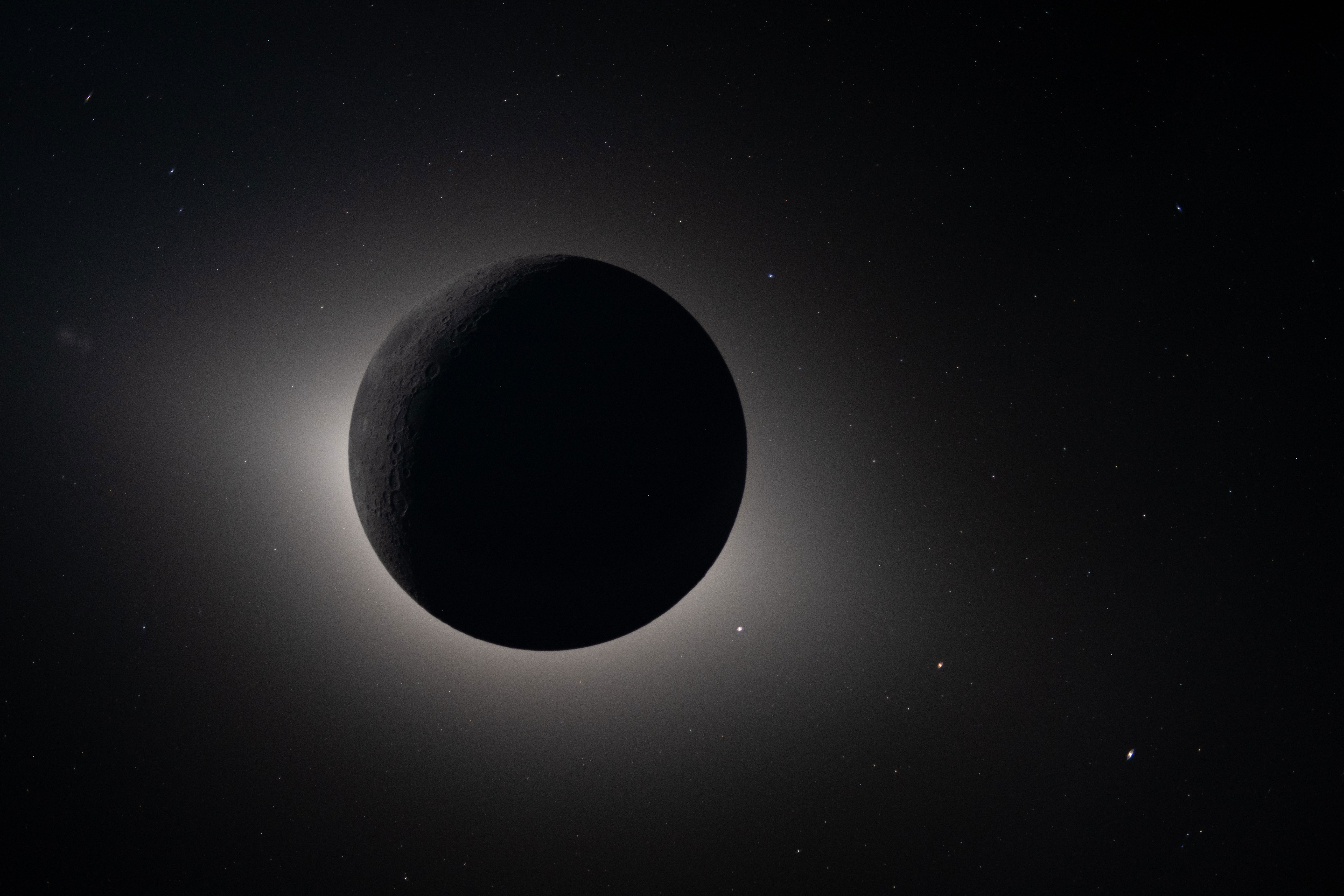
The moon fully eclipsing the Sun. The corona forms a glowing halo around the dark lunar disk, revealing details of the Sun's outer atmosphere typically hidden by its brightness. Also visible are stars, typically too faint to see when imaging the moon. (NASA) |
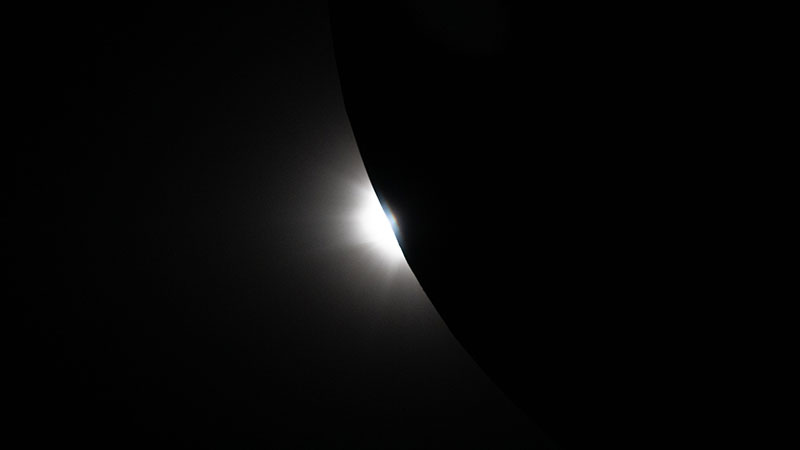
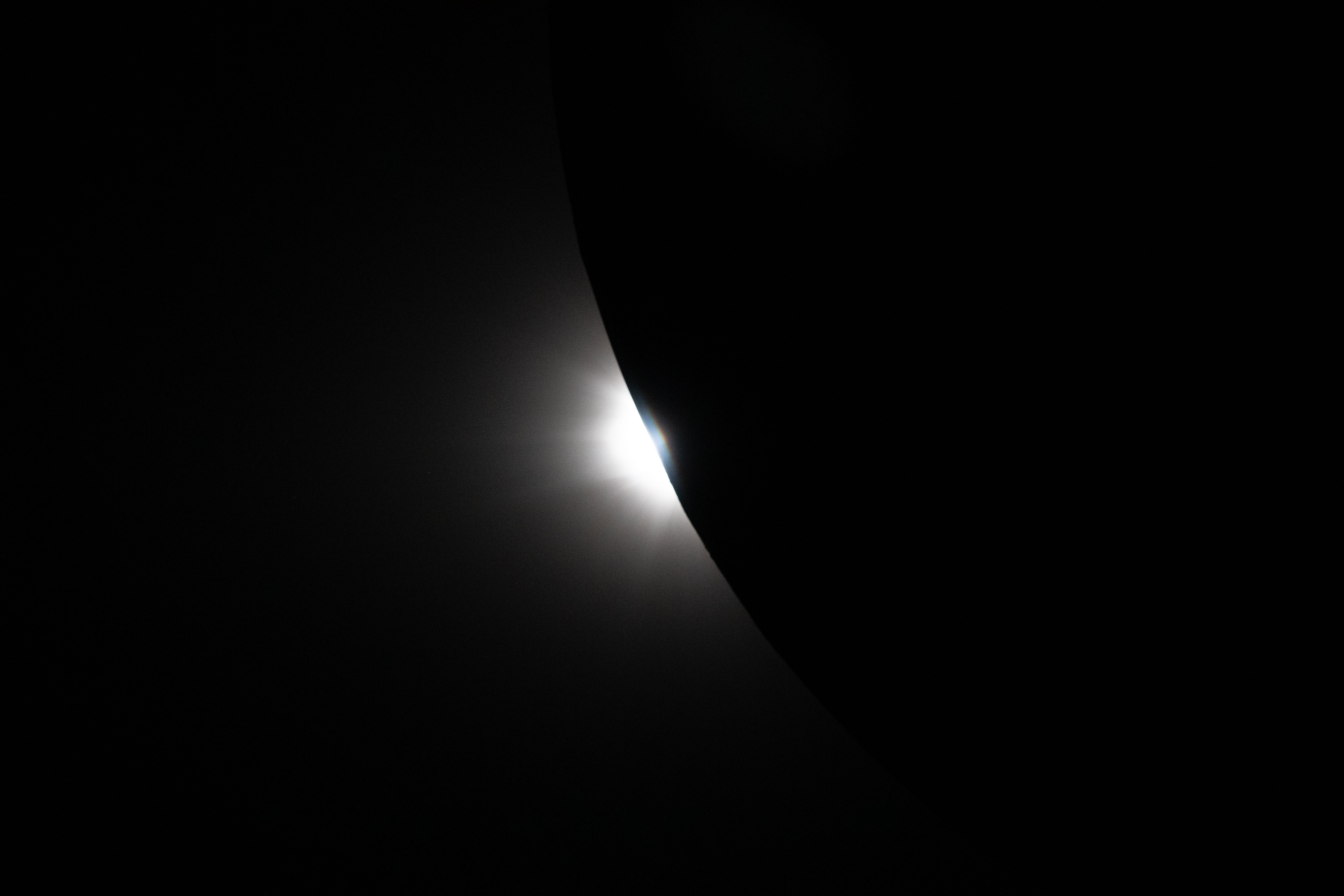
Captured near the end of the Artemis II flyby, the Sun begins to peek out from behind the moon as the eclipse transitions out of totality. (NASA) |
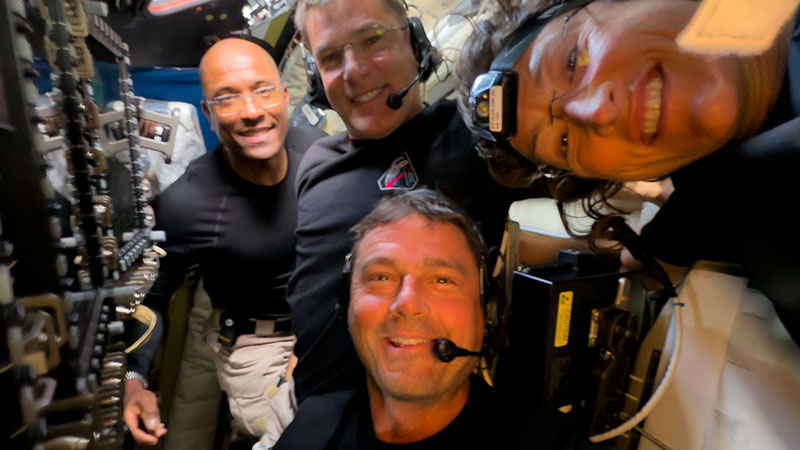
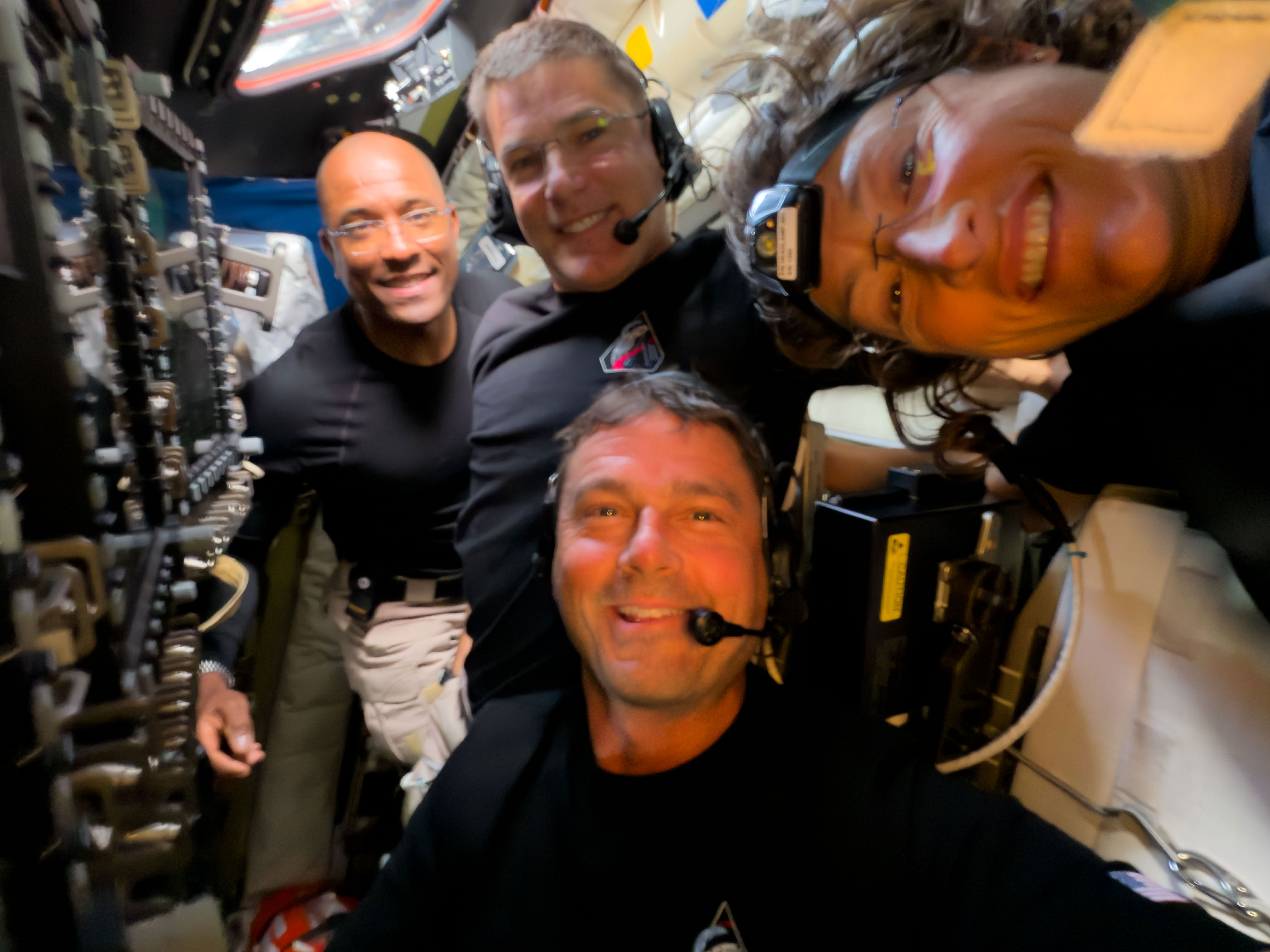
Artemis II crew members Reid Wiseman, Victor Glover, Christina Koch and Jeremy Hansen pause for a selfie inside the Orion spacecraft. (NASA) |
collectSPACE is grateful to Intuitive Machines for supporting our Artemis II mission coverage. Intuitive Machines successfully soft-landed its Nova-C class lunar lander on the moon, returning the United States to the lunar surface for the first time since 1972. In 2025, Intuitive Machines returned to the lunar south pole with a second lander. The company is focused on delivery services, data transmission services and infrastructure as a service. |
|

© collectSPACE. All rights reserved.
|
|
|
|