advertisements advertisements
|

|
'Rise'-up!: Artemis II astronauts pick plush moon as zero-g indicator
March 27, 2026 — The four crew members who will soon fly by the moon on NASA's Artemis II mission are ready to "rise" to the historic challenge, with the help of the imagination of a third grade student.
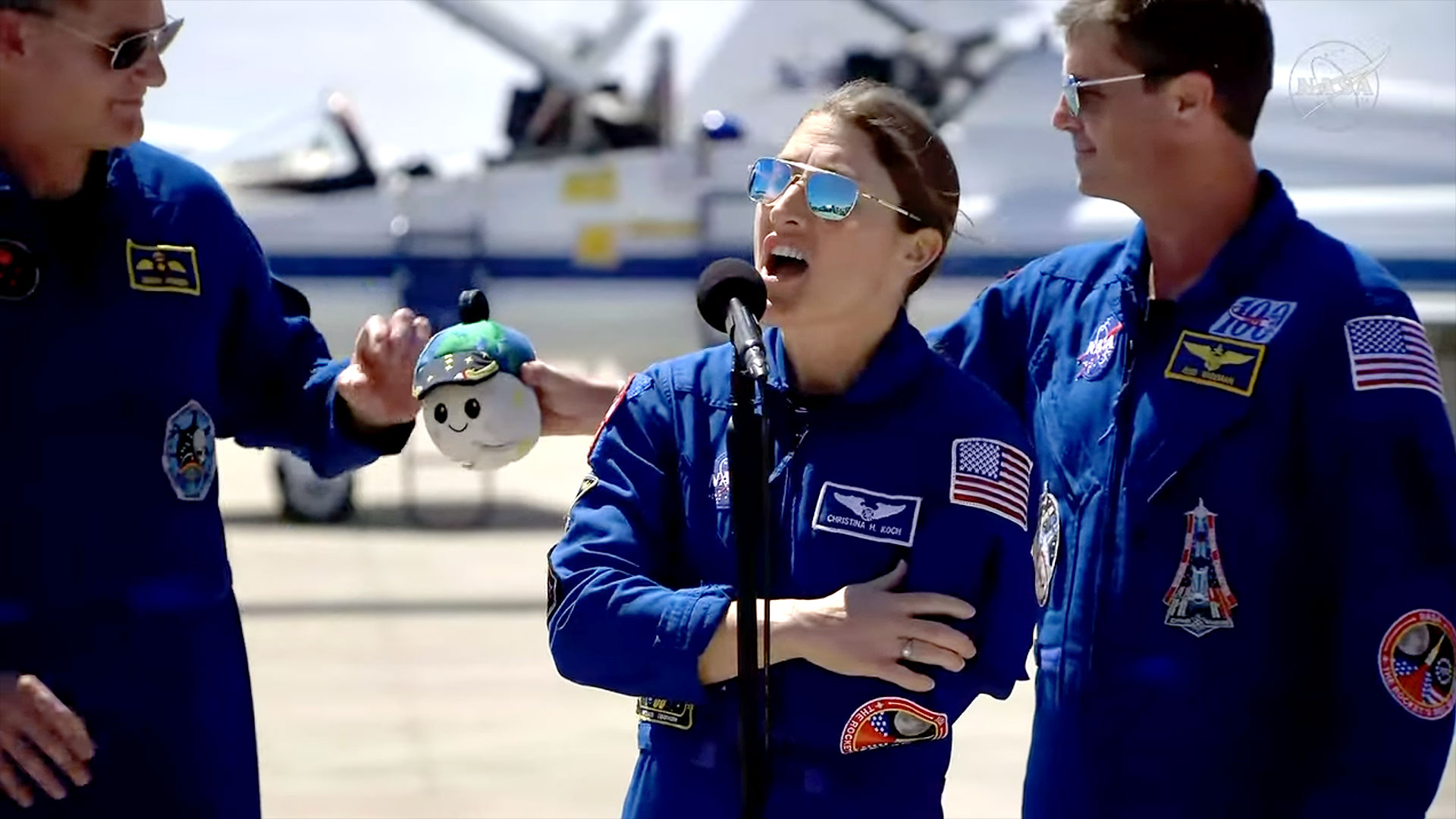
NASA astronauts Reid Wiseman, Victor Glover and Christina Koch, along with Jeremy Hansen of the Canadian Space Agency, on Friday (March 27) revealed the zero-g indicator (ZGI) that will launch with them on their 10-day flight. "Rise," a plush doll of a smiling moon wearing an Earth-adorned baseball cap, will begin to float when the crew reaches orbit, signaling a successful start to their journey.
"We are holding our zero-g indicator, 'Rise,'" said Wiseman, Artemis II commander, after he and his crew arrived at NASA's Kennedy Space Center in Florida ahead of their launch.
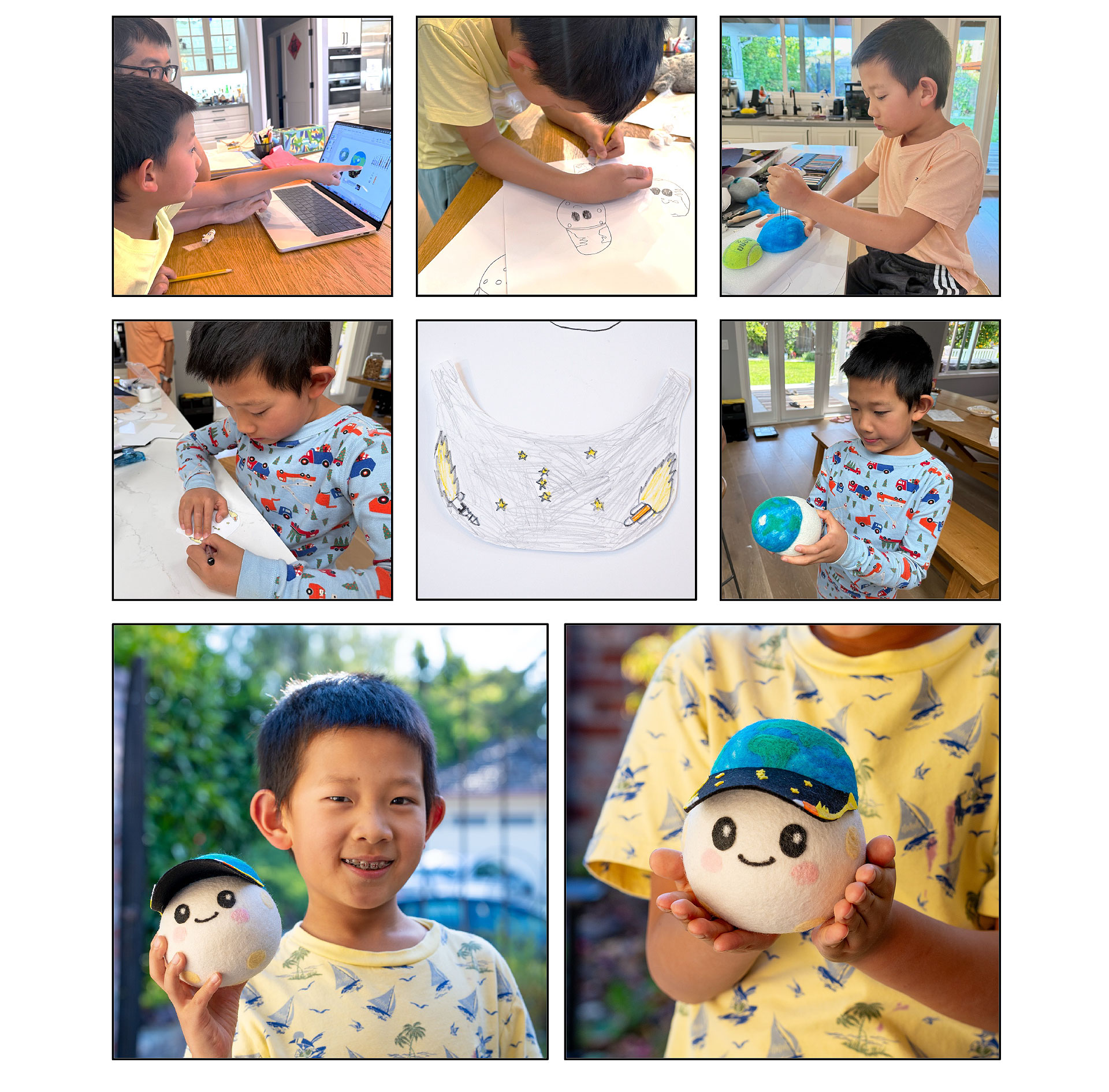
Lucas Ye of Mountain View, California, created Rise in response to a NASA and Freelancer.com online competition to design a ZGI for the Artemis II astronauts. The "Moon Mascot" contest restricted entries to what could be made from a list of safe-for-spaceflight materials that could fit into a 6-inch square (15.25-cm) box. The submissions needed to be original ideas, relevant to a global audience and meaningful to both the mission and the crew.
Twenty-five finalists were chosen in August 2025, out of the 2,605 entries that were received between March and June. Each finalist (including Ye) won $1,225 or an Artemis prize pack, depending on their age. Ye, as the winner, was also invited to attend the Artemis II launch at the Kennedy Space Center in Florida.
Wiseman, Glover, Koch and Jeremy then picked out their five favorites, out of which they then selected Rise as the winner. The four runner-ups included "Creation Mythos," a sea turtle with the moon and Earth on either side of its shell, by Johanna Beck of McPherson, Kansas; "Corey the Explorer," a cute alien creature, by Daniela Colina of Lima, Peru; "Lepus the Moon Rabbit," whose floppy ears were lined with constellations, by Xiaomei Xia of Oakville, Ontario, Canada; and "Big Steps of Little Octopus," who held the planets in its tentacles, by Natalia Udakova of Finland.
The thermal blanket lab at NASA's Goddard Space Flight Center in Maryland assembled Rise for flight, following Ye's submission. Ye's parents, Fan Ye and Changhui Zhao, as well as his older brother Oliver Ye, added to Rise's original design, which included a few nods to earlier moon missions
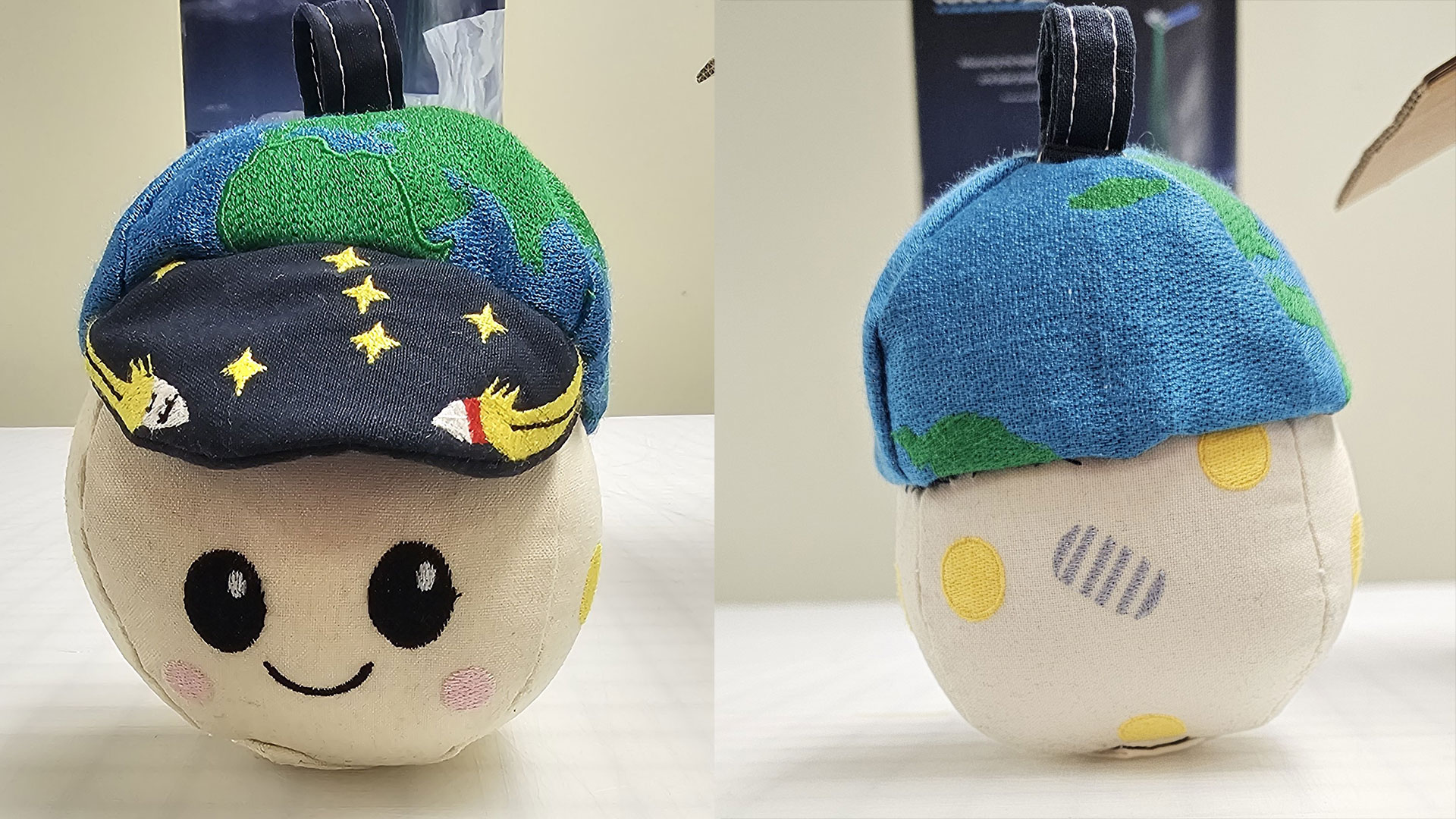
For example, Rise's blue and green baseball cap, as well as its name, are meant to reference "Earthrise," the phenomenon first witnessed in-person by the crew of Apollo 8 in 1968, as Frank Borman, Jim Lovell and Bill Anders became the first humans to orbit the moon. The cap's front features Africa, the only landmass that is visible in the iconic Earthrise photograph, honoring the continent's significance as the cradle of humanity.
"This little guy really resonated with us because the theme is actually the Earthrise photo taken on Apollo 8, which is inspirational to all of us and is a mission that sort of mirrors our own," said Koch, Artemis II mission specialist. "We've incorporated [Earthrise] into our mission patch and also into our ethos and values as a crew. So welcome aboard Rise!"
The two rockets on the hat's rim symbolize the past and the future of space and lunar exploration, Apollo and Artemis, while the seven stars form the constellation Orion, the namesake of the Artemis crew capsule.
Further, on Rise's rear is a boot print, representing Neil Armstrong's "one small step" on Apollo 11, as well as a "nod to human achievement on the moon and a hopeful step toward humanity's future in deep space," according to Ye's original submission.
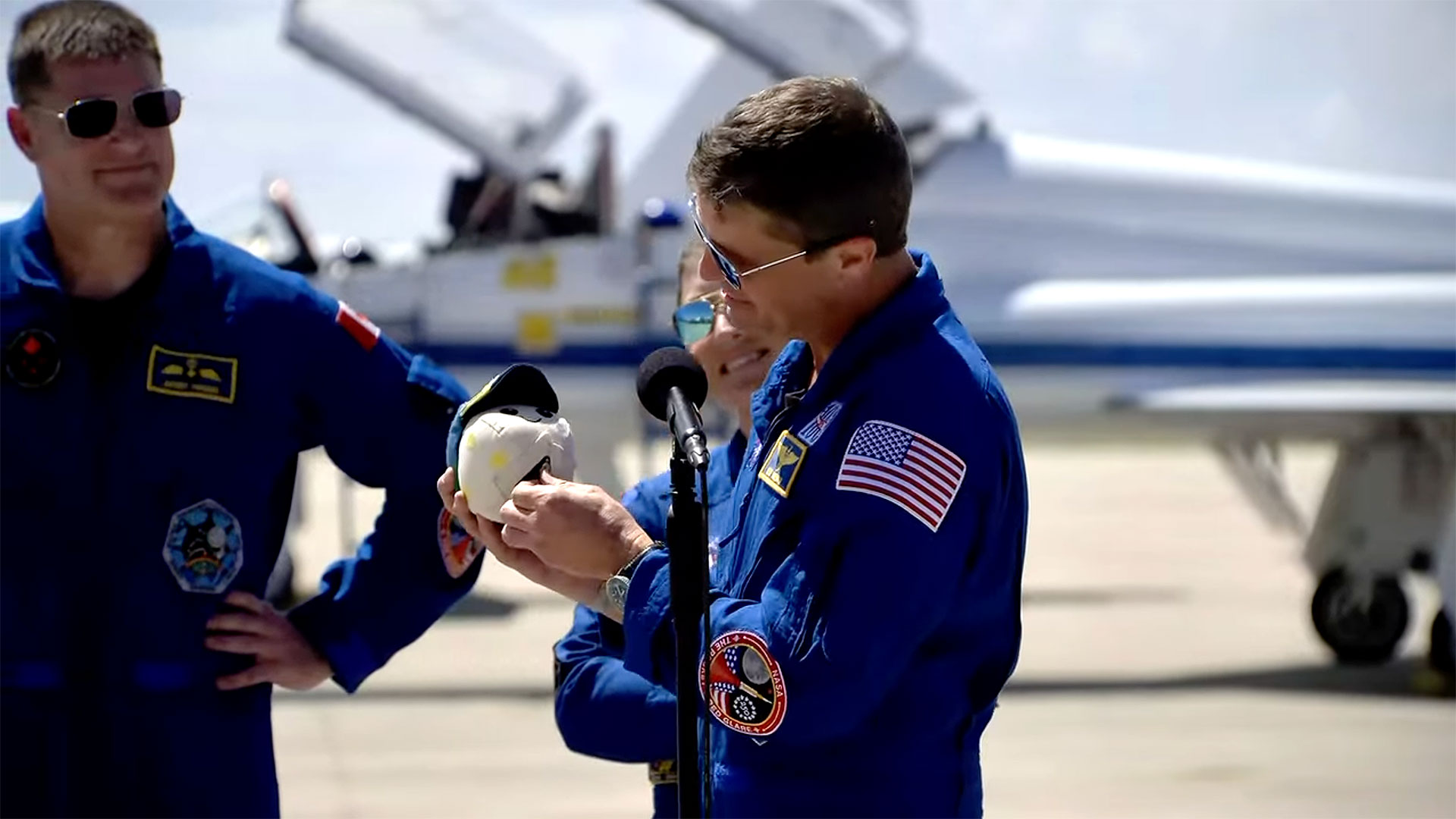
NASA added two more features to Rise: A loop by which to tether the doll to one of the crew seats during the mission and a small pocket to carry a microchip on which more than 5.6 million names have been recorded for all who signed up on NASA's website to have their name flown on Artemis II.
The tradition of flying zero-g indicators began in the former Soviet Union with the world's first human spaceflight in 1961. Since then, many of Yuri Gagarin's fellow cosmonauts have flown toys and stuffed dolls as ZGI, often at the suggestion of their children.
The ZGI custom migrated to the U.S. with the first flights of NASA's Commercial Crew program. NASA's uncrewed Artemis I mission, which flew around the moon in 2022, carried a custom-made Snoopy doll, complete with a miniature version of the same pressure suit that the Artemis II astronauts will wear on Orion.
NASA produced only two Rise dolls, one to fly to the moon and another for photos and demonstration in the lead up to and throughout the mission. NASA holds copyright to the doll's design but may permit its reproduction by hobbyists and toy companies if compliant with its merchandise guidelines. |
|
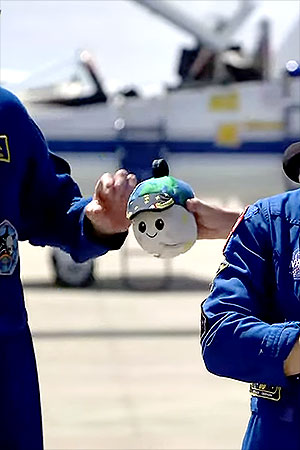
The Artemis II crew introduced and displayed their zero-g indicator, "Rise," a small, plush moon, after flying to NASA's Kennedy Space Center in Florida for their launch to fly by the moon. (NASA)

Lucas Ye of Mountain View, California, with his prototype of "Rise," the chosen Artemis II zero-g indicator. (Freelancer.com)
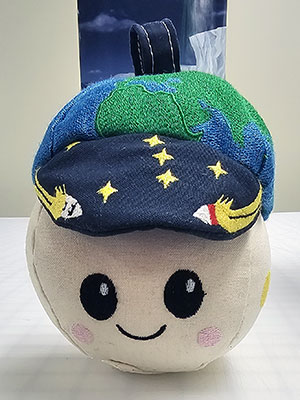
"Rise," as assembled by NASA's thermal blanket lab for its flight on Artemis II, includes nods to the past and future of lunar exploration, including Apollo 8's view of Earthrise. (NASA) |
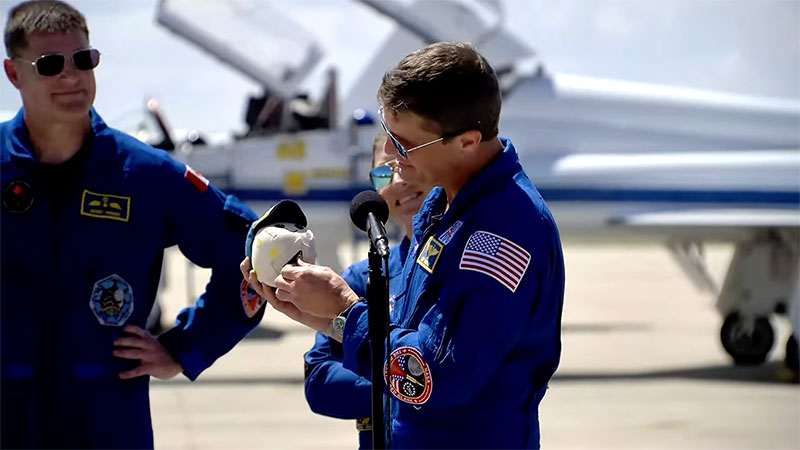
Artemis II commander Reid Wiseman reveals the zippered pocket at the bottom of their zero-g indicator, "Rise," that will hold a microchip recorded with the names of millions of members of the public who wanted to fly to the moon. (NASA) |
|

© collectSPACE. All rights reserved.
|
|
|
|