Space Newsspace history and artifacts articlesMessagesspace history discussion forumsSightingsworldwide astronaut appearancesResourcesselected space history documents
advertisements
NASA rolls out Artemis II rocket to launch pad for flight to the moon
January 17, 2026
— NASA is now 4.2 miles (6.8 kilometers) closer to returning astronauts to the moon.
The agency on Saturday (Jan. 17) rolled out its Space Launch System (SLS) rocket and Orion spacecraft to Launch Pad 39B at the Kennedy Space Center in Florida in preparation for the Artemis II mission to fly astronauts by the moon for the first time in more than 50 years. The journey atop a slow-moving, Apollo-era crawler transporter took nearly 12 hours to complete.
The 322-foot (98-meter) booster and its mobile launch tower traversed the river-rock-filled path from first motion at the Vehicle Assembly Building (VAB) at 7:04 a.m. EST (1204 GMT) to atop the pad at 6:42 p.m. EST (2342 GMT). The crawler, which in 2023 was certified by Guinness as the world's heaviest self-propelled vehicle, carried the 11 million pound (5 million kilogram) stack at a max speed of just 0.82 miles per hour (1.3 kilometers per hour).
"What a great day to be here!" said Reid Wiseman, Artemis II mission commander, addressing members of the media with his three crewmates, fellow NASA astronauts Victor Glover and Christina Koch and Jeremy Hansen of the Canadian Space Agency, as the rollout got underway. "We see this beautiful hardware behind us, the SLS [and] the Orion, but for this crew, we have been on this journey for 2.5 years and we truly look at that and see teamwork."
NASA began stacking the Artemis II launch vehicle beginning with its two solid rocket boosters inside the VAB in November 2024. By March 2025, the SLS core stage had been integrated, followed by the Orion spacecraft "Integrity" — with its European service module and launch abort tower — in October.
In December, the crew took part in a launch day countdown rehearsal, boarding their capsule atop the SLS for the first time.
"They have met every single milestone over the last year to get to where we are today," said Wiseman, referring to launch control and exploration ground systems teams at the Kennedy Space Center. "It is awe inspiring."
"We really are ready to go," he said.
Wiseman, Glover, Koch and Hansen completed the day by conducting a walkdown at the pad.
"Putting crew on the rocket and taking the crew around the moon, this is going be our first step toward a sustained lunar presence," John Honeycutt, Artemis II mission management team (MMT) chair, in a pre-rollout press briefing. "It's 10 days, four astronauts going farther from Earth than any other human has ever traveled. We'll be validating Orion spacecraft life support, navigation and crew systems in the really harsh environments of deep space, and that's going to pave the way for future [moon] landings."
Over the next two weeks, NASA engineers will prepare the SLS for a series of tests, including a wet dress rehearsal (WDR) that will load the rocket with more than 700,000 gallons of cryogenic propellants and conduct a launch countdown. The WDR will include several "runs" to verify the launch team's ability to hold, resume and recycle to several times in the final 10 minutes before reaching T-minus 0, known as the "terminal count."
Separate from the WDR, the Artemis II astronauts will also go out to the launch pad to practice escaping from Orion in the case of an emergency.
Should anything go awry with the demonstrations, additional tests may be required to ensure the vehicle is completely checked out and ready for flight. If needed, NASA may choose to roll back SLS and Orion to the VAB for additional work. The first launch window extends from Feb. 6 through Feb. 11. After that, NASA would stand down until a month later.
"We will fly when we are ready," said Honeycutt. "As chair of the MMT I have one job and that is the safe return of Reid, Victor, Christina and Jeremy. I consider that a duty and a trust and it is one I intend to see through."
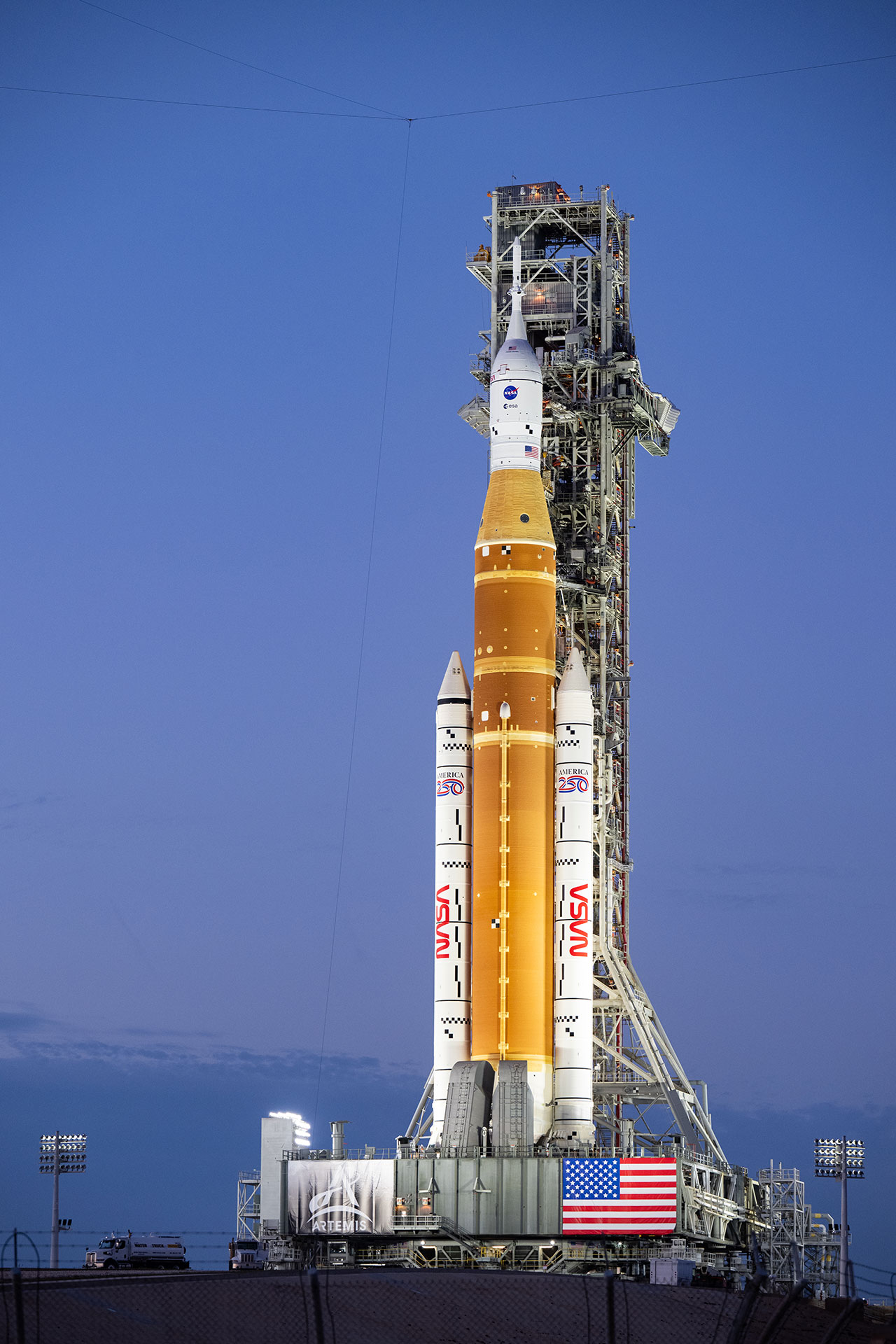
NASA's Space Launch System (SLS) rocket and Orion spacecraft, secured to the mobile launcher, are seen arriving atop Launch Pad 39B, Saturday, Jan. 17, 2026, at NASA's Kennedy Space Center in Florida. (NASA/Keegan Barber)
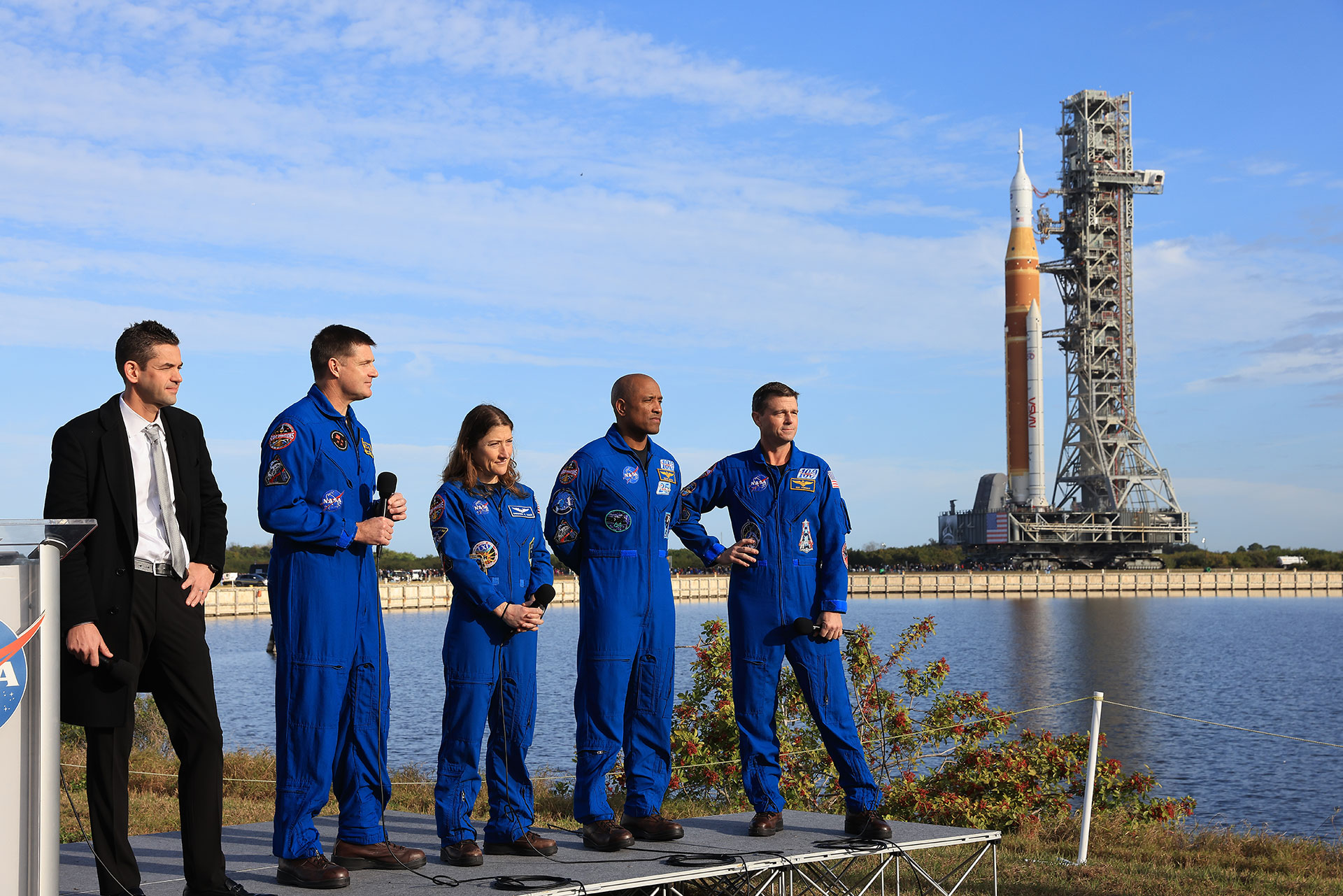
NASA Administrator Jared Isaacman (left) and Artemis II astronauts Reid Wiseman, Victor Glover, Christina Koch and Jeremy Hansen speak to members of the media during the rollout of the mission's Space Launch System rocket to Pad 39B at Kennedy Space Center in Florida on Saturday, Jan. 17, 2026. (NASA/Kim Shiflett)
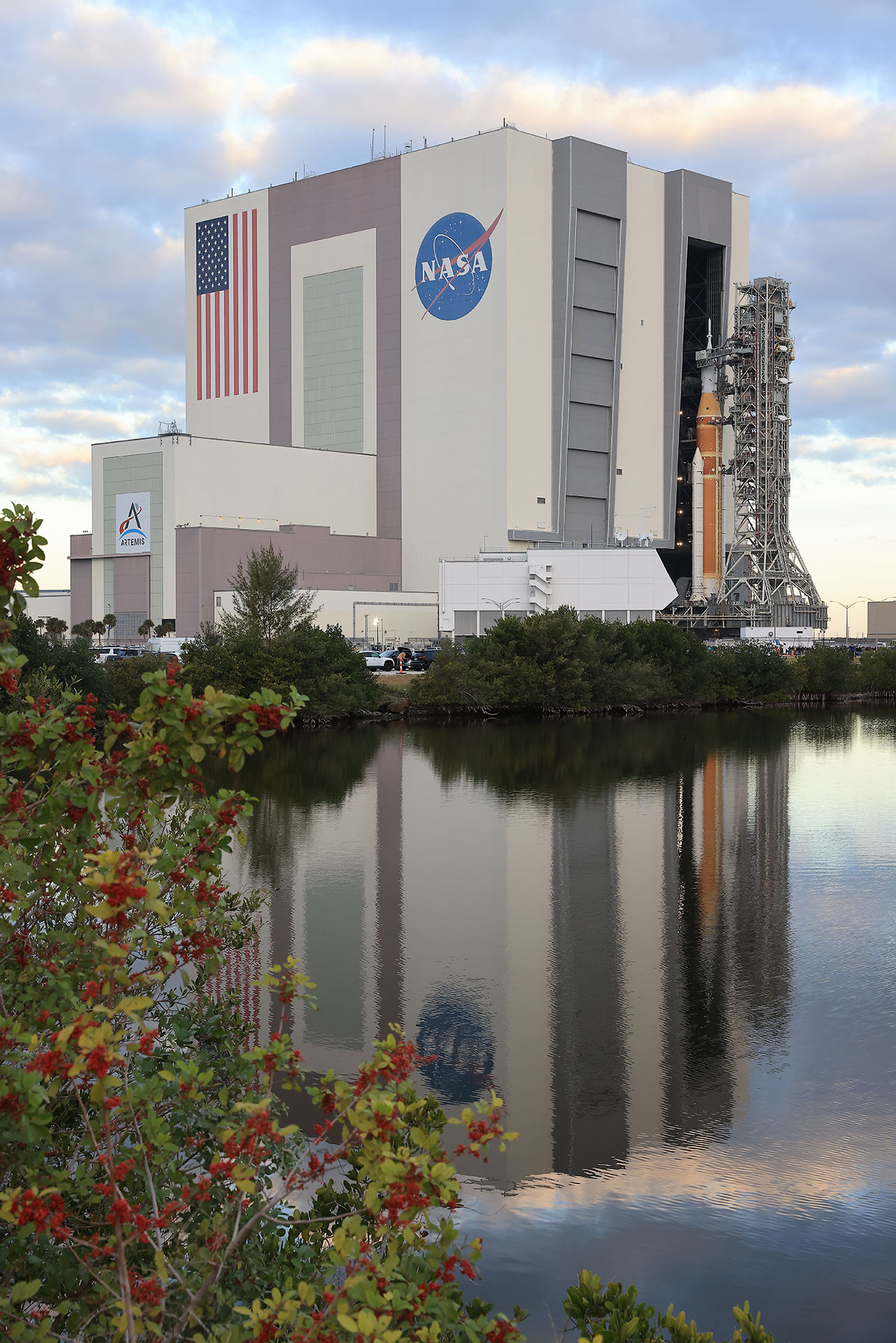
NASA's Artemis II Space Launch System (SLS) rocket and Orion spacecraft, secured to the mobile launcher, begins the 4.2-mile journey toward Launch Complex 39B at NASA's Kennedy Space Center in Florida on Saturday, Jan. 17, 2026. (NASA/Kim Shiflett)
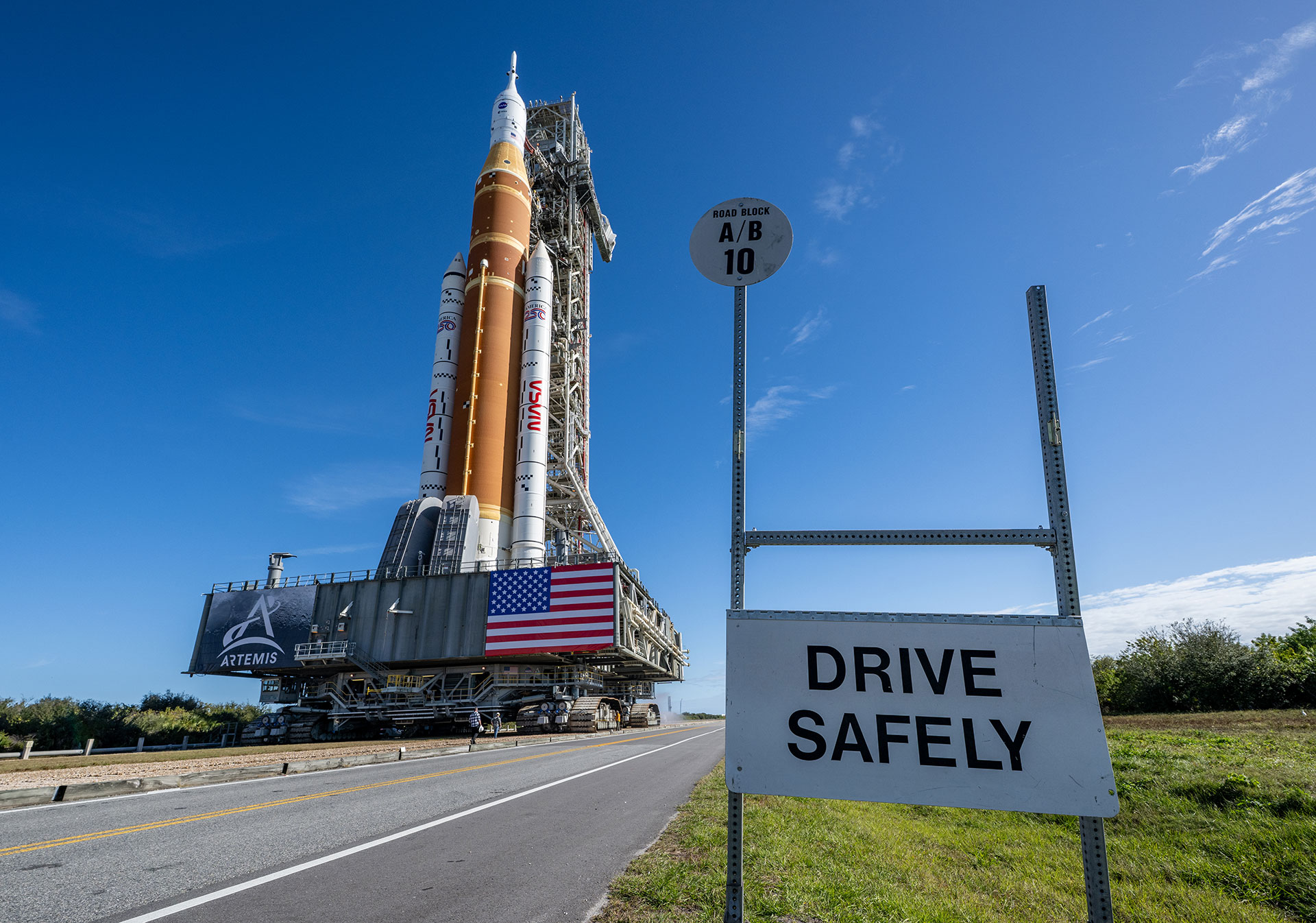
NASA's Artemis II Space Launch System (SLS) rocket and Orion spacecraft, secured to the mobile launcher, are seen as they make the 4.2 mile journey toward Launch Pad 39B, Saturday, Jan. 17, 2026, at NASA's Kennedy Space Center in Florida. (NASA/Keegan Barber)