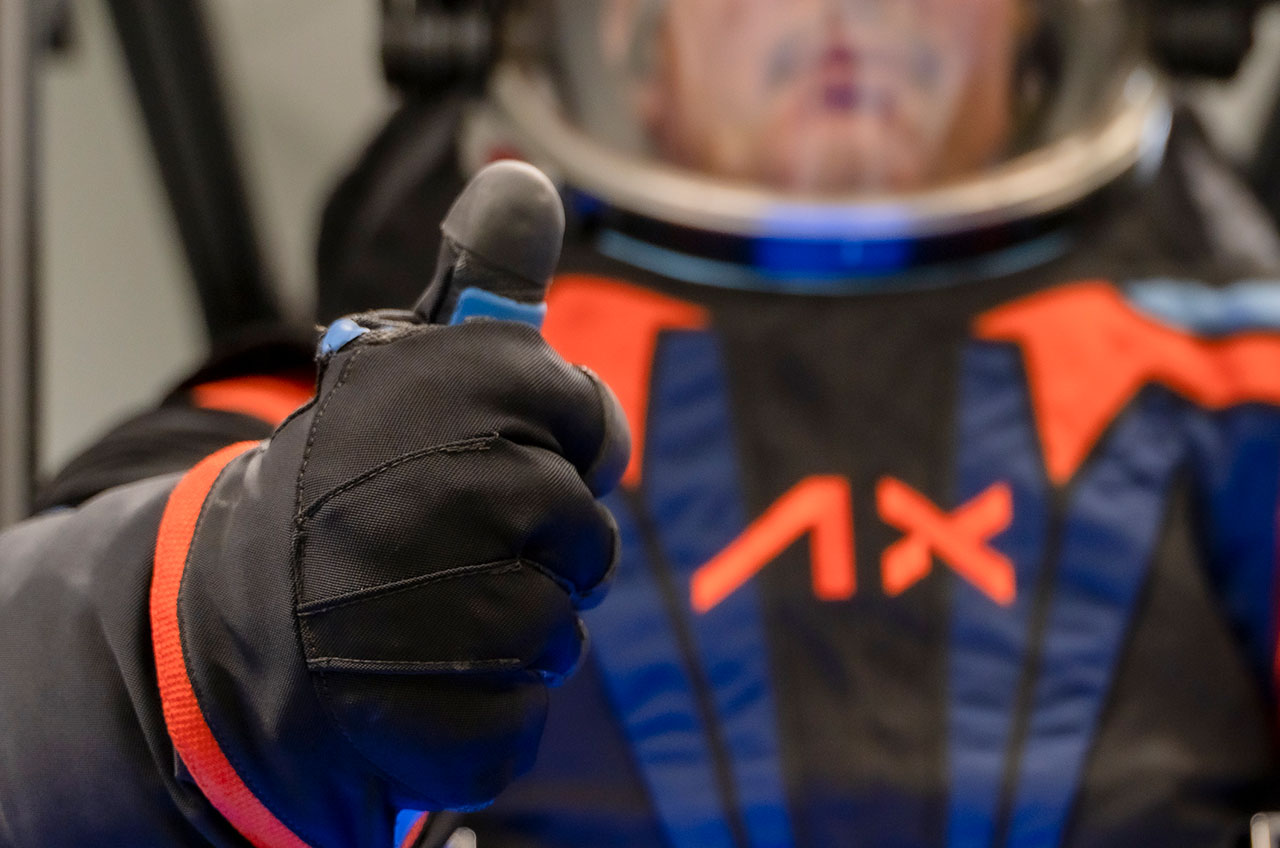
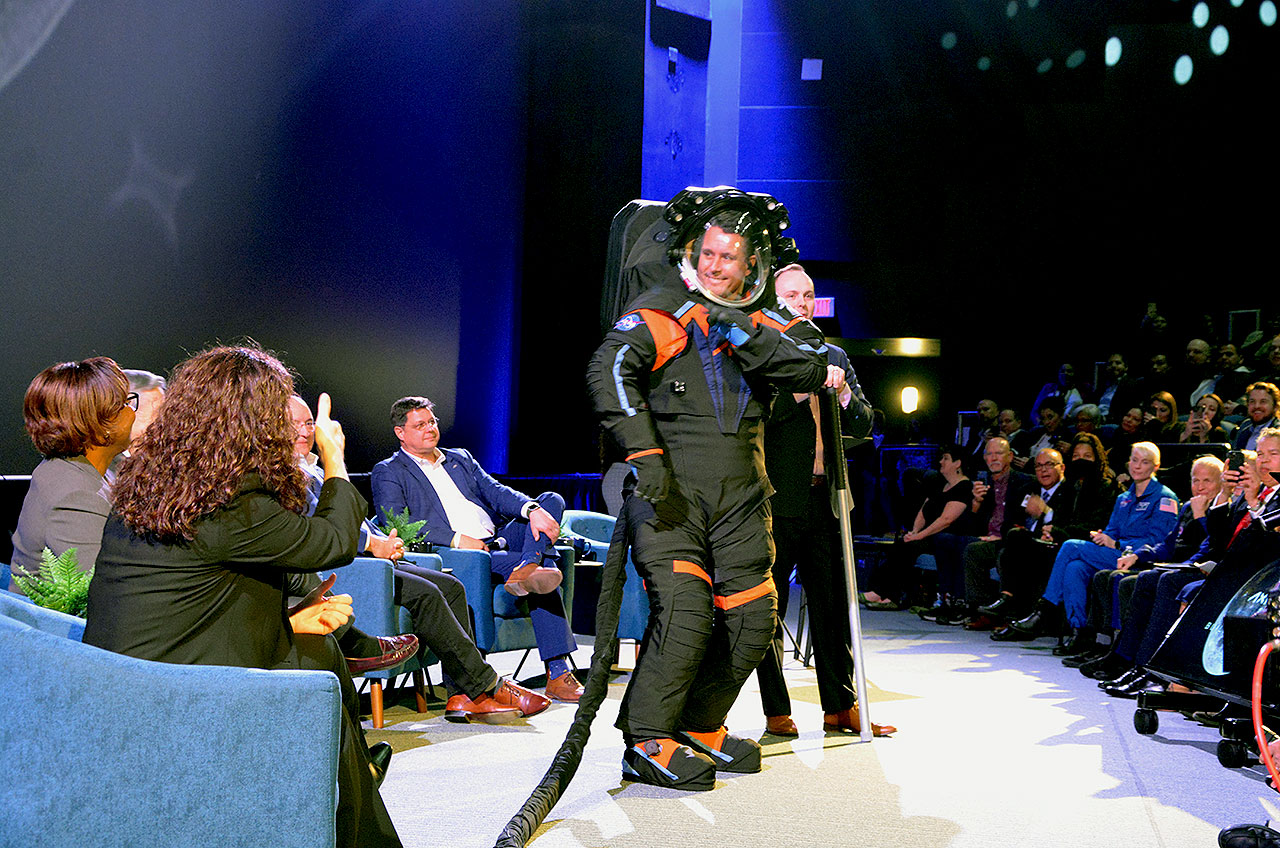
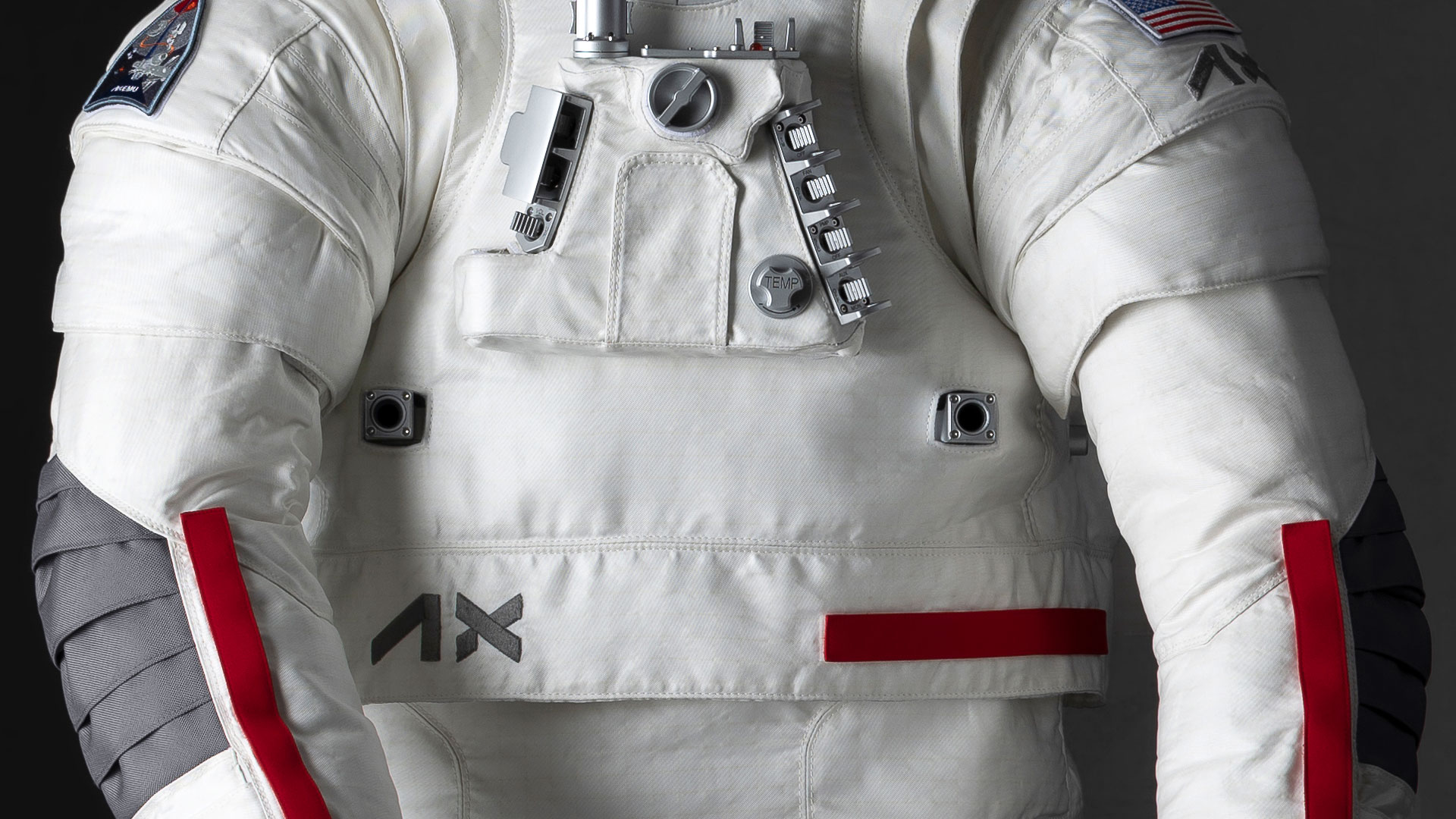
A prototype of the commercial spacesuit that U.S. astronauts plan to wear during the next mission to land on the moon was unveiled on Wednesday (March 15). Unlike the iconic garments worn by the Apollo astronauts more than 50 years, this new suit is a "rental" — designed, built and soon to be leased to the space agency by Axiom Space, a space services company.
Robert Pearlman Editor
Posts: 56651 From: Houston, TX Registered: Nov 1999
The history-making spacesuits worn by the first woman and next American astronaut to walk on the moon will be abandoned on a SpaceX lunar lander rather than be returned to Earth for their reuse or museum display.
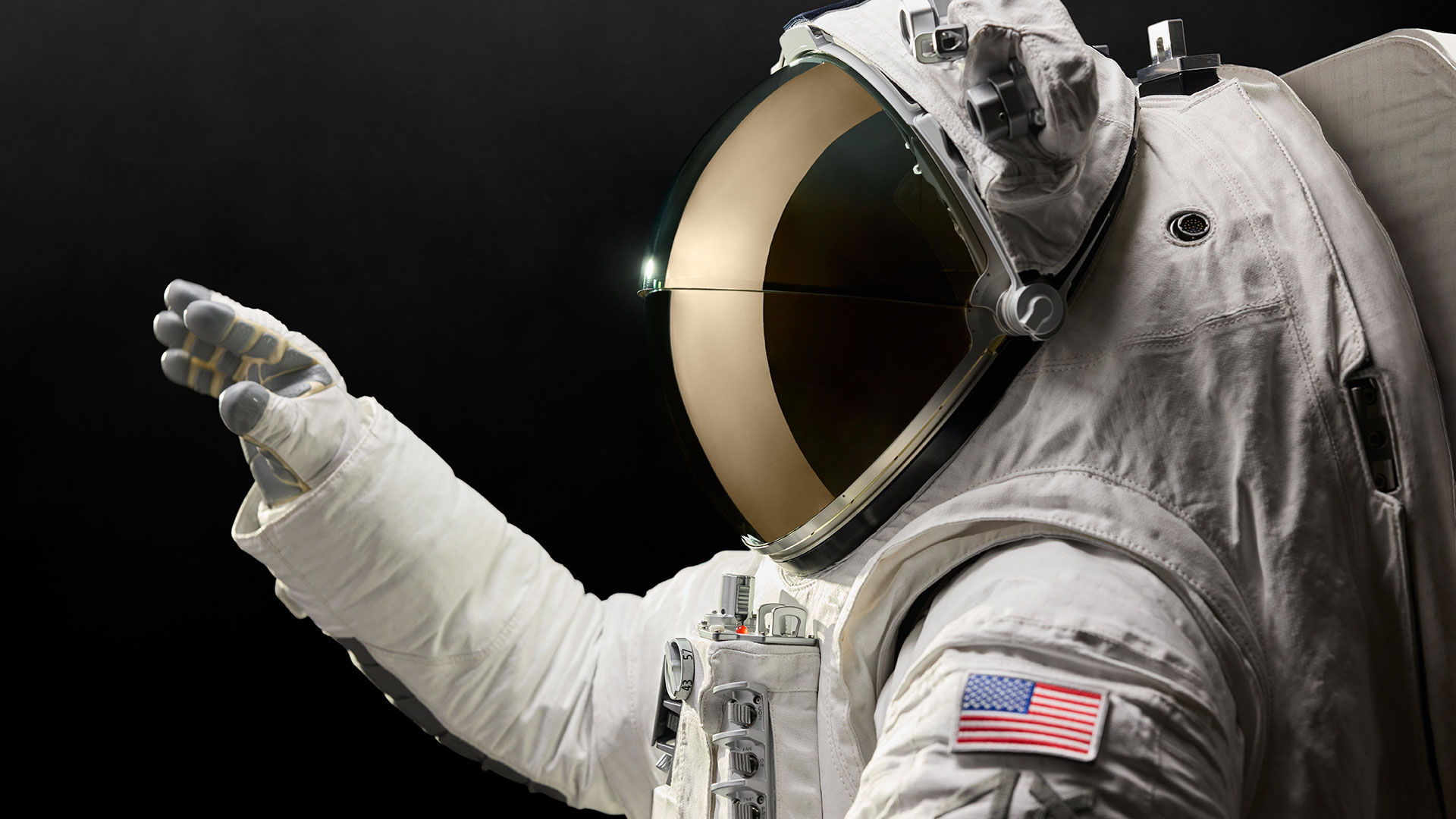
Axiom Space, the Houston-based space services company selected by NASA to design, build and furnish the spacesuits for the 2025 Artemis III lunar landing mission, unveiled a prototype of its lunar garb during a press event at Space Center Houston on Wednesday (March 15). Axiom president and CEO Michael Suffredini and Mark Greeley, the company's program manager for extravehicular activity, spoke about the fate of the Artemis III spacesuits in a brief interview.
Robert Pearlman Editor
Posts: 56651 From: Houston, TX Registered: Nov 1999
A new partnership is taking the concept of haute couture to new heights.
Axiom Space, a Houston-based spaceflight services company, has joined forces with the Italian luxury fashion house Prada to design the spacesuits for the next astronauts to walk on the moon.
Robert Pearlman Editor
Posts: 56651 From: Houston, TX Registered: Nov 1999
posted 08-21-2024 08:14 AM
Axiom Space release
Axiom Space and Nokia Partner to Enable High-Speed Cellular Network Capabilities in Next-Gen Lunar Spacesuits
Axiom Space has partnered with Nokia to integrate advanced 4G/LTE communication capabilities into the next-generation spacesuits that will be used for the Artemis III lunar mission.
Together, Nokia and Axiom Space will incorporate high-speed cellular-network capabilities in the Axiom Extravehicular Mobility Unit (AxEMU), supporting HD video, telemetry data and voice transmission over multiple kilometers on the Moon. This advancement will enable Artemis III crewmembers to capture real-time video and communicate with mission controllers on Earth while they explore the lunar surface.
"Axiom Space is excited to work with Nokia to build on the advanced capabilities of our next-generation spacesuit," said Russell Ralston, Axiom Space executive vice president of extravehicular activity. "Adding high-speed 4G/LTE network capability on the Moon will serve as a vital bridge linking astronauts to Earth, facilitating crucial data exchange, and enabling high-definition video communication over long distances."
Nokia plans to deploy the first cellular network on the Moon as part of Intuitive Machines' IM-2 mission, which is scheduled to be delivered to the launch site in 2024. During that mission, Nokia aims to demonstrate that cellular connectivity can facilitate crucial communications during future lunar or Mars missions. Nokia's Lunar Surface Communications System (LSCS), pioneered by Nokia Bell Labs' research and innovation, will be deployed during IM-2 and will be further adapted for use in the AxEMU spacesuit.
"Just as astronauts will need life support, shelter and food, they will need advanced networks to communicate with each other and go about their crucial work," said Thierry E. Klein, President of Bell Labs Solutions Research at Nokia. "Bell Labs has a long history of working on space projects, and Nokia is a leader in designing and building networks that connect the world. We are taking advantage of the same standards-based technologies that connect billions of devices on Earth every day, while bringing new innovation and technologies to bear on the specific challenges encountered in space."
The fully autonomous LSCS has two components: a network-in-a-box combines the radio, base station and core network elements of a terrestrial cellular network into a single unit, and device modules that will be integrated into the AxEMU spacesuits. Both the network and device modules have been carefully engineered to withstand the extreme environmental conditions on the lunar surface and the dynamic stress of spaceflight, and have been optimized for size, weight and power consumption.
Axiom Space was recently awarded $57.5 million from NASA to make this 4G/LTE network modification to the lunar spacesuit for the Artemis III mission, building upon its first Artemis task order in 2022, valued at $228 million.
Axiom Space's spacesuits will provide astronauts with advanced capabilities for space exploration while providing NASA with commercially developed human systems needed to access, live, and work on and around the Moon.
Axiom Space's development of these next-generation spacesuits and Nokia's lunar surface communications innovations are significant advancements toward furthering American leadership in space exploration, enabling a deeper understanding of the Moon, the solar system, and beyond.
Robert Pearlman Editor
Posts: 56651 From: Houston, TX Registered: Nov 1999
The next U.S. astronauts to walk on the moon will do so in style.
Axiom Space, a Houston-based spaceflight services company, and Italian luxury fashion house Prada have revealed the outer layer of the spacesuit to be worn on NASA's first Artemis mission to land humans on the lunar surface. The unveiling occurred at the International Astronautical Congress in Milan.
Robert Pearlman Editor
Posts: 56651 From: Houston, TX Registered: Nov 1999
posted 07-09-2025 10:25 AM
Axiom Space release
Axiom Space's Next-Gen Spacesuit is Crew Tested for First Time in NASA's Neutral Buoyancy Lab
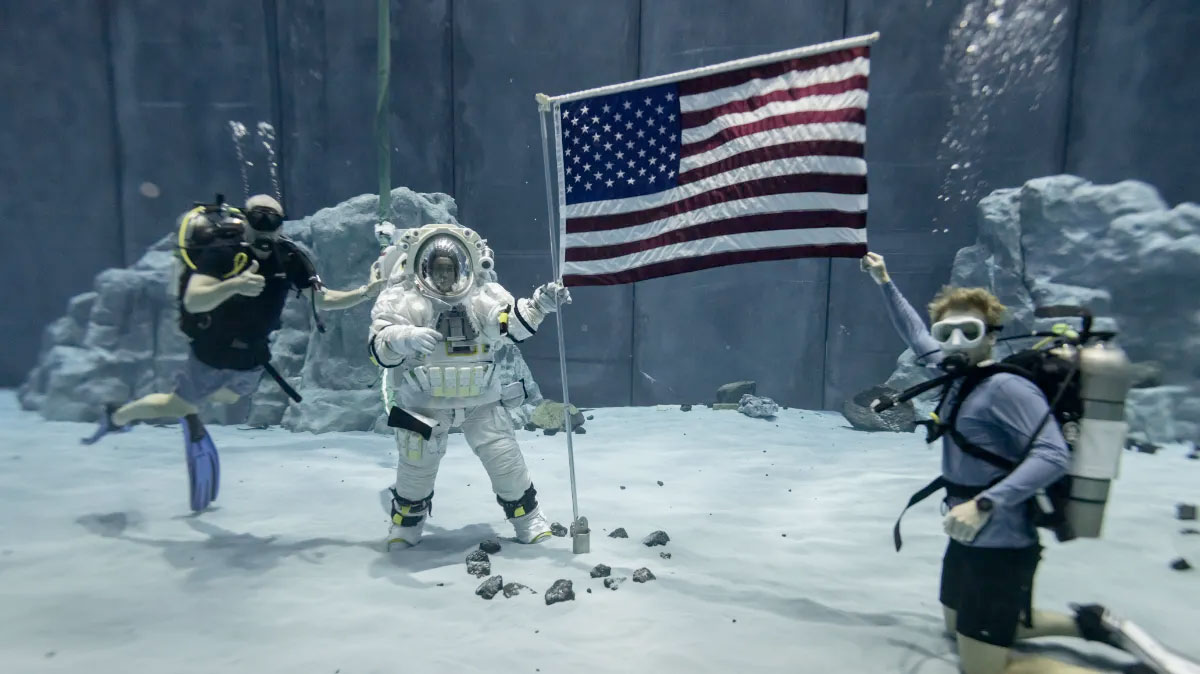
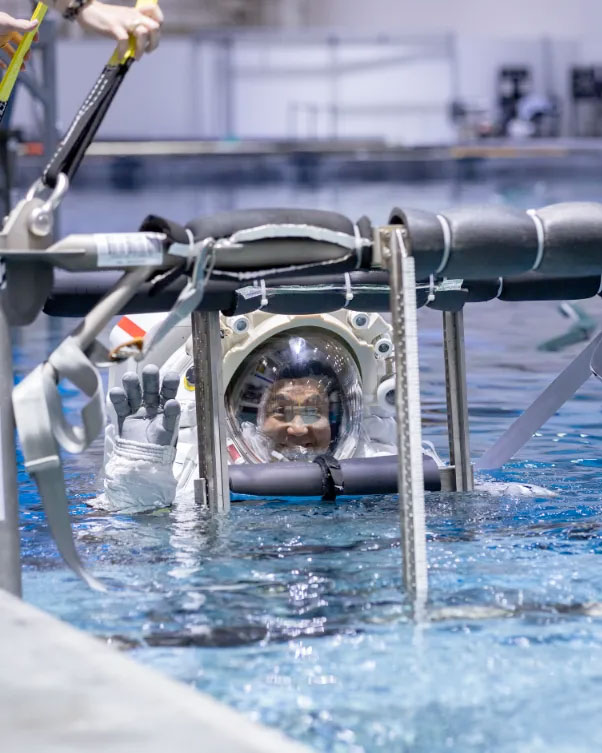
In June, Koichi Wakata, Axiom Space astronaut and Chief Technology Officer, was the first to test the Axiom Extravehicular Mobility Unit (AxEMU) in NASA's Neutral Buoyancy Laboratory (NBL).
Above: Axiom Space conducted the first crewed test of the Axiom Extravehicular Mobility Unit (AxEMU) in NASA’s Neutral Buoyancy Laboratory (NBL) in June. Koichi Wakata, Axiom Space astronaut and Chief Technology Officer, simulated planting the American flag on the lunar surface during the test in the NBL. (NASA)
The Axiom Space-developed spacesuit will enable astronauts to explore the Moon for the first time in over 50 years as part of the Artemis III mission to the lunar south pole.
The tests were first conducted with Wakata, followed by NASA spacesuit engineers Kristine Davis and Richard Rhodes and focused on the integration of the AxEMU into the NBL facility. The NBL is one of the world's largest indoor pools, used for astronaut training and mission preparation, allowing astronauts to simulate lunar surface tasks in partial gravity or spacewalks in zero gravity.
Above: Wakata enters the pool to test out the AxEMU for the first time in the NBL’s 1/6th lunar gravity environment. (Axiom Space)
The Axiom Space Extravehicular Activity (EVA) program team tested the operations and capabilities of the communications, breathing, and cooling systems of the spacesuit in the pool. The team worked to familiarize the NBL divers with the AxEMU's operations and support systems.
In preparation of the Artemis III mission, Axiom Space and NASA's Artemis Program teams will continue to conduct tests in the NBL to train for EVA tasks on the lunar surface.
The AxEMU continues to undergo extensive testing to ensure it will be ready to support Artemis III. This year, the EVA program team accomplished several key achievements, including completing its first three crewed tests in the NBL; 23 tests in NASA's Active Response Gravity Offload System (ARGOS) that provides a simulated reduced gravity environment; multiple field evaluations using lunar tools; and lunar regolith challenge testing demonstrating that the suit exceeds its mission requirements in this area. The spacesuit continues to undergo integrated tests with the Lunar Terrain Vehicles (LTVs) and is scheduled to enter the Critical Design Review (CDR) later this year.
Robert Pearlman Editor
Posts: 56651 From: Houston, TX Registered: Nov 1999
Oakley is going from the ski slopes and sports fields on Earth to the craters and ridges on the moon.
The high-performance sunglasses company has been chosen to provide the visor system for the next spacesuit to be worn on the lunar surface. The Axiom Extravehicular Mobility Unit, or AxEMU, will incorporate Oakey's advanced optical technology into its deployable two-part visor to provide astronauts with clearer and farther vision while exploring the moon's south pole.
Robert Pearlman Editor
Posts: 56651 From: Houston, TX Registered: Nov 1999
posted 11-20-2025 08:31 AM
Axiom Space release
Axiom Space, KBR Successfully Complete First Uncrewed Thermal Vacuum Test of Next-Generation Spacesuit
Axiom Space and KBR successfully completed the first uncrewed thermal vacuum test of the Axiom Extravehicular Mobility Unit (AxEMU) Pressure Garment to evaluate the spacesuit's thermal performance and advanced materials in extreme temperatures at the vacuum of space.
The test was a critical next step in collecting data on how the spacesuit will endure the harsh environment on the lunar south pole during the Artemis III mission.
"This successful test produced data to inform the AxEMU's performance and readiness for operational use on the lunar surface," said Russell Ralston, Axiom Space general manager of extravehicular activity. "It was important to evaluate the thermal performance of the new materials we've incorporated into the suit design and to see how the suit's advanced protection will enable astronauts to work at the lunar south pole and in the Moon's permanently shadowed regions for at least two hours."
In partnership with KBR, the test was conducted inside the thermal vacuum chamber at KBR's Aerospace Environment Protection Laboratory (AEPL) in San Antonio, Texas. The Axiom Space EVA and KBR teams worked side by side to enable this integral test from concept to execution in less than one month.
From a historical perspective, it was the first time the AxEMU, designed for the return the Moon, was tested at AEPL – the same facility where Apollo astronauts trained for their historic Moon landings. For more than 60 years, this facility has been used by the aerospace community, including during the Apollo and Space Shuttle missions, and in support of the Blue Angels and commercial spaceflight crews.
"KBR is proud to partner with Axiom Space on this major milestone in preparing for humanity's return to the Moon," said Mark Kavanaugh, KBR's President, Defense, Intel and Space. "This achievement reflects KBR's position as a leader in human spaceflight innovation and our ability to deliver mission-critical solutions that advance NASA's Artemis program. Our expertise and collaboration with Axiom Space continue to strengthen KBR's role in enabling the future of human exploration beyond Earth."
The uncrewed thermal vacuum test of the AxEMU was the first in a series of tests which will grow in complexity and scope as Axiom Space moves toward the spacesuit qualification phase with NASA. In preparation of the Artemis III mission, Axiom Space continues to conduct extensive testing of the next-gen spacesuit. The team has completed the first dual-suit run at NASA's Neutral Buoyancy Laboratory (NBL), is completing the final integration testing in the NBL, and has achieved over 700 hours of crewed pressurized time in the spacesuit; the AxEMU is currently in the critical design phase.
Robert Pearlman Editor
Posts: 56651 From: Houston, TX Registered: Nov 1999
posted 02-12-2026 01:46 PM
NASA release
NASA Moon Mission Spacesuit Nears Milestone
The next-generation spacesuit for NASA's Artemis III mission continues to advance by passing a contractor-led technical review, as the agency prepares to send humans to the Moon's South Pole for the first time. Testing is also underway for the new suits, built by Axiom Space, with NASA astronauts and spacesuit engineers recently simulating surface operations and tasks underwater to demonstrate safety and mobility.

Above: A NASA crew member practices using lunar tools to collect geology samples at NASA's Johnson Space Center during an elevated suit pressure test where teams evaluate how well crew perform tasks in different suit pressure levels while wearing the Artemis III lunar spacesuit developed by Axiom Space called the AxEMU (Axiom Extravehicular Mobility Unit). (NASA/Bill Stafford)
The AxEMU (Axiom Extravehicular Mobility Unit), is designed to give astronauts increased flexibility and improved mobility for moonwalking, including bending down to collect geology samples and perform a variety of scientific tasks. The suit features increased sizing options and adjustability to fit a wider range of crew members. It incorporates advanced life-support systems and enhanced protection to withstand the harsh lunar environment. Axiom Space is also developing specialized tools and equipment for work on the lunar surface, allowing astronauts to more easily gather geology samples.
Now that Axiom Space has completed their technical review of the AxEMU, NASA will evaluate whether the spacesuit is ready for the agency's Artemis III mission that will return American astronauts to the Moon. A NASA-led critical design sync review, which is an agency-required technical evaluation, will confirm that the design's hardware and systems are on track for final testing and delivery. In parallel, Axiom Space has begun receiving parts for the first flight unit, which will be assembled later this spring.
"The completion of their internal review brings Axiom Space one step closer to delivering a next-generation lunar spacesuit," said Lara Kearney, manager of the Extravehicular Activity and Human Surface Mobility Program at Johnson Space Center in Houston. "This achievement reflects our shared commitment to deliver a safe, capable lunar spacesuit that will enable astronauts to explore the Moon's surface."
NASA and Axiom Space have conducted over 850 hours of pressurized testing with a person inside the AxEMU. Leading up to the review, teams conducted underwater and simulated lunar gravity tests of the AxEMU in facilities at NASA Johnson that demonstrate how the spacesuit's capabilities will offer increased mobility as astronauts explore the Moon's surface and prepare for missions to Mars. These tests allow astronauts and engineers to become familiar with the spacesuit and practice moving and performing tasks in a simulated lunar gravity environment, which is one-sixth the gravity we experience on Earth. Suit users have provided feedback on design, functionality, and safety.
Agency and Axiom Space teams recently finished the first series of test runs in the Neutral Buoyancy Laboratory at NASA Johnson. While in the 40-foot-deep pool, they weighted the AxEMU to match lunar gravity and assessed functionality and ease of movement.
Now, teams are in the middle of evaluating how well test subjects can perform tasks while wearing the spacesuit in different suit pressure levels in NASA Johnson's Active Response Gravity Offload System facility. The agency uses an overhead lift system that connects to a spacesuit to create a reduced-gravity environment allowing anyone in the suit to walk around in simulated lunar gravity. Higher suit pressures reduce time to acclimate to the suits, enabling astronauts to spend more time walking on the lunar surface during Artemis missions.
Astronaut safety is NASA's top priority for the Artemis campaign. Using more than 50 years of spacesuit expertise, NASA defined the technical and safety standards and requirements by which the next generation of lunar spacesuits are being built. At key milestones in the spacesuit's development, NASA has and will continue to verify the AxEMU and its system deliverables to ensure the risk to the Artemis crew members is understood and minimized.
NASA's spacesuits contract is managed by the Extravehicular Activity and Human Surface Mobility Program which serves as the agency's program to develop next-generation spacesuits, human-rated rovers, and spacewalking tools, along with all required spacewalking support systems that will enable astronauts to survive and work outside the confines of a spacecraft to explore on and around the Moon.
Robert Pearlman Editor
Posts: 56651 From: Houston, TX Registered: Nov 1999
Axiom Space served up a new component of its next-generation lunar spacesuit on Sunday (June 7), one tailored fit for its Italian partner, Prada — the "spaghetti" suit.
Officials from both the Houston-based human space exploration company and the fashion house gathered at the Prada Broadway Epicenter in New York to provide a first look at the liquid cooling and ventilation garment (LCVG) that will be worn by astronauts under the Axiom Extravehicular Mobility Unit (AxEMU) spacesuit. The LCVG circulates cold water through tubes sewn into the garment, hence its pasta-inspired nickname.







 posted 03-15-2023 08:00 AM





 advertisement